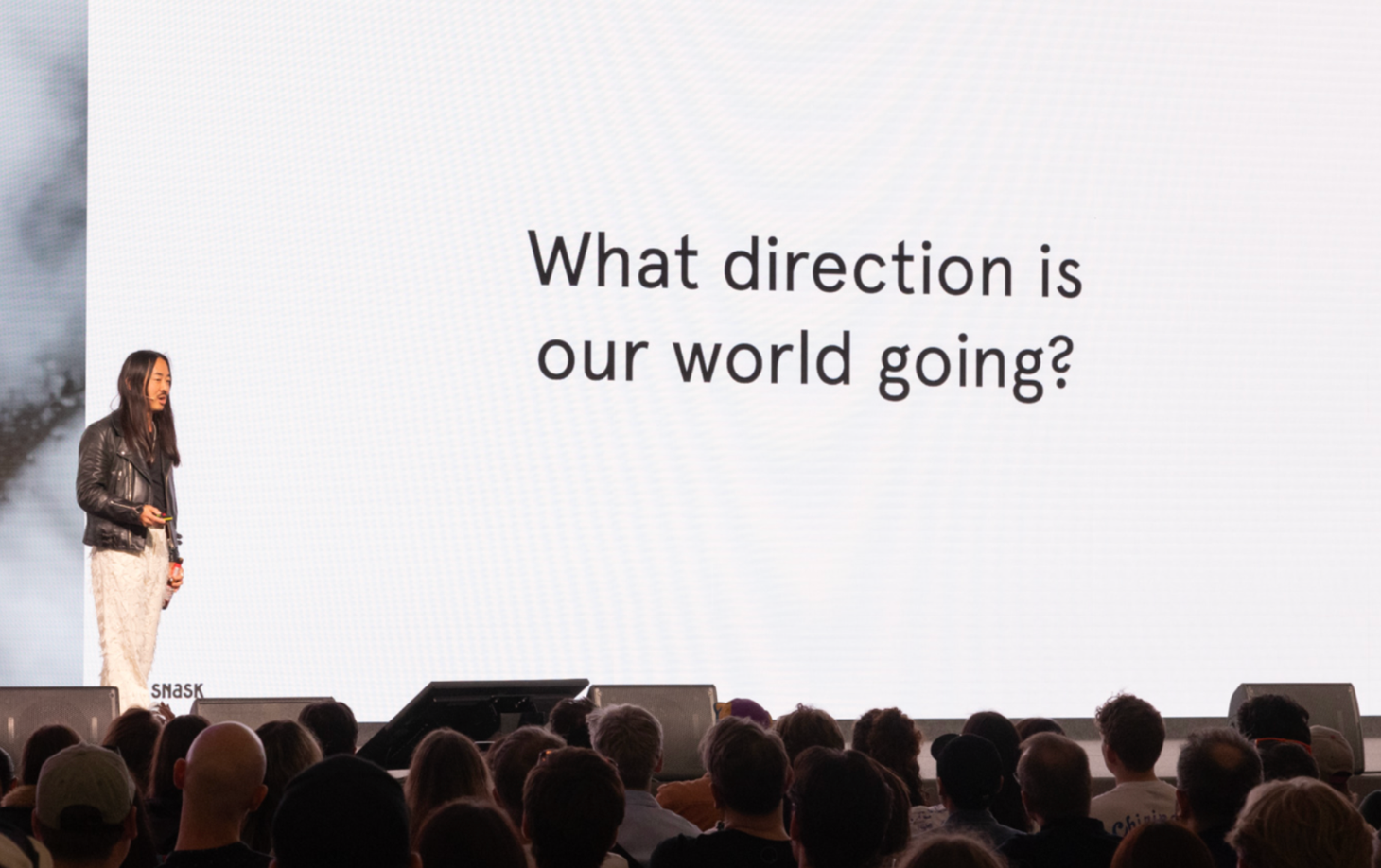
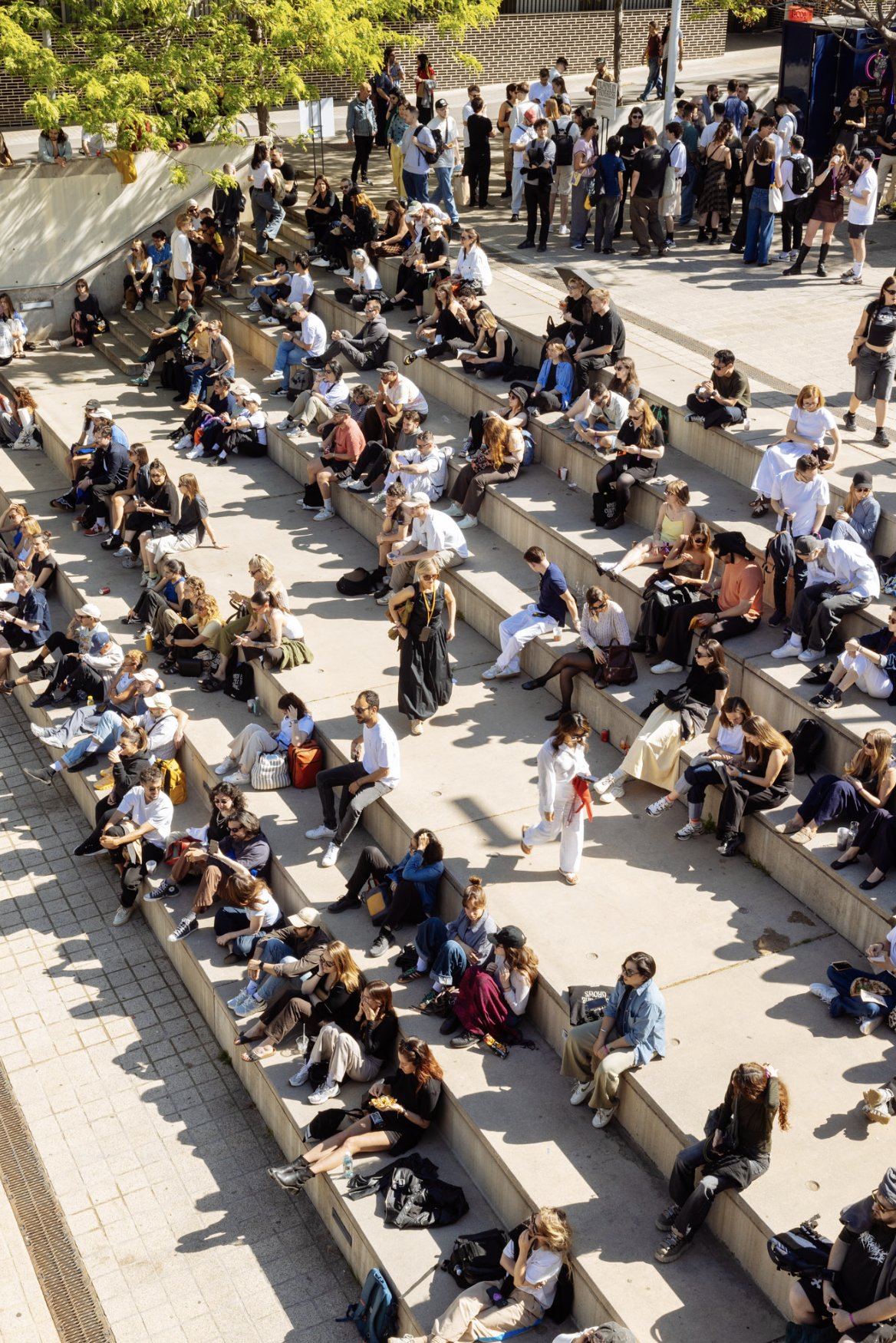
I've always wondered which geographies have the better impact on creativity. Is it London's gray weather? San Francisco's year-round stable climate? Berlin's harsh contrast between summer and winter? I realized a couple of weeks ago that Barcelona's weather turned out to be the sweet spot for 3,000 creatives to come together, chill, and talk about their work in the middle of everything happening in the world.
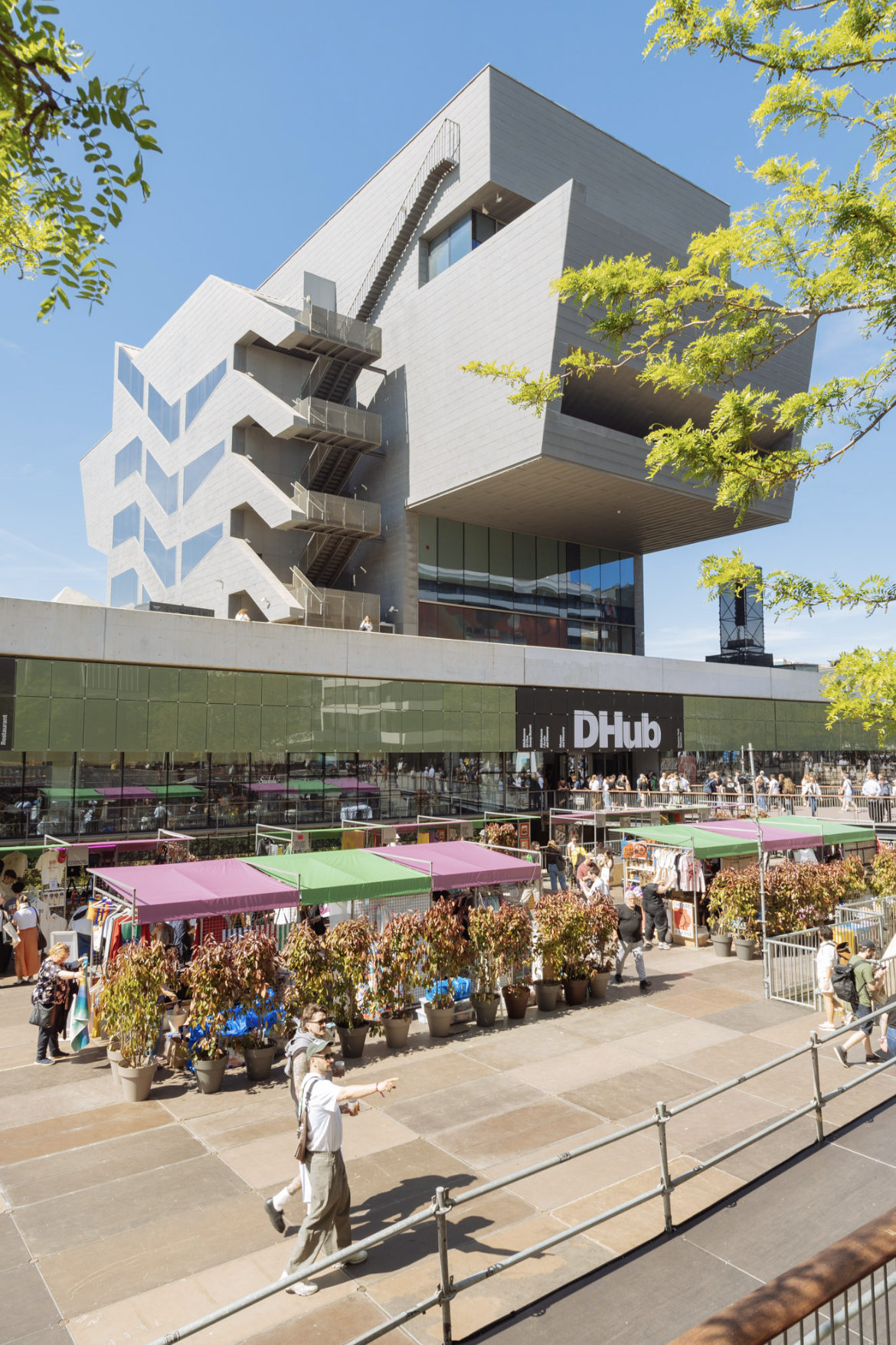
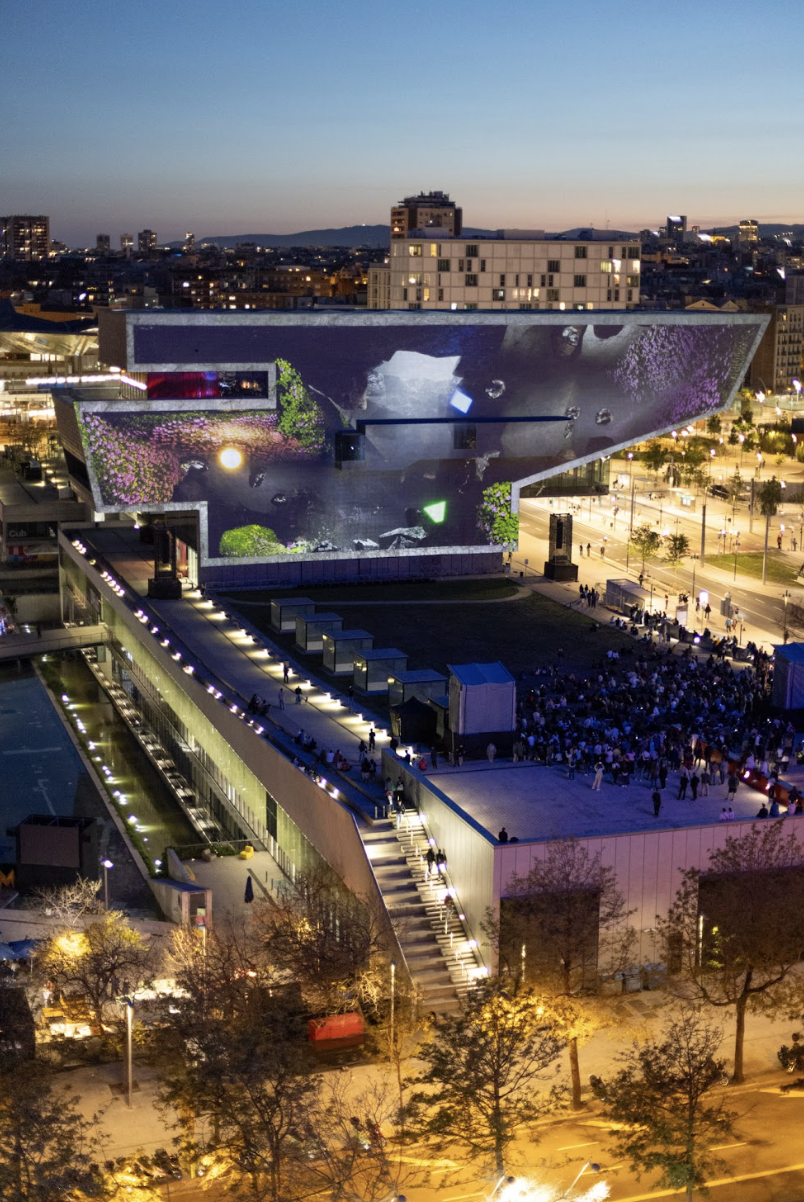
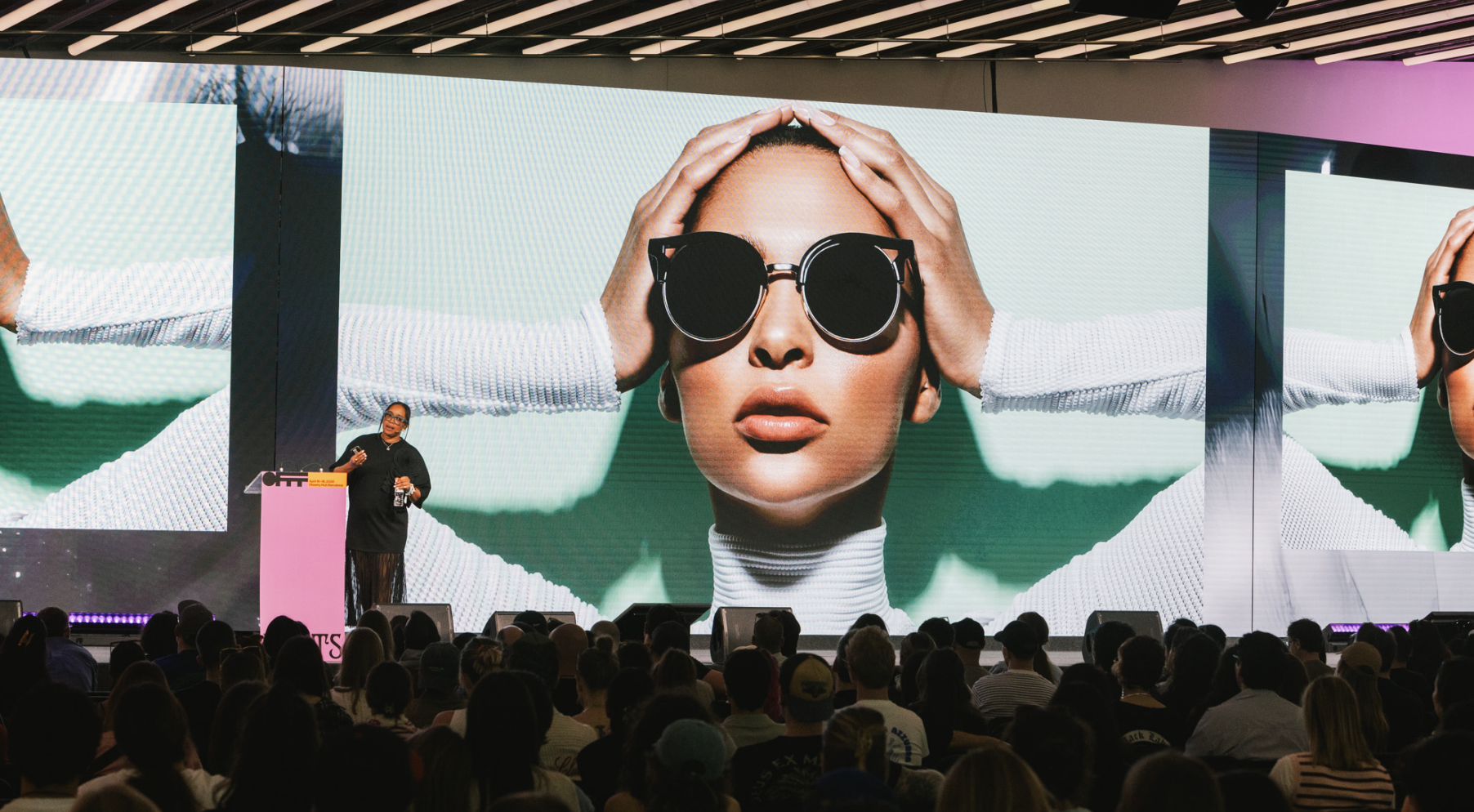
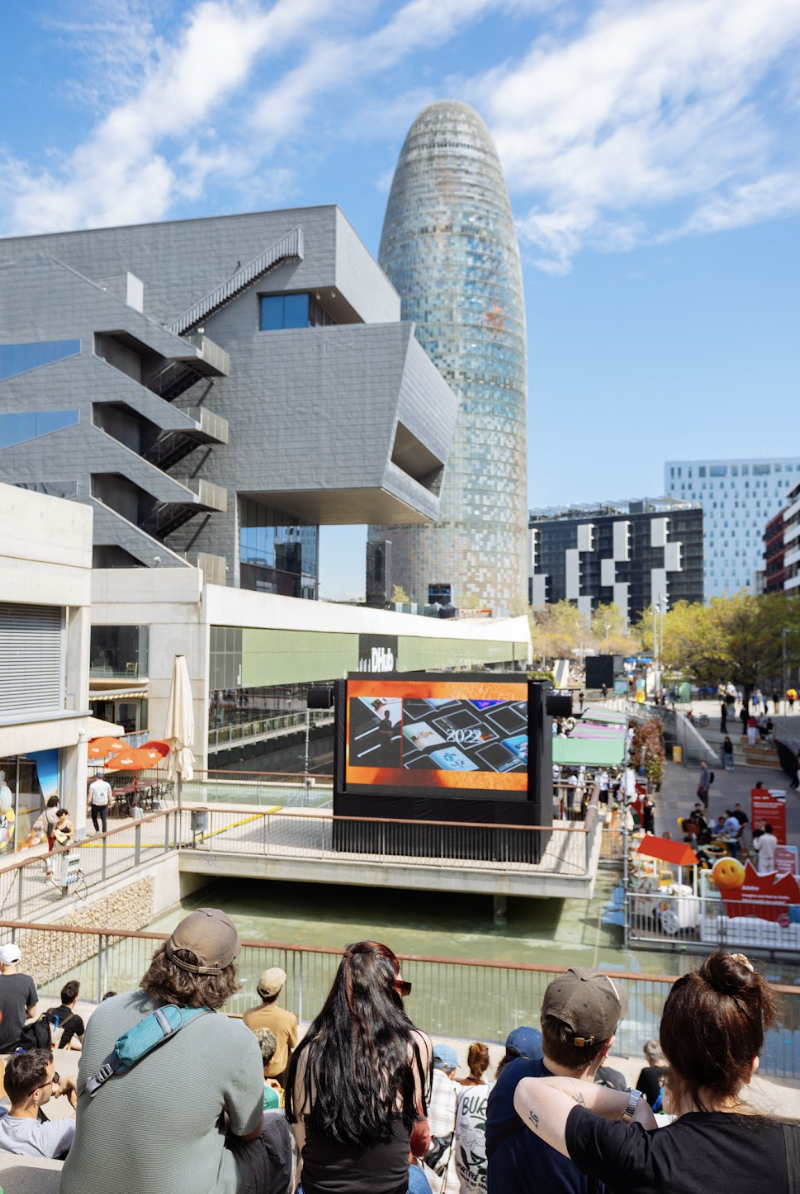
Nine out of ten conferences are dull. Most are dull in every sense; some are rich in content but still dull socially. OFFF wasn't one of them. The festival was hosted in the beautiful Barcelona Design Museum. Barcelona is one of the most hybrid yet beautifully architected cities in the world. I still can't believe the contrast and the beauty of all the buildings I saw there. Most of the companies and creators were from Europe, and of course there were agency talks too.
When Pedro Vilar, Strategic Branding Creative Director of Peter Schmidt Group, told me the original name of the conference was Offline Flash Film Festival, I was shocked. I barely remember Adobe Flash. I maybe used it a couple of times in computer class back in high school. But not too long ago, it sat at the center of creative work. Beautiful and terrible days.
The real point is that tools have evolved dramatically since OFFF first took off. They've changed many times over. And with each change, not only has the conference itself, a hub for the creative industries, evolved, but creativity itself has too.
I interviewed creative industry professionals throughout the festival about how AI is affecting the creative process and what originality even means anymore. One thing stood out at the end of every conversation. Tools keep changing. From dust to chalk to paint to pen to computer to AI. As tools get stronger, creative processes get stronger too. And now, more than ever, the expectations placed on the creative are much higher, because we have powerful tools at our disposal.
Here are some of my key takeaways from the festival, one by one.
1. The end of the retainer, the rise of the pitch economy
The most concrete shift I heard about, and the one that has nothing to do with AI, social media, or any of the usual suspects, was the quiet death of the retainer client. Alex, a design director at Wieden+Kennedy Amsterdam (almost ten years at the agency, eight in London before transferring), put it plainly: agencies used to live off accounts, now they live off projects.
"It used to be that a lot of our clients would be retainer-based clients, they give you a certain amount of money a year, and you would do all their work. That model has completely shifted to project by project. Agencies are basically now pitching for projects as opposed to accounts."
This sounds like a finance story, but it's actually a creative one. When every project might be the last one with a client, the calculus of how you spend creative energy changes. "Every project you have with this client might be the last, so you need to really put everything into it." Less security, but also less complacency. Fewer agencies that can coast on a fat retainer and produce average work.
Lukas Cottrell, CEO of Peter Schmidt Group, described the same shift from a different angle. His agency, founded in Germany in 1972 by the late Peter Schmidt (a pioneer of holistic branding whose work shaped the visual identity of Hugo Boss, Jil Sander, and Joop), is today one of Europe's most influential design houses, leading identity work for Deutsche Telekom, E.ON, and Deutsche Bank, with offices stretching from Hamburg to Lisbon to Tokyo.
Lukas's reading of the last twenty years: advertising used to sit on top of the pyramid and design agencies lived underneath it. Today branding sits on top, and advertising is just one expression of it. Brands have realized that the unique part, the part that can't be commoditized, is the brand itself. Products can be copied. Smartphones look the same. Cars look the same. The brand is what's left.
What this means in practice is that the agencies surviving this shift are the ones that have moved away from production volume and toward concept and idea. Wieden+Kennedy is starting to win briefs that are just the strategy or just the design, not the whole rollout. Pedro, who runs Peter Schmidt's Lisbon office, described it as the value moving "earlier" in the chain: closer to the input of the brand, further from the output. The output, as we'll get to, is increasingly something a machine can handle.
2. Brands as cultural authority, not commodity
Every conversation circled back, eventually, to the same idea expressed in different vocabulary. Stockholm Design Lab calls it cultural authority. Peter Schmidt Group calls it aura. Base in Brussels talks about brands becoming part of culture and having a cultural voice.
- They're all describing the same thing: the days of branding as a closed system of logos, colors, and PDF guidelines are over.
Björn Kusoffsky, who founded Stockholm Design Lab in 1998 and has spent nearly three decades shaping how Scandinavian brands look to the world, made the case for patience as a core branding ingredient. His client list reads like a tour through Northern European modernism: SAS Scandinavian Airlines, IKEA, Polestar, H&M, Absolut. He's an AGI member, has won two Gold Cannes Design Lions among more than two hundred international awards, and his work sits in the National Museum of Art in Stockholm. Anyone serious about branding has felt his influence, whether they know his name or not.
His take on the current Chinese branding boom was clarifying. Chinese companies, he said, often have everything (the resources, the technology, the manufacturing) except the patience to actually build a brand.
"It takes time. You have to be patient. You have to do it in the right way. They want to do it in like half of the time, always. So that is not how you do design. Then you have to do a rebranding after one year, two years, and that costs even more."
Peter Schmidt Group took this further. Pedro described how brands today don't sell on product specs but on the culture they create around themselves:
"People are not buying the products anymore. They are buying because of reasons that are not product-based, that are cultural-based. These influencers, these people that recommend, they create a culture around brands. That's what today engages the people with brands and makes them want to have them. It's not about the characteristics of the product anymore. It's about creating this aura."
This connects directly to a question I asked everyone: are we moving from brand-led to personality-led? Influencers launching beauty lines, founders becoming the public face of their companies, politicians winning more on charisma than party platform. The answer I kept getting was more interesting than a simple yes or no. It's not that personalities are replacing brands. It's that everything has become brand. The designer at Base in Brussels put it most succinctly:
"Branding is shaping perception. It's not about shaping the thing itself. It's about shaping the perception of the thing." Once you accept that, a person, a politician, a streetwear label, and a luxury house are all doing the same job.
The risk, of course, is sameness. Base's designer was honest about it: "Everything kind of starts to become everything. Where's the brand? Where's the identity?" When a fashion house communicates as a museum and a museum communicates as a fashion house, the lines blur. You can't stop it. But you can choose to anchor in something real, a philosophy or an attitude, that survives the noise.
3. The Instagrammable moment
The most vivid description of how social media has rewired creative work came from Silent Partners Studio in Montreal, the studio behind the visual content for some of the world's biggest concert tours. Justin Timberlake. Taylor Swift. Florence and the Machine. Selena Gomez. Founded in 2014 by Janicke Morissette and her three co-founders, the studio has watched the music industry transform twice. First when Napster killed the album, making touring the main revenue stream. Then when Instagram made every concert a content machine.
"We came in right at the moment where production value needed to be put on steroids to justify increasing ticket prices. Six or seven years ago, I started hearing this phrase: Instagrammable moments. Of course, you want to cater to concertgoers paying a ticket and sitting there for two hours, but what's gonna travel, wherever it's gonna end up online, has to be something that encapsulates the whole spirit of the tour in 15 seconds."
This rewires set design at the conceptual level. The monolith on Justin Timberlake's recent tour, they explained, is a moment that has almost no video in it. It's physical, tangible, designed to be photographed by 50,000 phones at once. The "big gag," as they called it, is no longer a song or a costume change. It's a frame.
Alex described the same dynamic from the other side. A good campaign idea now, she said, is essentially a template that people can remix: "A good campaign idea is actually a template for people to recreate it." The Lego World Cup project Wieden recently put out got reinterpreted thousands of times by fans using AI, and that multiplication, not the original spot, was the point.
- Ten years ago, an ad lived in your living room and maybe came up at work the next day. Now it gets remixed back at the brand within hours, and that's the success metric.
There's a tradeoff here that nobody at OFFF was naive about. Designing for the small screen, for the algorithm, for the fifteen-second scroll, can be limiting. Alex put it well:
"If you apply the same rules to the TV ad to social media, you'll be really disappointed. But if you think about where people will see it and how they're going to interact with it, there's still space to do really interesting work."
The discipline is to design for the medium, not against it.
4. AI: bicycle of the mind, not its replacement
I asked everyone about AI. Nobody dismissed it, nobody worshipped it, and almost everyone landed in roughly the same place. AI is a tool. It raises real ethical and environmental concerns. And the people most worried about it are the ones who built their careers on production rather than ideas.
The best metaphor came from Silent Partners. Riffing on Steve Jobs's old line about computers being "bicycles for the mind," one of the founders said: "AI is more like the motorcycle." Faster, more powerful, but you still have to know how to ride it. They use AI extensively as plugins inside Notch, for depth maps, background removal, real-time treatments, but not as an end-to-end production tool.
"You make a show with a hammer. But the hammer is not magically having your stage material. You have to handle it."
Alex was more cautious, particularly around photography and human imagery. She worried about a future where photographers and directors are reduced to recreating what AI already showed the client:
"The reason you got them involved in the first place is because they have this eye, this point of view on the world that you know is going to make the work sing. And now we're tempering that, because the client's bought into something they've already seen."
She also flagged the deeper concern, the ability to make subtle adjustments to people's bodies, skin tones, and faces in a way that's now technically trivial but ethically loaded.
Lukas made the most interesting argument: that AI's actual problem is that it produces average.
"AI will only produce an average size, because this is how AI works. It's good enough for the average. But brands need to have a distinct appeal, and creating that distinct appeal with vibe coding or vibe marketing is not possible."
The implication is that AI doesn't kill creativity. It commoditizes the middle of the bell curve and pushes the value to the extremes. Either you're producing the average for free, or you're producing the genuinely distinctive that AI can't.
Björn, who has been doing this for thirty years, was the most relaxed about it. He's seen the industry survive three or four transitions like this already. His advice was almost grandfatherly: don't sit at the computer. Read books. Go to concerts. Travel. Get knowledge from outside design itself. "Look at things that everyone else is looking at. That's not the future."
Will people lose their jobs? Most agreed yes, at the production end. Most agreed the ones who survive are the ones who position themselves as concept-driven, advisory, leading. Or as Lukas put it at the very end of our conversation:
"Don't cry about AI arriving. Get your hands dirty and try it out."
5. From guidelines to principles to attitude
The single most useful framework I picked up at OFFF came from Lukas Cottrell. His three-decade arc of how design systems have evolved deserves its own section.
- Twenty years ago, brand systems were built on guidelines. Rigid rules, thick PDFs, exact color values, exact spacing, exact lockups. The goal was consistency at all costs. Logo here, never there. This font, never that one.
Around fifteen years ago, the digital explosion broke the guideline model. Brands needed to live across infinitely more touchpoints than a guideline document could anticipate. So the field shifted to principles, looser and more flexible guardrails. Instead of "use Helvetica at 14pt with 18pt leading," you got "be confident, be human, be clear." Principles let designers adapt to context without breaking the brand.
Now, Lukas argues, even principles aren't holding things together anymore. The work is getting too diffuse, the channels too many, the AI-generated assets too easy to produce in any direction. The next layer, and this is where he's betting, is attitude. A shared mindset, almost in the spirit of the old Geigy studio in Switzerland, where there were no rules at all but everyone who walked in already knew what good looked like.
I keep thinking about this framework because it explains so much. It explains why "vibe" has become a word people use unironically about brands. It explains why the strongest brands today are the ones with the most legible attitude, like Patagonia, Muji, and Polestar, rather than the most polished guidelines. And it explains why the agencies still thriving in 2026 are the ones that can transmit attitude rather than enforce rules.
Pedro added the necessary counterweight: attitude alone doesn't ship the work. You still need codes, assets, distinctive visual elements that are recognizable across every touchpoint. The discipline now is figuring out which assets carry the attitude (which logo, which color, which type of motion, which tone of voice) and ruthlessly protecting those, while letting everything else flex.
What I left Barcelona thinking
A festival like OFFF works because it does something the rest of the year can't. It puts the people building the future of creativity in the same room as the people watching it happen, and lets them argue. Some of what I heard was contradictory. Some of it was wrong. Some of it I'll be quoting for years.
The thread running through all of these conversations is that the job of the creative person has gotten harder, not easier, even as the tools have gotten more powerful. The leverage is bigger. The competition is bigger. The bar is higher. The ones who'll keep working are the ones who can hold an attitude, ship an idea, and resist the gravitational pull toward the average.
That's worth a flight to Barcelona. I'll be back next year.