A breath of fresh air for Çanakkale’s restaurant culture: can it be done differently?
How far can a restaurant change the food and drink culture of its city? Inspired by the restaurant culture that has grown up in Urla around local produce and producers, what kind of transformation does Bertha hope to be part of in Çanakkale? Consultants Osman Sezener and Sabiha Apaydın and investor Yağız Özgen approach the question from different angles, from the kitchen to service, from local production to gastronomic tourism.
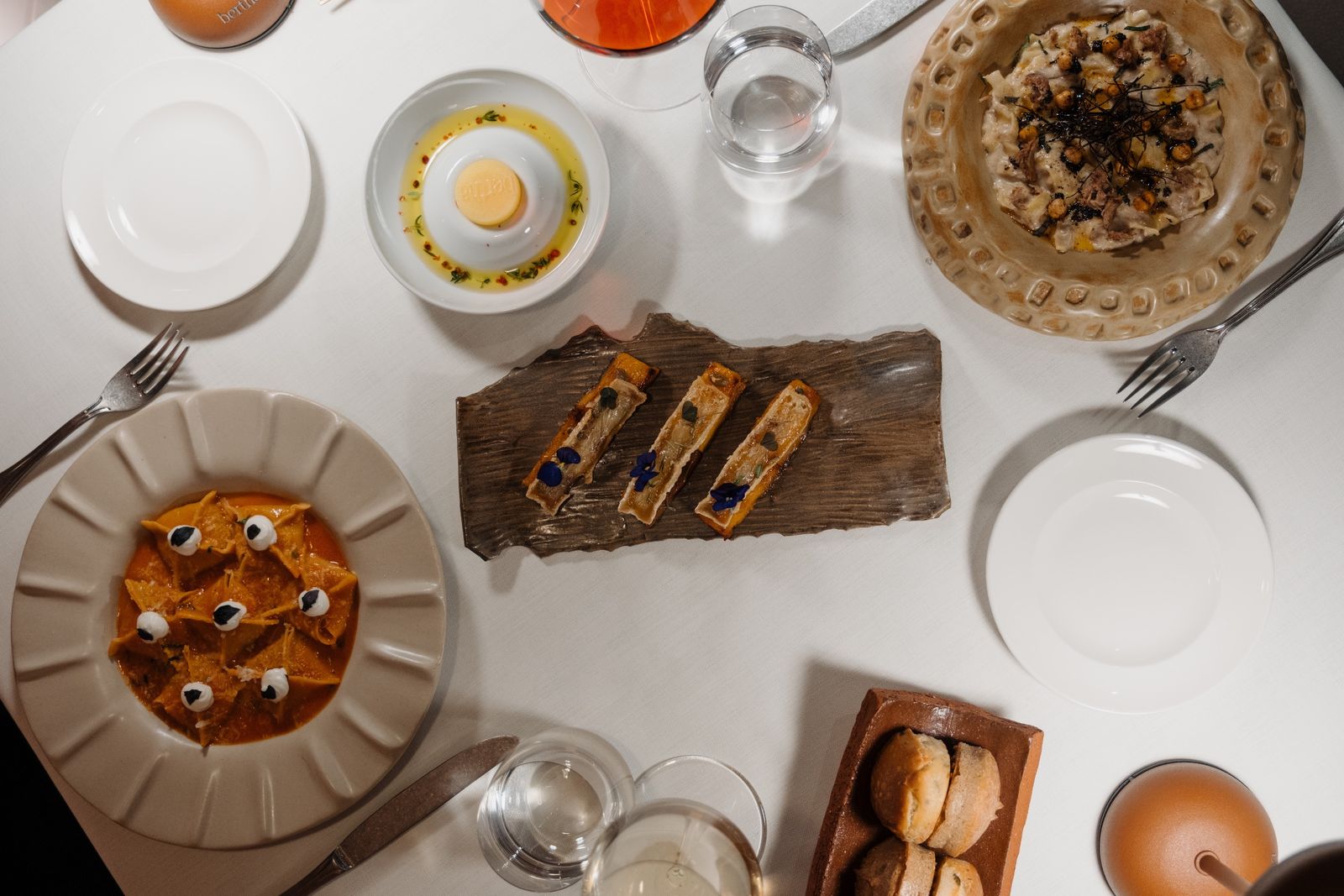
When I visited Ahmetçe in February, I had the chance to see first-hand the different forms of the production culture that stretches along the western foothills of Kazdağları (Mount Ida), across the Assos and Ayvacık line. On the land of Simurg Inn, located in Ahmetçe, vegetables, fruit and aromatic herbs are grown; the inn works with producers in the surrounding villages and aims to protect agricultural diversity by providing them with seeds. A few kilometres away, V’Asbos, which works vineyards open to the Assos wind, focuses in its gravity-flow winery on preserving the character of the grape with as little intervention as possible. Bülent Özgören, founder of Gemedere Peynircilik in Ahmetçe, makes labour-intensive cheeses from milk sourced in the surrounding villages, cheeses shaped by the season and by what the animals eat.
Recommended reading: Three stories from the foothills of Kazdağları | Reyhan Ülker, apéro
What these three ventures have in common is that they do not see the land they stand on merely as a place of production. They are trying to build a network of relationships that brings together soil, climate, local knowledge and producers. The gastronomic potential of the North Aegean lies partly in this relationship. But alongside good producers, there is also a need for restaurants that know these products, work with them and bring them to a wider public. A city’s food and drink culture can only develop when the different links in this chain, from production to the table, come together.
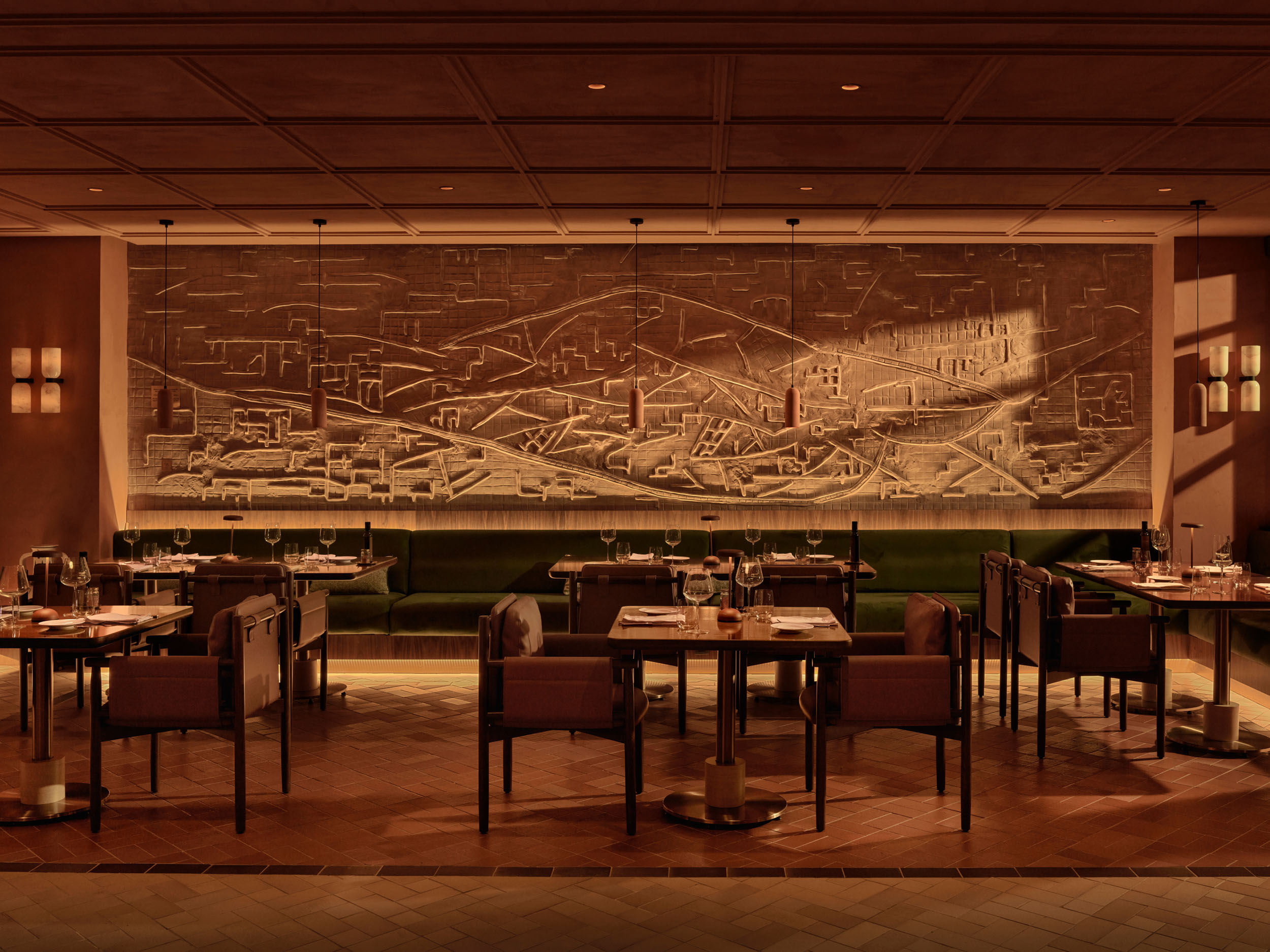
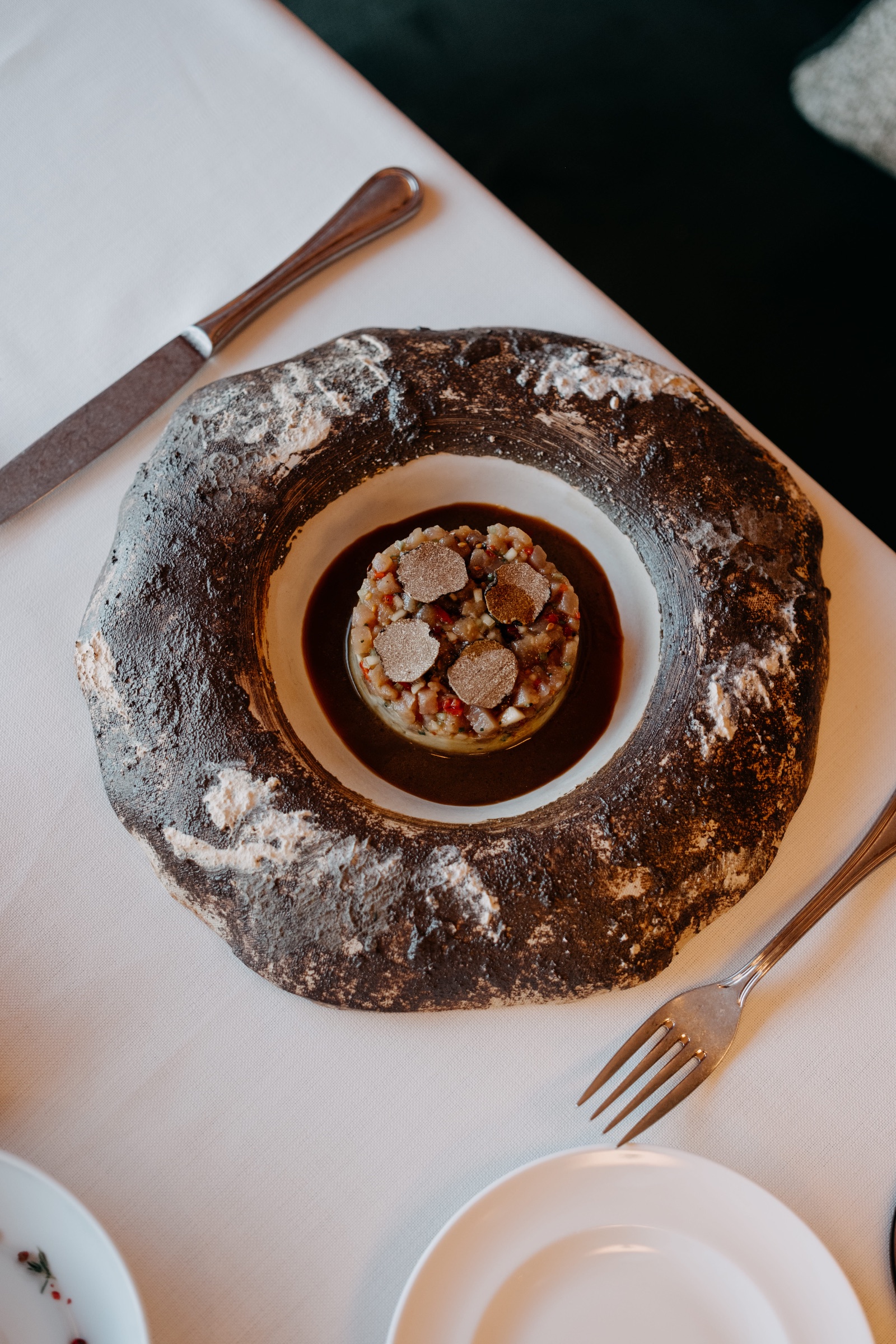
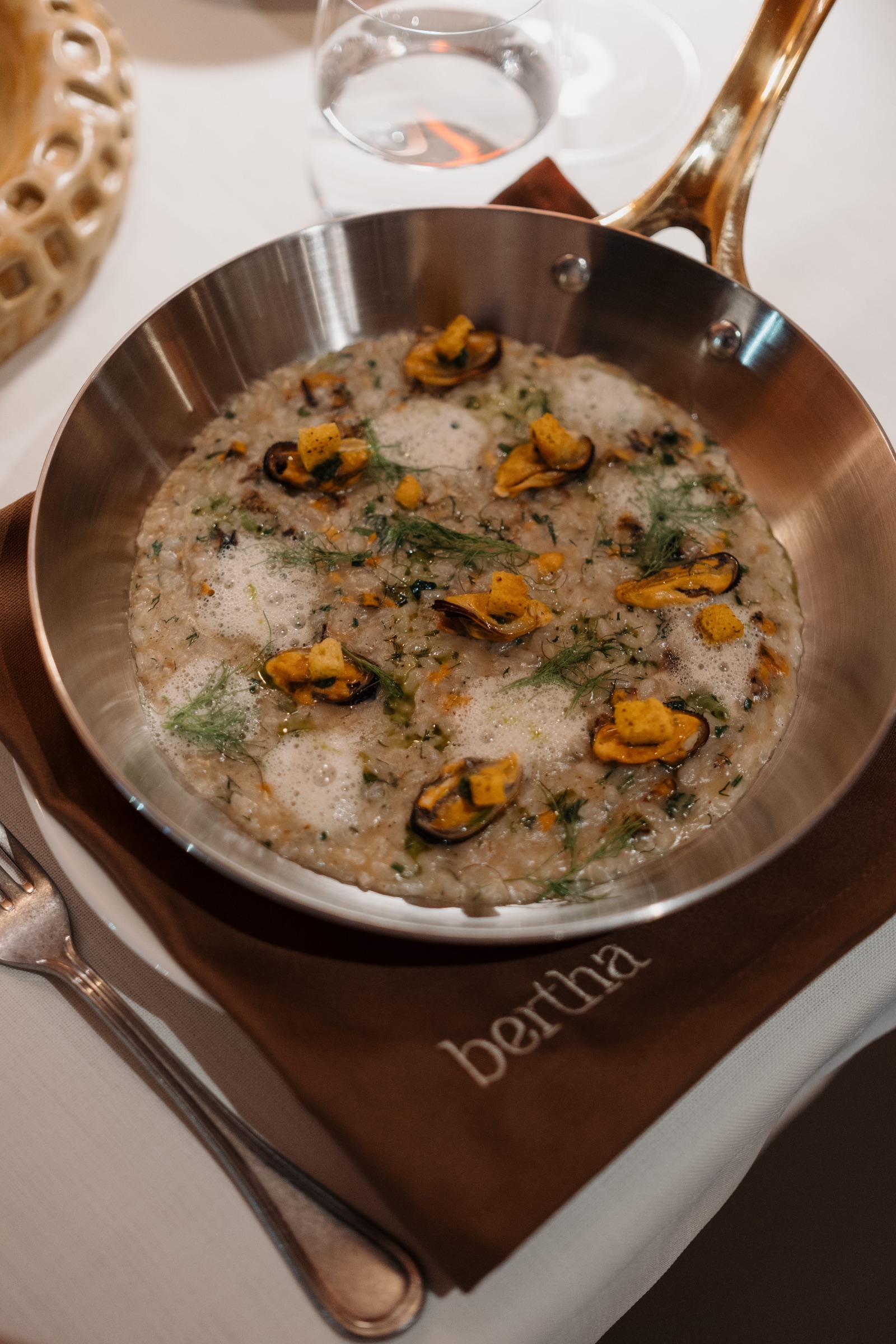
In this respect, Bertha, newly opened in Çanakkale, is one of the signs of a new search in the city’s food and drink life. Putting the region’s produce at the centre of its kitchen, giving ample space to local wines and treating the service experience as part of the same approach, the restaurant brings to life an idea of dining rarely seen in Çanakkale before. As investor Yağız Özgen stresses, the aim is not only to open a new restaurant but, over time, to contribute to the growth of the city’s gastronomic scene.
From Urla to Çanakkale: can a restaurant change the place it stands in?
The experience that consultant chef Osman Sezener has gathered over the years in Urla offers an important starting point for understanding Bertha’s approach. With his restaurant OD Urla, Sezener has not only made Urla’s local produce and producers visible but is also one of the pioneers who showed that quality restaurants can exist outside Istanbul. That experience is also a reference for the structure now being built in Çanakkale. It is worth looking at how this example is reflected in Bertha’s cooking, its approach to service and the idea behind the investment.
At the heart of the approach Sezener has developed in Urla over the years is the refusal to think of a restaurant apart from the place it stands in. Getting to know local produce and producers, building lasting relationships with those producers and making their produce part of a quality restaurant experience… The core principles of this approach, which over time set a wider circle in motion in Urla, are now being reshaped at Bertha, under Sezener’s guidance, around the produce and producers of Çanakkale.
Sezener knows the region and its producers well. In the winter months he comes to the area every 15 to 20 days, walks around the Ayvalık market and keeps track of the wild greens and other produce as they come into season. We see the result of this familiarity and product knowledge in Bertha’s kitchen too.
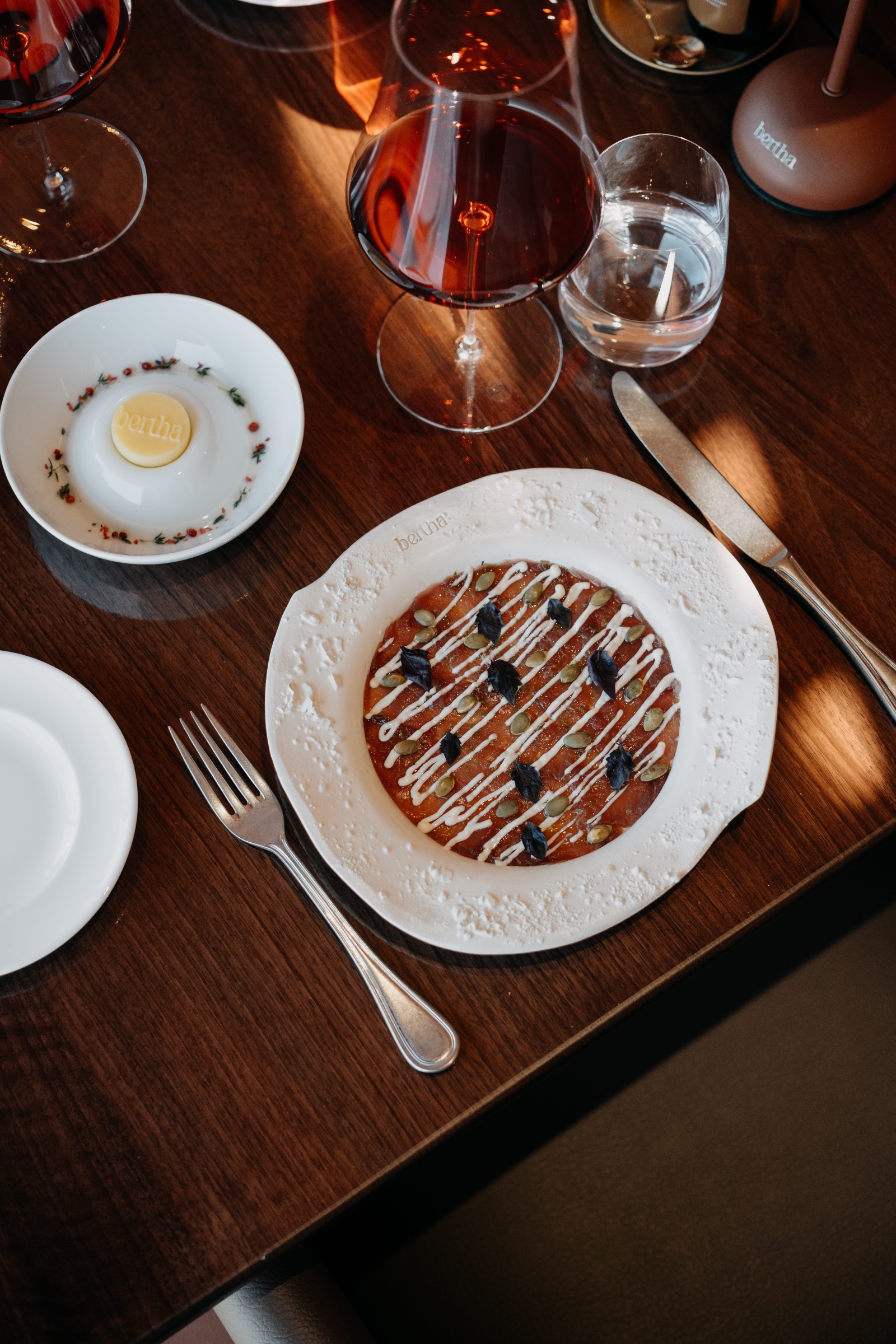
In Sezener’s restaurants, flavour comes before how the plate looks. Knowing local ingredients, understanding their character and creating tastes that linger on the palate form the basis of his cooking. When he starts working in a new region, the first thing he looks at is what that place has to offer: what grows there, which products stand out, what are the region’s own particular treasures?
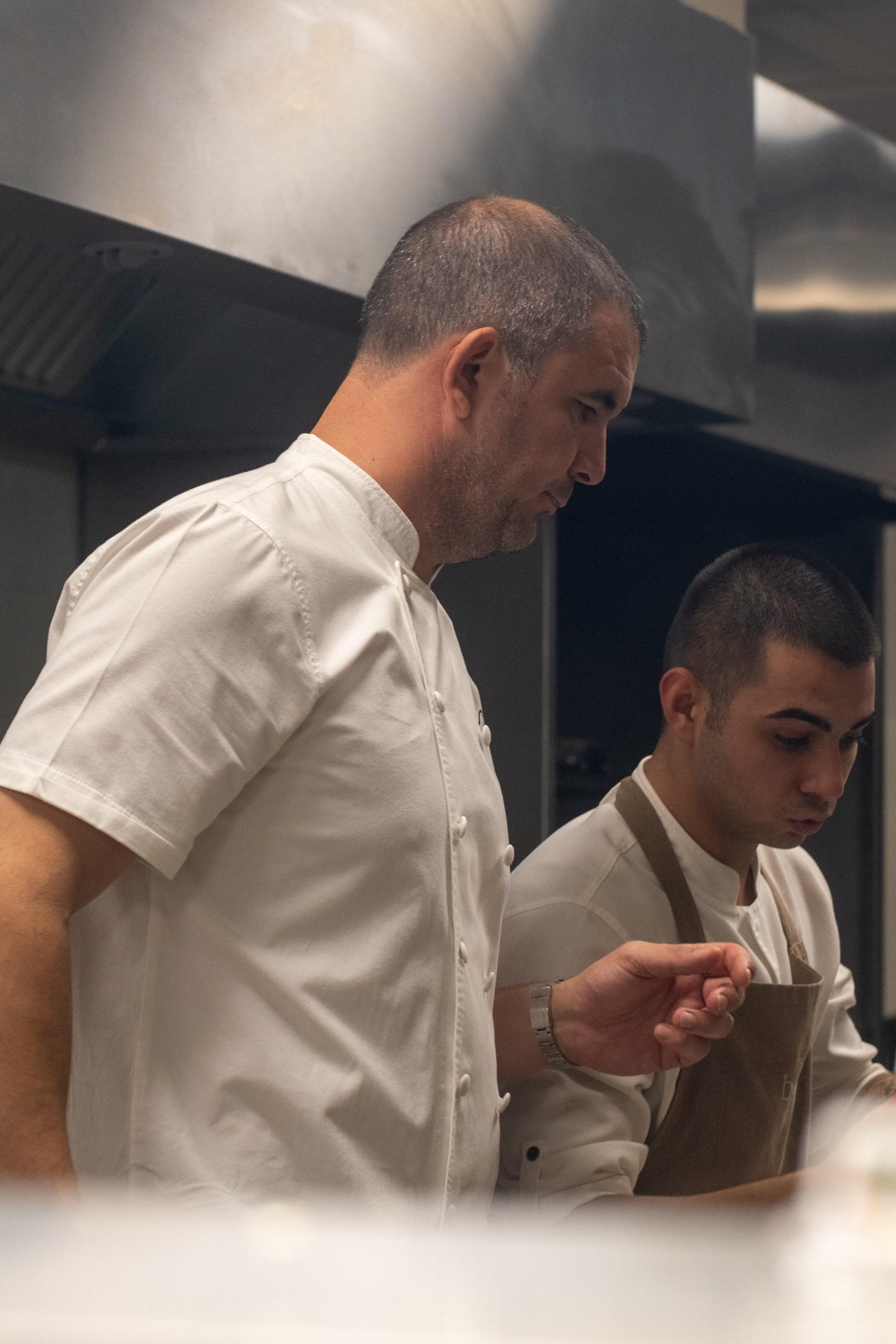
Yet a restaurant using local produce does not, on its own, mean that it has built a relationship with its surroundings. That relationship has to be passed on to the kitchen team, product knowledge has to become part of the daily routine, and the restaurant has to be able to keep up its own standards. This is why training and regular follow-up hold an important place in Sezener’s consultancy model. At Bertha too, the kitchen team is trained first, and then work is done on site. Sezener comes to Çanakkale every month to check the kitchen and how things are running.
For Sezener, though, the real reward of the Urla experience is the change the restaurant has brought to its region. He recalls that when they first set out, quality restaurants were largely concentrated in Istanbul, and that even people living in İzmir wanted to go to Istanbul for a good meal out. They wanted to change that picture and show that good restaurants could exist elsewhere too.
“We didn’t want good restaurants to be squeezed into Istanbul. In a sense, we aimed to start a reverse migration. Through our work, through what we shared and by making the region’s produce visible, we tried to make these places more attractive. As a result, some people wanted to return to their home towns, their villages, to the Aegean. People are now proud of their region’s produce and want to work there again. Interns are being trained, and some of them join the permanent staff. Over time, a self-sustaining system has formed.”
He believes a similar movement could take shape in Çanakkale. In his view, it is essential for young chefs to see good restaurants in their own regions and to have places they can take as a model. Sezener notes that while at one time using imported products such as parmesan, foie gras and balsamic vinegar was seen as a way of showing a restaurant’s quality, today a new approach is coming to the fore, one that turns to local ingredients and the riches of its own land.
“This change could also encourage young chefs to return to their regions and open restaurants. Just as we set up our own restaurants inspired by chefs in France or Italy, the young people coming up today can take us as an example. But it is very important that the right examples are there.
Besides, investing in a restaurant in a big city like Istanbul is now very expensive. When an entrepreneur from the Black Sea, the East or Central Anatolia opens a restaurant in their own region, they can gain visibility faster in a place with fewer alternatives.”
Service, hospitality and local wines
A restaurant’s relationship with its place may begin in the kitchen, but it is completed at the table. The approach of Sabiha Apaydın, who is responsible for Bertha’s service and wine consultancy, focuses on this other side of the relationship. For Apaydın, who brings to Çanakkale the expertise she gained at restaurants such as Mikla and Seraf, a good restaurant experience is as much about how guests feel as about the quality of the food coming out of the kitchen.
She draws a distinction between service and hospitality. Taking the order correctly, understanding what guests need, serving food and drinks on time, handling the bill and seeing guests off are the service team’s basic responsibilities. Beyond all that, however, guests need to feel noticed, understood and valued. She gives an example from her everyday life to explain this approach:
“I always buy my morning simit (a sesame bread ring) from the same simit seller. I even change my route for it. What I pay him is 25 lira, but the feeling it leaves me with is worth far more than that. That feeling is what makes me go back. This is exactly what I mean when I talk about customer satisfaction.”
In designing Bertha’s service training, she adopts the same approach regardless of the restaurant’s concept. According to Apaydın, though, sustaining care for guests depends first on creating a workplace where staff themselves feel good and safe. She particularly stresses that the responsibility for creating this environment lies with management:
“For me, team satisfaction comes first, then customer satisfaction. Creating the working environment is the responsibility of the boss and the manager.”
A sign reading “I smile, I solve”, which she saw in the staff break room of a restaurant where she worked when she was young, is one of the examples of this thinking that has stayed with her. In her view, good service depends not only on applying set rules but also on the team embracing the approach. That is why training should not be seen as a process completed during the opening period. It should continue through repetition, practising together, observation and feedback.
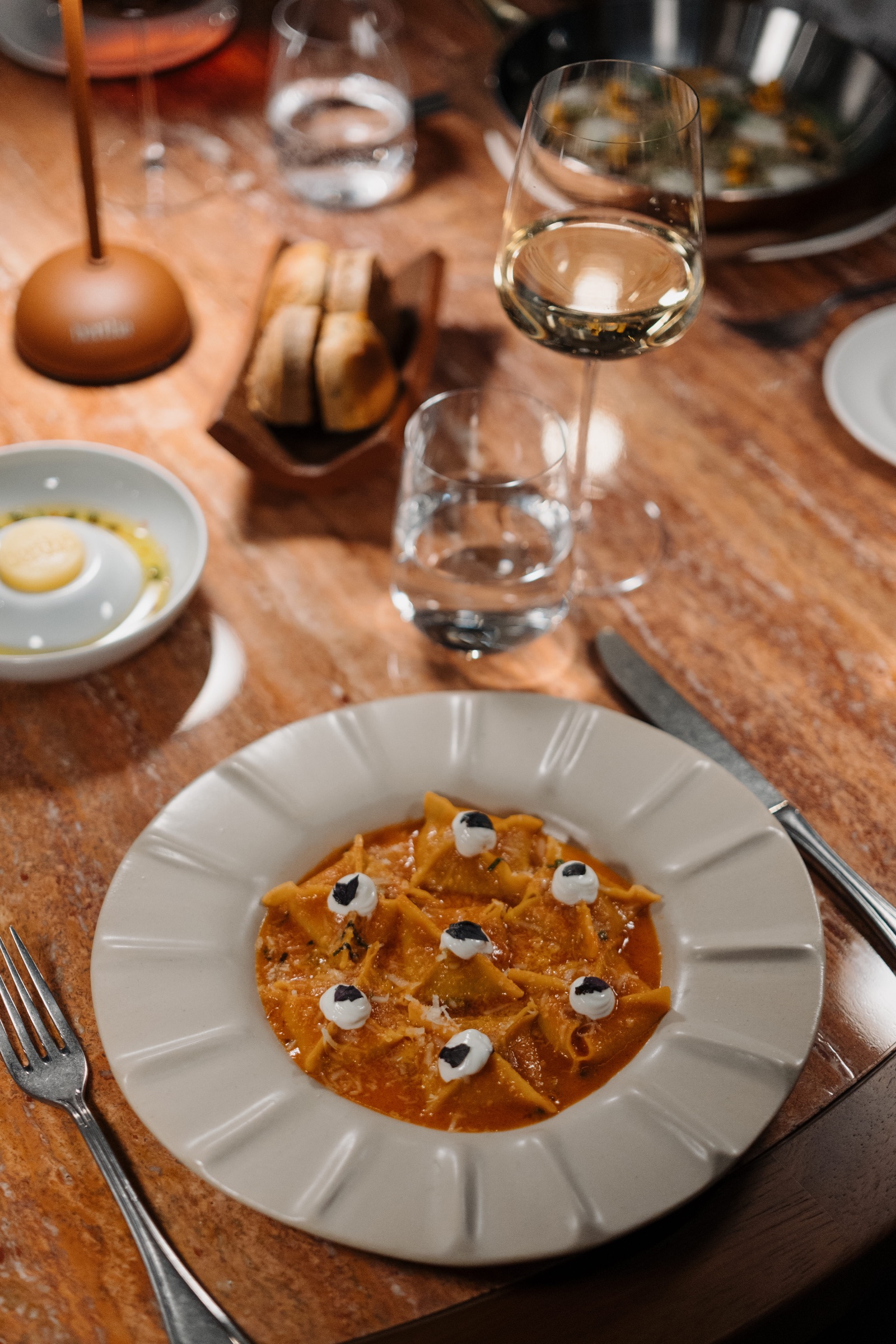
Another of Apaydın’s responsibilities at Bertha is building the restaurant’s wine list. In putting together a list that suits North Aegean cooking, they give weight to producers from nearby regions such as Bozcaada, Gelibolu and Thrace. By increasing the number of wines served by the glass, they aim to let guests try wines made by different producers from different grape varieties. The restaurant has a sommelier, and the whole service team is also trained to know the wines and answer guests’ questions.
Behind this selection lies more than the idea of serving wines that go with the food. They also want to change the entrenched perception in the region that only rakı, the aniseed spirit, can be drunk with seafood. To show that different pairings are possible with local wines, the tasting menu also offers a wine pairing option. For Apaydın, if a restaurant’s kitchen gives space to produce from its own soil, the wine list should reflect the same approach.
“But putting the wines on the list isn’t enough to increase the visibility of local producers. Pricing also has to be thought through so that more people can try them. Wines by the glass are important in this respect; they make it easier to get to know different grapes and producers. For me, what matters most is making good products accessible.”
A new gastronomic scene in Çanakkale
Bertha’s investor Yağız Özgen lives in Çanakkale and believes in the city’s potential. In bringing the restaurant to life, he started less from extensive feasibility studies or pre-calculated demand than from the idea of creating a restaurant experience he felt the city was missing.
He thinks the productive strength of Çanakkale and the North Aegean is not sufficiently reflected in quality dining, and he designed Bertha to fill that gap. Although his main target audience is the people who live in the city, he also wants the restaurant to appeal to those who visit Çanakkale for food and tourism. A stopover for people travelling from Istanbul to İzmir, the city also has a new population living around it, people who, especially since the pandemic, have settled in the villages of districts such as Ayvacık and Bayramiç. The Urla experience was decisive in Özgen’s decision to bring in Osman Sezener as a consultant.
“We can see what it has meant to set up a restaurant in Urla and, over time, to help a gastronomic scene form there. In that respect it matches what we want to do in Çanakkale. Another important point is that he is not only a chef but also a restaurateur. It is possible to make very good plates, but making a restaurant sustainable is another matter. Quality places in Türkiye closing a few years after they open is one of the issues I focus on in particular.”
He had been following Sabiha Apaydın for a long time because of the importance she gives to Türkiye’s wines and local grape varieties. For cocktails, they work with Twins Cocktail. Like the food and wine menus, the cocktail list is also planned to change with the seasons. In this way, the different parts of Bertha come together around the same local, seasonal approach.
The framework Özgen draws for Çanakkale, however, is wider than the success of a single restaurant. He believes the city’s geographical and cultural diversity can form a strong base for those who travel for food. The history stretching along both shores of the Dardanelles, the mountains, the sea, the villages and the farmland come together with a range of products, from cheese and olive oil to wine. But the mere existence of these assets, one by one, does not by itself create a gastronomic destination.
For that, restaurants, producers, wineries and the hospitality sector need to act together. A structure must be built that brings visitors to the region not just to go to one restaurant, but to spend a few days discovering different producers and businesses.
“I want other restaurants to open in Çanakkale too. Rather than Bertha standing out on its own in the city, I think it would be more valuable for everyone if similar ventures multiplied. It is hard for people to travel to another city just to go to one restaurant. But once there is a structure with different restaurants and producers, where visitors can spend a few days, people will want to discover the region as a whole.”
For him, the growth of new ventures in Çanakkale matters as much as Bertha still standing five years from now. His goal is to help the city become a gastronomic route that appeals not only to its own residents but also to visitors from across Türkiye and abroad.
The Urla example shows that such a change can begin with a single restaurant but cannot be completed by one. A kitchen that knows local produce, a service team that can tell the story of that produce, a business that supports producers and new ventures that feed one another can, over time, form a wider structure. Çanakkale, too, has a strong base of production and culture for such a transformation. Bertha’s role at present lies less in representing all of this potential than in offering a new beginning that can set it in motion at the scale of a restaurant.