A community-built festival in the footsteps of Lycia: Kaş Tiyatro Günleri
Held for the fifth time from 15 to 18 October under the theme “Lycian Cultural Heritage”, Kaş Tiyatro Günleri (Kaş Theatre Days) this year reaches beyond Kaş to Myra and Patara. We spoke with Ahmet Murat Akoy, one of the festival’s founders and president of the Kaş Environment and Culture Association, and volunteer supporter Aslınur Sarıca about the space opened up by theatre, the ecological struggle and making things together.
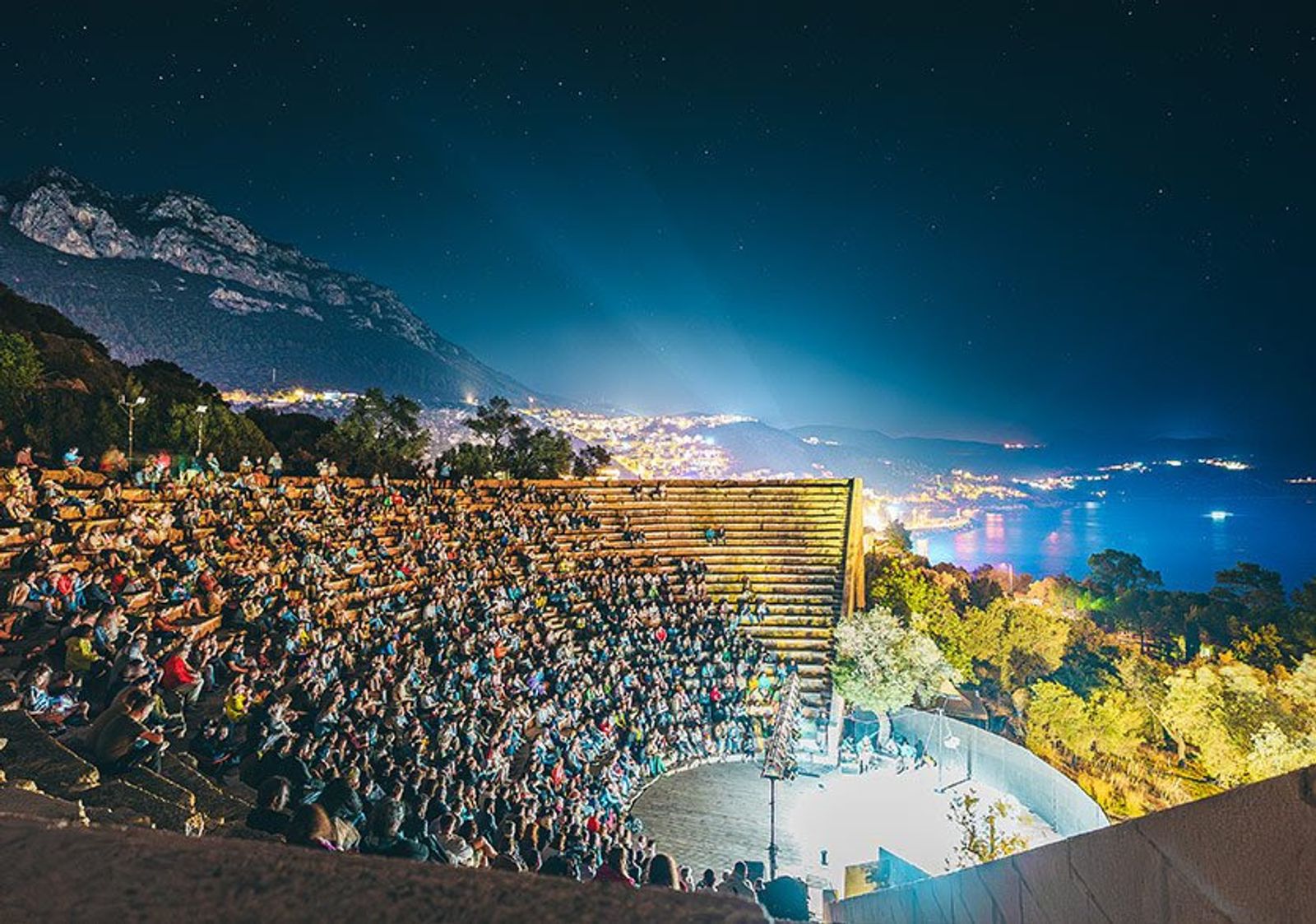
On the shores of the Mediterranean, in the shade of ancient stones, theatre is meeting life again. Held for the fifth time under the “Lycian Cultural Heritage” theme from 15 to 18 October, Kaş Tiyatro Günleri (Kaş Theatre Days) this year reaches beyond Kaş to Myra and Patara. Bringing together archaeology, mythology and theatre, the festival will gather audiences of all ages across the Lycian landscape for four days of 12 plays, archaeological tours and workshops.
- In these dark days, perhaps the real source of strength is not escaping all those oppressive realities, but being together and making a festival possible together. Sometimes a festival reminds us once again how important a place theatre holds in everyday life, in the ecological struggle and in the insistence on being together.
October in Kaş is not just the month that follows summer; it is a time of gathering, when theatre blends into the streets, the ancient stones and the rhythm of the Mediterranean. For five years Kaş Tiyatro Günleri has taken the stage beyond its usual limits, opening a space where audiences come together not only to watch, but also to connect with the place, with the artists and with one another. It invites us to rethink theatre from within everyday life.
We spoke with Ahmet Murat Akoy, one of the original founders of Kaş Tiyatro Günleri and president of the Kaş Environment and Culture Association, and with Aslınur Sarıca, an actor and teacher from Antalya and a volunteer supporter of the festival, about its five-year journey, the change it has brought to the region and the space it has opened for independent theatre.
Ahmet, I’d like to start with you. This year you are bringing us Kaş Tiyatro Günleri for the fifth time. I think the most important thing about the festival is that it grew out of the ecological struggle. How did a theatre festival come to meet the struggle for nature and living spaces?
Ahmet Murat Akoy: When we founded the Kaş Environment and Culture Association, our aim was to protect Kaş’s marine, terrestrial and cultural assets, and at the same time to give the people who live here access to high-quality arts events. For us these aims are very close to each other. Standing up for the place we live in also means thinking about what kind of life we want to build here. Art has an important place in that life.
Theatre brings people together!
What role can theatre play in this struggle? Do you think the ecological struggle and making theatre have things in common?
A.M.A: Tiyatro Günleri brings people together, lets us hear one another’s stories and see through someone else’s eyes. We need that in the ecological struggle too. Last year, through our theme, we were able to talk about and debate many issues, from marble quarries to access to the coast, from the pollution of our sea to the pressures on our forests and how the struggle should be carried on, by raising them through performances, documentaries and gatherings. The event created a space for problems to be discussed and solved. I believe theatre’s power to bring people together, to make us think and feel together, provides important ground for tackling these problems.
Do you think Kaş Tiyatro Günleri has changed the way Kaş sees theatre?
A.M.A: I can say that we have increased the chances of encountering theatre in Kaş. Here, especially outside the tourist season, cultural events are very limited. To see a play you often have to go to Antalya or Fethiye. That has a cost, both in time and in money. When you bring plays to where people live, that encounter becomes easier. That is why it matters that we take children’s plays to the villages and performances to the streets and public spaces. We are trying to make room for theatre within people’s everyday lives. It would be a bold claim to say that Kaş’s view of theatre has changed completely in five years, but I think we have laid the ground for a regular gathering.
It matters that, from the start, the festival has been free, made possible by the support of the people of Kaş, local businesses and volunteers. You could say the volunteers make the festival possible. Could you tell us a little about this volunteer work and how it makes the festival happen?
A.M.A: The first year we started without a big sponsor or municipal support, simply by trusting one another. Those with hotels opened up their rooms, those with restaurants provided meals, a transfer company handled transport, a carpenter built the stage. Many people, from video makers to curators, shared their knowledge and their labour and brought them together. In that sense you could call KTG, as the festival is known, a cultural imece, the old tradition of communal work.
In the first year we had the support of 41 local businesses; today that number is close to 90. Our volunteers have grown from around 10 people to more than 30, among them students from the Theatre Department of Akdeniz University. Over time, support from the municipality, public institutions and cultural funds was added. But local solidarity is still the foundation of the festival. Keeping it free is a choice we made so that there is no financial barrier to accessing art. What allows us to keep that choice is that we share the cost and the work together. We could not do this event without the businesses of Kaş and our volunteers.
This kind of solidarity, working together to hold a festival in a region, tends to appear outside Istanbul. The Bergama Theatre Festival is also a tradition kept alive, like yours, with the support of volunteers and the people of Bergama. Aslınur, let me ask you: what does holding a festival outside centres like Istanbul, where culture and the arts are concentrated, make possible, and what does it make harder?
Aslınur Sarıca: As someone who lived and worked in Istanbul for thirty years, I know very well both the comfortable infrastructure the metropolis offers and the enormous sense of confinement it creates. Holding a large event in a place far from the centre, like Kaş, above all makes it possible to take art off those sterile, tightly bounded stages and bring it into a far more organic and physical dialogue with the place. We open up a space of expression where the ancient fabric, the wind, the stone or the heat of the moment take part in the performance directly, as actors, a space that is specific to the site and constantly reshaped by the ecology of the moment. Here the distance between audience and artist closes, and watching becomes a somatic and participatory experience.
As for the difficulties: of course logistics, technical equipment and financial sustainability are not at your fingertips the way they are in Istanbul. You have to weave your own infrastructure, networks and practices of solidarity almost from scratch, and take the initiative. This structural fragility in the process, the materials and the team may look like a disadvantage at first, but in fact it binds us much more tightly to one another and makes us skilled at finding creative solutions.
Drawing strength from solidarity
This time I’m curious to hear from both of you. After five years, what has working in Kaş taught you?
A.S: After five years, working in Kaş has taught us this: it is possible to create by drawing strength from solidarity. Moving beyond the centre is an act that transforms the pace of our work and the way we relate to nature and to one another. When you attune yourself to the rhythm of nature and the place, what looks impossible gives way to a very strong, collective and creative resilience.
A.M.A: I would say the most important thing we have learnt in five years is to keep trying to do our best despite all the difficulties, and to hold on to the resolve to carry on stubbornly.
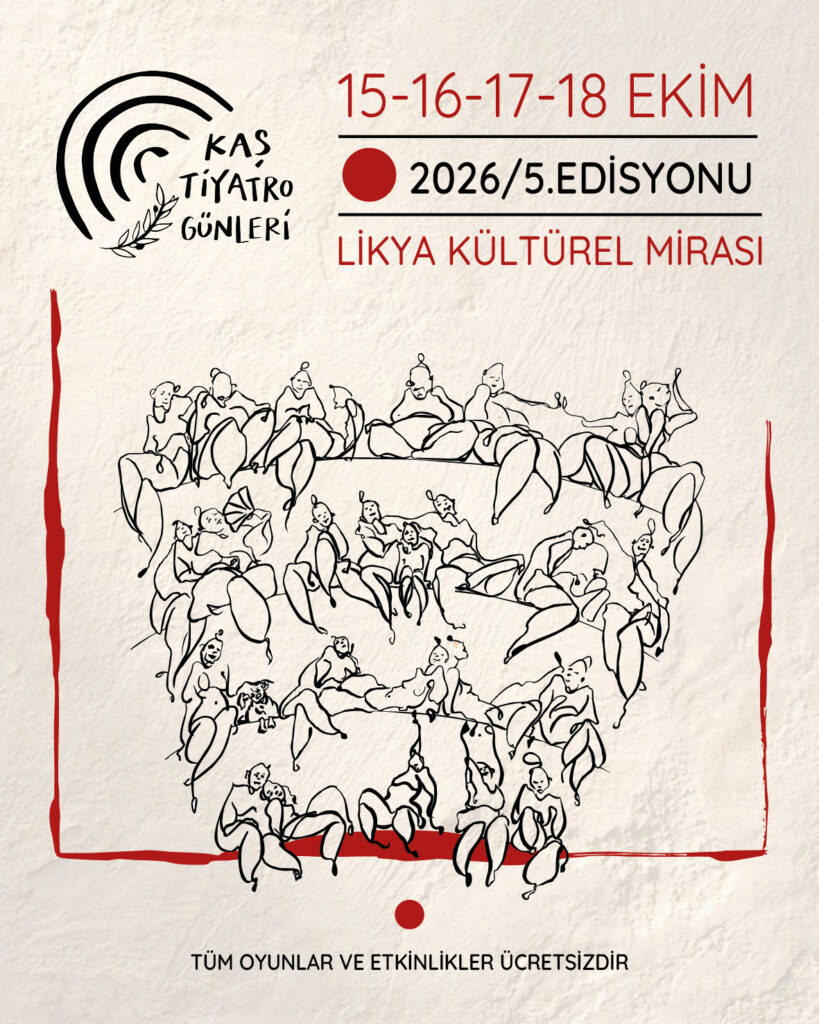
This year, with the theme “Lycian Cultural Heritage”, you are spreading beyond Kaş to Myra and Patara. What would you like to say about bringing archaeological sites together with theatre, mythology and storytelling?
A.M.A: With its ancient cities, among them Patara and Xanthos, which is on the UNESCO World Heritage List, Kaş is an open-air museum bearing the traces of Lycian cultural heritage. The Lycian Way, which links these ancient cities and is described as one of the best walking routes in the world, draws thousands of people every year. We stage our main plays in the two-thousand-year-old Antiphellos Ancient Theatre. Many of the performances also take place in public spaces that carry traces of Lycian cultural heritage.
One way of protecting these sites is by making them better known and more visible. Above all, this heritage needs to be known and cared for by the people of the area, who live on top of it. That is why this year we will be working with the theme “Lycian Cultural Heritage”. With Prof. Dr. Nevzat Çevik, head of the Myra and Andriake excavations, we will explore the ancient city of Myra and the Museum of Lycian Civilisations, and with Patara excavation head Assistant Professor Dr. Şevket Aktaş, the ancient city of Patara. We will also talk about Lycia with Fahri Işık, the first excavation head, who began the Patara excavations and devoted 20 years to them.
After five years, what transformation have you seen in the audience, the artists and the local arts scene?
A.M.A: We think that an event brought to life through imece like this has given many people courage. In the first year we met audiences who were coming to the theatre for the first time. Today audiences from cities such as Istanbul, Ankara and İzmir also come to Kaş in October. We hope that KTG builds a loyal audience, gives artists unique experiences and helps theatre companies take shape in Kaş.
A.S: The festival has gone from being a temporary event to an ecosystem that breathes with Kaş’s own dynamics. While the audience has taken on a more active role, it has also created a safe space for artists where they can take risks and connect with nature and with one another. It has strengthened belief in the sustainability of work made outside the centre.
Is there an encounter or a story that stays with you, that made you feel the festival has truly touched the region?
A.M.A: When someone tells you the events did them good, it reminds you what all the effort means to people. While the country is going through such deep darkness, being part of a beautiful event together does all of us good.
A.S: I would say the most precious encounter has been strengthening the cultural bridge between Istanbul and Antalya. For young artists living in Antalya, and for art students studying there, being able to encounter work from Istanbul in their own city, to build a dialogue with artists and to reach alternative, different and rich kinds of work is a huge opportunity. This brief encounter shows us very clearly that the festival is not a closed circuit made only by visiting artists among themselves.
If Kaş Tiyatro Günleri were a person, what would it be like in its fifth year? What has it learnt in five years, and what does it keep objecting to?
A.M.A: It would be someone a little tired, very excited, with lots of friends, still eager and never letting go of hope. Sometimes reaching the limits of its means but managing to gather again every year, KTG has learnt to ask for help, to share what it has and to open a space where everyone can take part with their own effort.
A.S: It would be someone who walks barefoot on the earth and moves with the direction of the wind, but whose roots reach into an ancient memory. It has learnt to stop trying to control everything and to surrender to the ecology of the place and the moment. It objects to art being locked inside huge buildings, sterile stages and the consumer culture of the metropolis; it stands up for the creative fragility of independent theatre.
What’s on?
Kaş Tiyatro Günleri is getting ready to welcome audiences for the fifth time, from 15 to 18 October, with the theme “Lycian Cultural Heritage”. Spread over three different sites in the ancient Lycian landscape, the festival will bring together archaeology, mythology and theatre and, with local and national artists, give audiences four days of celebration. Once again Kaş Tiyatro Günleri is organised by the Kaş Environment and Culture Association, with financial and moral support from the businesses of Kaş and its volunteers… All performances at Kaş Tiyatro Günleri will be free to attend.
- Independent productions such as Sevgili Arsız Ölüm/Dirmit, Monologlar Müzesi Pavyon, Yıldız, Apsolit and Gong come to Kaş this time.
- Yeşilköy Halk Tiyatrosu, which has been making theatre in Kaş for around 40 years, will stage Bizim Köyün Sosyetesi, while under the Genç Sahne (Young Stage) strand, Mono Creative will present Uyku, Ölüm, Dondurma, Ülke.
- The ancient city of Myra and the Museum of Lycian Civilisations will be toured with Prof. Dr. Nevzat Çevik, who directed the city’s excavations for many years. The tour of the ancient city of Patara will be led by excavation head Dr. Şevket Aktaş. So, as well as watching plays, festivalgoers will have the chance to learn from experts about the ancient cities, the excavations and the traces left by Lycian civilisation.
- In the Children and Youth Stage selection, ACT Project’s Of Ah Oh and Boş Sahne’s Kum Feneri will be performed for young people, while ASSITEJ Genç Sahne’s Dünyadaki En Güzel Şey, Güzel Şehir Kumpanyası’s Karınca Kararınca and Tiyatro Keşif’s Martıya Uçmayı Öğreten Kedi will be performed for children.
- With the Antiphellos Ancient Theatre as its main stage, the festival will present plays in various historic and public spaces in central Kaş and beyond, reaching Myra and Patara.
- It is worth repeating that since day one, Kaş Tiyatro Günleri has been held free of charge, thanks to the support of local businesses and the work of volunteers, so that nothing stands in the way of access to high-quality arts events.
A reminder for those not yet ready to say goodbye to summer: October in Kaş will be about theatre, solidarity and coming together. Do find your way there.