A London food route: from Borough Market to Bermondsey Street
Getting to know London through its food doesn’t always mean chasing the city’s newest restaurants. Sometimes a route of a few streets is enough to see how the city’s food culture is changing. The area from Borough Market to Bermondsey Street is one of the best examples. Emre Onar walks us step by step through this short distance by way of his favourite stops and his own experiences, following a route that begins with coffee and moves from the market stalls to the restaurants, and from there to the calm of Bermondsey Street.
If you are going to Borough Market for the first time, the first thing you will probably do is stop and look around. There are long queues in front of row after row of food stalls; something is sizzling in a pan, cheeses are being tasted, and meanwhile someone walks past holding a steaming plate… Although it is one of London’s most touristy spots, it is still a hard place to resist for anyone who loves food.
- What is more, Borough Market should not be thought of as just the market itself. In recent years, with one ambitious restaurant after another opening around it, it has become a food district in its own right.
Walk for a few minutes, though, and on Bermondsey Street the rhythm of the neighbourhood changes completely. The crowds thin out, and with its neighbourhood restaurants, cafés and art galleries you arrive in one of the corners of London that still feels local.
This time we are on a route that starts at the stalls of Borough Market, stops at restaurants serving every kind of world cuisine, and from there stretches to Bermondsey Street.
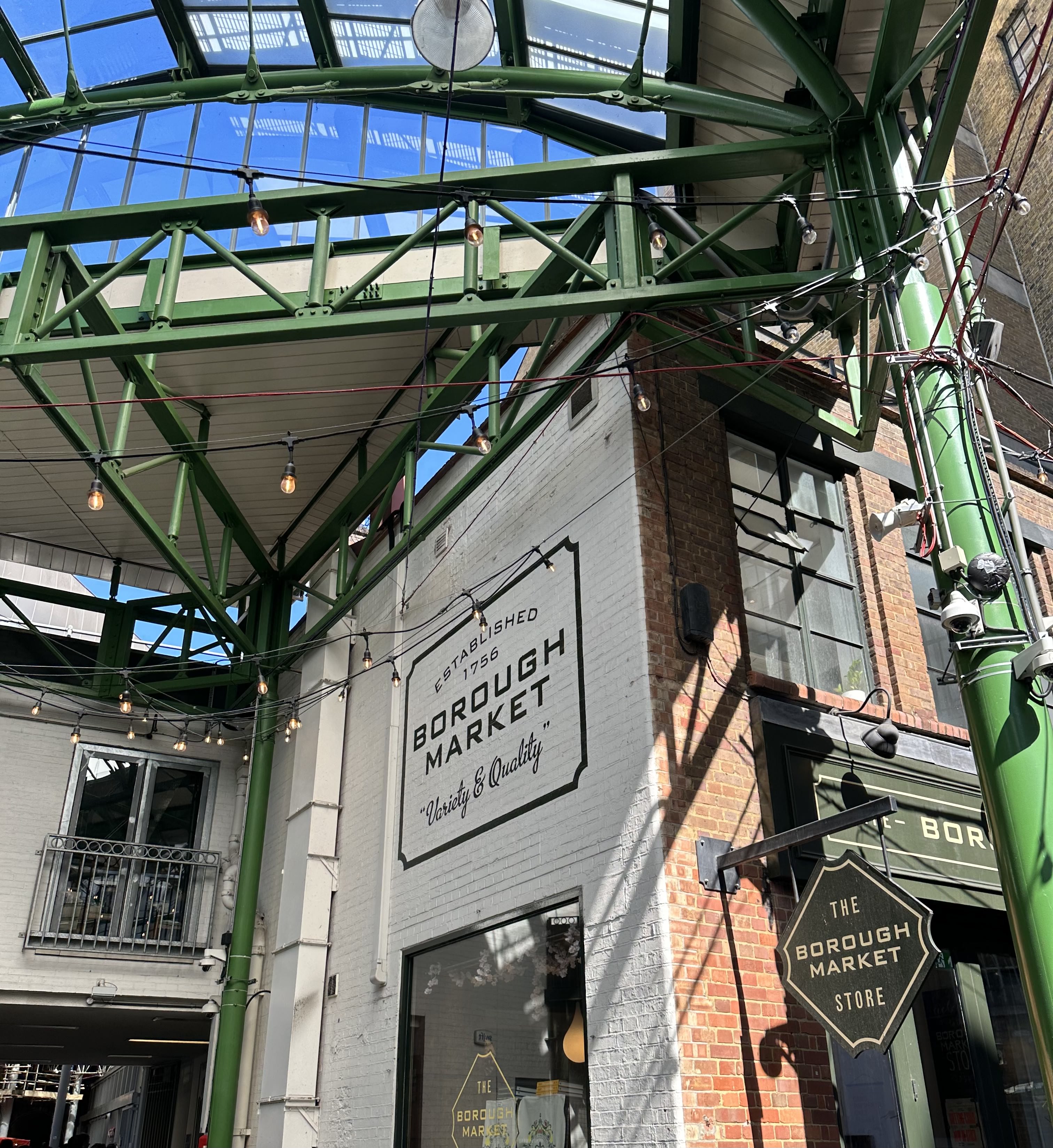
Inside a thousand-year-old market
Borough Market’s history goes back about a thousand years. In the 11th century there was a market at the southern end of London Bridge where traders sold fish, meat, vegetables and fruit, and being one of the gateways to the City of London on the other side of the River Thames made it a natural place for trade. The market was established on its present site in 1756. In the 19th century, when the railway reached the area, produce from different parts of England began to be brought here by train, and Borough became one of London’s most important wholesale markets.
Today the noise of the trains passing over your head is simply part of the Borough Market experience. Among the passages that open onto one another beneath the railway arches, the stalls and restaurants create a slightly chaotic but distinctive scene. One of the important turning points in its present form was the Food Lovers’ Fair held in 1998. After the interest shown in the event, which brought small producers, farmers, bakers and cheesemakers together with Londoners, Borough gradually turned into the food hub we know today.
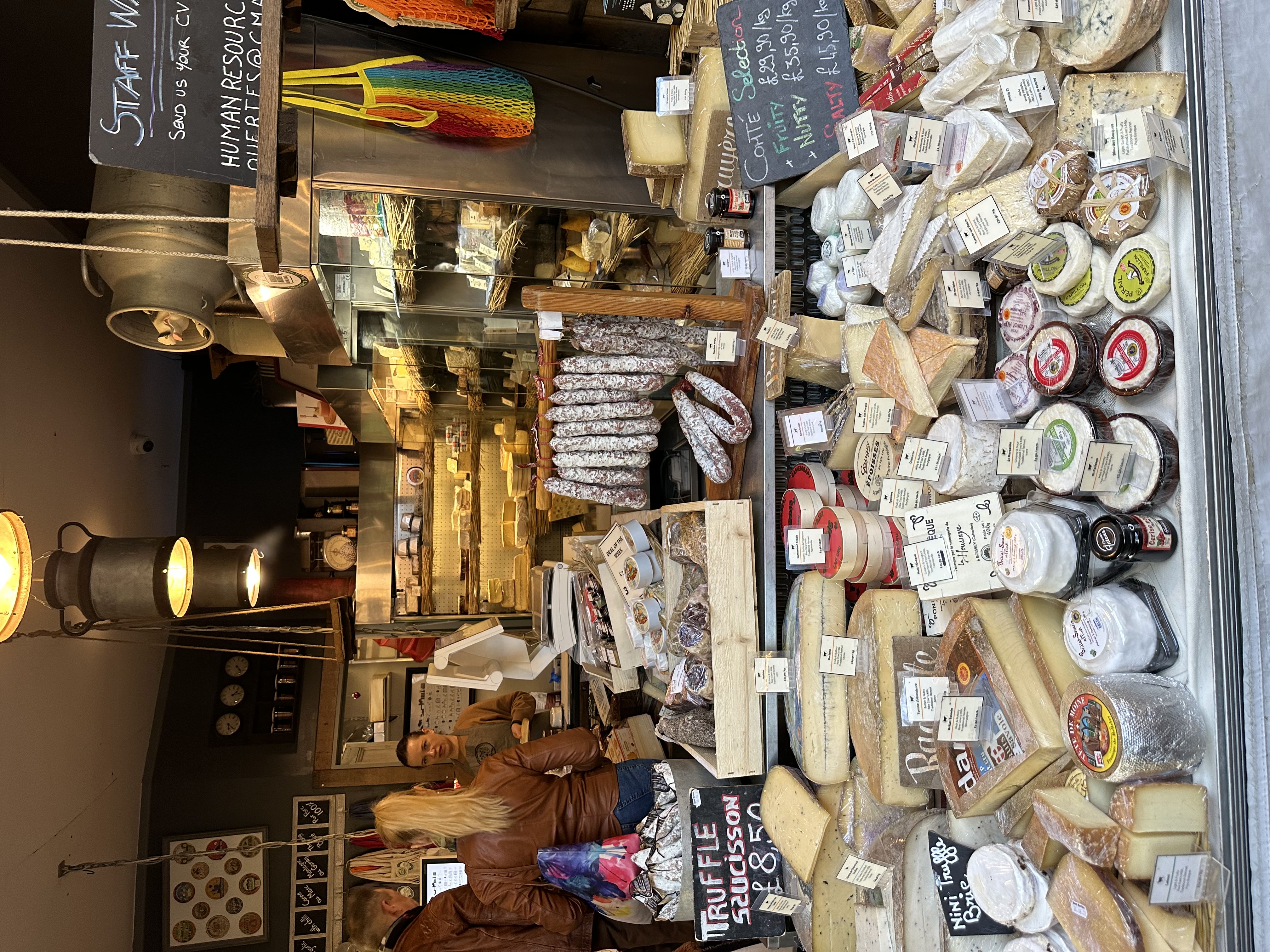
Today the market has more than 100 stalls, shops, bars, cafés and restaurants. From 2015 onwards in particular, chef-led restaurants began opening one after another. So trying to get through them all in one day is impossible, but we have put together the places that should definitely be on your list.
Coffee first, then the market
Let’s start with coffee. When I come to Borough in the morning, one of my favourite first stops is The Gentlemen Baristas. I love sitting in this coffee shop, which opened in 2014, and watching people come and go. Because the area was once a centre of hat-making, they name their speciality coffees after classic English hats such as the Bowler and the Top Hat.
One of the most classic spots here is Monmouth Coffee Company. Their shop on Monmouth Street in Covent Garden, opened in 1978, is the original, but the Borough shop has been a fixture of the market for years. You don’t even need to know the address: the queue outside will most likely lead you to the right place. Sitting at its wide frontage opening onto the street and watching Borough’s foot traffic is a pleasure of its own.
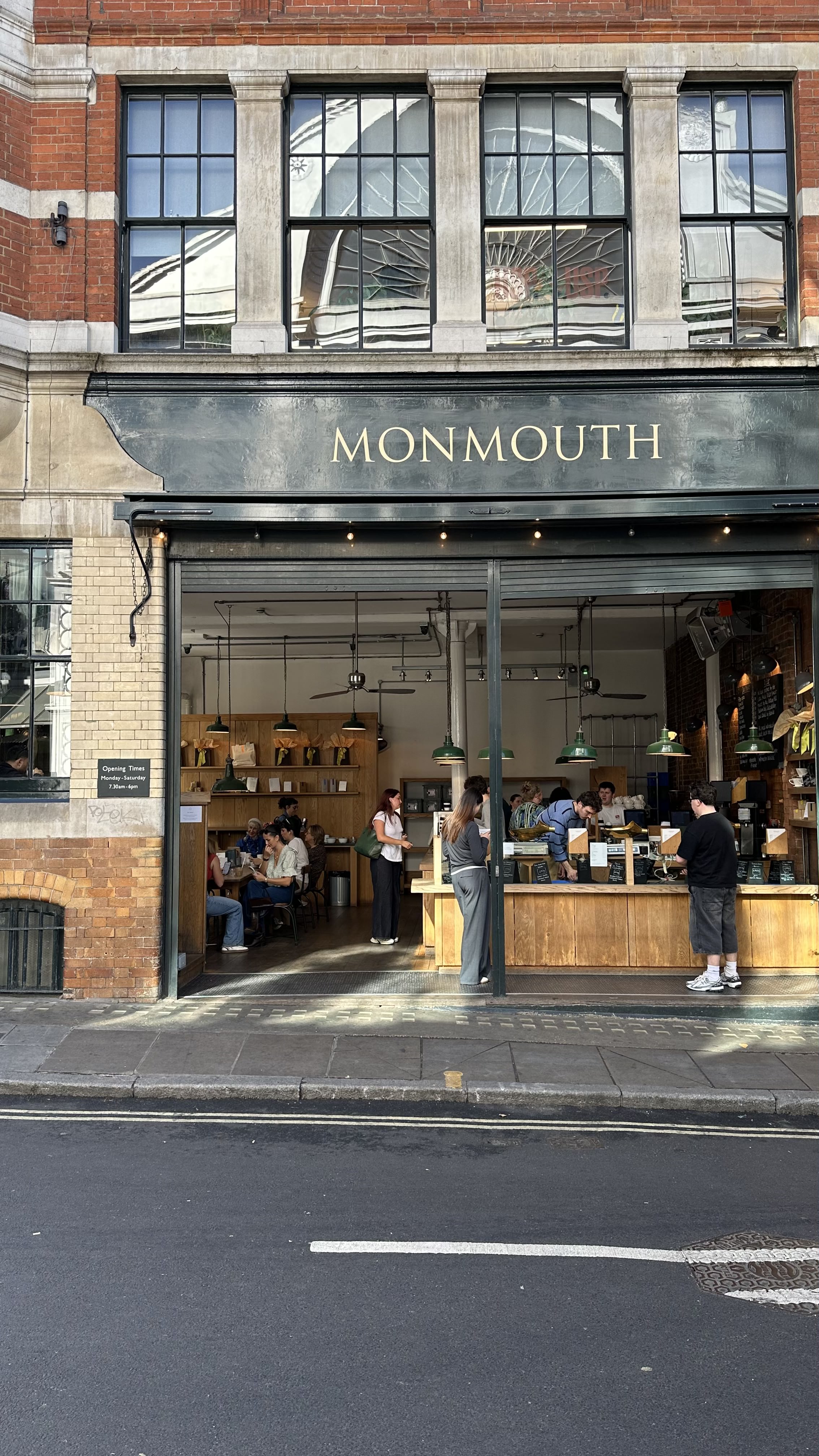
Monmouth Coffee Company.
The Colombian Coffee Company, which you come across once you mingle among the stalls inside the market, has a rather different story. It is a social enterprise bringing in coffee from Colombia, and it puts part of its income into social projects in Colombia. Another Borough classic is Flat Cap Coffee. The story of Fabio and Rob, which began with a coffee cart in 2008, still continues here.
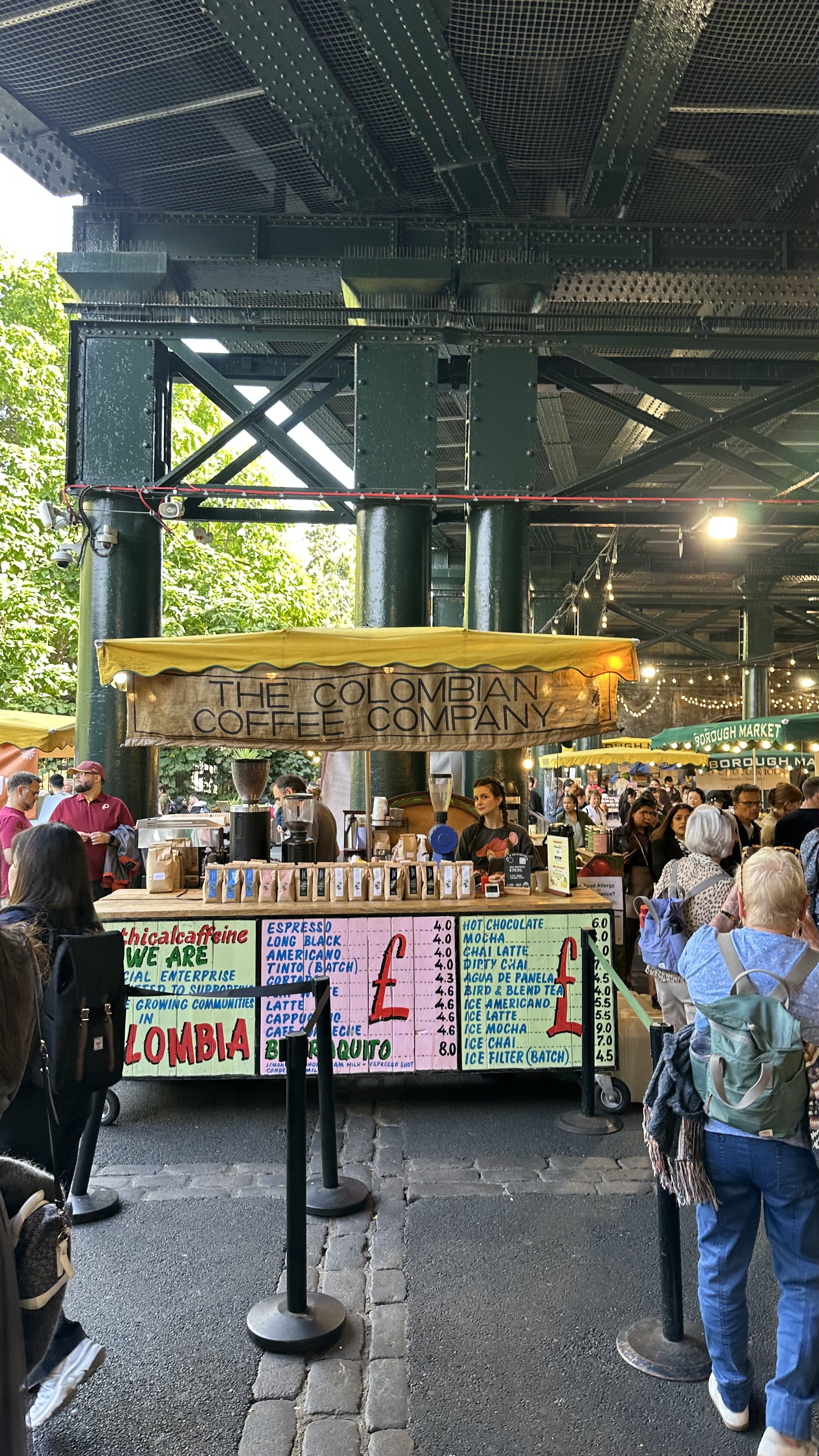
The Colombian Coffee Company.
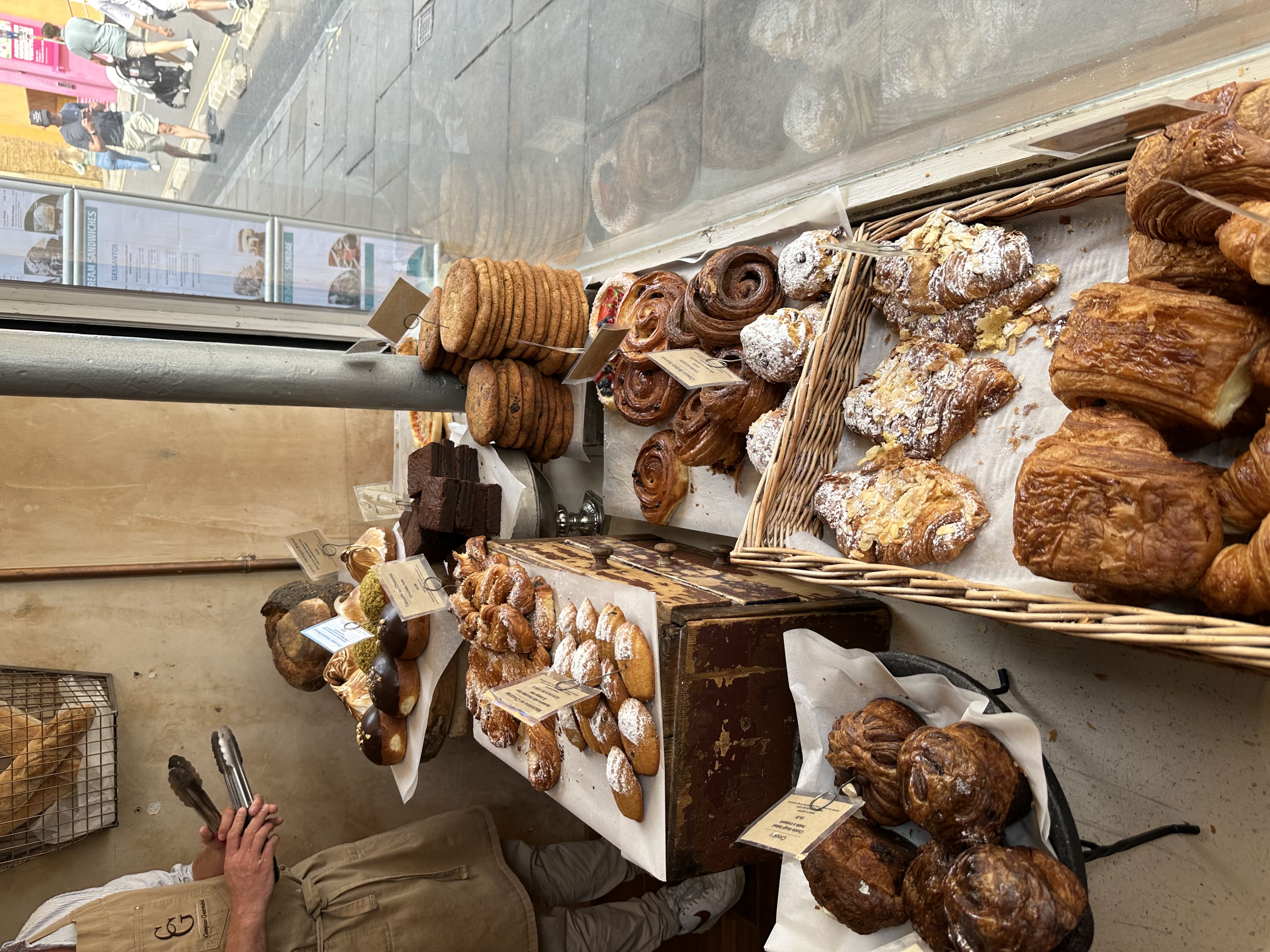
Of course, you can’t have coffee without something on the side. Bread Ahead, which has branches across London, first opened here in 2013. This is actually one of the things I love about Borough Market: you come across brands like Bread Ahead that started here and then spread to different corners of London.
The bakery went viral on Instagram thanks to its sugar-coated doughnuts filled with vanilla custard, and these became the brand’s signature. At weekends especially there are always long queues outside. Alongside the doughnuts they sell filled croissants and sourdough bread, and at Bread Ahead Bakery School, in the same building, they run workshops and classes on everything from bread to all kinds of pastry.
Speaking of sweet things, it would be wrong not to mention Humble Crumble. The place has become even more popular since Kate Middleton, the Princess of Wales, visited this year and made her own crumble with the team. Kim Innes began selling crumble, one of the most classic English desserts, in a more “Instagrammable” format at her market stall in 2018; it now has six branches in London.
Among the stalls of Borough Market
At Borough, the real issue is deciding what to eat. The best thing is to come in a group and work your way through the stalls sharing a few things. The first stop could be the Borough Market classic Kappacasein. Its “cheese toasties”, made with cheeses such as Montgomery cheddar, Ogleshield and Comté, may look like a simple toasted sandwich, but once you take a bite you will understand why queues have formed in front of it at Borough Market for years.
If you like oysters, you shouldn’t miss Wright Brothers. Today it has several branches in London, but its first restaurant opened at Borough Market in 2005, and in my view this is still its most special one. Oysters arrive from different coasts of England and Ireland, changing with the season, and sitting at the tables facing the street with a drink is a real pleasure.
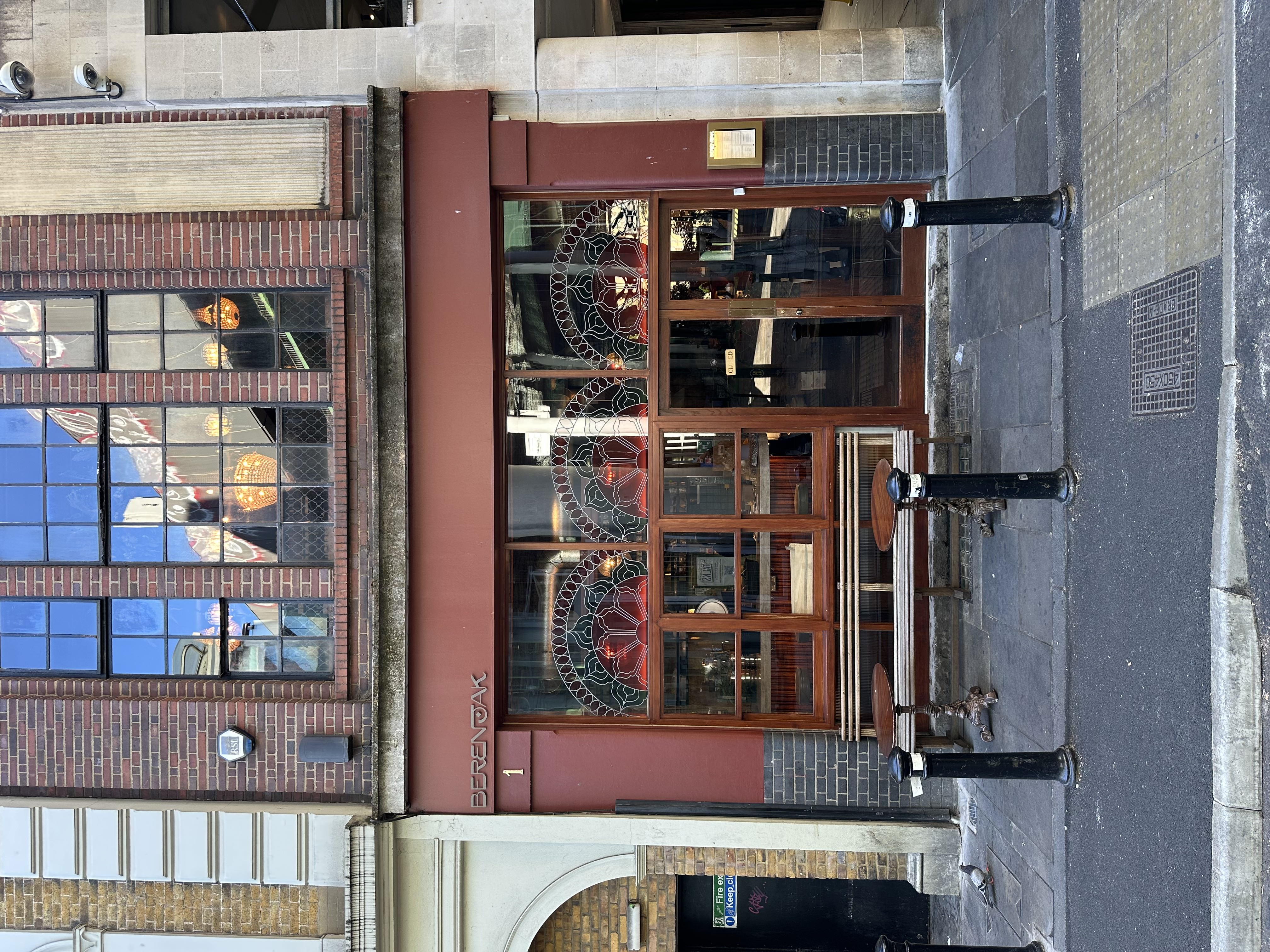
Berenjak.
Borough Market’s greatest feature, though, is that discovering flavours from completely different corners of the world takes just a few steps. At Mei Mei, opened by Elizabeth Haigh, chef at the London classic Pidgin, which closed in 2024, you can try various Singaporean dishes such as nasi lemak, rendang and Hainanese chicken rice. Horn OK Please is a place where you can taste vegetarian Indian street food. The bhelpuri, made with rice, vegetables, chutney and spices, is very famous here. Khanom Krok stands out for the small Thai coconut pancakes it takes its name from, but you can also find other Thai street food there.
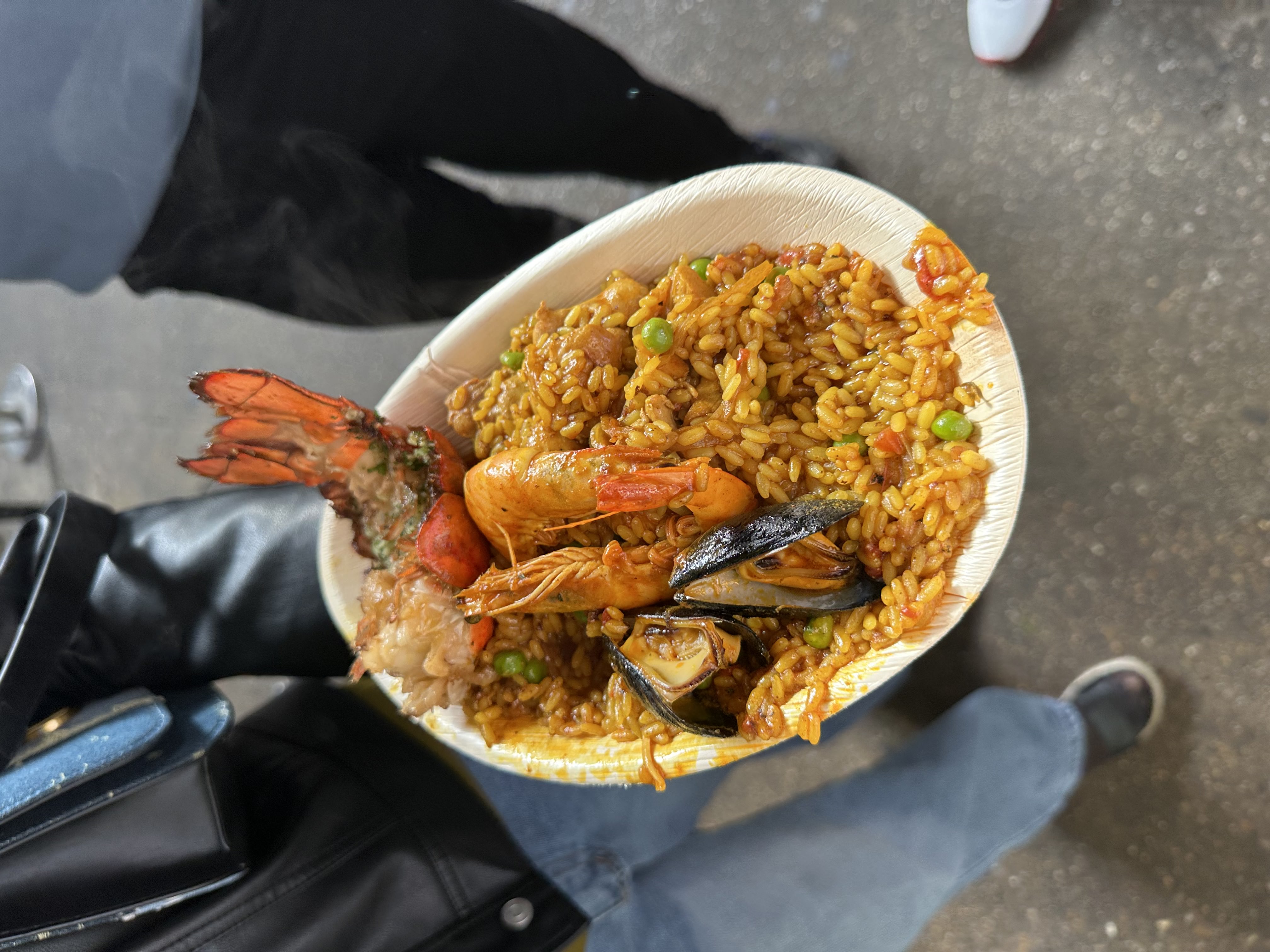
Queues at the food stands aside, Borough is still a market where people do their shopping. Turnips, for example, is one of the family businesses that carry on Borough’s old tradition of fruit and vegetable trading today. And as you wander the little lanes of Borough Market, there are plenty of delicatessens, spice, cheese and preserves shops waiting to be discovered.
From street stalls to chef-led restaurants
In my view, though, the real transformation of Borough Market in recent years has come with the restaurants opening around it. With restaurants such as Camille, Rambutan, Berenjak and OMA opening one after another, the area has become a food route in its own right. Where people once came to Borough to browse the market, there is now a sizeable crowd that comes purely to eat at one of these restaurants.
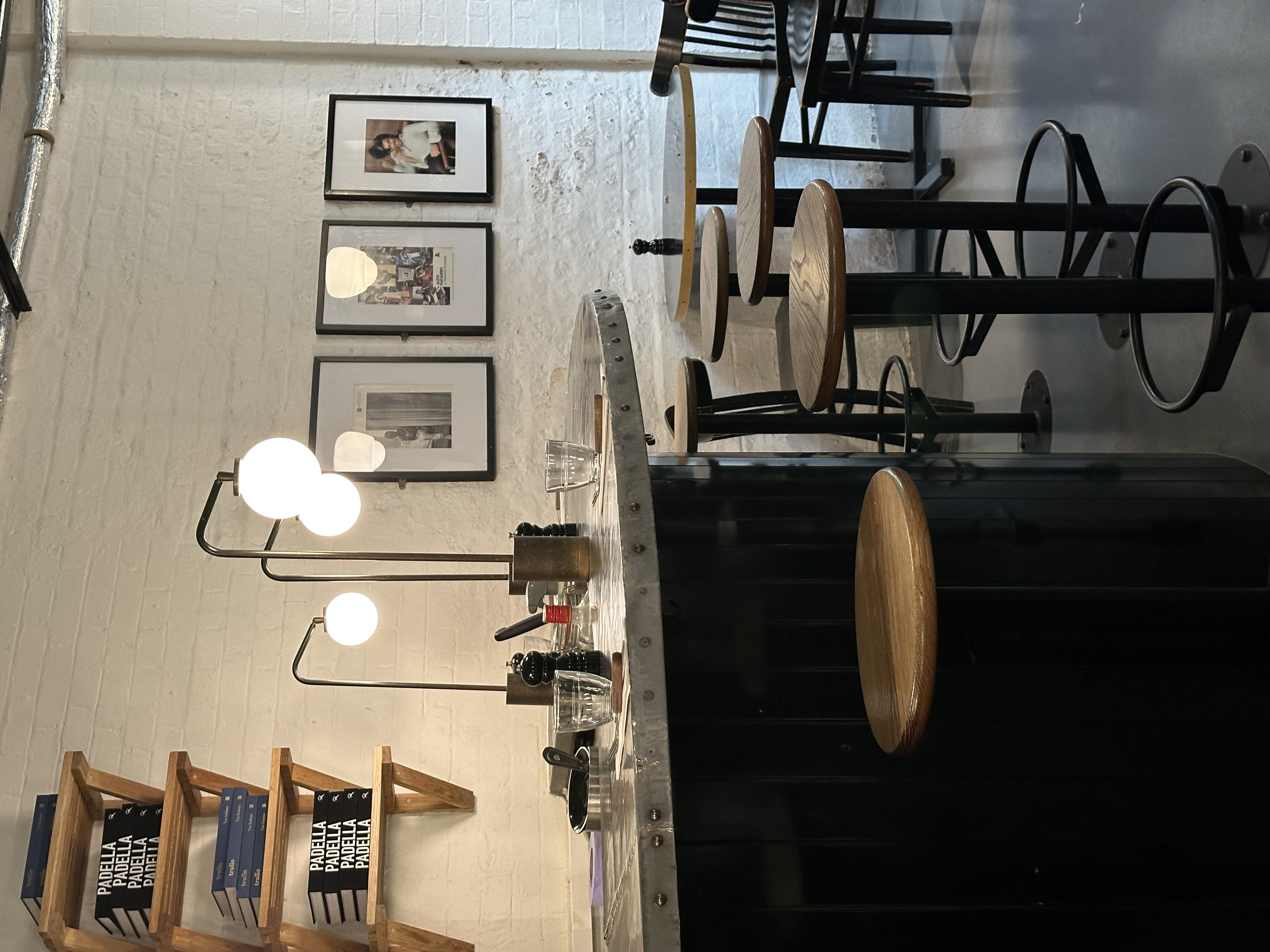
Padella.
Padella is one of the early examples of this movement. It was opened in 2016 by Tim Siadatan and Jordan Frieda and soon became one of London’s best-known Italian restaurants. Back then especially, queueing for an hour outside was considered perfectly normal. There are still queues today, but it now also has restaurants in Soho and Shoreditch. The menu focuses on a few key dishes, with the emphasis on pasta made fresh every day. The pici cacio e pepe and the pappardelle with Hereford beef ragù cooked for eight hours have been on the menu since the day it opened. The pici cacio e pepe in particular is so popular that while you wait for a table you see plate after plate coming out of the kitchen. And it definitely lives up to its popularity.
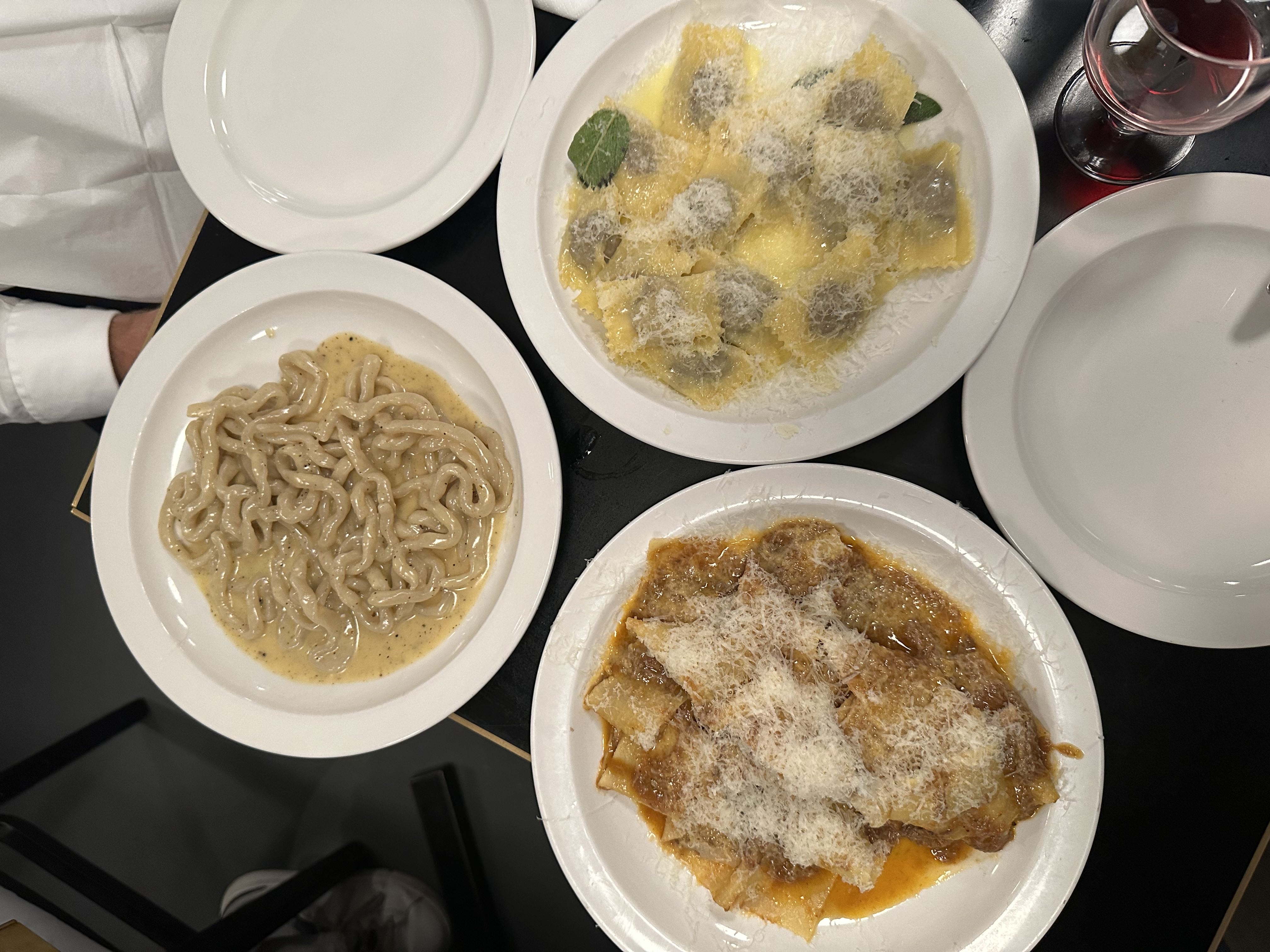
Padella.
Agora and OMA, which likewise never lack a queue, have been among the most talked-about restaurants in Borough, and indeed in London, in recent years. The two sister restaurants opened in April 2024, and OMA won a Michelin star in its very first year. Behind the restaurant is David Carter, known for Smokestak and Manteca, and running the kitchen is Ecuadorian-born Jorge Paredes, previously executive chef at the one-Michelin-starred Sabor.
The restaurant is billed as a “Greek restaurant”, and although the menu’s starting point is Greece, flavours from different shores of the Eastern Mediterranean, above all Türkiye and the Levant, find their way onto it. There are details from our own cuisine too, such as a bread listed on the menu as “açma”, which they interpret in a modern way. Not entirely Greek, but Greek in spirit, you might say. Spanakopita, the Greek spinach pie, for instance, comes not in the classic pie form but as a hot, creamy spinach filling served alongside layered, crisp pastry. You complete the dish by eating the two together.
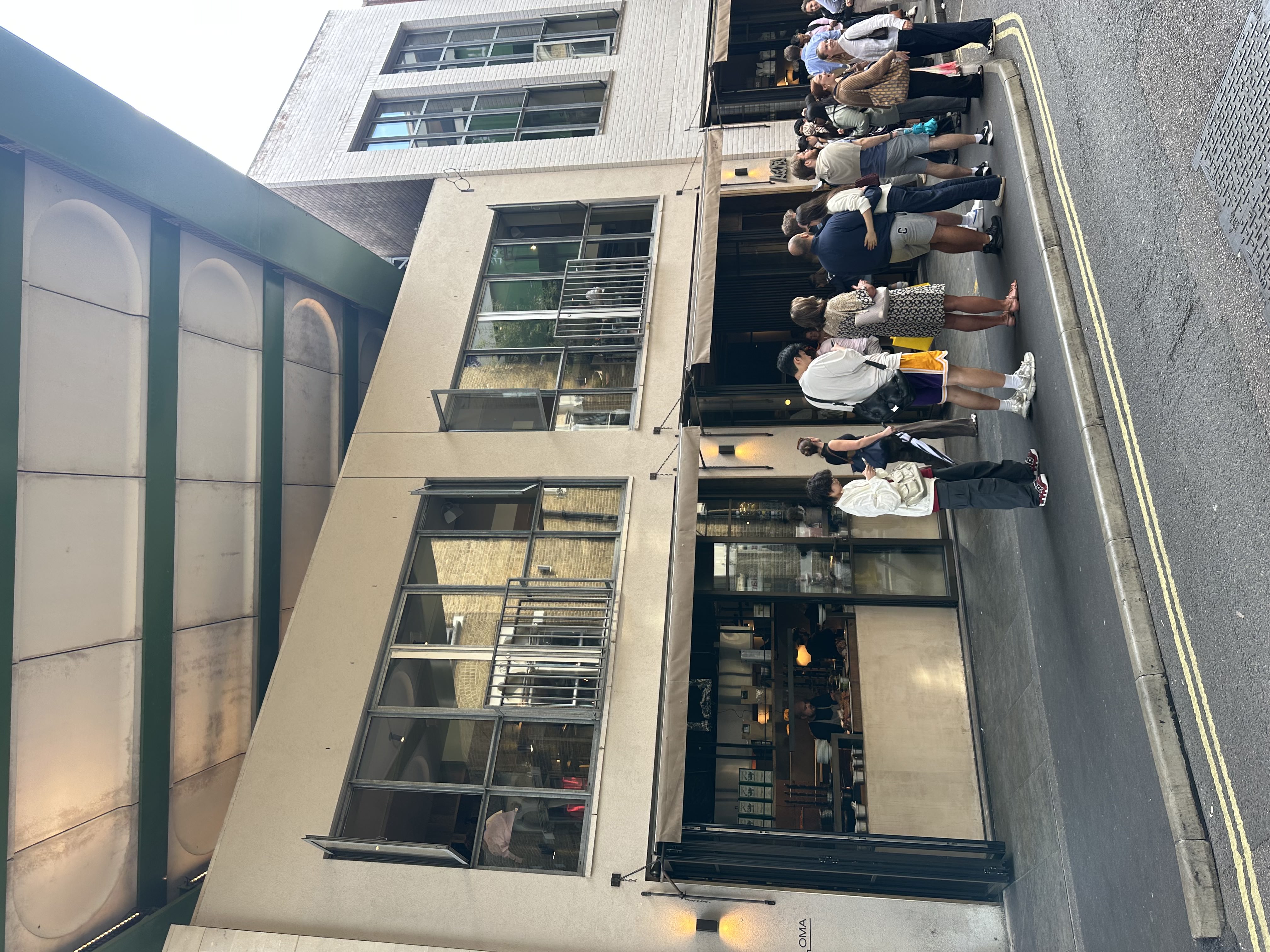
The queues outside OMA and Agora.
Other places worth noting are Berenjak, which serves Iranian cuisine in a modern way, and Camille, which cooks seasonally changing French bistro food. It is one of my favourite options, especially for a long lunch. Close by, Rambutan is Cynthia Shanmugalingam’s restaurant rooted in Sri Lankan cooking. Kolae, meanwhile, takes its inspiration from southern Thailand.
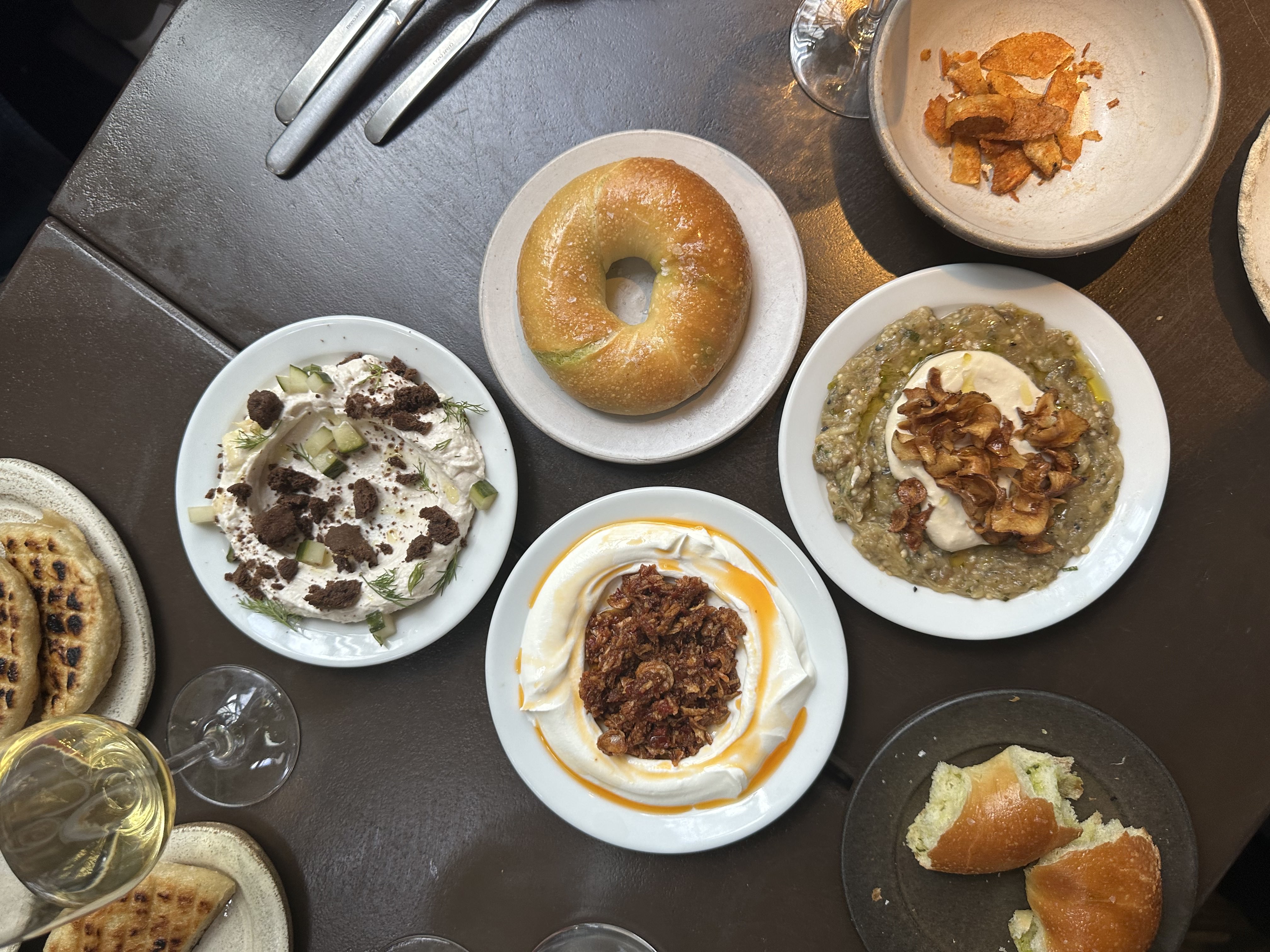
OMA.
A Turkish restaurant with a months-long wait
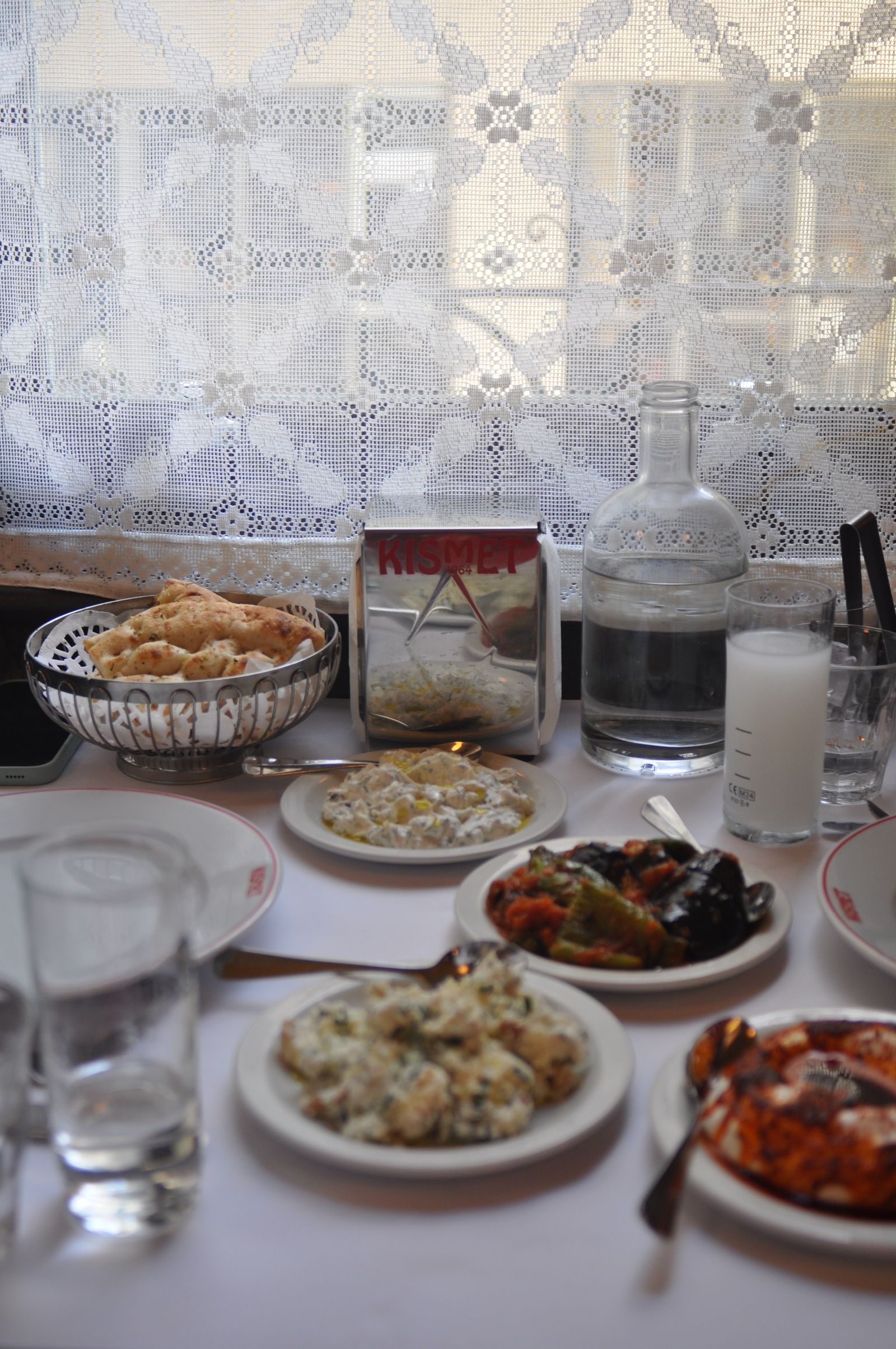
One of the newest restaurants at Borough Market is a Turkish one. Kısmet, which opened in July 2026, is a project Turkish Cypriot chef Keiran Mustafa had dreamed of for years, and he brought it to life with Dom Hamdy, the name behind many successful London restaurant projects such as Bistro Freddie and Crispin.
Being upstairs at The Globe Tavern, a pub in Borough Market, it is a slightly hidden place, but it has become so popular that there are no reservations available until December. At the door you are greeted by an old television set on a lace doily, nostalgic images of Türkiye on the screen, and you step inside to Turkish songs in the background that carry you from one emotion to the next.
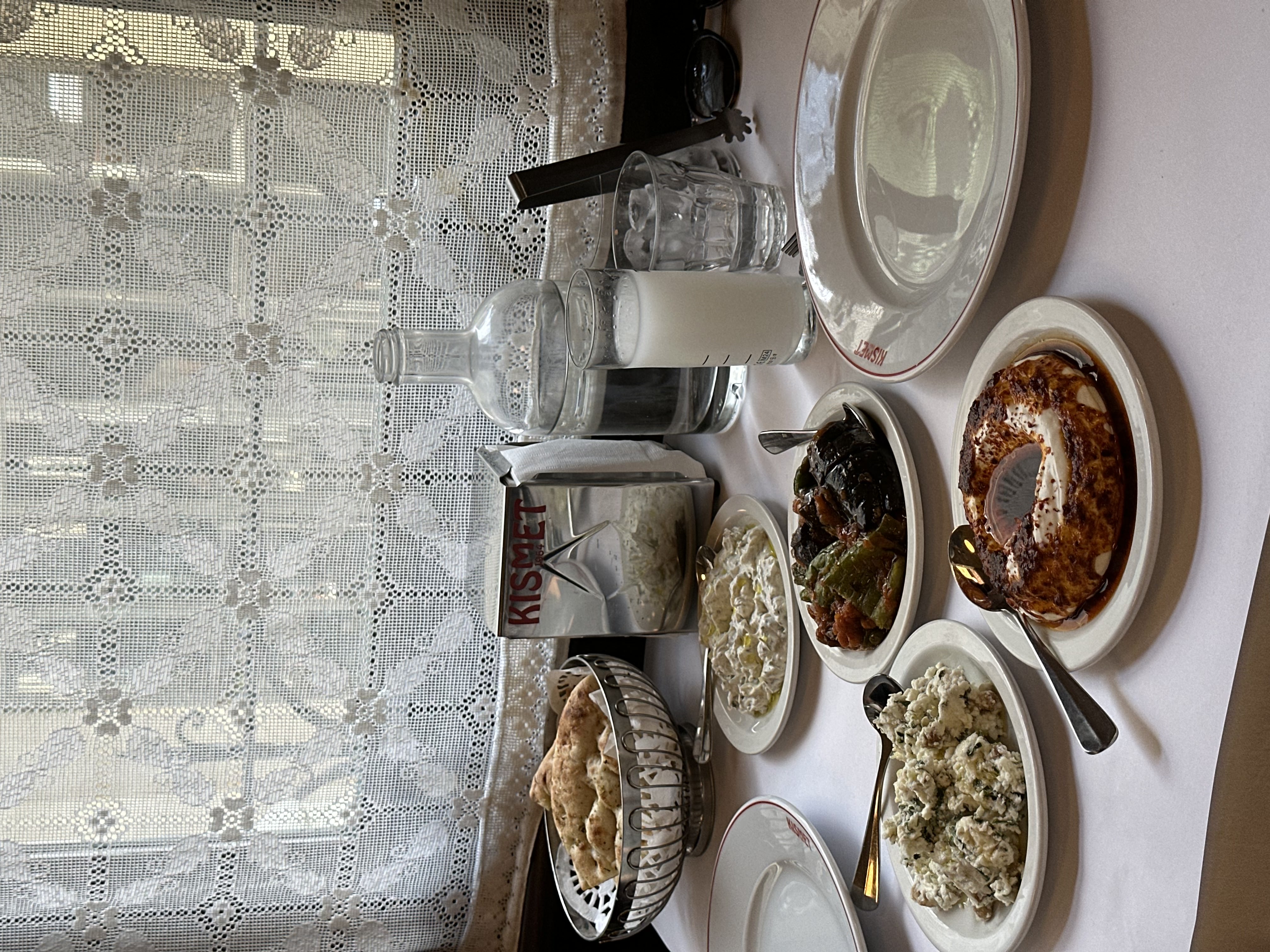
The meze (small sharing plates) arrive on wooden trays; there are metal napkin holders, lace tablecloths, old photographs and posters of Türkiye, a “no smoking” sign, and çay (Turkish tea) served on the classic metal tray… It is almost like being in a meyhane (a traditional tavern) in Istanbul. You feel as though you have been beamed into a parallel universe. The curtain at the entrance, it turns out, is no coincidence. When we spoke, Keiran told us they wanted the act of pulling back that curtain and stepping inside, after the crowds of Borough Market, to feel genuinely like passing into another place.
For this project, he and Dom toured meyhanes in Türkiye and Cyprus. They looked not only at the food but at everything, from the way it is served and the objects on the table to the feeling a meyhane gives you. The food, though, does not just lean on the nostalgia created by the décor. Classic meyhane dishes such as bulgur köftesi, yaprak ciğer (thinly sliced fried liver), chard with yoghurt baked in a clay pot and lamb şiş arrive in their very best form. The special weekend menus also rotate dishes from different regions of Türkiye and Cyprus.
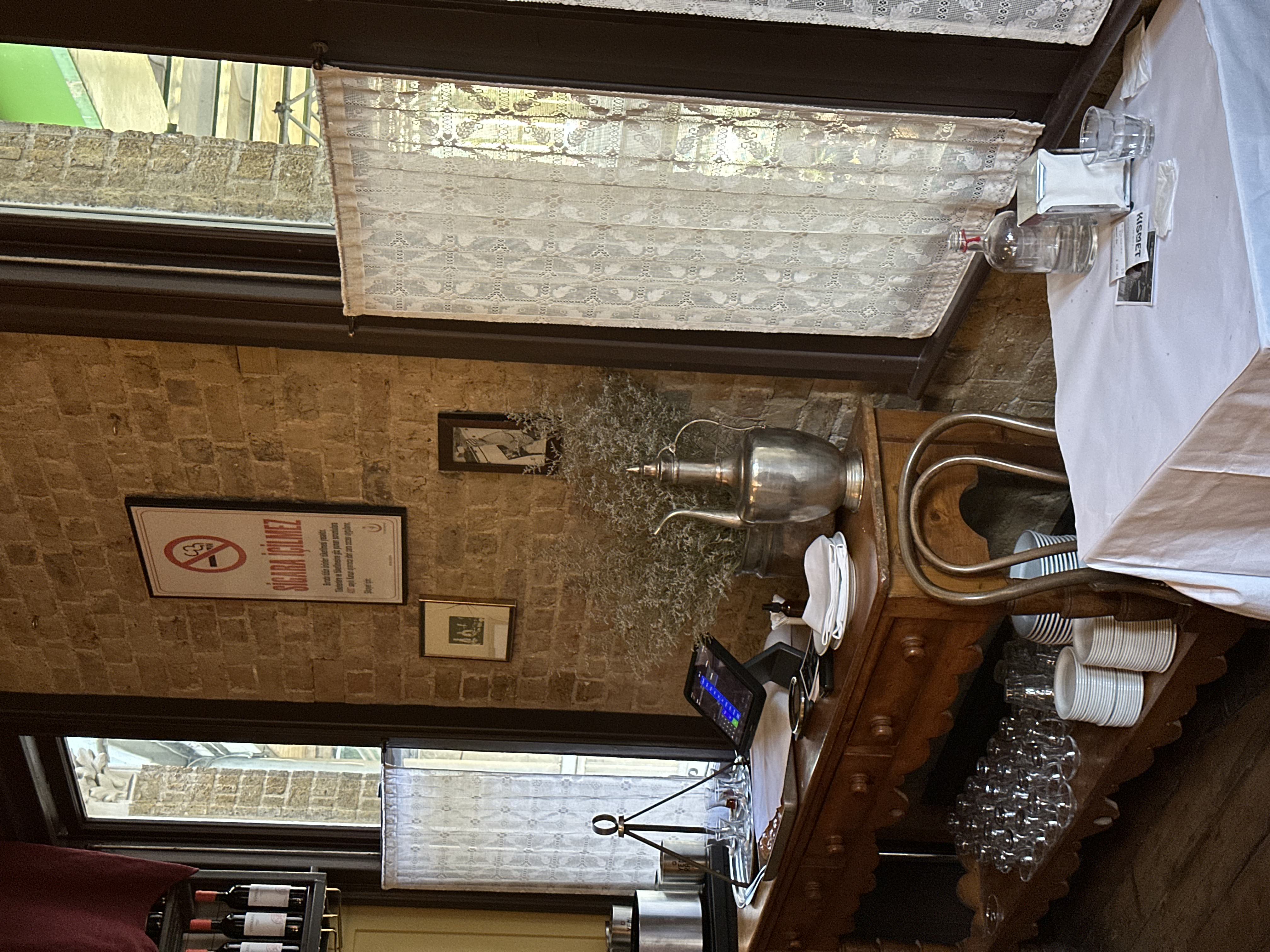
Although Kısmet began as a one-year project, the interest it has received has led Keiran and Dom to start looking for a permanent home. So if you find yourself at Borough Market, I would say pull back Kısmet’s curtain while it is still in this one-year space.
- Editor’s note: Our interview in which founders Dom Hamdy and Keiran Mustafa tell the story of Kısmet is coming very soon on apéro.
One of the city’s most special restaurants: Trivet
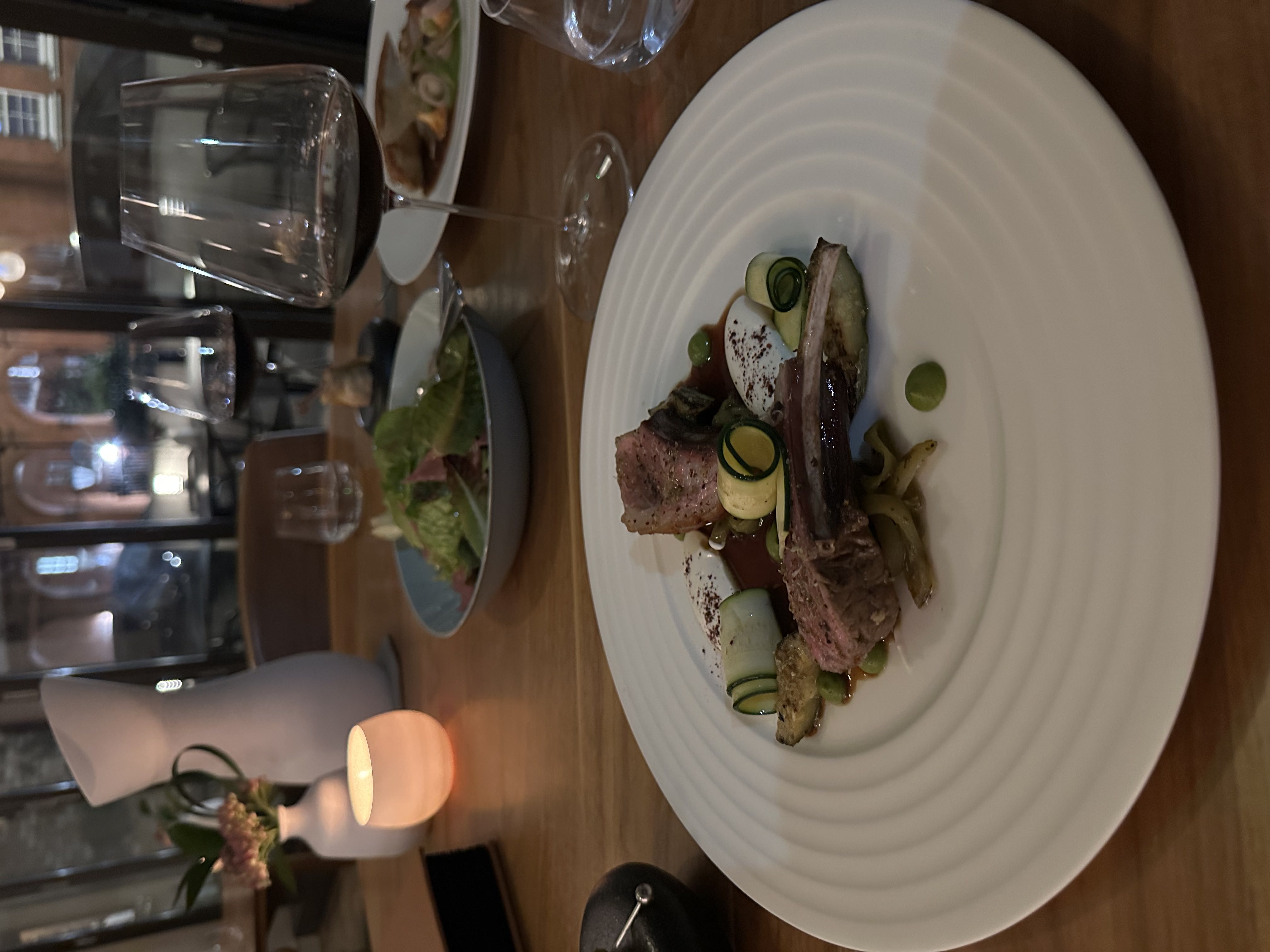
When talking about Borough, you can’t leave out the two-Michelin-starred Trivet. What is more, there is a Turkish signature behind it. Turkish Master Sommelier İsa Bal opened Trivet in 2019 with Canadian chef Jonny Lake, with whom he worked for many years at The Fat Duck, one of England’s most important restaurants. It won its first Michelin star in 2022 and has held two Michelin stars since 2024. Despite its two stars, you are welcomed into a very relaxed atmosphere.
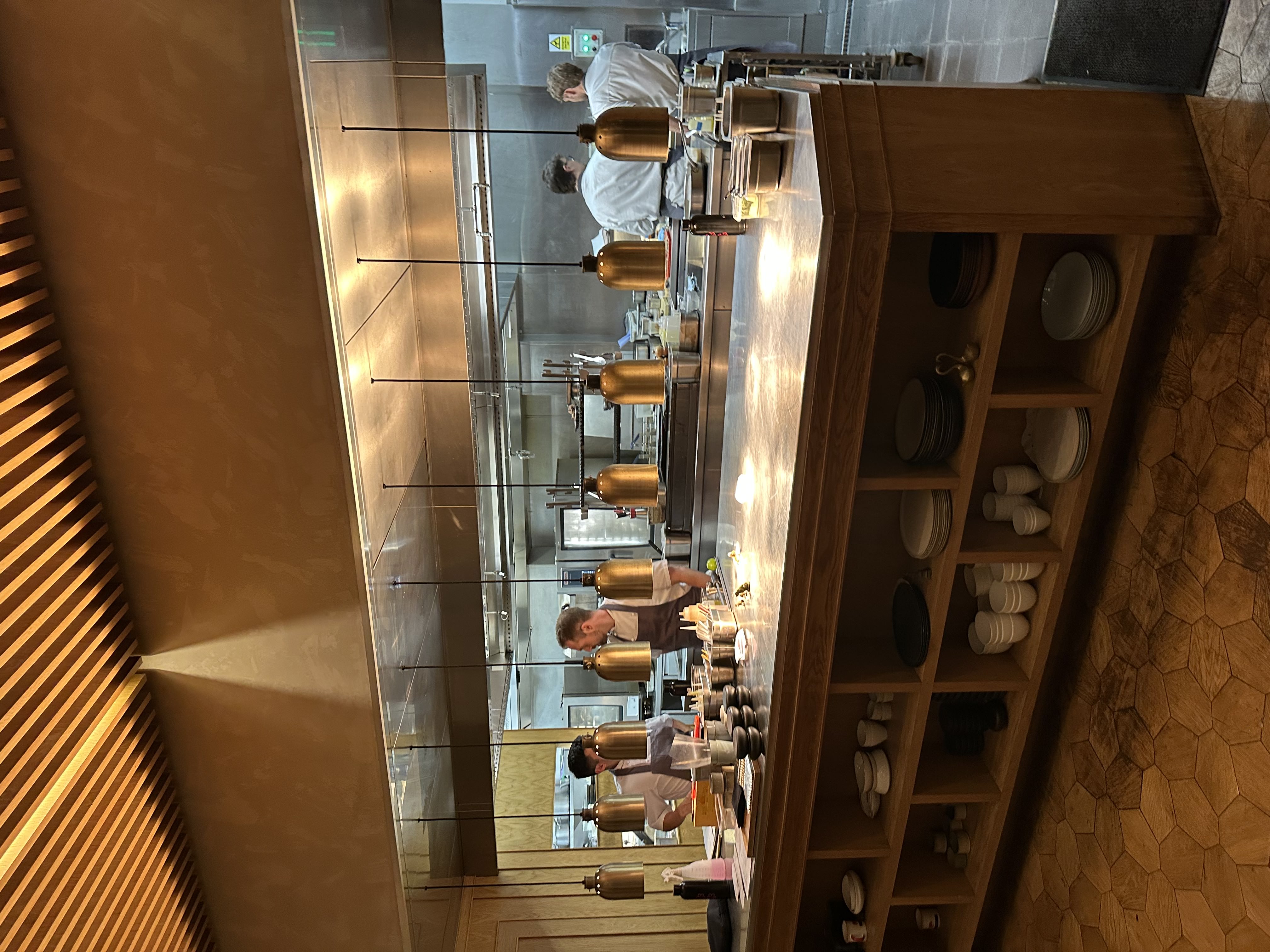
It is the only two-Michelin-starred restaurant in England without a tasting menu, and its menu is entirely à la carte. You can even go to the bar side without a reservation. What stands out most is the wine list put together by İsa Bal. Its more than 450 bottles are arranged not by country but according to the historical development of winemaking. So on the list you come across wines from ancient wine countries such as Türkiye, Georgia and Armenia before French or Italian ones. It is also one of the few restaurants in London where you can find boutique producers from Türkiye.
One of the city’s local spots: Bermondsey Street
A little beyond Trivet you reach Bermondsey Street. Although it is so close to Borough Market, it is much more local, which makes it one of my favourite streets in London. As soon as you set foot here the tourist crowds thin out, and on a single street truly excellent restaurants, cafés, small shops and galleries sit side by side.
If you like Spanish food, both of the famous chef José Pizarro’s restaurants are here. José is the tiny tapas bar he opened in 2011. The best thing is to sit here, order a few tapas and something to drink, and take a little break. Alongside classics such as croquetas and tortilla there are also dishes that change with the season. His other restaurant a little further along the street, Pizarro, is a more classic restaurant format. While José is a place to eat a few tapas and move on, at Pizarro you can settle in for a long lunch or dinner.
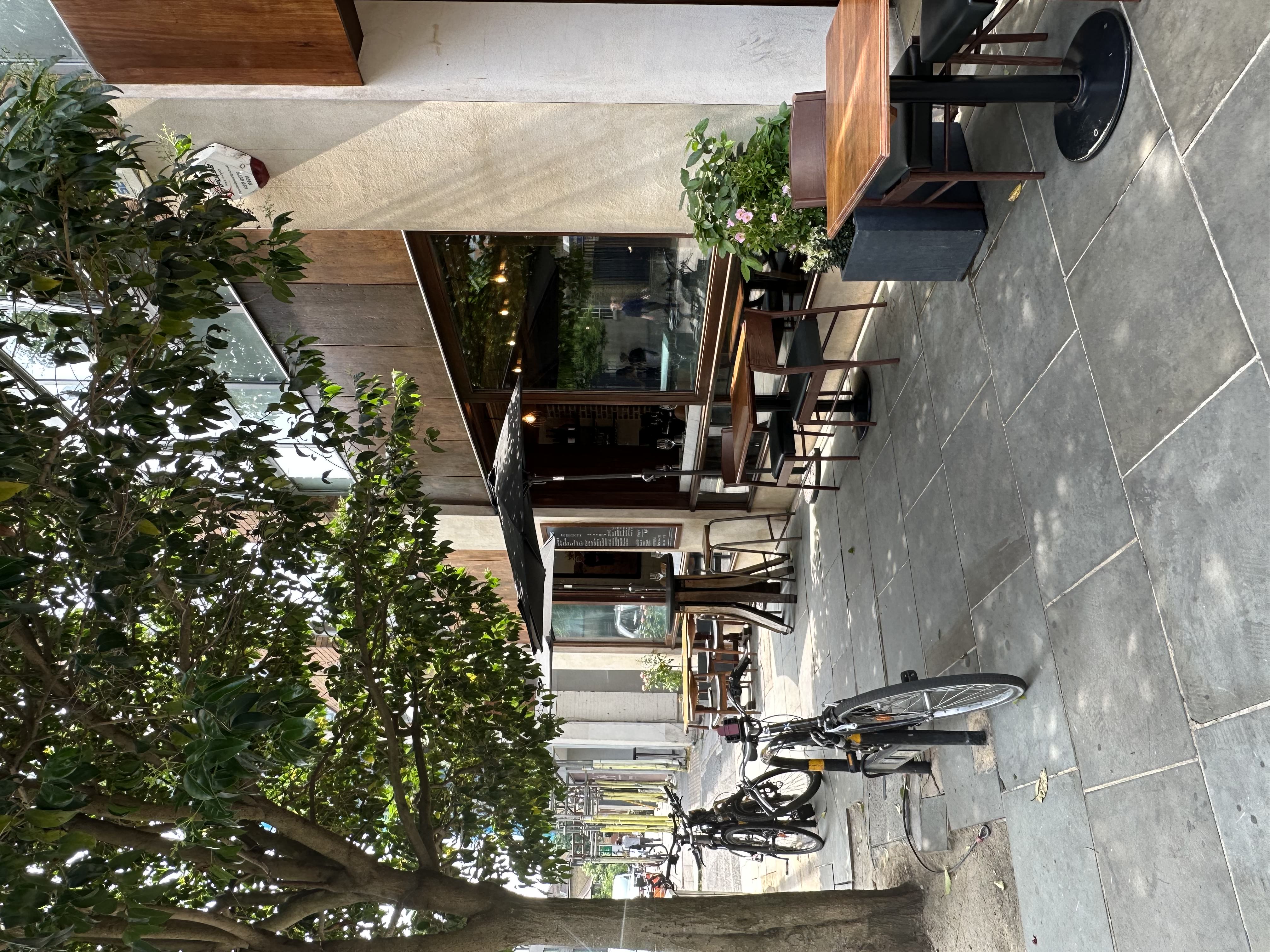
Pizarro, Bermondsey Street.
Close by, Casse-Croûte, with its tiny tables, blackboard menu on the wall and classic French cooking, has been one of the street’s best-loved bistros for years. When you walk in, you feel as if you are in a small neighbourhood restaurant in Paris rather than London. On menus that change every day you can find classic French dishes such as pâté, escargots and confit de canard. Another of Bermondsey Street’s long-time favourites is Flour & Grape, known for its fresh pasta.
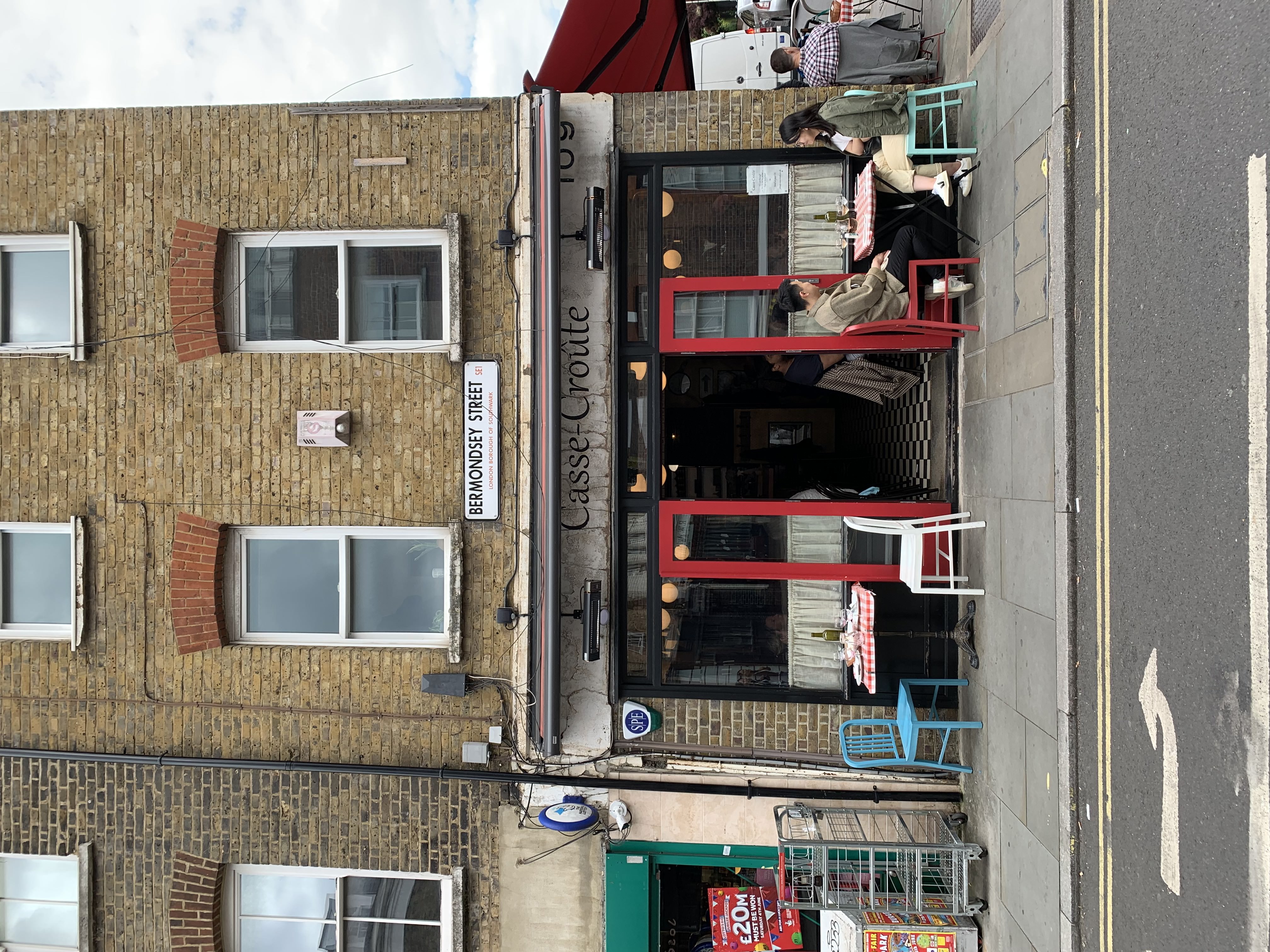
Casse-Croûte.
A little further on is Baccalà, another Italian restaurant I love. I also like the fact that the story of chef Moreno Polverini and sommelier Fabio De Nicola’s restaurant began in Istanbul. The two met while working in Istanbul, and the friendship and long dinners they shared with their Turkish wives, Elif and Ilanit, later became the restaurant they opened in London in 2019.
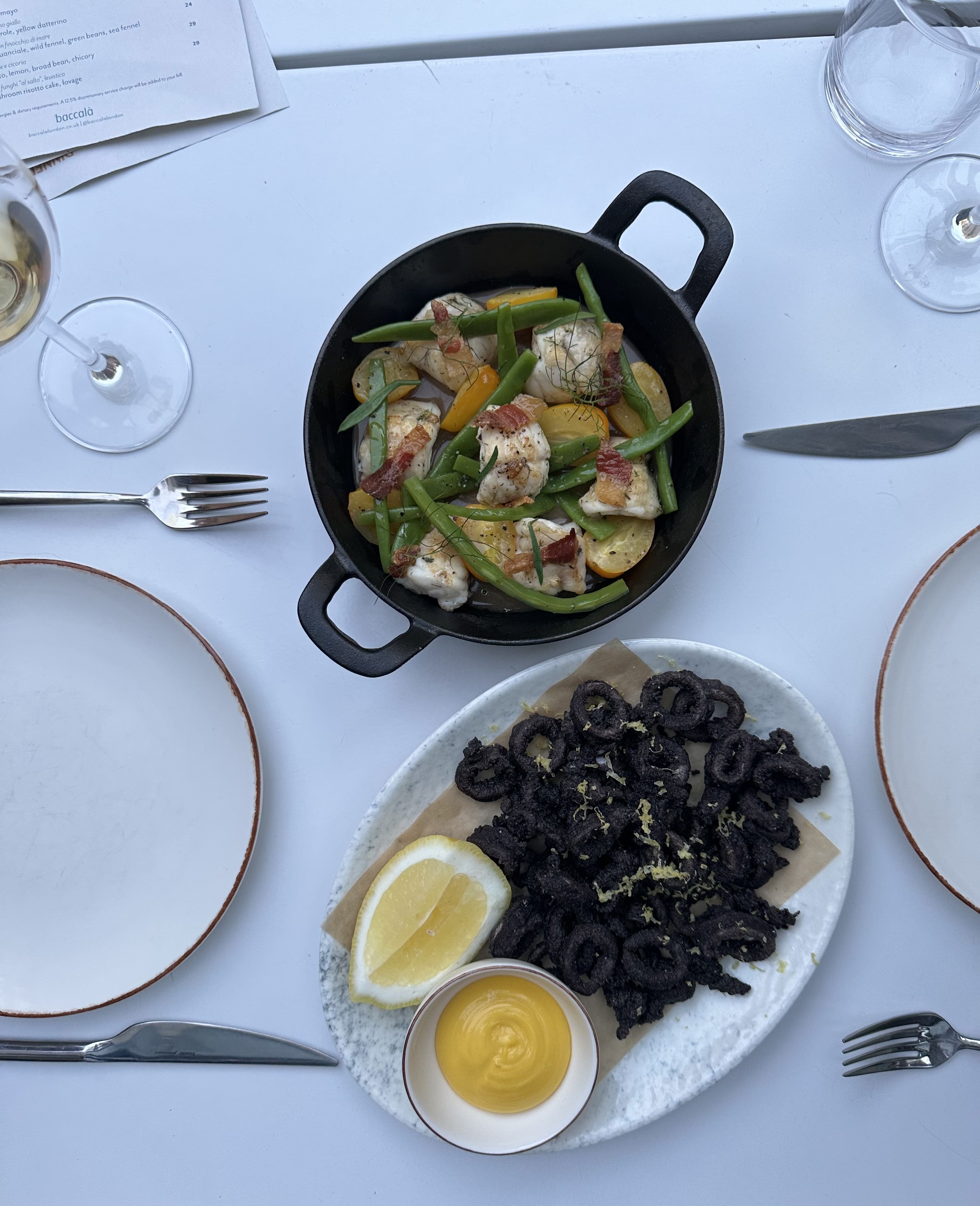
Baccalà.
Baccalà’s menu centres mainly on fish and seafood. Squid fried in black rice flour, monkfish stew and whipped salt cod are among my favourites. Fabio’s wine list focuses on small Italian producers you would struggle to find elsewhere in London. It also stands out for its olive oil menu, which lets you taste olive oils from different regions of Italy, and they hold olive oil tastings.
Starting at Borough Market and stretching to Bermondsey Street, this area is actually quite small on the map, but its wide variety of food makes it a route worth returning to again and again. If you want to explore the market at ease, go in the morning if you can: stop at a few stalls, have lunch at one of the nearby restaurants, then sit at a table facing the street on Bermondsey Street and watch people come and go. And while you are on Bermondsey Street, don’t forget to add White Cube, one of London’s most important contemporary art galleries, to your route.