Belle Burden’s ‘Strangers’: what remains when a marriage ends?
“Strangers”, which entered The New York Times hardcover non-fiction bestseller list at number one, tells of Belle Burden facing the collapse of her twenty-year marriage. It is a sincere and at times painful memoir that questions the financial inequalities hidden behind the curtain of love and trust, the silence expected of women, and how much of themselves a person can lose while devoting their life to a relationship.
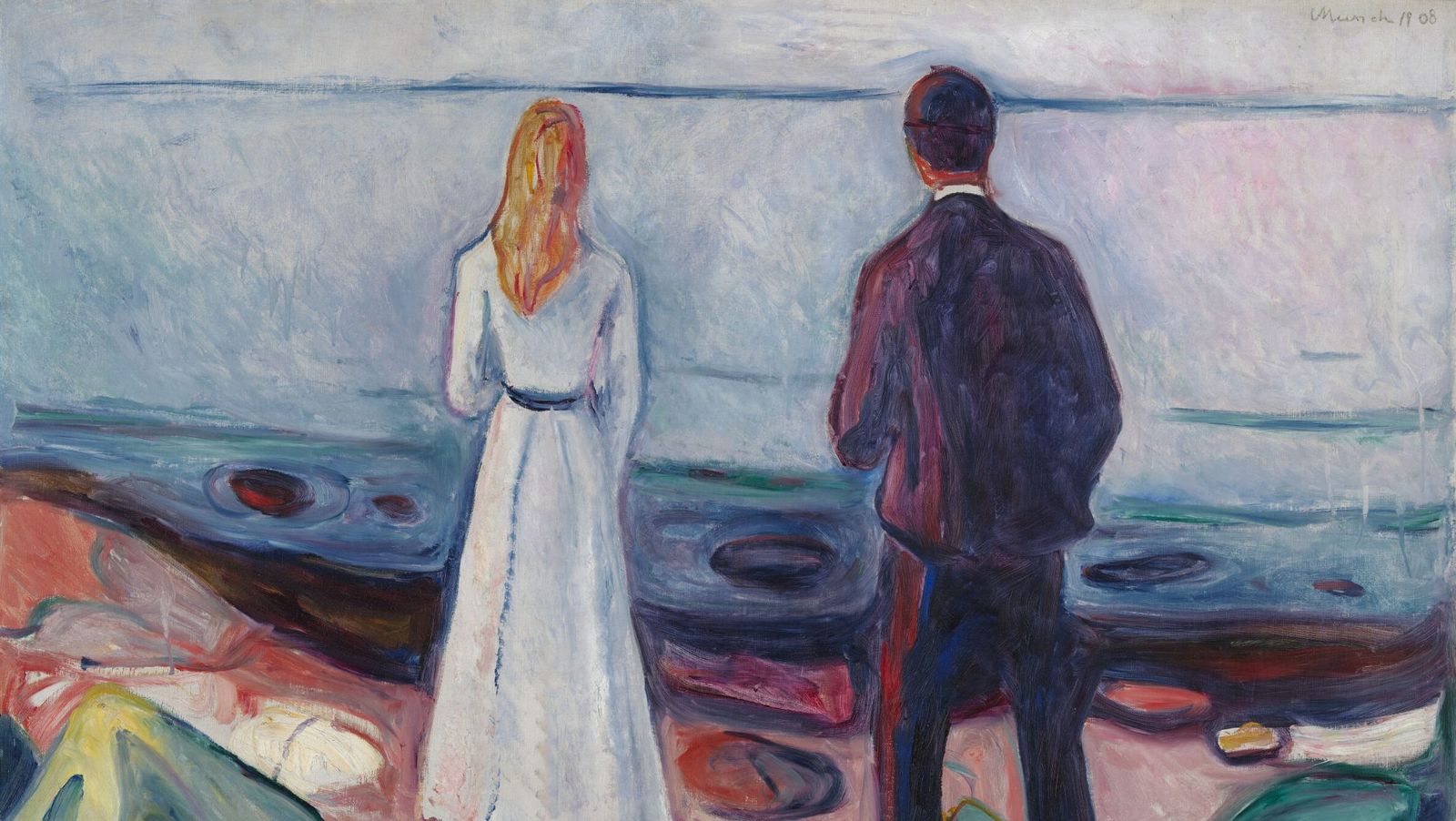
Picture yourself at the height of the pandemic, with the world turned upside down and despair settling over everything like smoke, on an island far from it all, in a house with a sea view where a fire burns quietly in the hearth. Your children are watching a film in the living room, and the smell of fresh cake drifts from the kitchen. Your husband is curled up asleep beside you. By day you walk the dog in the woods a few steps from your door, and in the late afternoon, as the sun goes down, you gather seashells on the beach with your children. You watch the migrating birds, and on long nights you have a drink together and talk until morning. Everything is like a dream. But one morning you wake up and your partner of twenty years tells you he wants to leave. And it is not only a divorce he wants: he does not want custody of the children he read stories to every night, and he has no interest in the home you built together with such care over the years. He just wants to take his jacket and go. Suddenly, just like that. Without a word, without an explanation, he shuts the door behind him. What does a person do in a situation like this? What do they think? What do they feel?
An autobiographical novel that stayed on the bestseller lists for weeks from the day it came out, Strangers follows its protagonist and author, Belle, as she struggles to make sense of what has happened to her. Her whole marriage, her entire adult life, passes before her eyes day by day, moment by moment. Unable to find her way through it, she reaches for the phone and calls the people she loves. She is so helpless, so lost, that one by one she tells her closest friends, her mother and the stepmother she adores everything that has happened.
It is the pandemic, of course: no one can come out to the island, and Flo cannot go to anyone. She burns alone with her bewilderment and the pain of the betrayal. She misses the “perfect” life she had until the day before, misses the husband who walked out without a word, and she regrets missing so badly the man who left her like this. She mourns the marriage she had trusted without hesitation for twenty years, the arms she had surrendered herself to without question. And all the while, now a mother on her own, she tries to keep her two daughters at home from sensing anything.
Had life been normal, she writes, had they been in New York, she might have caught him in the street, made him look her in the eye and understood at least a little of what was going on. But she was on one island and he was on another, and she knew nothing beyond the shock of his disappearance.
In Strangers, Belle Burden draws a portrait of her relationship from the day she and her husband met to the last day they saw each other. One of the main reasons the book has drawn so much attention in every language and country where it has been published is Burden’s keen self-awareness and the transparency she offers about both her marriage and what came after it ended.

Burden grew up in a highly privileged family. Indeed, her grandmother Babe Paley and the celebrated writer Truman Capote were for a time close friends and confidants. They fell out after the scandal over a story Capote published in 1975, which laid bare the secrets of the society women around him. Babe Paley never spoke again to Capote, who had spilled what she had told him for money. On her father’s side, too, the family line reaches back to the Vanderbilts, known for the fortune they made from railways and industry. Burden, in other words, grew up in a world where generations of New York society were intertwined. So, as she admits in the book, she is aware of how privileged her life is, whatever happens.
She told herself, she writes, that other women faced far worse outcomes and that she should not complain. She had tried to gain some perspective, to see how privileged she still was whatever the divorce might bring. But fear had once again made her short-sighted: all she could see was what she stood to lose.
Unlike the many women who are left in financial straits by divorce, manipulated and threatened over money, Burden is relatively comfortable in this respect. Even so, once the divorce becomes official, things turn uglier, and she learns that her husband’s bank accounts, which for years she had never even felt the need to look at, held large sums he had put aside in his own name. So for twenty years Burden devoted her time to her children and her home while her husband focused on his career, and meanwhile, without her knowledge, he was growing his own fortune.
Facing this truth on top of the devastation she has already suffered drives Burden into a deep impasse and pulls her into a whirlpool of anxiety. She begins to question everything she believed to be true, everyone she trusted, every stone she had leaned on. Worse, their shared circle, sadly, stays on the side of the husband who left her. The friends they used to see together, neighbours of many years, though they can see what Burden is going through, find a way, as so often happens, to pat the man in the relationship on the back while making the woman feel bad.
She longed, she writes, for one of his male friends in particular to tell him not to do this, not to do this to his children. She knew that in his world a voice was only heard if it came from a man. Instead she found that many men were not interested at all, preferred to accept what had happened and had no wish to get involved. The message she received was that she should resign herself to her fate and accept whatever James chose to grant her. It was as if they were telling her she had had good years with her investor husband, should be grateful, and that it was time to pack up her things and go.
As she begins to heal, Burden first tries to remember who she was before she met her husband. What she loved, who she saw, what time she woke up, what she did on an ordinary Tuesday evening… Once she slips out from under the terrible shadow of years spent living with a narcissist, her muscles loosen, her fingers open, and she starts to write her story.
Looking back on those first days of writing, she writes, picturing herself at her desk, she sees a woman peeling away, one by one, the layers built up over twenty years: her trust in her husband, the comfort of the life they shared, the place their marriage had given her in the world. Without those layers, those protections, the woman at the desk had been able to feel and to see. She had found the way.
Her piece first appeared as an article in The New York Times. The very next day her inbox and those of the editors were overflowing with letters from readers, and, encouraged by this, Burden turned her memories into a book, and so Strangers came to be. Despite the weight of its subject, it is a very easy read. It is a book that exposes the hidden chaos of a long relationship, in which love and trust are naturally entwined with figures and contracts, and that speaks of some rather uncomfortable truths. So much so that after its publication, some girls’ high schools in America began offering financial literacy classes.
Strangers is a heartfelt memoir that reminds us not to let the intoxication of love cloud our judgement, one that hurts, but from a friendly place. Whatever happens, whoever comes into our lives, we must not forget who we are. Because at the end of the day, when things do not go as we hoped and our own little paradise falls apart, the only place we can take refuge is our own heart.