Shion Miura: sailing the ship of words, keeping pace with those who run with the wind
Shion Miura is an accomplished writer who carries on the legacy of Japanese classics such as Natsume Sōseki and Jun'ichirō Tanizaki. Like Seyrüsefer, published last year, her novel Rüzgârla Koşanlar speaks to the warm, emotional and heartfelt world of the East.

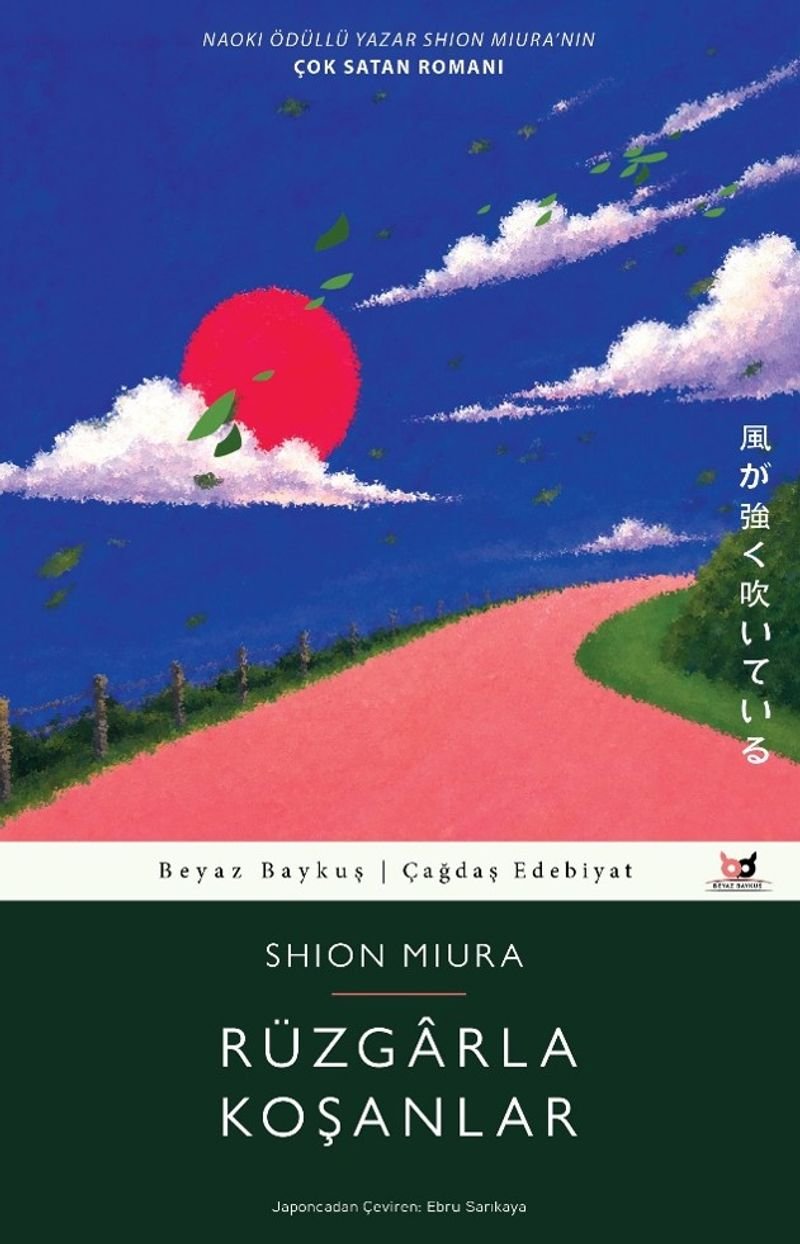
I started Shion Miura’s novel Rüzgârla Koşanlar (published in English as Run with the Wind) with my usual prejudices, but between the lines a completely different writer was waiting for me: mischievous, modest, forever in search of the curious. As soon as I finished it, I read her other novel, Seyrüsefer (The Great Passage in English), which came out in Turkish in 2025 and, I suspect, went largely unnoticed.
Sadly, some good writers, like so many other good things in life, sometimes remain in the shadows.
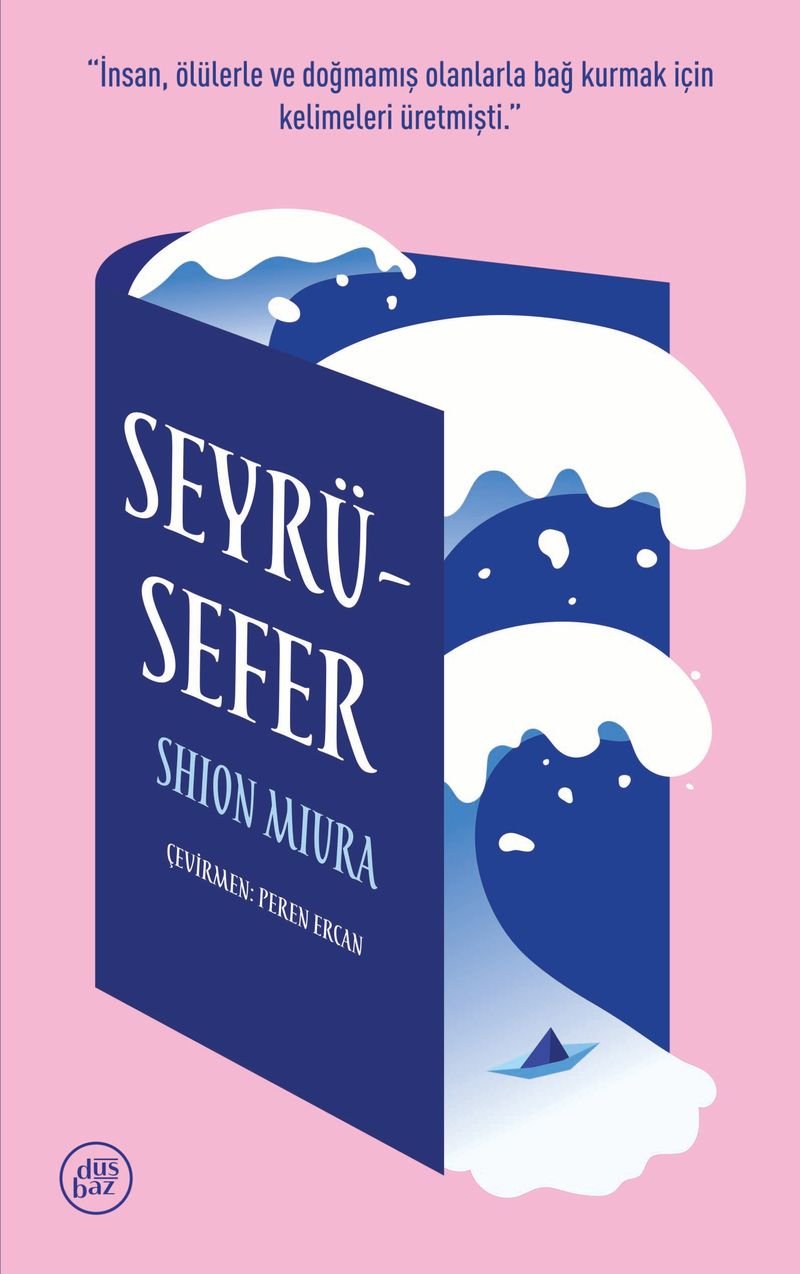
Before I turn to Rüzgârla Koşanlar, let me say a few words about the novel Seyrüsefer. “People invented words in order to connect with the dead and with those not yet born” : with this line on its cover, Seyrüsefer won me over. Shion Miura is an original writer, with a subtle humour, a wit that always lands in the right place, and a way of portraying innocence and youth in their most unguarded form. It is also a novel whose title lets you feel its essence.
Within the story of a publishing house’s editors, young and old, who devote themselves to producing the most ambitious, most comprehensive dictionary of the Japanese language, there is love, friendship, the bond between master and apprentice, jealousy and even a theme of gluttony. But among those characters there is one who is a source of inspiration in his own right for anyone who wrestles with the question of how to create an original character in fiction.
Mitsuya Majime starts his new job at the publishing house absent-minded, clumsy, scattered and shabby, with a rather “dim” manner, and over time all but disowns the years of his life that lie behind him. Reading the simple yet finely drawn story of Majime, his love Kaguya, the ever-scheming Nishioka, their mentors Araki and Matsumoto and the formidable apprentice Kishibe feels like walking down a cool, densely tree-lined road on a summer’s day.
Seyrüsefer had already conquered me with the sentence on its cover. But more importantly, how could anyone not love a writer, and a novel, that defines a dictionary as “a ship that crosses the sea of words”? It was in this spirit that I read Rüzgârla Koşanlar, Shion Miura’s second work of fiction in Turkish.
From the very start of her literary career, Shion Miura has drawn attention with the prizes she has won. Born in Tokyo in 1976, she won the Oda Sakunosuke Prize for Ano ie ni Kurasu Yonin no Onna, a novel modelled on the setting and themes of Jun'ichirō Tanizaki’s Makioka Kızları (The Makioka Sisters). Seyrüsefer received a prize well suited to its subject, the Japan Booksellers’ Award. She has also been praised for her essays, for the way she approaches questions in them, and for her contribution to her country’s literature. Rüzgârla Koşanlar, the subject of this piece, has been adapted for cinema, the stage and anime.
The courage to begin again
In both novels, whose subjects could hardly be more different, Shion Miura places similar emphases. Through a voice we read in Ebru Sarıkaya’s translation from the original Japanese, and the warm atmosphere it creates, she draws the reader in at once. In both books she invites us to reflect on friendship, solidarity, team spirit, belonging, achievement and the courage to begin again. From beginning to end, the novel offers this advice above all to the young, to people living through the springtime of life, of ambition and of the desire to succeed:
“Great achievements demand great sacrifices!”
The novel opens with a petty theft, a moment of escape and a surprise offer. A young man runs like the wind so as not to be caught with a bun he has pinched from a shop. Another young man, on his way home from the hamam (a public bath), falls under the spell of that speed. When he catches up with the runner on his bicycle, he immediately wants answers to two questions:
“Why are you stealing, and how can you run so fast?”
This chance encounter is how Haiji Kiyose and Kakeru Kurahara meet, and how their friendship slowly grows. Haiji invites Kakeru, who is flat broke, desperate for a bite to eat and has nowhere to stay, to his own boarding house. Kakeru joins the threadbare lives of the university students living in this building, which looks as if it would collapse if you blew on it. The miracle that will bring together these young people, each leading a life cut off from the others, lies hidden in Haiji’s dreams.
Where does success hide?
Haiji wants to pick up the running career that was cut short by injury, and to build a relay team that will race under his leadership. The project gathers pace with Kakeru’s arrival, and soon it is joined by the boarding house’s student who has never run in his life and always has a cigarette in his mouth, and by the loner who spends every hour of the day reading manga and seems almost afraid to move.
There are hiccups now and then, but under the leadership of Haiji and Kakeru, Shindo, Prince, Akihiro Hirata, Yuki, King, Musa and the twins Jota and Joji quietly join the team. So will these ten dreamers keep in shape and build muscle by running at least six hundred kilometres a month, and, not content with that, finish in the top ten of a race made up of ten stages averaging twenty kilometres each and so qualify for Japan’s traditional race, the Hakone Ekiden (a very famous and important event in real life)?
And then, is wanting something really half the battle? Is success hidden in small details? Can love, success, youth and dreams of the future all grow in one heart at the same time, with the same drive? These are the thoughts that keep running through the young men’s minds as they train doggedly every day to stay in shape.