An Istanbul meyhane in London: Kısmet
Opened in July as a one-year project, Kısmet is one of London’s newest Turkish restaurants and opens a new chapter in how Turkish cuisine is represented in the city. We talked to Keiran Mustafa, a chef of Turkish Cypriot descent, and Dom Hamdy, one of the names behind some of London’s most notable restaurants, about Kısmet’s story, meyhane (traditional tavern) culture and the changing place of Turkish food in London.
When I first moved to London in 2017, whenever I missed Türkiye and Istanbul’s food culture, I usually found myself in a Greek restaurant. Mazi in Notting Hill or Lemonia in Primrose Hill were the places that came closest to the meze (small shared plates) tables and restaurant atmosphere I was used to. Of course, London already had a strong Turkish restaurant culture. The many kebab shops, ocakbaşı grill houses and family businesses that have been serving North London in particular for decades are an important part of the city’s gastronomic identity. But it was not easy to find in London the meyhane culture I knew from Istanbul, an experience in which the atmosphere of the place matters as much as the food. In recent years, though, the picture has begun to change.
With restaurants such as Yeni in Soho, Zahter, The Counter and Lokal, Turkish cuisine has become more visible and more varied in London. Each of them represents a different approach to cooking, and one of the most exciting examples of this new wave of Turkish restaurants is Kısmet, which opened in Borough Market a few months ago.
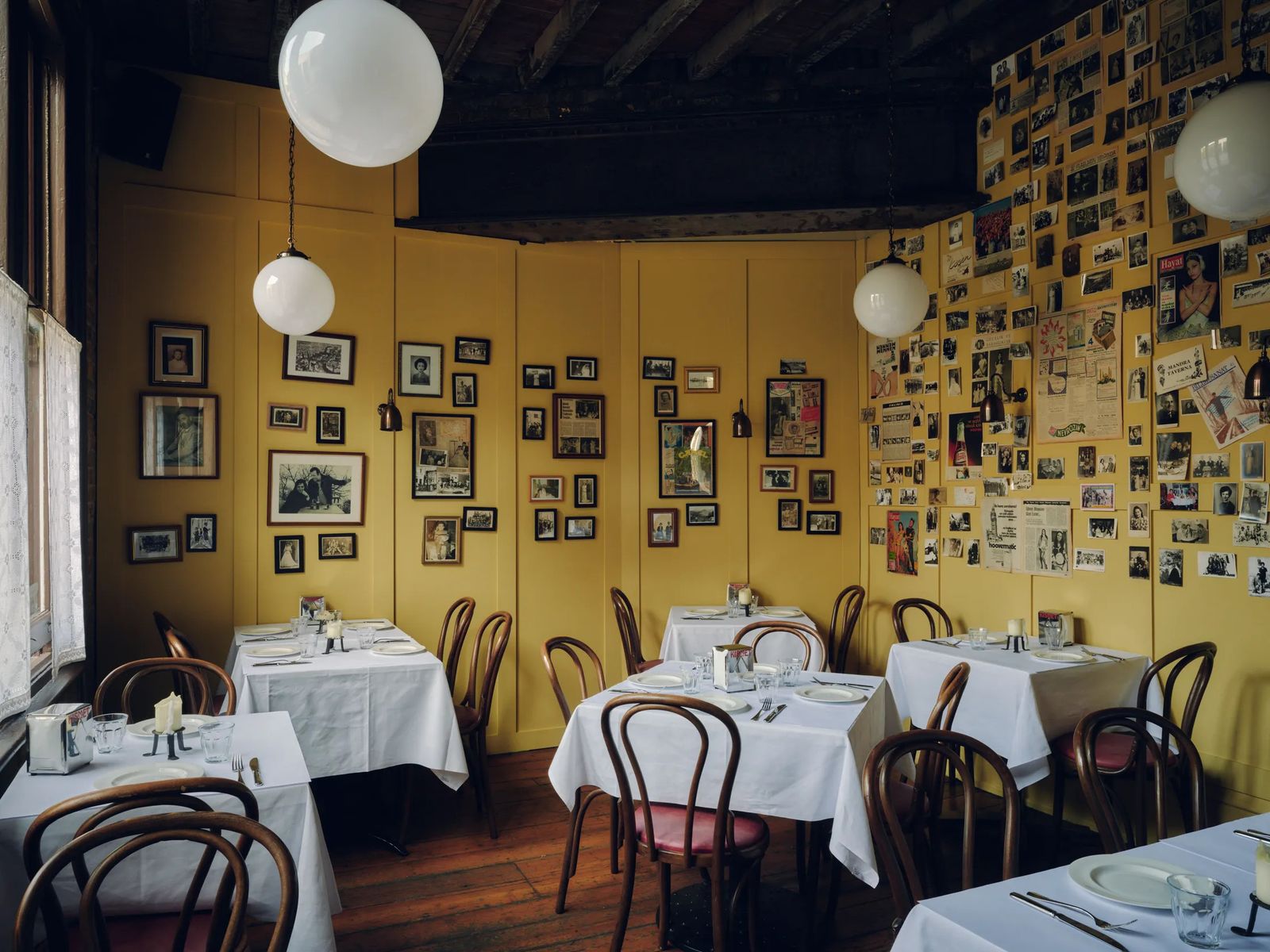
You slip away from the crowds of Borough Market and step through the door of the historic Globe Tavern inside the market. You pass through an English pub and climb the stairs to the upper floor. The sound of Turkish music begins to reach you. At the top of the stairs, an old television draped with a lace cover is playing nostalgic footage from Türkiye. Then you draw back a heavy velvet curtain and suddenly feel as though you have been transported to an old meyhane that has been open in Istanbul for years.
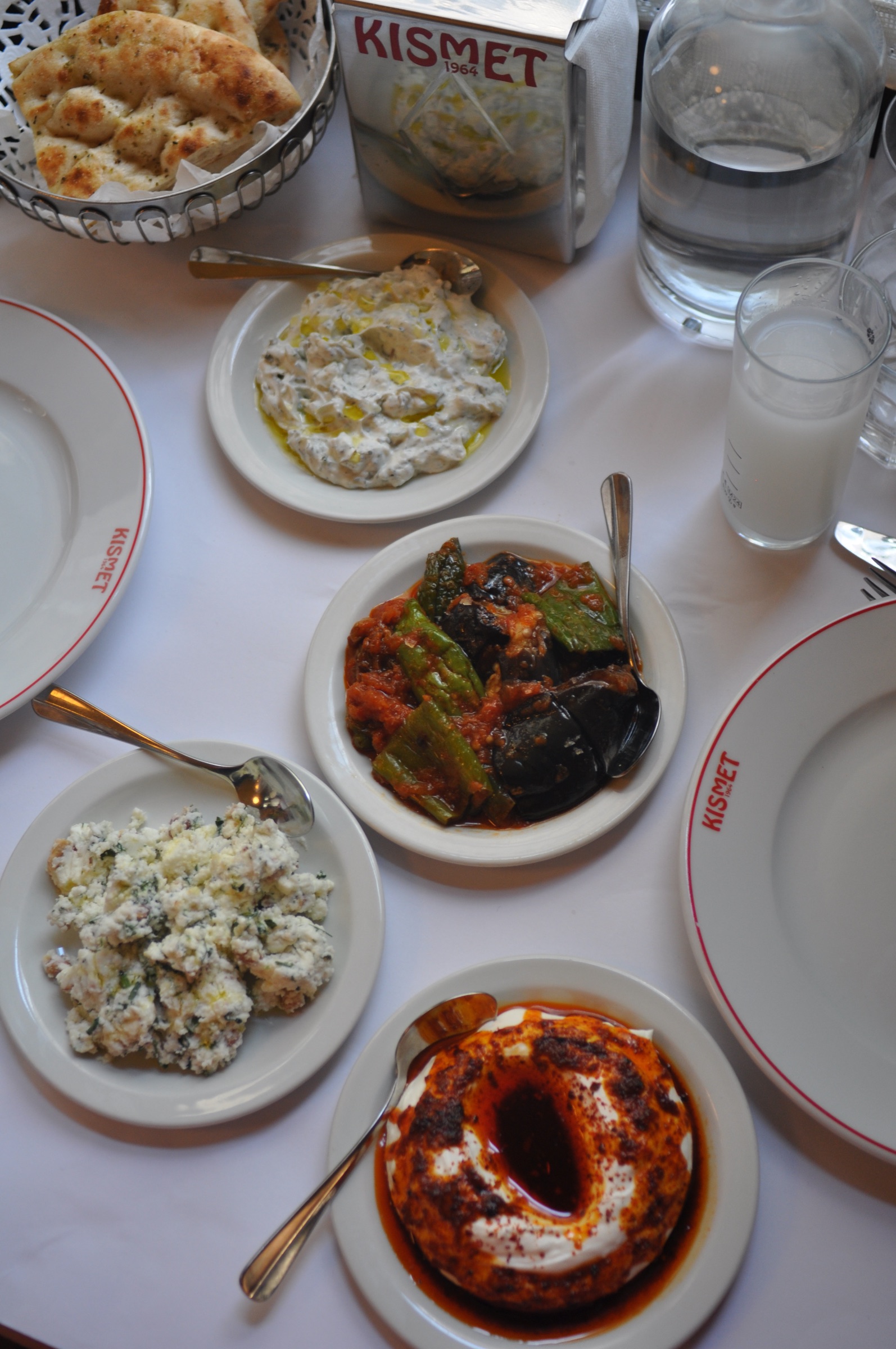
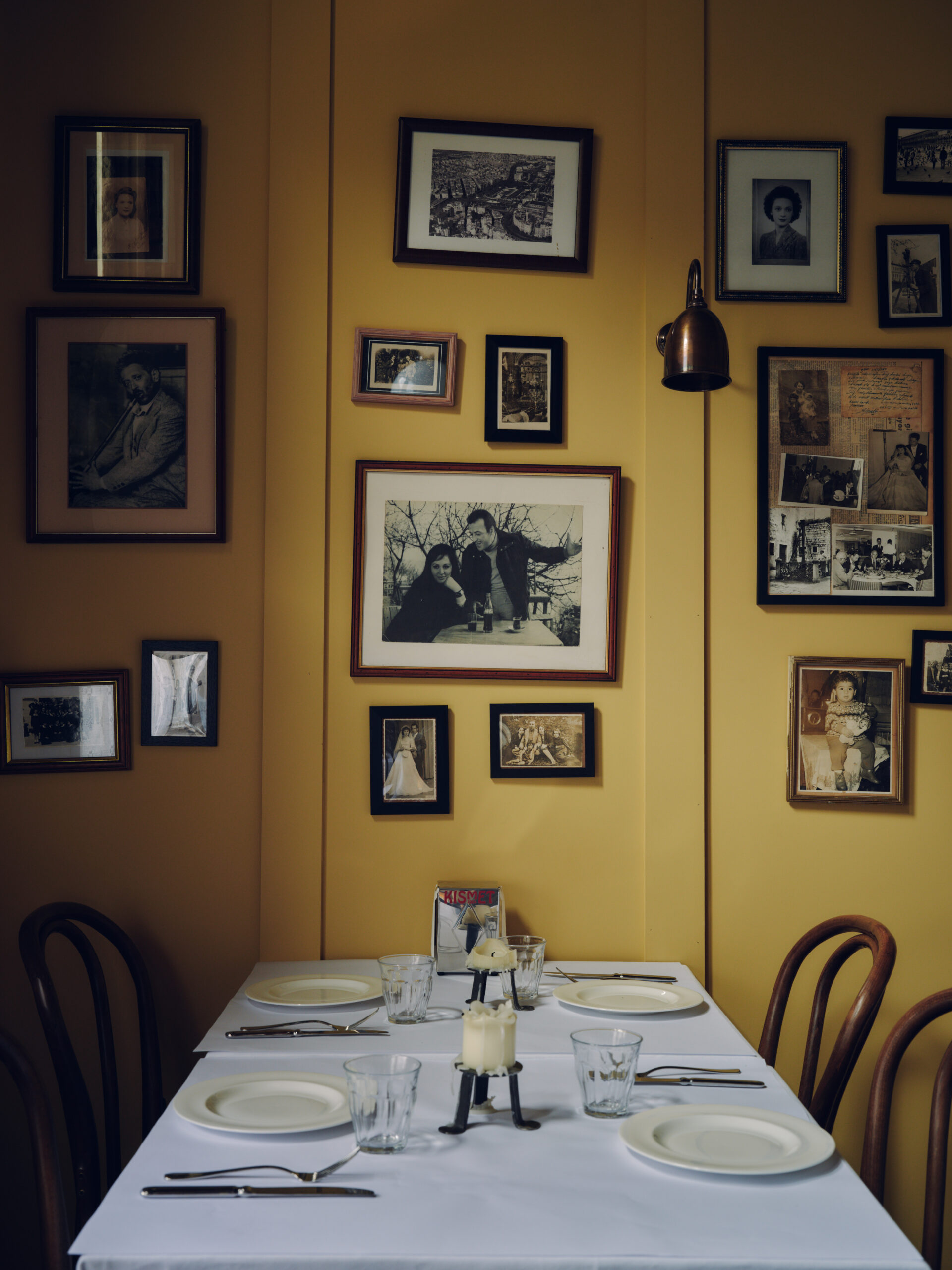
Inside there are lace curtains, metal napkin holders, black and white photographs on the walls, old magazine clippings bought from second-hand booksellers, a portrait of Atatürk, of course, and even a sign reading “Sigara içilmez” (No smoking)… Together, all these details create a surprisingly familiar atmosphere, and you feel as if you were in a meyhane that has been open in Beyoğlu for years.
The meyhane he had dreamed of for years
There are two people behind Kısmet. In charge of the kitchen is Keiran Mustafa, a chef of Turkish Cypriot descent, while the concept and running of the restaurant are in the hands of Dom Hamdy, whose name is behind some of London’s most talked-about restaurants of recent years, including Crispin, Bistro Freddie and Canal.
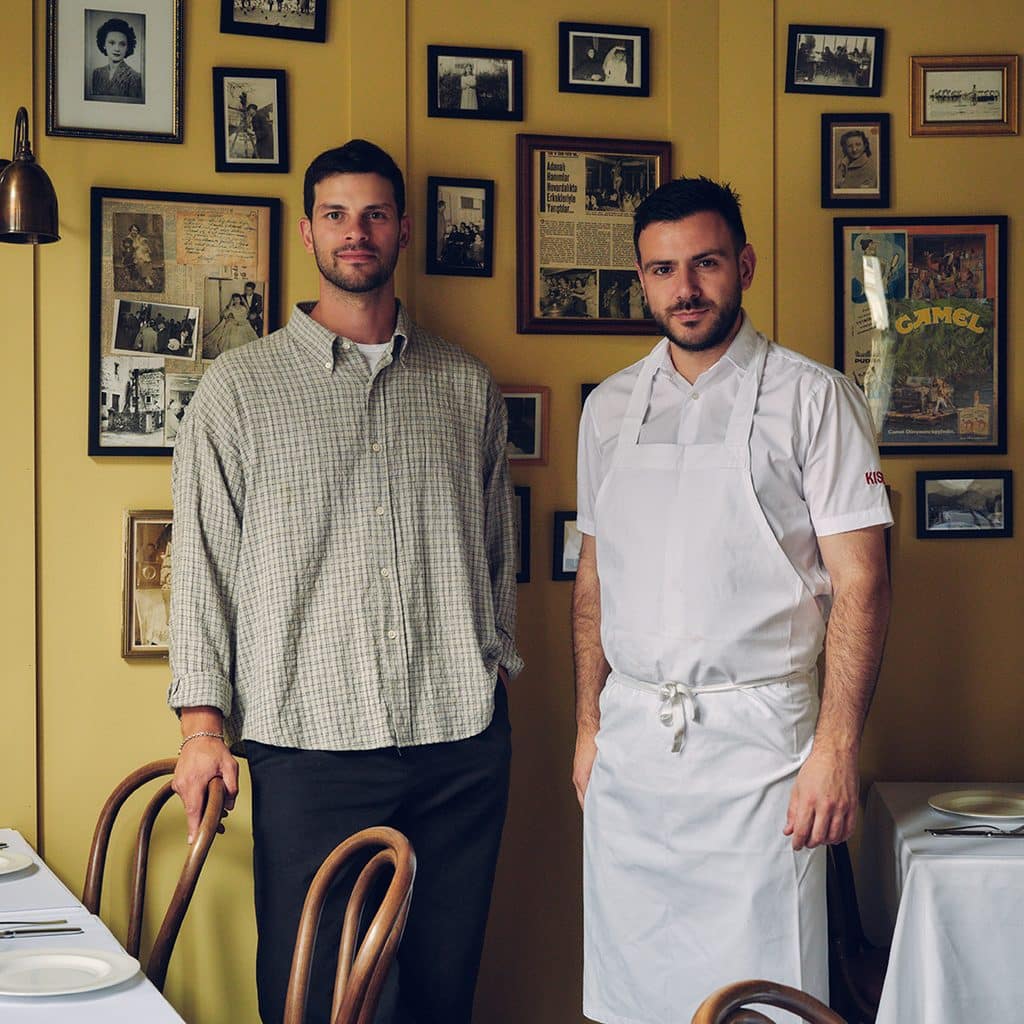
Keiran is an experienced chef who spent years working in many notable London restaurants, including the Michelin-listed BiBi. He had always dreamed of one day opening his own restaurant. Ever since the day he decided to become a chef, he says, he had wanted to open a Turkish restaurant. He remembers how different the dishes he ate in his grandmother’s kitchen as a child were from what people in England think of when they hear the words Turkish food.
For many years he had wanted to share with people the broad food culture of the table he grew up at, especially the slow-cooked dishes of Cypriot cuisine. From the very beginning Keiran had a meyhane clearly in mind, and in 2018 and 2019 he began to talk seriously about the idea with various people. Keiran and Dom’s paths crossed much later. The two began working together when Keiran was consulting on the Bistro Freddie and Canal projects. When Dom heard about the Turkish restaurant Keiran had been thinking about for years, he was immediately interested.
His art form, Dom says, is opening restaurants and creating worlds. He explains that watching an idea become reality, and then watching people eat and talk in the place he has created, is deeply satisfying for him. When he came across Keiran’s idea, he realised that although he loved Turkish food, he did not know enough about its many details.
The two worked on the concept for about a year, travelling to Istanbul and Northern Cyprus to research dishes, places and the customs of the table. The meyhane Keiran had imagined from the start, combined with Dom’s experience of creating restaurants, became the Kısmet of today.
Keiran’s inspiration, the meyhanes of Cyprus and Istanbul
In Cyprus
The Meyhane
Bizim Meyhane
Ömerli Meyhane
In Istanbul
Jaash Saloon
Cibalikapı Balıkçısı
Asmalı Cavit
Karaköy Lokantası
Giritli
A restaurant made of a thousand small details
Talking to Dom, what I was most curious about was the design of the place. I have seen the interiors of many successful restaurants in London, but I rarely come across cultural references as carefully thought through as those at Kısmet. Especially among Turkish restaurants. One thing Dom said while describing his approach to restaurant design has stayed with me:
A successful restaurant, he says, is made up of thousands of small details. Some people notice some of them, others see different ones. And some notice none of them at all, yet still feel a certain way.
Dom also explains that the main aim of Kısmet’s design was to get rid of the feeling of a newly opened restaurant.
They did not want to create a restaurant that felt new, he says. The place should feel lived in and look as though it had been there for decades. When you walk in, you should feel as if you are eating in an institution that existed long before you.
The chairs, for instance, date from the 1970s, and the signs of wear on them have been deliberately preserved. Because the old lace curtains at the windows were not quite the shade they wanted, a tailor dyed them with Persian tea in their own garden. The brass curtain rails and metal fittings were aged before being installed.
Even the metal napkin holders on the tables and the texture and typography of the menus are the result of painstaking research. For the typography of the logo, for example, they drew inspiration from the typefaces used in old newspapers they collected from second-hand booksellers in Istanbul, and from the gazino (music hall) and meyhane posters printed in them. The same research shaped the menu design: instead of the minimalist look seen in so many restaurants today, they chose a layout that recalls old meyhane menus.
Many of the black and white photographs, old magazines, frames and copper objects on the walls were gathered from flea markets in Istanbul. Among them are images that recall the old gazino and meyhane culture of Türkiye.
Recommended reading: Two Istanbul classics: the Safa and Seviç meyhanes | Paul Benjamin Osterlund, apéro
The metal tray on which tea is served after the meal has its own story too. As Keiran tells it, they were drinking tea at an inn during one of their visits to Northern Cyprus. Dom loved the old tray and asked whether they could buy it. The owner agreed to sell it for 10 euros. And so the tray that carried tea in Cyprus for years now carries on doing the same job in London.
One of the details I particularly liked was this tea and baklava service. The tea comes in small glasses on an old metal tray. The baklava is portioned straight from the baking tray and served at the table. Here, as in every corner of the restaurant, a small ritual has been created.
Even the fact that Kısmet sits above a pub, giving it the air of a hidden meyhane, is a lovely touch. This was not a deliberate choice at first. But Dom believes it has played a big part in the restaurant’s success. He points out that several London restaurants he loves, such as Brat, The Devonshire and One Club Row, are also on upper floors. Climbing the stairs and reaching a place tucked out of sight, he says, gives people the feeling of having discovered somewhere special. It reminded me, too, of Istanbul’s old meyhanes.
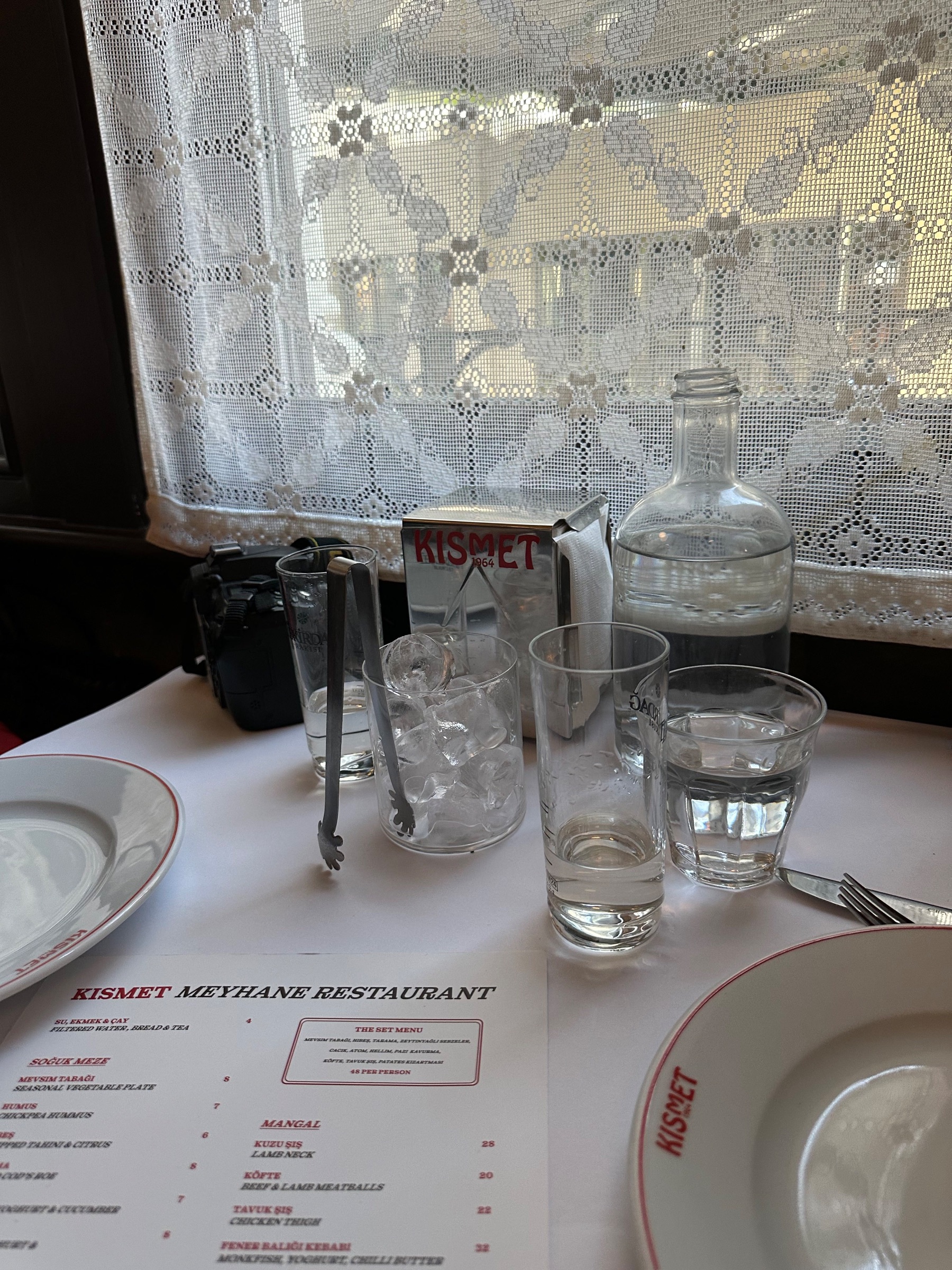
If you are wondering why the restaurant’s logo says 1964, that date has a personal meaning as well. It is the year Keiran’s grandparents emigrated from Cyprus to England.
A table reaching to Cyprus and Istanbul
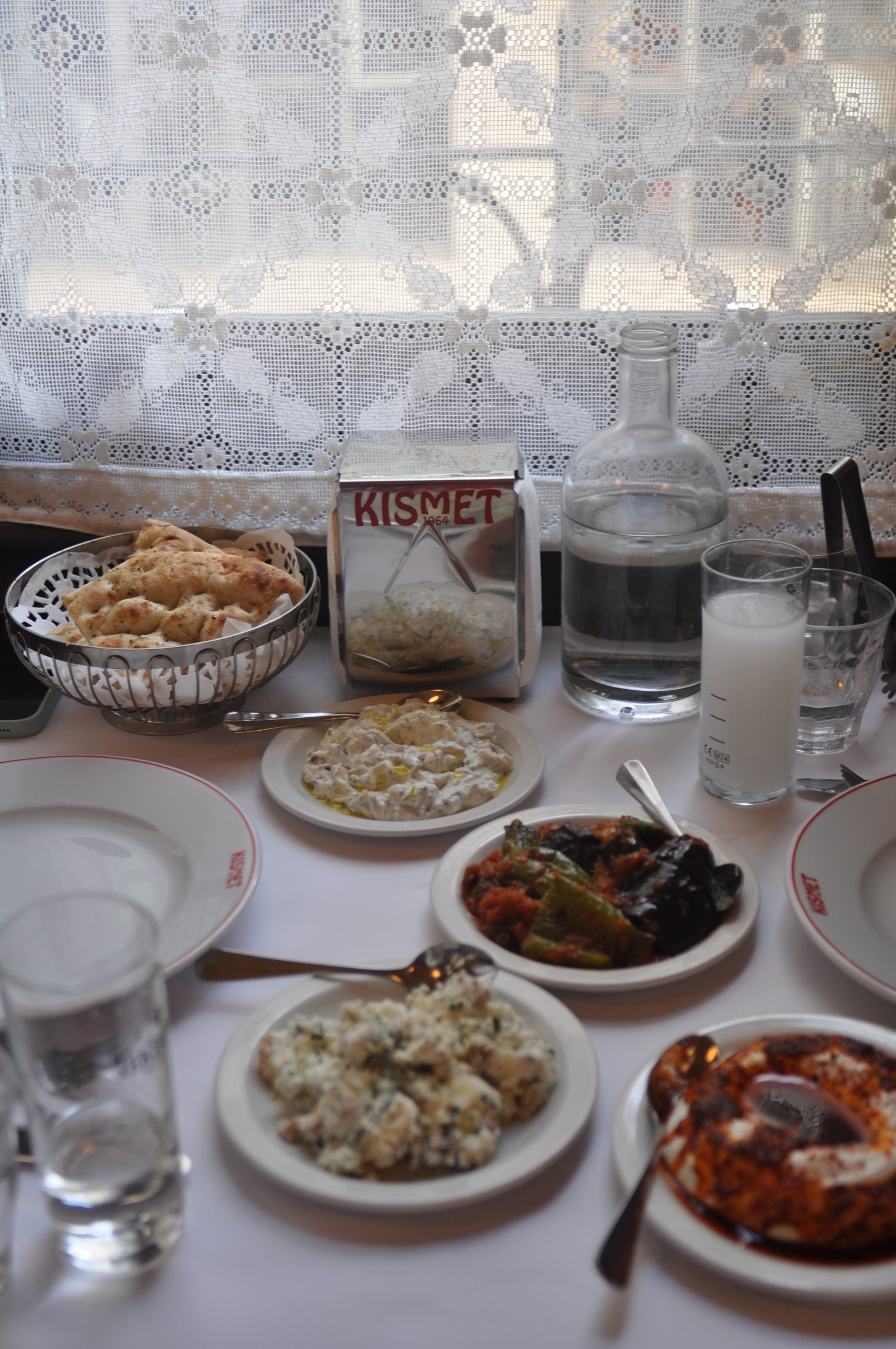
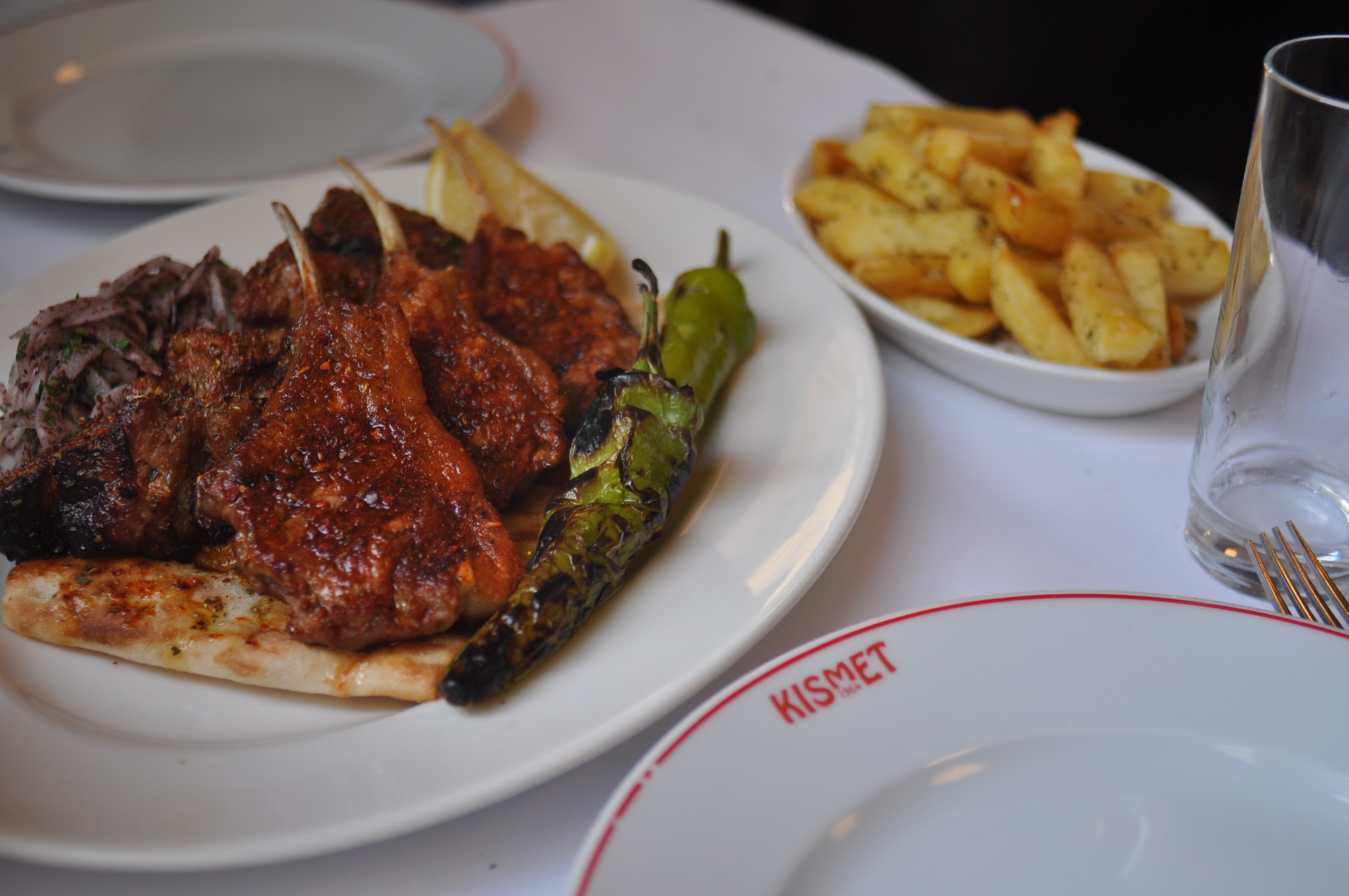
Of course, what gives all of Kısmet’s atmosphere its meaning is the food. Keiran’s menu draws on two sources: Istanbul’s long-established meyhane tradition and the Turkish Cypriot cooking he has known since childhood. It is a classic Turkish restaurant menu of meze, hot starters and grilled meats.
Istanbul has a very old meyhane culture and they wanted to capture that spirit, Keiran says, but there were also some Turkish Cypriot dishes he was determined to have on the menu. First among them is bulgur köftesi. His grandmother never told him in advance when she was making it; it was always a surprise. Because it took so long to prepare, it was one of the most special dishes on the table. They could eat five, six, even seven in one sitting.
The bulgur köftesi on Kısmet’s menu is inspired by this family recipe. Keiran says Turkish guests compare it to içli köfte (stuffed bulgur shells), but the ingredients and method used in Cyprus are different.
Another important dish is yaprak ciğer (thinly sliced liver). Keiran says that in England liver is remembered as dry, overcooked food, associated above all with old school dinners. By slicing the liver thinly and frying it, they achieved a lighter, crisper result, and for me it was one of the standout plates of the meal.
He wanted even someone who does not like liver to eat it and realise how delicious it really is, he says. Liver is a much-loved dish in Türkiye and Cyprus, so he focused on preparing it in the best way possible.
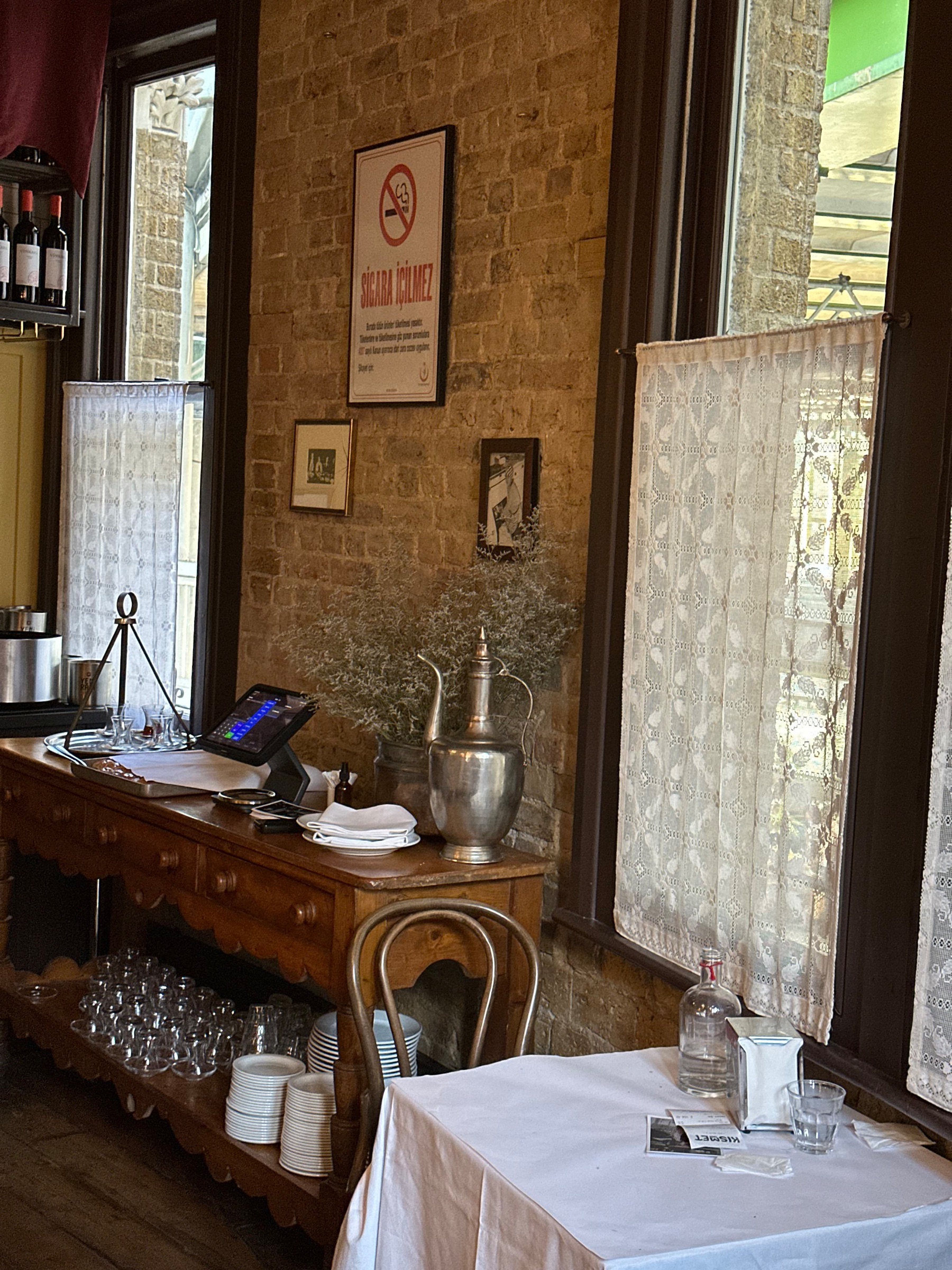
Another key part of the menu is atom (thick yoghurt topped with hot chilli butter). Because it was one of the meze that stayed with him most from the meyhanes he visited in Istanbul, Keiran made it one of Kısmet’s signature dishes. Atom was always one of the meze he remembered from meyhanes, he says, so he wanted it to have an important place on the menu. It was one of my favourites on my visit, too. It is not usually among the first meze I would order, but I loved this version with its spicy butter, almost like the sauce on mantı (Turkish dumplings).
Over time he would like to serve more piruhi (Cypriot filled pasta), molehiya (jute leaf stew) and other traditional dishes from Cypriot cuisine. But the small kitchen on the upper floor of the Globe Tavern has its limits. That is why the daily specials board plays an important role. With dishes sometimes served for only one or two evenings, Keiran aims to introduce guests to flavours they would not normally order. They even had to take some dishes off the original menu because of the physical constraints. One of them is şeftali kebabı (minced meat wrapped in caul fat), one of the most characteristic dishes of Cypriot cuisine. The heavy smoke it produced caused problems for the restaurant and the neighbouring businesses. Keiran says he wants to put the dish back on the menu once they move to a permanent home.
The changing place of Turkish food in London
In both of my conversations with Keiran and Dom, the talk naturally kept coming back to the same subject: the position of Turkish cuisine in London. Turkish food has been known and loved in England for many years. Yet for many people it is still associated with kebab, döner and fast food eaten late at night. These are, of course, part of our culture too, but when I think of the variety of restaurants in Istanbul, it becomes all the clearer how limited the representation in London remained for so long.
In May I had written a more detailed research piece on this subject, looking at newly opened chef-led restaurants and street food places, but as I kept wondering about the whys and hows of an English investor and an England-born chef setting out to open a Turkish restaurant, I wanted to open up the subject a little further.
Recommended reading: How do ethnic cuisines become haute gastronomy? | Reyhan Ülker & Zafer Yenal, apéro
Keiran wants non-Turkish guests to understand that Turkish cuisine is much more than kebab. Of course they serve kebab too, and it is an important part of the cuisine, he says, but he also wants people to see how elegant, romantic and special a meyhane can be.
One of the most important things Dom took from the trips to Istanbul and Cyprus was the quality of the food. He was struck by the difference between the Turkish food he had eaten in London before and the quality of ingredients, craftsmanship and cooking techniques he found in Türkiye. He points in particular to the way meat is handled, how döner is prepared, and the techniques developed by masters who have been doing the same work for years. He feels the examples of Turkish cooking he had known before did not fully reflect this richness. When I ask what it will take for this perception to change, his answer is very simple: time.
Italian and Spanish cuisines, too, reached their current position in London only after decades and the opening of many successful restaurants. Dom believes Turkish cuisine will go through a similar process. As good restaurants multiply, people’s interest in the cuisine and their expectations of it will grow.
Keiran thinks along the same lines. In fact, he says the new Turkish restaurants are making room for one another rather than competing. He thinks the opening of Yeni may have encouraged other projects such as Zahter. He describes a community forming among Turkish chefs in London, each representing a different approach to cooking. In the future he hopes to see other restaurants focusing on fish, ocakbaşı grills or more regional Turkish cooking. I think an important change is under way here. In London’s food world, instead of a single type of Turkish restaurant, there is a growing number of restaurants in different styles and catering to different budgets: chef-led restaurants, Turkish fusion, meyhanes.
Kısmet’s future
For now, Kısmet is operating as a one-year temporary restaurant on the upper floor of the Globe Tavern. The same space has previously hosted other projects, such as TOU. Although it was conceived as temporary, the interest it has attracted means the search is now on for a permanent home. Dom says reservations are full months in advance and that they want the new space to be about twice the size of the current restaurant. That way they will be able to welcome more guests and Keiran will be able to expand his menu.
Being on the upper floor of a historic building is now one of the key criteria for the place they are looking for. They want to keep the sense of discovery created by the Borough Market space. And they are in no hurry to find a new one.
When they find the right place, Dom believes, they will feel that it is the right place.
What stayed with me most clearly as I left Kısmet was the feeling of suddenly getting away from the crowds of Borough Market and from London, and stepping into an Istanbul meyhane I had known for years. That, in fact, is exactly what he means by “the right place”. Tea arriving on an old tray, baklava cut from the baking tray, Turkish songs in the background and familiar images on the walls…
As a Turk, noticing all these details was a particular pleasure, but the attention Kısmet is attracting in London shows that the experience does not speak only to us. Guests who had never known this side of Turkish cuisine are enjoying being part of this table, and it makes me think that we may be at the very beginning of a new positioning for Turkish food in London.