Reading the ‘Living Autobiography’ trilogy: can we dream of the future and stay open to the possibilities of today?
Deborah Levy’s “Living Autobiography” trilogy tells of a woman’s efforts to build a life of her own. With these books as company, we think about the times when the old order no longer fits us but the new one has not yet taken shape, and about ways to hold on to our dreams for the future without putting our present lives on hold.
While reading Deborah Levy’s Real Estate, I was thinking about moving too. One day I would draw up a list of the lives I might live in another city, the next I would try to work out why I did not want to go. Levy’s search for a house and mine walked side by side. But as the pages went on, what I found myself thinking about was less the house than the shape my life would take from here.
What did I want to take with me? What did I no longer want to carry on? How would I decide while there were still things I did not know?
Reading Levy’s three books, I met a life that was sometimes close to mine and sometimes quite different from it. I would stop at one of her sentences, turn back to my own experiences, jot down notes, then carry on reading, curious about her story. What I needed was as much a voice to keep me company in a space I could not yet fully define as a plan describing the rest of my life.
A living autobiography
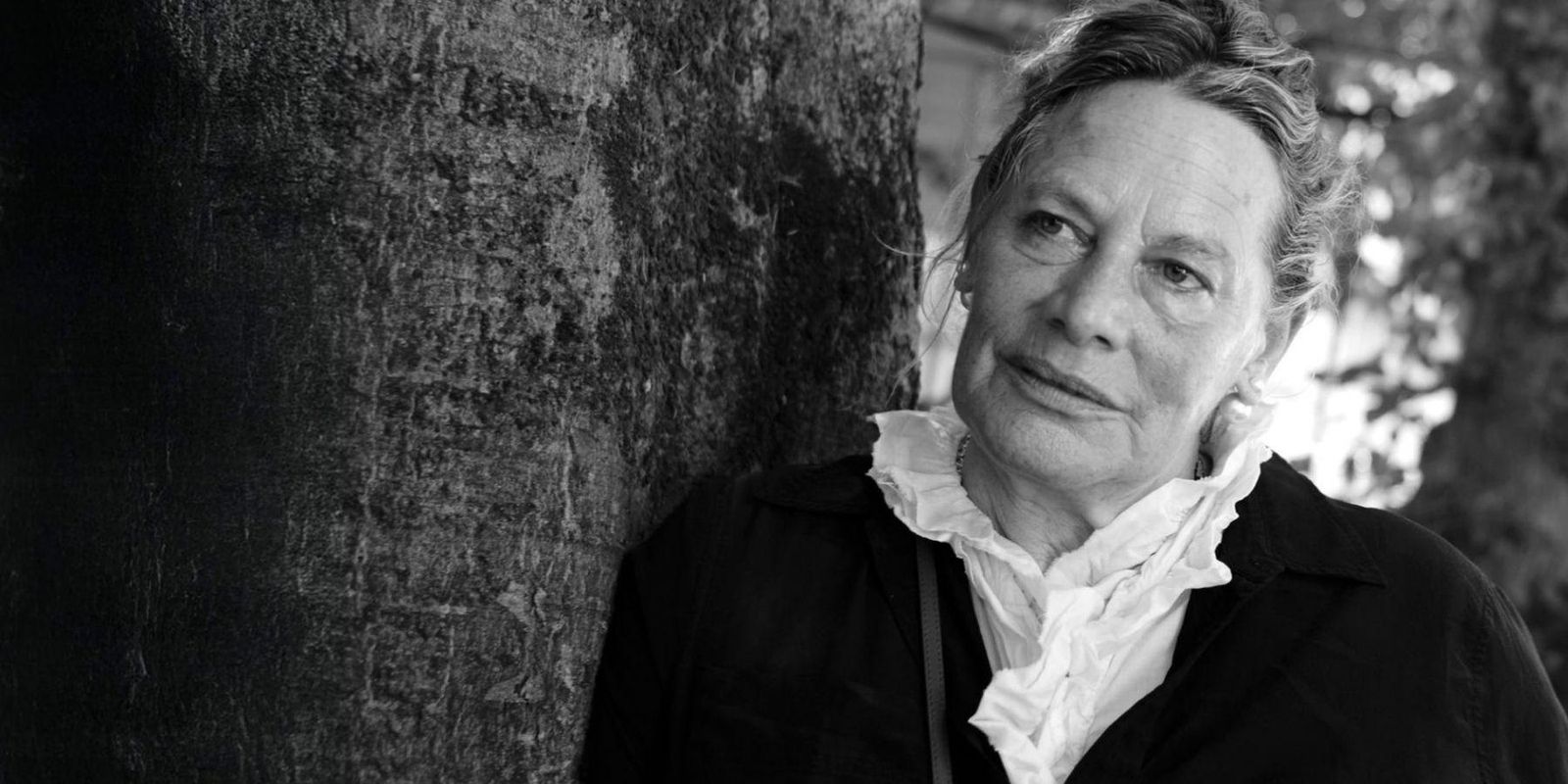
Some readers may know Deborah Levy, born in 1959, from novels such as Swimming Home and Hot Milk. The Living Autobiography series is made up of three books: Things I Don’t Want to Know, The Cost of Living and Real Estate. In this account, which stretches from her childhood in South Africa to her life in England, writing, being a woman, marriage, divorce, motherhood, making a living and building a life anew all move forward intertwined.
I like the phrase “living autobiography”. It has a different, more spacious ring than looking back once everything is over and joining up the dots. You can write while you have not yet fully worked out the meaning of what is happening. You can think through writing without knowing whether something is a beginning, an ending, or simply a period to be lived through in between.
Reading Levy, I felt I was following not so much a backward account of a finished life as a curious mind that keeps looking at what it lives through: sometimes brave, sometimes fragile, and a little mischievous too.
An encounter, an object, a journey or a small gesture… The cool irony she turns on herself as well when she talks about the details of everyday life did me good in those days. When you are in the middle of an existential transition, you can take life too seriously. Every feeling is a sign, every decision a turning point, every hesitation a separate issue to be worked on.
Yet we can tell what we are living through without immediately working out what it means. Sometimes we only realise what we are living through as we try to tell it.
When did we last update our story?
Telling the story of your own life is not just for writers. In a job application, on a first date when we explain who we are, at a reunion dinner with school friends we may not have seen for 5 to 10 years… Whenever we are asked to talk about ourselves, we choose certain pieces of our past and put them together, looking at them from where we stand today.
An experience we once described at length can now fit into two sentences. A pursuit we never used to mention can settle at the centre of our story. And sometimes, as we describe ourselves, we notice that a label we still use no longer quite fits.
Life’s major thresholds are also times when we review our story like this. When we think about what comes next, we are not only looking to the future. We are also reconsidering how we got here, and the choices, roles and desires through which we have defined ourselves.
In this sense, the first book of Levy’s trilogy, Things I Don’t Want to Know, opens up room to think not only about writing but also about the relationship a person has with their own experience.
The book responds to George Orwell’s essay “Why I Write” from the experience of a woman writer. Levy uses the four headings under which Orwell lists his reasons for writing as the framework for her own account. Returning to her childhood in South Africa under apartheid, her father’s imprisonment and her teenage years in England, she explores how the desire to write took shape. She weaves her experience of womanhood and motherhood into this account as well. So while answering the question “why do I write?”, she also makes visible a woman’s struggle to tell her own experience and make room for her own voice.
The question of giving your own experience a say comes up again when we think about the rest of our lives. In the story we have told so far, which of our desires had a place? Which stayed in the background? If we now want to live a role we once chose eagerly in a different way, how will we describe ourselves?
The answers do not arrive crystal clear. These are periods ruled by change and fluidity. We are trying to reconcile our past with what is only just emerging. Uncertainty and potential, side by side.
What if we have no script?
The second book, The Cost of Living, begins exactly where uncertainty and potential meet, on the shore where the more familiar map of life’s first half runs out.
To my mind, it is mainly with this book that the series begins to do justice to the author’s description “living autobiography”, and to give it its flavour. Throughout the account, which begins after the end of the heroine’s twenty-year marriage, we as readers are drawn, as if through a diary and almost in the present tense, into the struggle and the adventure of building a new life.
Levy describes the period when she moved into a flat in north London and, riding her electric bicycle up the hills, tried to rebuild her life. It is a time when her daughters are growing up, when she faces her mother’s illness and death, and when, as a woman and a writer, she questions both the material and the emotional costs of living independently. Freedom brings new energy, but it does not do away with vital needs and responsibilities such as making a living and caring for others.
The chicken she bought for dinner falls into the road when her shopping bag splits, and a car runs over it. The garden shed she finds to write in has to be shared with a chest freezer. Thanks to her own particular humour, which I found so refreshing, Levy makes visible the distance between the stubborn will to live and the details of life that never quite go to plan. At one point she reflects:
Life was hard and she had no script. Perhaps, she thought, she was writing one.
Next to this sentence I had noted down my own questions: Did I want to settle for a ready-made script? If not, what was my own script? Did I know it?
Wanting a change and knowing how to live inside it are not the same thing. That is why the distinction William Bridges draws between change and transition is useful: moving house, a separation, retiring or starting a new job have a date in the calendar. These are the changes that happen in our lives. But rearranging our daily rhythm, our relationships and the way we define ourselves has no such fixed date or duration. Transitions like these are a gradual, laborious process of construction in which we respond to the small or large upheaval that change creates. The old order no longer holds, and we have not yet fully settled into the new one.
Sometimes nothing has visibly changed yet, but a transition has begun inside us. A search, a longing appears. We sense that the old life, the job, the relationship or the rhythm no longer suits us. Over time, this inner movement can lead us to a concrete change.
The feelings of this limbo do not fall into line easily either. If I feel relieved, why am I sad? If I chose this, why am I afraid? What does it mean that I miss the old while I feel eager for something new?
When you are right in the middle of a change, it is not easy both to face it and to make sense of it. The heat is too high. It is like holding your hand over a flame. This dance of change and transition asks us for time, understanding and the right to let things steep.
Perhaps that is why what draws me to Levy’s story is not only how a new order is built, but how life goes on before it has been built. Independence is not the reward of a life that will begin once all the difficulties are over. As she keeps writing, working and meeting people, she is also exploring how she wants to live.
Being the author of our own story is not, after all, about writing what comes next in one sitting and being done with it. It is like a tailored garment: we try it on, wear it, adjust it here and there, and try it again.
Real Estate: where is the life we are looking for?
In Real Estate, the last book of the trilogy, Levy is approaching sixty. At a time when her daughters have grown up and turned to their own lives, and her writing is offering her new encounters and new freedom to move, she thinks about how and where she wants to live. In her imagination there is a large old house with a pomegranate tree in the garden. Throughout the book we keep circling back to that house. But as much as its rooms and garden, what matters is the kind of life that will be lived inside it.
Buying a house, it seemed, was not the same as having a home.
When she says she has carried that house inside her for years, her friend Agnes says it must be very heavy. Why not let it go? Levy’s answer is firm: without the dream of that house, she would fall apart.
As I read, I genuinely wondered whether she would find that house in the end. My own thoughts of moving and her search had become tangled up. Would the house of Levy’s dreams have an address? And when I settled somewhere else, would I have solved some of the questions of my life?
Dreaming is good. It is precisely that picture in our minds that keeps us going. The idea of a house, a city, a relationship, a new pursuit or a different way of living in the future does us good even when there is nothing there yet.
But at some point the equation can flip. The dream we build for the future can mortgage the life we are living now. As if our present life were a long rehearsal before the real show begins.
Once these conditions fall into place, that is when I will really live.
A waiting of this kind had formed around my own thoughts of moving, too. But Levy does not just wait. She travels, works, meets people. She spends time in Paris on a writing fellowship and steps into the daily life of another city. She writes part of the book there. Even before she has settled into the house of her dreams, new pieces of her life keep taking shape.
Towards the end of the book, Levy’s account meets my questions again. As she pursues the house of her dreams, the life she has already built also becomes visible in all its richness: her books, her daughters, her friends, her journeys, her conversations. The possibilities her writing has opened up for her and the bonds she has formed.
The idea of the home she is looking for spreads beyond the property she longs for. The meaning of a house of her own does not disappear. But the one thing that would make her present life valuable is not that piece of real estate she does not yet own.
Flirting with possibilities
It is possible to want things from the future and still be open to the possibilities of today. Sometimes it is good simply to flirt with possibilities. In flirting there is attention, curiosity, room to be surprised. But there is not yet the claim that “this is my destiny”. You move closer to something, you look, you listen. Perhaps you carry on, perhaps you don’t. Either way, the encounter is not wasted.
Visiting a new city a few times, trying out a different rhythm, seeing what kind of person you are within a collaboration. Sensing how it feels to live differently. Instead of the weight of big decisions, the lightness of small experiments.
We do not come to understand ourselves only by thinking, after all. Sometimes it happens when we sit at a different table, sometimes when we walk down a different street, sometimes when we try our hand at work we know nothing about…
Ah, we say, so there is this side of me too.