Bozcaada International Ecological Documentary Festival: ‘Local, small, slow’
We spoke with Nigar Mat, events coordinator of the Bozcaada International Ecological Documentary Festival, about the festival’s bond with the local community, the island’s ecological problems and what it takes to sustain a festival through solidarity.
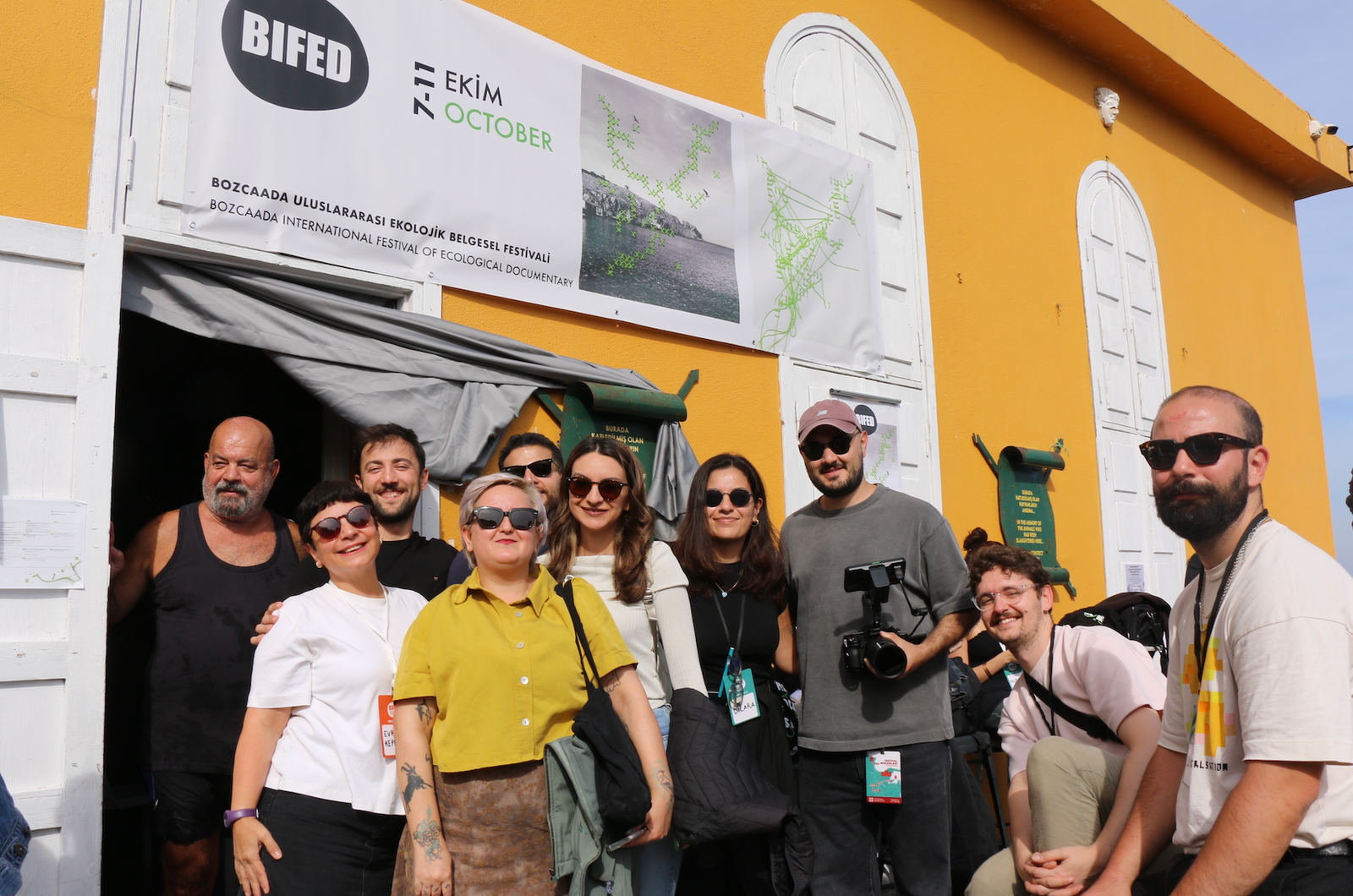
Some festival invitations excite you from the very first message, because they let you feel why they want you there. The invitation from Beyza Aksoy of the BİFED team was like that: it was clear she cared about the relationship I try to build between cinema and its social and cultural context, and she said she had been thinking about how this might intersect with the festival.
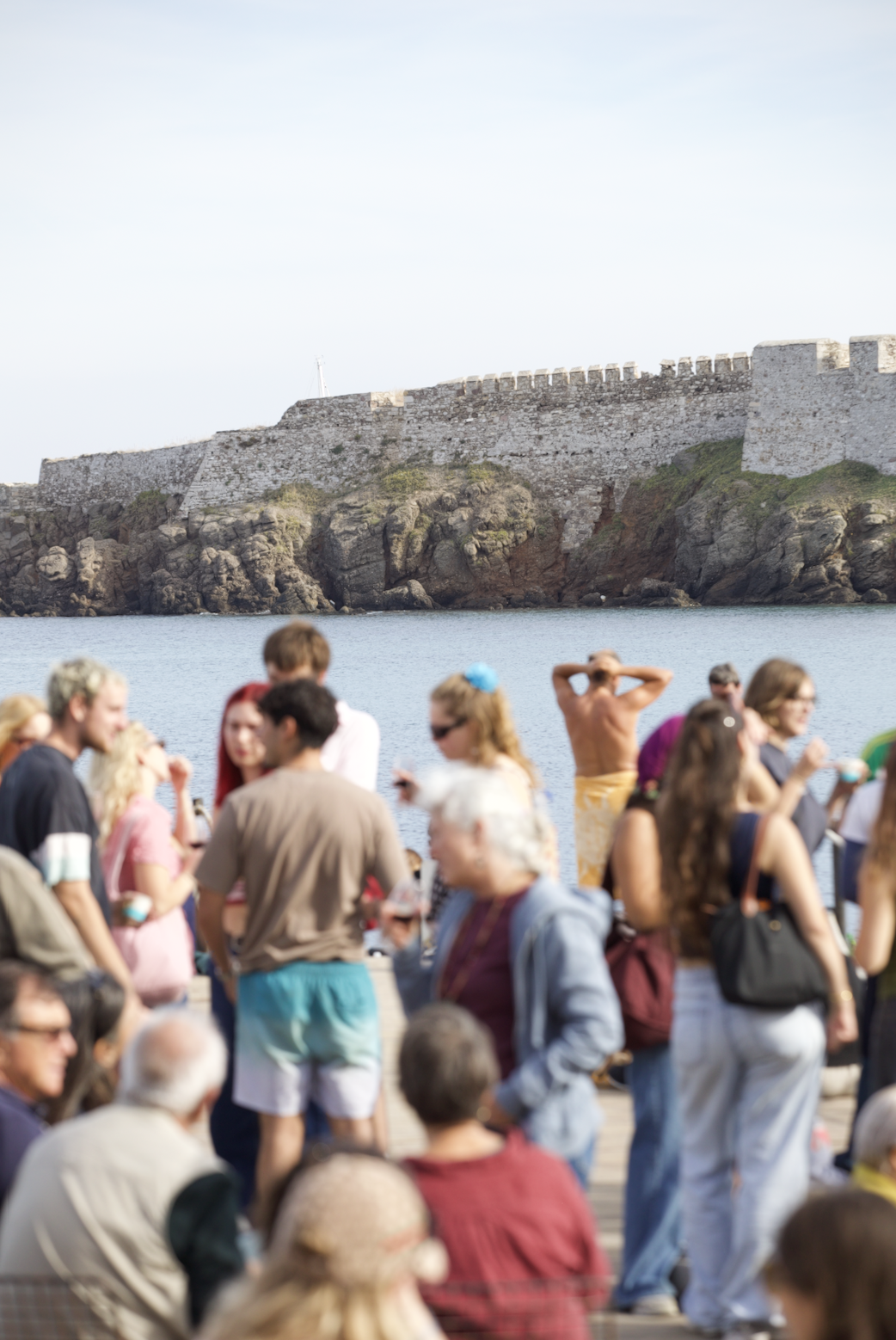
- When I reached the island, I found exactly the Bozcaada she had described in her message. The tourist season was over and many places had closed; some of those still open were keeping their doors open for the festival. The people we met in the streets were either islanders or, like us, had come for the festival.
I found here the same reasons I love festivals that blend into local life, such as those in Ayvalık and Kaş, but the season being truly over created an entirely different feeling: the island seemed less a busy tourist destination than a small world given over to the festival. Although I could not stay until the end, I am glad I was able to see what BİFED’s motto, “Local, Small, Slow”, really means in practice, and to breathe the air of this world for a few days.
Those few days also made me think about the definition and scope of ecology. When I hear the word ecology, what comes to mind first are problems more directly tied to nature; yet several of the documentaries I watched widened that frame.
Seablindness led me to see in this light what happens to seafarers left stranded for long periods on ships anchored in ports for economic and bureaucratic reasons, while Green Desert, showed that an area covered with man-made pine forests can also be an ecological threat.
In the Q&A after the opening film, Time Amongst Olive Trees, I watched the worries of an olive grower in Andalusia find an echo in a grower on Bozcaada. This closeness between stories from different parts of the world and the island’s own concerns made the festival’s bond with the local all the more meaningful.
In our conversation with Nigar Mat, BİFED’s events coordinator, we talked about how this bond came about, how the films reach audiences beyond Bozcaada, the island’s ecological problems and the difficulties of sustaining a festival through solidarity.
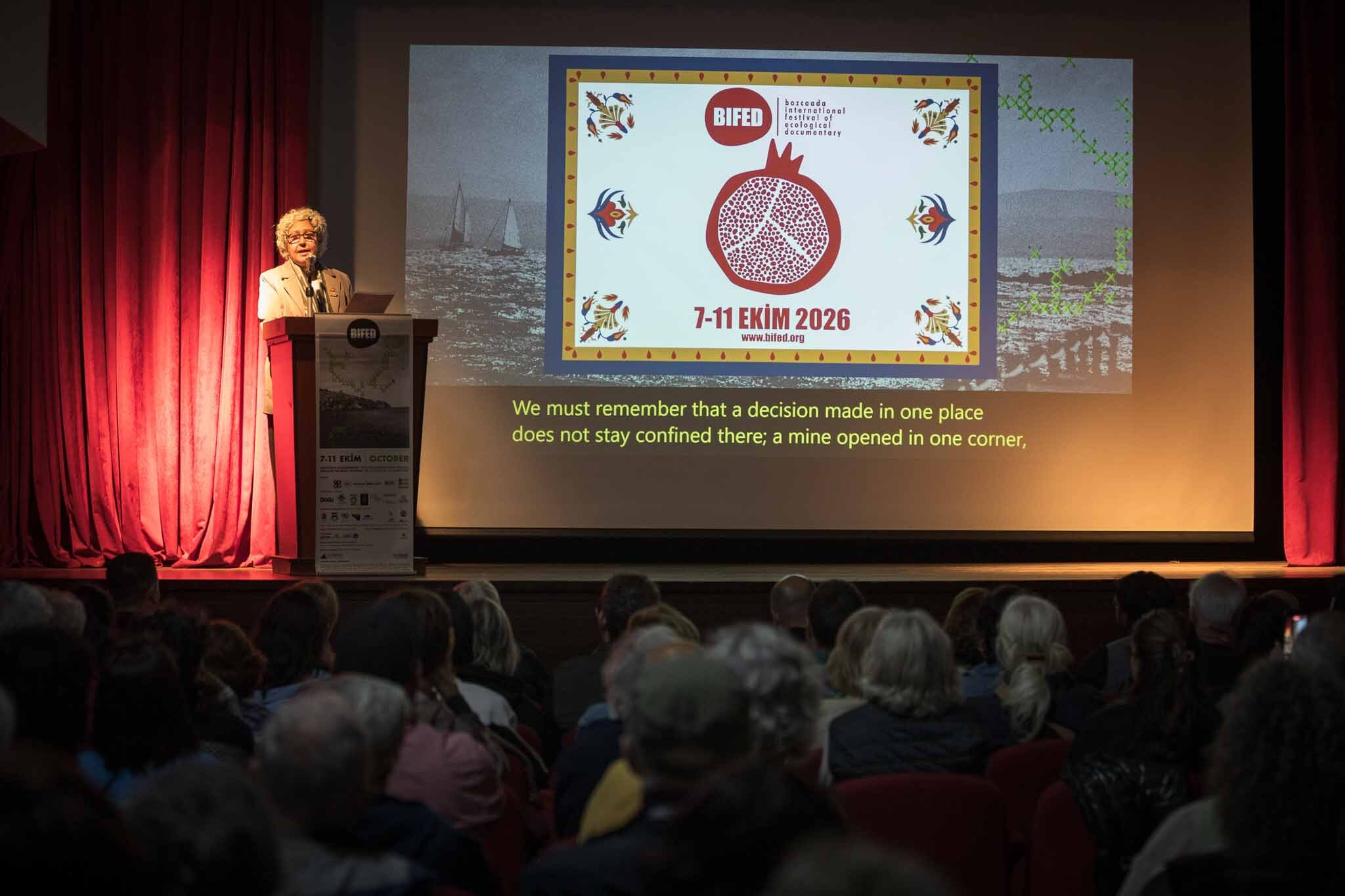
You have only been part of the festival’s organisation for three years, but from your speech at the opening ceremony I could feel how well you know BİFED and how much you have made it your own. How did your relationship with the festival begin? I would love to hear the story of how BİFED was founded from you as well.
Nigar Mat: I have been actively involved in the organisation for the last three years, but in the ten years before that I was here as an audience member. And when we talk about how the festival was founded, we have to turn to Ethem Özgüven and Petra Holzer, because they are its founding architects. They come from the documentary world and do everything there is to do with documentaries: they make them, screen them and teach them. In that sense they have a real command of documentary cinema. The “ecological documentary” they had in mind should be thought of as a field in its own right. So not just documentary, but specifically ecological documentary.
While Petra and Ethem were spending their summers here, they thought the island, a place of this scale, could be very well suited to such a festival. When they sat down with the mayor of the time, his deputy and the people here, everyone agreed it could work. In 2014 the festival began with the motto “Local, Small, Slow”.
Today, thanks to the connections we have built, BİFED documentaries are screened in many parts of the world, and likewise across Türkiye. But we never let go of that “Local, Small, Slow”. We have never compromised on it to this day. We hold on to this approach everywhere we go and with everyone we work with. We try to take it with us wherever we go, and to draw as much as we can from the local too.
In a very short time, the people of Bozcaada understood the festival and embraced it wholeheartedly. Even though the season is completely over, accommodation, food and drink are never a problem here, either for our team or for our guests. It is through their solidarity and support that we have come this far.
The festivals in Türkiye I enjoy returning to again and again are mostly held not in big cities but in small destinations, with a local spirit. How many islanders are on the BİFED team? How are your collaborations with local people and businesses going?
Nigar Mat: There are islanders on the team, but relatively few. As you may have noticed, we work with a very young team, and the island does not have a very young population. That is why we do not have that many islanders among our colleagues. But when it comes to businesses, solidarity and support, almost all of it comes from the island. The coffeehouse, the restaurant, the hotel, the patisserie; almost everyone is part of it.
There is so much going on in big cities. If you look closely, the audiences of some festivals are shrinking too. I remember the festivals in Istanbul in the old days, film festivals and music festivals alike. People waited for them like mad, studied for them, took notes. Of course there are still people who go, but how shall I put it, there is something going on, saturation or inflation, something like that.
Our intention, though, has always been to meet people locally. Let us not see this as simply taking films somewhere. We do take the films, but we also learn so much from the places we go. That is the whole idea: let us go to the local, let us learn that local knowledge ourselves. And if possible, let us be carriers, let us carry it somewhere else.
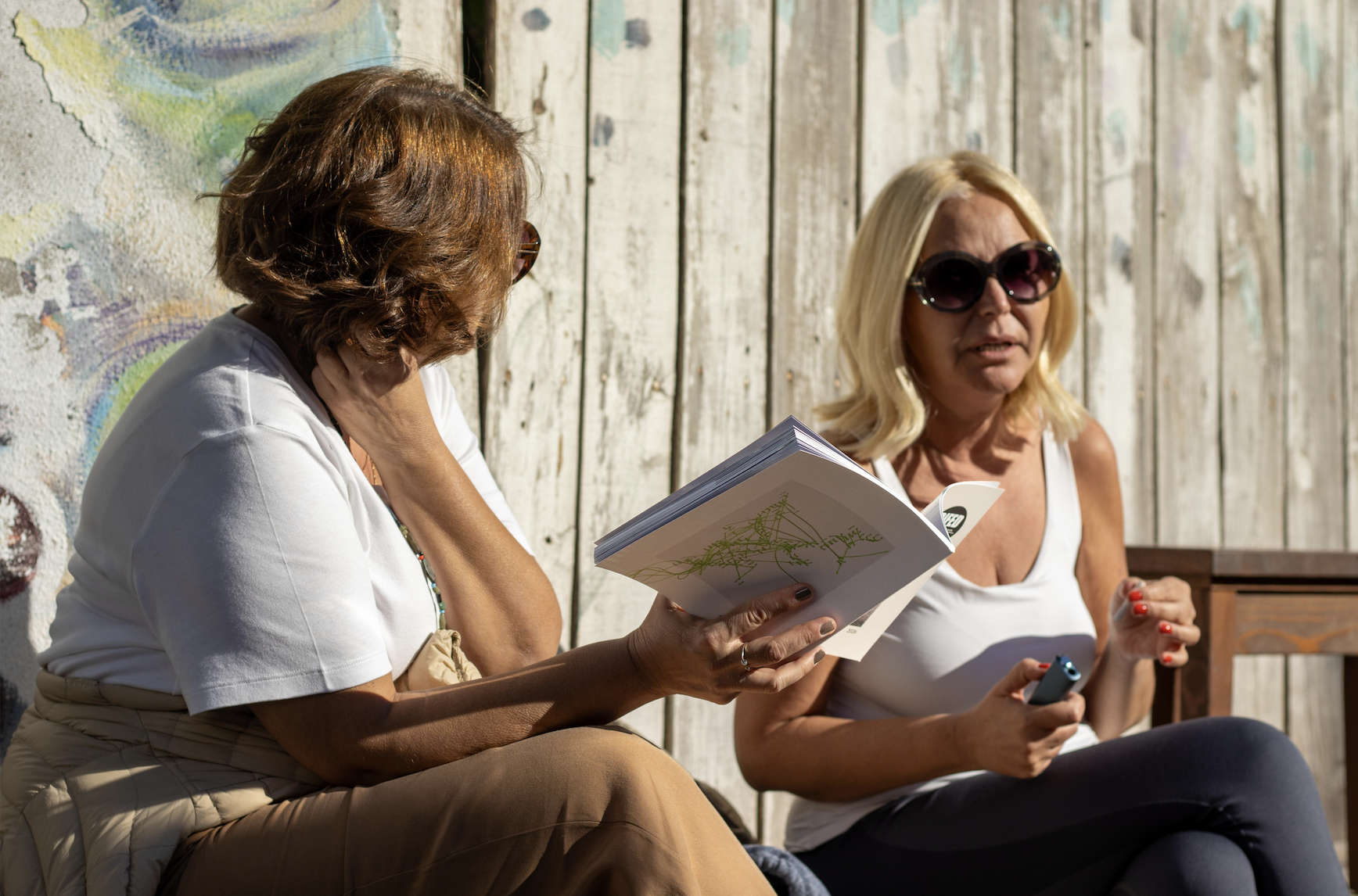
You take this idea of meeting the local beyond Bozcaada too. How do you bring the festival’s films to other audiences?
Nigar Mat: When BİFED brings these films, it actually solves a big problem in doing so. This year, for example, there are films from Brazil in the Yanomami language and from India in several local languages. Translations into English, translations from English into Turkish and subtitles are all prepared. So in effect we are preparing boneless fish for the audience.
Over the years a relationship of mutual trust has grown with producers, distributors and directors. The films are ready. Why should we not share them with other people, people who would never be able to see them anywhere else?
Last year, at the end of January and the beginning of February, we were guests at an inter-university winter festival in Akşehir. It was apparently the sixth edition. We went with six documentaries. There were many young people from universities across Anatolia. We reached as many of them as we could with those films. These young people would not be able to see these films on any platform or in any cinema. I do not want to call it a “service”, but it is another example of support and solidarity.
We also have a collaboration with the Istanbul Metropolitan Municipality. Do not think of it as Istanbul; there too we are actually doing something local. Once a month, a documentary is screened free of charge at the Beyoğlu Cinema as part of “An Island Breeze from BİFED”. We choose the film together with the staff there.
Every September we also put together a selection of five or six films at İPA Havuz, the Istanbul Planning Agency’s venue. They are screened under the title “Ecological Documentary Days in the City”. In Istanbul too, we try to reach the local. We know this, and this is what we try to do.
You show ecological documentaries from different parts of the world, yet the issues they deal with resonate here too. In the Q&A after the opening film, I saw that an olive grower here shared the worries of the olive grower in Spain; there were questions and comments about it. What kind of interaction develops between the films and the island’s concerns?
Nigar Mat: Something an islander wrote on social media recently was very important. A port project is currently being debated on Bozcaada. The project will have consequences, and people are very worried. They are deeply concerned about life both at sea and on land, about people’s future, and about the future of the island, the soil and the water.
There are various films in the selection, from Türkiye and abroad, that touch on this. That is no coincidence, in fact. In that post that appeared on social media a few days ago, an islander says, “We learned resistance, struggle, unity and fighting together from BİFED”. I truly value that.
So there is a two-way interaction here. Bozcaada nourishes BİFED, and BİFED nourishes Bozcaada, in a positive way and in every sense.
Apart from the port project, what are the main ecological problems islanders are worried about?
Nigar Mat: I mentioned the port project first because it is very much in the news and very recent. But first of all, rampant tourism is a very serious danger for Bozcaada. Over the years we have shown so many films about it. We can predict what might happen; we can see it. There are surely people on the island who have drawn inspiration from them.
In fact the biggest problem is tourism, that devouring kind of tourism. This is a tiny place, as you have seen. It cannot bear something like that. Nor should it have to. Then there is viticulture. Grape growing has become quite difficult here. Winemaking, grape growing, the island’s ecological problems... And because it is far from the mainland, there is a transport problem too.
The island’s harbour is an ancient one. I do not know if anywhere else in the world has a harbour this clean, where everyone can swim. I do not know much about the technical side, but there is a very good current here. And more importantly, there are seagrass meadows called posidonia. These are organisms that produce more oxygen than forests. Very few are left in the Aegean and the Mediterranean. This area, Bozcaada, is one of the places where they are found most. It is believed, and predicted, that the planned projects will do them great harm too.
There is also the question of clean energy. This island needs to get its energy cleanly. But how, that needs to be discussed. Wind, solar: each has its advantages and disadvantages. These are the kinds of ecological problems the island is dealing with.
Holding a festival is getting harder, especially in Türkiye. Are there extra difficulties in organising a thematic, niche festival like BİFED? What is the picture when it comes to finding sponsors or participants?
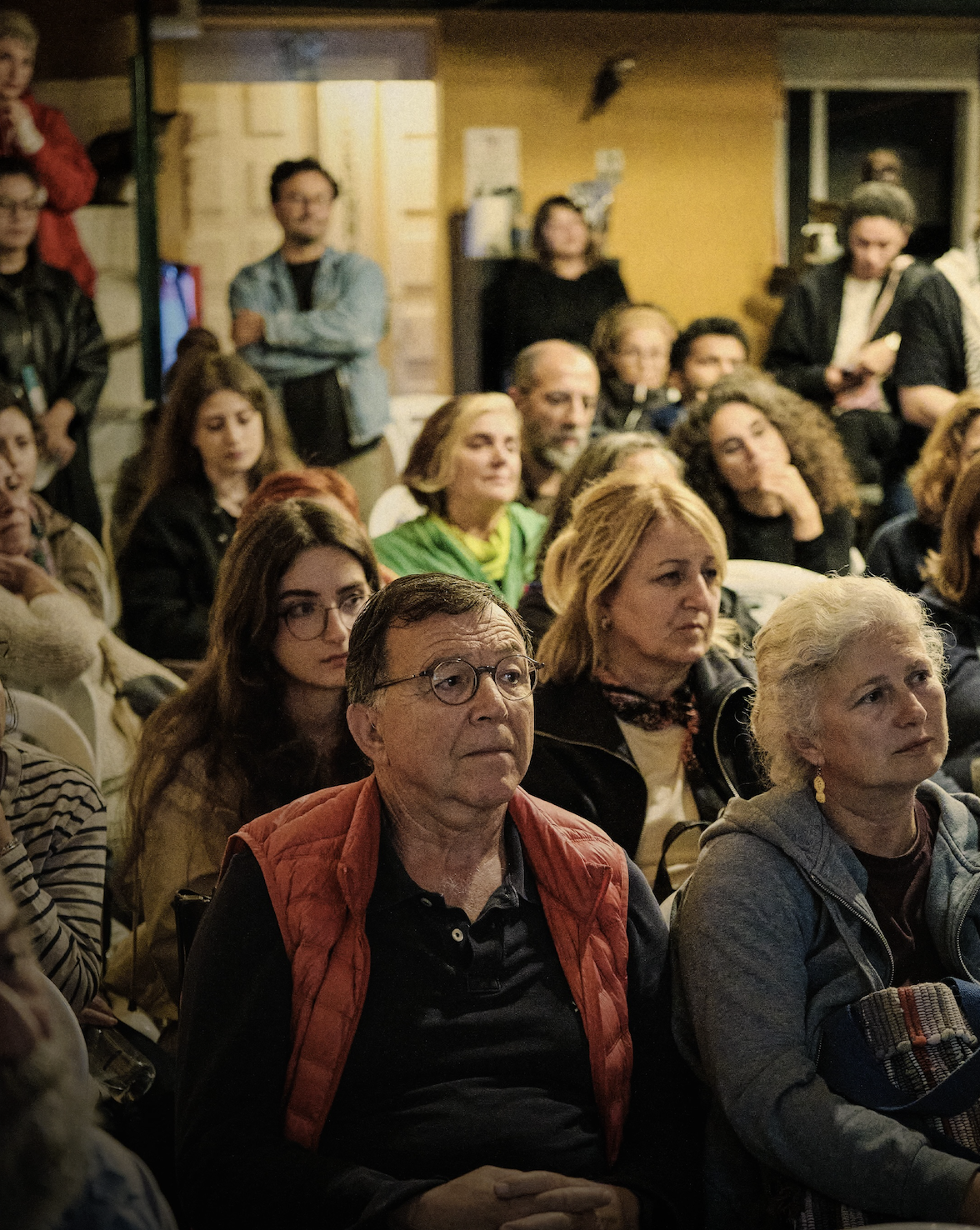
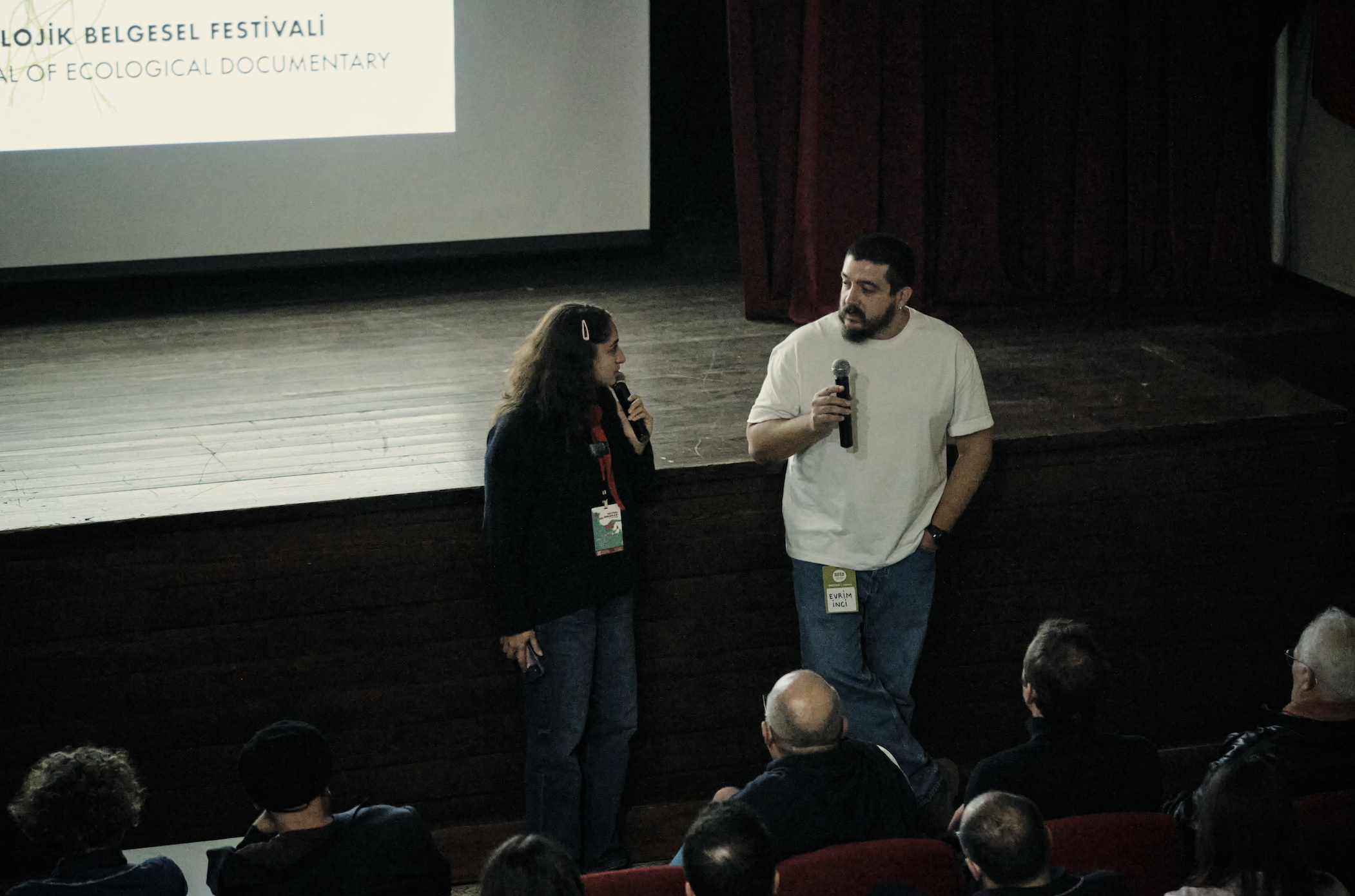
Nigar Mat: Shall I tell you something? We have no trouble finding participants. You can see it yourself, every screening room is full. We have jury members, directors and invited guests from Türkiye and abroad. But beyond them, many people come purely to be in the audience at BİFED, to take part in the festival.
Finding financial support, however, is very hard for us. Whether it is because, as you say, it is a very niche field, or because no festival can find support, I honestly do not know. But we cannot find it. We struggle a great deal to find backers and sponsors. This year, for the first time, we tried crowdfunding. We reached our target, we had supporters and we completed the campaign successfully. But it is exhausting. We are all truly worn out, because then you cannot focus on the festival’s content, on the things you want to do. I suppose we do not really know how to get our message across, either. That is our sorest wound.
You said you have no trouble finding participants. On my way to the island, I saw that half the bus was full of Erasmus students. How did you reach them?
Nigar Mat: We actually have Erasmus students every year, but this is the first time there has been such a large turnout. When word was sent out through our coordinator Ethem Özgüven’s connections at Bilgi University, a university in Istanbul, a large number of Erasmus students wanted to come as participants. This year there are nearly fifty students here. They are very happy too; I chat with them now and then. And we are very happy to see them. I think the islanders are happy as well. To use the fashionable phrase, it is a “win-win” situation.
At first it seemed to me that holding the festival after the tourist season makes it a little harder to mingle with the island; many places are closed. But you can feel that those still open have stayed open for the festival. Do you choose the dates specifically to create this encounter?
Nigar Mat: Yes, you are quite right. These dates were chosen deliberately, knowingly, on purpose. Since it began, the festival has been held in October. Depending on the storm calendar it can shift three to five days earlier or later, but it is always in October.
The point is that the season has closed; we want that specifically. Because then those who stay here only for BİFED meet those who come here only for BİFED. That is the kind of space we want to create. We do not want all of this to be lost in the bustle and chaos of tourism. Since we are doing something so special, its supporters are special too, and so are its participants.