Digital nomads on the “Geographic Resonance Line”: is it really where we live that we are running from?
Perhaps the invisible line stretching from Bali to Koh Phangan, from Goa to Tulum, should be called the “Geographic Resonance Line”. It is a network of circulation where people try to find the rhythm they have lost. But after a while you notice something else: people do not find resonance, they simply carry it from one country to the next. That is why the Geographic Resonance Line is less a map of solutions than a map of symptoms.
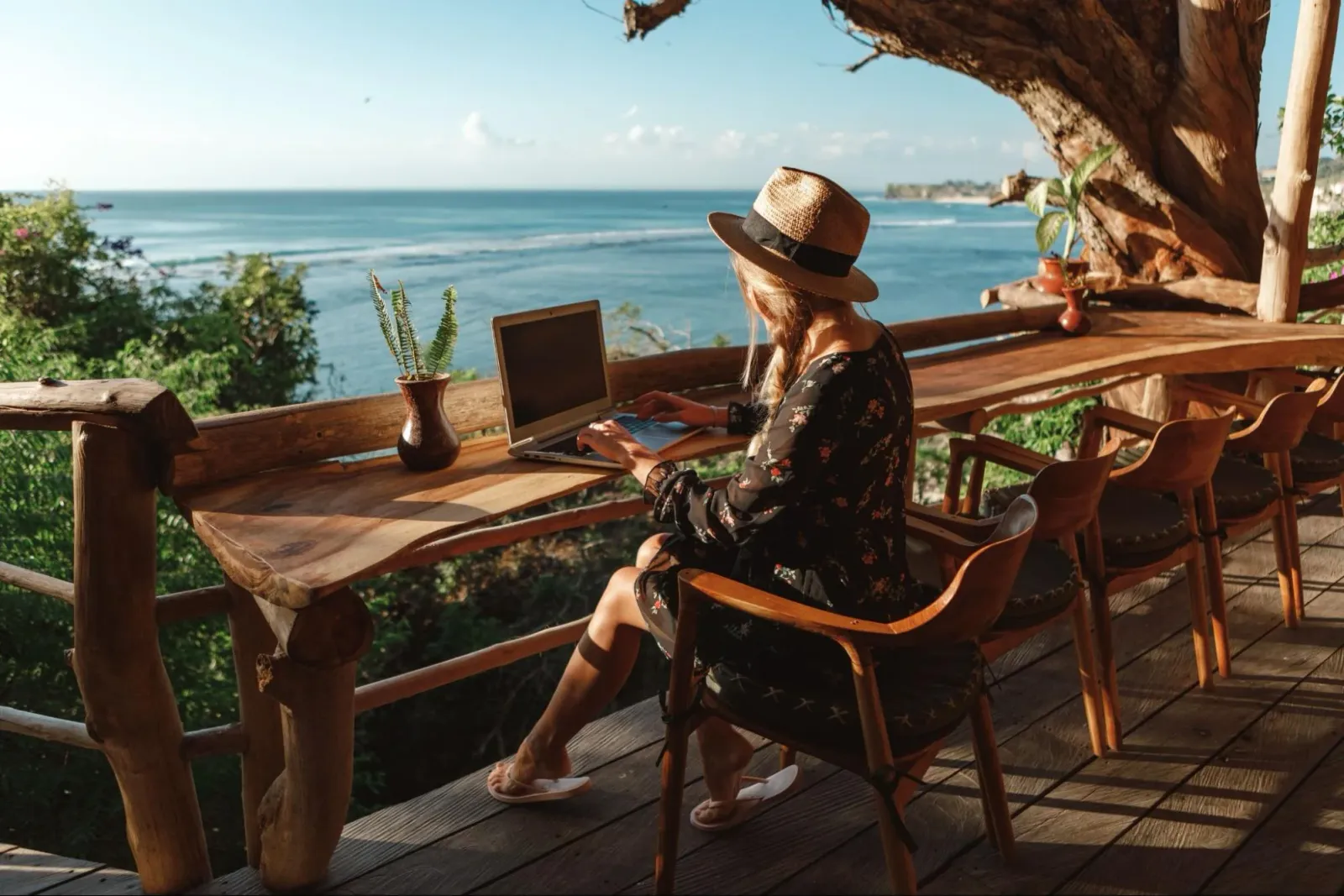
Koh Phangan. Bali. Chiang Mai. Da Nang. Penang. Canggu. Ubud.
These places, hundreds of kilometres apart on the map, share a common language: the same coworking spaces, the same yoga studios, the same organic coffee shops, the same “high vibe” phrases.
On an island in the Gulf of Thailand I heard the same sentence every day. The words changed, but the meaning never did:
“At some point I decided I didn’t want this to be my life.”
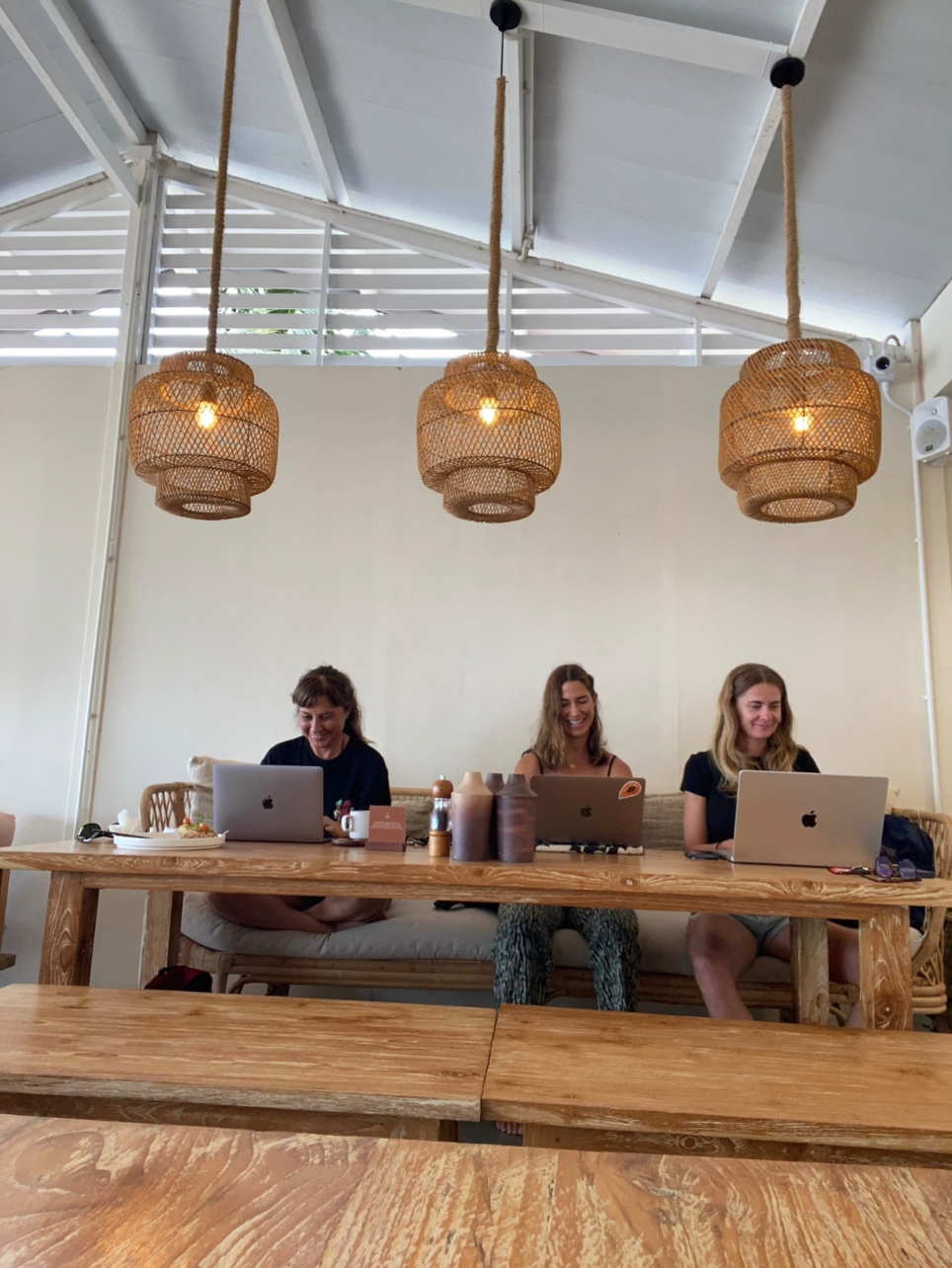
A software engineer who had left Germany, a former advertising professional who had walked away from agency life in London, a Canadian physiotherapist, a young American editor… The passports were different, the sentence was the same. I was part of that picture too. Coffee in hand, laptop in front of me, a notebook and a book beside me. I have no distance that sets me apart; only questions.
I think nomadism has another face, one rarely talked about and different from the one on offer today: never quite feeling that you belong anywhere. For my generation and those before us, nomadism came from a more existential place. It was less an escape than something close to a reckoning. Today’s nomadism, by contrast, feeds more on a spiritual vocabulary. It is presented as a hybrid way of life, distinct from tourism. The difference may look small, but that is where the whole matter begins.
A tourist collects experiences wherever they go; a nomad tries to build an everyday life for a while. Having to form new relationships again and again, a suitcase that is never fully unpacked, learning another country’s bureaucracy each time, trying to turn a café into a home… Perhaps the real work of today’s nomadism is not moving, but trying to settle again every single time.
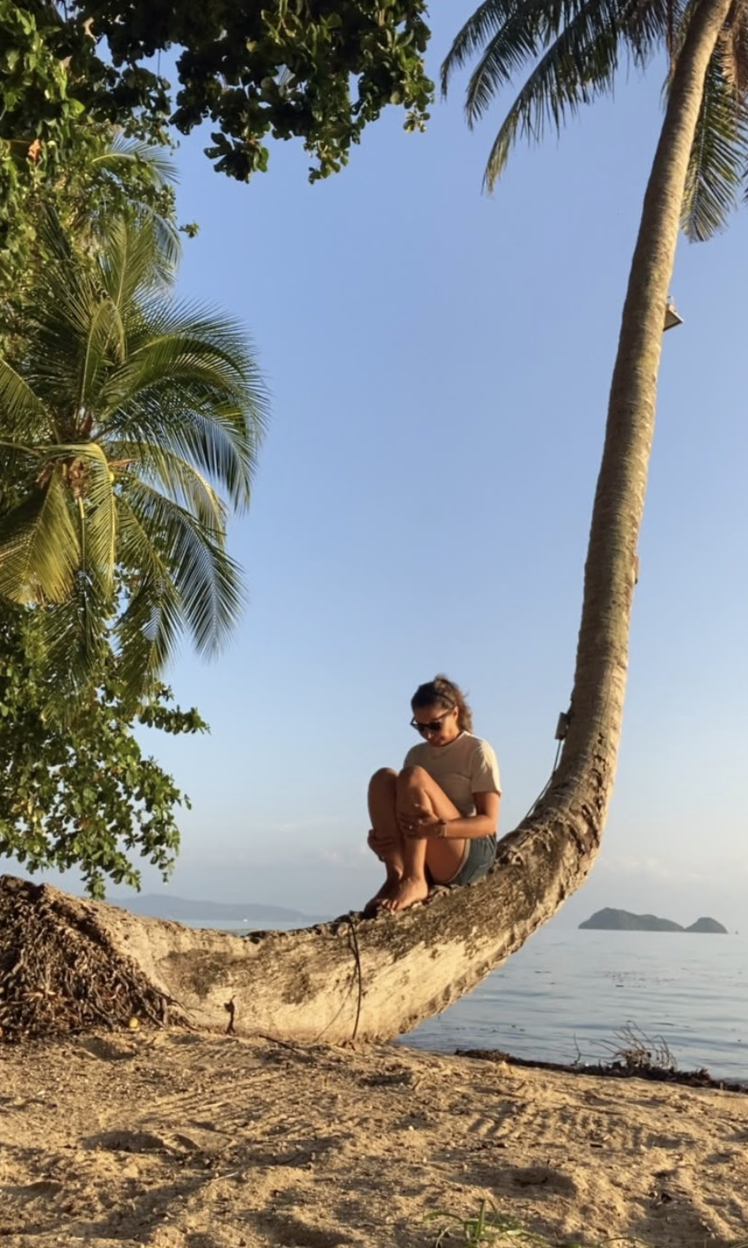
Before I came here, I drew myself a map. Where could I live for months, and where could I go after that? But while I was making the map, another question was on my mind: was I really the one deciding this? Or had algorithms already designed a life on my behalf? Software developers doing yoga in Bali, designers working on their laptops in Chiang Mai, tiny houses, slow living videos… At first I took all of this for the new romanticism of social media. Then I stepped into this life and realised that the algorithm was not only making a trend visible. It was also making visible the unravelling of our relationship with modern life. How much of what brought me here was my own decision, and how much was a story, shown to me again and again, that had talked me into it? I still don’t know. But the question itself grew a little heavier with every month I spent on the island.
There is a line running from Koh Phangan to Bali, from Chiang Mai to Da Nang, from Penang to Canggu. These places resemble one another not only in their climate or their scenery. They also produce similar ways of life, similar venues and similar dreams of the future.
Digital nomadism has become more visible in these regions as remote working has spread. But the point is not simply that people pick up their computers and go to other countries. What is changing are our expectations of how a life should be built.
Throughout history, migration has been driven by powerful reasons such as war, poverty, oppression and economic opportunity. These have not disappeared today. But for one group in particular, those who have the means to move and can work remotely, the decision to migrate is accompanied by other questions too:
“How do I want to spend my days? Who do I want to give my time to? What rhythm do I want to live my life in?”
These choices, which look entirely personal at first glance, are part of a broader transformation. Because what is changing is not only the geography we live in, but the way we define success, productivity and the good life. The narrative of success built around career, property and constant growth is being questioned more and more, at least by certain groups. Lifestyle migration, voluntary simplicity and digital nomadism are different faces of this questioning. When the spread of remote work, the feeling of burnout, the housing crisis and the freedom of movement that technology allows come together, these tendencies, which seem like individual choices, take on a social meaning.
The Industrial Revolution concentrated labour in factories; the corporate capitalism of the twentieth century drew people into the metropolises. The internet digitised part of that labour, and the pandemic opened up the link between work and place to debate on a much wider scale. Today, for some people, the historical tie between where they live and where they work is loosening. This is not a new freedom available to everyone; but it is a significant change, one that forces us to rethink the geography of our lives.
Even so, I am no longer at all sure how deep or lasting this change is. New discourses are trying to replace the old sources of meaning: religion, the traditional family, the nation and the promise of a stable career. But the new is quickly turned into a commodity too. Simple living becomes an aesthetic, freedom a marketing language, feeling good a set of experiences you can buy.
When I think of the German sociologist Hartmut Rosa’s concept of resonance, I see something familiar in the faces I met in Southeast Asia. Resonance, as Rosa describes it, is about whether our relationship with the world can be alive, reciprocal and transformative. About the world ceasing to be merely an object to be controlled, used or consumed; about it speaking to us and changing us. This may be exactly where one of the problems we face today arises. As our relationship with the world becomes ever more functional, measurable and controllable, we try to resolve our search for meaning with the same tools.
I propose calling this invisible line, running from Bali to Koh Phangan and from Goa to Tulum, the “Geographic Resonance Line”. It is not just a geography where people change places; it is a network of circulation where they try to find the rhythm they have lost. But after a while you notice something else. People do not find resonance; they simply carry it from one country to the next. That is why the Geographic Resonance Line may be less a map of solutions than a map of symptoms.
Someone who moves to Bali is looking for a more authentic life. Yet that very search can turn Bali into a simulation of happiness. Resonance is promised, but what travels along the line is less resonance itself than a sense of loss that keeps changing places.
Perhaps that is why these people are neither tourists in the full sense nor nomads as we know them. They are not as superficial as tourists; but, like nomads, they cannot always bring themselves to put down roots either. They are always on the move. And it is not only their bodies that move, but a search for meaning that never manages to settle.
Time will tell whether this relocation works. But one thing is already visible. It comes at a price, and not everyone can pay the same price. The stories told by those who come to these places are strikingly alike. Yet none of them set out under the same conditions. There is a vast gulf between a young German being able to say “At some point I decided I didn’t want this to be my life” and a Thai person not having the chance to make the same decision.
Digital nomadism sounds like global freedom. Yet in the questions of who can live where, for how long and under what conditions they can work, a very old hierarchy lives on. The Westerner who comes in search of enlightenment and the local who washes the Westerner's laundry meet in the same place; but they do not live in the same world. How ethical is it to earn in dollars or euros and spend in places where the local currency is weak? I ask this question more often now, having passed through the narrative of a new world that I experienced here.
At first glance, the arrival of foreigners contributes to the local economy. But when demand concentrates in particular neighbourhoods and areas, it can in the long run drive up rents, transform living spaces and push local people out of the very places they live. The upmarket remaking of neighbourhoods that comes with tourism and foreign settlement (gentrification) is one of the hidden costs of this way of life.
Koh Phangan and Bali both have their own contradictions now. My Thai friends do not explain these in theoretical terms. When they say “They come to our islands with their money”, what they mean is clear. And they are not wrong. As I write this, I cannot even take myself out of the picture. Perhaps that is why, for me, the point is not only to criticise digital nomadism; it is also to ask whether what I desired as freedom has become a privilege that narrows other people’s room to move. This resonance line did not give me the answers I had hoped for. But it gave me the right question:
“Was it really the place we lived that we were running from, or was what we carried coming with us everywhere anyway?”
Geography may be ceasing to be destiny. But on its own it is not enough to create meaning. Leaving a place does not mean we will also change our relationship with ourselves.
Perhaps the real question is not finding out where to go, but understanding why we keep wanting to leave. We cannot live inside the old world, and we cannot build the new one either. For now, we are all somewhat in limbo. And for my part, I now see this: the world has different places, but there are no different worlds.