DJ İlkay Şencan: ‘To go global, first return to your roots’
On his new EP “Origin”, İlkay Şencan brings the musical memory of his childhood together with electronic music. We met Şencan and talked about many things, from the start of his career to international success, from what audiences expect in the DJ booth to networking in the music industry.
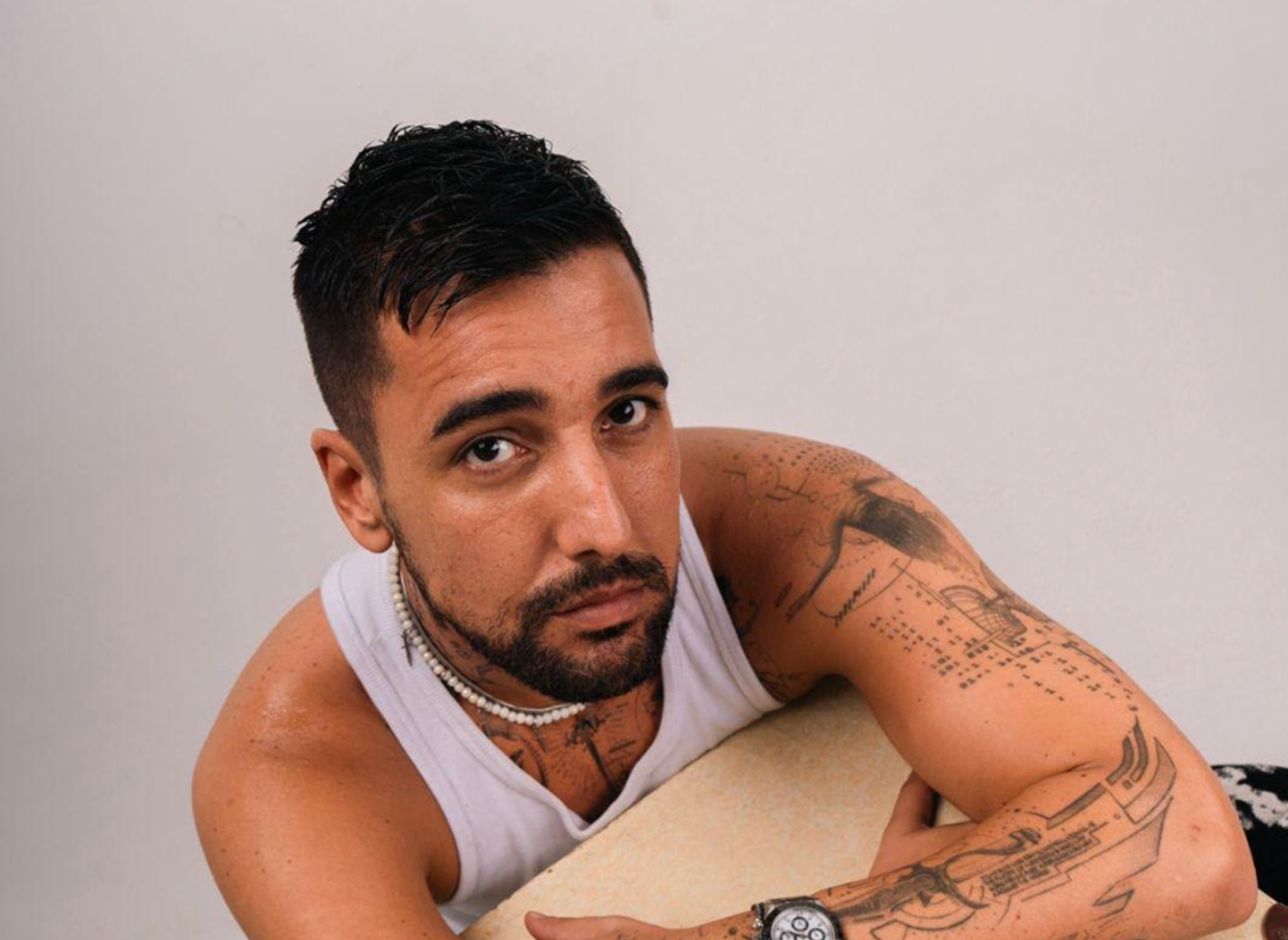
İlkay Şencan brings the musical memory of his childhood together with electronic music on his new EP, Origin. The DJ, who has more than two million monthly listeners on Spotify, made the remix of Erkin Koray’s “Şaşkın” with Mahmut Orhan that we heard everywhere last summer.
On his new EP, too, Şencan stresses how important it is to return to your roots if you want to be known on the global stage. We met İlkay Şencan and talked about many things, from the start of his career to international success, from what audiences expect in the DJ booth to the role of networking in the music industry.
When you began your career in electronic music, was the global stage always your goal? Was it a strategy you planned from the start, or a story that developed over time?
From the day I started making electronic music, my goal was to do something abroad. I’ve been into electronic music since I was 17. The artists I listened to, the labels I wanted to work with and the places I dreamed of playing were all abroad. So my first goal was to do something globally. But back then I didn’t know that it was better to reach a certain audience in your own country first and then go abroad. We always had this idea in our heads: “If I get a track out on Spinnin’ Records, my life will change.”
My story changed with the remix I made of Post Malone’s “Rockstar”. The track grew outside Türkiye first, in the Balkans and Russia. Luck played a part in that. But the audience my music speaks to also suited those regions. From there the track came to Türkiye, and it was a huge success here too.
From office job to stage
What drew you to DJing? Did nightlife and popularity play a part, or was your real interest in producing?
Actually, I started DJing the day before I first went on stage. Production was my real field. I started out in music playing the keyboard. A friend introduced me to electronic music. The sounds, the movement and the overall sonic feel fascinated me. So I tried to teach myself music production.
Around 2007 I found FL Studio and started making music as a hobby. I had no big ambitions like becoming a DJ or playing particular clubs. Making music was more of a space for meditation for me. I had an office job at a telecommunications company. I’d commute to work and make music at night.
In 2013, while on holiday in Marmaris, I decided to quit my office job. I had fallen for the club scene. I thought, “Even if I’m a busboy or a waiter, I’ll stay in this world.” After that I worked as a waiter at Katamaran in Bodrum for five years. I was immersed in electronic music, but I also kept producing and selling my tracks to other DJs.
After 2017 I started making music professionally. I was selling my tracks to better DJs and taking on mixing and mastering work for various artists. Some of the artists I worked for were names doing work on an international scale.
How did you first get on stage?
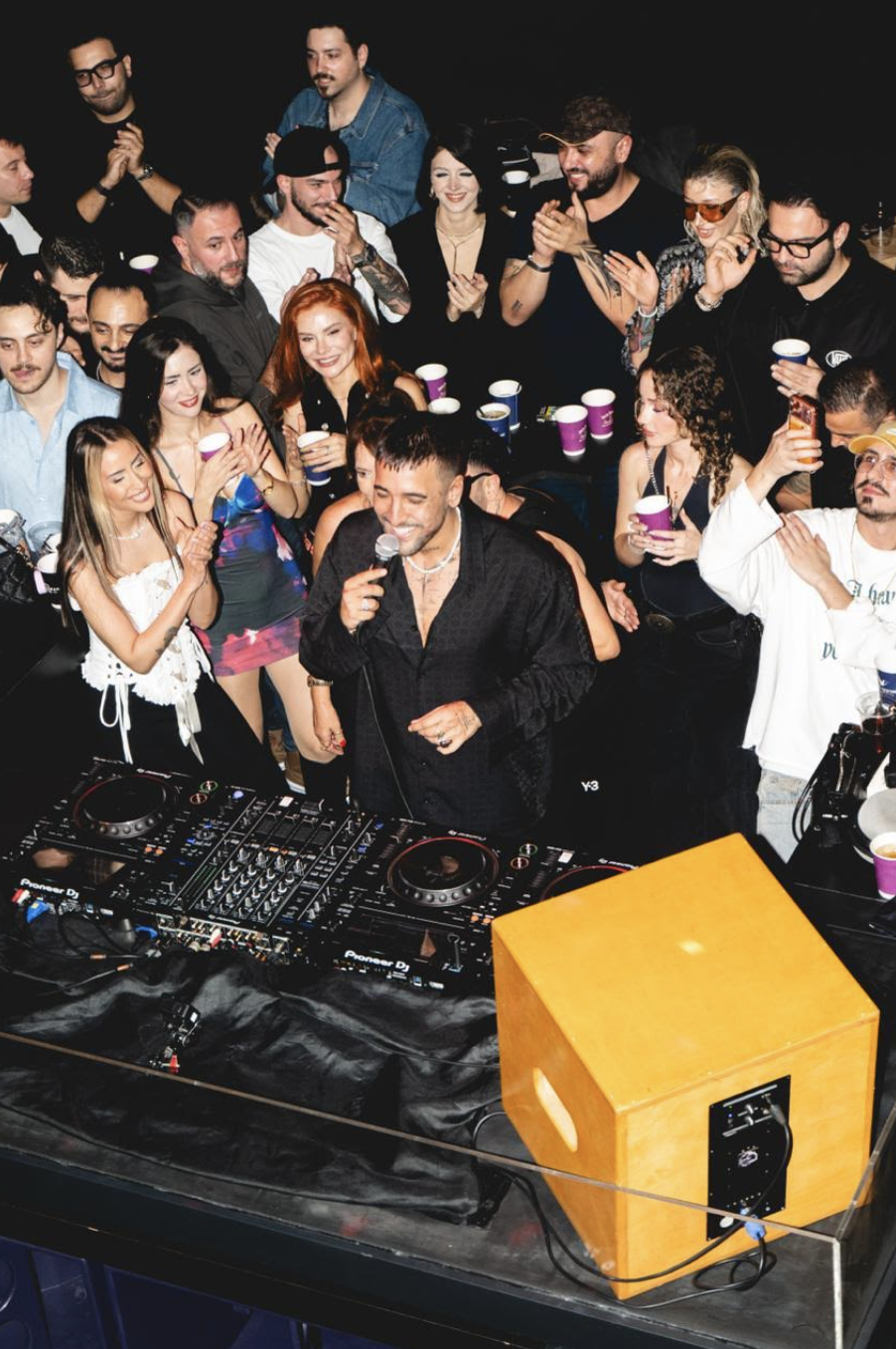
I met my manager while “Rockstar” was taking off. He set up a few gigs for me. I didn’t know how to use the equipment I’d be playing on. The night before the gig I went to some DJ friends and said, “Teach me this machine, how does it work?” I learned it that night. The next day I went on stage a little scared, but then I opened up.
When I tell this story I sometimes get a reaction from DJs; they seem to think I’m giving the impression that DJing is very easy. But I was someone who had devoted his life to production. I knew how sound works and how tracks are built. That background made it easier to learn the equipment. But good DJing isn’t just joining two songs together. Track selection, how you carry yourself in the booth and how you read people matter too.
Did your view of this music change once you started performing?
Absolutely. Once I was on stage, I discovered the feeling it gives me. I also saw that DJing gives my production a very important advantage. I’m also a sound designer. I have my own packs on Splice, the platform where music producers use sound packs. Say I’ve made a track and I have a gig the next day. I play 40 seconds of it, watch how people react and note what’s missing. Then I go back to the studio and make the changes. For me the stage is like a laboratory where I test my music. That’s partly where the name Lab Recordings comes from.
‘I promise you beautiful things you haven’t heard’
On your new EP, Origin, you blend Turkish and Latin music. What was your starting point for the project?
In fact, one of the key elements of my success in the global arena is my use of Turkish musical motifs. You can hear traces of this approach in tracks like “Don’t Say Goodbye”, which has reached 300 million streams.
The artists I listened to as a child, the ones who made me love music, are very special to me. Barış Manço, Erkin Koray, Sezen Aksu and Yıldız Tilbe are some of them. I want to rebuild the melodies I heard in their music, and the feelings I had as a child, inside my own music today.
These days I listen to genres like Afro house and tech house and draw on those sounds. What I wanted was to make the melodies of our own music heard over those foundations and bring them to people in different parts of the world. Because something beautiful is beautiful. It doesn’t matter whether it’s Turkish, Indian or Arabic music. If you deliver that melody with the right sound, at the right time and in the right way, and it speaks to people, it lands. I made Origin out of passions that go back to my childhood. Every track on the EP, from “Şaşkın” to “Rakkas”, has its own story for me.
Do you think you have to return to your roots first in order to succeed globally?
Absolutely. In fact this is what I’ve always wanted to do, but some tracks didn’t allow it. When contracts and labels get involved, you can’t always make the musical choice you want.
For example, my track “Not So Bad” has no Turkish musical motifs in it. But I’m not a musician stuck inside a single genre. I want listeners to hear a track and be able to say, “This is an İlkay Şencan song.” At the same time, being able to make whatever I want to hear today matters to me. In that sense Origin was a project where I could realise what I wanted to do more freely. I wanted to bring my own culture and musical memory together with a global sound.
Most of the songs on the EP are very cheerful. I have to admit, listening to so many happy songs was a bit of a struggle for me...
Yes, I’m not normally someone who makes very happy songs. Most of the work that makes me who I am is more depressive, more minor-key. On this EP, though, I built a more cheerful world. You need to think of it as a concept project.
When we went to our relatives’ weddings as children, there would be bands playing live. The happiness I felt in those days stayed in my memory musically. Today, when I make a track like “Unico Color”, I go back to those days. Songs like “Aşklar Hep Yalan Dolan” carry similar feelings.
What I do is rebuild those memories with today’s sounds. I started this EP from songs I love. Two of the tracks have already done really well. Tiësto, for example, remixed “Şaşkın” and brought Erkin Koray’s voice to listeners in different parts of the world. That’s very exciting for me.

Mahmut Orhan became part of the “Şaşkın” story too...
As I was getting close to finishing the EP, I went to Los Angeles for a week. We held a music camp there. I also dropped in on Mahmut Orhan and played him the tracks from the EP. He loved “Şaşkın” and suggested we release it together. I agreed.
How did the vocal choices on the EP come about?
Quite spontaneously... For example, Laçin Martinov is on “Rakkas”. And Buray sang “Sevmek Zamanı” in Spanish as “Mi Amor”. We wanted to do this song in Turkish but couldn’t get permission for the lyrics. It didn’t even get as far as negotiation. We got the necessary permission for the music from Goran Bregović and wrote the lyrics in Spanish.
I had also imagined a Turkish vocal for “Unico Color”, but in the end I went another way. I couldn’t get permission for “Dönence” either, which I wanted on the EP. Sometimes, regardless of how you imagined a track, rights and permissions decide things.
‘Now DJs are also expected to produce a kind of content’
How do you define success as a DJ? There was a time when success was measured by playing big festivals and working with major labels. What is it now?
At one point my biggest goals were to climb the Shazam Global chart, release a track on Spinnin’ Records and play festivals like Tomorrowland. Those were huge goals for me. I stayed at number one on Shazam Global for months. In 2021 my monthly listeners on Spotify reached 8 million.
Playing big festivals and joining major DJ collectives are very valuable for an artist’s goals and motivation. But at the end of the day, what remains is the work. The people who listen to you and buy tickets to come to your shows also determine the value of what you do.
Saying “I released a track on Spinnin’ Records, I’m doing great” or “I played Tomorrowland, now I’m a really big artist” isn’t enough. You learn that by living it. I think what matters is the artist’s vision, sticking to that vision, being able to say no when needed, and consistently producing work that is distinctly their own.
Which excites you more today: playing big festivals, or reaching a smaller crowd that really listens to the music?
Right now I’d choose a smaller, warmer setting. One reason is that I haven’t had much experience on big festival stages yet. DJing is actually a very lonely job. On stage there are thousands of people in front of you, but there’s a distance between you and them. The industry’s expectations have also changed. Five years ago people expected a DJ to put on headphones and play good music. Today, just presenting music on stage isn’t enough. People also want moments worth filming, images they can share on social media. Now DJs are also expected to produce a kind of content. That adds a different responsibility alongside the musical side of the job.
Do audiences ever try to interfere with your set?
All the time. Someone asked for “Şaşkın”. I didn’t play it. Then he came backstage wanting a photo and said again, “You didn’t play ‘Şaşkın’.” I asked him if he knew the remix was mine. He said he didn’t. So he’s asking me for the song but doesn’t know it’s mine. That’s an interesting situation.
‘Electronic music audiences have got better, but the community is still weak’
Why do DJs in your style get fewer slots at festivals in Türkiye?
For a long time I thought that in Türkiye networks, acquaintances and connections counted for more than merit. But I’ve seen that things aren’t very different on the global side either. Networking really is very important.
Of course, not everyone can play at every level. For the headliners of big festivals in particular, musical success and career should be what gets them there. But when it comes to choosing the names before the headliner, relationships and the agencies and collectives you work with can play a part.
At my own events I also give slots to people from my team. It’s natural for a DJ collective, or the community around a label, to support its own artists. But at very large events I think the people on stage should genuinely deserve to be there.

Do you think electronic music audiences in Türkiye have changed in recent years?
Absolutely. I’ve noticed that electronic music audiences in Türkiye listen with more discernment. But there is also a perception created by social media. A sizeable crowd has emerged that doesn’t really listen to electronic music, has no particular interest in it, but comes to be at the event and post stories. I’m not angry with these people. After all, they also keep our work going. They come to the event, have fun and enjoy it. Not everyone has to come to an event for the same reason.
But looking at ourselves as an electronic music community, I think we’re still very weak. We’re in a better place than before, but there’s a lot of room to grow. Not everyone needs that level of knowledge to come to an event. Some come to follow the music in detail, others just to have fun. Both are possible.
‘Burak Yeter and Mahmut Orhan opened the door to the world’
What kind of career do you dream of?
Right now I have about 25 tracks waiting to be released. Not all of them are built on Turkish musical motifs like Origin. I make whatever I want to hear today. You don’t have to reinvent the world every time. You can take an existing idea, adapt it to yourself and turn it into something else. That’s more or less how music and art move forward.
For me, Origin also means completing one of my childhood dreams. There are lovely collaborations and different projects ahead. But I don’t know what tomorrow will bring. My dream is to play a huge stage where I’m the only headliner, where people come specifically to hear me. Projects like the Volkswagen Arena events we’ll be doing soon could be one of the starting points of that dream. I’d like to grow it over time and maybe one day take it to stadium scale. I imagine a stage like that first in Türkiye, then on a global scale.
How do you see yourself among the Turkish DJs who have achieved global success?
Burak Yeter and Mahmut Orhan were the names who opened the global door for Turkish DJs. There was a time when the perception was, “You’re Turkish, nothing will come of it here. You can’t get into that community.” The success of Burak Yeter and Mahmut Orhan changed that. When I saw their success, I thought, “So it is possible.”
Now I have successful work on a global scale too. Other musicians who see this may ask themselves the same question: “If they did it, why can’t I?” I think it’s very important that people see this. People shouldn’t give up.