In Orpheus’s footsteps with Burcu Fikretoğlu, between presence and absence: ‘Imitate the Sleep of Stones’
The National Archaeological Museum in Athens is hosting a contemporary artist’s solo exhibition within its permanent collection for the first time. William Kentridge’s “Imitate the Sleep of Stones”, curated by Burcu Fikretoğlu, takes as its starting point the ancient Greek myth of Orpheus, the musician who descends into the underworld to bring his beloved Eurydice back to life. We heard about the exhibition from its curator, Burcu Fikretoğlu.
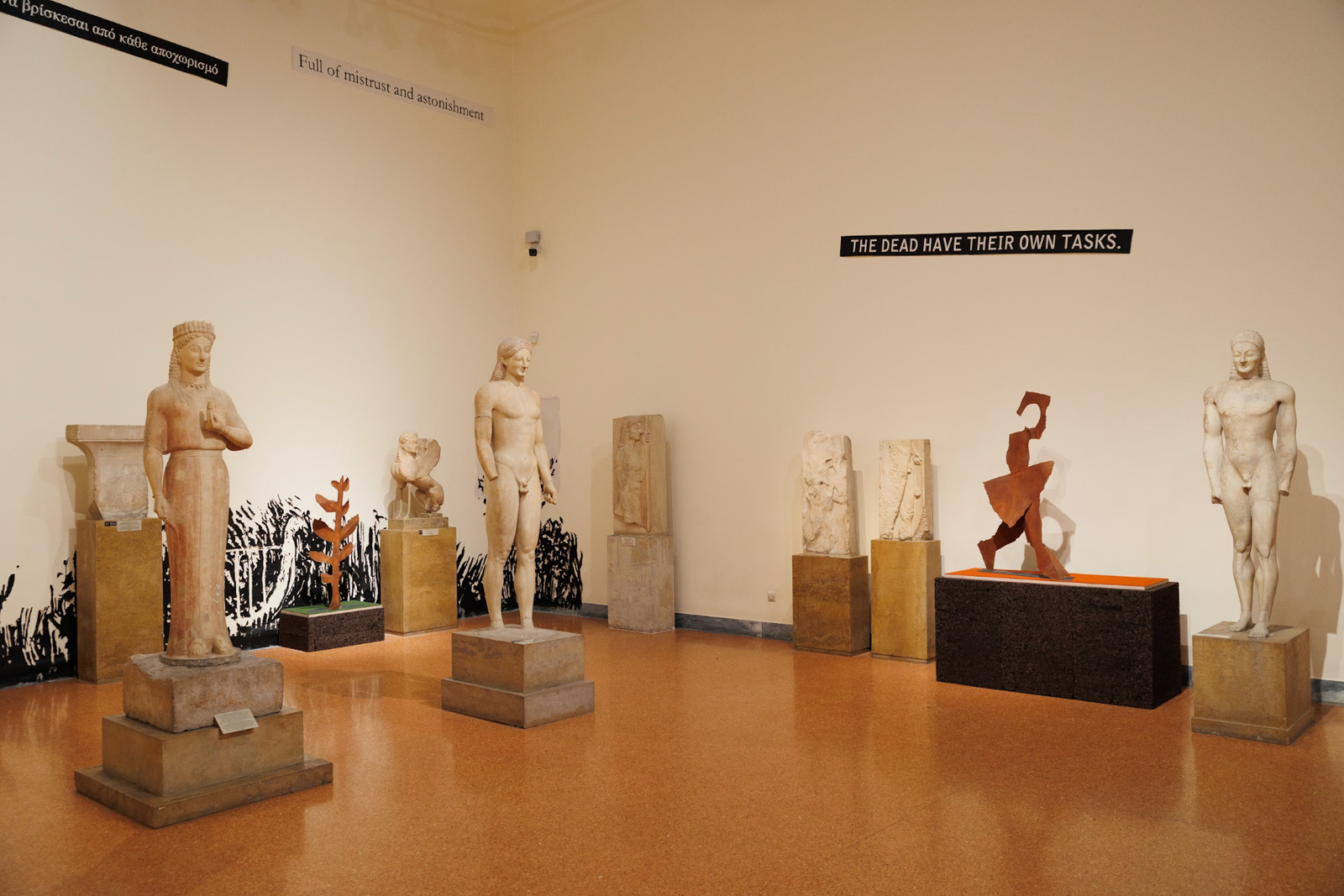
The National Archaeological Museum in Athens is hosting a solo exhibition by a contemporary artist within its permanent collection for the first time. William Kentridge’s exhibition Imitate the Sleep of Stones, curated by Burcu Fikretoğlu, is open to visitors from 29 October 2026 to 24 January 2027.
Imitate the Sleep of Stones brings William Kentridge’s contemporary work into dialogue with archaeological objects from the National Archaeological Museum’s historical collection. The exhibition takes as its starting point the ancient Greek myth of Orpheus, the musician who descends into the underworld to bring his beloved Eurydice back to life. We asked its curator, Burcu Fikretoğlu, to tell us about it.
For thousands of years, the myth of Orpheus and Eurydice has endured as a way of thinking about death, mourning, love and return. William Kentridge’s practice, too, is shaped around questions of memory, loss and transformation. Which layer of the myth drew you in particular for this exhibition? How do you read Orpheus’s desire to “bring back” today, in the context of contemporary art and the museum?
What drew me most was the desire to bring back, and its impossibility. It is a very basic human impulse: we want to see what we have lost again, to restore it to how it was, to undo the absence. Yet Orpheus’s story tells us that even a desire and a determination this great cannot achieve that. The tragedy begins beyond the moment Orpheus looks back. His most helpless moment is believing that Eurydice is still someone who can be brought back, someone he can have again.
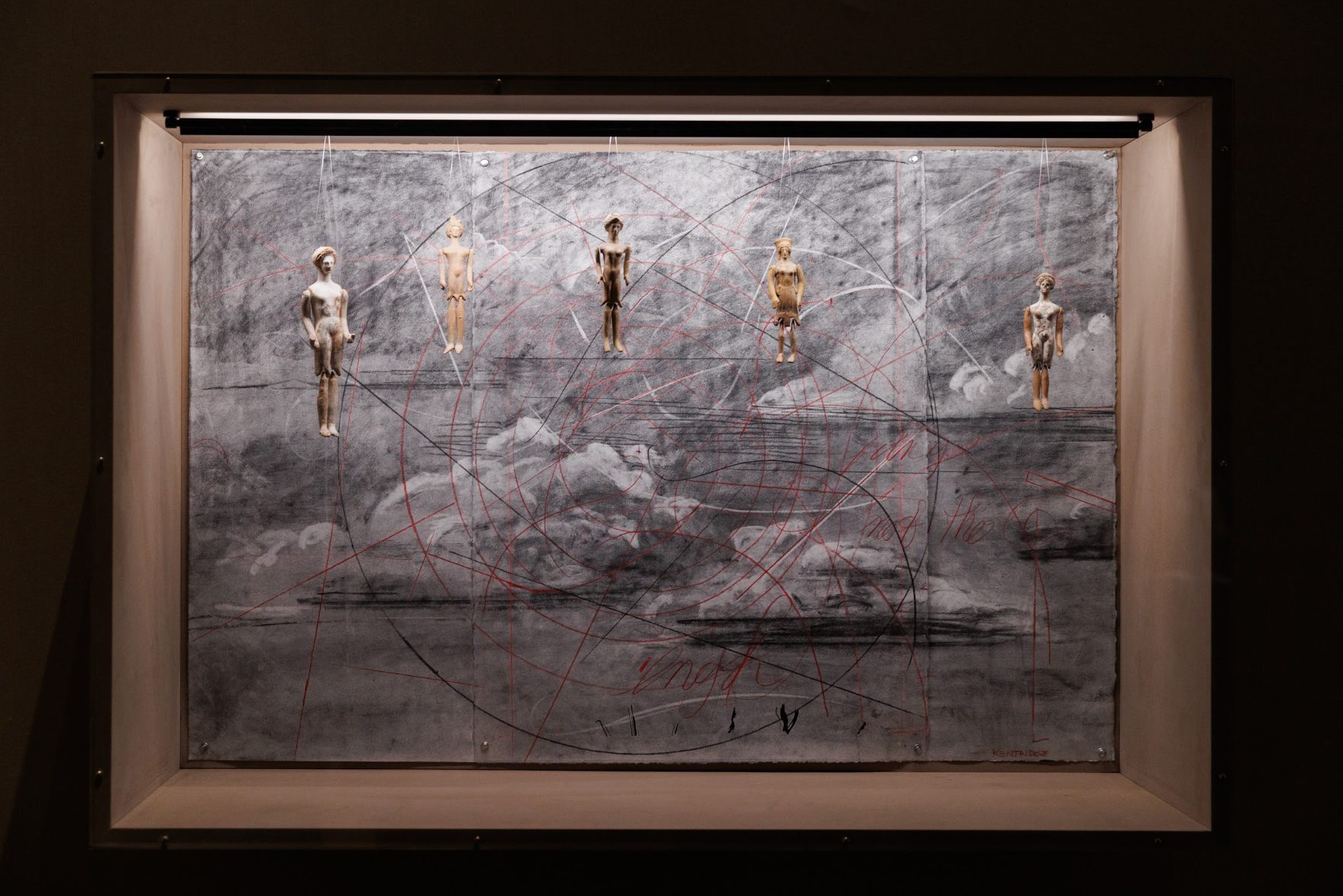
This idea intersects very powerfully with the museum, too. The objects in an archaeology museum do not bring the past back to us, and indeed they cannot. They show us what remains of it. The distance and the unknown in between never fully close. While working on the exhibition, I always focused not on filling this gap but on keeping it visible.
The phrase in the exhibition’s title, “Imitate the Sleep of Stones”, is as paradoxical as it is poetic: stone evokes stillness, permanence and silence, while Kentridge’s practice is built on movement, transformation and transience. How does this title open up, for you, the relationship between stone and body, between archaeology and memory?
For me, sleep here is not just stillness but a kind of withdrawal from the world. When we sleep, the body is still there, yet it has partly withdrawn from the world we can reach. Stone, in a similar way, has a very strong physical presence, but the past it carries is not entirely open to us. When we stand in front of one of the objects in the museum, we see its thousands of years of existence, but we do not know its whole story, and we do not have to. Rather than wanting to clarify everything and fill every gap with information, perhaps it is also possible to let some things keep their own silence.
When Kentridge’s moving, shifting world meets this silence, a very beautiful tension emerges. On one side there are images in constant transformation; on the other, stones that stand there as if saying nothing to us…
Placing Kentridge’s works within the permanent collection of the National Archaeological Museum seems like a curatorial gesture that goes beyond setting contemporary artworks beside historical objects. What new perspective does this placement offer on the museum’s own collection and on the way it displays the past?
I never imagined Kentridge’s works “explaining” the ancient objects. Likewise, I never thought of the ancient objects as a backdrop that could legitimise the contemporary works. What interests me is that each side can remain somewhat strange in front of the other. Because not every encounter has to end with its meaning fully resolved. Meeting on the threshold of that strangeness is, I think, a very special experience.
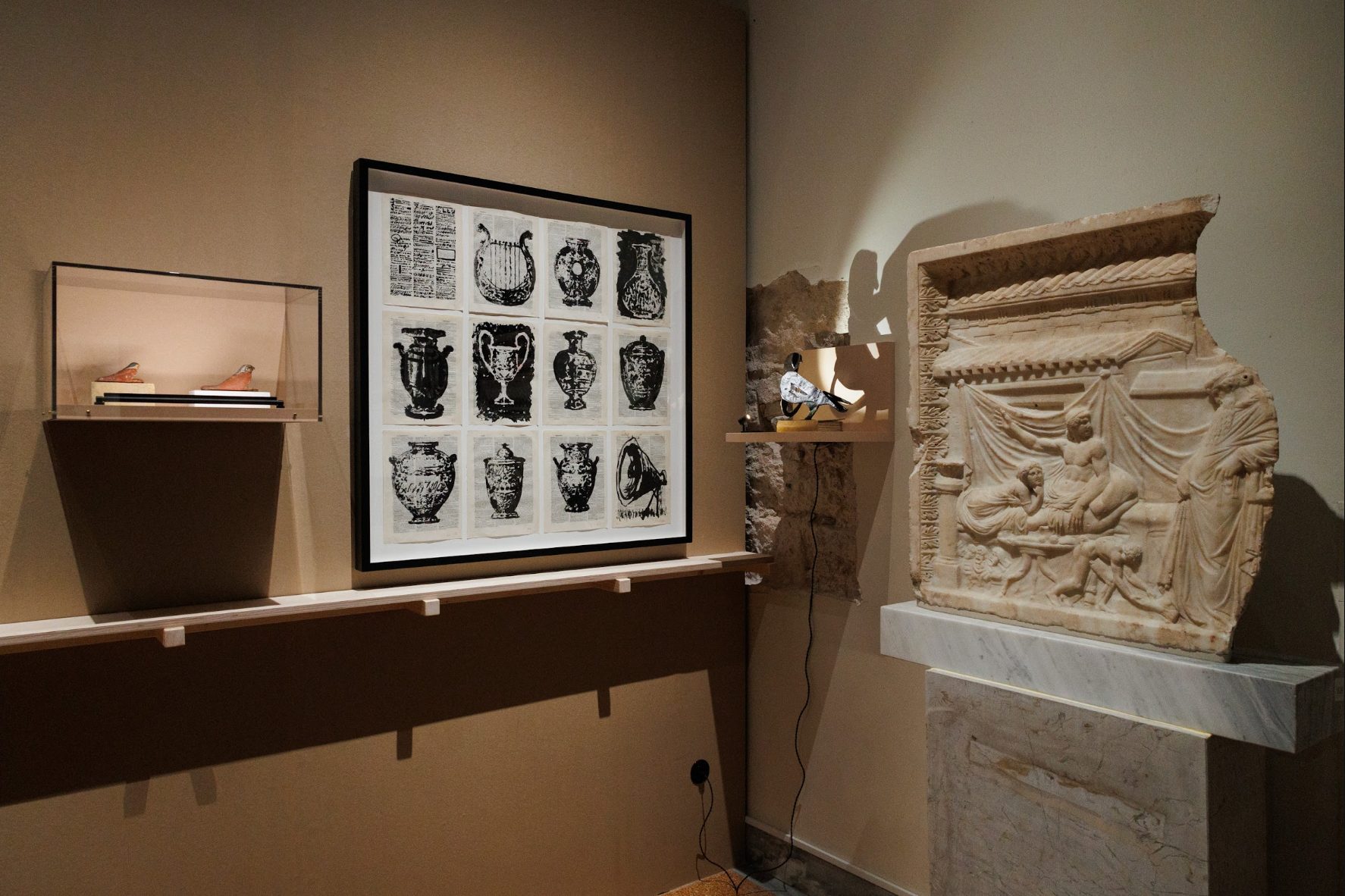
Archaeology museums, by their nature, classify, date and identify. These are, of course, unavoidable processes. But we should not forget that the whole meaning of an object cannot be exhausted by this information. There are huge gaps: where it was used, who touched it, under what circumstances it was lost, what kind of time it spent beneath the earth. Perhaps the museum can be not only a place that passes on what we know, but also a place where we can stay with what we do not know.
The relationship the exhibition draws between “excavation” and “drawing” is particularly striking. While the archaeologist uncovers a past from within the earth, the artist, through drawing, makes visible what is unseen, erased or still taking shape. Where do these two practices meet for you?
In both there is a movement towards the unseen. But the important thing is not to fall for the idea that a complete, unchanging truth is waiting for us beneath the surface. When you excavate, in uncovering something you also change the state in which it was found. In drawing, too, every new line changes the image before it. In Kentridge’s practice, what is erased leaves a trace, and the image is never completely wiped clean.
That is why it feels right to treat excavation in the exhibition not only as an archaeological method but as a way of thinking. The deeper we go into the layers, the more we arrive not at a conclusion but at further layers.
When Kentridge’s rust-painted steel figures appear among the ancient stone works, the material itself becomes part of the narrative. How did you think of these material relationships between rust, stone, paper and earth as part of the exhibition’s world of meaning?
Each of these materials carries time differently. Stone evokes a very long time. Rust shows time’s intervention on a surface. Paper is extremely fragile; it holds every gesture made and erased on it, and of course it comes from trees. Earth, meanwhile, is the place of both disappearance and preservation.
But I do not see these as fixed opposites. Stone breaks. Metal decays. Paper can sometimes outlive a body by far. And paper, after all, is only one stop in its existence. This is exactly what caught my interest as the exhibition came together. Things we think of as permanent suddenly turn out to be fragile, and things we think are lost can come back as a trace.
The 19th-century “Pepper’s Ghost” technique used in the diorama places a moving image inside a physical object, creating a kind of ghostly presence. How do you relate this optical illusion to Orpheus’s attempt to bring Eurydice back from the underworld? Where in the exhibition does the line between what is seen and what truly “exists” lie?
“Pepper’s Ghost” is in fact a very simple but very striking technique. The image is projected into the physical space by means of a transparent surface placed at an angle. So a figure appears before your eyes, but that figure is not really there. The physical objects and the image begin to look as if they share the same space.
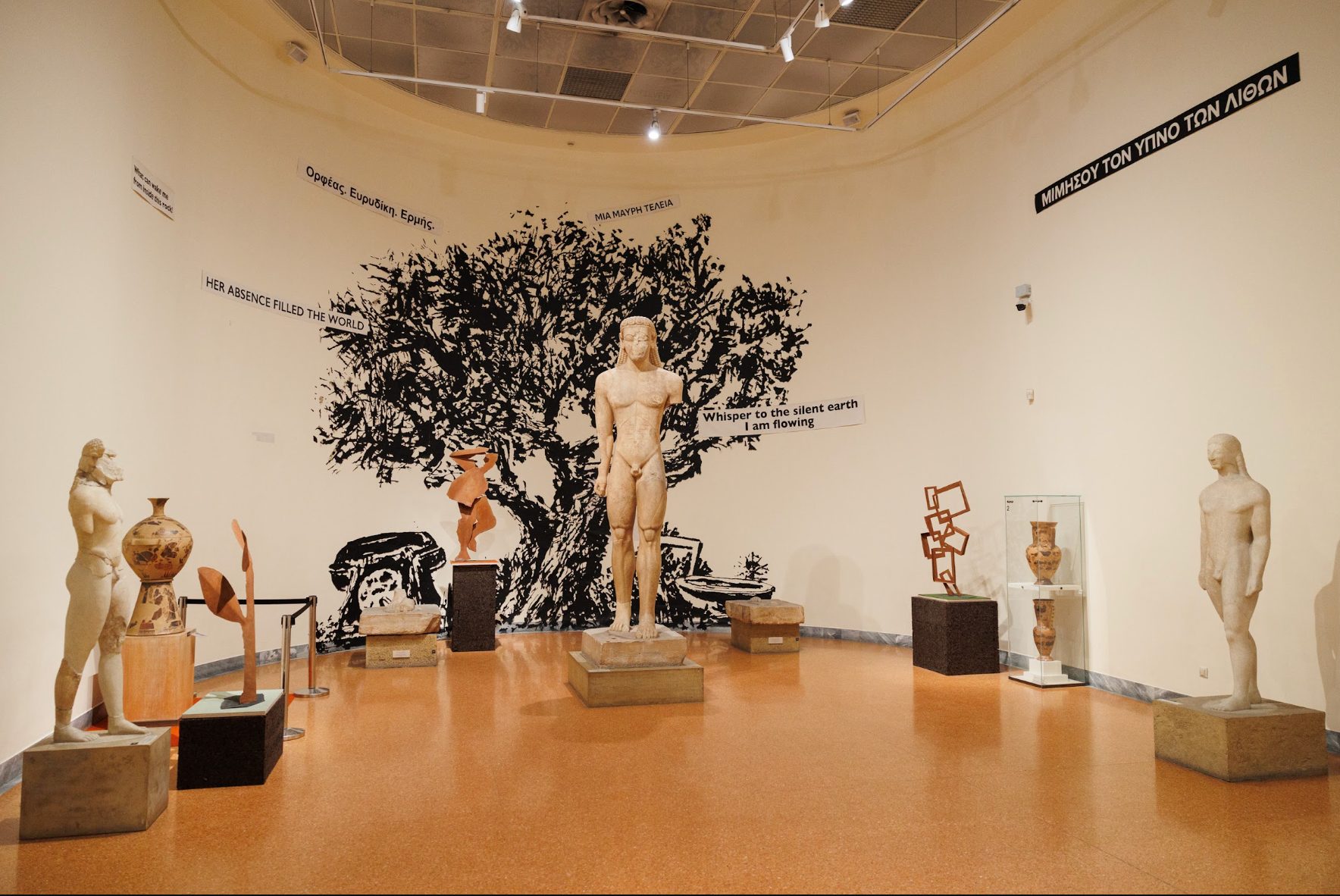
You see something but you cannot reach it. It remains between presence and absence. This connects very strongly with the story of Orpheus and Eurydice. Orpheus’s whole desire is to see Eurydice again and bring her back. But seeing her is not enough to truly bring her back. In a sense, Pepper’s Ghost does the same thing: it brings back the image, but not the body.
That is why it mattered to me that the diorama sat at the heart of the exhibition. It brings the physical object and the moving image together in the same place, and it also poses one of the exhibition’s central questions very directly: does making something visible again mean that it has truly returned? In fact, the museum works a little like this too. The object stands before us, really here. But the world it belonged to is no longer here.