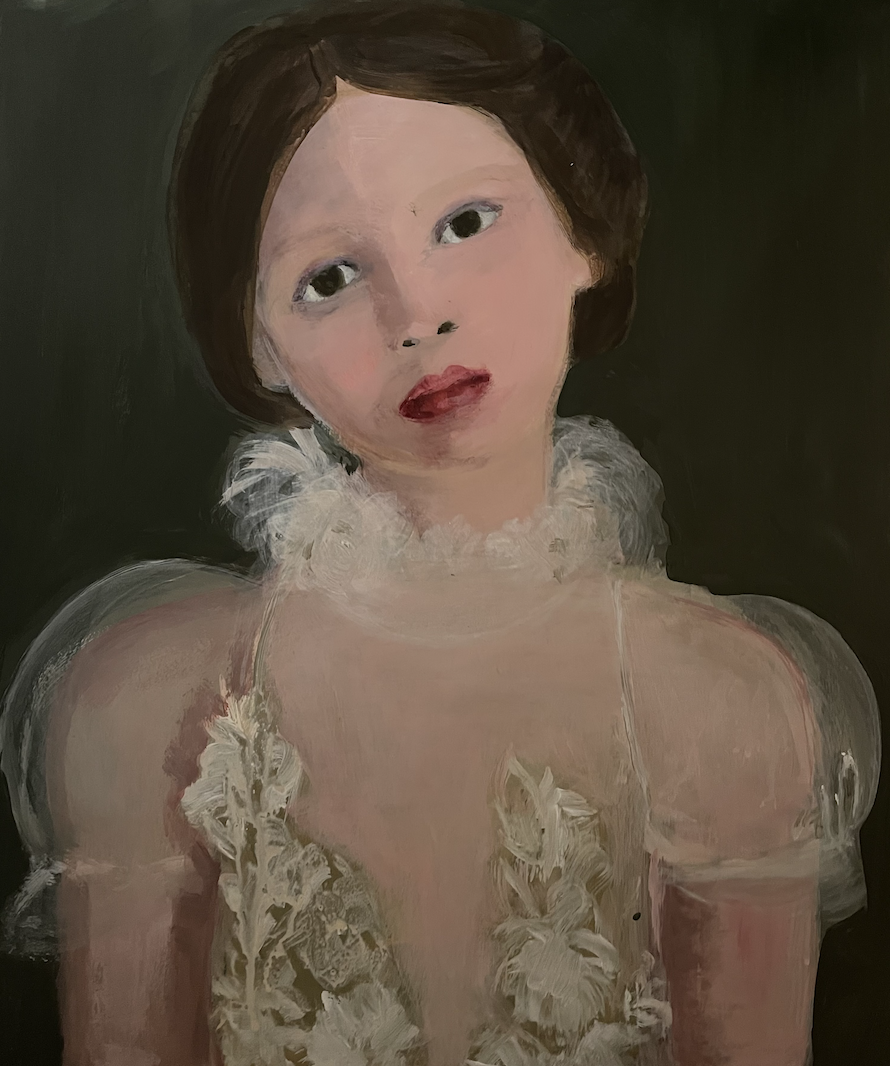
Ramize Erer’s Séparation in Paris: parting in room 44
Ramize Erer’s exhibition “Séparation” has opened in room 44 of Hôtel Langlois, a hotel that carries the historic atmosphere of Paris into the present. We spoke to Ramize Erer and the curator Nazlı Pektaş about the sadness and transience in the paintings and what the space brings to the exhibition.
Ramize Erer’s new exhibition Séparation (Separation) has opened to the public in room 44 of Hôtel Langlois, a hotel that carries the historic atmosphere of Paris into the present. Erer is an artist and illustrator whose distinctive line explores the states of womanhood and women’s experiences.
Curated by Nazlı Pektaş, the exhibition brings together close to 50 of Erer’s portraits, figure paintings and still lifes, along with a video series that accompanies the paintings. Centred on separation, loss and transience, Séparation can be visited until 31 October 2026. We heard about the exhibition from Ramize Erer and Nazlı Pektaş.
Séparation takes shape around the different layers of the idea of separation. Could you tell us where the idea for the exhibition came from and how it developed?
Ramize Erer: I painted all the works in the exhibition in Paris this year, in 2026. I was also aiming to show them in Paris this year. If I had opened it in Istanbul, I probably wouldn’t have used the title “Séparation”. When the first paintings emerged, the theme of “separation” had begun to appear too. That was when I decided on it and pursued it.
Throughout my journey as a painter, “fragility” has been something I have focused on a great deal. That “separation” came to the fore in the paintings I made for this exhibition may have to do with what I have been living through recently.
Is there a particular story behind the exhibition being held in room 44 of Hôtel Langlois in Paris?
When the paintings began to mature, I started looking for a place to show them. The idea of exhibiting in a classic gallery offering a bare, neon-lit space didn’t sit well with me. Around the same time, the idea of showing them in a hotel room, which could reflect the sense of transience in the paintings and in the title “separation”, began to take shape. I was looking around for one. A minimal hotel room without a single “unnecessary” object or piece of furniture wouldn’t have met the need either, and that is usually what hotel rooms are like.
When I discovered Hôtel Langlois and its room 44, I was practically spellbound. In fact, it felt as if Hôtel Langlois had invited me and my exhibition. The Langlois, a 19th-century hotel, with its lived-in feel, its spirit, the objects, paintings and classic furniture that fill the whole building and its rooms, and its lift, made me say: “this is exactly the place I was looking for”.
Tuğçe Zaccaro, who runs the hotel, generously supported my idea and shared my excitement. Dear Nazlı Pektaş, whom we approached to curate the exhibition when the idea first came up, also put in a great deal of work: she came back and forth, stayed in room 44 to feel the spirit of the hotel, and was always by my side.
I am curious too about the answer to the question you asked yourself: “Why are these paintings, which I made with joy and happiness, now sad?” Have you been able to find the answer?
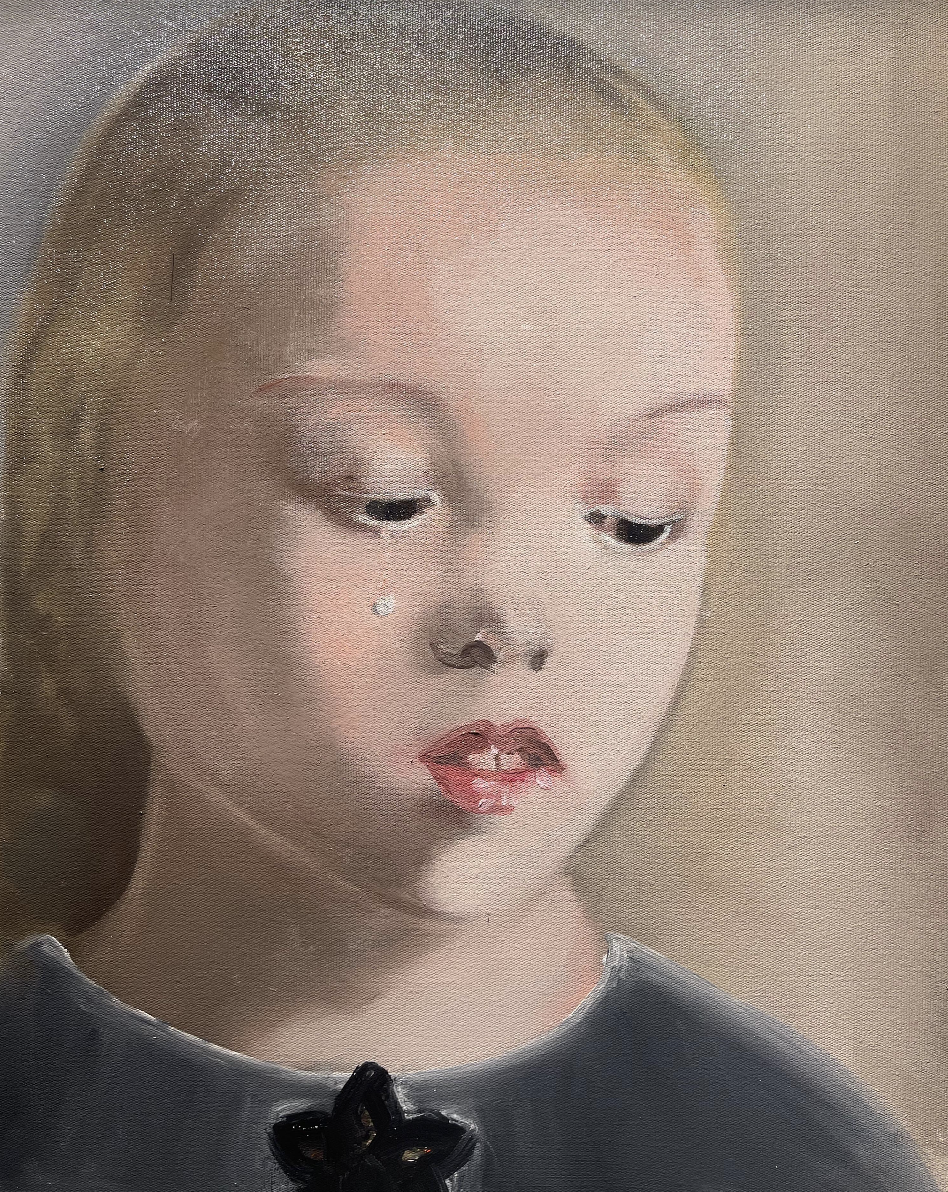
For me the question remains open. That this feeling turned into a question I ask myself is still a mystery to me as well. But I can say that there are separations behind it, and that sadness is the past tense of joy.
Is there a particular reason you chose mostly female figures? Who are these women?
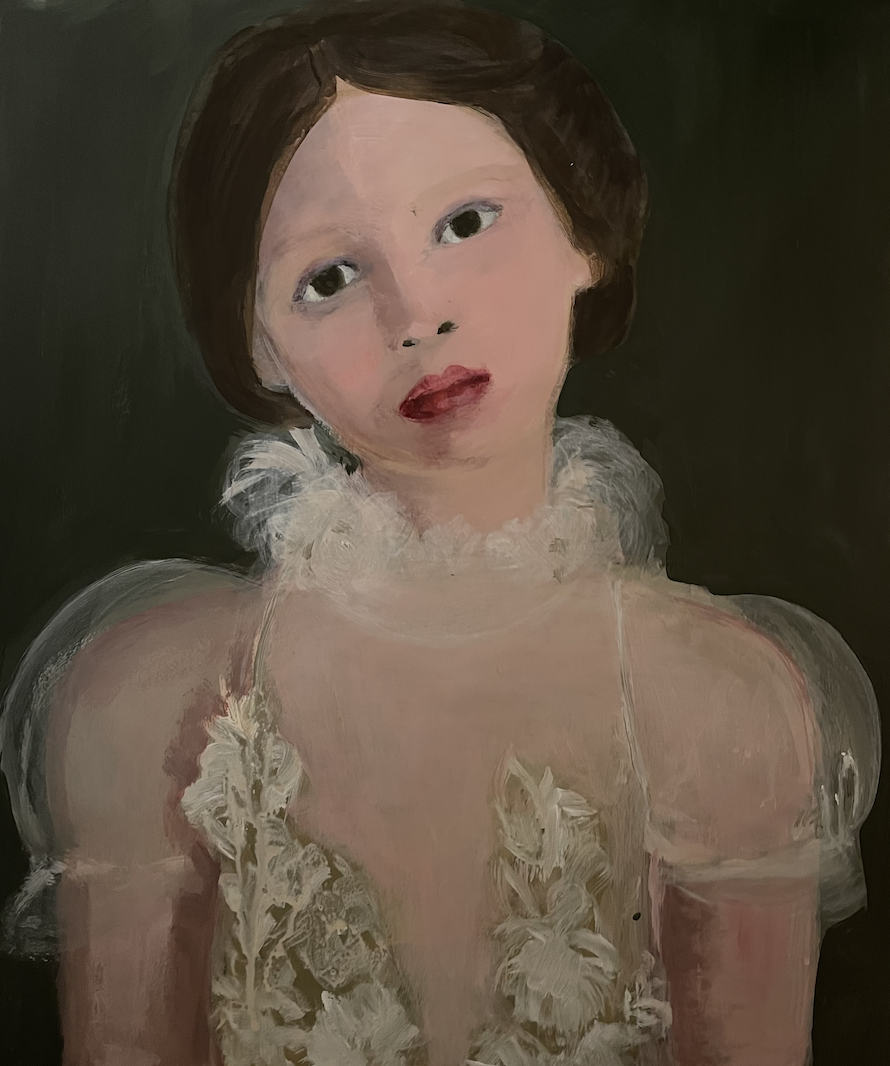
As you say, women are the subject of this exhibition. In the past there were periods when I concentrated on the reflections of innocence carried by young girls with an adolescent fragility and by young boys whose masculinity had not yet become defined. In this exhibition, perhaps, I focused on the shifts of fragility in female figures and portraits that bear the traces of a state of “separation”.
I can’t say I painted this particular woman or was inspired by her. I may have drawn on the projections of women filtered through a long trail I have been following for as long as I can remember. Reflected in them are people very close to me, close or distant acquaintances, imaginary ones, and the impressions left on me by heroines of novels I have read and characters in films I have watched.
In a practice that stretches from cartoons to painting, the states of womanhood and women’s experiences have always held an important place. How does your approach to the female figure differ between these two mediums? Where does Séparation stand within your work to date?
The languages differ. The language of cartoons and the language of painting are different. My subjects are the same, of course. The states of womanhood and the human spirit are what interest me. Because my previous exhibitions were organised by galleries, I hadn’t felt so much a part of them. What makes this exhibition different is that it was a process that drew me in emotionally as well. The choice of venue, the choice of works to show, the title… The curator Nazlı Pektaş and I put our heads together and worked on it. It was a long and intense process.
You read Ramize Erer’s selection for the exhibition through mourning. What is the shared feeling that brings these women together?
Nazlı Pektaş: I would say the main feeling uniting the women and girls in Ramize’s paintings is an unfinished grief that spills beyond time. They come together for reasons such as migration, forced departure, love or being torn from their roots. Even though they seem not to speak to one another, they place their silences side by side and stand back to back around wounds that do not heal. What brings them all together, I think, is a longing for what has been lost and the courage not to postpone the pain of separation.
What was it like for you to step outside the classic white cube and stage an exhibition in a hotel room?
Holding the exhibition somewhere other than a gallery was first of all Ramize’s idea. For dear Tuğçe Akdur Zaccaro, the manager of Hôtel Langlois, to set aside the room for this exhibition was of course a very significant decision for a hotel manager. The moment Ramize had met her and settled on room 44, Ramize called me, and I embraced the idea wholeheartedly. Because the sadness, mourning and melancholy I saw in Ramize’s new series matched directly the very reason a hotel room exists.
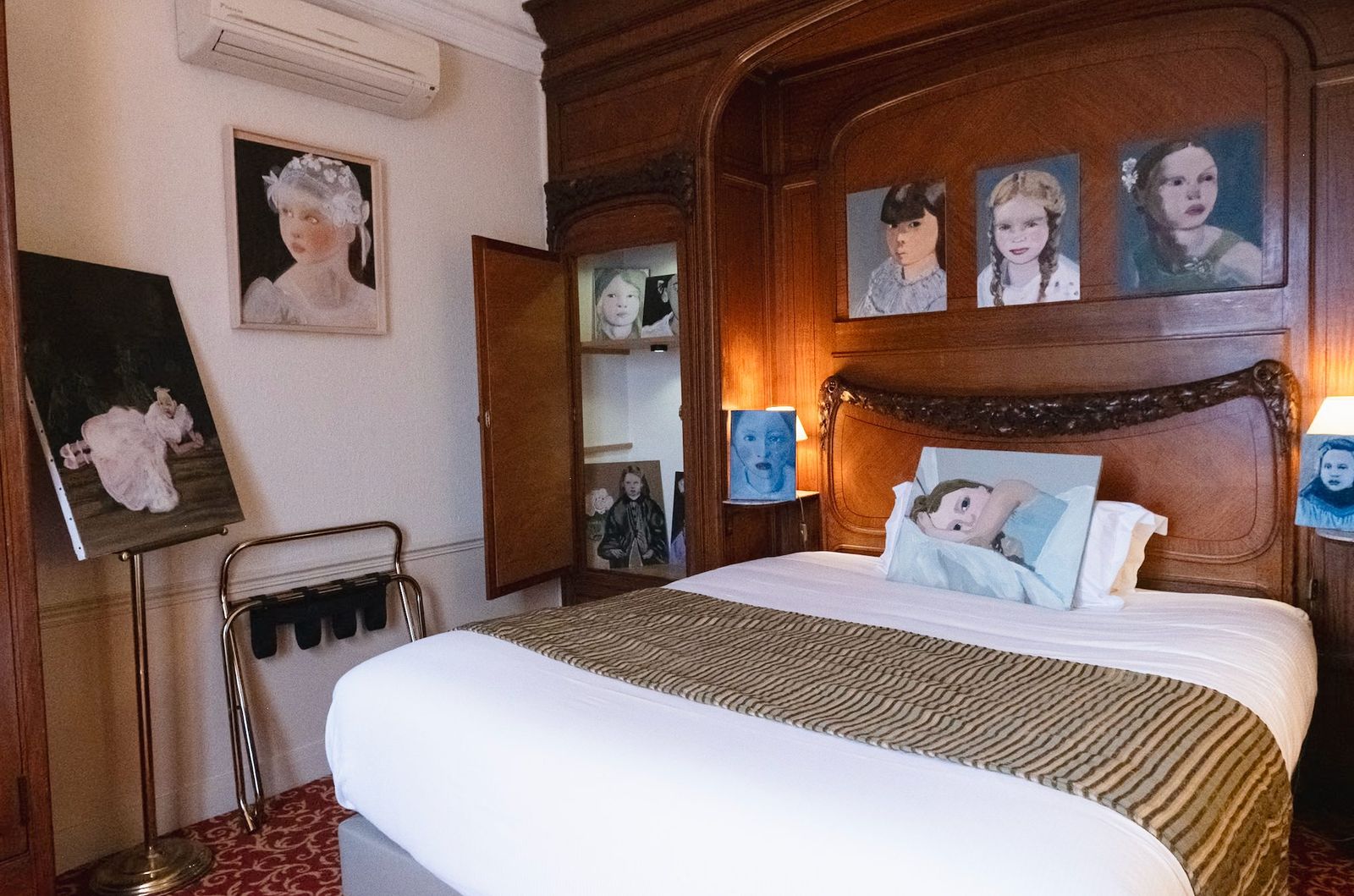
We placed the paintings, united by the theme of separation, alongside the nature of a temporary space. After all, when you lie down on the bed, you could say you are taking the place of someone who has only just got up from a reunion or a parting. While installing, we didn’t drive a single nail into the walls, so as not to damage the historic fabric. We placed the works on the bed, on the wardrobe, even on the luggage rack. We put works on paper under the glass on the wooden table. I imagined the girls had left their separations behind the door and come to live here for a while. Inside, the room came alive for me like a two-room theatre stage.
Transience is another important theme of the exhibition. What did you pay attention to when emphasising this feeling in the curatorial arrangement?
A hotel room is by its nature a limbo where passers-through stay. The same bed bears the trace of both arrival and departure. I can say that, in building the sense of transience, I was very careful not to disturb the spirit of the place. We let the works seep into the space not as objects brought in from outside but as the night’s natural guests. Rather than fixing the figures to the wall, propping them on the bed or against the edge of the wardrobe also nourished the sense of transience physically. To me, this is a refuge where women can safely leave their most vulnerable feelings for a short while.
Looking at the works, I feel as if I am meeting characters from a novel and listening to each of their stories. The fictional text you wrote about the works strengthens that feeling. What inspired your curatorial approach to this exhibition?
The greatest source of inspiration for my curatorial arrangement was the gazes, colours and details in the paintings Ramize has just made in Paris, dated 2026. The titles of the works come directly from details in the paintings: Tüllü Kız (Girl in Tulle), Kurdeleli Kız (Girl with a Ribbon), Tokalı Kız (Girl with a Hair Clip)... Others take the names of their own stories, such as Hassas Kalpler Ormanı (Forest of Tender Hearts) or Efkarlı Kız (Melancholy Girl).
The titles and the figures’ different attitudes reminded me of characters on a stage. I would say the reason visitors feel as if they are reading a novel is that the girls in the paintings are positioned as characters who have truly come to live here with their own stories of separation. Accepting each one’s existence, I brought them together without exaggeration.