The film that forgets its main character: Unabomber
Ted Kaczynski’s life holds enough questions for cinema to want to return to it again and again. Netflix’s “Unabomber” approaches the same story this time through the psychological experiments of his youth. In the film, however, what Kaczynski wrote and why is pushed aside by his style. While following the traces of the character it takes as its subject, Metz’s film does all it can to avoid actually meeting him.
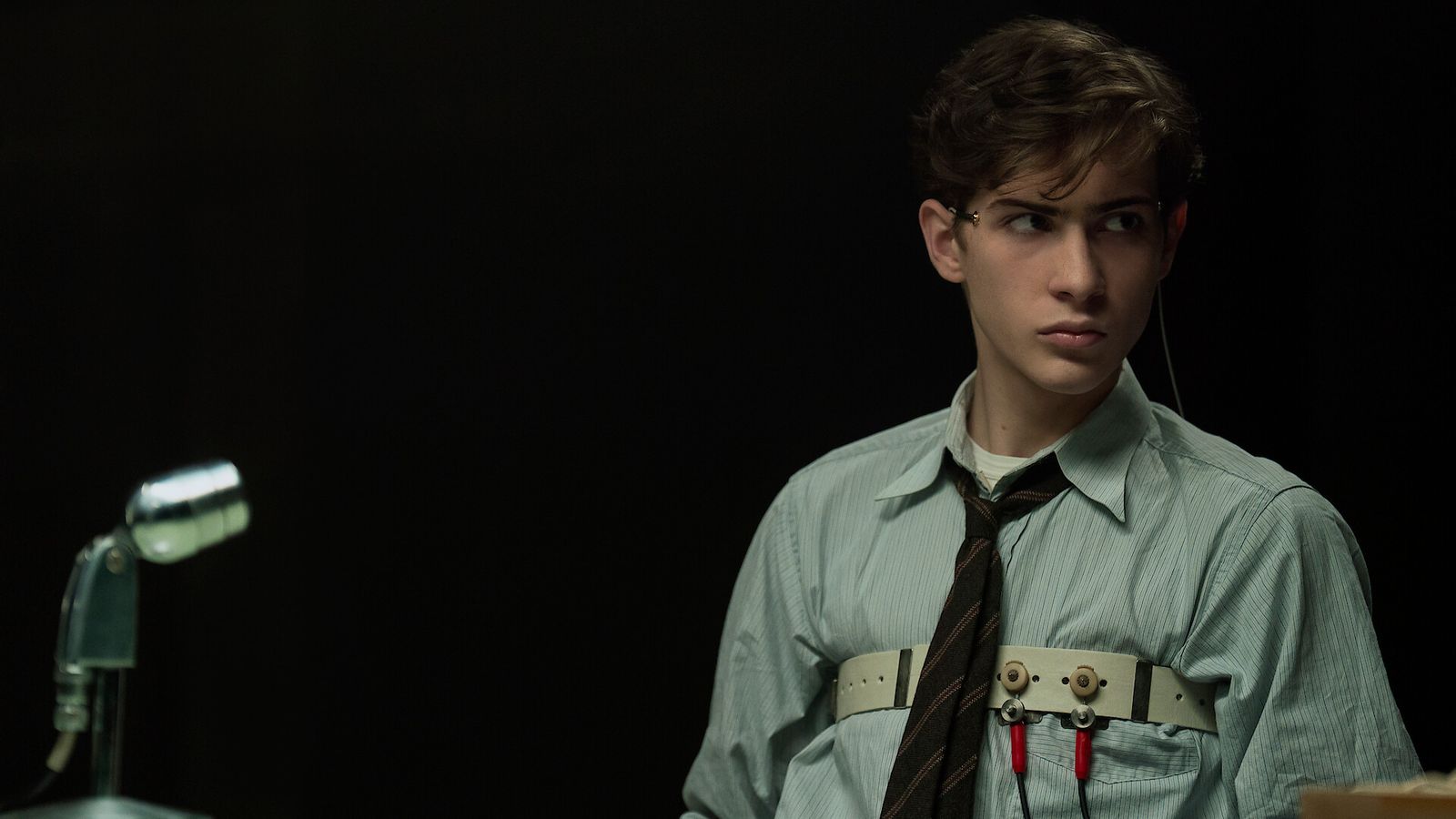
Ted Kaczynski’s life holds enough questions for cinema to want to return to it again and again. The story of a mathematician who entered Harvard as a child, then left academia, retreated to a cabin in Montana and turned his anger at technological society into bomb attacks, can bring a different side of itself to the fore in each retelling.
- We have seen this life before, in documentaries and adaptations. Unabomber, now on Netflix, approaches the same story this time through the psychological experiments of his youth. Janus Metz, director of Borg vs. McEnroe, brings together Kaczynski’s student years at Harvard and the investigation that led to his capture years later, trying to understand how a person arrives at this point.
At first glance the choice is intriguing. To take a killer at the point before he has committed any crime and look at him requires us to set his past apart, for a while, from the ending we already know. We ought to be able to feel that other possibilities lay ahead of the young Ted. Unabomber, however, struggles to open up those possibilities. Wherever it approaches Kaczynski’s life, it searches for a sign that will explain his future crimes, and it does everything it can to present an already convicted criminal as a scapegoat.
As the film goes on, we realise that the decades that fit between the humiliation at Harvard and the cabin in Montana have been sacrificed for a psychological explanation of the packaged, supermarket kind, the kind no one with any self-respect would choose to eat, the kind that makes us say “I’m not eating that”.
The clearest example of this approach is the role the 35,000-word manifesto plays in the film. FBI agents examine the sentences, trace the words, try to reach the person who wrote them. The world those words describe, though, is hardly ever discussed. Sanayi Toplumu ve Geleceği (Industrial Society and Its Future) is stripped of one man’s objections to society and turned into a fingerprint. What Ted Kaczynski wrote and why is pushed aside by his style. Metz’s film, while following the traces of the character it takes as its subject, does all it can to avoid actually meeting him.
In the bomb attacks he carried out between 1978 and 1995, Kaczynski killed three people and injured 23. His targets, ranging from universities to computer shops, planted fear in the ordinary objects of everyday life. A parcel, a book, an object left in a car park could carry the possibility of death. Unabomber opens with this fear, through the attack in which Thomas Mosser was killed. As Mosser opens the parcel, the camera lingers on the knife nearing the packing tape, and the edit cuts to his family in another room. A death the audience already knows about is drawn out by the character’s unawareness. In its very first minutes, the film uses a real person’s life to generate suspense. The time it does not spend getting to know Mosser, it spends waiting for his death.
Then two stories begin. In one, Kaczynski, who entered Harvard at 16, takes part in the experiments of psychologist Henry Murray. In the other, FBI agent Joanne Miller focuses on the language of the manifesto in an investigation that has gone unsolved for years. Moving back and forth between Jacob Tremblay’s young Ted and Shailene Woodley’s agent, the film trusts that these two periods will explain each other. Yet the gap between them grows with every cut.
- The young man’s doctorate in Michigan after Harvard, his academic life at Berkeley, his retreat to Montana, the hardening of his thinking and his choice of violence all stay at the edges of the story. While claiming to tell the story of a transformation, the film cuts out the life in which that transformation took place.
Murray is put in place of what is missing. The professor, played by Russell Crowe, senses the young student’s need for acceptance and binds him to himself. Experiments that begin with the promise of philosophical debate open onto sessions in which a person’s most intimate thoughts become material for humiliation. There is a whole film in this alone: the authority of the university, the relationship between scientific curiosity and violence, the researcher who considers himself neutral turning the person in front of him into an object. Metz, though, squeezes these questions into a preface to Kaczynski’s future crimes. He is less interested in how the experiments worked than in what killer they produced in the end.
What is more, a large part of the relationship at the film’s dramatic centre is fiction. In Netflix’s own interview, screenwriter Sam Chalsen admits there is no evidence that the real Kaczynski and Murray had a relationship with all the turns shown in the film. It is understandable for cinema to fill historical gaps with imagination. But here the invented relationship takes on the task of explaining an entire life.
- The darkness the CIA connection lends the film serves the same convenience. A line is drawn between the violence of institutions and the violence of the individual, and then the years along that line are not shown. Two events placed side by side are presented as if they had acquired a cause-and-effect relationship of their own accord.
Tremblay carries the character’s fragility in his gaze and his breaking voice. Crowe, for his part, finds a role in which he can move between kindness and domination. The scenes between the two are at times more alive than the rest of the film. But the tension the actors manage to build cannot broaden the script’s understanding of people. Every unease Ted feels becomes a symptom of the coming disaster. His shyness, his loneliness, his family relationships and his difficulty with intimacy are lined up as clues from which the audience will eventually reach a diagnosis. The still undetermined life of a young person is turned into a case file explaining his future crimes. While trying to humanise him, the film ties his every move to the ending we know, and so narrows his room to move.
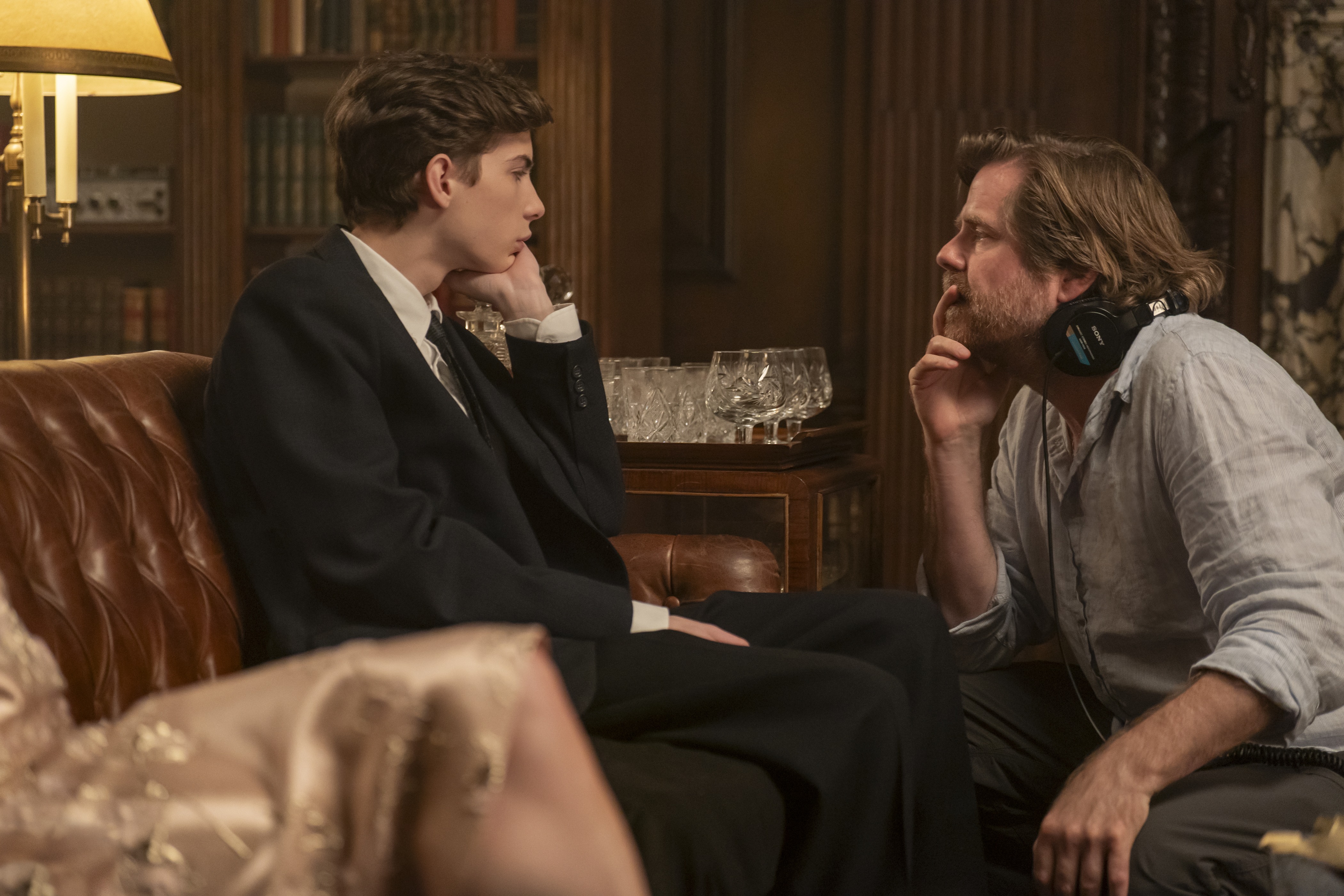
Unabomber: In His Own Words was, for this reason, a more satisfying watch. That documentary also questioned the impact of the Harvard experiments. But by presenting Kaczynski’s prison interview alongside the accounts of family members, researchers and people inside the investigation, it opened up different ways into the story. As Kaczynski explained his own life, that explanation itself had to be examined. The distance between what a person says about himself and what he has done could remain visible. In Unabomber, that distance is closed by a self-assured psychological story. The ending we know decides in advance the meaning of every scene from the past.
The real loss here is the critical relationship one could have built with Kaczynski’s ideas. At the heart of the manifesto is the idea that as technological systems grow, they shrink human autonomy. The concept Kaczynski calls the “power process” revolves around a person setting a goal, making an effort towards it and reaching the outcome through their own action. He argues that modern society corrupts this process with artificial goals and dependencies.
- Today, the way our working lives, our attention and our relationships are organised by technological infrastructures reopens these questions for debate. The same text’s sweeping judgements on social movements, and the destruction it demands in the name of revolution, are also part of that debate. Taking an idea seriously means reading it together with its contradictions.
Because the film does not undertake this reading, it cannot approach the fundamental contradiction within the violence either. Kaczynski, who claims to defend human autonomy, grants himself the absolute right to decide over the lives of the people he attacks. While claiming to fight an abstract system, he sets himself against concrete bodies. The man who condemns the technological order for instrumentalising people uses the deaths of others as an instrument to get his own text into circulation. A hard-edged film could have come out of this, reaching both the limits of the ideas and the responsibility of the perpetrator. Instead of circling this contradiction, Metz goes back to the humiliation at Harvard.
On the investigation side, another ready-made story kicks in. The fictional agent Miller asks the right questions, the men around her belittle her, and in the end she is proved right. Recalling The Silence of the Lambs, this set-up turns every objection into a predictable obstacle. There is little need for the difficulties Miller faces to change her character or the way she works. The script moves forward by proving her right again and again. The collective effort of the real investigation, the documents that came from the family and the way linguistic analysis combined with other evidence all fall behind a success story built on one person’s intuition.
The story of David Kaczynski and Linda Patrik, by contrast, holds a far harder tension. Recognising the voice of a family member in a text, and then having to live with the consequences of that recognition. Caught between turning in his brother, trying to protect him from the death penalty and stopping the attacks from continuing, David’s position does not fit into an easy tale of heroism.
The film touches on this possibility briefly, then switches on a crime-thriller mechanism. Yet what the audience does not yet know could have been not only the perpetrator’s name but also what feelings a brother had to go through to be able to say that name.
- Netflix’s true crime output comes with a familiar promise: we will look inside a terrible person, find the wound that explains him there, and then feel relief at his capture. Unabomber makes every stop along this promise. A child humiliated, an agent proved right, a door opened…
In between lies a life left untold. The film also adds the thirty-five thousand words written on technological society to this machinery, as far as it can carry them. In the end we do not learn who Kaczynski was; we learn which story about him is easier to consume in a hundred minutes.