





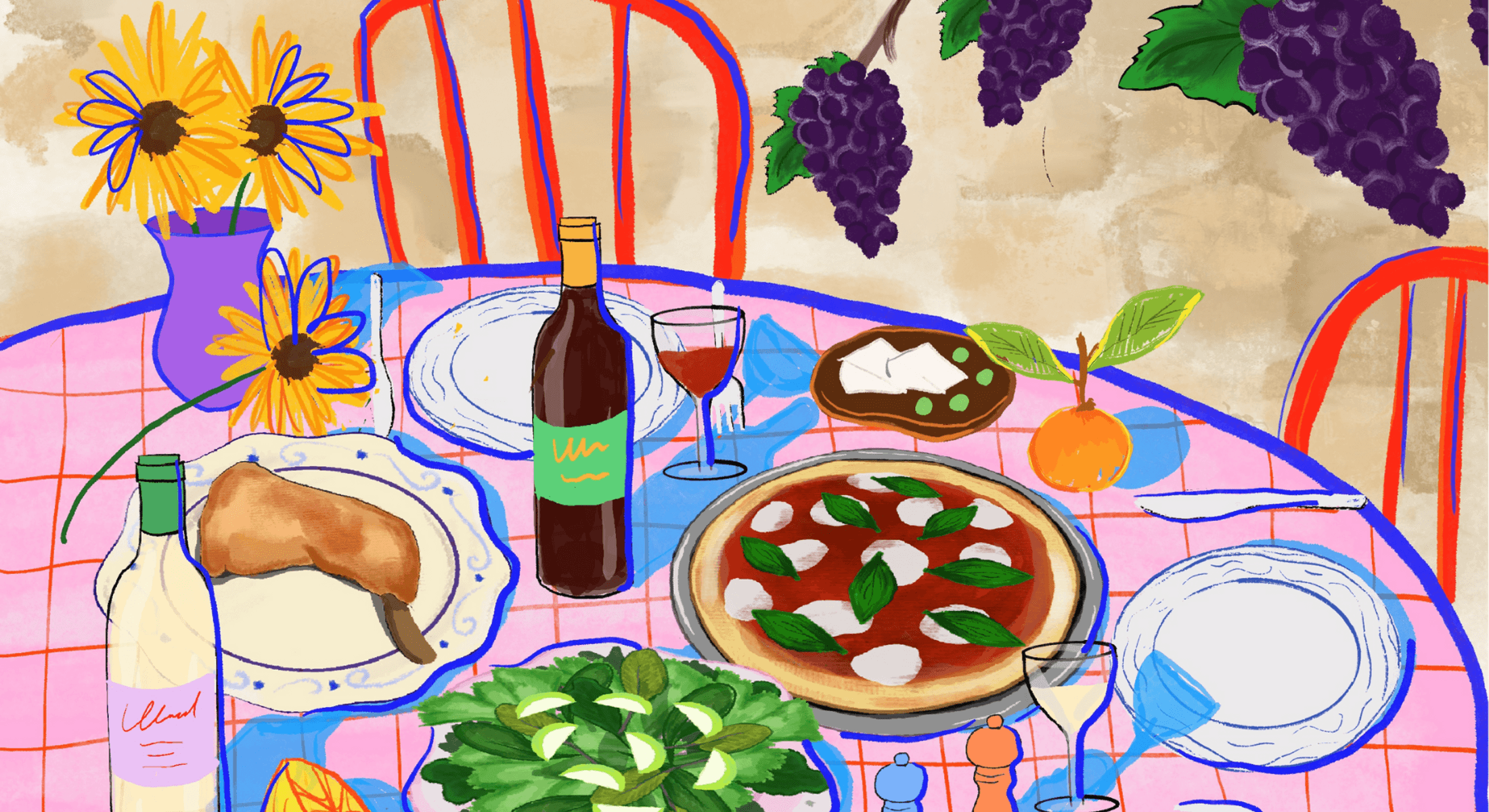
Hello!
Today, we set a beautiful table and start a new series. I am on your screens with Food & Wine Pairings Season 1 Episode 1. In this series, we discover the chemical and physical effects behind pairings. You can stop asking why does red meat come with red wine? Can't cheese pair with white wine? What's the reason for the acidity; where does this bitterness come from? Even though our food and wine choices are completely personal, I am sure that our discovery will deepen once we understand the reasons behind our choices by milling around the chemical and physical aspects of wine. This issue is a little long, but bare with me. Because you will get out of your endless loop of ordering Cabernet Sauvignon; a véraison promise! Now, we are starting with three plates in this epidose; in the upcoming months, we will continue on.
Attention! This post is about wine, a fermented grape juice from alcoholic beverages. For readers under 18, non-fermented grape juice may be more suitable.
Cheers,
I am starting the article by giving a small heads up. There are many takes, even rules on food-wine compatibility. There are absolutely no rules in this issue, only suggestions. There are no absolutes, only personal commentary. There are examples and cause-and-effect so that we understand where this compatibility comes from, image it, and interpret it for ourselves. I don't like generalizations, but I don't mind imagining a little or flying high for a little while for a better understanding. I'll give some examples to better understand the sensory experience of the pairings, heads up.
Textural and Aromatic Experience in Pairings
Some harmony, some explosions.


Not everyone likes the same wine, and not everyone may prefer the same pairings. Yes, individual preferences come into play. You might want to drink a light red with a fruity flavor, and you might prefer a dish that brings out the fruit even more. Or I might want to feel the tannins and find my balance with some protein. So palates are different, preferences are different. But through both physical and chemical interactions, we can increase the pleasure factor in food-wine pairings.
I will divide the sensory experiences in pairings into structural (textural) and aromatic, and share both through complementarity, similarity, and contrast.
Structural (textural) experience
To understand the structural (textural) experience in pairings, let's take a look at the building blocks of wine: acidity, tannin, and alcohol, with a pinch of sugar. The more saliva, the more acidity. The more sugar, the more alcohol. With the effect of these building blocks, changes - even transformations - take place in the palate. The palate becomes fresh, dry, warm, ticklish, and even watery. These are structural changes independent of flavors. Let's briefly look at what they are and then we will set the table!
Acidity
Acid is the sourest building block of wine. When you drink lemonade, when greengages appear in the grocery store, or when you put too much lemon on a salad, you get a sour taste in your mouth, it hits your tongue and palate. Then you suddenly start salivating. This is exactly the sensory effect of acidity. We experience this effect on the palate with wine as with any food or drink with high acidity. The more saliva, the more acidity.
Tannins
We can think of tannins as one of the building blocks that make up the skeleton of wine. They are tannic acid; polyphenols found naturally in many foods. They are found in the seeds, skin and stems of the grapes. The sensory experience is very similar to a beverage we consume a lot: tea. Let's imagine a cup of tea. After sipping it, it has a drying effect on the tongue and palate, and the tannin in wine has a similar effect. It's as if it pulls on your gums and dries your tongue and palate.
Alcohol
"Is there a wine without alcohol?" No, that's grape juice. The alcohol in wine is produced by alcoholic fermentation. If there is a burning sensation in your throat and a slight heat on your palate after swallowing the wine, watch out! You're probably over 14% abv; so you're drinking a high alcohol wine. When you sip whiskey, your throat gets slightly warm, not as strong an effect, of course, but you can imagine it as a similar effect.
Aromatic experience
To understand the aromatic experience in pairings, we will taste the wine, we will talk about its flavor. Is there a Kalecik Karası in the glass with red fruits as if cherries are bursting out of the glass? Or is there a sour salad with too much lemon? We will look at the aroma profile of both the food and the wine.


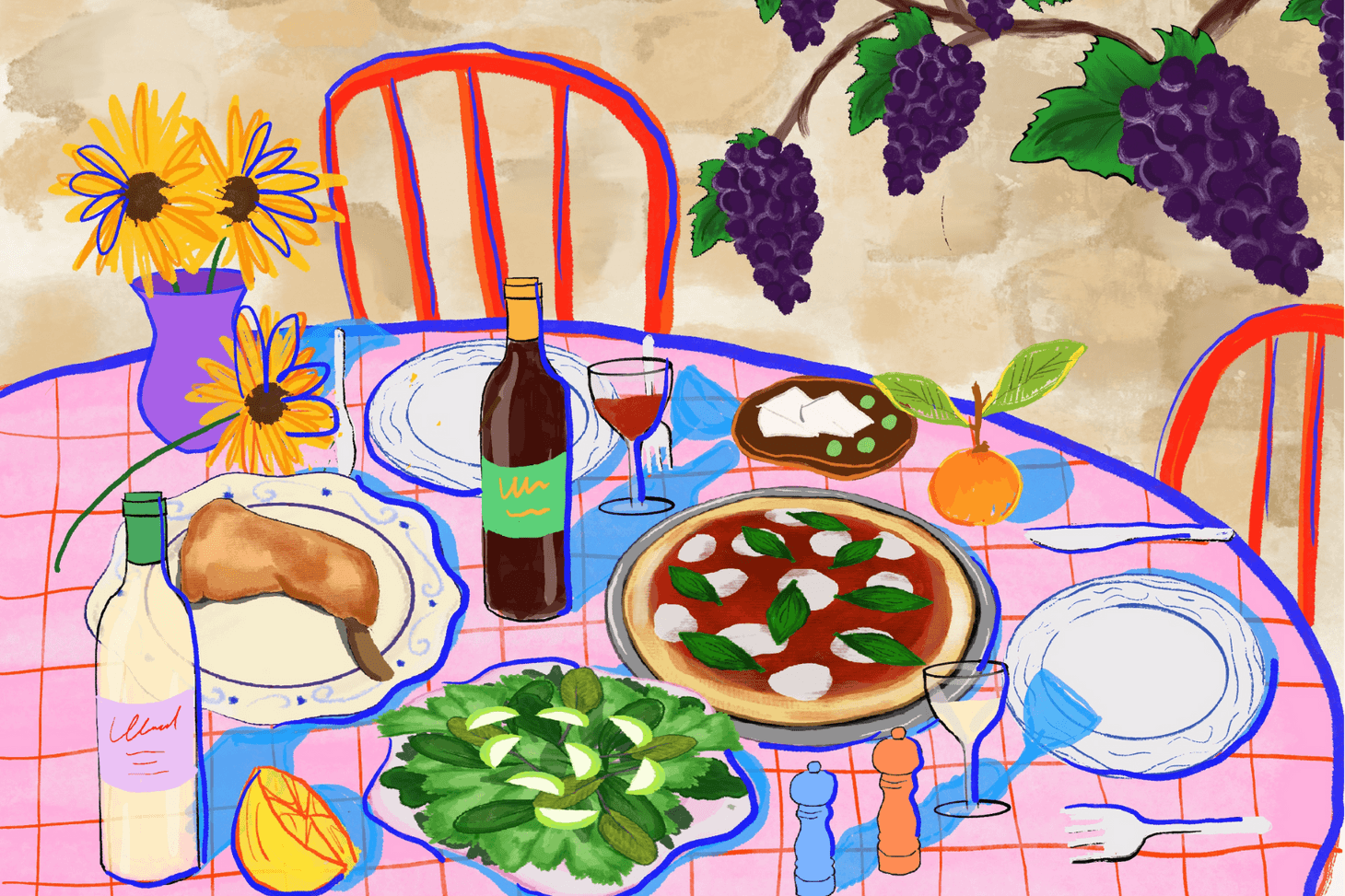
Now that we've looked at what structural (textural) and aromatic experiences are, let's set the table for Episode 1!
In this episode, I have chosen 3 plates. And with the approach we are going to talk about here, you can try these harmonies with similar plates or dishes with similar ingredients. We will continue this series with different dishes in the following issues.
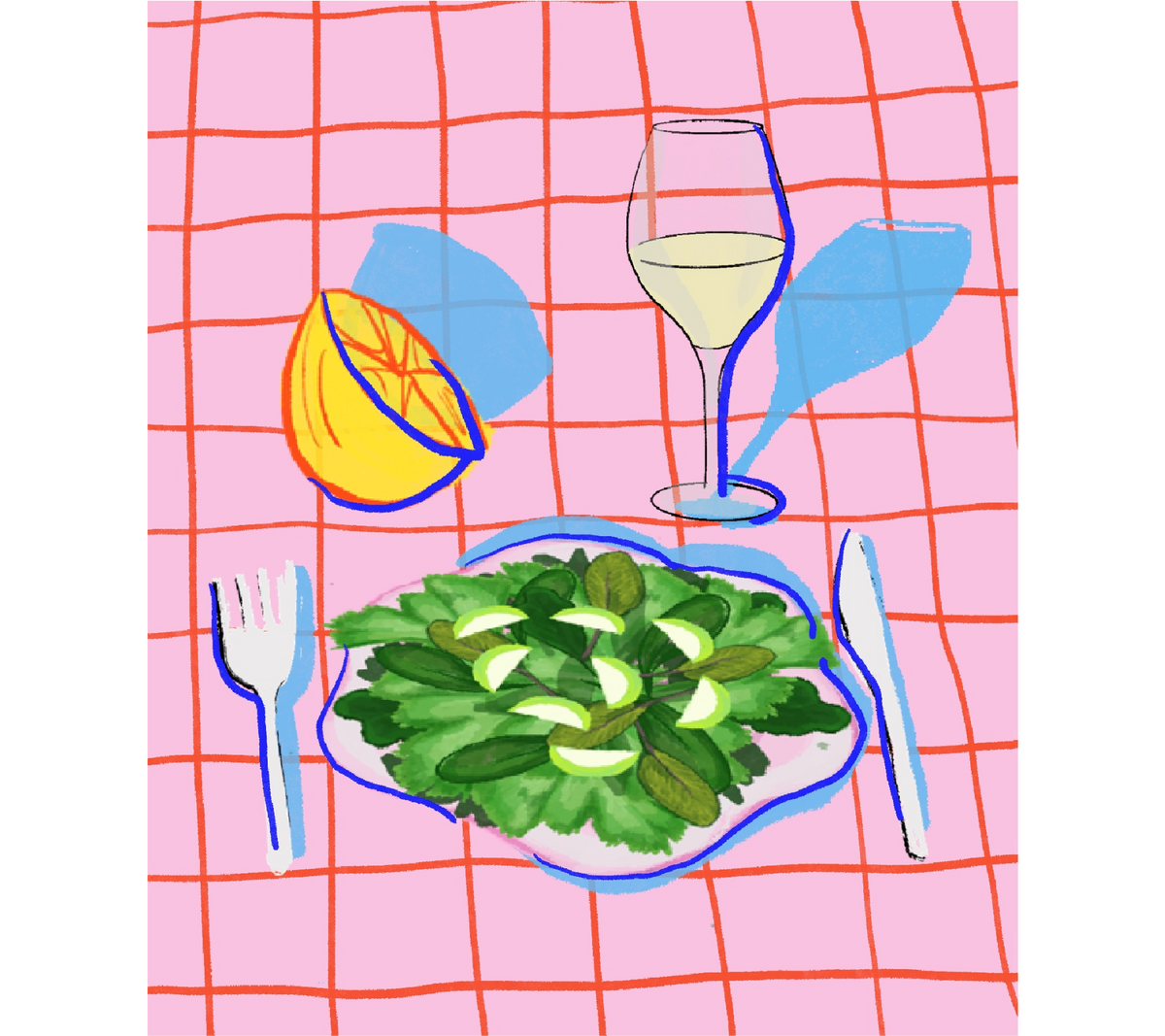
1- Green green salad
You know, it's summer. The sun is out and everything is fine (almost). I'm sure you're eating lots of salads in this weather. We have a lush salad on our plate. Any salad can contain herbs, fruits, cheeses, even meats; it can be confusing. But we choose the simplest, most refreshing plate. Think of lettuce, or a bunch of arugulas. Greens on a plate, an acidic vinaigrette with lemon in it, and some fruit. You can put in an apple or a peach. It's a summer salad!
Structural experience: similarities and explosion
Here, the most important factor is acidity. It affects both the texture and the aromatic structure. The salad is acidic, we need to choose an acidic wine so that the wine doesn't get lost under the acidity of the salad, so that it can stand on its own. If we choose a wine with low acidity, we will not feel much on the palate when we sip the wine with that sour salad. In fact, we will perceive the wine as a little sweeter.
Let's take a look at the sensory perception of acidity with a small experiment:
🧪 We take a glass of white wine and taste it.
🧪 We move it around the palate and understand its structure and taste.
🧪 Then we squeeze a lemon and taste its juice.
Mouths are watering, I know.
🧪 Now we go back and taste that first wine again. You will feel like you are tasting a different wine! Because there will be no trace of the acidity you felt that first time you tasted it.
This is because lemon juice is much more acidic/sour than wine. The acidity of the lemon juice overpowers the acidity of the wine. And when you drink a less sour wine with that very sour lemon juice, the sourness of the wine disappears in our sensory perception. Wine tastes less sour/acidic. It will feel even sweeter. In fact, the wine is the same wine, but depending on what you eat/drink with it, it turns into something completely different. This is why acidity is a very important building block in food-wine harmony.
So, in order to have a balance on the palate; if the food has high acidity, we choose a wine with high acidity. If we have a salad with lemon/lime/vinegar/acidic dressing on our plate, we should have wine with high acidity in our glass. The similarities are explosive, no one outshines anyone else. Sauvignon Blanc is a good example of this pairing.
Aromatic experience: complements and harmony
First of all, we pair green salads with a wine that has similar herbaceous flavors. Sauvignon Blanc wines have herbaceous flavours. One of the reasons why I chose Sauvignon Blanc is this, and the other reason is the fruity profile. Once we have fruit in the summer salad, we should also have fruit in the wine. Sauvignon Blanc is a white wine with a strong fruity aromatic profile. Since both aromatic aspects (herbaceousness and fruitiness) are present in wine and food, they will complement each other and create harmony.

Let's say we have cheese in the salad. When the fruit flavors of the wine and the dairy notes of the cheese come together, both sides are more pronounced sensually. The farm notes of the cheese (especially at the finish) become more pronounced, and the fruits of the wine seem to come out more. For those of you who eat feta cheese with jam, I'm talking about a similar flavor, so we chose a wine in which we can feel the fruit.
And then there's the bitterness in the greens, the wine is a cure for that too. Sauvginon Blanc, where the fruit is at the forefront, balances this bitterness very well with those fruits - in other words, it softens the sensory perception.
🍽 I will give an example of this plate that surprised me recently: Simone's fennel salad. Fennel is difficult to pair, both because it is very aromatic and because it has a pungent taste. When I played it safe and chose Sauvignon Blanc, I enjoyed it very much. I asked Sinan, the chef, why is that, and he replied:
"We marinate the fennel with grape vinegar and sea salt. This softens the sharp flavors. The recipe for the salad dressing includes the water from the fennel, orange, and lemon. Sauvignon Blanc can be pleasant with the acidity and fruit notes of orange and lemon. But if you ask me, an orange wine with light oxidative notes like "Gelveri Keten Gömlek" would be very enjoyable with this dish."
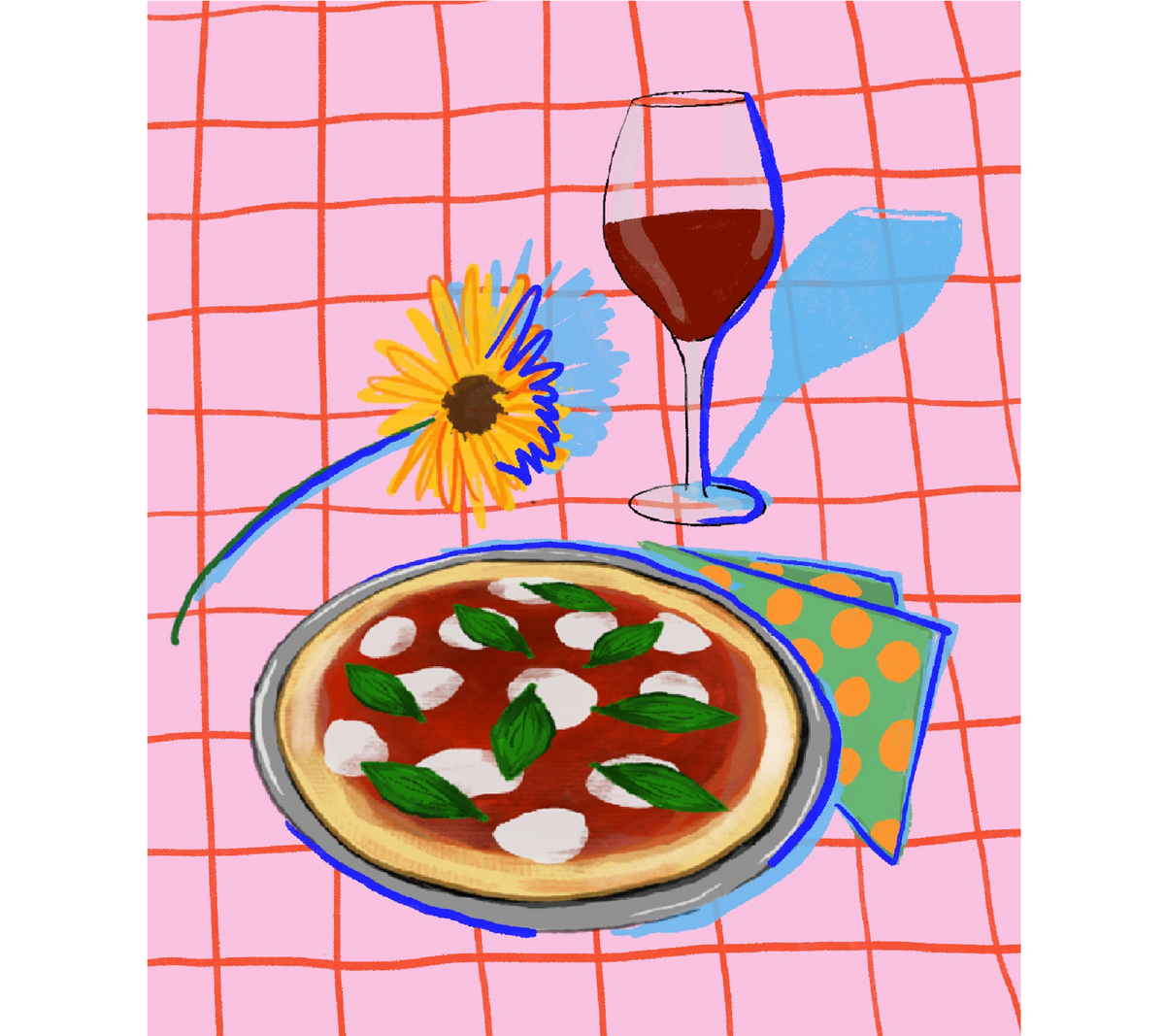
2- Pizza Margherita
We couldn't not include pizza in the first issue of this series. I am ordering Margherita, because I can't think of a more appropriate pizza to describe fundamental harmony.
Structural experience: complementarities and harmony
Mozzarella is a soft cheese. And this soft structure demands an elegant wine. Because if we pair it with a red wine having a strong body and tannins, this soft cheese would be overpowered by the wine's body and tannins; and we might not even be able to taste it. An elegant Kalecik Karası with a delicate texture, light-medium body, and medium-low tannins will harmonize with the soft structure of mozzarella. A calm harmony, without collision, without tiring the palate.

Aromatic experience: contrasts and collision
We'll clash fruit with the fresh and intense dairy notes of mozzarella. I call the combination of fruit and dairy "contrasts and collision" because both sides have very different flavor profiles. And when these two come together, it's like an aromatic collision. The fruit becomes more pronounced, the milk feels fresher and fresher. It's a very elegant collision. When we think of fruit and elegance, Kalecik Karası immediately comes to mind.

The cheese is accompanied by tomatoes, let's not leave that out. The acidity of the tomato is strong, but there is also a little bit of sugar (!) that mutes it a little bit. A little acidic, a little sweet, a little tart. Kalecik Karası's neither high nor low acidity won't spoil the fun, I'm sure it will welcome the tomato well.
🍽 I'll give you an example of a place in Istanbul that will make you feel like you're in a real trattoria in Italy. As soon as you enter this restaurant, a stone oven welcomes you, then glasses appear on your table. You are at Pizzeria Pera! I asked Serdar about his Margherita and whether we could have a glass of wine with it:
"Margherita consists of 3 main ingredients that describe the characteristics of Italian cuisine: tomatoes, cheese, and dough. This is the most important dish in the menu; and the best pairing for me is Pinot Grigio in white and Gamay in red. A Pinot Grigio with herbaceous and floral notes and good acidity will balance the intense flavor of the buffalo mozzarella and basil. And if we are going for reds, I would pair with Gamay because of the similar comments you made about Kalecik Karası.
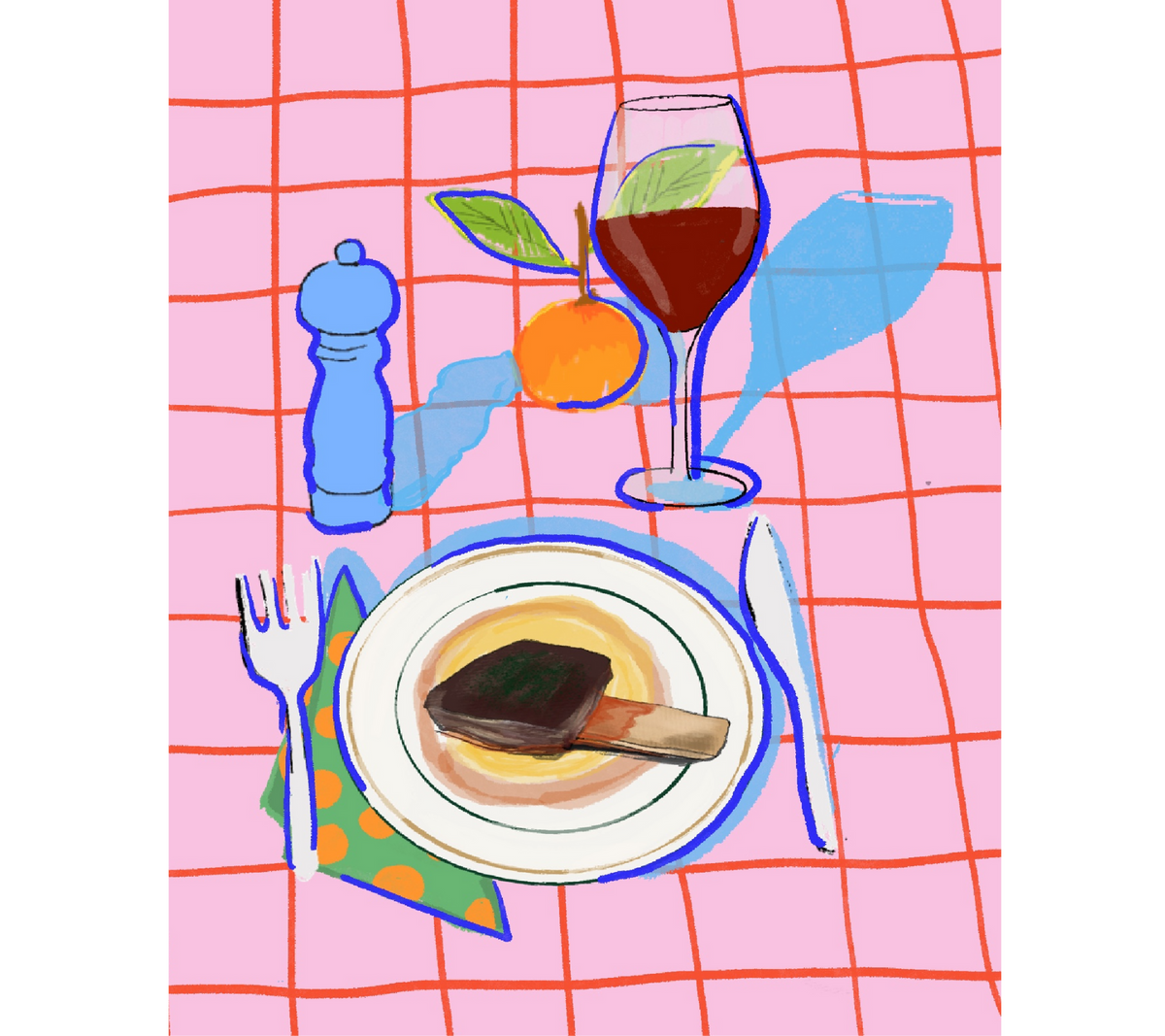
3- Meat. Ribs even. Short ribs to be accurate.
There's a lot of protein on the plate, so watch out! And lots of tannins in the glass, so we end up with a multidimensional sensory experience.
Structural experience: complementarities and harmony
Imagine a rib that cooks very slowly and slides nicely off the bone. You can't have a wine that's too strong for this soft structure. You may be thinking of Cabernet Sauvignons that are very strong, full-bodied. Don't! We're going to look for something in the middle; a medium body, medium tannins, and medium acidity. We can't overshadow the aromatic profile and the soft structure that emerges as it slowly cooks. So we're looking for harmony.

The critical issue here is tannin. I immediately put on my chemical engineer's lab coat and explain without complicating it too much. Tannin = tannic acid. They are polyphenolic compounds. Due to their chemical structure (phenolic compounds) they are very interested in proteins and have a high attraction to them, and they want to bind with them immediately. The sensory effect of tannin in wine is that it dries out the palate. In a high tannin wine, you feel like your gums are being pulled on. It's like drinking a very strong tea. When protein is involved, the tannin binds with the protein, and this drying effect is reduced. That's why they usually pair meat with high tannin wines.
In this pairing, we're not going to go for high tannins, we're going to stay in the middle, because we don't want to leave that soft structure of the rib behind, and we don't want the tannin to stand out with its drying and scorching effect. But we can't do without tannins either; you know, there is protein on the plate. Then, what complements this meat? I would say Syrah. Why?
Aromatic experience: contrasts and collision
Meat on the plate, fruit in the glass. The taste of dark fruits and meat will collide; and a little sugar and a little acidity will shake up the palate. That is why we are pairing with Syrah. Here is an example to understand this aromatic difference and its effect on the palate: Ikea Swedish meatballs with fruit sauce. Even if it seems like a contrast, even if the flavors clash, the result is a pleasure.

Another aromatic reason for choosing Syrah is the spices. Syrah makes spicy wines, you feel the sweet spices in the nose and on the palate. We can say that it accompanies the spices of the meat, even complements them.
🍽 My example for this plate is from the side streets of Maslak Oto Sanayi. If we are looking for the best ribs, the place to go is Markus Ribs. I asked Emirhan about the little secrets of this dish and the wine that he would pair with. His answer was a little spicy:
"One of the secrets of our beef ribs is in the sauce. We make the gravy with jus instead of the classic demi glace; which is thickened with flour. Normally, jus; bone broth is boiled with vegetables and thickened- thanks to the collagen in the bone. The method we use for ribs is different. First we extract the marrow from the joint bones. After mire poix, we deglaze the caramelized ribs with wine and cook them with bone broth. At this point, in addition to the bone collagen, the meat's own collagen is also mixed into the bone broth. We drain this bone broth again and obtain the sauce for the ribs. Then we place the ribs on the mash, which we call royal mashed potatoes, as a base, and then we flavor it again with the jus sauce and serve it."
As you can see, the process is complicated, but the result is just as enjoyable. The result is a multi-layered flavor profile, which is a pleasure to pair with wine; and I share Emirhan's wine pairing:
"Bogazkere from the local grapes. I think it is especially good with Kavaklidere Prestige Bogazkere."
We've come to the last course. Palate collisions are my favorite wine pairings. That's why the pairing of fragrant and moldy cheeses and sweet wine has a special place in my heart.❤ Blue moldy cheeses and semi-sweet and/or dessert wines made from aromatic grapes are among the pairings that delight my palate the most. The reason is the contrast, the collision, the sweet war between these cheeses. Those wines shake the palate with their high acidity and intense aroma profile. A pairing to go: Arcadia 333 Late Harvest with molded Konya cheese. Yum!
Big collision, sweet end.
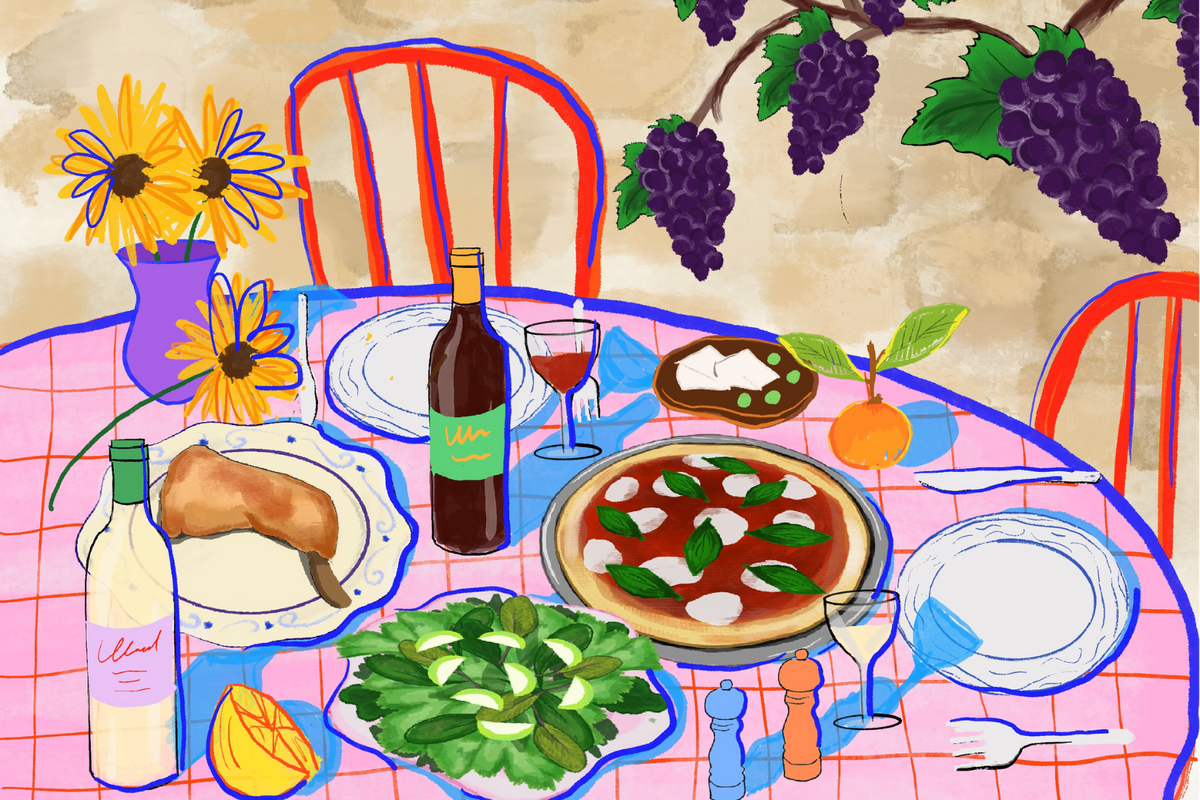
🎨 The illustrations are by Ester, a big cheers to you Ester!
Thank you for reading!
Cheers,
Selin🍷


