





Hello!
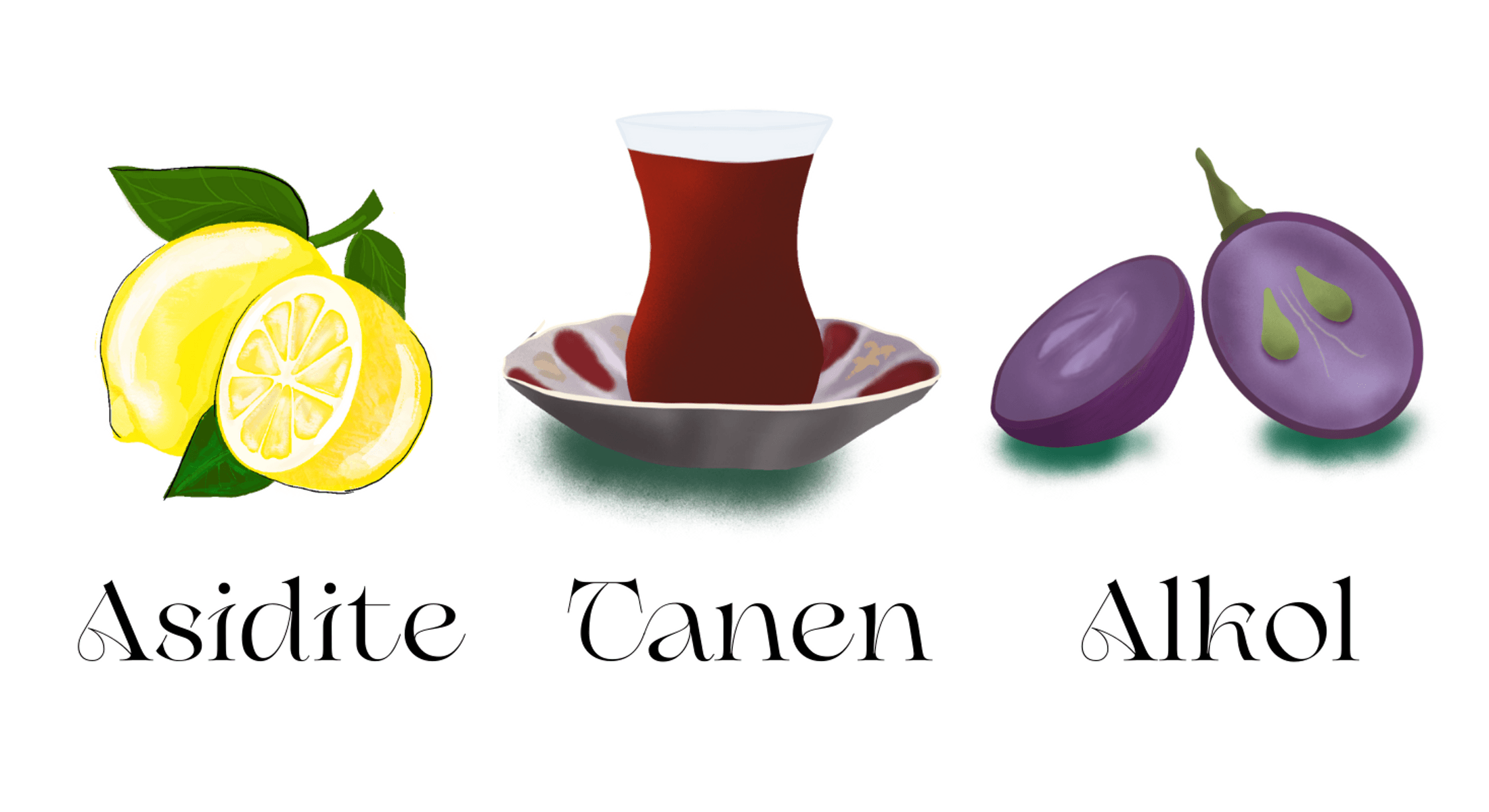
This week, we delve into the Holy Trinity of Wine: Acidity, Tannin, Alcohol. Wines are put through the pH meter as appetites are whet. We seek an answer to the question, “What is round tannin anyway, does it roll away?” And we understand how much alcohol there is in your glass.
Attention! This post is about wine, a fermented grape juice from alcoholic beverages. For readers under 18, non-fermented grape juice may be more suitable.
What's in our glass?
🎵 Grapest Hits: Emir
🍷 Class in a glass: Acidity, tannin, alcohol
Cheers,
I picked one of the grapes which makes you feel its acidity the most: Emir! Emir is the proudly presented grape of Cappadocia. The high diurnal range (the difference between day and night temperatures in the vineyard) makes the grape ripen well without losing its acidity. It makes quite lively, zappy wines. Our Grapest Hits playlist is also quite lively, zappy. If it has already started to play in the background, let’s start!
Acidity, Tannin, Alcohol
The Holy Trinity of Wine.


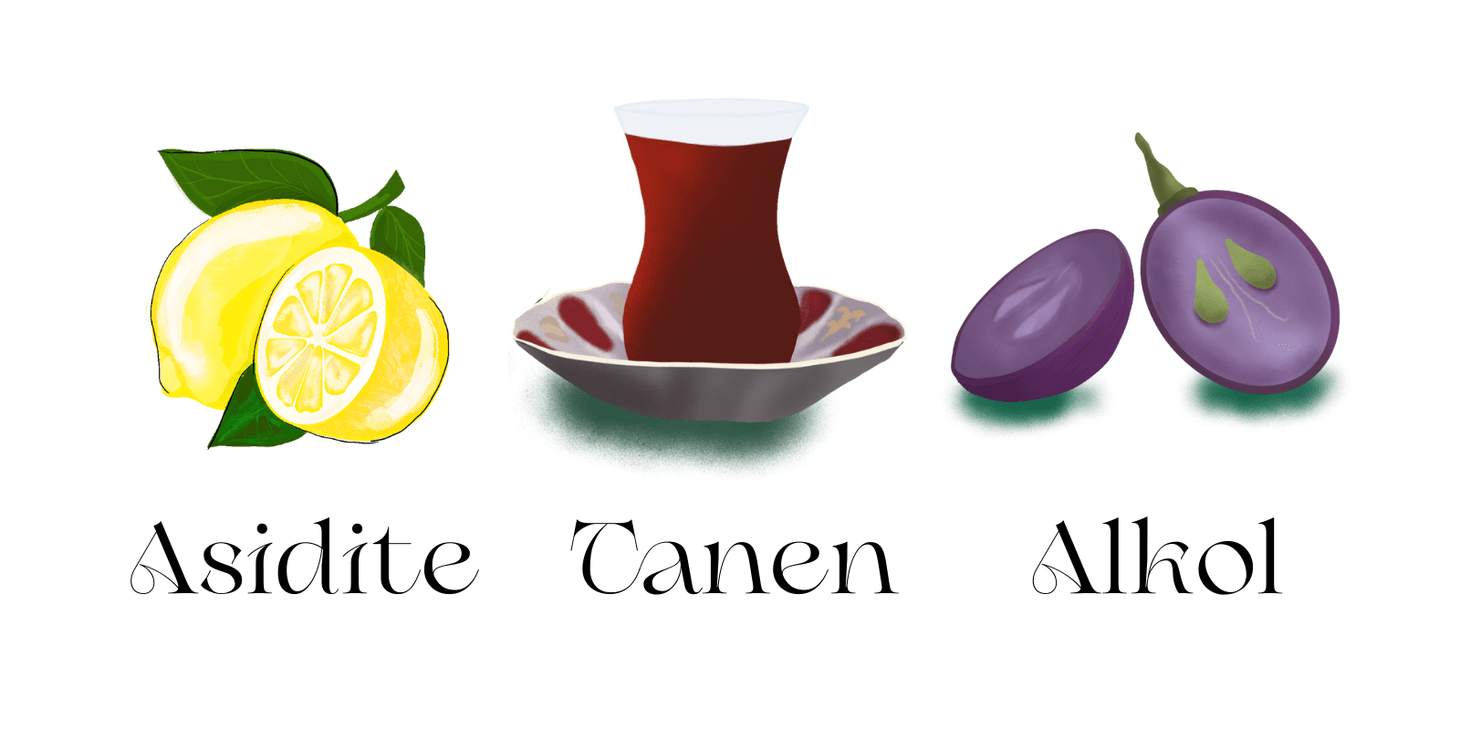
We will talk about the building blocks of wine: Acidity, Tannin, Alcohol.
Acidity
Acidity is the sour building block of wine. Next to the sensory experience, it also impacts the lifespan of the wine. So, the subject is important, and interest is high. The concept of acidity in wine is quite complex, it has a long journey that starts in the soil and reaches the winery. I will explain step by step without getting lost in the details.
Sensory Experience
When you drink lemonade, when greengages appear at the farmers’ market, or when you put too much lemon on your salad, you get a sour taste that strikes the tongue and the palate. Then suddenly, you start salivating. That is the sensory effect of acidity. Much like with every other food and drink high on acidity, you experience this effect on your palate when you drink wine. More saliva, more acidity.
 In tastings, the acidity of wines is interpreted as low, medium (-), medium, medium (+), and high. To explain the sensory differences between the different interpretations of acidity, I will use the example of apples:
Low acid wine is smoother than high acidity wine. It doesn’t strike the palate; it feels kind of sour but also not. Think of the light acidity of a baked apple in apple pie.
Medium acid wine is livelier and sourer than low acidity wine. You say “This is a little sour!” when you taste it. Think of the apple from our pie before it was baked. You got it at the farmers’ market and ate it fresh.
High acid wine is quite lively and bounces the palate and tongue with sourness. This time, think about the raw apple that’s not ripe yet. This time you don’t get it from the farmers’ market, you can’t even get yourself to pick it from its branch.
The difference in low, medium, and high acidity is similar to that of the apple. You can discover this at home too. You can get a better handle on it by tasting and comparing wines with different levels of acidity. Wine acidity varies greatly depending on the grape and the region, therefore I prefer not to give comparative examples of wine. However, you can do a tasting by buying a varietal bottle of wine made from Emir grapes that is budget-friendly. Wines made from Emir grapes are usually high in acidity. Therefore, they make a good example. After a few wines tasted with acidity in mind, you will understand the differences in acidity more clearly.
pH Values
We can’t not mention pH when we talk about acidity. 🧪 As a chemical engineer, I am putting my lab coat on! In order to understand the acidity of wine – like in every other area – you check its pH value. In fact, you can hear people ask “What’s the pH?” in wine tastings.
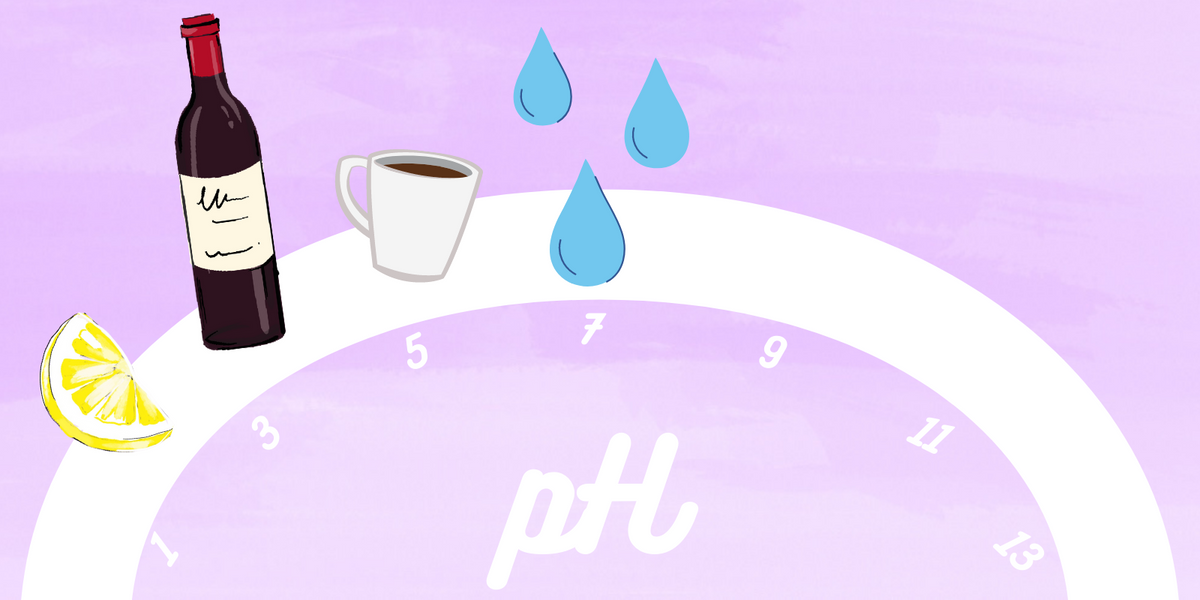
First of all, pH is a measure used to understand the acid or alkaline value of a solution. The H in pH is hydrogen and can be from 0 to 14 based on the density of hydrogen ions. Imagine a scale from 0 to 14. The closer you are to 0, the acidity goes up; the closer you are to 14, the acidity goes down. 7 marks a neutral solution. To give an example, lemon juice and vinegar’s pH levels are around 2; coffee around 5, and water around 7. To understand the difference, you can drip one or two drops of lemon juice in your mouth, then drink a gulp of water, and then some coffee. If you ask “Where is wine on this scale?” it wanders around 3-4. I would love to give examples of low, medium, and high acid wines but that would be a huge generalization. I don’t make generalizations about white, pink, or red wines or grapes either. No matter which Emir wine you get, it will be a good example of high acidity.
Tannin
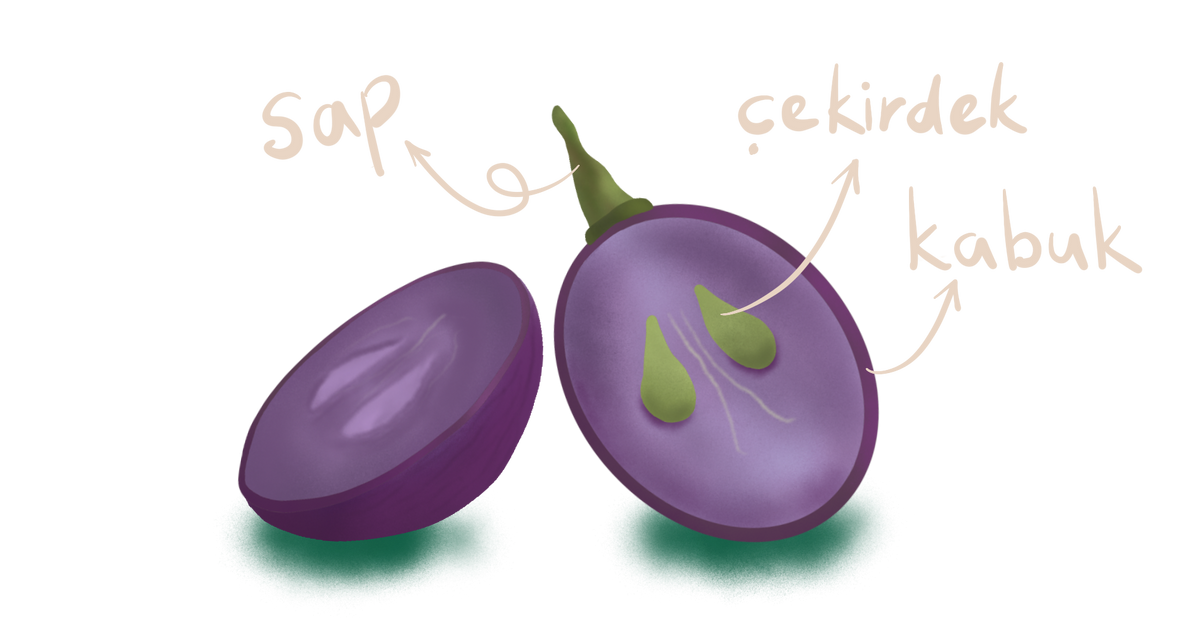
We can think of tannin as one of the building blocks of the skeleton of the wine. This is a component that influences the effect of the wine on the palate and its potential to age. So, let’s take it seriously. We can’t give up on acids though, we are talking tannic acids, polyphenols that are naturally found in many foods. It is found in the seed, skin, and stem of grapes.
Stem, seed, skin
Sensory Experience
Tannin’s sensory experience is quite familiar, it is really similar to a drink we consume quite often: tea. Imagine a strongly brewed tea. It has a drying effect on your palate and tongue after you take a sip. That is similar to the effect of tannin in wine. It almost pulls your gums, dries up your tongue and palate.
In tastings, tannin is interpreted as low, medium (-), medium, medium (+), and high. These different interpretations of tannin demonstrate that drying effect. We can understand this in a small and simple experiment at home. First, we brew tea. We add more water to one and less to the other. First, we take a sip of the weaker tea, then the stronger one. This is quite similar to the sensory difference between a low tannin wine and a high tannin wine.
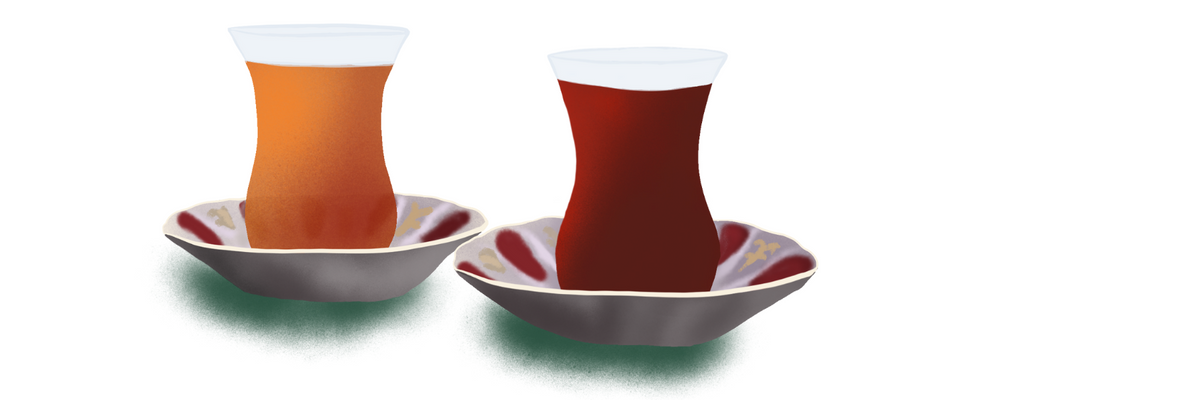
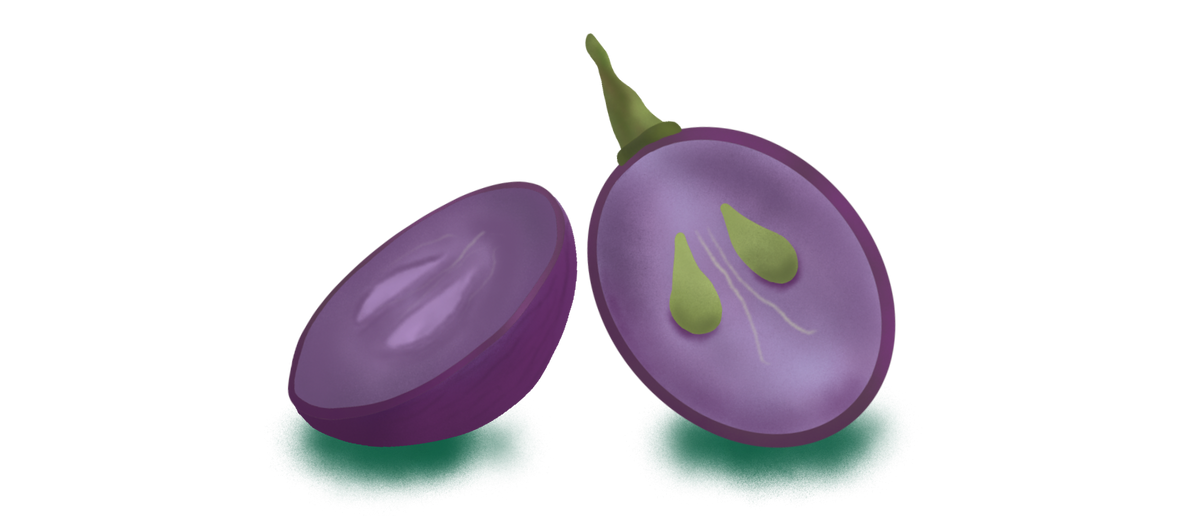
We talked about the tea example, now let’s go with the example of grapes:
- You buy grapes at the farmers’ market and you are eating them. It has seeds, and all of a sudden you hear a crack, you bit the seed. There’s a tart, bitter, parching, slightly itchy effect. That’s the tannin effect.
- You keep eating the grapes. But like me, you are one of those people who sometimes remove the skin and eat it afterwards; or just for this time you peeled off the skin and are eating it. As you chew on the skin, there’s a tart, bitter, parching, slightly itchy effect. That’s the tannin effect.
We can’t say that every tannin effect is the same. Because the tannin effect coming from unripe grapes and ripe grapes is different. You can have the bitter, parching effect more severely, while you can get a more naïve, velvety effect on the riper side.
Ages, ages
Tannin influences the aging potential of wine because it protects it. It takes on the role of a natural antioxidant and plays a big role in the wine standing tall. Let’s take Cabernet Sauvignon as an example of a high tannin wine. If only the tannin in 10+ wines could talk… As they age, aggressive and hard tannins usually soften. Their tiring effect becomes softer and rounder. Of course, tannin isn’t the only effect in aging, there are low tannin but beautifully aged wines.
If you had your tea and understood tannin, let’s sip our next wine with the tannin effect on the palate in mind. Always experimenting, always discovering.
Alcohol
“Is there wine without alcohol?” No. That’s grape juice as I specifically state in the intro of every issue.
Yes, we are talking about fermented grape juice. The alcohol in wine comes from “alcoholic fermentation.” We have grape juice, and there’s natural sugar in the grape juice. When you add yeast to the grape juice (or when the yeast naturally found in the skin works,) the yeast eats the sugar. Then, alcohol and carbon dioxide appear. This is alcoholic fermentation. The more sugar in the grape, the more alcohol it makes. More sugar, more alcohol. We understand how much alcohol the wine contains by alcohol by volume. Alcohol by volume is the globally accepted standard of measurement. The amount of ethanol in any given volume of liquid is shared as %. For example, you can see 13% by volume on the bottle. Or you might see 14.5% Alc/Vol. This is the alcohol percentage by volume.
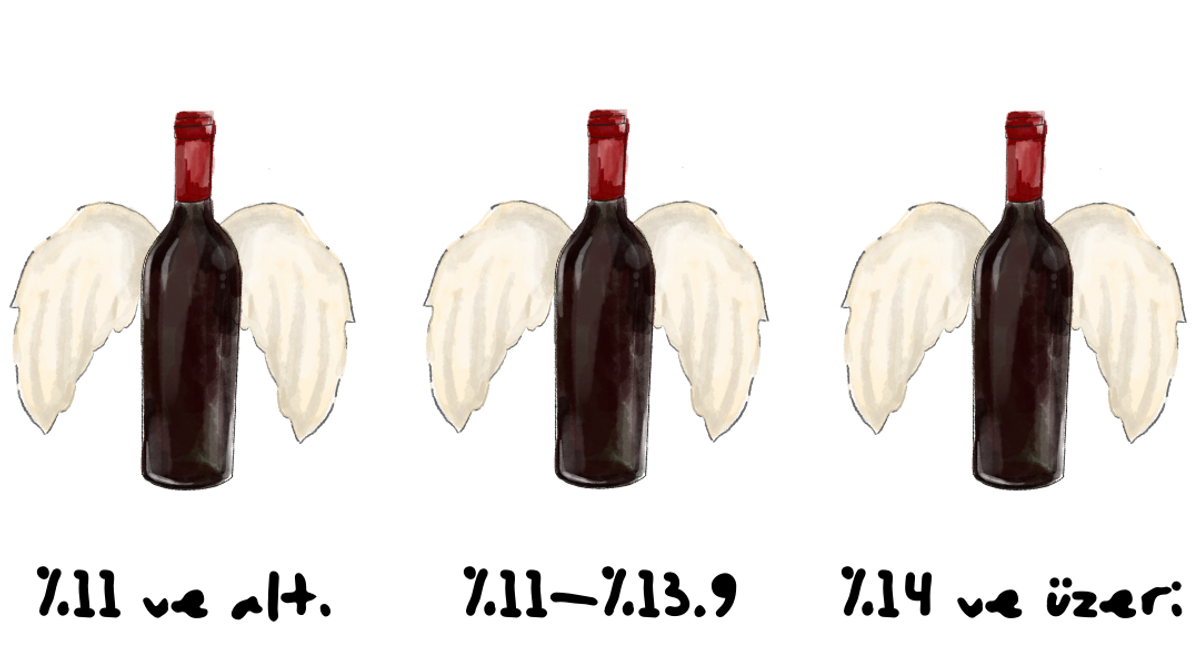
11% and below, 11%-13.9%, 14% and above
I explain low, medium and high alcohol in wine with numbers and examples:
- Low alcohol levels: 11% and below by volume. Our example is Kabinett Riesling. German wines are grouped according to the amount of sugar in the grapes at harvest. Kabinetts are also considered dry and medium sweet wines. For example, a Kabinett Riesling with 8-9% alcohol by volume will be a low on alcohol but slightly sweet wine. We can also see 12% wines of the same grapes. Then the sweetness will drop because those sugars will turn into alcohol.
- Moderate alcohol levels: Between 11% and 13.9% by volume. As an example, we can think of Sauvignon Blanc, Chianti. Generally, wines that are consumed are around moderate levels.
- High alcohol levels: Over 14% by volume. Some Shiraz, some Cabernet Sauvignon. If you want to look further, you can turn to fortified wines: Port, Sherry, Marsala.
Sensory Experience
The alcohol content also influences the sensory experience. In tastings, the alcohol of the wine is interpreted as low, medium, and high. While tasting these ratios, you may or may not feel them in your nose and palate. If there is a burning sensation in the throat after swallowing the wine, and slight heat in the palate and throat, it is okay! You're probably past 14%, drinking a high alcohol wine. I'm burning up, you’re burning up, they’re burning up! When you sip whiskey, it slightly warms your throat. Of course, it is not such a strong effect, but we can say that it points in a similar direction. Let's be very careful with the food we eat with it; if we eat hot food with high alcohol wine, will burn badly. In addition to this burning sensation, there is also a feeling of fullness and heaviness given by alcohol. In other words, alcohol also affects the body of the wine. Take water as an example. Alcohol has a denser structure than water, and it feels heavy and full on the palate. While having a juicier drinking experience in a low alcohol wine, we encounter a fuller effect in a higher alcohol wine.

Thank you for reading!
Cheers,
Selin🍷


