
Aposto World · 9 November 2026
🏛️ COP31 in Antalya, Miller in the West Wing
Stephen Miller takes over the White House, COP31 opens in Antalya and the Bank of England raises rates on the Gulf's oil shock.
Good morning from a beautiful day in Antalya.
The weather is sunny yet crisply cold: what one might call perfect fall weather. The town is buzzing with thousands of cars, people from every corner of the world, and the excitement of a gigantic event, possibly the biggest in the city’s history. Yesterday, an organizer called it the largest event in the history of the Turkish Republic. The organizers expect more than 100,000 participants over two weeks, delegations from 197 parties, some 85 heads of state and government, and nearly 300 ministers.
COP31, the 31st Conference of the Parties to the UN climate convention, opens today at the Antalya Expo Center, a 60,000-square-meter site packed with hundreds of pavilions. Antalya was not an accidental choice. A city built to host millions of tourists a year already has the airport, the hotel beds and the congress halls that a summit of this scale demands. Convention infrastructure, it turns out, is also climate diplomacy infrastructure.
The conference arrives under a familiar cloud. COP is routinely criticized for its ability, or inability, to drive action, and for being yet another soft-diplomacy gathering of the United Nations. Last year’s summit in Belém ended without an agreed roadmap for phasing out fossil fuels. This year the US federal government is absent for a second year running, though a large delegation of American governors, mayors and congresspeople is here regardless. The billboards around Antalya read “Dialogue, Consensus, Action.” Welcome to Türkiye.
There is one more novelty worth noting: for the first time, the presidency is split. Türkiye hosts and presides, Australia runs the negotiations. Whether this is a clever compromise or a diplomatic workaround, we will find out by the 20th.
Even though COP reads as a climate conference tackling the most alarming issues of our time, in practice it functions as a melting pot for diplomats, the private sector and NGOs. The venue is divided into two zones. The Blue Zone is the main arena, where delegations negotiate and countries have their pavilions. The Green Zone is open to the public, free to register, and is where companies, industries and institutions run their pavilions and hold sessions and events.
I do not think it is common for so many different parts of society to gather under one roof like this, and the fact that the Green Zone is open to anyone who registers makes it rarer still. One should not see COP solely as a climate conference, but also as an opportunity to bridge people and organizations, nations and cities, and to put a different city in the spotlight every year, one that can become an international hub for a wide range of industries, from tourism to policy to technology. Whether the conference produces meaningful policy or remains a diplomatic talking shop, Antalya and Türkiye are living through a historic moment. From the inside, COP is far more colorful than what we see on the news.
Keep following us over the next 10 days on Instagram and YouTube, and in this newsletter, where we will share updates from our interviews and our insights from the ground. We will also be hosting fireside chats and podcasts with our correspondents.
Have a wonderful week,
Orhun Canca
What else is in the news?
A week after Republicans lost both chambers of Congress, Washington is rearranging itself. Susie Wiles has gone, and Stephen Miller, the architect of the deportation drive, takes over as White House chief of staff today, even as Trump tells 60 Minutes that the same policy was "too tough" and cost him at the polls.
Markets drew their own conclusion: the Nasdaq fell 5.5% on Thursday on bets that a Democratic Congress will slow the AI build-out, wiping about $1tn off the seven biggest tech firms in one session.
Articles of impeachment against Pete Hegseth over the Iran war may be tabled as early as today, and Hakeem Jeffries, the incoming Speaker, is already a yes.
The rest of the world gets its first proper look this week. G7 foreign ministers meet in Paris today and tomorrow with Marco Rubio staying both days, COP31 opens in Antalya with nearly 200 delegations and President Erdoğan hosting the leaders' summit on 11 and 12 November, and next week Trump expects to sit down with Xi Jinping and Vladimir Putin together at APEC in China.
Over all of it hangs the war with Iran, now in its ninth month: it pushed the Bank of England into its first rate rise since 2023, and Tehran has just dropped its 2,000-kilometre missile cap.
🎵 Tunes for the read, and for the rest of the week: Everybody Wants to Rule the World by Tears for Fears
Have a good week, an easy read, and see you on Friday.
UK
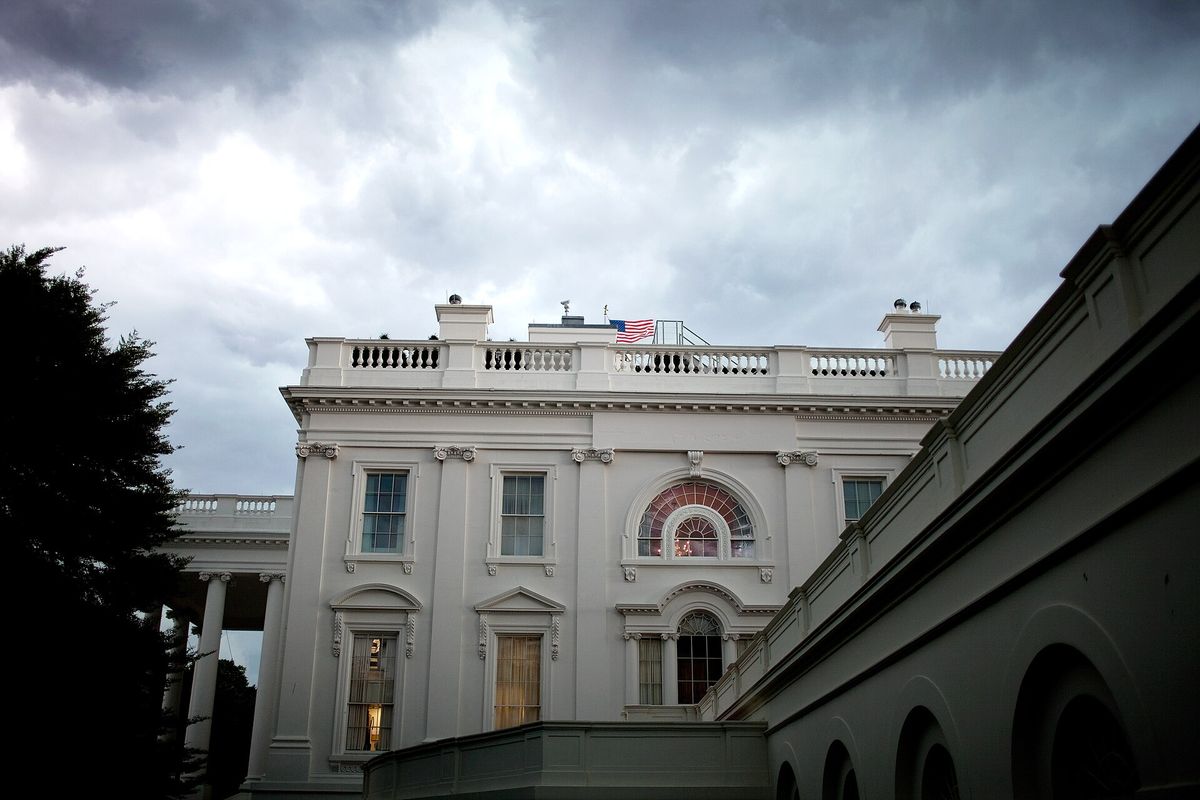
White House (Chuck Kennedy) / Wikimedia Commons, Public domain
Oil in the base rate: The Bank of England raised its base rate to 4% from 3.75% on Thursday, its first increase since August 2023, to stop the oil shock from the US-Iran war spreading through the economy. Andrew Bailey, the governor, tied the next move to the Gulf rather than to Britain.
- The quote: "Unless the conflict in the Middle East is resolved, neither does it seem likely to be the last increase," Bailey said, adding that it "requires real progress towards settling the conflict".
- Behind the scenes: Eight of the nine rate-setters voted for 4% and one wanted 4.25%. Clare Lombardelli sees a case for another rise soon, while Alan Taylor called this a "one-for-now" insurance hike.
- Looking ahead: Inflation was 3.5% in September. The Bank now expects it to peak at 4.9% in mid-2027 and not reach the 2% target until 2028, or to hit 6.2% if the war escalates. Household energy bills rise in January.
Windrush, Ankara edition: The Home Office has rejected a sharply rising number of applications for indefinite leave to remain from Turkish nationals since January, and errors have been found in some of those refusals, The Guardian reported on Sunday. People who built businesses in Britain now face removal.
The backstory: The applicants hold European Community Association Agreement (ECAA) visas, a longstanding route to residency for Turks who set up a business in the UK and one of the few Brexit left intact.
Context: The original Windrush scandal erupted when thousands of long-term, legal Commonwealth residents were wrongly treated as illegal immigrants by the Home Office, resulting in wrongful detentions and deportations due to bureaucratic failures and lost records.
Slower lane for EVs: Ministers are expected to make steep cuts this week to the mandate that sets how many new cars sold must be electric. Louise Haigh, the de facto deputy prime minister, is due to settle the plan after a Downing Street meeting on Wednesday that ends a long dispute between the transport, energy and business departments.
- Why it matters: The mandate is a central part of Britain's emissions plan. Carmakers will be relieved, but many Labour MPs are alarmed about the government's commitment to green policy.
- Punchline: The decision lands in the same week that COP31 opens in Antalya, where the host is asking governments to sign up to electrifying more of the economy.
Pricing a united Ireland: A party in Ireland's governing coalition published a blueprint for reunification on Sunday, putting the first-year cost at between €3bn and €25bn. The Taoiseach announced a government unit to inform the debate.
- Important note: The figures come from scenario planning, not government policy. A range that wide shows how much about the cost of unity is still unknown.
EUROPE
Antalya's turn: COP31 opens in Antalya today, Monday, with delegations from nearly 200 countries meeting for two weeks of climate talks. Murat Kurum, Türkiye's environment minister, gives the opening address; Türkiye hosts while Australia presides over the negotiations, and President Erdoğan hosts the leaders' summit on 11 and 12 November.
Why it matters: The Turkish presidency's headline ask is a pledge to raise electricity’s share of global final energy consumption to 35% by 2035, up from about a fifth today. Climate groups object that it does not require the extra power to be low-carbon, so the first fight is over whether electrification alone counts as progress.
Zoom out: The US war with Iran, now in its ninth month, has sent governments scrambling for oil cargoes and back to coal, AI is driving power demand up, and the United States is staying away from climate cooperation for a second year. A UN Environment Programme report in October said the world is already set to overshoot 1.5C of warming.
Furthermore: Pacific island states are pushing for a clearer roadmap away from fossil fuels, while producers led by Saudi Arabia argue oil and gas can stay in the mix if paired with carbon capture.
Terror on the Rynek: A gunman drove into Krakow's Main Market Square on Saturday afternoon and fired at random from his car, killing six people: four Poles, a Briton and an Austrian woman. Police found three more bodies at his home in Ostrowiec Świętokrzyski, identified on Sunday as his father, mother and 21-year-old sister.
- What happened? Armed officers shot the 25-year-old Polish suspect within three minutes, and he is in hospital after surgery. Sixteen people were taken to hospital, including five foreigners and two police officers, one of them shot three times.
- Why it matters: Interior Minister Marcin Kierwiński said the attacker was 'fascinated by far-right ideologies', and prosecutors are treating the shooting as a terrorist offence. Polish media report he held a firearms permit and may have taken the weapons from the family home.
A seat in Abu Dhabi: G7 foreign ministers meet in Paris today and tomorrow, the allies' first chance to judge whether last week's Republican midterm rout changes Washington's line on Ukraine and Iran. The meeting was moved from Marseille for security reasons after weeks of protests across France, and Marco Rubio, the US secretary of state, is staying both days.
- Looking ahead: US-mediated Russia-Ukraine talks open in Abu Dhabi on Tuesday and Wednesday, with Steve Witkoff and Jared Kushner for Washington. Jean-Noël Barrot, France's foreign minister, says Europe will be there, although the Kremlin had ruled out any European role.
- What they're saying: Donald Trump told CBS that Ukraine would 'end up with a little bit different shape'. Jonas Gahr Støre, Norway's prime minister, who spoke to Putin, told Politico he would be 'cautious' and doubts Putin wants peace.
- Behind the scenes: Europe still cannot agree who speaks for it; Giorgia Meloni warned on 5 November that separate national tracks risk making Europe irrelevant, and EU leaders take up the question at an informal summit in Dublin this week.
Cold war, warm freezers: Estonia has accused Russia of state-sponsored terrorism over hybrid attacks, as European governments investigate who hacked supermarket fridges across the continent last Monday. Retailers in Estonia, Belgium, Ireland, Finland, Luxembourg, the Netherlands and Sweden found units reprogrammed to reach 50C, and freezers at France's national blood bank were hit the same day.
- What they're saying: Richard Horne, head of Britain's National Cyber Security Centre, says the world is in the 'foothills' of a new hacking landscape. Experts point to Russian hallmarks, though no one has claimed the attacks and the Pentagon suspects Iran behind similar hacks on US base freezers in the summer.
- Furthermore: An internal EU assessment seen by Reuters finds a covert Russian network, 'Operation Overload', exploited France's October riots with fake videos impersonating Western outlets. A French foreign ministry study found MAGA-linked accounts drew far more views, 49 million against 2.8 million for pro-Russian posts over three days.
Madam Bundespräsidentin: Friedrich Merz, the German chancellor, said on Sunday he will nominate Ilse Aigner, the Bavarian parliament's speaker, as federal president, which would make her Germany's first female head of state. If the CDU and CSU confirm her today, election by the Federal Convention on 30 January is all but certain, with the SPD already supportive.
- The backstory: Aigner, 61, a former agriculture minister under Angela Merkel, was put forward by the CSU earlier this year, but the CDU held back while Merz weighed alternatives, straining the sister parties' relations. She would succeed Frank-Walter Steinmeier, whose second term ends in March 2027.
US
The AI hangover: The tech-heavy Nasdaq fell 5.5% on Thursday, its worst day in 19 months, as investors bet that the Democrats' capture of Congress would slow the data-centre build-out behind the AI boom. The seven biggest tech firms, Apple, Nvidia and Tesla among them, lost about $1tn in value in one session; Nvidia alone fell more than 9%.
- Zoom out: The sell-off reached Asia on Friday. Japan's Nikkei closed 6% down, and South Korea's Kospi tripped a circuit breaker after falling more than 8%, with chipmaker SK Hynix down over 10%; Germany's Dax lost about 2%.
- Why it matters: Democrats campaigned against data centres, and Texas's governor-elect, Gina Hinojosa, has promised a moratorium on new ones. Elon Musk, who spent nearly $450m backing Republicans, watched Tesla fall almost 11% and SpaceX 8%.
- The quote: Trump's verdict on Truth Social: "you only have yourselves to blame". Wall Street steadied on Friday, the Nasdaq up 1%, after figures showed the US economy added 165,000 jobs in October.
The CEO and the spy: Nvidia's board opened an independent investigation on Sunday into its founder and chief executive, Jensen Huang, after reports that he had a relationship with Alice Huang, a Megaspeed executive whom US officials believe worked for China's Ministry of State Security. In a memo to staff, Huang admitted he had been "unfaithful" to his wife. The board says it has no reason to think national security or company secrets were compromised.
- The backstory: Megaspeed, a Singapore-based data-centre firm and Nvidia customer, is under Commerce Department investigation over whether it smuggled AI chips to China, where Nvidia's most powerful chips are barred. The New York Times reported in October that Trump had been briefed on the intelligence last year.
- What they're saying: Asked on Sunday whether he wished he had acted at the time, Trump said: "No, I don't think so. I think he's an honourable guy." Beijing calls the allegations "groundless speculation".
- Why it matters: Nvidia, worth about $4.5tn, supplies the chips that OpenAI and Meta build on. Huang has also lobbied Trump to loosen export curbs on chip sales to China.
Miller at the gate: Trump on Friday named Stephen Miller, the architect of his deportation drive, as White House chief of staff. Miller, 41, takes over today from Susie Wiles, who resigned after Republicans lost both chambers of Congress. Trump had said last month there was "zero chance" she would go.
- Behind the scenes: According to The Atlantic, Wiles resisted arresting journalists to make them reveal sources in leak cases, while Miller favoured it. The New York Times reports that the Justice Department has weighed naming the Times itself as a conspirator in the Comey leak case.
- Furthermore: Others have left since the election, among them Harmeet Dhillon, head of the Justice Department's civil rights division, and John Eisenberg, head of its national security division.
- Looking ahead: Robert Garcia, the Democrat in line to chair the House Oversight Committee, says Miller's role "deserves oversight and investigation".
Too tough, says Trump: In his first major interview since the midterms, broadcast on CBS's 60 Minutes on Sunday, Trump said his deportation policy had been "too tough" and had hurt Republicans at the polls. He offered to strike an immigration deal with Democrats but gave no details.
- Important note: The machinery has not slowed. The Department of Homeland Security said "ICE is NOT backing away", and CBS reports that officers have been told to aim for about 2,700 arrests a day, up from 2,000.
- Furthermore: Trump also blamed the defeat on the Iran war, petrol prices and a "great dislike, incredibly, for Israel". He insisted he would go to war again.
- Big picture: Election-day polling ranked immigration as voters' third concern, and a swing of Latino voters helped carry Texas for the Democrats.
Articles against Hegseth: Thomas Massie, an outgoing Republican congressman, plans to table eight articles of impeachment against the defence secretary, Pete Hegseth, as early as Monday. The articles accuse him of waging war on Iran without the congressional authorisation required by the 1973 War Powers Resolution. Hakeem Jeffries, the Democrat expected to become Speaker in January, said on Sunday he is "a hard yes".
- Important note: The House can impeach by a simple majority, but removal needs two-thirds of the Senate. That is beyond even the Democrats' enlarged caucus of up to 56 senators without Republican votes.
- What happened? On Saturday Trump ordered the Justice Department to look into Democrats threatening investigations, calling them "EXTORTIONISTS". On Sunday Attorney General Todd Blanche refused to rule out prosecuting lawmakers.
MIDDLE EAST
Eisenkot's 28 days: Gadi Eisenkot, a former army chief who now leads the Yashar party, formally received the mandate to form Israel's next government from President Isaac Herzog on Sunday. He has 28 days, extendable by 14, to find 61 votes. His bloc won 48 of the Knesset's 120 seats on 27 October against 53 for Benjamin Netanyahu's camp.
What happened? Eisenkot drew 67 recommendations to Netanyahu's 46, but 19 of them came from the two Arab-majority lists, whose support several of his partners reject; Yisrael Beiteinu has ruled out sitting with them. United Torah Judaism, Netanyahu's ultra-Orthodox ally, declined to endorse anyone.
The quote: "We are in the midst of a devastating diplomatic crisis. Even our closest friends and strategic allies are saying their relationship with Israel must be reassessed," Eisenkot said, inviting Likud and Bezalel Smotrich's far-right party into a "national emergency government", with himself as prime minister.
Looking ahead: Netanyahu wants a unity government led by him and calls any deal with Arab parties betrayal. If Eisenkot fails, the mandate can pass to another nominee and then to the Knesset; another failure could lead to Israel’s seventh election since 2019.
Iron Gate: US Central Command announced Task Force Iron Gate on Saturday, a 20-member civilian and military team based in Florida, to choke off weapons, dual-use technology, sanctioned goods and illicit revenue moving across Iran's land borders and the Caspian Sea. It extends the naval blockade of Iranian ports into the war's ninth month.
- What happened? Strikes continue alongside the squeeze. Donald Trump confirmed a "minor" strike on an Iranian air defence system on Qeshm Island on Friday, and explosions hit Qeshm and nearby Bandar Abbas again on Sunday evening; a Hormozgan provincial official said on Monday that vital infrastructure was spared, without naming targets or casualties.
- What they're saying: "Very little gets into, or out of, Iran," Trump posted on Sunday. The Revolutionary Guards replied that Washington would be "powerless to block" Iran's links with its neighbours.
- Why it matters: Qeshm sits at the mouth of the Strait of Hormuz. Marco Rubio, the US secretary of state, calls such strikes defensive, a licence wide enough to cover most of what the US might choose to do there.
No more 2,000 km: The Islamic Revolutionary Guard Corps (IRGC) said on Saturday that Iran has lifted its self-imposed 2,000-kilometre cap on ballistic missile range. Its spokesman, Hossein Mohebbi, added that the necessary readiness would be provided if the leadership chose to reconsider Iran's nuclear doctrine.
- The backstory: The cap was the late Supreme Leader Ali Khamenei's personal ruling. In 2021 he said he had personally blocked a push for 5,000-kilometre missiles; the IRGC now says production continues in underground "missile cities" built to work under bombardment.
- Zoom out: Qatar, the lead mediator, is pitching a trade: the US lifts the blockade and releases part of $8bn in frozen Iranian assets, Iran admits UN nuclear inspectors to its bombed sites and reopens Hormuz on day two via a route agreed with Oman. Vice-President JD Vance has been talking almost daily to Qatari and Pakistani mediators.
- What they're saying: Rubio called Tehran's demands "outrageous and ridiculous" on Sunday and said no breakthrough was close. The same day Trump said he was "not looking to" escalate.
Missiles over the KAFD: More than 50 people were killed in Yemen in one of the deadliest 24 hours since the Houthis and the Saudi-backed government returned to war in the summer. Houthi media said a Saudi strike on al-Shariyah, east of Sanaa, killed 33 people, many of them women and children, on Saturday. At the weekend Houthi missiles hit the Aramco Tower in Riyadh's King Abdullah Financial District.
- What happened? The Saudi energy ministry spoke of "minor damage" from falling shrapnel and no casualties; footage verified by the BBC shows at least one floor badly hit. The Houthis also claimed Riyadh airport, Aramco storage tanks and Abqaiq as targets.
- Why it matters: The district houses the Public Investment Fund, the sovereign wealth fund, and the Saudi stock exchange, the showcase of the kingdom's reform drive. The strike came on the day many Saudi schools returned to in-person classes after weeks of home learning.
- Zoom out: The UN counts more than 1,600 dead and 300,000 displaced since the 2022 truce collapsed in July, in a front reopened by the Iran war.
Winter in the tents: Gaza's first winter storm flooded 70,000 tents within 12 hours of rain starting on Friday evening, and by Sunday 350,000 displaced Palestinians were sleeping in the open, according to Munir al-Bursh, director-general of Gaza's health ministry. A landslide in Deir al-Balah on Sunday killed a woman and four children in their tent.
- Important note: Al-Bursh says thousands of tents are waiting at the crossings and the Israeli army is refusing to let them in. Restrictions on shelter and building materials have held despite the ceasefire in force since 10 October 2025.
- Looking ahead: Trump told Netanyahu in a call on Thursday to start implementing his Gaza plan, which provides for disarming Hamas and handing the enclave to a Palestinian technocratic government. The plan has been frozen for months, first by Netanyahu's reluctance and then by the Israeli election.
AFRICA
End of the Mandela era: The African National Congress (ANC) won 30.76% in Wednesday's municipal elections, its worst result since 1994, down from 46% in 2021 and 64.82% twenty years ago. Its secretary-general, Fikile Mbalula, called the outcome "catastrophic".
What happened? The ANC won more than half the municipal vote in only one of the nine provinces, Limpopo., against six in 2021, and came first in just two of eight metros. The Democratic Alliance (DA) took 24.64% and held Cape Town outright, while Jacob Zuma's MK party, on 9.76%, beat the ANC in Durban.
Looking ahead: Coalition talks now decide Johannesburg and Pretoria, where the DA is trying to build majorities without the ANC. The party also picks a successor to Cyril Ramaphosa next year, with few candidates in sight before the 2029 general election.
Furthermore: Washington announced on 2 November that South Africa loses duty-free access under the African Growth and Opportunity Act (AGOA) from 1 January 2027, leaving farm exporters to pay standard US tariffs.
Ebola under fire: Fighters loyal to the Islamic State killed at least 48 people in eastern Congo, officials said on Saturday, and patients fled an Ebola treatment clinic in an area at the centre of the country's growing outbreak.
- Why it matters: People who leave treatment take the virus with them, and this outbreak is driven by the Bundibugyo strain, for which there is no licensed vaccine or treatment.
- Big picture: The only approved Ebola vaccine, Ervebo, was built for the Zaire strain. A German study found it produces some cross-reactive immune response to Bundibugyo, but whether that protects anyone is still unknown.
Incitement by slogan: Tanzania's High Court acquitted opposition leader Tundu Lissu of treason on Friday but sentenced him to four years for inciting unrest, ruling that his campaign slogan "No Reforms, No Election" was enough to convict.
- Why it matters: Lissu, who leads the Chadema party and has been held since April 2025, is barred from the 2030 election if the sentence survives appeal. Treason can carry the death penalty; incitement allows him to seek bail.
- The quote: "The offence of incitement is one that you, honourable judges, have manufactured," Lissu told the court. Amnesty International called the verdict a "travesty of justice".
- The backstory: President Samia Suluhu Hassan won the October 2025 vote with 98% after both main challengers were excluded. An official inquiry put the death toll from the post-election crackdown at at least 500.
Ninety days, says the court: Somalia's Supreme Court ruled on Thursday that President Hassan Sheikh Mohamud had unlawfully extended his term, and ordered leaders to agree an electoral plan within 30 days and hold elections within 90.
- What happened? The court found that the March constitutional changes adding a year to his mandate, which expired in May, cannot apply to his current term. It also declared void his dismissal of Chief Justice Bashe Yusuf Ahmed the day before. Former prime minister Hassan Ali Khaire accused the president of sending security forces into the court.
- Looking ahead: Mohamud has called national talks for 14 to 18 November, but opposition leaders question his authority to convene them. The electoral commission's timetable, with parliamentary polls on 15 April 2027, is rejected by Puntland and Jubaland.
- Zoom out: All this comes as Uganda, the largest troop contributor to the African Union force fighting al-Shabab, plans to withdraw its soldiers by the end of the year.
ASIA-PACIFIC
Three at the table: Donald Trump said on Sunday that he expects to meet Xi Jinping and Vladimir Putin together at next week's Asia-Pacific Economic Cooperation (APEC) summit in China. It would be the first meeting of its kind between the three leaders.
- The quote: "We're talking a lot of things, including denuclearization, but we'll be talking a lot of things. We're trying to end the war in Iran," Trump told reporters before flying back to Washington.
- Behind the scenes: Moscow said in October that the meeting was being prepared, and the Wall Street Journal reports that Putin wants the three-way format used to broker a deal on Ukraine, days after this week's US-mediated talks in Abu Dhabi.
- Why it matters: For Xi the summit is prestige with a price. China took about 42% of the Gulf crude that passed through Hormuz in October, so it has a stake in an Iran settlement, but talks on Ukraine's future and nuclear limits force choices Beijing would rather avoid.
One seat to spare: New Zealand's election on Saturday left Prime Minister Christopher Luxon's National-led coalition with a projected 67 seats, one more than the 66 needed for a majority, after National and Labour finished neck-and-neck on the party vote. Party leaders have put off coalition talks until the final count.
Important note: Nearly 400,000 special votes, 14% of the total, are still being counted, and they tend to lean left. Final results are due on 27 November, with MPs confirmed on 3 December.
Furthermore: National lost Finance Minister Nicola Willis, Justice Minister Paul Goldsmith, Transport Minister Chris Bishop and Speaker Gerry Brownlee. David Seymour, leader of the libertarian Act party, now wants the finance portfolio.
Zoom out: The centrist Opportunity Party, which had failed three times to enter parliament, is projected to win seven seats and says it could work with either side. Luxon, who had ruled it out, now wants to talk to its leader, Qiulae Wong.
Hasina's paperwork: Sheikh Hasina, Bangladesh's ousted prime minister, on Monday applied for a new passport and identity card so she can return from self-imposed exile in India, according to a letter seen by Reuters. It is her first such communication with the authorities since she fled the 2024 uprising.
- Why it matters: It is the clearest step yet towards her planned return in December, more than two years after the deadly protests that ended her long rule. A homecoming would open fresh political and legal fights in Dhaka.
Beijing vetoes a robot: Chinese regulators on Thursday blocked the $5.4bn sale of ABB Robotics, the robotics business of the Swiss conglomerate ABB, to Japan's SoftBank.
- Why it matters: Neither buyer nor seller is Chinese. The veto shows Beijing using merger review to protect its technology ambitions, and other cross-border deals touching Chinese industry now face the same scrutiny.
Taiyuan tower fire: Fourteen people died and dozens were taken to hospital after a fire broke out in a high-rise building in Taiyuan, capital of China's Shanxi province, at about 5pm on Sunday. The blaze was put out by around 7pm, local authorities said.
ELSEWHERE
Resignation refused: Paraguay's Congress impeached Santiago Peña on Friday, a day after he resigned, and he was placed under house arrest within minutes. On Saturday prosecutors charged him with breach of trust and administration for personal gain over the collapse of Ueno Bank, and he has since been moved to a military facility for his own safety.
- The backstory: On 2 November the central bank put Ueno into resolution for insolvency, freezing the accounts of nearly 3 million customers, about 60% of Paraguay's adults. Ueno had grown from an obscure finance company into the country's bank of choice after Peña's central bank, led by Ueno's former chief executive, licensed it as a digital bank in 2023.
- Behind the scenes: Peña resigned to keep the life Senate seat and special jurisdiction the constitution gives former presidents; lawmakers stripped it anyway, so he faces ordinary courts. He held about $1m in shares in the group that became Ueno Holding until April 2025, and the bank came to manage $800m-850m in state and pension deposits.
- Why it matters: Businesses report sales falls of up to 80% and about 32,000 pensioners went unpaid. Repayments have begun, but protests continue, and a president once courted by markets and by Donald Trump fell in a week.
Rosstat counts the dead: Data stolen from Rosstat, Russia's state statistics agency, suggest that between 393,881 and more than 450,000 Russians have been killed in the war in Ukraine, The Moscow Times reported on Sunday. The figures would make the war the fourth most common cause of death in Russia since 2022.
- What happened? The Belarus Cyber Partisans and Silent Crow, both banned in Russia as extremist, hacked Rosstat between 29 October and 1 November. Silent Crow's higher count includes civilians killed in strikes and in Ukraine's 2024 Kursk incursion; the Cyber Partisans counted only deaths from combat and its long-term effects.
- Zoom out: Moscow has published no battlefield losses since September 2022. The Moscow Times checked a sample of 50 names against open-source death records but could not verify the dataset in full; 72% of the deaths were registered in the occupied Donetsk region, and Russia's ethnic republics bear a disproportionate share.
- The quote: "You cannot say Russia is winning this war if it is losing population at this rate," said Janis Kluge of the German Institute for International and Security Affairs.
Headscarves and handshakes: Recep Tayyip Erdoğan joined Ilham Aliyev in Fuzuli on Sunday for Azerbaijan's Victory Day, six years after Baku retook the district from Armenian forces. "Our unity will endure forever," Türkiye's president said, closing the worst public rift between the "one nation, two states" in years.
- The backstory: In September Baku changed school uniform rules to bar clothing deemed incompatible with secular education, in effect banning headscarves in classrooms. Presidential adviser Oktay Saral demanded a reversal; Aliyev's party called it interference, and Baku declared 31 Turkish nationals, including an opposition MP, persona non grata over social media posts.
- Behind the scenes: Erdoğan sacked Saral, but Aliyev still skipped the 30 October Turkic summit in Ankara and sent his foreign minister, Jeyhun Bayramov. The trip to Karabakh was Erdoğan's answer: go to Aliyev on his biggest day.
Sermon for Milei: Pope Leo XIV told Javier Milei on Sunday, on arrival in Buenos Aires, that "the economy must be at the service of the people, rather than people being at the service of the economy". It is the first papal visit to Argentina in nearly four decades.
- What they're saying: Leo singled out pensioners and "those affected by illness, dependency and disability", a veiled reference to Milei's cuts to disability assistance. He added that democracy needs the "careful use of words", aimed at a president who once called Pope Francis an "imbecile".
- Big picture: After three years of austerity, Argentina's poverty rate stood at 32.3% in September. The 71-year-old pontiff is three weeks out of lung cancer surgery and heads to Peru on the last leg of his 12-day tour.
R2 down: Mexican forces on Sunday arrested Rafael Álvarez, alias "R2", alleged head of the Jalisco New Generation Cartel's "Los Rs" cell, in Zapopan, acting on intelligence shared by the US Drug Enforcement Administration. He was wounded in a shootout; 19 others were detained.
- Why it matters: Álvarez is linked to at least 19 killings, including last year's murder of Carlos Manzo, the crime-fighting mayor of Uruapan, and faces a US extradition warrant. He is the latest senior figure to fall since the cartel's founder, Nemesio "El Mencho" Oseguera, was killed in February.
IN OTHER NEWS
Cured, perhaps: A daily pill called baxdrostat has shown promise in treating primary aldosteronism, a common cause of high blood pressure, with benefits lasting after treatment ended in some patients, and the benefit held for up to two years after patients stopped taking it, results reported on Sunday show. Some patients needed no hypertension drugs at all afterwards.
What happened? Patients took the drug for six to 12 months and their blood pressure improved, as expected. What stunned doctors was that it stayed improved long after the course ended.
Why it matters: High blood pressure is usually managed for life, not cured. A drug that switches off one of its causes could spare millions of people a lifetime of pills.
Sydney looks west: Powerhouse Parramatta, billed as Australia's largest cultural project since the Sydney Opera House, was unveiled on Friday ahead of its public opening on Saturday. The 30,000-square-metre museum stands on the banks of the Parramatta River in western Sydney, far from the harbour postcard.
- Behind the scenes: Paris studio Moreau Kusunoki designed it with local firm Genton and engineer Jun Sato. Two blocky volumes are wrapped in a three-layered steel lattice that is both facade and structure, a nod to the Sydney Harbour Bridge and the site's industrial past.
- Punchline: The architects say the lattice frees the interior entirely, so the building can change with its users. The pitch is a museum that never quite finishes being built.