
Aposto World · 6 November 2026
🗳️ Democrats take Congress, AI stocks tumble
Democrats sweep Congress, the Nasdaq and Nikkei crash, the Bank of England raises rates and Paraguay's president tries to quit and is impeached.
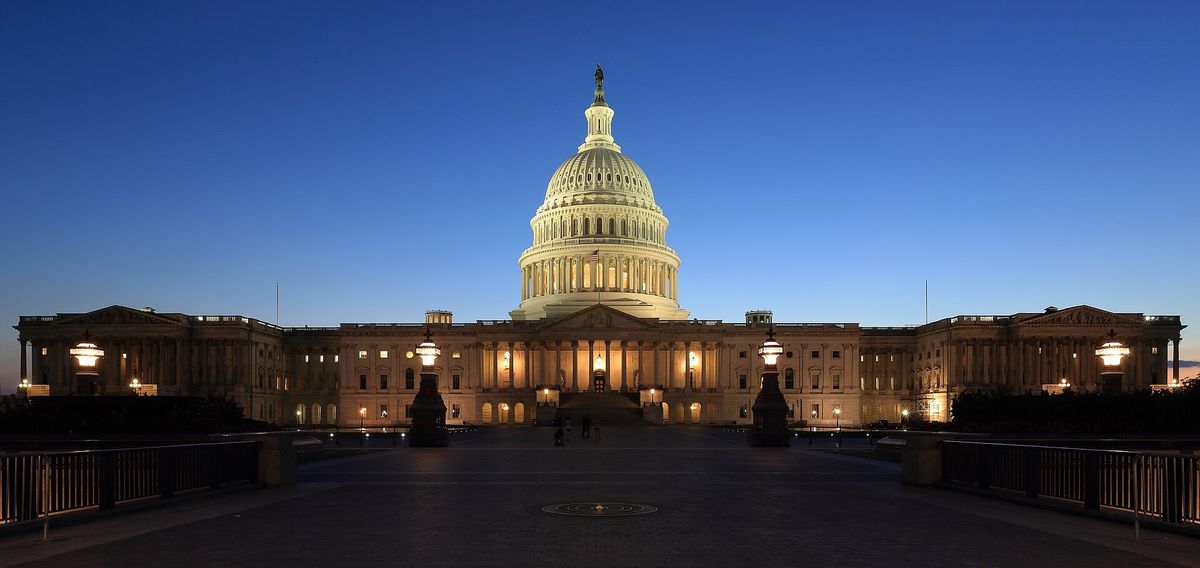
After a long break, Aposto World is back. You are receiving this issue because you have signed up for our newsletter in the past year or so; we hope you will like the new version and stick with us.
Aposto World will be a biweekly newsletter summarizing the most important news literally from around the world. Each channel will be dedicated to a region: the UK, Europe, the US, the Middle East, Africa, Asia, and more. Our goal is to give our readers a bird's-eye view of what is happening in the world that week. We will also bring you the most essential global stories in lifestyle, arts, and culture—mainly events that have a global influence.
If you like the format or have any feedback, please write to us at [email protected]. If you really like it, please forward it to your friends from all around the world. If you don't like it, you can unsubscribe immediately.
We hope to see you at one of our events in Istanbul, London, New York, or somewhere else in the world.
Wishing you a great day,
Orhun Canca
Here is what was in the news this week.
Tuesday's midterms turned into a verdict on Donald Trump. Democrats have won control of the House and Senate and are projected to secure the largest nationwide House popular-vote margin for either party since 1976. That leaves Trump facing a Democratic Congress for the final two years of his term. Markets reacted swiftly: the Nasdaq fell 5.5% on Thursday, its worst day since the April 2025 tariff sell-off. Concerns that a Democratic Congress could slow the AI build-out were among the factors weighing on stocks. On Friday, the sell-off spread to Tokyo and Seoul, where a sharp fall in the Kospi triggered a circuit breaker.
The war with Iran hangs over all of it. Trump says he will decide "soon" whether to resume all-out war, squeeze Tehran harder or cut a deal, and the conflict has already pushed the Bank of England into its first rate rise since 2023. Over the weekend, watch New Zealand, which votes on Saturday, and Jerusalem, where Isaac Herzog decides on Sunday whether Gadi Eisenkot or Benjamin Netanyahu gets the first try at a government. In Asunción, the Senate impeachment trial of President Santiago Peña, who tendered his resignation before lawmakers pressed ahead with proceedings, is the story to follow.
Here are the headlines from this week's bulletin:
🇺🇸 Democrats sweep both houses of Congress
🇮🇱 Majority of Israeli lawmakers back Eisenkot to form government
🇵🇾 Paraguay impeaches president after bank collapse
🎵 Tunes for the read, and for the rest of the week: Landslide by Fleetwood Mac
Have a good weekend, an easy read, and see you on Monday.
UK
Martin Falbisoner / Wikimedia Commons, CC BY-SA 3.0
Iran war hits Threadneedle Street: The Bank of England raised its base rate from 3.75% to 4% on Thursday. It is the first increase since August 2023. Eight of the nine members of the monetary policy committee voted for the quarter-point rise; Catherine Mann wanted 4.25%.
Why it matters: The cause is oil, not wages. Inflation was 3.5% in September, largely on fuel. The Bank now expects it to peak at 4.9% in mid-2027 and not return to its 2% target until 2028. If the US-Iran war escalates, it could reach 6.2%.
The quote: Governor Andrew Bailey said the rise should not be read as the first in a long sequence, but "unless the conflict in the Middle East is resolved, neither does it seem likely to be the last".
Looking ahead: The committee is split on what comes next. Clare Lombardelli sees a case for another rise soon; Alan Taylor called this a "one-for-now" insurance hike.
Sausages before sovereignty: The UK and the EU have agreed a 200-page draft deal to remove post-Brexit sanitary and phytosanitary (SPS) checks on food and farm trade. The text went to EU governments on Wednesday, ahead of a UK-EU summit later this month. Draft texts on emissions trading and a youth mobility scheme were circulated with it.
- What happened? The deal would scrap £200 export health certificates and £25 plant certificates, reopen EU markets to British fresh sausages, burgers and shellfish, and bring back pet passports. In return Britain accepts "dynamic alignment" with EU food rules. London claims £5.1bn a year in eventual benefits.
- Behind the scenes: At least six EU states want Britain to commit before the summit that EU students will pay domestic tuition fees. Some say the food deal should be delayed without that pledge.
- Zoom out: This is Andy Burnham's reset. He replaced Keir Starmer as Labour leader and prime minister in July and has said he would like to see Britain back in the EU in his lifetime. Kemi Badenoch, the Conservative leader, calls dynamic alignment a red line.
No new North Sea: The government introduced its Energy Independence Bill on Wednesday. It would remove the North Sea Transition Authority's power to grant new oil and gas exploration licences. The government has also announced a £2bn Energy Wealth Fund, using North Sea oil and gas tax revenue to invest in renewable and low-carbon projects.
Important note: The bill leaves Rosebank, Britain's largest untapped field west of Shetland, outside its scope; that decision is still pending. Existing fields could expand into adjacent areas, adding an estimated 60 million barrels.
What they're saying: The Conservatives called the bill "dangerous". The Scottish National Party (SNP) said it reinforced the case for independence. Greenpeace welcomed it but demanded that Rosebank be refused.
Brand behind bars: Russell Brand was convicted on Thursday at Southwark Crown Court of one count of rape and three of sexual assault against four women, for offences between 2004 and 2009. The jury acquitted him of two further rape counts and one of attempted indecent assault.
- What happened? The judge, Mr Justice Bennathan, refused bail on the ground that he might flee. Brand, 51, will be held over the weekend and sentenced on Monday; he has been told to expect "a significant custodial term".
- Furthermore: The Metropolitan Police said it is still investigating rape allegations from two more women. Brand, who now lives in Florida and has a large online following for wellness and conspiracy videos, had called the case a media conspiracy.
EUROPE
France takes to the streets: Between 575,000 and 600,000 people marched across France on Thursday, by the interior ministry's count, the biggest day of the autumn's cost-of-living protests. The CGT union put the figure at 1.57 million. Prime Minister Sébastien Lecornu has called unions and employers to a "social conference" on Monday.
What happened? Five unions joined students and a revived yellow-vest movement. Some 70,000 police were deployed, the Eiffel Tower shut, a sixth of teachers struck and refinery and nuclear output was disrupted.
Why it matters: The unions want a higher minimum wage, now €12.31 gross an hour, and the CFDT is calling for a €100 net increase in the monthly minimum wage. Lecornu has little to give while he hunts for tens of billions of euros in savings to bring the deficit down to 5% of GDP.
Belgrade cleans house: After the student-backed list ended 14 years of rule by Aleksandar Vučić's Serbian Progressive Party. On 3 November an Air Serbia flight to Moscow was ordered back from Lithuanian airspace carrying Aleksandar Vulin, a former intelligence chief under US sanctions, and two other regime figures close to Moscow.
Furthermore: Davor Macura, owner of the SNS-linked Alta Bank, was arrested on suspicion of removing about €383m ($430m) from its vault days after the central bank revoked its licence. Vote-buying and procurement arrests have followed.
The quote: "They are showing what they could have done but were unwilling to do until just ten days ago," said prosecutor Bojana Savović, who warns the haste may serve personal vendettas within the old regime.
The fund scandal reaches the AKP: An Istanbul court on Friday jailed Fatma Betül Sayan Kaya, family minister from 2016 to 2018 and until September a deputy chair of Recep Tayyip Erdoğan's ruling AKP, pending trial in the investment fund scandal. She is charged with breaching capital markets law and membership of a criminal organisation.
The backstory: Prosecutors say she sold shares in shipbuilder Özata Denizcilik on 16 September, a day before regulators moved to liquidate the funds. Separately, opposition figures allege that she and her husband withdrew about 2.17bn lira ($43m) after investing a combined 163m lira. The stock had risen from about 220 lira in April to 4,980.
Big picture: More than 430 people are under investigation and 112 have been jailed over manipulation that hit nearly 500,000 investors; opposition leader Özgür Özel says Erdoğan should resign or call elections.
Important note: The scandal lands as annual inflation fell to 29.77% in October, below 30% for the first time in five years.
Hoaxes in the sky: Hoax bomb threats disrupted at least 34 flights across Europe this week, 25 of them on Thursday alone, touching 16 countries from Ireland to Bulgaria. An Aer Lingus Dublin-Rome flight diverted to Normandy and Italian fighter jets escorted a Finnair plane into Rome; no explosives were found.
Behind the scenes: Emails to Rome's airports were signed ‘Fighters of the Male State’, possibly a reference to Male State, a Russian far-right group banned by the Nizhny Novgorod Regional Court in October 2021.
Zoom out: On Wednesday France's national blood service said hackers had raised temperatures at three cold stores of blood products, the latest in a run of attacks on European fridges and freezers. Alarms let technicians step in before stock was lost.
Kigali, take two: Five European countries are closing in on a plan to send rejected asylum seekers to Rwanda, reviving the idea Britain tried and abandoned.
US
Blue tsunami: Democrats have won more than 250 House seats after Tuesday's midterms, flipping further seats in Ohio, Arizona and North Carolina, and have won the Senate too, putting them on course to control both chambers from January for the first time since 2023. The Democrats' national House popular-vote margin is projected to be the largest for either party since 1976, setting up two years of divided government for Donald Trump.
What happened? Texas went blue, electing a Democratic senator and governor, and Michigan's Abdul El-Sayed becomes the first Muslim in the Senate. Los Angeles voters elected the democratic socialist Nithya Raman to replace Karen Bass as mayor, putting the two largest US cities on course to be led by democratic socialists.
What they're saying: Ted Cruz, the Republican senator from Texas, called the result a "Watergate-level repudiation". Trump, having accepted the outcome, called it "crooked" on Thursday and demanded that the uncounted Alaska votes go to the Republican incumbent.
Looking ahead: The Senate races in Mississippi and Alaska are still uncalled. Hakeem Jeffries, in line to be House speaker, has promised investigations into the Trump family's enrichment and has not ruled out a third impeachment.
Data centres on the ballot: The Nasdaq fell 5.5% on Thursday, its worst day since the "Liberation Day" tariffs of April 2025, wiping an estimated $2.5tn off its value and pushing the index into correction territory, more than 10% below its record. Investors are betting that a Democratic Congress will slow the build-out of artificial intelligence (AI). The S&P 500 lost 4.4% and about $3tn.
- Why it matters: Democrats campaigned against data centres, and an AP voter poll found 56% of voters called them a crucial or major factor. Texas's Democratic governor-elect, Gina Hinojosa, has pledged a moratorium on new construction, and Bernie Sanders is calling for a national one.
- What happened? Nvidia fell more than 9%, AMD and Micron more than 17%, and Tesla nearly 11%. Elon Musk had spent close to $450m backing Republican campaigns. The sell-off reached Asia and Europe on Friday, with London's FTSE 100 opening 1.5% lower.
- The quote: "The Stock Market crashed today because the Dumocrats had a big Tuesday. So sad to see, you only have yourselves to blame," Trump wrote on Truth Social.
The war on the ballot: Trump met his national security team on Thursday for the first time since the vote and said he would "soon" decide whether to resume all-out war on Iran, squeeze it further economically or cut a deal. "I would rather not destroy the rest of the country if possible, but maybe I will have to," he said.
- Behind the scenes: Vice President JD Vance broke ranks on Wednesday with a 600-word post blaming the defeat on the war: "The reason we lost is the war." Two sources told Reuters that Trump had held off strikes only until the midterms and still intends to bomb.
- Looking ahead: Thomas Massie, a Republican congressman, says he will force an impeachment vote on Pete Hegseth, the defence secretary, early next week. Trump says he intends to keep Hegseth, and the White House denies that Marco Rubio, the secretary of state, is leaving.
Emptying death row: Gavin Newsom, California's outgoing governor, on Thursday announced plans to commute all 548 death sentences in the state to life without parole. If completed, it would be the largest clearing of a death row in modern US history and reduce the national total by about 27%.
Important note: Nearly 400 of the commutations require approval from at least four of the California Supreme Court's seven justices. The state has not executed anyone since 2006, and Newsom imposed a moratorium in 2019.
Why it matters: Newsom is a likely 2028 presidential contender, and the move puts the sentences beyond the reach of future governors as executions rise in Republican-run states.
MIDDLE EAST
Herzog's Sunday call: Parties representing 67 of the Knesset's 120 members recommended on Thursday that Gadi Eisenkot, the former army chief who leads Yashar, be tasked with forming Israel's next government, compared with 46 backing Benjamin Netanyahu. President Isaac Herzog said he will decide on Sunday which of the two gets the first try, citing "mutual vetoes between the blocs and within the blocs themselves".
What happened? Both Arab lists, the Joint List with 11 seats and Raam with eight, recommended Eisenkot, and United Torah Judaism, which backed Netanyahu after the previous five elections, declined to recommend anyone.
Important note: The mandate is not a majority. Some Jewish parties in Eisenkot's bloc refuse to sit with Arab parties, which won an unprecedented 19 seats on 27 October.
What they're saying: Netanyahu and his allies allege that Arab voters stole the election; election officials say the foul play under investigation could not have changed the result.
From aid to partnership: Trump told Fox News on Tuesday, as polls opened, that the roughly $4bn a year in US military aid to Israel would end by the close of this year because "they don't need it". Netanyahu's office answered on Friday that the move "from aid to partnership shows the strength" of the relationship.
Furthermore: The countries are discussing a shift from direct aid towards joint defence programmes, but the timetable remains unclear.
Why it matters: The announcement adds uncertainty over US support for Israel after an inconclusive election, while the incoming Democratic Congress includes senators who call the Gaza war a genocide.
Ankara joins the Mecca pact: Türkiye's parliament ratified the Mecca Joint Defence Agreement with Saudi Arabia and Pakistan on Thursday by 279 votes to 119, the last of the three signatories to do so. Signed in Mecca on 7 August, the pact treats an external armed attack on one member as an attack on all.
- Big picture: It ties NATO's second-largest army to the Islamic world's only nuclear power and to a Saudi kingdom under Houthi missile and drone fire since July.
- Looking ahead: Ankara still needs a separate troop deployment mandate and legal arrangements for any forces sent to Saudi Arabia, and the opposition Republican People's Party (CHP) wants parliament's say over deployments kept intact.
Two Kurdistans: Bafel Talabani's Patriotic Union of Kurdistan (PUK) quit Iraqi Kurdistan's regional government on Thursday and threatened to name its own president and prime minister if its rival, the Kurdistan Democratic Party (KDP), names theirs. It came a day after the KDP reconvened parliament without the PUK and elected Vala Farid as its first female speaker.
- The backstory: No cabinet has been formed since the October 2024 election; 52 of 100 lawmakers attended Wednesday's session, one more than the quorum, thanks to three PUK defectors.
- Why it matters: The region has no constitution of its own to settle a split, the last US forces have left, and the two parties fought a civil war in 1994.
AFRICA
Atiku off the ballot: Nigeria's Federal High Court in Abuja on Thursday sacked the leadership of the African Democratic Congress (ADC), the main opposition party, and declared invalid the presidential nomination of Atiku Abubakar, the former vice-president. The election is on 16 January.
- What happened? Justice Peter Lifu ruled that the caretaker committee under David Mark, which ran the primary that picked Atiku, was illegal. He voided every candidate the ADC had submitted to the electoral commission (INEC), on a suit by Nafiu Bala Gombe, a former deputy chairman.
- The backstory: The same court upheld Mark's leadership in July, and the Supreme Court restored it on an interim basis in April. INEC's final list still carries Atiku, 79, with Rotimi Amaechi as running mate, and the ADC will appeal, probably all the way to the Supreme Court.
- Why it matters: The ADC accuses the ruling All Progressives Congress of being behind the suit, which President Bola Tinubu's office denies. If Atiku cannot run, no major candidate from the north is left, a dangerous gap in a country where regional balance is politics.
Potholes on the ballot: South Africans voted on Wednesday in local elections for the country's municipalities, the first test of the African National Congress (ANC) since it lost its parliamentary majority in 2024. Polls before the vote put it below a third, down from 45.6% in the 2021 municipal vote and 40.2% in the 2024 national one.
- Big picture: Municipalities run water, power and refuse collection, and they are failing: the auditor-general gave clean audits to only 39 of 257. In Soweto residents know the water goes off every Monday at 2pm.
- The quote: "The ANC is going higher and higher and on the 4th we will show those naysayers," President Cyril Ramaphosa told his final rally. The party took 70% nationally at its 2004 peak.
Court versus Villa Somalia: Somalia's Supreme Court ruled on Thursday that President Hassan Sheikh Mohamud unlawfully extended his term, and ordered leaders to agree an electoral plan within 30 days and hold elections within 90. A day earlier the president had sacked the chief justice, Bashe Yusuf Ahmed; the court declared that dismissal null and void.
- The backstory: Mohamud's four-year mandate expired in May; parliament gave him another year through constitutional changes in March, which the court said cannot apply retrospectively. Former prime minister Hassan Ali Khaire accused him of sending security forces into the court compound.
- Looking ahead: The electoral commission had set parliamentary elections for 15 April 2027, which would be Somalia's first direct national vote since 1969. Mohamud has called national talks for 14 to 18 November, as Uganda, the largest troop contributor to the African Union mission against al-Shabaab, plans to pull out by year's end.
Oromia's churchgoers: Gunmen killed at least 34 Ethiopian Orthodox Christians in Endato village, in Oromia's Robe district, on Thursday, local media reported. That brings the toll from attacks on worshippers to at least 94 in under three weeks.
- The backstory: Attacks on 20 and 24 October in Merti and Shirka districts killed at least 60, according to the church. On Wednesday the Ethiopian Human Rights Commission blamed them on the Oromo Liberation Army; nearly 70 suspects have been arrested.
- Zoom out: Ethiopia, with around 130 million people, is fighting several wars along its internal borders at once, and clashes in the south have pushed tens of thousands into Kenya.
ASIA-PACIFIC
Tokyo catches the cold: Asia took the second leg of the post-midterm AI rout on Friday. Japan's Nikkei 225 closed down about 6%, its worst day since Donald Trump's 'Liberation Day' tariffs in April 2025, and South Korea's Kospi dived 8.5% in early trade, tripping a 20-minute circuit breaker.
What happened? The trigger was Thursday's 5.5% fall in the Nasdaq, as investors bet that the new Democratic Congress will brake data-centre building. In Asia the chipmakers paid: SK Hynix fell nearly 12%, Kioxia 14% and TSMC as much as 8.5% in Taipei, where the main index dropped more than 8%.
Why it matters: The AI build-out runs on Asian memory and foundry capacity, so a slowdown priced in Washington lands hardest in Seoul, Tokyo and Taipei. SoftBank slid 11% and the cost of insuring its debt against default jumped, in a week Beijing also blocked its $5.4bn takeover of ABB Robotics.
Looking ahead: Dip buyers steadied the region by the afternoon and Nasdaq futures were up 1.4%, though a strategist at Saxo warned that forced selling by leveraged investors can feed on itself.
Ten more years: Joshua Wong, the teenage face of Hong Kong's 2014 protests, was sentenced on Thursday to 10 years for colluding with foreign forces under the national security law. He has been in jail since 2020 and was due to walk free in January.
- The backstory: Wong, now 30, pleaded guilty in September to working with the exiled Nathan Law, his fellow Demosisto co-founder, to lobby for foreign sanctions against China in 2020. He is the only activist prosecuted twice under the law.
- Furthermore: Macau followed on Friday, jailing Au Kam San, a 69-year-old former lawmaker who organised the city's Tiananmen vigils, for 12 years and six months after a closed-door trial: the city's first national security case.
- What they're saying: John Lee, Hong Kong's chief executive, called Wong and Law 'among the primary culprits' of the city's unrest; London called the sentence a clear example of the law being used against political expression.
Who tapped the president: Indonesian police on Tuesday arrested Listyo Sigit Prabowo, President Prabowo Subianto's chief of staff and a former national police chief, with two senior officers, on suspicion of wiretapping the president's phone since 2025. A fourth suspect, Slamet Uliandi, was named on Thursday.
- The backstory: Listyo is a loyalist of former president Joko Widodo, whose backing won Prabowo the presidency in 2024. The case is read in Jakarta as the open rupture of that alliance, as Widodo's son, Vice-President Gibran Rakabuming Raka, faces impeachment talk after courts found his school diploma invalid.
- Why it matters: The president's spokesman has spoken of treason, which carries life imprisonment or death, and thousands of troops were deployed in Jakarta. It comes with the rupiah near a record low and investors already uneasy about Prabowo's costly populism.
Chris versus Chris: New Zealanders vote on Saturday, 7 November, to elect a new government, in a race between two leaders called Chris dominated by the cost of living.
ELSEWHERE
Bank run, president under fire: Paraguay's president, Santiago Peña, announced his resignation on Thursday, three days after the collapse of Ueno Bank, a digital lender with about 3 million customers in a country of 6.4 million. A joint session of Congress failed to reach a quorum to consider it, leaving Peña formally in office. Minutes after his video on X, all 78 deputies present voted to impeach him, and the Senate pressed on with a trial at which he was due to present his defence on Friday.
What happened? On Monday regulators found alleged excessive lending to firms linked to Ueno's controlling shareholder, Grupo Vázquez. On Tuesday the central bank seized the lender, which held roughly $800 million in public deposits, including state pension and health funds and money from the operators of the hydroelectric dams.
Behind the scenes: Peña held shares in Ueno's parent group until last year, and the central bank governor he appointed had run Ueno's predecessor. Opposition senators say accepting his resignation would keep him eligible for a life Senate seat and shield him from prosecution.
Looking ahead: The attorney general has opened three criminal investigations, one touching Peña. If he goes, Vice-President Pedro Alliana serves out the term to 2028.
Fifty at the aid point: The death toll from Monday's Russian bombing of an aid distribution point in Kamyshuvakha, in Ukraine's Zaporizhzhia region, reached 50 on Friday, Ukraine's emergency service said. It is one of the deadliest strikes on civilians this year.
- What happened? Ukraine says nine glide bombs, some weighing 3,000kg, hit the village as residents queued for aid. Bodycam footage from a police officer killed in the attack shows people sheltering underground after the first blast, seconds before the shelter itself was hit.
- Zoom out: Overnight into Friday the two sides traded drone strikes on energy sites. Russian attacks cut power in seven Ukrainian regions, including Kyiv, while a Ukrainian strike set the Afipsky refinery in Krasnodar ablaze.
The first lady's channel: Melania Trump hosted Russian and Ukrainian officials at the White House on Thursday to mark the six-day ceasefire in occupied Oleshky, the longest truce of the war so far, which both sides credit her with brokering. Afterwards her husband met privately with Kirill Dmitriev, the Kremlin envoy, and promised a "big, beautiful agreement" that "might involve all of Europe".
Looking ahead: Russian, Ukrainian and US negotiators meet in Abu Dhabi on 10 and 11 November, the first trilateral round since talks were suspended in February.
The quote: Jared Kushner, Trump's son-in-law and envoy, said the aim is "a broader European security architecture", with NATO "central to European collective defence" and no country holding a veto over another's alliances.
Punchline: Dmitriev gave the first lady a child's drawing from Oleshky and said the girl ‘chose to live with her family in Russia’
Masters of their destiny: Canada's finance minister, François-Philippe Champagne, presented the Carney government's second budget on Thursday, titled ‘Masters of Our Destiny’. It seeks greater economic independence from the United States and proposes C$142.1bn in new spending and tax measures over five years, largely offset by stronger revenues linked to higher energy prices.
Furthermore: The budget includes C$11.2bn over four years towards a goal of ending homelessness within a decade. Immigration targets stay flat at 380,000 permanent residents a year.
Important note: The deficit tops C$50bn ($36bn), with no path to balance. US tariffs on key Canadian industries have already cost thousands of jobs.
Yerevan's constitutional fight: Armenia's main opposition groups formed a nationwide alliance this week against the ruling Civil Contract party's plan to amend the constitution, hours after the arrest of Samvel Karapetyan, the Russian-Armenian billionaire who leads Strong Armenia. On Friday Prime Minister Nikol Pashinyan said Armenia's interest in the Russian-led Collective Security Treaty Organisation (CSTO) "has run its course".
- Why it matters: Azerbaijan says Armenia's constitution contains territorial claims against it and has made amending it a condition for signing the peace treaty the two initialled in August 2025. Civil Contract lacks the two-thirds majority needed to call a referendum, and Pashinyan has floated snap elections to get one.
- Zoom out: Pashinyan says Armenia could apply to join the EU in 2027 or 2028, but has "not begun preparations" to leave the Russian-led Eurasian Economic Union.
IN OTHER NEWS
Leo goes home: Pope Leo XIV left Rome on Friday for a 12-day tour of Uruguay, Argentina and Peru, three weeks after surgeons removed a tumour and the lower lobe of his right lung. The Vatican says no extraordinary medical measures are being taken for a 71-year-old who has had an operation.
- Why it matters: Argentina is the politically delicate leg. President Javier Milei once called Pope Francis "evil on earth", and the country's bishops have attacked his austerity cuts.
- Looking ahead: The tour ends in Peru, where the American-born Robert Prevost spent almost 20 years as a priest and bishop. He will return to Chiclayo, say Mass in Cusco at more than 3,000m and fly to Pucallpa in the Amazon.
- Important note: In all three countries he is scheduled to meet survivors of clerical sexual abuse, the issue that clouded Francis's 2018 visit to Chile and Peru.
End of the Cybertruck: Elon Musk said on X on Friday that Tesla will wind down Cybertruck production at its Texas Gigafactory around the middle of 2027 to make room for more Cybercab robotaxis. The Austin plant is the only one known to build the vehicle.
- The backstory: Tesla does not publish Cybertruck sales, but even the highest analyst estimates put deliveries at about 70,000 since the 2023 launch, against the 250,000 a year Musk once forecast.
- Punchline: The steel pickup's three years on the road brought repeated recalls and a design that is not road-legal in much of the world. Musk is now betting the factory on cars with no driver at all.
Three months adrift: Five passengers from a boat that went missing in Micronesia in July came ashore last weekend on an island in Kiribati, unclothed and emaciated, more than 3,000 miles (about 4,800km) from where they set out.