
Aposto World · 8 April 2025
🌓 İmamoğlu's arrest, historic protests
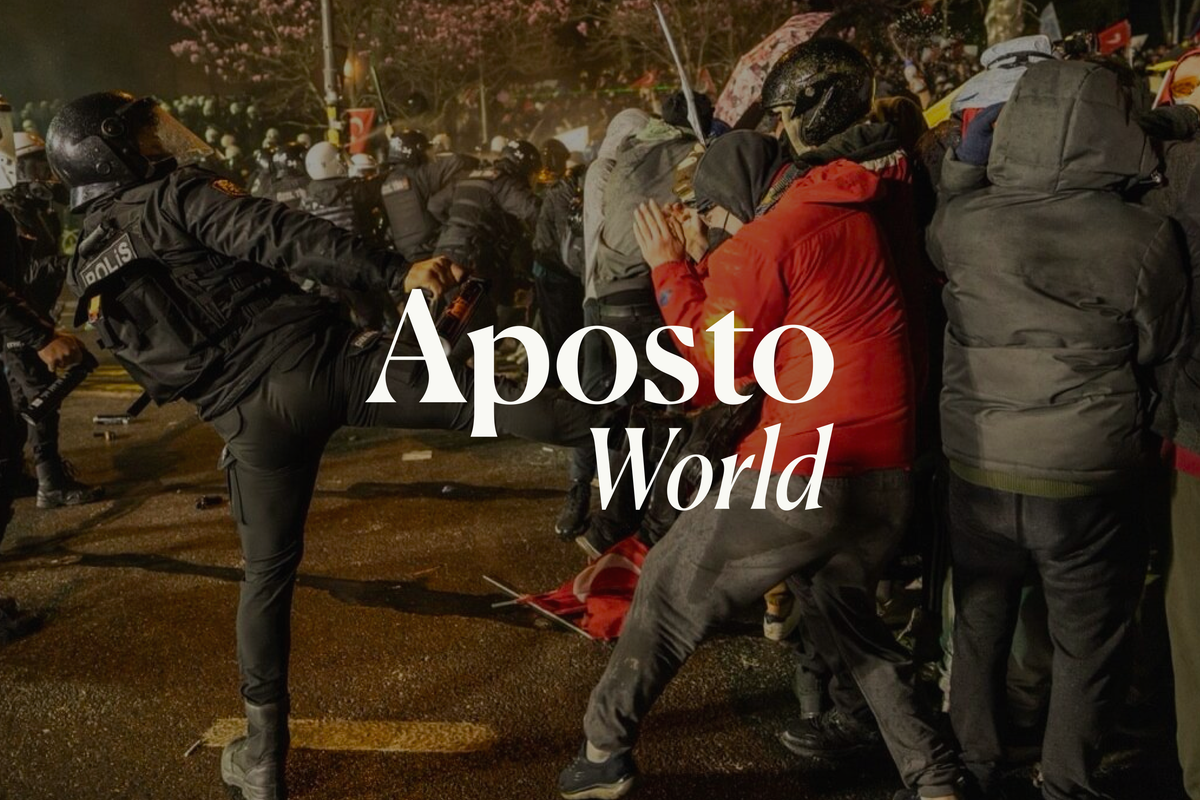
İmamoğlu arrested. Massive demonstrations. Judicial crackdown. Police brutality and tear gas. Biggest protests in a decade. General boycott. CHP leader re-elected, announces rallies.
Hello again! Today is April 8.
Turkey has undergone weeks of massive protests following the arrest of Ekrem İmamoğlu, Istanbul Mayor and the opposition's presidential candidate.
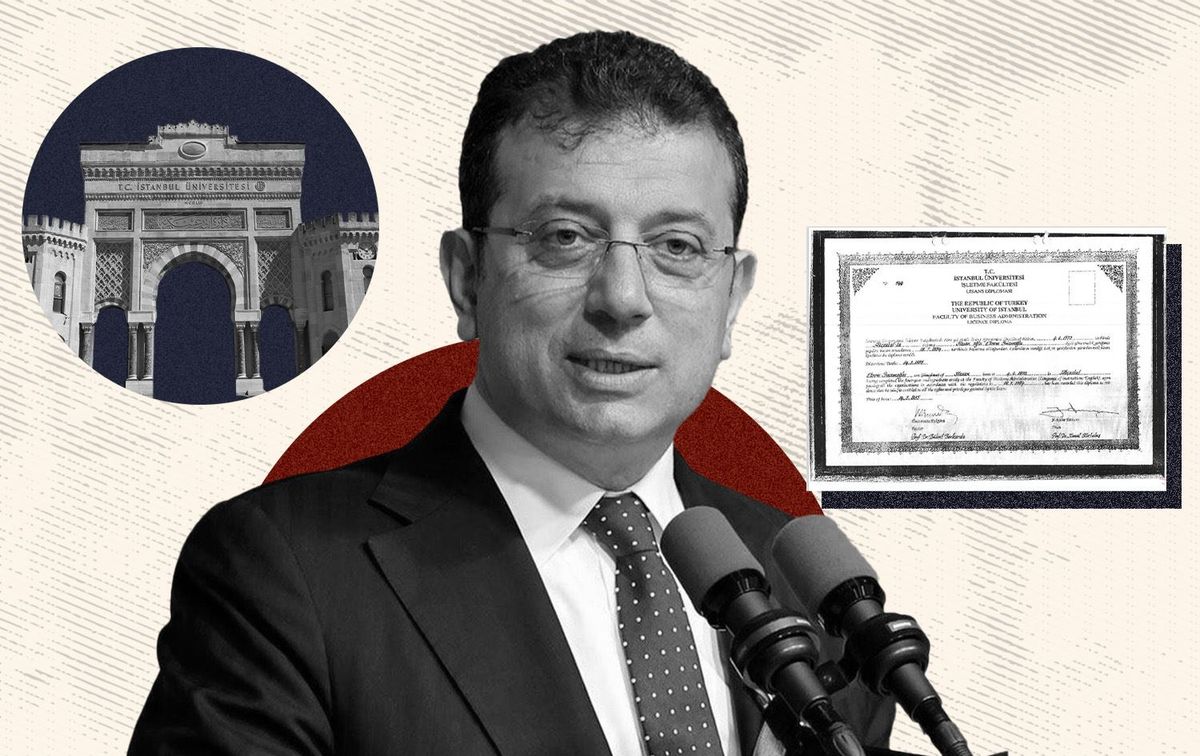
İmamoğlu had his university diploma revoked on April 18, disqualifying him from running for president. At the time, this seemed as a new low for Turkish democracy, using an alleged technicality to remove a political opponent. However, since then, each day brought with it new reasons to lament the state of Turkey's democracy, as well as just as many reasons to be confident in it, hopeful.
- Things were moving fast, so we put together a timeline of events breaking down what happened day-by-day since March 18.
The mood is mixed: Turkey's opposition is experiencing a crackdown unparalleled in recent history, perhaps ever, but opposition supporters are also coming together in a show-of-unity that is inspiring more people each day. The government says that the double trials facing İmamoğlu and more than a 100 associates are legitimate, while many call the trials a sham.
- Who are the protestors? Yes, there are many who fill the square with their political party affiliations, cvil society organizations and so on. But there are also a staggering number of young people who are there by themselves asking for a change. Our reporter Ayça Örer lets them take the stage and tell us who they are and what they are protesting for.
The demonstrations are the largest since Gezi Protests of 2013. Starting with Gezi, when the police brutally suppressed the protests, Erdoğan's AK Party turned increasingly more authoritarian. For many, the current protests are, similarly, a critical juncture: It's too early to say what happens next but we do know that something is about to change in a substantial way.
Alp
THE TIMELINE
On March 18, opposition’s presidential candidate Ekrem İmamoğlu, Istanbul Mayor, had his university diploma revoked, disqualifying him from running for president. The deep-rooted Istanbul University’s (IU) executive board issued a statement revoking the diploma of Ekrem İmamoğlu and dozens of others who transferred to IU from other universities.
On March 19, in the early hours of Wednesday morning, the police raided the homes of İmamoğlu and 105 others to detain them. These names included İmamoğlu’s close advisors, business associates, and other mayors working under Istanbul Municipality. İmamoğlu's candidacy for the opposition CHP was set to formalize on March 23rd.
- Recommended read: Turkey’s pivotal moment: Presidential candidate İmamoğlu detained | Aposto World
These simultaneous detentions were made under two separate investigations: In the first investigation, İmamoğlu was described as the “leader of a criminal organization” and accused of corruption along with 99 other people. In the second investigation, an arrest warrant was issued for İmamoğlu and 6 others on charges of “aiding a terrorist organization”.
The governor’s office issued a statement at the same time as the arrests:
“All kinds of meetings, demonstrations and press statements have been banned for 4 days between March 19-23 in order to maintain public order throughout the province and to prevent any provocative actions that may occur.”
Access to social media platforms was also restricted.
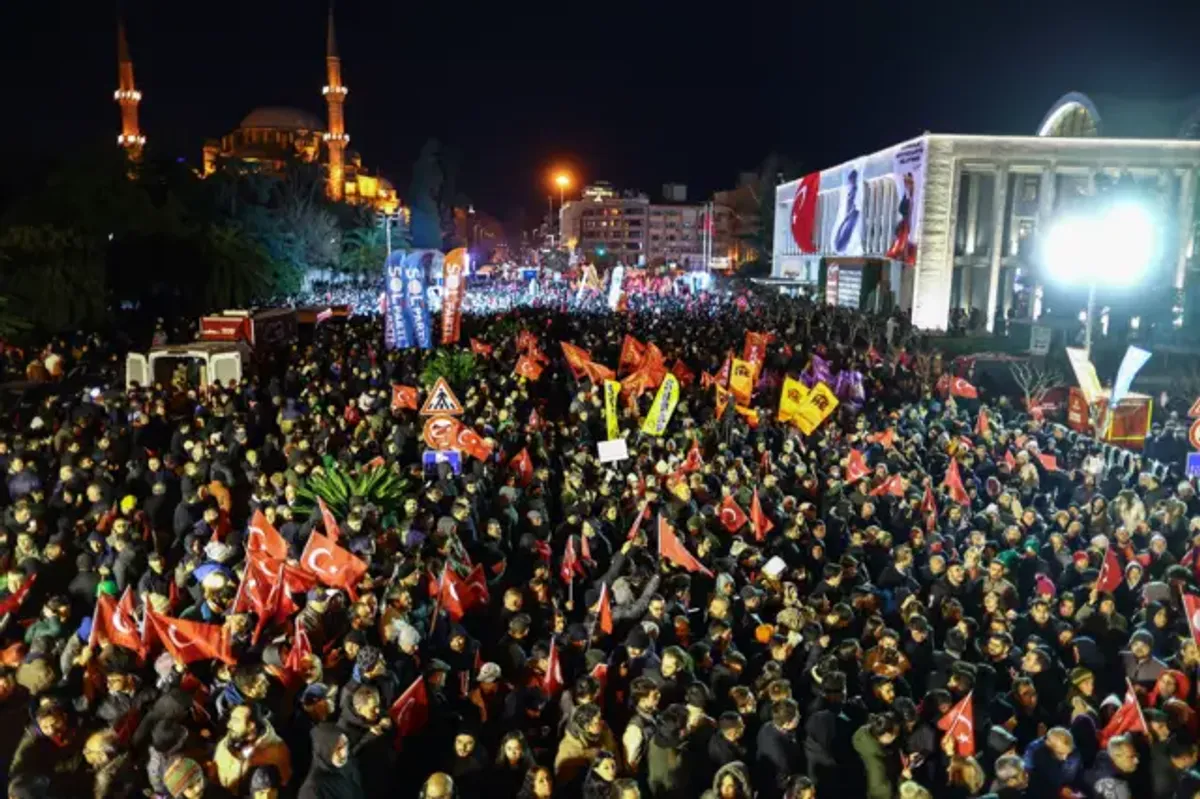
The first evening of protests at Saraçhane, March 19
The opposition has marked March 19 as a junta, or a coup; the markets tumbled, and the lira fell to record lows. In the evening, protestors started to gather at Saraçhane, where the municipal building is located. CHP also called its supporters there, and in the later hours, the police intervened to the crowds with force.
On March 20, the government seized the financial assets of İmamoğlu's family company. Later, media companies which broadcasted the protests were penalized for "violating broadcast policies" of the centralized broadcast commission, RTÜK.
In the evening, the protestors gathered at Saraçhane once again, reaching hundreds of thousands. CHP leader Özgür Özel made it clear that he was calling people to the streets to join the non-violent protests. In a speech, he vowed to "keep the struggle going until İmamoğlu is freed."
President Erdoğan spoke for the first time, saying that the protests were evil and the charges against İmamoğlu was legitimate.
On March 21, the gathering ban on Istanbul by the central government was extended to Ankara and İzmir, two other largest cities in the country. The opposition called for the whole country to use their democratic rights to protest.
As the result of an ongoing investigation, a court removed the president of the Istanbul Bar Association, İbrahim Özden Kaboğlu, and all board members from office, citing their statement on the deaths of two journalists in a December airstrike in northern Syria. This was seen as an extension of the government crackdown, as the Bar has been known to clash with Erdoğan's government on constitutional issues. Thousands of lawyers protested the decision.
That day, court documents showing İmamoğlu's testimony from his initial interrogation on corruption charges were released. They showed the prosecutors asking İmamoğlu about a number of testimonies from unnamed, "secret witnesses" rather than substantive claims or evidence.
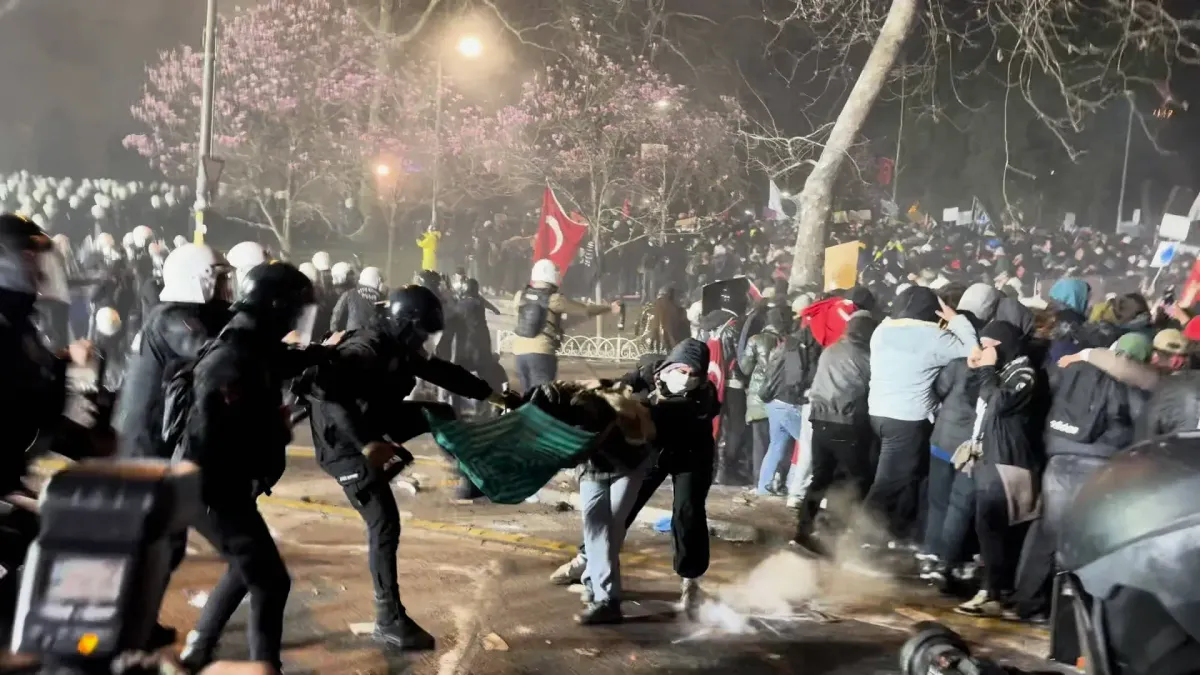
Protests at Saraçhane saw the largest crowds to day, and the police crackdown became more brutal. Saraçhane, March 21
On March 22, İmamoğlu was interrogated on terrorism charges. Again, claims from "secret witnesses" made up the bulk of the accusations. Erdoğan spoke again, saying "if you have the courage, let democracy run its course. The days where you could take to the streets along with leftist organizations, marginals, vandals to intimidate the national will are over.
Istanbul Governor extended the gathering ban in Istanbul for another 3 days, and banned anyone "suspected of joining the protests" from traveling to Istanbul.
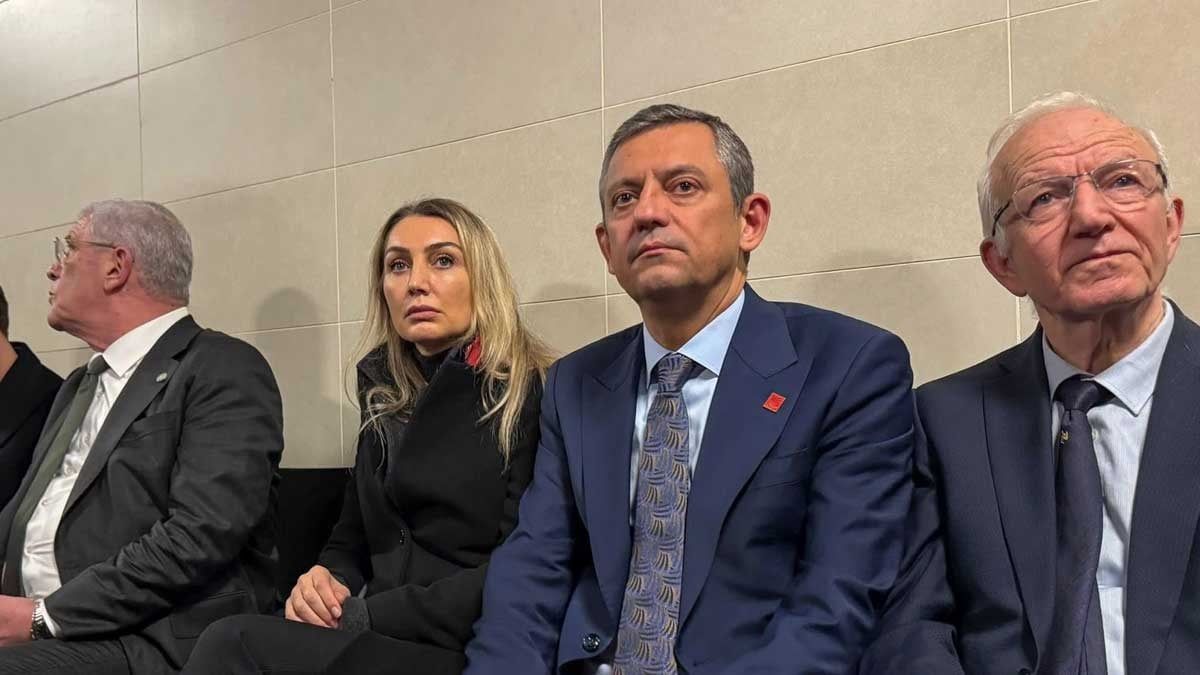
Dilek Kaya İmamoğlu (Ekrem İmamoğlu's wife), Özgür Özel (CHP leader), and İbrahim Kaboğlu (President of the Istanbul Bar Association who was removed from his position the day before) outside of the courtroom, waiting for the judge's decision. Çağlayan, March 22.
İmamoğlu's detention time limit was to expire a day later, and almost everyone spent the night awaiting news from the courthouse.
On March 23, the court ordered İmamoğlu and 48 others to be arrested on corruption charges. On terrorism charges, his trial would continue without detention. However, other district mayors were arrested on terrorism charges, and all were suspended from their duties. The government appointed new mayors in their place. İmamoğlu was also suspended from his position as Istanbul Mayor.
- The state news agency Anadolu was the first to report on the decision. What was confusing to media outlets worldwide was that the court had yet to rule. When Anadolu published the article announcing İmamoğlu's arrest, the court was still in session. This brought further skepticism around the fairness of the trial, with many asking "how does the state news agency know the decision before it has been made?"
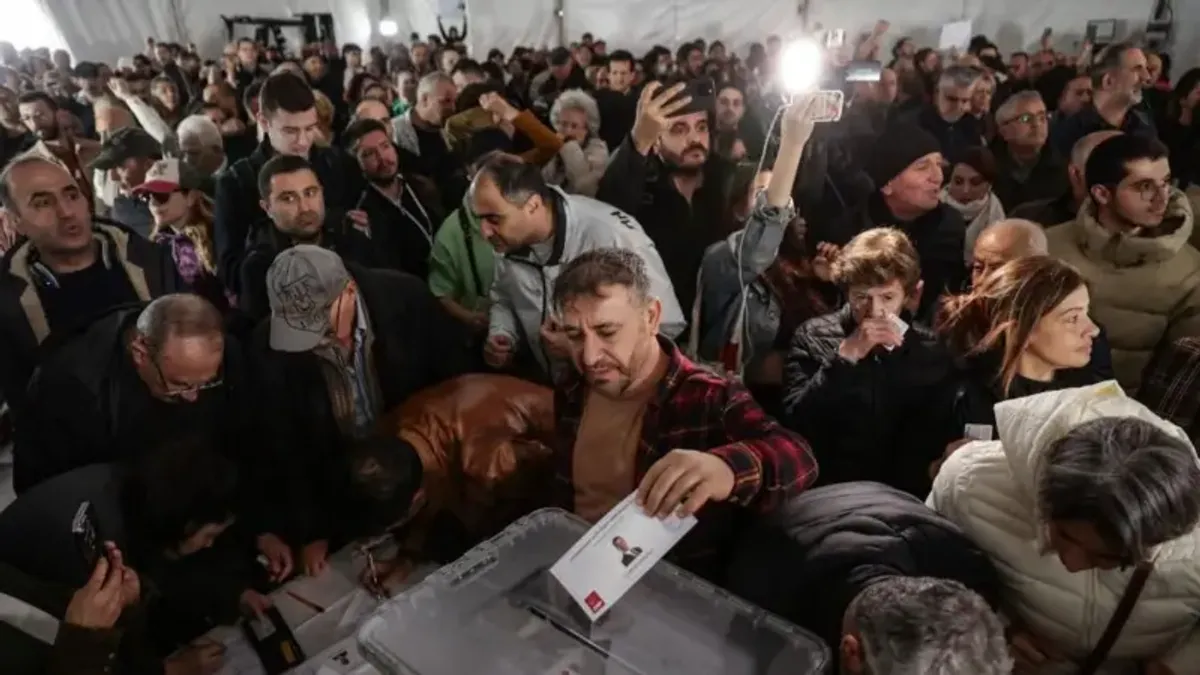
People voting in the CHP primary | Getty Images
Meanwhile, the opposition went ahead with the primary election to formalize its presidential candidate. With İmamoğlu arrested, and his name the only one on the ballot, the primary was symbolic, and yet following days of energized protests, over 15 million people, close to a quarter of the whole voting population, voted in the primary, either as party members or in solidarity and protest.
With overwhelming support for their arrested presidential candidate, CHP called for early elections.
In a statement posted on X's Global Government Affairs account, the social media company said it objects to "multiple court orders" from Turkish authorities to block more than 700 accounts belonging to news organizations, journalists, political figures and students.
X said it will be challenging the block requests in court, and adds that it "will always defend freedom of speech everywhere we operate". This comes amid accusations from the opposition that
On March 24, a new wave of arrests targeted the media, international as well as local: At least 10 journalists were detained. Interior Minister Ali Yerlikaya announced that at least a thousand people were detained since March 19.
That day, Turkey entered a new stage in protests: Boycotts.
University students called for an academic boycott and refused to attend classes. CHP leader Özel called for a targeted boycott of media outlets that refused to report on the protests, and companies associated with those outlets. He added that March 25 would be the last evening of protests in Saraçhane.
On March 25, the government seized the assets of three more companies that have worked with the Istanbul Municipality in the past. Meanwhile, university students took center stage again as they organized a large march to protest the government trustee of Şişli district, who replaced the elected mayor Resul Emrah Şahan.
Again, large crowds gathered at Istanbul's Saraçhane, Ankara, and in many other cities. These protests experienced police crackdowns. The total number of detainees rose to over 1500.
On March 26, President Erdoğan announced that the Ramadan Eid holiday, which was supposed to last until April 1, would be extended to cover the rest of the working week, meaning workers would have 9 days off. Some saw this as an incentive for people to go out on holidays rather than protesting.
On March 27, the government seized the assets of a dozen more companies and more individuals. Some people who were targeted were close associates of İmamoğlu, while others were only loosely connected to him. Broadcast board RTÜK announced further penalties against media outlets, TV and online, that broadcasted the pro-İmamoğlu protests. İmamoğlu's lawyer Mehmet Pehlivan was detained. The government blocked access to a website, and it reiterations, that listed the number of companies that CHP announced it would boycott.
CHP announced that its membership reached 2 millions, up from about 1.5 millions a month before.
BBC correspondent Mark Lowen was deported from Turkey after being arrested in Istanbul, where he was covering the protests.
On March 28, CHP held its largest ever rally in Maltepe Square: Party Chair Özgür Özel said that 2.2 million people attended. An AI-generated video showed İmamoğlu's image voicing a letter that he had written.
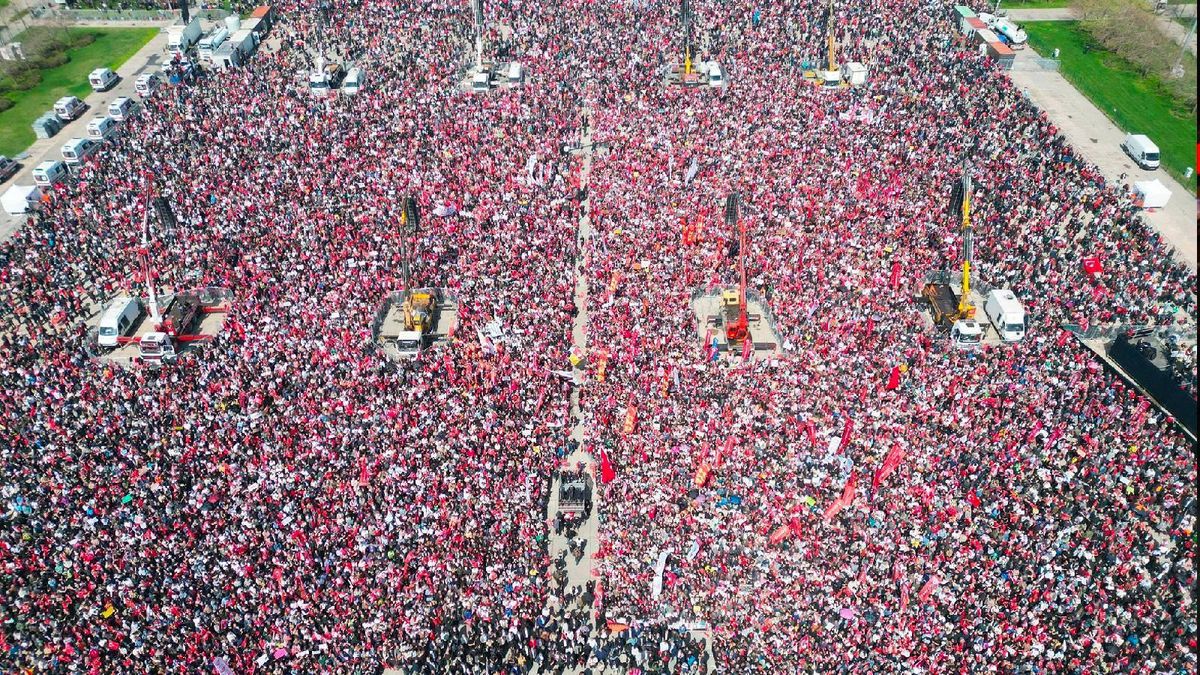
On a sunny Friday, millions gathered at Maltepe for Turkey's largest rally in recent memory, perhaps ever. Maltepe, March 28
CHP leader Özel also targeted Treasury and Finance Minister Mehmet Şimşek.
He claimed that Mehmet Şimşek “appears to be a democrat in the world stage, but with the coup report he had MASAK [Financial Crimes Investigation Board] prepare, he is a partner of this coup, a part of that junta.”
Özel said, "All economic circles around the world have seen that Mehmet Şimşek is not a democrat, not an economist who manages the country with rational policies, but a gunslinger under an autocrat, an autocrat's hitman. A person like Mehmet Şimşek has no credibility, nor does he have anything to contribute to this country from now on." Şimşek denied the accusations.
- Şimşek is a divisive figure: He is an orthodox economist who has been serving as the Minister of Treasury and Finance since 4 June 2023. He was the Deputy Prime Minister of Turkey from 24 November 2015 until the office's abolition on 9 July 2018. He previously served as the minister of finance from 2009 to 2015, a period that saw considerable economic growth. Well-liked by Western capital groups and monetary groups, he was brought back to the cabinet following a period where Erdoğan tried to combat inflation by lowering interest rates, an unorthodox approach that proved catastrophic. However, the policies that he advocates for has hurt the working class the most, and they haven't yet delivered on the economic success that he had promised.
On April 2, the call for a general boycott by university students—a call that the opposition announced it's support for—materialized. The aim was to stop all purchases throughout the country for a day. In affluent neighborhoods mainly inhabited by the supporters of the opposition CHP, the effects were visible: The streets were scarce with shoppers, the cafes and restaurants mainly empty, and dozens of establishments had closed their businesses for the day.
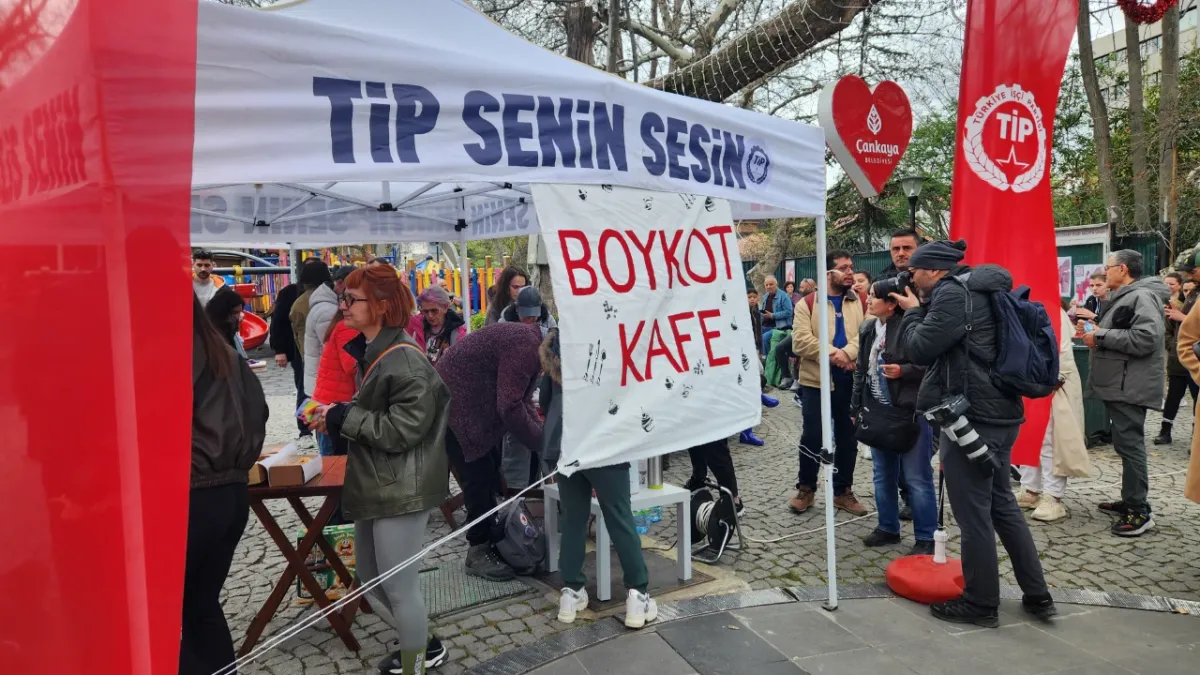
TİP, a leftist political party, as well as other citizen initiatives have installed "boycott cafes" in different parts of Istanbul and Ankara. Volunteers distributed coffee and tea free of charge, sho that people could socialize without breaking the boycott. Ankara, April 2.
A step back: Erdoğan had said earlier: “All kinds of sabotage against the Turkish economy, the welfare and peace of the nation will be held accountable before the judiciary. The fate of Turkey is intertwined with the fate of the AK Party.”
It's hard to say what the economic impact of the boycott was as government institutions have been unreliable in sharing data transparently. The state news agency reported that the boycott was ineffective, however, government ministers made it clear that they took the action seriously. The night before the general boycott, ministers appeared on pro-government networks and published statements to call the mass action "an act of economic terrorism" and "sabotage."
Furthermore, Istanbul Prosecutor's Office said that those calling for a boycott would be tried for "inciting hatred." In the morning, it was clear that these were no empty threats as famous actors who shared widely distributed social media filters supporting the boycott on their accounts were brought in for questioning. Many others who worked for TRT, the state television channel, were fired from the TV shows that they took parts in.
International reactions
The European Commission has urged Turkey to "uphold democratic values" as a country that is both a member of the Council of Europe and a candidate for joining the EU.
"We want Turkey to remain anchored to Europe, but this requires a clear commitment to democratic norms and practices," commission spokesperson Guillaume Mercier told reporters, according to the AFP news agency.
The Greek government also commented on the political situation of its neighbor, saying it was "worrying", adding that undermining the rule of law and civil liberties "cannot be tolerated".
Turkey's commitment to pursuing EU membership "sounds increasingly hollow" in light of Imamoglu's arrest, said Germany's foreign minister. In a post on X, external, Annalena Baerbock says a country that envisions its future in the EU "must uphold the rule of law". "Political competitors do not belong in prison or before the courts," she added.
Reaction from the US has been pretty dim, as US state department spokesperson Tammy Bruce said Washington “will not comment on the internal decision-making processes of another country”.
A spokesperson for the UN secretary general said they hoped “the normal rules for due process will be followed.”
Soner Çağaptay, a biographer of Erdoğan and an analyst at the Washington Institute for Near East Policy, said such statements were not likely to prompt any change in policy:
“There are unlikely to be any meaningful actions to follow; there will be no sanctions or disinviting Erdoğan to summits, declining to include Turkey in future planning. There will be no concrete repercussions, because of the way Turkey has positioned itself in this new global arena as an important power.”
What's next?
As the protests shifted from physical gatherings to coordinated acts of civil disobedience and economic resistance, some question whether the momentum will die down. However, the opposition CHP, which re-elected its current leadership in a show of confidence and unity on April 6, seems more energized than ever.
The emboldened Özel has announced that his party will hold rallies twice a week, one in Istanbul and one in another city, starting April 9.
There are talks of the general boycott becoming a weekly occurrence, taking place each Wednesday. A prospect of a mass strike is also within the realm of possibility for the first time in recent memory. University students are planning independent and spread out protests and they are asking for their peers and all jailed since March 19, and others who are imprisoned for what they say are political reasons, to be freed.
An indictment was prepared against 139 protestors, including 104 detained, on charges of “opposing the law on meetings and demonstrations” with a demand of up to 3 years in prison each. In a separate case, Istanbul Chief Public Prosecutor's Office demanded a political ban on 139 students in the indictment prepared against those arrested on March 25.
On social media there are more political posts than otherwise, and even though after 3 weeks some people are returning to their daily routines, there is also a campaign to "not normalize the feed."
Some background: People are not protesting simply against İmamoğlu’s arrest. Turkey’s democracy has been backsliding for over a decade, and the economy has suffered immensely over the past years. Turkey has one of the highest inflations, and the tight fiscal policy to combat it has hurt the working class the most. In short, people are getting poorer and less free; the events of past week, what the protestors see as an assault on their political will, has fueled the largest protests in a decade.
THE PROTESTORS
Young people who have witnessed an increasingly harsher version of the same government since they were born, who live in the world described by their parents as if it were a distant time; social media influencers whose sincerity is questioned in every social event; young women who are followed outside their dormitories and questioned whether they participate in protests or lynched for participating in protests with their headscarves; those who dare to take to the streets in small cities against the risk of being tagged by law enforcement... For a week now, they have been playing the lead role in the protests, standing firmly and objecting against everything imposed on them.
- We asked the protestors, who share a voice and a set of concerns: “Why are you on the streets?” The answer points more towards fear than it does to courage.
I'm in Diyarbakır, the predominantly Kurdish metropolis in Turkey's southeast. 15 minutes ago, the protest in Dağkapı ended. It is March 22nd, İmamoğlu is detained but he has not been arrested yet. “Hêviya me İmamoğlu” (in Kurdish: Our hope is İmamoğlu) banners are accompanied by banners that read “There is no salvation alone,” a catchphrase for Turkey's opposition. The pains of the protests and detentions in Istanbul have reached here as well, and people on the streets are worried about what kind of injustice awaits them. For example, Yasin, who participated in the protest in Diyarbakır told me the following:
"The issue is not only İmamoğlu. It is the fact that the arbitrariness of the law that has been applied very easily to Kurds until today has now spread to every part of Turkey. This much lawlessness will collapse everyone, it will eat us from the inside like woodworm."
The second testimony is from Eskişehir, a mostly secular city with a large student population. Participants in the protest in the province, which became the grave of 19-year-old Ali İsmail Korkmaz during the 2013 Gezi protests, keep the searing memory of the incident in their minds. On the other end of the phone is 22-year-old Gizem, her voice cracked, obviously ready to burst into an angry cry:
"We had left the area, we were walking normally, we were neither chanting slogans nor anything else. Suddenly I heard a hand reaching out from behind me and swearing. He pushed me against the wall until I was out of breath. The more I told him not to touch me, the more he touched me. In between he hit my legs with a baton. ‘You stroll the streets and then complain about the femicides,’ he was saying. Now the law enforcement officers who treated me like this are also the law enforcement officers who are supposed to protect me, is that so?"
Scared about my future
Gizem's question “Is that so?” brings to mind trade unionist Kamil Kartal's speech on October 12, 2020:
"The state is trying to hold us to account as if we did the theft, the corruption and shamelessness. The state, which failed to hold one lousy boss to account, is going to test its strength on us, is that so, commander? We are here. Now you're going to show us your strength! And we're afraid of this strength? By God (Vallahi), we are not afraid of you, no way that we are not afraid of you!"
Are young people aware of this sentence, which became a slogan with Kartal's speech? If you ask me, no. But the feeling that they carry is the same one that miners who faced the gendarmerie carried years ago. Let's listen to 19-year-old Samet, who joined the protests in Saraçhane, Istanbul on Sunday evening:
"What is this nonsense? The police are my police, I am a citizen of this state, how is it normal for me to be beaten? What have I done? I couldn't find a place in a dormitory, I can only stay in a student house if I share a room with two of my friends, I'm constipated from eating pastries and pasta, if my father sends me 10 thousand liras (approximately 260USD) a month, they will suffer financially at home, when I graduate I'll be one of hundreds of thousands of unemployed people, I'm doing copies at a photocopy shop from 8 a.m. to 8 p.m. for 18 thousand liras (470 USD) a month. I'm scared, I'm scared for my future, not because of lack of money, but because I don't want to spend my life like this, or to be forced to go to a foreign country and become a penniless worker there. When I say this, I get beaten up by the police."
It's my country too
There are two young girls I spoke to whose courage is in sad contrast to their anxiety. Dilara, 20, lives in a dormitory and although she fears the consequences of participating in the protests, she can't stop herself from coming:
"When we came to the protest on Friday and the protest dispersed, we realized that we were being followed back to the dormitory. That scared me a lot. I already have an anxious nature. I don't want to think that I didn't do my best if everything gets worse in the days to come.
I don't actually have a political view. My family are not political people either. I just realized that the recent events affect me a lot. Women are killed all the time and the justice system does not work at all. Those who died in the earthquake lost their lives and there was no follow-up regarding those responsible.
Ekrem İmamoğlu is someone I find unlikeable, but I want diversity. If the same people are always telling us what to do, if we have no say in our future, I think we are living our lives in vain. Something like this happened recently, one of our professors told us what they used to do when they were young. I couldn't believe it. I'm young myself and I can't even imagine the things they did. And these things were not some wild adventures, they were things like going to another city, traveling, the books they buy every month, etc. As young people, we have a very heavy responsibility. They always criticize us for being apolitical, but considering the consequences that are faced by those who are political, I think we are still doing alright."
Rumeysa, who participated in the protests in Konya, questions her representation with her headscarf:
"When I express my opinions on social media, I am always met with the objection, ‘You are headscarved.’ There is a judgment that headscarved people owe their whole lives to the AK Party. On both sides. Every side feels entitled to say ‘Shut up’ to me because of my headscarf. But aren't headscarves still discriminated against in this country today? Do you think it is only the CHP that discriminates against them?
There are still conservatives who prioritize men in interviews, politicians who constantly say that a woman belongs at home, people who like to remind you when you show representation in any field of life as a woman wearing a headscarf: 'This happened because of our struggle' or people who speak with the recklessness of 'Your headscarf must be blocking the flow of air into your brain'. This country is ours and I think for most young people in their 20s, these distinctions are no longer as important as for people in their 40s.
As for why I went to the field, here's why: I don't want people who call themselves conservatives or Muslims to commit injustice and lawlessness on my behalf anymore. Even in Konya, we know who is corrupt, they have normalized the phrase ‘he steals but he works’, what more is there to say?"
Rumeysa received a great reaction from her close circle for participating in the protest. Some of her neighbors came to her house and tried to give her advice. Although she finds this worrying, she feels justified.
Normalization begins when justice is achieved for all
Hande Birsay's instagram account @hihieved is among those who have openly expressed their reaction since March 19. When I contacted her for an opinion, we had a small scuffle where she would insist that I include her name in this article, and I would say that I'd rather if we kept her anonymous for her own safety. I would like to note the concern that prevented me from writing her name in terms of the point journalism—and restrictions facing it—has reached.
Hande emphasizes hypocrisy when describing her experiences:
"Social media influencers are expected to always take a stand on what is happening in their country and the world. I understand this, but I also question its sustainability and realism. If an account does not set out with a political/news mission, it is impossible and unsustainable for it to keep up with every agenda and take a stand. For this reason, everyone chooses the topics that touch them the most, that they prefer to take a stance on, or they share memorized copy and paste content under pressure to avoid being lynched.
I forget which event it was for, I once received a message saying ‘At least you should have shared a black page’. I will share a black page, and then if I share a video of an outfit combination, for example, it will be accepted. I find this very hypocritical, very despicable on my own behalf. If I express my feelings and thoughts and they are not seen—and of course there are people who don't see them—you can be lynched again. There is someone who expects you to post something on that topic 24/7, even if it is a black page. Then, after a while, the account becomes unable to produce the content you follow it for and it turns into something else. Then they write ‘we didn't come to politics unf!!!’ and leave."
@hihieved is an account that emerged when Hande was experiencing one of the most lonely times for women, postpartum, and grew with the commonality of similar experiences:
"I did not set out on this journey to become famous, to become an influencer, to have many followers. The account started out of a social rebellion, grew organically, and grew itself and me. I didn't calculate any of this, and I had only one strategy from the beginning: no strategy. If I was angry, I wrote, I printed the content without waiting for the algorithm clock. It's a place where I am completely myself, where I behave myself and that's why it's successful. To gain this freedom, I said no to many jobs, partnerships and agencies; there were periods when I struggled financially, but I never did anything I didn't want to do. No one can make me share copy and paste press releases or praise a product I don't use or that doesn't suit me."
On the other hand, she thinks that the recent political crisis stands in a different place:
"The latest political crisis we are experiencing is unlike anything we have experienced since 2015, when I existed as a content producer. I look at all the developments where I have always made my stance and side clear and I put March 19th in a different place. That's why, starting from the cancellation of İmamoğlu's diploma, every day, every moment, I have turned over my entire flow and devoted my flow completely to this process. I have lost a lot financially, I have stopped collaborations, I am on hold, I have completely shelved my income from affiliate marketing, I don't feel like sharing the link of any product right now.
Normalization starts when there is justice for everyone. Only then I will continue to share and recommend the books that I love and the products that I use. For us, since the 19th, life has stopped; or rather, it has been flowing in a single moment. I can't pretend it hasn't stopped so that I can keep making money."
The unaffiliated protestors of Saraçhane
There are people who cannot find a place for themselves under the pennants and flags that fill Saraçhane, people who have never even been exposed in person to the political views represented there. Some are disturbed by the fact that Ümit Özdağ, a far-right party leader is in prison, some merely by Ümit Özdağ's name... We are talking about a crowd that really cannot be labeled: People carrying portraits of Turkish-nationalist figures, people with Turkish flags, humorous banners with different messages such as “My mascara and will are waterproof”, “Revolutionary children of conservative families” and many others...
There were also people who rolled their eyes when CHP leader Özgür Özel was speaking, and people who heckled Mansur Yavaş... But when the police started to intervene, this group, which needs sociological explanation as to how it came together, became one. Calm and unhurried, as if they have been practicing for these protests for years, they suddenly find their ground. For those of us who are familiar with the stories of children/young people killed in protests, these alarming images do not seem to penetrate them. To what do they owe this fearlessness?
Mustafa replies:
"I feel like there is nothing more to lose. Maybe I'll get scared if I get beaten by a police baton, I don't know yet."
He leaves laughing and jumping up and down. The fear and anger of these people, whose lives and futures are caught in the middle of political calculations, is waiting to be seen.
This article was originally published in Turkish on March 25.
THE EXCEPTION
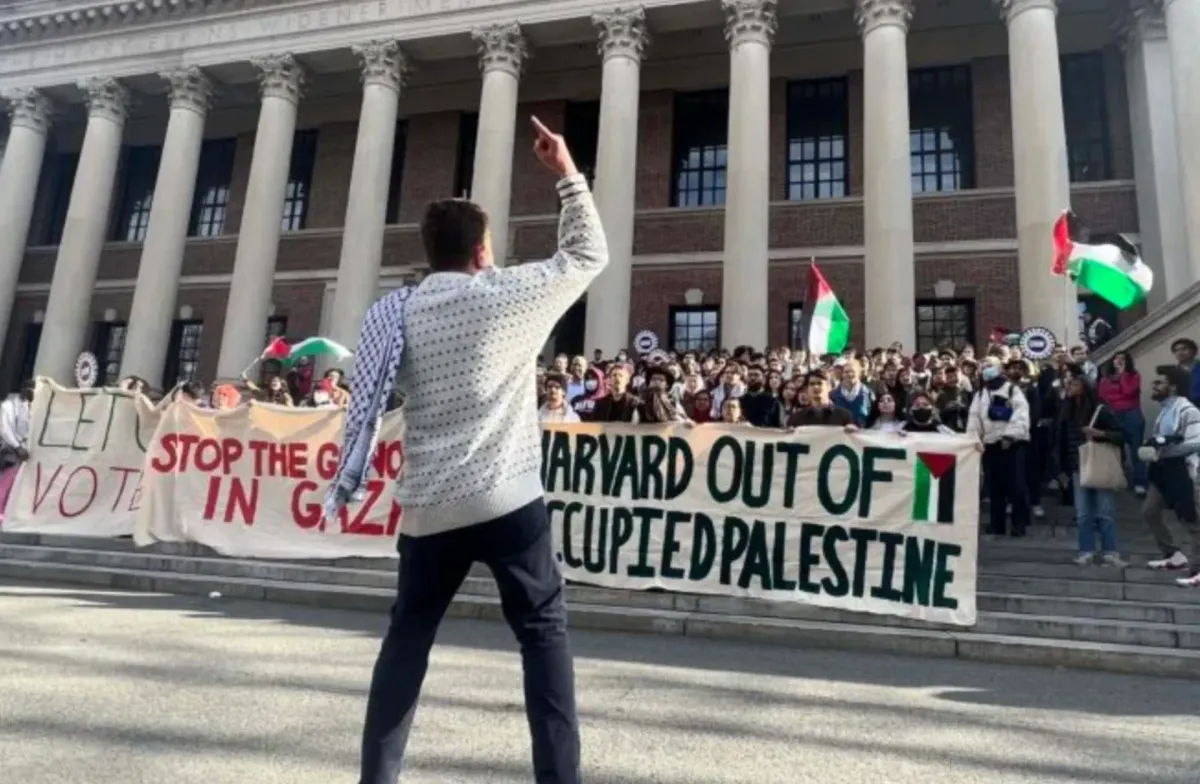
The Palestine exception to academic freedom: What is happening in US universities?
The dismissal of historian of the Ottoman Empire Cemal Kafadar from his position as Director of Harvard University's Center for Middle Eastern Studies, and the detention of Rümeysa Öztürk, a PhD student at Tufts University in Massachusetts, are the latest links in a chain that began in the pre-Trump era at US universities, which sees Palestine as an “exception” to freedom of expression and academic freedom. What is happening at US universities?
By: Deren Ertaş
On March 25, Rümeysa Öztürk, a Turkish national and PhD student and Fulbright scholar at Tufts University, was on her way to iftar dinner when several masked individuals stopped her on the street. They informed her that they are from Immigration and Customs Enforcement and that she was in the country illegally. Öztürk’s shock and confusion at the arrest can be seen from the CCTV recording of the event, which also shows the agents handcuffing her before taking her away.
“A visa is a privilege, not a right,” said U.S. Department of Homeland Security spokesperson Tricia McLaughlin after the arrest.
“Department of Homeland Security and Immigration and Customs Enforcement investigations found Ozturk engaged in activities in support of Hamas, a foreign terrorist organization that relishes the killing of Americans. Glorifying and supporting terrorists who kill Americans is grounds for visa issuance to be terminated. This is common sense security.”
On March 24, 2024, almost exactly a year before her arrest, Öztürk had published a co-authored op-ed in the Tufts Daily criticizing the University’s response to a student group’s demand for divestment from companies tied to Israel. On March 25 of 2025, she was taken to a detention facility in Louisiana.
A wave of arrests in American universities
Öztürk’s case was only the latest in a wave of detainments that swept American universities last month. It all began on March 8 when authorities detained Mahmoud Khalil, a Palestinian activist and recent Columbia graduate, at his apartment where he lived with his eight-month pregnant wife. Unlike Öztürk, who was in the US on a student visa, Khalil is a permanent resident with a green card. Like Öztürk, he had spoken out against the ethnic cleansing of Palestinians. He was a spokesperson for Columbia University Apartheid Divest and acted as a mediator between the group and the university during the wave of protests in Spring 2024.
BEFORE YOU LEAVE
From previous issues:
- Turkey’s pivotal moment: Presidential candidate İmamoğlu detained
- The anti-LGBTI+ tactic of populist regimes | Serkan Köybaşı
- Öcalan urges PKK to disarm in historic call
📱Finally: Make sure that you follow Aposto World on Instagram. Also, Aposto's culture and travel brand Soli just launched its monthly print-magazine. You can learn more about the English-and-Turkish magazine and order it here.