Aynı Mavinin Altında at Istanbul Modern: a polyphonic art history
Istanbul Modern’s new collection exhibition, Aynı Mavinin Altında, treats the art history of Türkiye as a living field, open to being rethought between past and contemporary work. We spoke to its co-curators, Çelenk Bafra and Deniz Pehlivaner, about how a museum might rewrite art history, and the possibilities this holds.
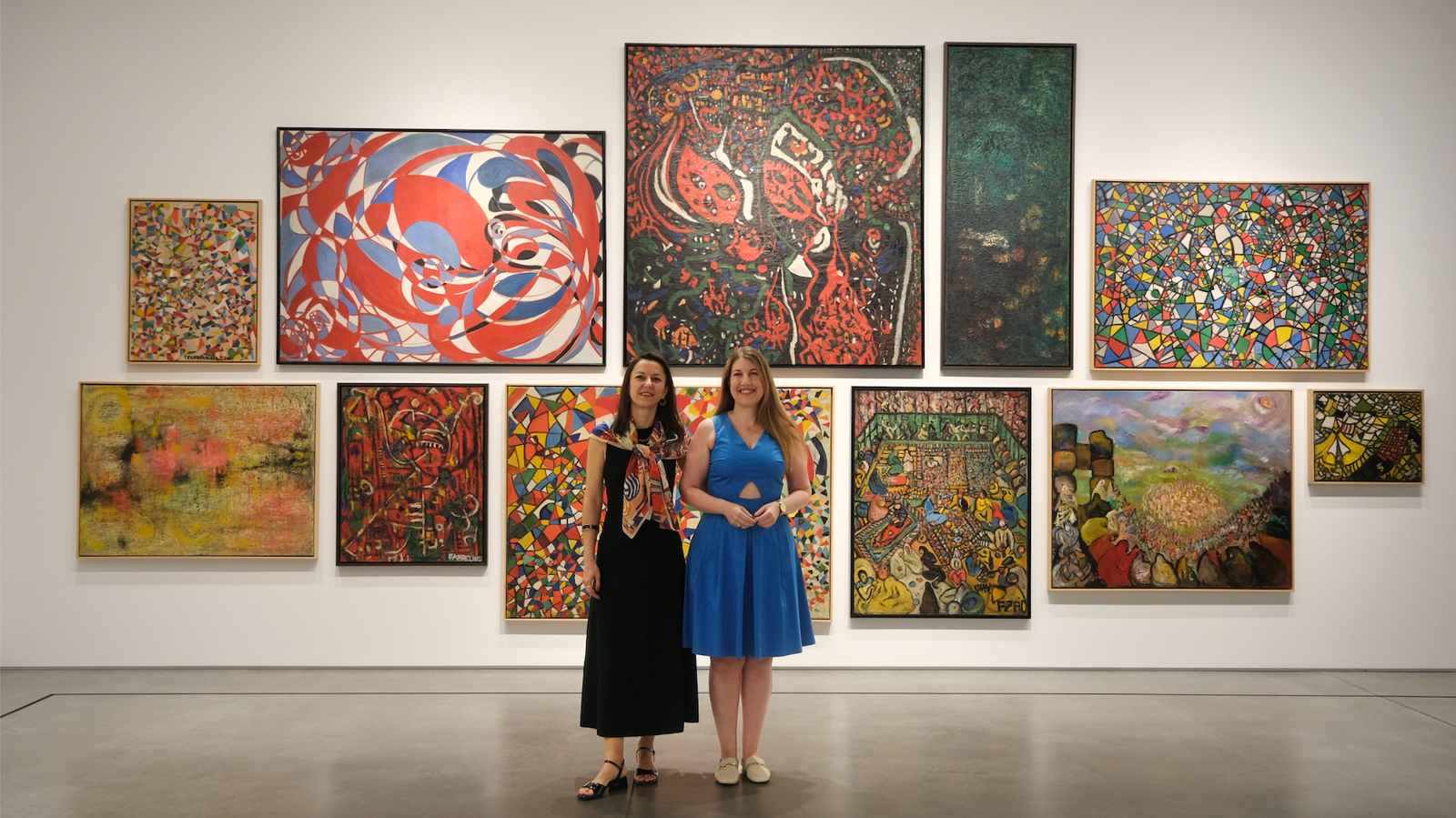
The new collection exhibition at Istanbul Modern, the city’s museum of modern and contemporary art, Aynı Mavinin Altında (Under the Same Blue), approaches the art history of Türkiye as a living field, open to being rethought between past and contemporary work. Co-curated by Çelenk Bafra and Deniz Pehlivaner, the exhibition favours polyphonic readings over a chronological narrative, foregrounding the visibility of women artists, encounters between different generations and geographies, and the relationships between the modern period and contemporary practice.
We talked with Bafra and Pehlivaner about how, through this approach, a museum might rewrite art history, and about the possibilities this opens up.
In the collection exhibition Aynı Mavinin Altında, which recently opened at Istanbul Modern, a chronological and a thematic narrative run side by side. On one hand we follow the transformation from modern to contemporary art in Türkiye from the 1940s to today; on the other, we see encounters that bring different periods, concerns and ruptures together. How did the idea of building these two strands together take shape?
Deniz Pehlivaner: As a museum with the word “modern” in its name, we carry a responsibility to tell visitors about the important subjects, movements and periods of art history through our collection. The modern period in particular, where our collection allows a stronger narrative, is also the exhibition’s starting point. Because works by international artists have entered our collection mainly since the 2000s, the differences in period between art made in Türkiye and the work of artists from abroad become more visible. Works that do not belong to the same period can sometimes meet around similar concerns. One way to move beyond this temporal divide is to make thematic exhibitions. So the exhibition begins as a journey through time, and by the time it reaches the 1990s and 2000s, the works come together around shared ideas and shift onto timeless ground. This allows the work of artists from different generations and geographies to sit side by side.
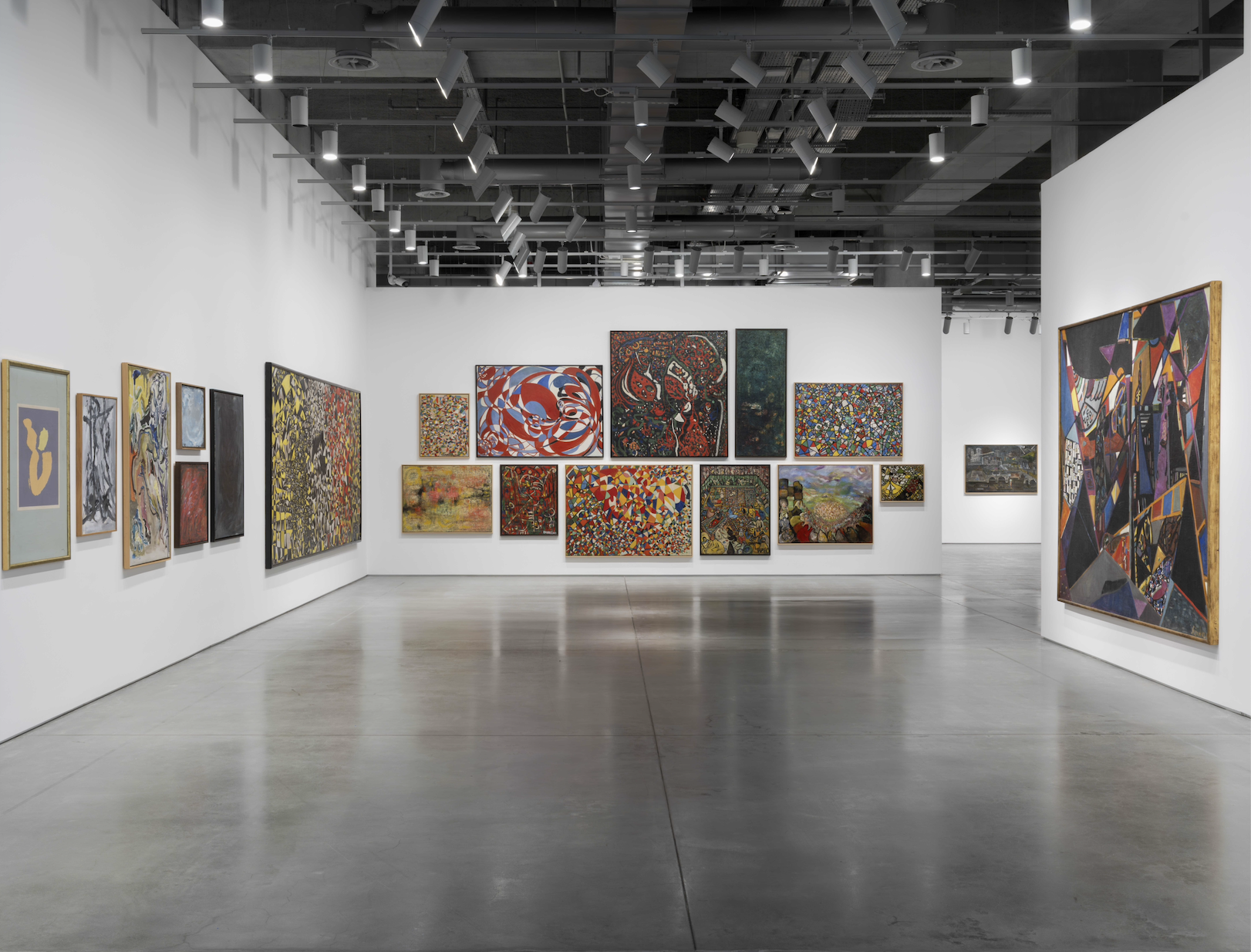
Photo: Kayhan Kaygusuz
Çelenk Bafra: I would like to add this to Deniz’s framework: in choosing this title and weaving the structure, we wanted to build an entirely pluralist ground through the metaphor of “Aynı Mavinin Altında”. Rather than attaching the art of Türkiye to a global centre after the fact, our aim was to bring works from different geographies together on an equal intellectual plane while preserving their own specificities. Istanbul Modern’s location on the shore of the Bosphorus and Renzo Piano’s architecture, which lets the light and the view inside, also support this idea. Blue thus becomes both the conceptual and the spatial axis of the exhibition.
One of the difficult things about revisiting such a large museum collection, one connected to the Bosphorus and to the art of Türkiye, must be this: you have a vast body of work, and every piece you choose, every arrangement you set side by side, in effect creates a particular narrative of art history. In this exhibition you go beyond relaying the familiar historical narrative of modern and contemporary art in Türkiye, building new relationships between different periods and works. What kind of reading of art history did you want to open up through these encounters?
D.P.: The most striking thing about art history is that, not only in Türkiye but around the world, it has long been a history determined and steered by art academies and institutions, and therefore shaped around a particular master narrative. Artists, works and relationships that fall outside this narrative can become less visible over time. That is why you might think of our approach in the exhibition as a “polyphonic” reading of art history. We wanted to look not only at which artist made what, but also at how artists related to one another: who was friends with whom, who made work with whom, who was whose student or teacher, which circles and encounters shaped a body of work? When this network of relationships becomes visible, we can see that art history is not made up only of artists and movements following one another; it is also shaped through encounters, interactions and ways of making together.
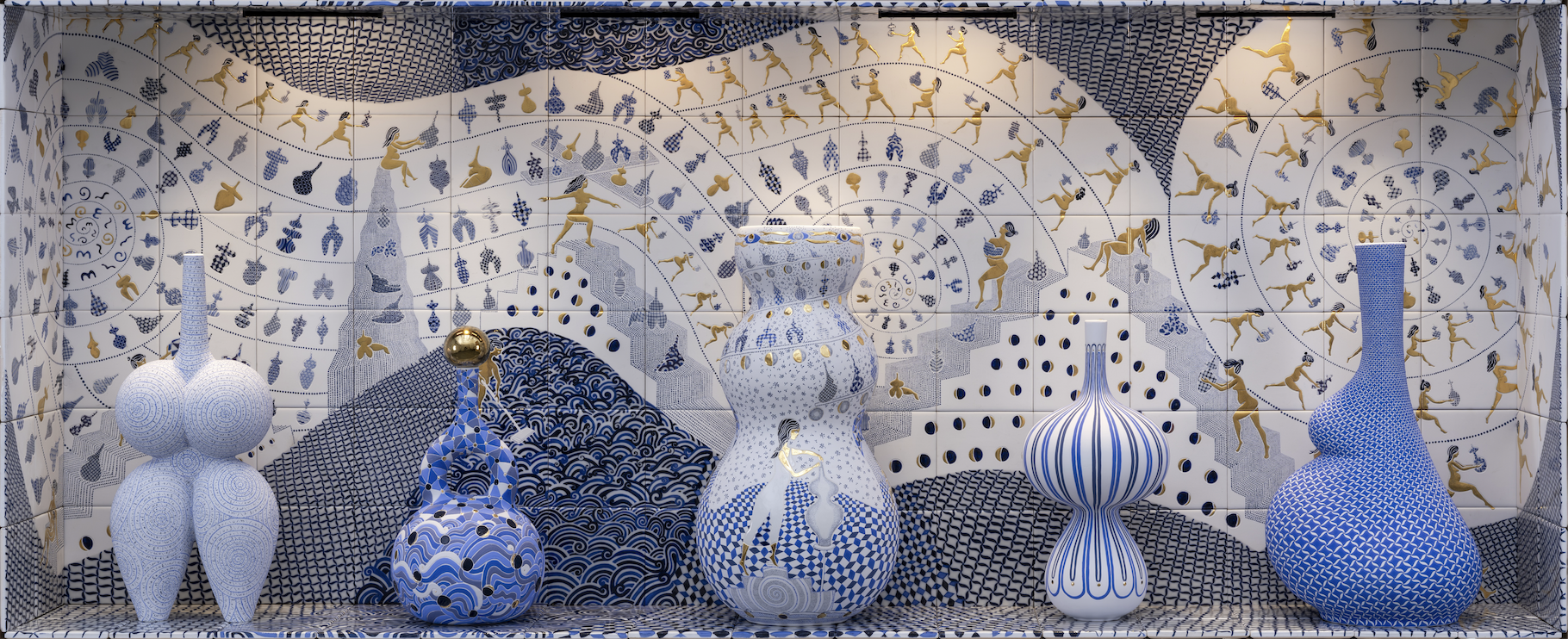
Elif Uras, Bu Çark Zor Dönüyor, 2024
Ç.B.: It is also worth stressing that in making this polyphonic reading we did not confine the exhibition to the gallery. By extending the selection across the museum’s four floors, its foyers and its library, we aimed to offer visitors a collection experience that lives throughout the building and becomes part of the space. Art history’s question, “How far have we come?”, finds its meaning in this spatial spread alongside contemporary art’s question, “Through which concerns can we think about today and the future?”
One thing that particularly caught my attention is that roughly half of the artists in the exhibition are women. You also describe the visibility of women artists as one of the exhibition’s priorities. Considering the gaps in past narratives of art history in Türkiye, what kind of curatorial question was it for you to strike this balance?
D.P.: Approaching it from an egalitarian, democratic perspective, I think we should first look at artists’ work regardless of their gender. But when we look at art history, we also see that the work of women artists cannot be assessed apart from the social conditions they lived in. With the opening of İnas Sanây-i Nefise, the Ottoman fine arts academy for women, in 1914, women’s art education and art-making gained an institutional footing; but because society defined women’s place in public life within quite rigid limits for a long time, it took time for women artists to free themselves and to be able to sustain their practice.
That is why what matters to us in the exhibition is not only increasing the numerical visibility of women artists, but making it visible that women artists are an essential part of art history. It is also important to think about, and open up for discussion, how women came to art, the conditions under which they were able to keep working or why they had to stop, which of their works were left in the background, and how their ways of expressing themselves took shape and diversified.
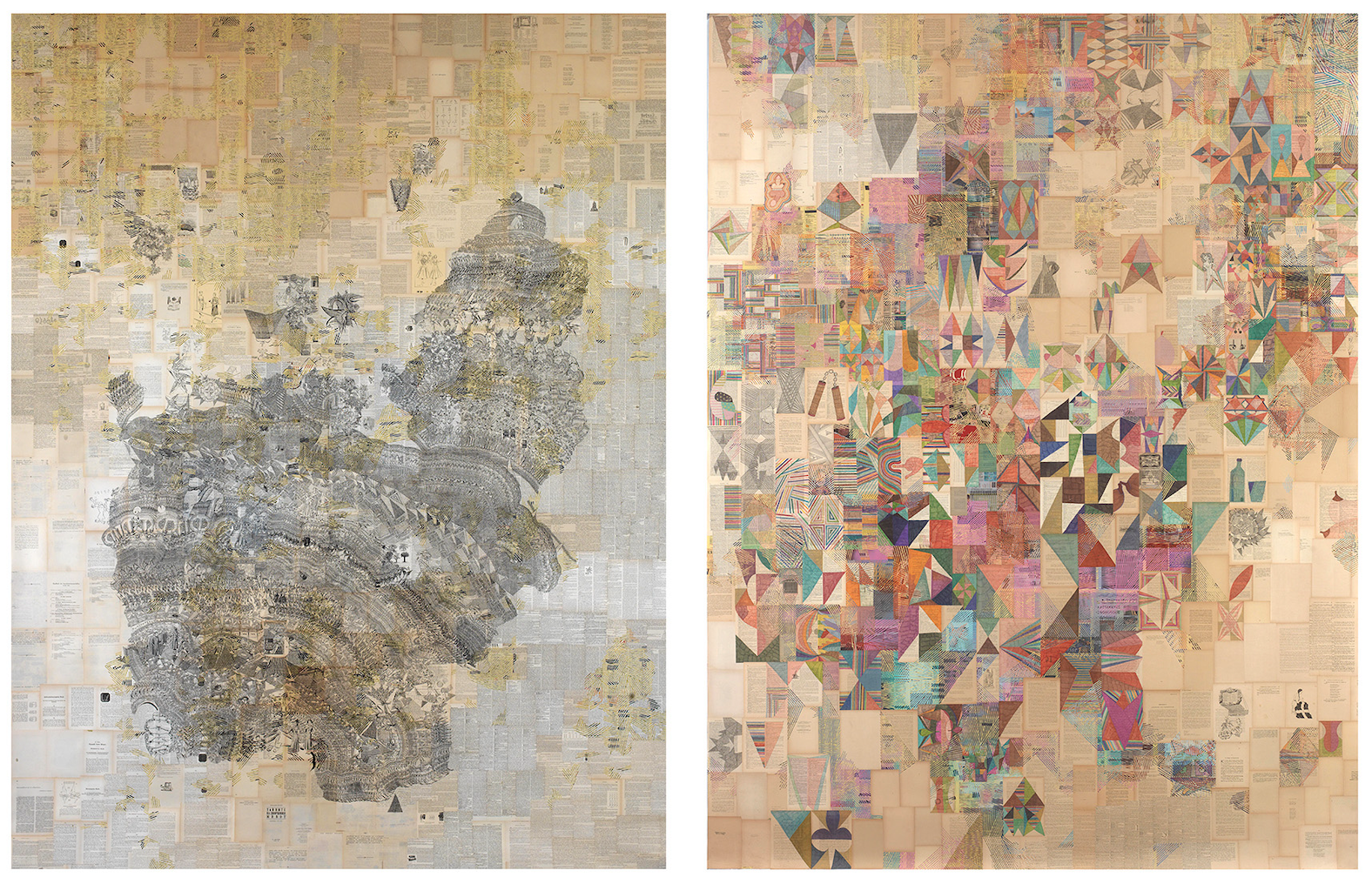
Antonis Donef, Untitled, 2019-2021. Photo: Odysseas Vaharidis
A significant share of the works Istanbul Modern has acquired through its Women Artists Fund are also being shown to the public for the first time in this exhibition. So the shift we see here seems to be the result not only of curatorial choices but of collecting policy too. To what extent can a museum’s collecting practice change the gaps in representation left behind in art history?
D.P.: A museum’s collection is not just an archive of works made in the past; it is also a living structure that can influence how art history may be read in the future. Bringing a work into the collection means that the artist and their work become part of the museum’s institutional memory. Collecting policy therefore offers an important opportunity to rethink existing forms of representation in art history and to address the gaps that have formed over time.
Thanks to the Women Artists Fund, since 2016, we have tried every year to bring works by women artists into our collection. This also lets us follow women artists’ current work more closely, and helps the contemporary themes they actively address in their work find a place in the collection.
Rather than saying a museum collection can fill the gaps in art history on its own, we can say that it can contribute to doing so. Every work that enters the collection is a new resource for future exhibitions, research and different readings. Collecting policy is therefore a long-term responsibility that shapes not only today’s exhibition but also the narratives of art history the museum will build in the future.
Once we reach the post-2000 period, the exhibition’s language changes too; issues such as war, displacement, ecological rupture, gender, labour and the city become more decisive. I am curious about this transition: in the post-2000 section the chronological narrative steps back, and the works come together through current concerns and thematic relationships. How did you shape this changing mode of narration?
Ç.B.: What was decisive was that, from the 2000s onwards, in Türkiye and around the world, it was no longer enough to read art production through a particular period or geography. Instead of following a set chronological order, we built it around the intellectual and thematic relationships the works form with one another. Our starting point here was less the question “Which work was made in which year?” than “What meaning does this work take on today when it is placed beside another?”
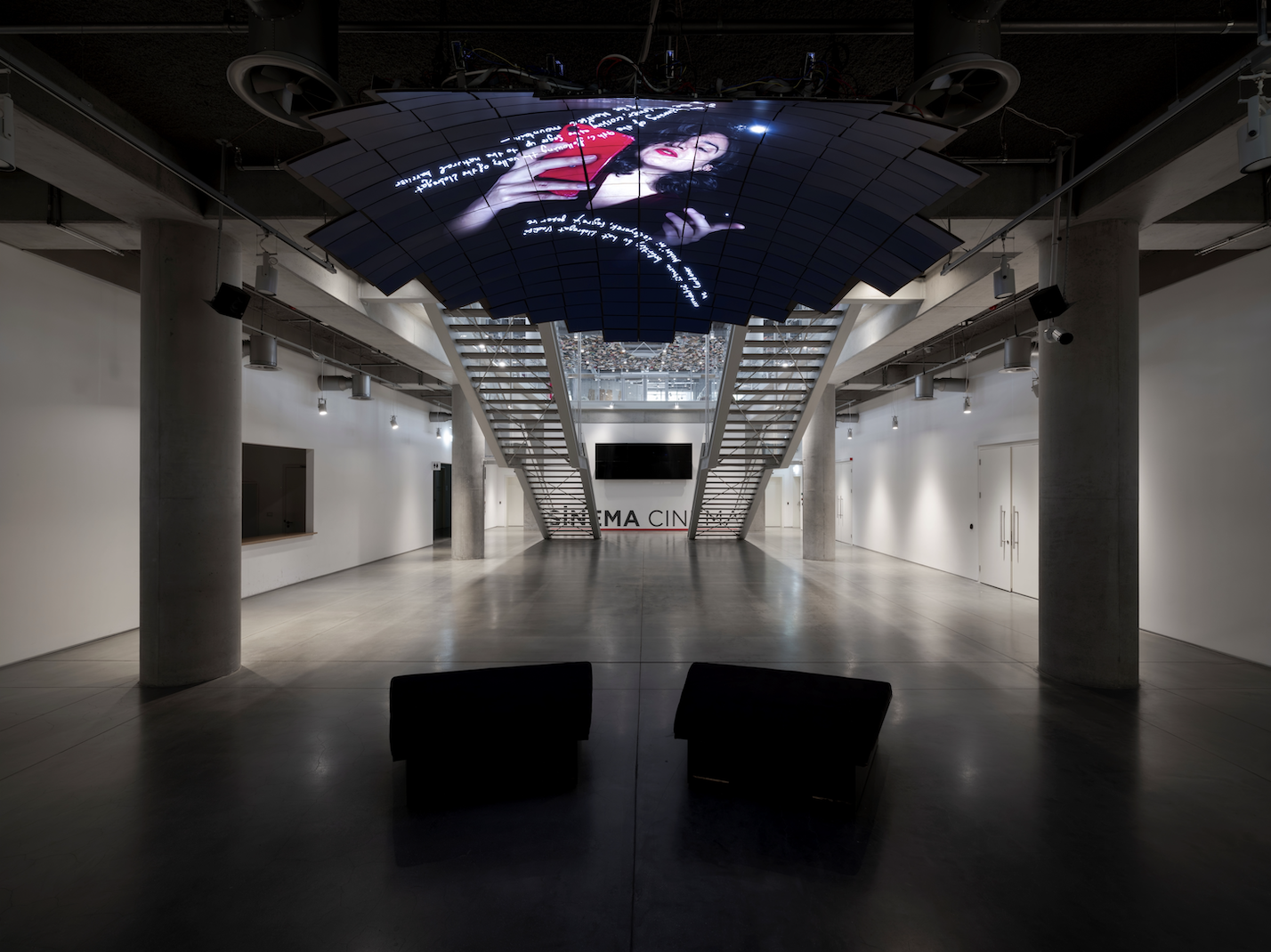
Claudia Pagès Rabal, Five Defence Towers, 2025
In the exhibition we see works made in different periods forming new connections around issues that remain relevant today. A work made years ago can carry an entirely different weight in today’s world. While putting the selection together, were there examples that surprised you, where you said, “This work speaks differently today”?
D.P.: When works made in different periods and geographies come together, it becomes clearer how shared and universal the concerns artists take up really are. What an artist wanted to say about their own time takes on new meanings when it meets another work. In this respect, the proximity of works by Nil Yalter, Altan Gürman and Ayşe Erkmen, paintings by Neş’e Erdok and Neşet Günal, the abstract paintings of Erol Akyavaş and Albert Bitran, and works by Füsun Onur and Tiraje reinforces alternative narratives.
One of the things I think about most with collection exhibitions is that museums do not simply show art history; through which artist, which work and which context they make visible, they also take part in writing that history. While preparing Aynı Mavinin Altında, how did you think about Istanbul Modern’s role in shaping the history of modern and contemporary art in Türkiye?
Ç.B.: Yes, museums’ collection exhibitions inevitably produce a narrative of art history. In fact, this narrative begins before the exhibition, at the stage of building the collection. Bringing a work into the collection, and then deciding which works to show it with and in what context, inevitably involves a process of selecting, connecting and interpreting. Since the first half of the exhibition follows a chronological narrative and the second half a thematic one, I would say the thematic part reflects roughly the last 25 years of contemporary art. It is also significant that the exhibition includes works shown at biennials and major international exhibitions not only in Istanbul but in many other countries. So I think the exhibition goes beyond offering a cross-section of the collection; it serves as a record of some of the key concerns and encounters in recent art.
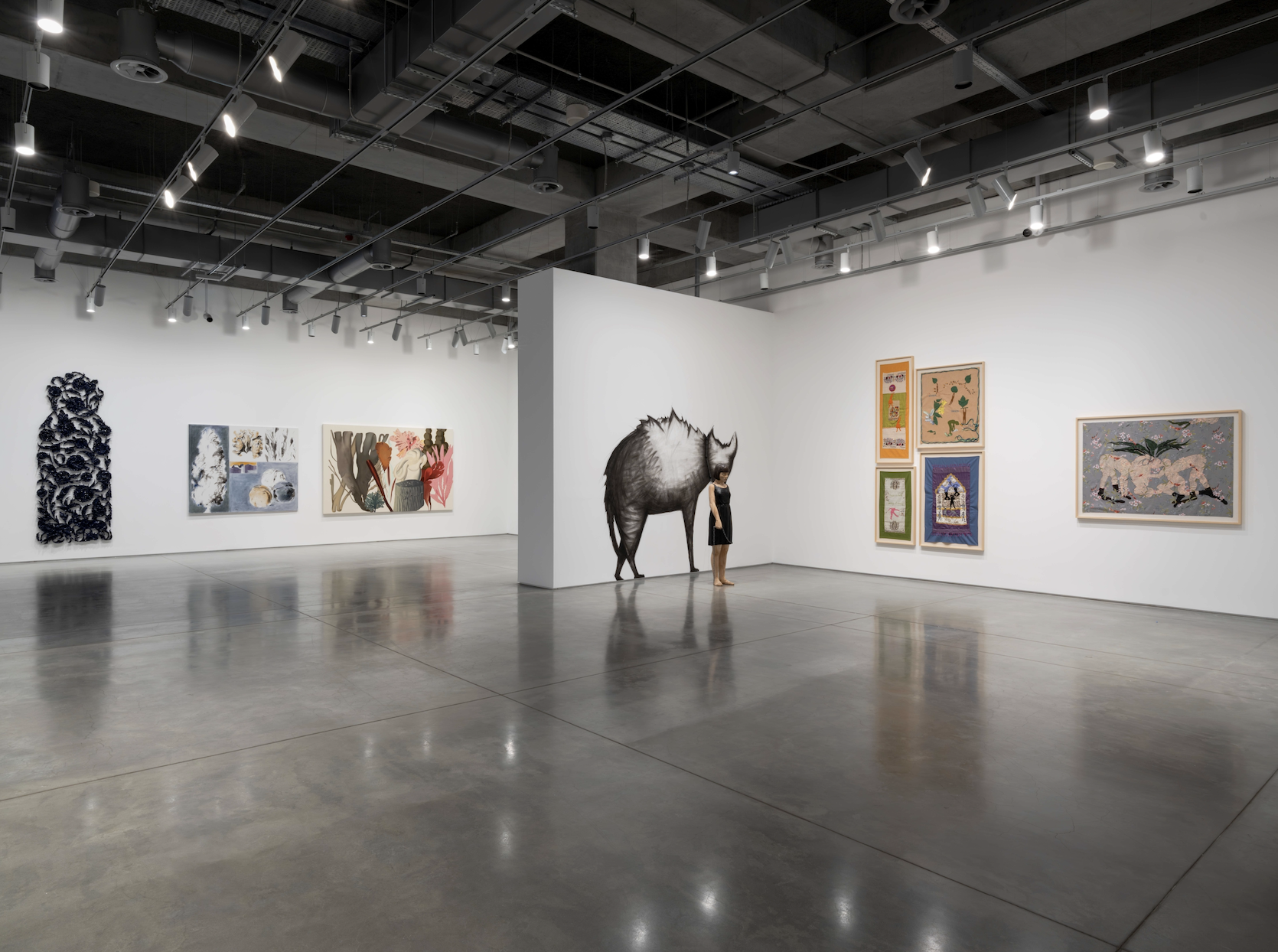
Photo: Kayhan Kaygusuz
We also see works by artists from Türkiye placed alongside works by international artists. This makes it possible to read the art of Türkiye not as a history closed in on itself, but as a field of production that develops in constant contact with other geographies. Were there historical connections you particularly wanted to make visible when building the selection?
D.P.: Among the artists in the exhibition, I find the encounters between Anselm Kiefer and Aslı Çavuşoğlu, Güneş Terkol and the Guerrilla Girls, Georg Baselitz and İnci Eviner, Hüseyin Bahri Alptekin and Hans Op de Beeck, and Hussein Chalayan and Lee Bul especially exciting. These relationships let us read art history not as linear, separate stories but as a living field where different times and geographies touch one another.
Finally, I am curious how you see the collection now that the exhibition is installed. Revisiting a large collection can make its gaps as visible as its strengths. With the exhibition complete, have the periods, artists or areas you would particularly like to strengthen from here on become clearer?
D.P.: Yes, of course. The exhibition presents a selection made within the possibilities of the collection, and the art world is of course not limited to the artists and works in the exhibition, so a need for something that would support the narrative can always arise.
Ç.B.: We see this exhibition not as an end point but, on the contrary, as the start of new questions and research. Seeing which generations, which forms of production or which themes are not yet sufficiently represented directly shapes our future collecting policy and acquisition strategy. So the exhibition is complete, but our responsibility and our search to deepen the collection continue without pause.