Aziz Shokhakimov on the Tekfen Philharmonic and the universal language of music
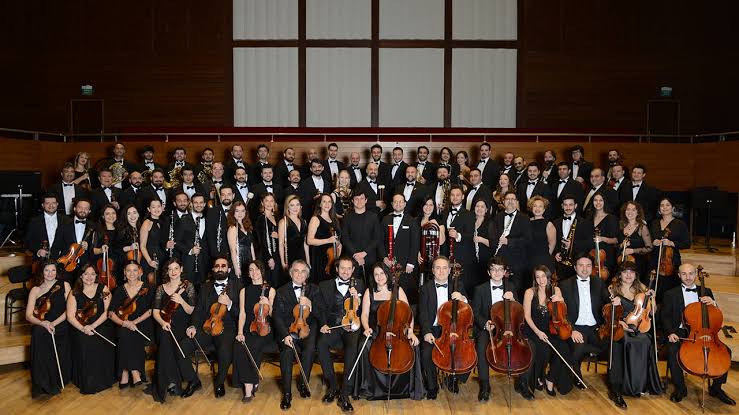
At the close of COP31, the Tekfen Philharmonic Orchestra will bring together leaders, business representatives, scientists and activists from around the world with a special repertoire centred on the fundamental elements of nature and the relationship between people and nature. We spoke to Aziz Shokhakimov, the orchestra's principal conductor and artistic director, born in Tashkent in 1988, about the Tekfen Philharmonic's journey and the unifying language of music.
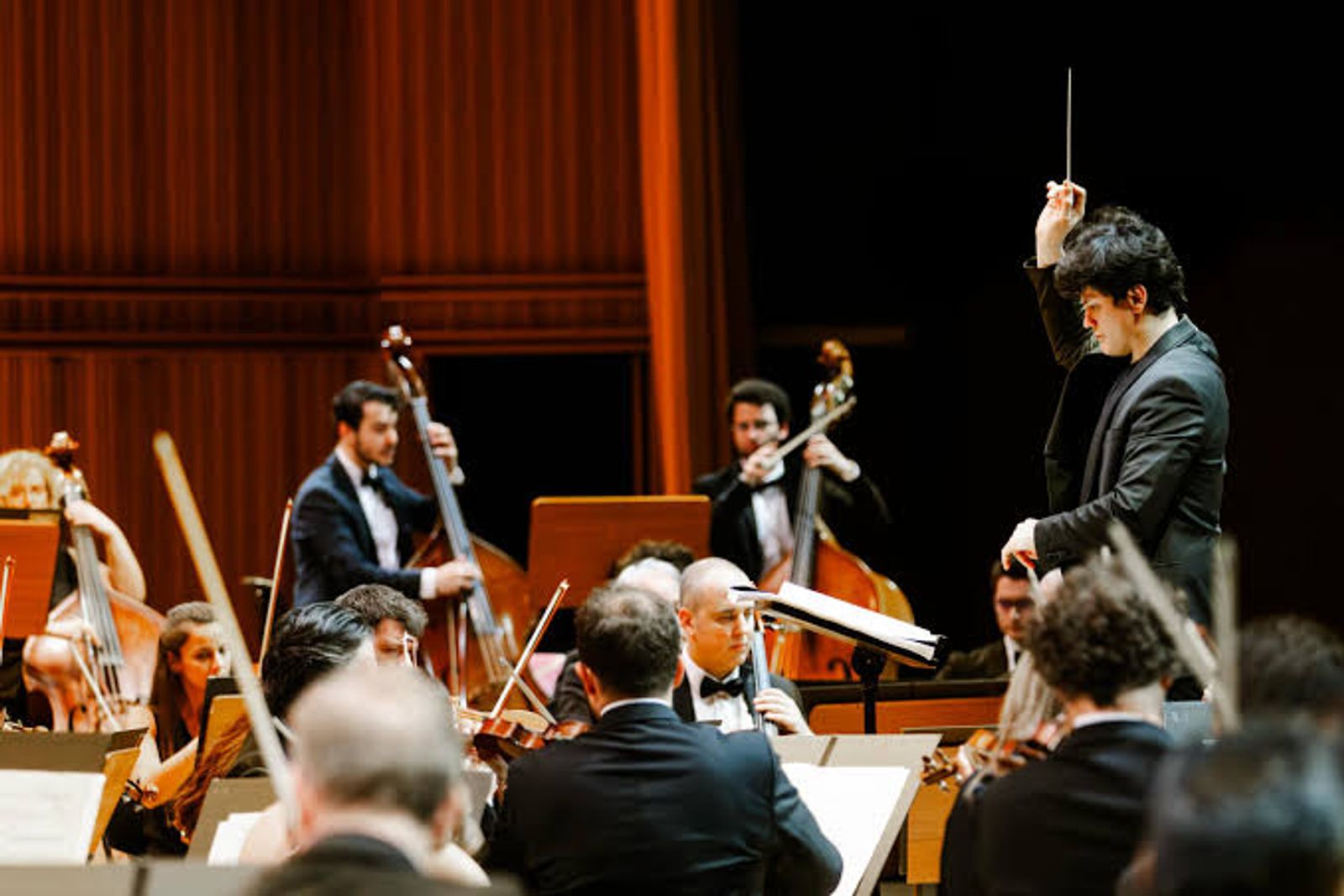
Interview: Necmi Çelik
The Tekfen Philharmonic Orchestra will take the stage on Friday 20 November at the close of the 31st Conference of the Parties to the United Nations Framework Convention on Climate Change (COP31), held in Antalya. The concert will use the unifying power of music to bring together leaders, business representatives, scientists and activists from all over the world.
Conducted by Aziz Shokhakimov, the orchestra's principal conductor and artistic director, who was born in Tashkent in 1988, the concert will offer a special repertoire centred on the fundamental elements of nature and on the relationship between people and nature. We spoke to Aziz Shokhakimov about the Tekfen Philharmonic's journey, what it takes to be a good conductor and the unifying language of music.
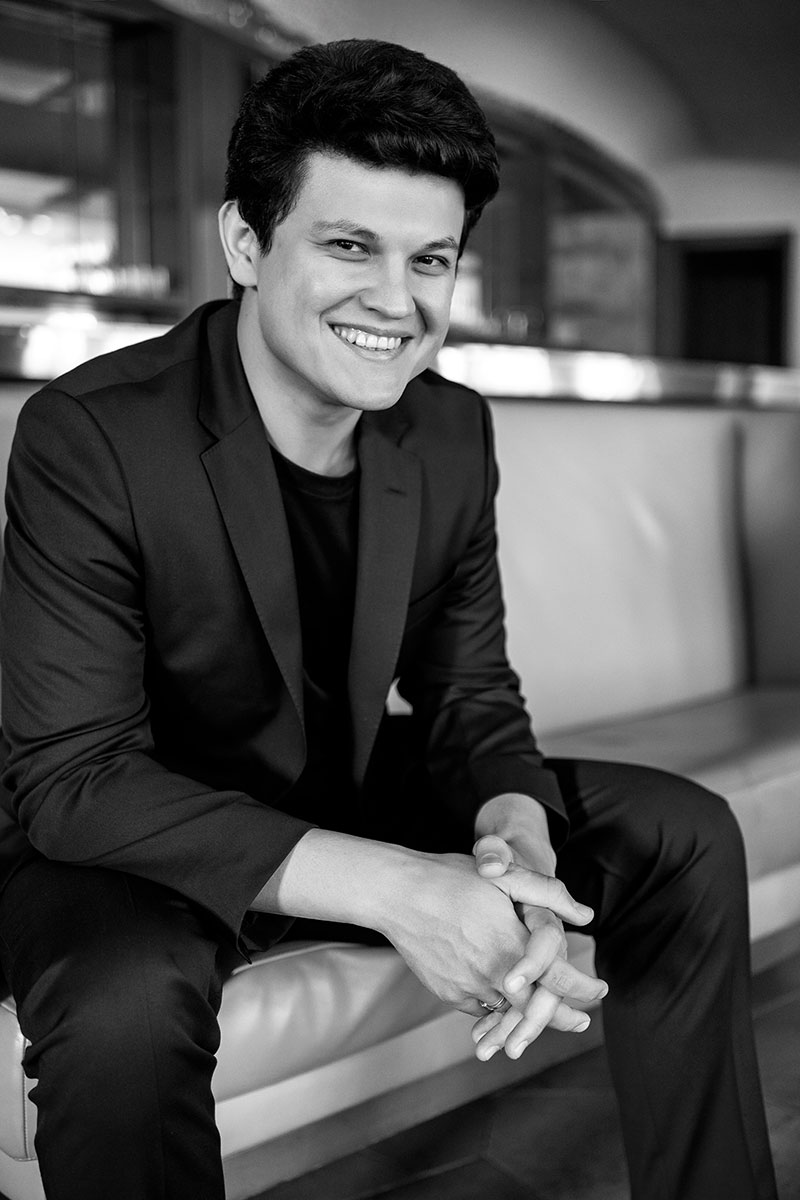
You have been principal conductor and music director of the Tekfen Philharmonic since 2017. What role does the orchestra play in your professional journey?
The Tekfen Philharmonic holds a very special place in my professional life. We began working together in 2017, when I was still a relatively young conductor, and over the years since we have come a long way together.
For me, one of its most valuable qualities is that the orchestra brings together musicians from different countries, cultures and musical traditions. In a sense, the Tekfen Philharmonic is a living embodiment of the idea that music is a universal language, one that can bring people together whatever their origins.
Perhaps my greatest source of pride is having witnessed the professional growth of our musicians. Many of them joined the orchestra young and with limited experience. Over the years they have become highly accomplished professionals. Knowing that I have been able to contribute to that growth makes me very happy. In rehearsals we have the chance to work intensively on musical detail, timbre, style and interpretation. I believe the benefits of this experience are not confined to our own orchestra. When musicians return to their own ensembles, they share the knowledge and experience they have gained here, helping to raise the artistic level of other ensembles, regional orchestras included.
For me, this is one of the Tekfen Philharmonic's most important missions: not only to make beautiful music, but also to contribute to the development of musicians and, through them, to serve the advancement of musical culture as a whole.
You have conducted, and continue to conduct, in both the United States and Europe. What colours and variations does this geographical and cultural diversity bring to your symphonic range as a conductor?
Every orchestra is a world of its own. Even when two different orchestras perform the same work, the result is never quite the same. Working over the years with orchestras in Europe, America and Asia, I have come to realise how deeply musical traditions, national cultures and even the way people communicate shape an orchestra's sound. Different orchestras can have very different approaches to timbre, rhythmic freedom and musical dramaturgy.
What interests me most is not trying to impose the same interpretation on every orchestra, but finding a shared artistic language. Every encounter with a new orchestra teaches me something new. Sometimes musicians suggest musical ideas or solutions I had never considered. At the same time, I firmly believe that a conductor must stay open to new ideas while also having a clear artistic vision. It is precisely this constant exchange that makes our profession so compelling.
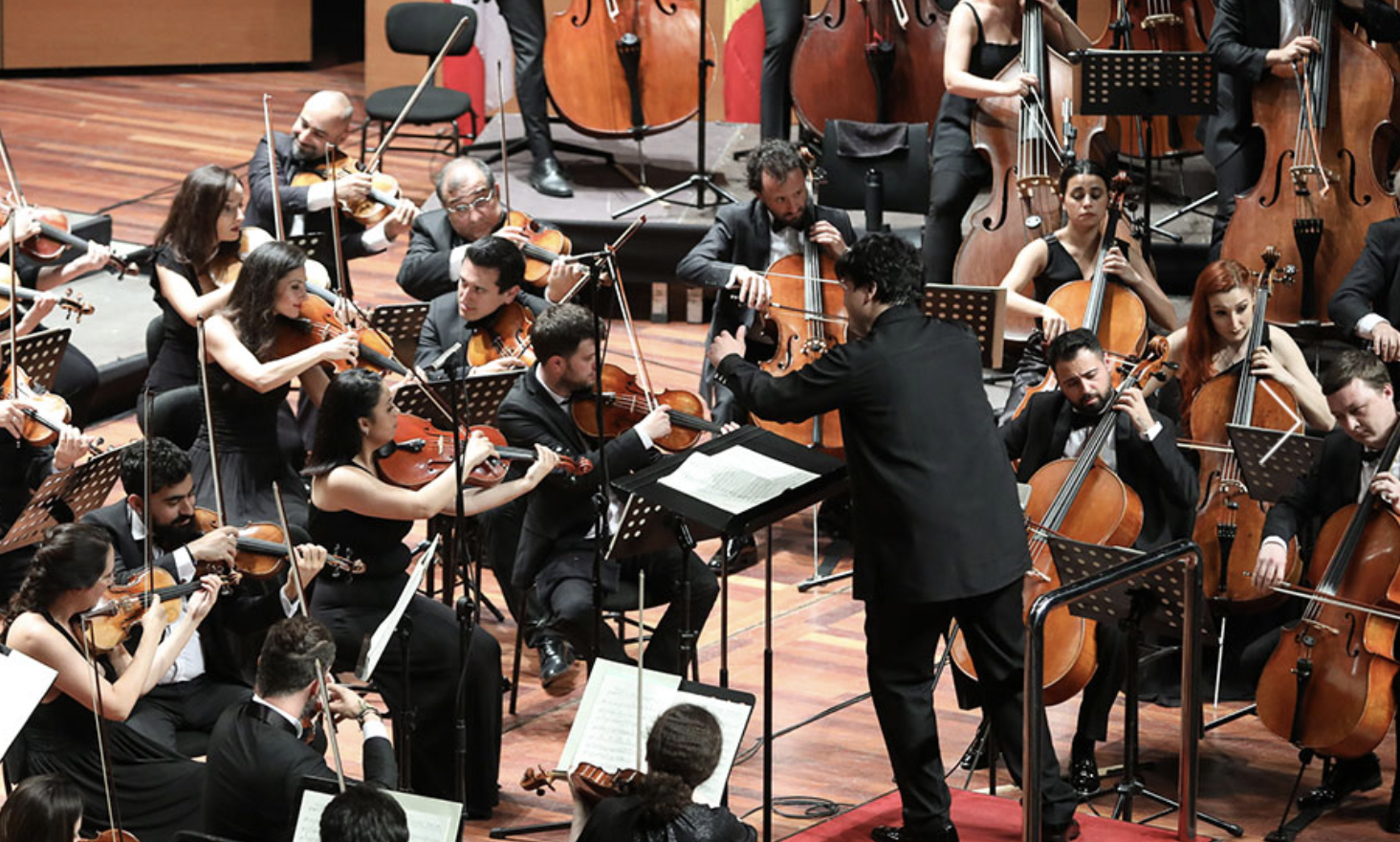
As someone who became a conductor at a young age and has led major projects, how do you see younger generations' interest in classical music in Uzbekistan? What advice would you give to musicians younger than you about classical music training?
Uzbekistan has an extraordinarily rich musical heritage. In the Soviet era the country had a strong tradition of classical music education, and its musical life was marked by great cultural and ethnic diversity. Unfortunately, after the collapse of the Soviet Union, and particularly in the 1990s and 2000s, things became very difficult. Many highly trained musicians left the country, and this inevitably affected the overall level of musical culture. In recent years, though, I have been delighted to see a new generation emerge: talented, energetic young musicians eager to learn, to grow and to create. Of course, building a strong musical culture is a long-term process. You cannot raise a generation of professional musicians in a few years. It takes decades of steady work, high-quality education and opportunities for professional development.
I sincerely hope that both Uzbekistan and Türkiye will continue to give this field more attention and resources. Türkiye also holds a very special place for me. Our peoples share deep historical, cultural and linguistic ties. We truly are sister nations. In my years working in Türkiye I have met a great many exceptionally talented musicians and witnessed the country's enormous musical potential. When I work with European orchestras and come across musicians from Türkiye or of Turkish origin, it genuinely makes me happy. It reminds me that talent knows no borders.
My advice to young musicians is always the same: talent is only the beginning. This profession demands great discipline, patience and constant dedication. That is especially true for conductors. Conducting is not simply a matter of learning a physical technique. You have to study scores in depth and develop a broad understanding of music history, harmony, philosophy, literature and culture in general. And perhaps the most important advice I can give: do not chase quick success. Real artistic and professional growth takes time; there is no shortcut.
How would you define your own style as a conductor? Given the multicultural make-up of both the Tekfen Philharmonic and the other orchestras you lead, how do you strike the balance between symphonic harmony and authority with the musicians?
I find it quite hard to define my own conducting style. The musicians I work with could probably answer that question better. But as for my artistic principles, emotional expression, clarity of musical thought and attention to detail matter enormously to me. Above all, I am very demanding of myself. When I stand in front of an orchestra, I need to have a very clear idea of what I want to achieve with a particular work. That said, I strongly believe that a conductor's authority must rest first and foremost on professionalism.
What makes someone a true musical leader is not their title, a strong personality or the ability to give orders; the most important thing is being able to persuade musicians of your interpretation. And that power of persuasion should come not from the use of authority, but from the depth of your musical understanding, your knowledge and the clarity of your artistic vision. To achieve this, a conductor must not only know the score exceptionally well but also have a broad intellectual outlook. Music is not a field separate from history, philosophy, literature and human experience. In front of a conductor sit dozens of accomplished musicians, each with their own experience, individuality and musical ideas. My task is to bring these individual personalities together around a shared artistic vision.
When musicians stop simply following the conductor and begin truly to believe in and share that vision, a real sense of unity emerges in the orchestra. That is when it becomes possible to make music together freely, and that, in the end, is why we devote our lives to music.
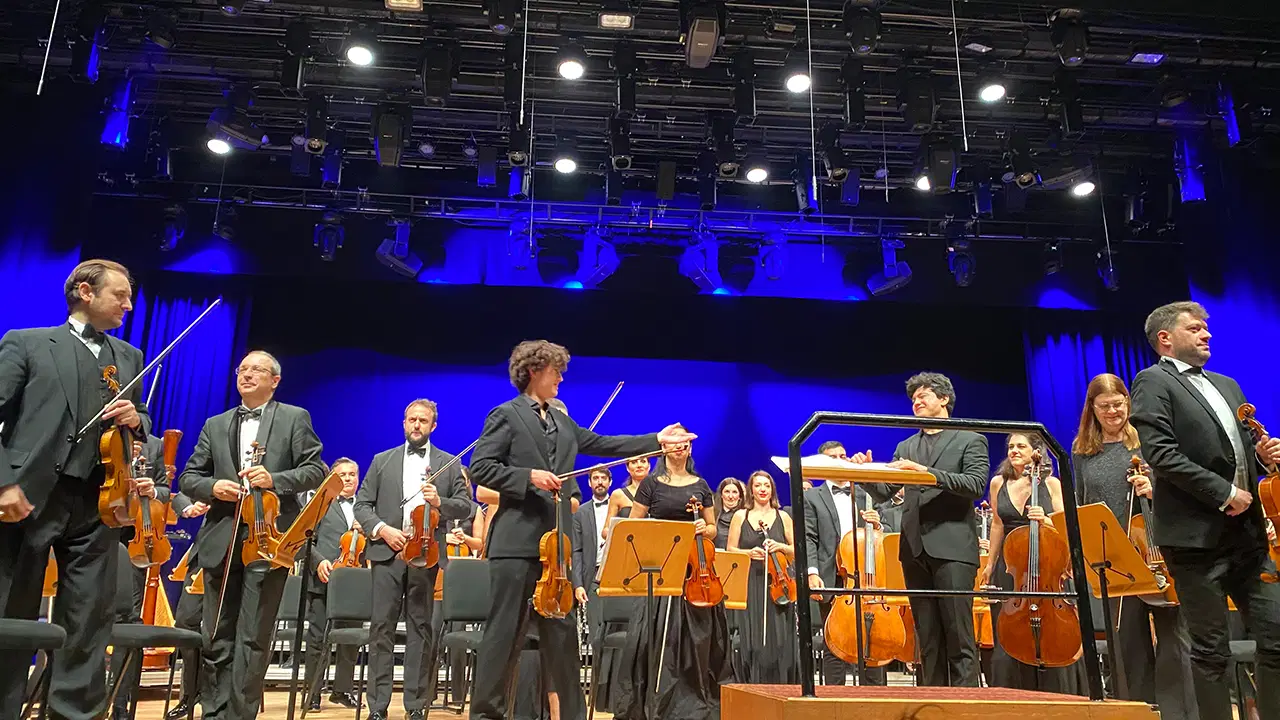
Alongside symphonies by the great composers of classical music, you also conduct opera. In terms of technique, what differences do you see between conducting an opera and a symphonic work?
Although opera and symphonic conducting call for different skills in some respects, both rest on the same principle: the ability to understand musical dramaturgy. In a symphony concert the conductor works mainly with the orchestra and the musical architecture of the piece. In opera the situation is far more complex. Besides the orchestra, you have to take into account the soloists, the chorus, the movement on stage, the acoustics of the theatre and much else. Perhaps the most important difference is that the human voice is a living instrument that demands a particular flexibility. A conductor must be able to breathe with the soloist, feel their phrasing and respond instantly to whatever happens on stage.
Opera also gives a conductor a very particular sense of theatrical timing. Personally, I consider the experience of opera absolutely indispensable for a conductor. I find it hard to imagine that a symphonic conductor's artistic development could be complete without experience in the opera house. Opera greatly enriches the way we understand symphonic music. It teaches you to hear music as living drama, to feel the breath of a musical phrase, to understand the psychology of characters and to grasp the inner logic of musical development. After working on operas, you begin to see many symphonic works in a completely different light. Their dramatic dimensions, their human emotions and their theatrical qualities become far more visible. That is why, for me, opera and symphonic music are not two separate disciplines but two inseparably linked sides of the same profession.
The Tekfen Philharmonic will give a concert at the close of COP31. The preparation can hardly be easy. We would love to hear about your experience of the process. For the Tekfen Philharmonic, 2027 will begin with the New Year concert. What projects lie ahead in 2027?
Performing at the closing concert of COP31 is, of course, a great honour for us. We have put together a varied programme that brings together works by composers from different countries and musical traditions. We will perform works by Fazıl Say, Bedřich Smetana and Igor Stravinsky. Each of these works, in its own way, is connected with nature, its beauty, its energy and its power. That is why I think the programme suits the spirit of the event extremely well.
As for the preparation, we are approaching this concert with the same care and professional dedication we bring to all our concerts. Whatever its scale or occasion, every concert matters to us. Our goal is always the same: to reach the highest possible artistic standard.
As for 2027, we will open the year with our New Year Concert at İş Sanat, the İş Bankası arts centre in Istanbul. We are currently working on the plans and repertoire for next season, so I would rather not share too many details for now, but I can say that our aim is to offer our audiences engaging and varied programmes while maintaining the highest artistic standards.
Do you have projects as a conductor that you hope will leave a mark on history? How do you dream of being remembered in the history of classical music?
To be honest, I have never thought about my work in terms of the legacy I might leave in music history. In fact, I sometimes feel that thinking that way could be a little self-centred.
I truly love music, and I see my profession above all as a way of serving it. What matters far more to me is what happens here and now: during a rehearsal, in the moment of a concert, or in those unique moments when that special emotional bond forms between musicians and listeners. I believe wholeheartedly that music has an extraordinary power to affect people. It can make us think, let us feel deep emotions and sometimes even change the way we see the world. These moments are the reason I have devoted my life to this profession.
Of course, I always try to do my work at the highest possible level, to keep growing as an artist and to stay true to my artistic convictions. But I am not the one who will decide whether I leave a lasting mark on music history. That will be for listeners, music lovers and perhaps future generations to decide. My task is both much simpler and much harder: to love music, to stay honest in my relationship with it and to serve it as best I can.