Between past and present: Seçkin Pirim’s ‘The King’s Road’ at the Pyramids of Giza
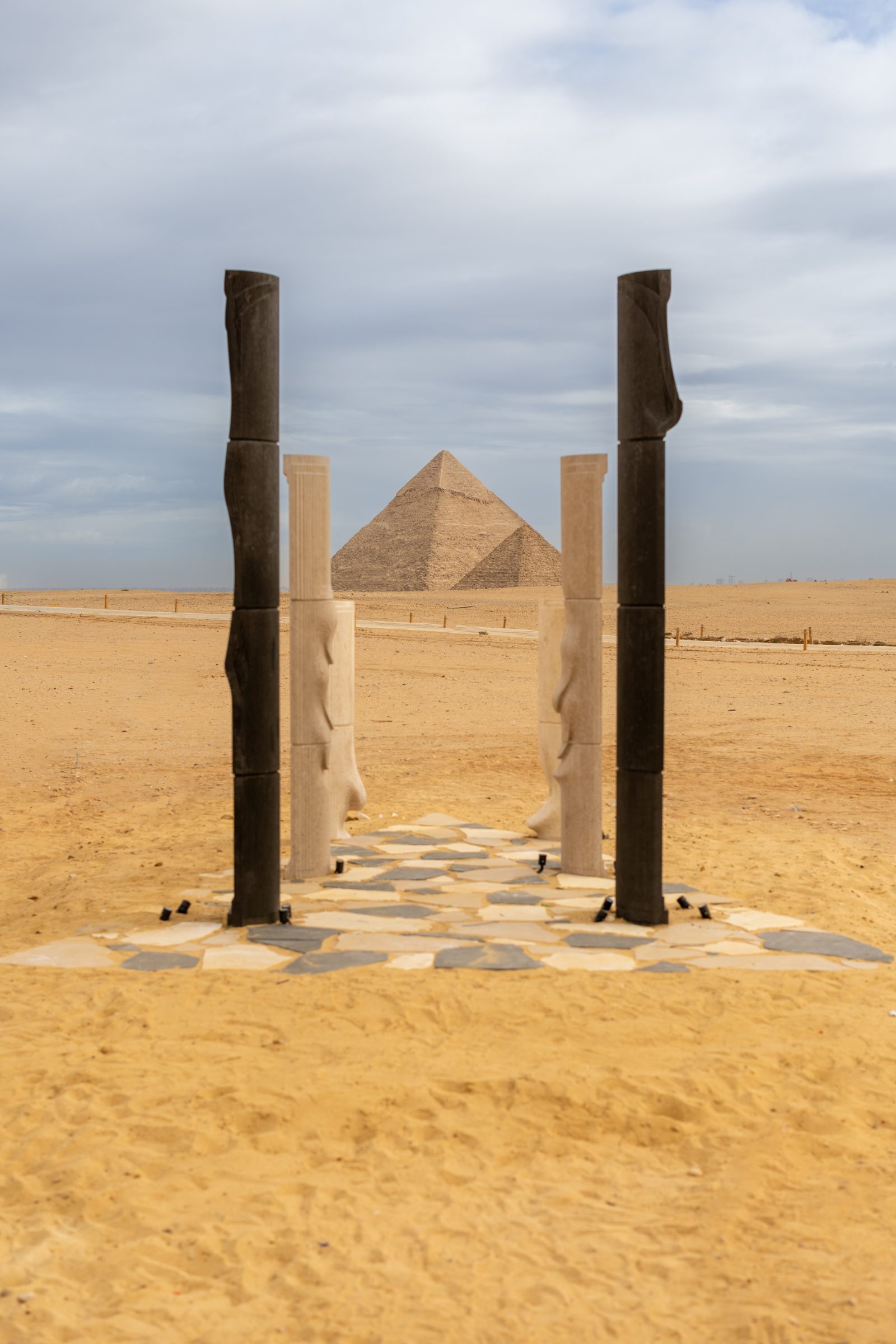
Seçkin Pirim’s “The King’s Road”, curated by Ayça Okay and presented by AWC Contemporary, is on show at the Pyramids of Giza as part of the sixth edition of “Forever Is Now”, organised by Art D’Égypte. We talked to the artist Seçkin Pirim, the curator Ayça Okay and AWC Contemporary founder Haldun Kilit about the work, which draws on the ancient roads that linked temples, quarries, ceremonial grounds and trade routes across Egypt.
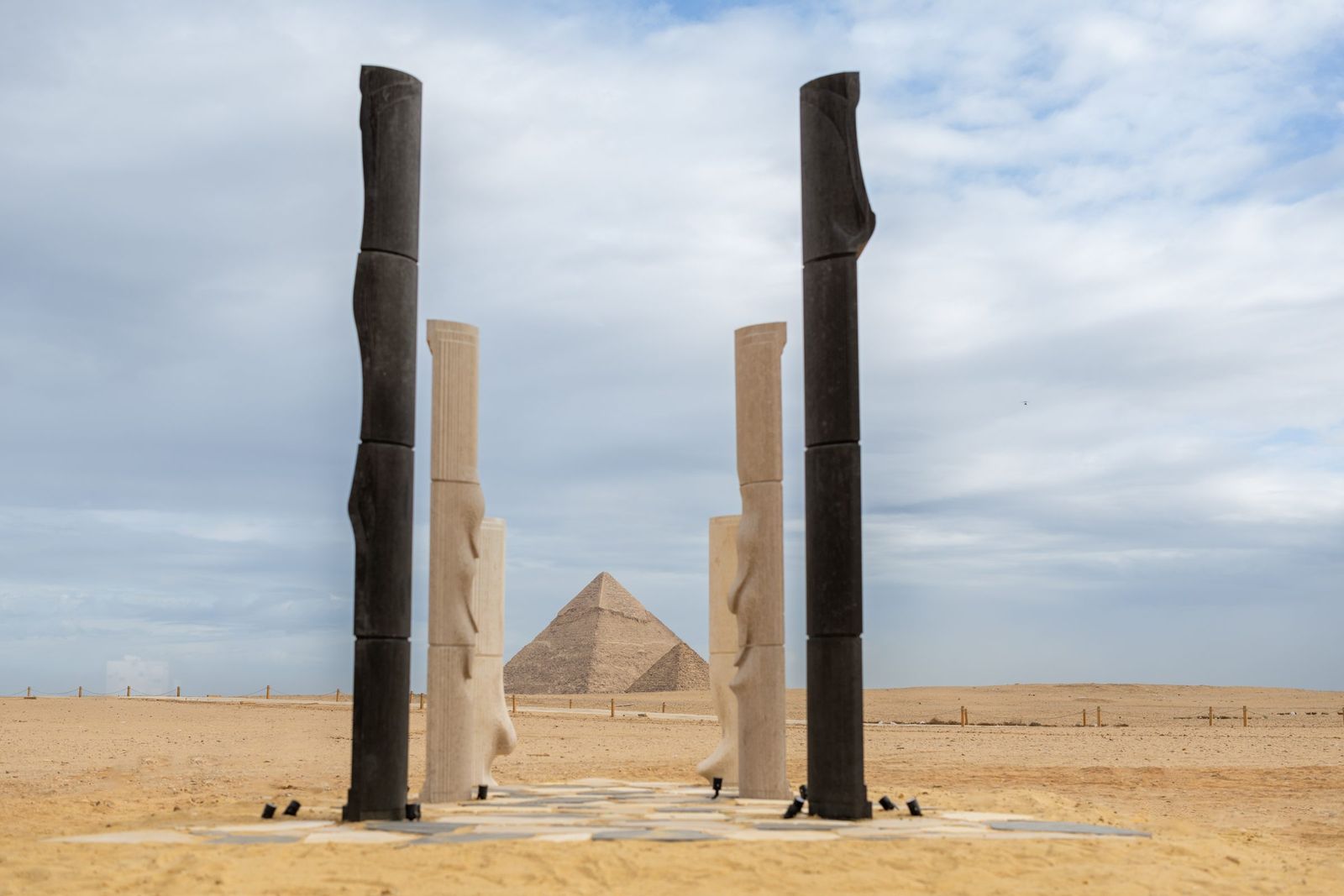
Seçkin Pirim’s work The King’s Road, curated by Ayça Okay, is on show at the Pyramids of Giza, presented by AWC Contemporary. Exhibited at the Giza Pyramids, a UNESCO World Heritage Site, as part of the sixth edition of “Forever Is Now”, organised by Art D’Égypte, the work takes its inspiration from the ancient roads that linked temples, quarries, ceremonial grounds and trade routes across Egypt. We talked about The King’s Road with the artist Seçkin Pirim, the curator Ayça Okay and Haldun Kilit, founder of AWC Contemporary.
The King’s Road is conceived as a passage stretching towards the Pyramids of Giza, carrying the viewer’s gaze from the sculpture to the pyramids. What is it like, in terms of your practice, for a sculpture to reshape not only its own form but also the perspective and line of sight of the landscape around it?
Seçkin Pirim: For me this project matters because the sculpture steps beyond its own limits and is able to shape the landscape it stands in. We usually think of sculpture as a form that is complete in itself. In The King’s Road, though, the space outside the sculpture is as much a part of the work as the sculpture itself.
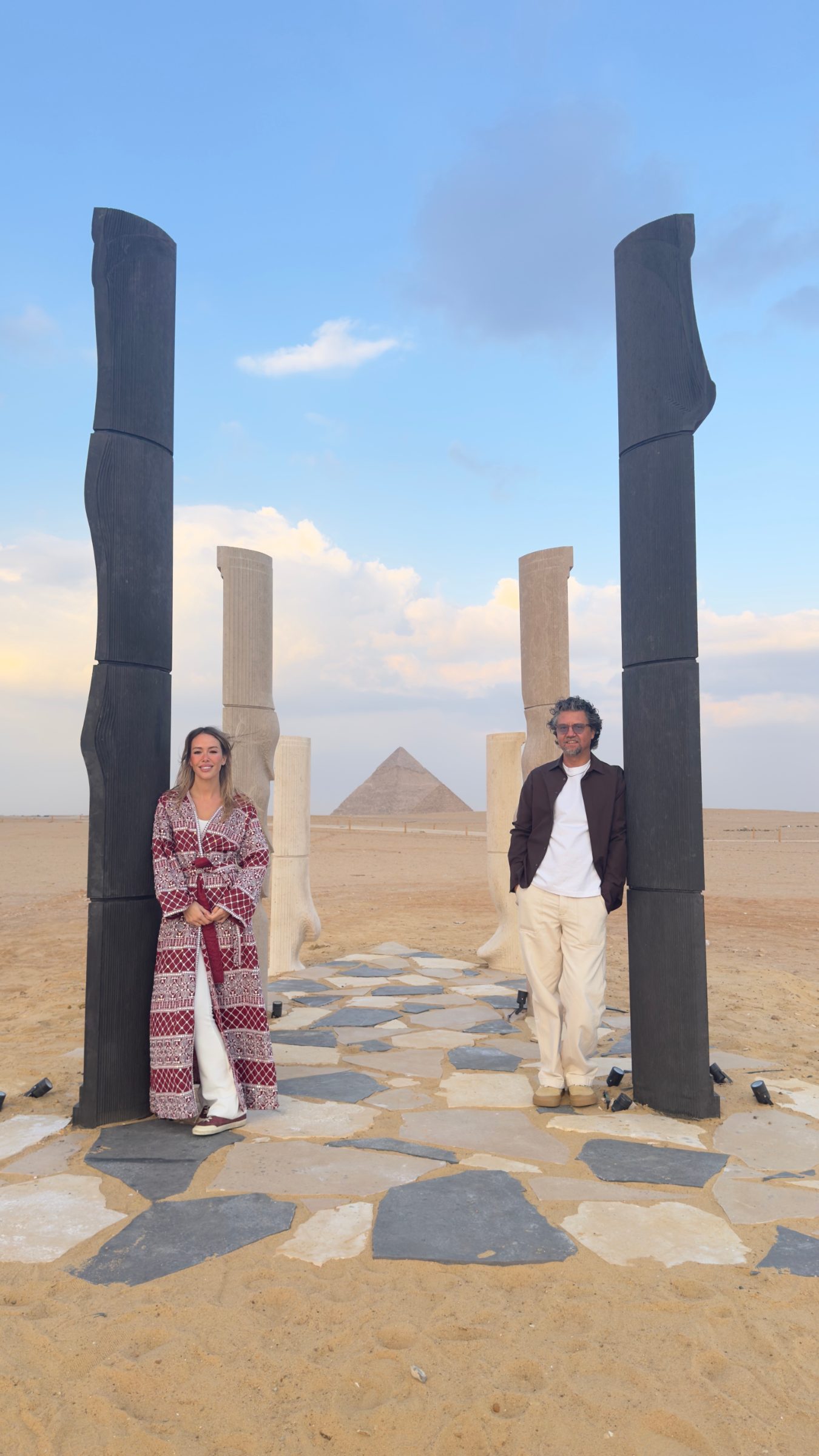
Here I used the geometric structure as a tool that directs the viewer’s gaze towards a particular point. Seen from inside the sculpture, the Pyramids of Giza are reframed within a specific perspective. The sculpture thus stops being merely an object and becomes an architectural intervention that redefines the landscape around it.
This is an important experience in my sculptural practice, because I am no longer only producing a form: I am also intervening in how the viewer will see the world.
The ancient roads at the root of the work were not just routes from one place to another; they also carried trade, ceremony, knowledge and cultural encounter. In bringing this historical idea of the “road” into today’s world, what did you want to transform?
Seçkin Pirim: Throughout history, roads have connected people, cultures, ideas and civilisations. What interested me was the meaning of the road beyond this physical function. For me the King’s Road is not simply a physical route between two points; it stands for humanity’s journey between history, faith and the search for eternity. In ancient Egypt, roads were not only for getting about; they were also a symbolic space of passage between life and death, between the earthly and the sacred.
In The King’s Road I wanted to turn the road into a space of perception and experience rather than a route of transport. I believe the roads that once brought people together can today bring different times and cultures together too.
What excited me about this work was not reproducing an ancient concept but interpreting the unifying idea at its core in a contemporary sculptural language. This relationship between past and present is, for me, one of the most important aspects of the project.
What does it feel like to exist in the same place as the pyramids, to be in dialogue with them?
Seçkin Pirim: Making work in a landscape like this is deeply moving, because what stands before you is not just architecture but one of the most powerful intellectual and physical expressions in human history.
In making a work beside the pyramids, I never set out to imitate their scale or compete with them. On the contrary, I wanted to create a structure that represents my own language and my own time.
What matters, I think, is being able to say something new in the face of such a powerful historical legacy. That is exactly the relationship I have with the pyramids: building a dialogue between their silent, powerful presence from the past and a work made today. The experience brings both a great responsibility and a strong drive to create.
It is striking that you turned to the natural stone traditionally used in Egypt for the work’s material. Marble already holds an important place in your practice, but here I feel the material takes on meaning not only aesthetically but as something belonging to the landscape and to cultural memory. How did your relationship with material change in this project?
Seçkin Pirim: For me, material has never been merely a technical means of turning a form into reality. Every material has its own character, its own memory and its own relationship with the place it comes from.
That is why I chose the natural stone traditionally used in Egypt for this project. I wanted the work to connect with its landscape through its material as well. In this way the sculpture is not just an object placed somewhere, but a structure nourished by the historical and cultural memory of that place. And it is a gesture of respect towards a land with an ancient past.
My long relationship with marble took on a new dimension in this project. The material is no longer only part of my sculptural language; it also carries the dialogue the work builds with its setting.
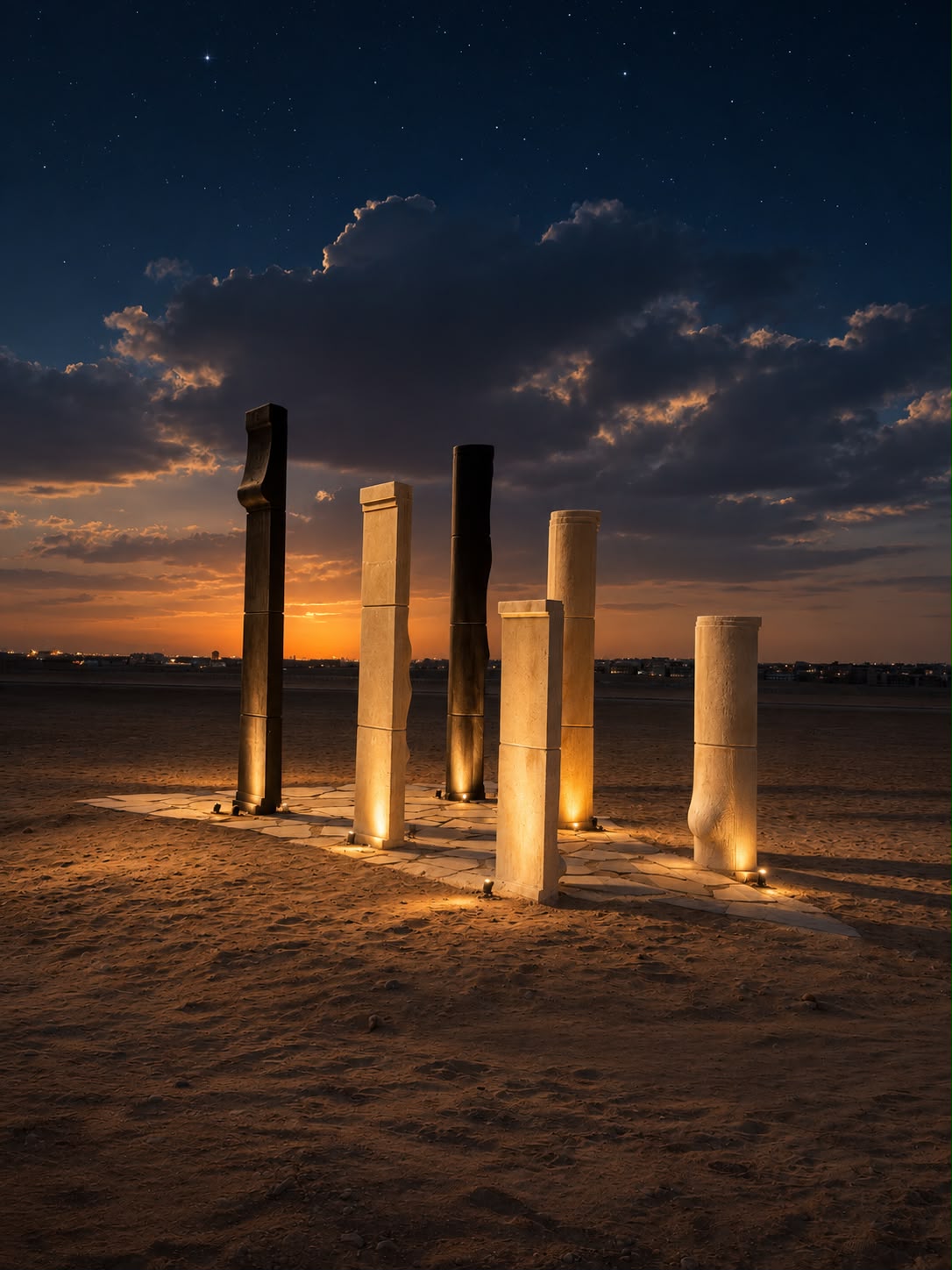
Repetition, rhythm, geometry and pared-back forms play an important part in your sculptures. In The King’s Road, this geometric language is read together with shadows that shift constantly with the movement of the sun. So over the course of a day the work never remains a single form. What does it mean to you for a sculpture to stop being a fixed object and become an image that changes with time?
Seçkin Pirim: For me sculpture has never been an entirely fixed object. The same form can take on a different character as the light changes. That is why I see light and shadow as inseparable parts of sculpture.
In The King’s Road, the geometric repetitions and rhythm keep creating different images as the sun moves. The perception of the work changes at different times of day. While the physical structure stays the same, its visual counterpart is constantly transforming. This matters a great deal to me, because here time is not something unfolding outside the work but a component that takes part directly in its making. In fact, at different times of day the viewer encounters not the same sculpture but the same sculpture in its different states over time.
When we think of your work, there is usually a sense of movement and transformation within a minimal form. In The King’s Road, this sense of movement comes not only from the sculpture’s own rhythm but also from the viewer moving around it. How far did you think of the viewer’s body as part of the work when designing it? At some point, does the sculpture guide the viewer, or does the viewer complete the sculpture’s meaning?
Seçkin Pirim: The viewer’s body is one of the work’s essential components, because I did not design it as a structure to be looked at from a distance. I wanted to create a space the viewer can enter, move through and form their own point of view in.
There is a reciprocal relationship here between sculpture and viewer. The sculpture guides the viewer through its geometry and perspective, but the real experience of the work emerges through the viewer’s movement. In a sense, the sculpture proposes a path to the viewer, but the viewer completes the experience of that path with their own body.
For me, one of the most important qualities of sculpture is its ability to create this encounter. The work is truly complete at the point where the viewer enters it and feels part of it.
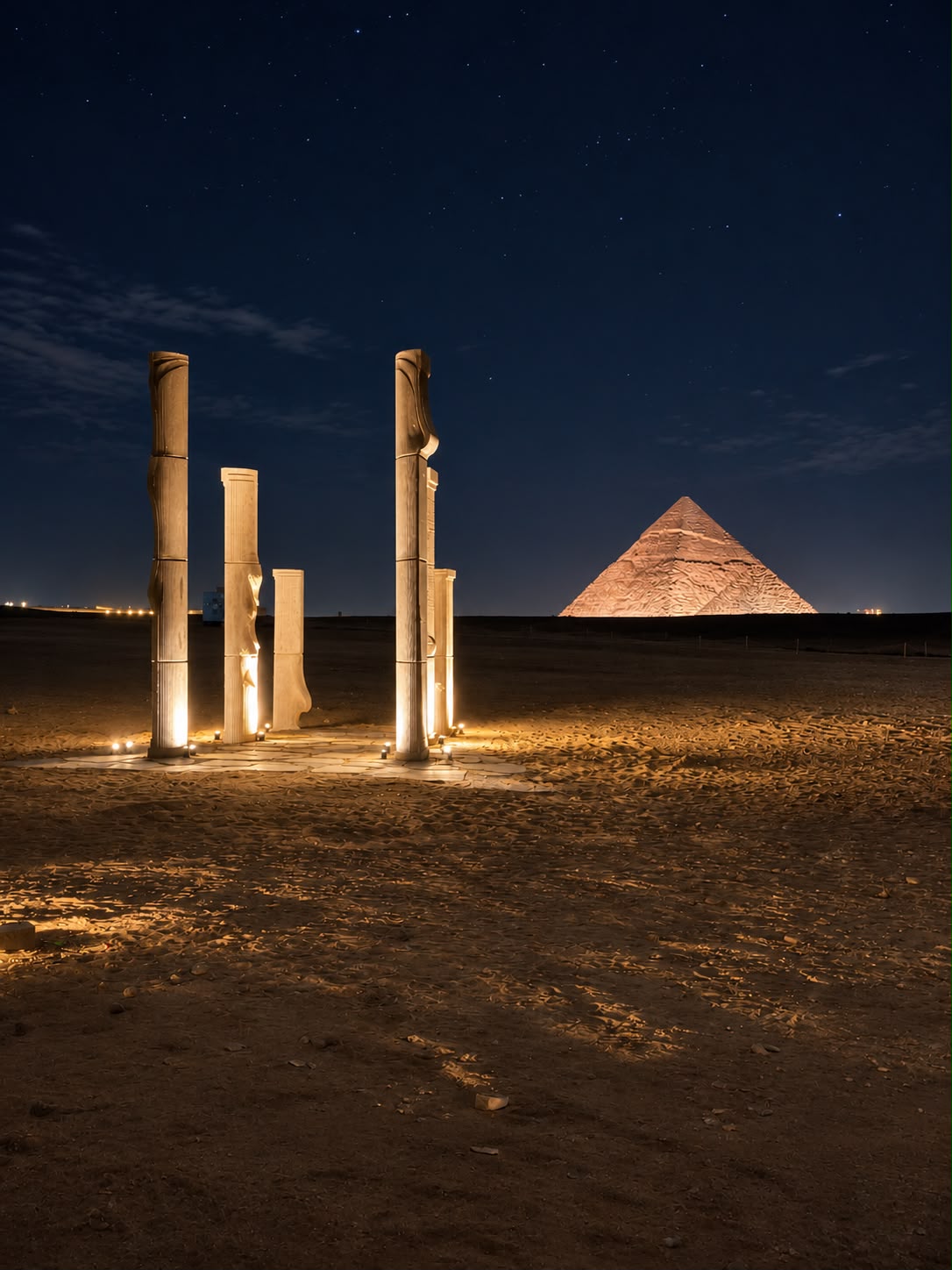
At Giza you are placing a work made today in front of an architectural heritage some 4,500 years old. As an artist, does the idea of making work that settles into time rather than competing with it matter to you?
Seçkin Pirim: Yes, it matters a great deal. I do not think art should compete with the past. Every era needs to put forward its own language, its own thinking and its own aesthetic. The pyramids at Giza are extraordinary expressions of their time. What I am doing is creating a new expression with today’s thinking, today’s materials and today’s sculptural language.
I do not judge a work’s permanence only by how long it will stand. What thoughts and feelings it stirs in different generations over time matters too. For me, the meaning of The King’s Road lies in creating a structure that represents the present beside the past, and bringing two different times face to face in the same place.
In positioning The King’s Road at the Pyramids of Giza, how did you bring Seçkin Pirim’s existing sculptural language together with the spirit of this historic landscape?
Ayça Okay: Repetition, rhythm and geometry are already very strong in Pirim’s practice. In his recent work especially (his research into the Aphrodisias school of sculpture, column forms, layered repetitions) he was already building a relationship between ancient architectural memory and contemporary form. At Giza I followed this existing vein, but the landscape opened up a new one as well.
The work moved beyond being a single sculpture and became a contemporary passage on the idea of the ancient “King’s Roads” (quarry to temple, the movement of materials, ceremonial routes). Vertical forms in Egyptian marble are arranged in rhythm; visitors walk between them, and the gaze is drawn first along the road and then towards the pyramids. Light and shadow shift throughout the day, which makes the work a temporal and bodily experience.
Rather than positioning The King’s Road as a static object, we chose to build it as a sequence of discovery. The forms evoke archaeological traces but are made with an entirely contemporary cut and rhythm.
An artist from Türkiye appearing at a site of global symbolic weight like the Pyramids of Giza can be seen not just as an exhibition appearance but in terms of the international circulation of contemporary art from Türkiye. Did the experience make you think anything new about how Turkish art might be read from outside?
Ayça Okay: At a place like Giza, in front of the pyramids, a Turkish artist making a work in Egyptian marble about the road from quarry to temple, and about permanence and transience, was a fresh reminder of how creative and powerful the ideas hosted by Türkiye’s contemporary art scene are. Our artists are not just producing “local” representation; they are very brave. As Seçkin Pirim has done, they can bring their own formal language, material research and bodily experience to a landscape of great historical weight. Contemporary art from Türkiye can enter into a direct, ambitious and bold dialogue with the shared memories of the Mediterranean and North Africa; the point is to bring that courage into wider circulation.
You also point to something important for the visibility of women art professionals from the region on the international art scene. International projects give you many opportunities to make connections and open up space. Could you tell us a little about that?
Ayça Okay: It is very meaningful that almost the entire team for this edition is made up of women. Art D’Égypte is trying to create a field of power led largely by women; not merely symbolic representation, but a structure in which women are genuinely decisive in decision-making, in production and on the ground. As a woman curator from the region, I am very happy working with women. We speak the same language, we come up against similar obstacles, and when we see each other’s courage the space opens up even further.
AWC Contemporary’s three-year collaboration with Art D’Égypte seems to have become a lasting relationship rather than a one-off exhibition appearance. What is the main thing that motivates you to keep this collaboration going and to come to these historic sites with a new artist each time?
Haldun Kilit: What motivates us is the dialogue contemporary art creates between different cultures and periods. Exhibiting work at a historic site like Giza creates a new relationship between past and present. We do not see our collaboration with Art D’Égypte as a one-off exhibition appearance. Each year we want to bring a different artist’s perspective to this landscape and give our artists international experience and long-term relationships.
At Miori you are building something that brings together gastronomy, art and tourism. This project at Giza also sits where art meets archaeology, tourism and cultural heritage. How important is it for AWC Contemporary’s future direction that art settles not only into exhibition spaces but into different landscapes and cultural experiences?
Haldun Kilit: I do not think of art as separate from other areas of life. At AWC Contemporary we care about developing projects that suit the identity of different places. AWC POINT x SANTİMİLİM DESIGN OFFICE Istanbul is where we bring art and design together with production. With the production facilities and technical teams we work with, we can realise large-scale art and design projects. The AWC Contemporary Sculpture Park at Miori is where this approach meets nature, gastronomy and tourism. While creating an important art destination on the Turkish Riviera, we offer our artists a setting where they can install large-scale works and engage with the place. The Giza project is an international example of the same vision. Our aim is to bring art into people’s lives and experiences in different landscapes.
Seçkin Pirim’s presence at Giza is also an important step for AWC Contemporary in making an artist from Türkiye visible on an international scale. Looking back on this project, how would you describe the role AWC Contemporary sees for itself in choosing artists and in international projects?
Haldun Kilit: In choosing artists we look for an original language, a strong practice and long-term potential. The relationship Seçkin Pirim’s sculptures build with space was very meaningful for Giza. I believe the strong contemporary art being made in Türkiye needs to be supported internationally through the right projects. At AWC Contemporary, our goal is not only to give our artists visibility but to provide lasting international relationships and new opportunities to make work.