Bibliotherapy this week: a reading prescription for the fear of ageing
Growing old and playing the role of an old person are two different things. We will grow old. Our bodies will change. But there is no necessary link between our bodies changing and our personalities, our desires and our relationship with the world being forced into a particular mould. A three-book prescription for those who are afraid of ageing.
“Dear Aslı Perker, I am afraid of growing old. Not of dying, but of having to act my age once I am old, and to dress accordingly.
Zeynep.”
Dear Zeynep,
To tell the truth, you have put your finger on a subject that is discussed all over the world, the focus of seminars and research, and one that will probably be debated far more in the years to come. When I narrow your question down, I understand that you are afraid of the rules that ageing will impose on you. You dread the day you look in the mirror and see not yourself, but the person others consider suitable for a woman of your age.
In recent years, when we talk about old age, we often mention the difference between biological age and chronological age. Being sixty once and being sixty today are not the same thing. Human lifespans are getting longer, medicine is advancing, new research is being done on healthy ageing. Some people even claim that their biological age is decades younger than their calendar age. All of this is lovely. But while we pick old age apart from a physiological point of view, are we looking closely enough at its psychology?
Let us say I am sixty, but my body is as healthy as a fifty-year-old’s. So how old is my mind? And my desires? My curiosity? What I expect from life? Do these have an age too? Am I supposed to wake up one morning and change the cut of my jeans, stop knotting my shirt at the front, stop laughing out loud, stop finding men attractive? Who decides all this?
Stranger still, on the one hand we are told we must stay young, and on the other we are advised not to act young. We are to erase the wrinkles on our faces, keep our bodies firm, cover the grey in our hair, but once we have done all that and go on to wear something young people wear, we are told this time that we are not acting our age. In other words, society gives us two separate commands at once:
“Do not grow old, but do not forget that you are old.”
For women in particular, this contradiction is crueller. While men’s ageing is usually associated with ideas such as maturity, experience and charisma, women’s ageing is still judged in terms of losing their beauty, their attractiveness and their visibility. An ageing woman is kept busy either trying to look young or giving up on looking young. Either way, she is at the mercy of other people’s gaze. And more often than not, before anyone has said a word to us, we decide on our own that certain things no longer suit us.
Another issue is the relationship between generations. When we assume that youth belongs only to a certain age group, we may come to think that adults who try to stay young are occupying young people’s territory. As mothers dress younger, is there no room left for their daughters to live their own youth? It is perfectly understandable that young people want a culture, a language and a look of their own. But does that require adults to become invisible? Is room made for one generation only when another leaves the stage? These questions actually lead one to wonder:
“What does making room for the younger generation actually mean?”
Before asking “What will I wear when I am old?”, should we perhaps ask “What kind of old person do I want to be?” Will we be someone who can learn new things, love and change, or someone stuck inside their own past, trying to explain the world only through what they already know? With these questions in mind, let us now look at our books.
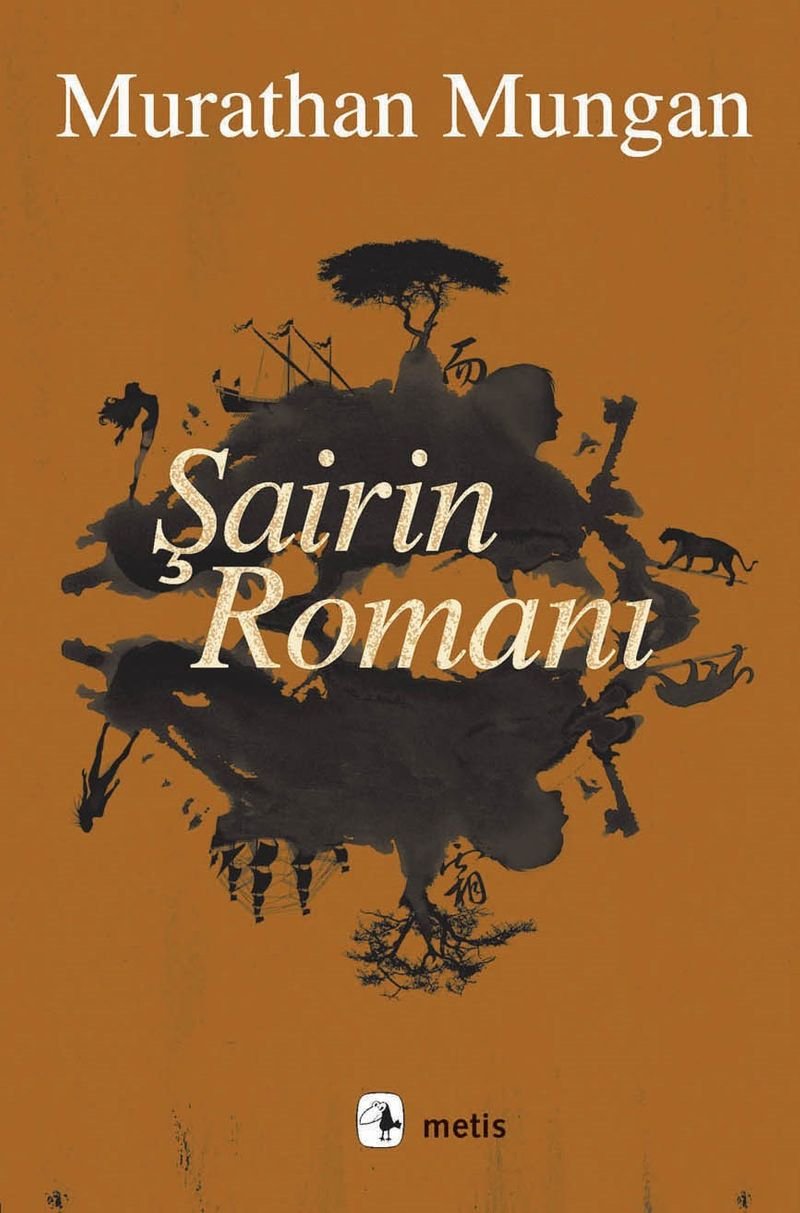
‘Şairin Romanı’ by Murathan Mungan
My first suggestion is Murathan Mungan’s Şairin Romanı (The Poet’s Novel). In the novel, old age is not a person’s gradual withdrawal from the world but a redefinition of their relationship with it. One of the novel’s key characters, Bendag, is a great poet. At the height of his fame and his art he left everything behind and lived far away for many years. Then, sensing that he is nearing the end of his life, he decides to return to his homeland. And so a journey home begins. But this journey is not made simply to arrive somewhere. The roads Bendag travels, the people he meets and the things he remembers bring the reader face to face with the marks time leaves on a person. This sentence of Mungan’s is very precious:
“He knows that, for those who are not afraid of dying, old age provides a useful sense of freedom.”
And to my mind the most important word in this sentence is “useful”. Because freedom is usually attributed to youth. When we are young, we think endless possibilities lie ahead of us. We can be whoever we want, go wherever we want, build whatever life we want. And yet is youth really as free a time as we imagine? We want to be liked, we want to be accepted, we fear failure. What others think of us is often at the centre of our lives. As we grow older, some of these expectations may lose their importance. We may realise that we do not have to win every argument, fit in everywhere or accept every invitation. We may even decide that we no longer want to play some of the roles we have kept up all our lives.
If I may make a reference to the question of clothes: beyond a certain point in life, rather than trying to build a new identity, a person can take off the identities they have worn for years. Perhaps, instead of thinking about which clothes you will be able to wear when you are old, you could think about which invisible clothes you will free yourself from.
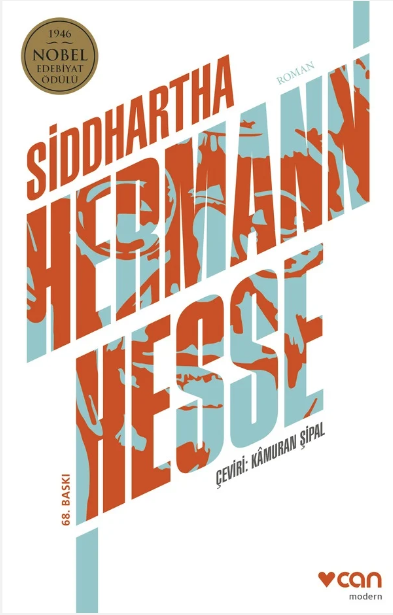
‘Siddhartha’ by Hermann Hesse
My second suggestion is Hermann Hesse’s Siddhartha. It is one of the books I keep by my bed. Life is treated as if it were a train journey with fixed stops: in our twenties we should do this, in our thirties that, in our forties something else. After fifty, certain doors should close. At sixty we should behave differently. So who set these stops and this timetable? Siddhartha is precisely one of those novels which show that life cannot be lived according to a timetable fixed in advance.
The novel’s hero, Siddhartha, is a young man who is not content with the life offered to him. First he sets out on a spiritual quest, then he experiences worldly pleasures, love, wealth, passion and disappointment. At different stages of his life he becomes very different people. Things he once cared about can later seem meaningless to him.
During the days he spends by the river, Siddhartha comes to understand how inadequate it is to think of time in the linear way we are used to. Because while the river flows constantly, in a sense it is always there. The water passing through it changes, but the river goes on existing. And so Siddhartha understands that the different stages of life are not cut off from one another. Who we were at twenty does not disappear, it lives on inside who we are at forty. Our childhood, our youth, our first loves, our losses, our courage, our fears are always with us. When we grow old, all of this is not simply replaced by an old person. So why should we suddenly put on an entirely different “costume”?
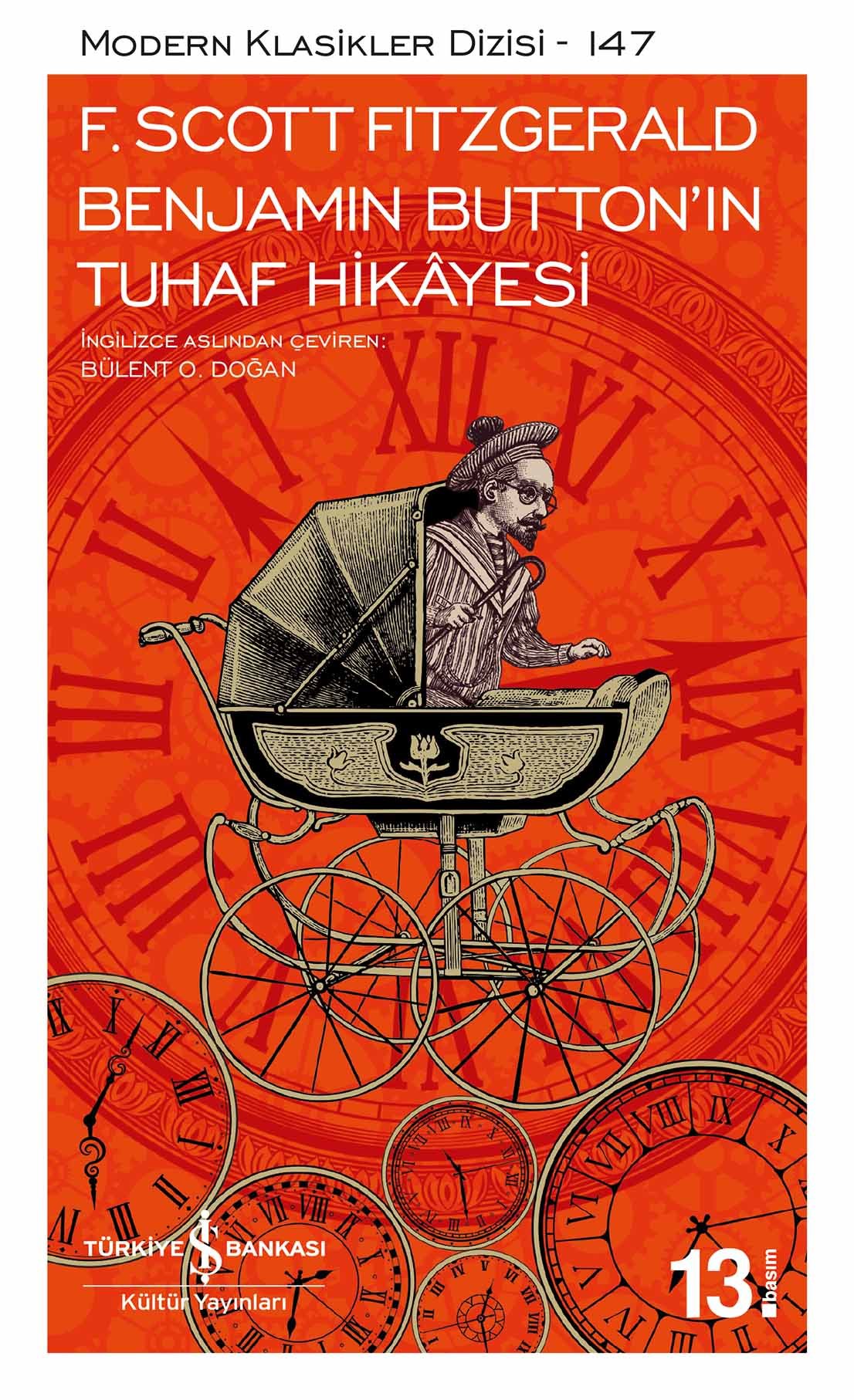
‘The Curious Case of Benjamin Button’ by F. Scott Fitzgerald
And my third suggestion is F. Scott Fitzgerald’s The Curious Case of Benjamin Button. A story that turns all the rules of ageing upside down. In this story Benjamin is born with the physical features of an old man. As his life goes on, his body grows younger. While others age, he is getting younger. While time flows in the same direction for everyone, Benjamin’s body moves the opposite way.
Benjamin’s life is built on a constant mismatch between his body and what society expects of him. Because society dictates to people how they should look at what age, how they should behave, whom they should have relationships with and which roles they should take on. Benjamin’s tragedy is perhaps the tragedy, today, of everyone who has grown younger through cosmetic surgery but is biologically older: others not knowing which category to put them in.
On the social clock, there are times considered appropriate for certain events in a person’s life: starting school, taking up a profession, marrying, having children, retiring, and so on. When we experience these events earlier or later than society expects, the reactions of those around us can change.
The same goes for our clothes and our behaviour. We know that a woman wearing a miniskirt at twenty and a woman wearing the same skirt at sixty are not judged the same way by society. And yet the skirt is the same skirt, the legs do the same job, and the wearer’s desire may well be the same too. What changes is the meaning others attach to that body.
We should not forget, however, that the measure of freedom is not being able to resemble the young, but being able to make our own choices. Just as we do not have to dress the way others expect us to, nor do we have to wear certain clothes to prove our youth.
I think reading Fitzgerald’s story from this angle is very valuable. Because as Benjamin’s body grows younger, his life does not get easier. Looking young does not resolve a person’s relationship with time. When someone cannot age in the same direction as the people they love, looking young cannot protect them from loneliness. Thanks to Benjamin’s life running in reverse, we can question how many of the age rules we take to be entirely natural really are natural.
At the end of these three books, I arrive at the same place. Growing old and playing the role of an old person are two different things. We will grow old. Our bodies will change. Perhaps we will not be able to walk as fast as before, perhaps some things will take more effort. To ignore all this would be to make ageing look easier than it is. But there is no necessary link between our bodies changing and our personalities, our desires and our relationship with the world being forced into a particular mould.
I hope my selection does you good. With love.