Dmitry Krymov in conversation: what is theatre for in an age of destruction?
Among the guests of the Istanbul Theatre Festival was director Dmitry Krymov with his production “Requiem”. Bringing together “Kafka on the Shore” and “Hamlet” and focusing on Ophelia’s final moments, Krymov set the playfulness of childhood beside the darkness of violence to create a poetic world. In our interview we talked about being an artist, theatre’s relationship with time, the borders between the world on stage and the real world, and what theatre might be good for in a destructive age.
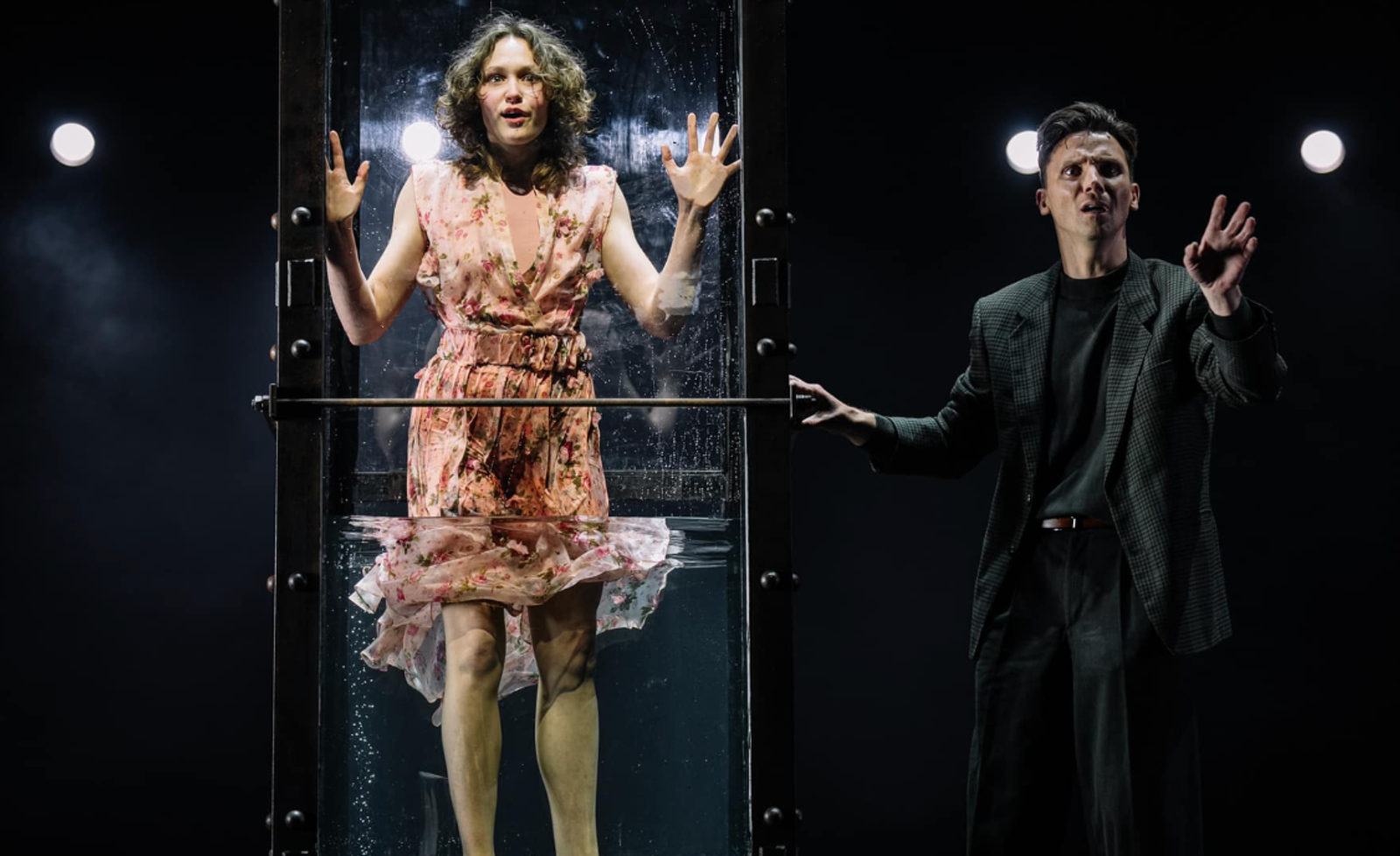
One of the guests at this year’s Istanbul Theatre Festival, held for the 30th time, was director Dmitry Krymov with Requiem. It is fair to say he held the audience spellbound that night. Bringing together Kafka on the Shore and Hamlet and focusing on Ophelia’s final moments, Krymov set the playfulness of childhood beside the darkness of violence and created a poetic world.
In our interview we talked about being an artist, theatre’s relationship with time, the borders between the world created on stage and the real world, and what theatre might be good for in a destructive age.
When you began working on Requiem, what was the first image that came to mind? How did it all begin?
As far as I remember, it was the moment Ophelia would appear inside it. I wanted to create a scene between Ophelia and Hamlet in which Hamlet does not have the strength to save her.
Why did you bring Hamlet and Kafka on the Shore together? What connects these two stories?
Because both are about children. Both are very well-known stories about human experience. And I wanted to tell the stories of children who face tragedy in this world. I thought it would be better to use different stories to do that.
It’s a bit like my fingerprint. I like bringing together things, plays and subjects that at first glance seem to have nothing to do with each other. Take your phone and this paper towel, for instance. What could the relationship between them be? Give me five minutes and (I hope) I can bring the two together in the same story and surprise you. Two completely different things can suddenly become part of the same world.
Throughout the play we see how violence gives birth to other forms of violence. Sometimes we think violence is far away from us, but in fact it is part of our everyday lives too. Where do you think violence begins?
Yes, violence is everywhere. You know, a dragon’s teeth appear in different parts of the world. But really they are all the teeth of the same dragon.
In Ophelia’s scene we see her speak with great excitement and hope about the future she will build with Hamlet. Yet at the same time she is slowly dying inside a tank filling with water. Hamlet, meanwhile, is preoccupied only with the troubles in Denmark. Do you think indifference, staying unmoved by what happens to others, is one of the greatest problems of our time?
Who, Hamlet? I didn’t want to tell Hamlet’s whole story. This is the story of Ophelia, who will never have children because she is about to die. It isn’t about Hamlet.
Your reading of Hamlet isn’t wrong, but it isn’t quite right either. Hamlet is a very complex character, and describing him that way would simplify him far too much. He isn’t just a foolish man without the strength to save a girl. But in my play this is not his story, it is Ophelia’s. Hamlet is like a shadow of Ophelia’s rich personality. When you make a play, the question of who Hamlet is becomes a whole subject in itself. For me, though, this is simply a small fragment of Ophelia’s story, of her last moments.
There is a difference between telling a story in a single sentence and writing a novel like War and Peace. If I wanted to create a world as vast as War and Peace, I would have to open my mind like Tolstoy and act like a god looking down on the whole world. But telling a short story doesn’t mean just passing on an anecdote either. It’s about catching a single sharp moment instead of trying to tell the whole story.
What I am really trying to ask is this: what do you think is the greatest problem of our time?
I can’t answer that question. It isn’t my subject. I’m a man of the theatre. I make theatre. I create one moment, then another, and I think about how to move between those two moments. I build a chain of moments that will keep the audience’s interest alive throughout the play. I want to arrange your time, say half an hour of it, so that you don’t get bored and don’t just sink back into your seat. You should be like a child watching cartoons on television: “Oh, what’s happening? What’s going to happen now?”
I know what matters in theatre, but I don’t know what the greatest problem in real life is. Theatre is the mirror of the world, but the problems of real life are something else.
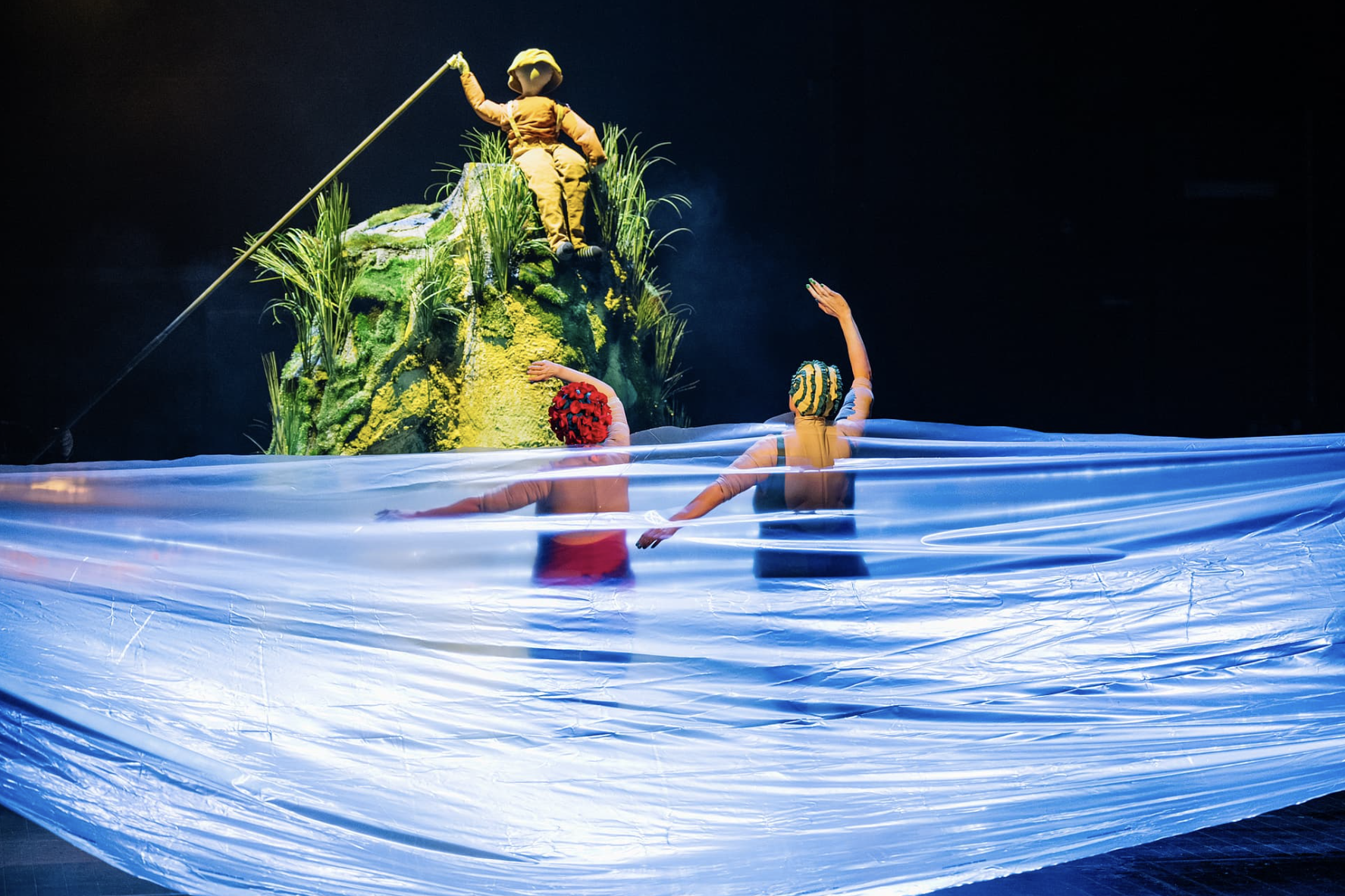
In your theatre the border between dream and reality often disappears. We see this in your choice of Kafka on the Shore too. Would you associate your theatre with magical realism?
I’m actually a very simple man. I read Kafka on the Shore from beginning to end and I loved the mysterious atmosphere of the section I chose for the play. I’m drawn to trying things I haven’t done before. Imagine, for example, a more or less realistic scene between two people. They are just talking, and I find that conversation deeply interesting. Even though not much is happening, my interest keeps growing.
As a theatre director, my job is to keep the audience’s interest alive. Imagine two people talking for 15 minutes. One says something, the other replies. Nothing extraordinary happens. For me the real challenge is to make that conversation interesting for 15 minutes without boring you. To keep the fire of theatre burning. And without resorting to tricks. Just two people talking. They could talk about a paper towel, for example. “This is a paper towel.”, “How many paper towels?”, “No, just one.” And they go on like that for 15 minutes. My dream is to hold your attention with something utterly simple, without any tricks at all.
Yes, I think the play is about childhood and children, but in a way you are like a child too. Rather than trying to be a great theatre director, you seem to enjoy playing on stage. For you, theatre is a kind of game as well. You take pleasure in the act of creating itself, without trying to explain everything.
Absolutely. That’s why I make theatre.
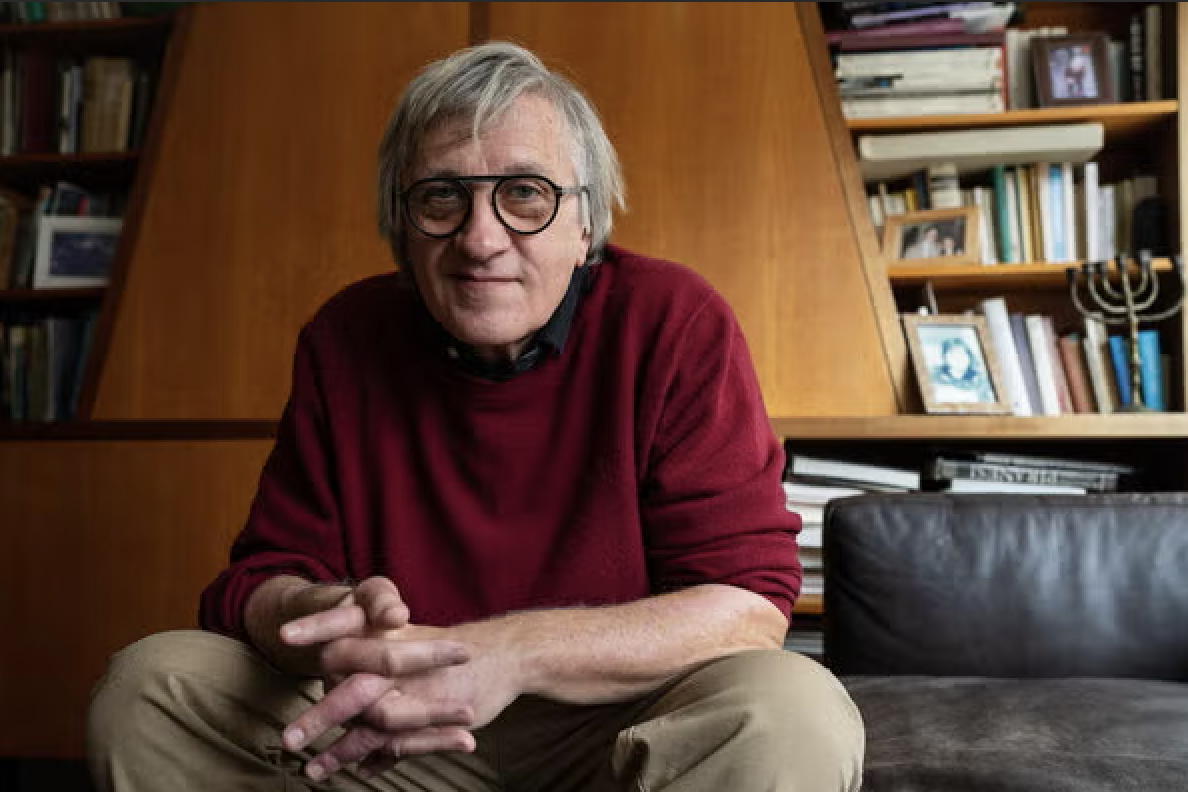
You are also a painter. How does painting influence your theatre? How do you see the relationship between painting and theatre?
That’s a very interesting question, because my answer may not be what you expect. People think that because I’m a painter, I first imagine the stage design and then build everything else on top of it. No, it isn’t like that. Although sometimes it does happen that way, and there’s nothing wrong with that.
But the relationship between them lies somewhere else. When you paint, you create a world inside a frame, on a canvas. A world made of colours. You can buy colours at the supermarket, but they are only colours. Without you they mean nothing. Then you start to cook something. You bring the colours together, you work on the nuances between them. And among those colours a world begins to appear.
As Eisenstein said, cinema is not simply one image followed by another. What matters is that something happens between those images. It’s the same in painting. Red and green on their own are not a painting. But when they sit side by side, something appears between them. A world. A world you can jump into.
The same is true in theatre. Take two simple lines, for example: “Have you got any money?” “No, I haven’t.” That isn’t theatre yet. But then you start asking questions. Why are you asking for money? Why does the other person answer like that? What do they want? What is the relationship between them? You begin to discover the nuances, the feelings, the temperament. And when you start creating a story between those two simple lines, you also start building a world. That’s where the relationship between theatre and painting lies. You try to build a world with your soul, your mind, your hands, your temperament, with everything you have. Not the real world. You may start from our world, but in the end another world, another reality, emerges.
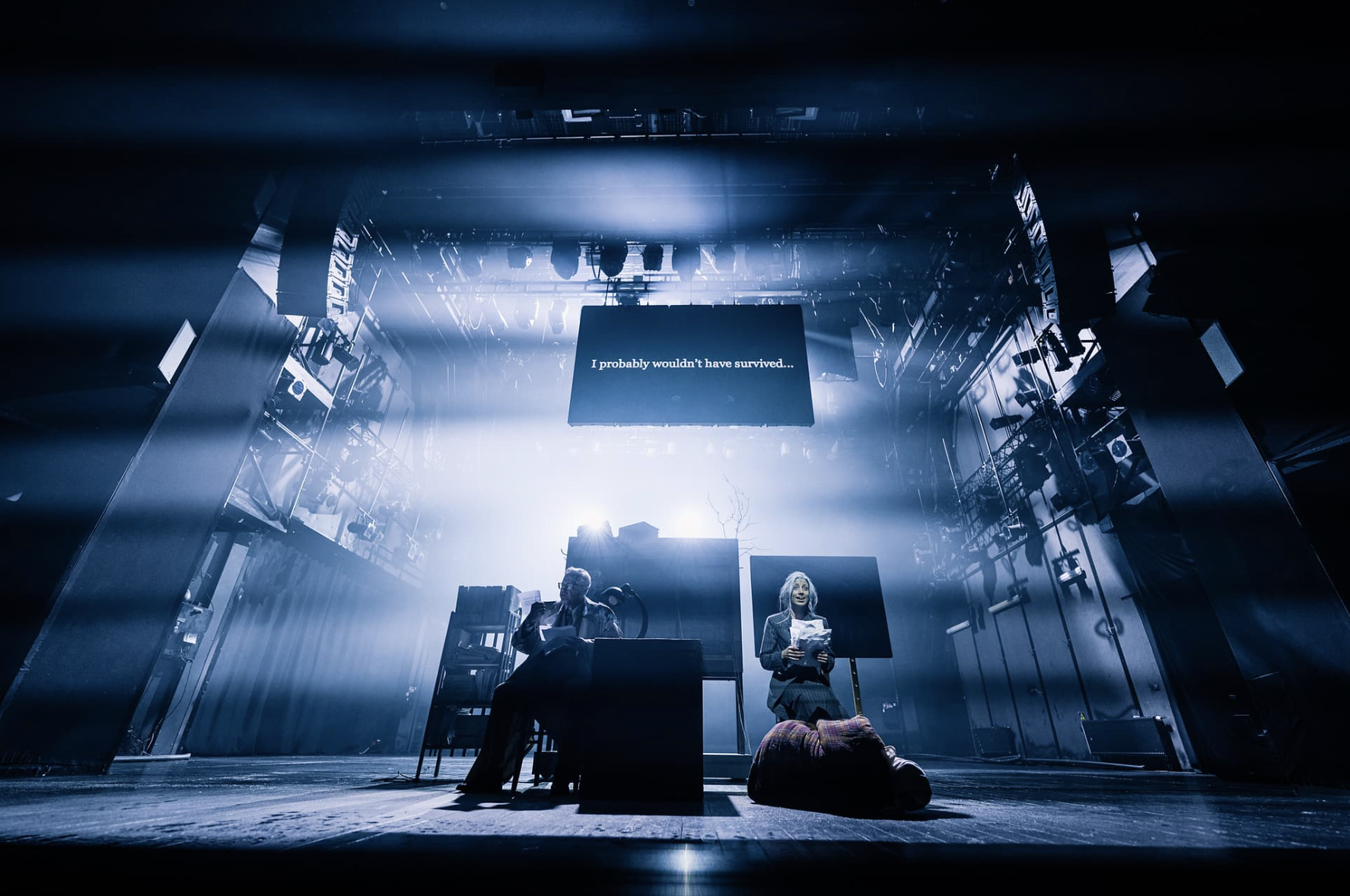
Theatre is an art made here and now. Every performance is different. Yet today digital technologies and artificial intelligence are increasingly being used in theatre too. What do you think about this change?
I’m not one of those who hate artificial intelligence. AI is a magic wand. The real question is: who is holding the wand? What do they want to do with it?
Think of it like photography. Let me give you a very simple example. You photograph a naked person. One photograph is pornography, while another photograph of the same naked person is art. What is the difference? The same person, the same subject. The difference lies in the idea behind the photograph, in what you want to do with it. I recently finished a large project made using AI. A one-hour animated film. I have great respect for this technology. It all depends on what purpose you use it for. In theatre, of course, every night is different. You never know what will happen, whether that connection will be made or not. Yesterday you saw a good performance because a good connection formed between us and the audience. The audience began to understand us. Theatre emerges between the audience and the stage. Just as, in painting, something emerges between the colours. And sometimes that connection isn’t made.
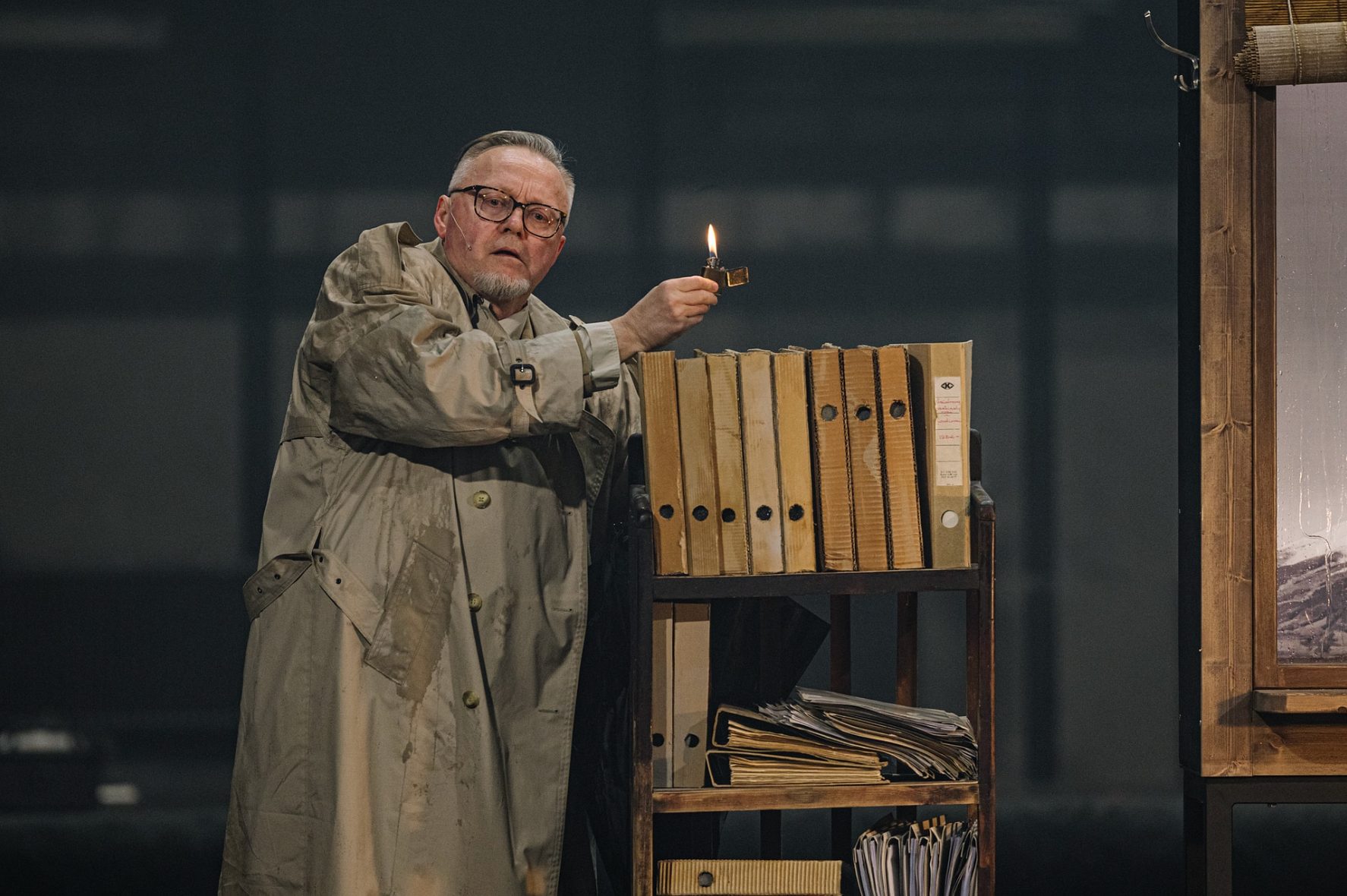
I also see Requiem as a play about exile. Not only exile from a country, but also from childhood and from the past. Does this have anything to do with your personal experience? How did leaving Russia change your world?
This theme is inside me, so of course it will be in my work too. If I told you the tale of Little Red Riding Hood, for instance, that too would be a story about exile. The little girl leaves her grandmother behind and goes into the forest. You see, for me even that is enough to make me cry. I could start crying right now. I want you to feel what it means to go into the forest while your grandmother stays at home. Because today many people cannot leave the country, as their grandmothers and parents are still in Russia. Some do leave, but their parents stay behind. A young friend of mine, whose parents are more or less my age, left Russia. He told his father that if anything happened to the father, he would not come back. And his father accepted it. That is the fairy tale. It turns up everywhere. So it doesn’t matter what I’m talking about. What matters is who you are.
Yesterday you said you are a pessimist. You also said that theatre cannot stop wars but is like a flower in a cemetery. And cemeteries need flowers. Do you think the greatest works of art emerge in the hardest times?
Not necessarily. But there is something an actor once said. I don’t remember who it was, but it was rather clever. The question is: who wins the struggle between the devil and kindness? Kindness, of course, everyone says. Isn’t that so? But no, the devil wins. And the answer is this: kindness still remains kindness.