Remembering Manuel Çıtak: ‘A man who loved life so much lived it through his viewfinder’
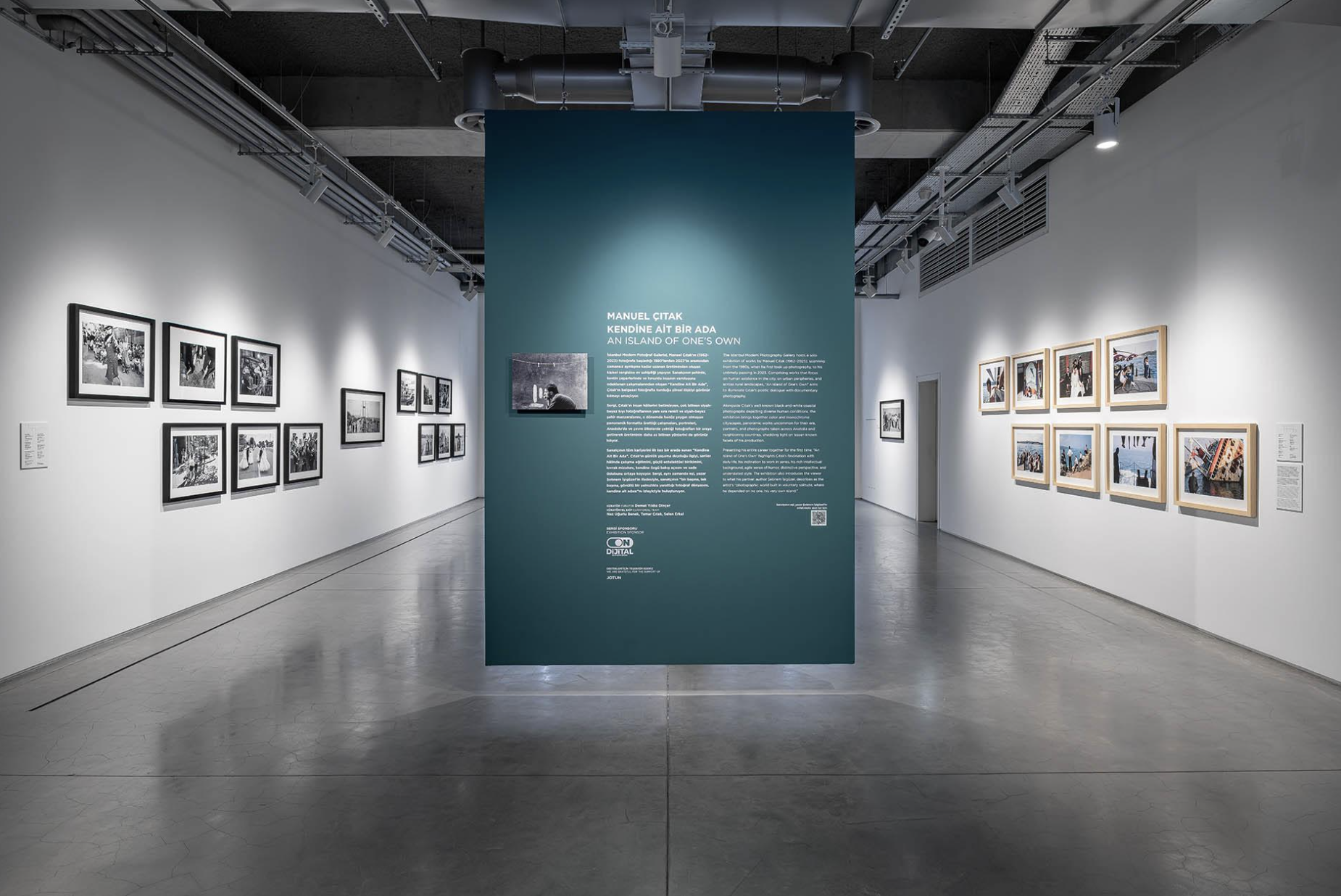
Istanbul Modern, the city’s museum of modern art, is hosting “Kendine Ait Bir Ada” (An Island of One’s Own), the first retrospective of the photographer Manuel Çıtak (1962 to 2023). We look back on the legacy of Çıtak, one of the leading modern figures among Armenian photographers, who brought fresh air to documentary photography in Türkiye from the 1990s onwards and kept working until his untimely death.
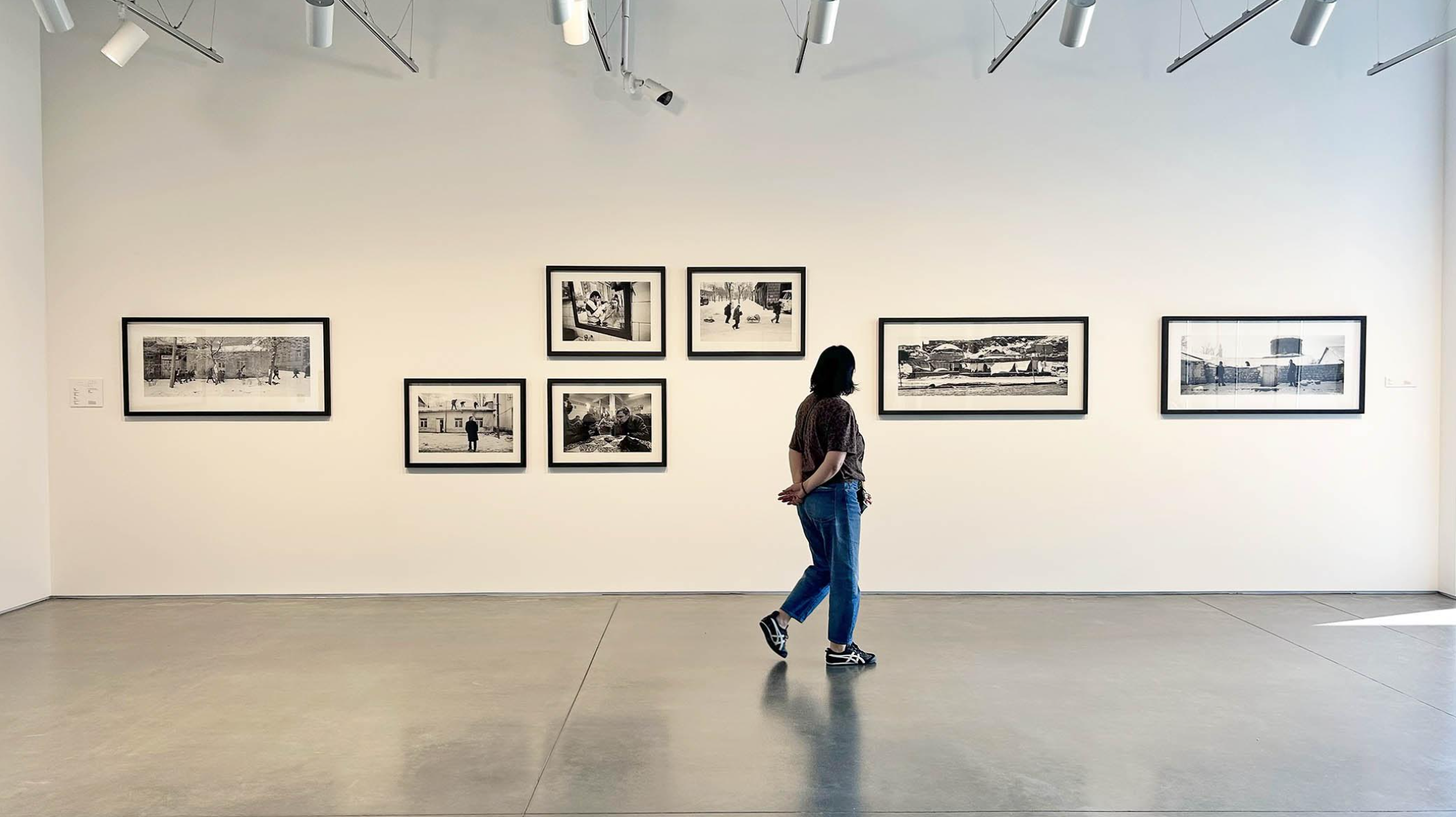
This is a belated ‘in memoriam’ for the photographer Manuel Çıtak, whom we lost in 2023. But the delay comes with a fine excuse that happens to fall right now: the retrospective Manuel Çıtak: Kendine Ait Bir Ada, which opened on 5 November at the Istanbul Modern Photography Gallery. The exhibition brings together, for the first time, the photographs Manuel took throughout his working life.
The oldest work in the show dates from 1989; the most recent from 2019. Manuel’s career in photography, however, was longer than the span these two dates mark: more than 40 years. But one thing these dates bring to mind is that he never had a solo exhibition in that period. During those years he took part in a few group shows, and his only solo exhibition, islomania, opened in 2022, a year before his death.
Exhibitions are, of course, no measure of a photographer. Still, many photographers who took up photography in the late 80s and early 90s, myself among them, regard him as a ‘pioneer’; in our generation he was often called ‘the best in Türkiye’. What is more, Manuel was a photographer with subjects on his mind, which he conveyed through long-term projects and series. If you were asked today to put together a coherent photography exhibition, I do not know how many photographers you could find who have worked on so many independent subjects, each so deeply and with such variety within its own bounds.
My point is not the exhibitions Manuel did not have, but his temperament.
The curator of Kendine Ait Bir Ada, Demet Yıldız Dinçer, head of the Photography Department at Istanbul Modern, says he is “one of the most striking figures in Türkiye’s recent photographic history; yet a photographer who, though very well known among specialists in the field, is relatively little known to the wider public” .
In their introduction, the curators of his first exhibition, islomania, Refik Akyüz and Serdar Darendeliler, say something similar: that he is “a mysterious name, especially for the new generation of emerging photographers and for art lovers, even though he had an intense practice”.
Photography people who share the view that Manuel ‘never gained the recognition he deserved’ explain why in similar words.
According to Orhan Cem Çetin, the reason is that he ‘felt no need for it’. In his editor’s essay “İyi Fotoğrafçı” (The Good Photographer) in the book Manuel Çıtak, published in the final days of 2025 in the Eczacıbaşı Photographers Series, Çetin writes of “his making almost no effort to put himself forward, or to cry out his testimony through his own individuality” .
Kemal Nuraydın, one of the first photographers at Atlas, a Turkish geography and travel magazine, says of his close friend, “He had no interest in pushing his work in anyone’s face”:
“Manuel never hesitated to share his knowledge, or even his equipment. Because for him photography was not about keeping secrets but about opening doors. He had no interest in, or ambition for, being well known; he was after meaning. Like a craftsman, he would look at life through a frame he had worked carefully, stitch by stitch, capture it with his camera, and leave it in a corner for those who wanted to see and understand.”
Where the ‘island’ lies
It is not only photographers. The journalist Ruşen Çakır, for instance, says of his old friend: “He never sought fame or anything like that, and he didn’t push his work in our faces the way some do. Although he had every means and the connections for it, he chose to stay in his own corner” .
The writer Şebnem İşigüzel, Manuel’s wife, says this:
“Because he had created his own universe in photography. A photographic world that, apart from what he took into his frame, depended on no one beyond light, technique and luck, one he created alone, entirely on his own, in a chosen solitude: an island of his own.”
And this is where Manuel’s ‘island of his own’, a phrase from İşigüzel’s pen that gave the exhibition its name, sits in the world.
The story of the exhibition and the book
That is why I felt great joy and excitement from the moment I heard that his book had been published and that a retrospective was on its way. And straight after, I wondered how it had come about. Whose idea was it? And what state was his 40-year archive in, and what kind of work had gone into producing these prints?
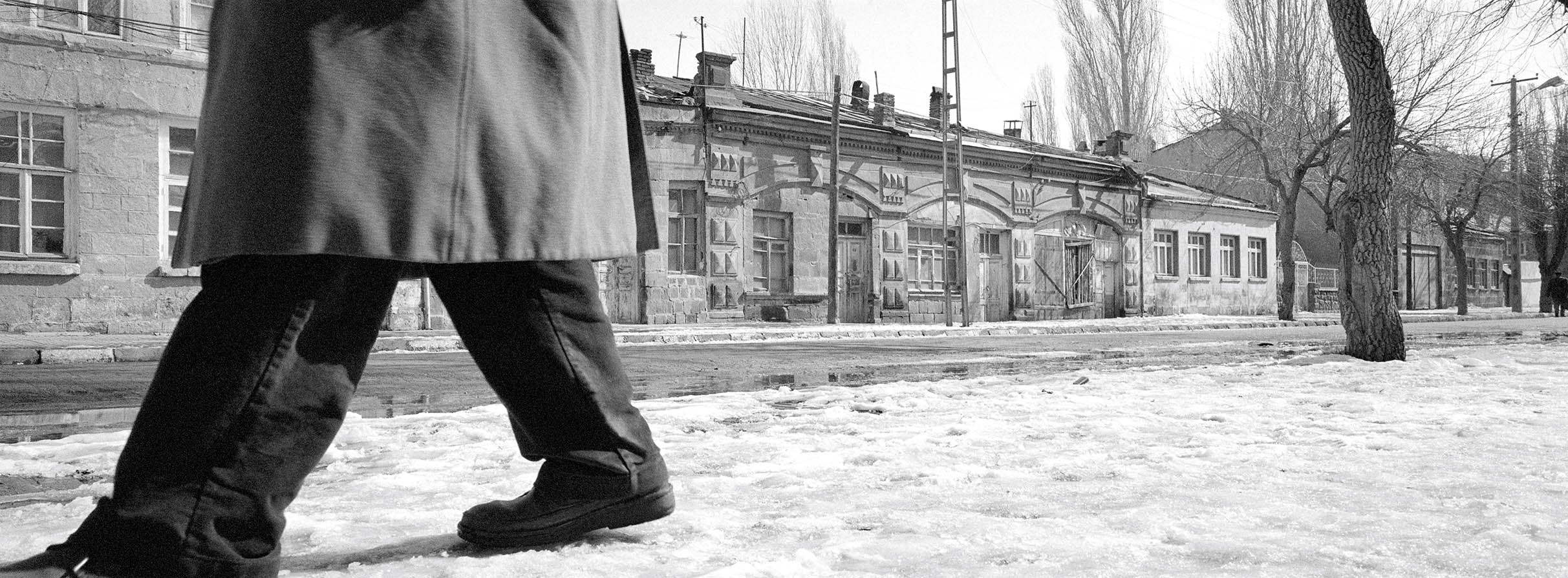
Manuel’s photographs had been in the museum’s photography collection since Istanbul Modern was founded. The idea of doing something about him at the museum emerged as a shared resolve right after his death. “Many people know his photographs of the crowds at Kilyos or of Kars, and his portraits, but we had never before seen together that they came from the same eye, and how they connect to one another. The starting point of the exhibition is the wish to present this many-layered body of work together for the first time” , says Demet Yıldız Dinçer, answering Aposto’s questions.
“Manuel had prepared his archive almost as if for a project like this. He built it with the meticulousness of an agency: the slides were sorted, with notes along their edges. The digital archive too” , says Orhan Cem Çetin. Once work began, the archive’s guides within the family stepped in: “Şebnem cleared the way for us, telling us ‘He was working on these subjects’, so we knew what to pursue”, Orhan Cem Çetin continues. For Şebnem, his wife, “was Manuel’s companion when those photographs were being taken, too.”
“Tamar’s command of her father’s archive, and the way she would trace a photograph like an archaeologist when needed, greatly enriched our work” , says Dinçer, describing the contribution from within the family. Çetin and Dinçer say that in choosing works for both the book and the exhibition they adopted the principle of ‘staying true to Çıtak’s own choices’. For Manuel had already made his selections with possible use in mind. “Which frames he printed, which he put into a series, guided us. When making new prints from the negatives, we also tried not to go beyond the decisions he made in his lifetime. On the other hand, we didn’t want to show only the well-known photographs” , says Dinçer.
How we leave things behind matters as much as what we leave. Which of us has an archive orderly enough to help those who come after? And for which of us does someone else know the subjects we work on, or what is in our archive? How much do we share what we make with those closest to us, with our families? Here too, Manuel shows us something.
A beach was never just a beach
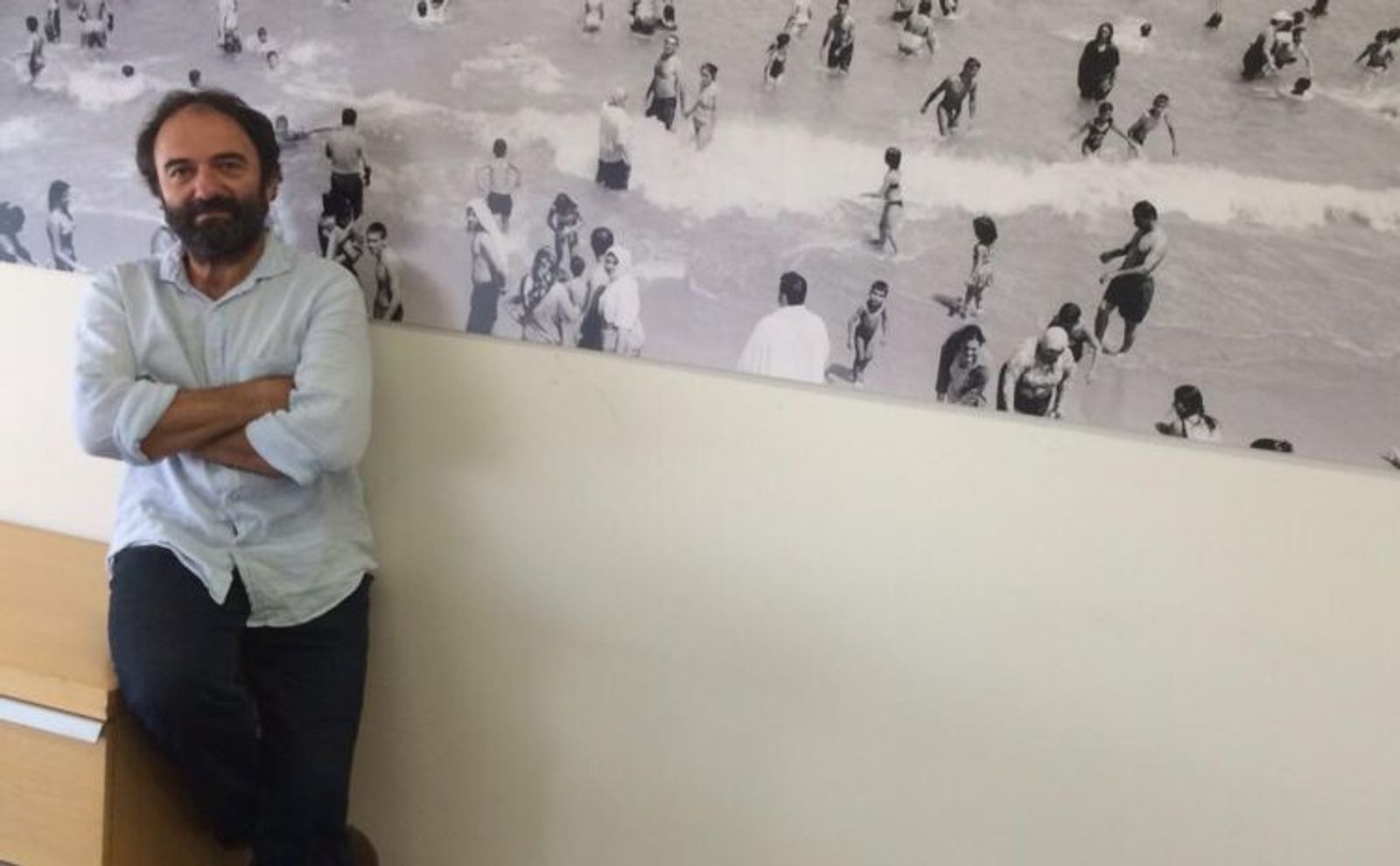
Manuel’s identity as a photographer and his professional journey are conveyed so beautifully in the three essays in the exhibition catalogue, which I have quoted at times in this piece, that nothing more need be said. But I am sure the frames that moved us all, and that stuck like nails in photographers’ heads in particular, are, unsurprisingly, the photographs he took on the beaches of Kilyos, on the Black Sea north of Istanbul, in the second half of the 1990s.
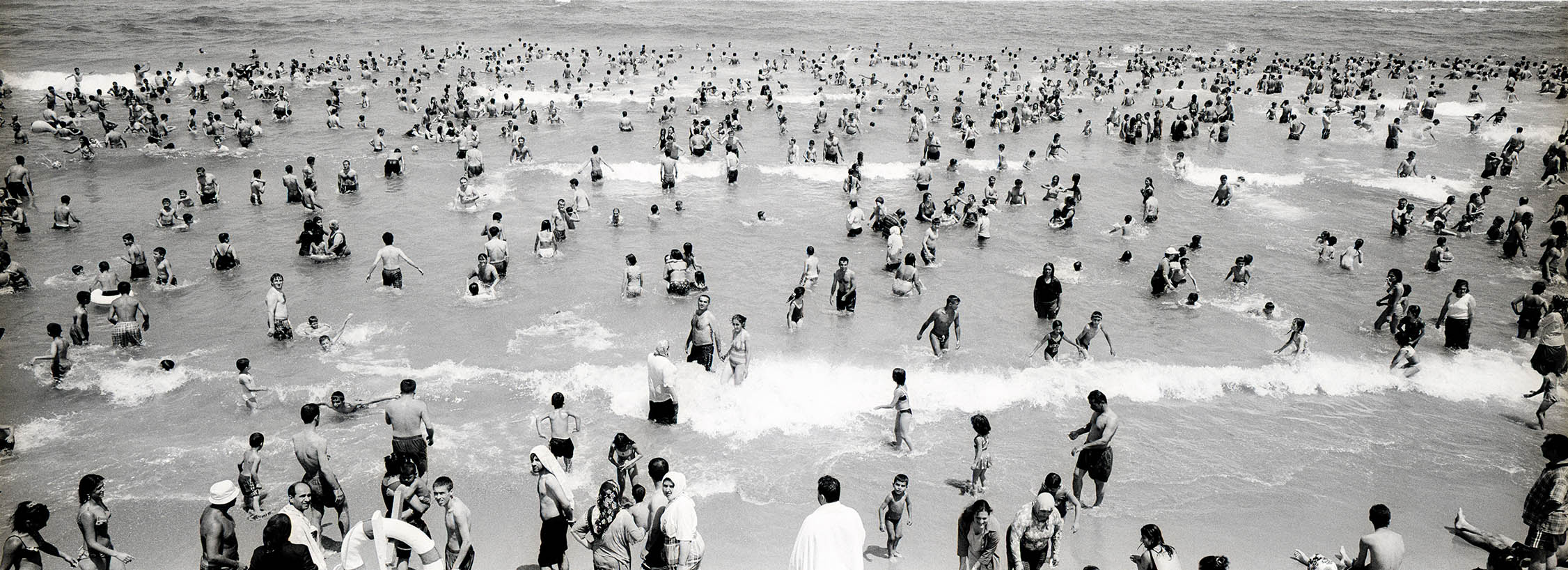
Of this series, Şebnem İşigüzel says: “No one had thought of photographing that crowd, no different from the sand by the sea, or, as an artist friend put it, had managed to fit it into the frame”.
It really was so. It is very hard to say this about photography, but those frames had never been taken before. In these works, which often tell more than one story in a single frame, Manuel, as in many of the pictures from his early period, was all but invisible among people in every kind of state amid a crowd of apocalyptic proportions. But who would have thought of it? After these photographs, a beach could never again be just a beach for a photographer in Türkiye; a place expected to suggest peace and relaxation became a place of searching and unease.
The cost of the profession
Becoming a photographer in Türkiye is a costly decision. Outside advertising, the market is so narrow it barely exists; editorial photography in particular lends itself to rights being trampled on, and employers are very few. As a journalist who worked as photo editor at Atlas magazine, I know at first hand the hardships photographers endure under this heavy cost; many had to give up the profession. Very few photographers in the country have managed to survive by producing only what their hearts desired.
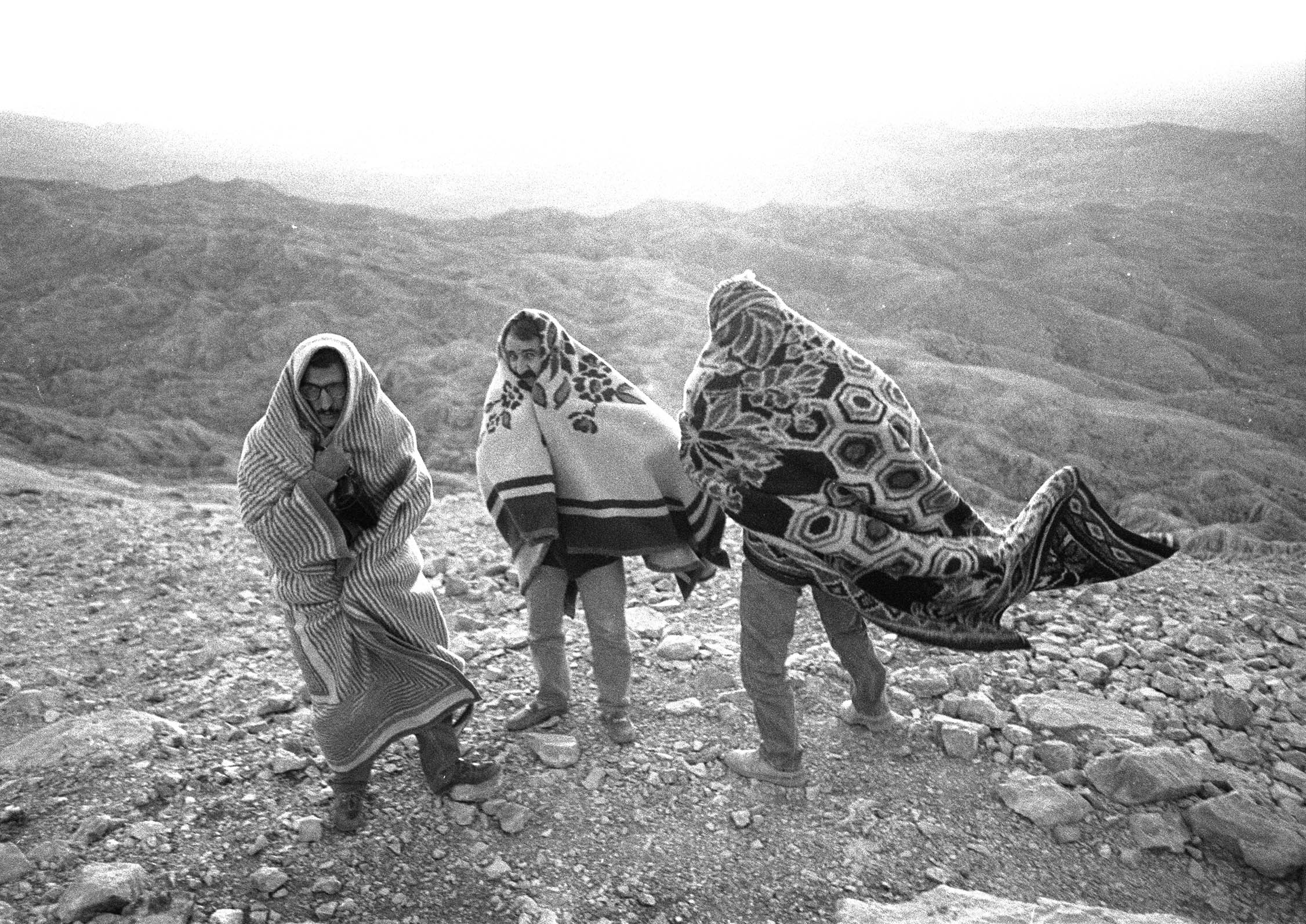
Alongside the work we have seen and know, Manuel, inevitably, earned his living largely from advertising photography. Yet he was a man who could draw a firm line between the work he had to do and the work he wanted to do. Perhaps he paid the cost of the profession by also taking on work he did not want. But he did not surrender his photography to the comfort of the jobs that paid. He was able to preserve, perhaps without any particular effort, the original identity that excited him, inspired us and made him who he was. And in this, too, he held a special place in Türkiye.
Among the reasons this was possible, alongside Manuel’s interest in technology, was that he was a photographer at home both indoors and on the street. He had the awareness to keep these two spheres apart and the skill to do justice to both. At the talk on 11 November, Şebnem İşigüzel shared a memory of how Manuel’s artist’s eye showed even in his commercial work:
“When mobile phones first came to Türkiye, he did a black-and-white advertising shoot for Ericsson at the Galata Tower. He shot some really extraordinary things. The agency here didn’t understand the photographs, but the Swedes got it at once, and congratulations came to Manuel from there. ‘You have made great art,’ they said. One of the company’s top executives even took one of the photographs to hang in his office. Yes, this was commercial work, but Manuel could give it a feeling, a way of seeing.”
Manuel’s light box
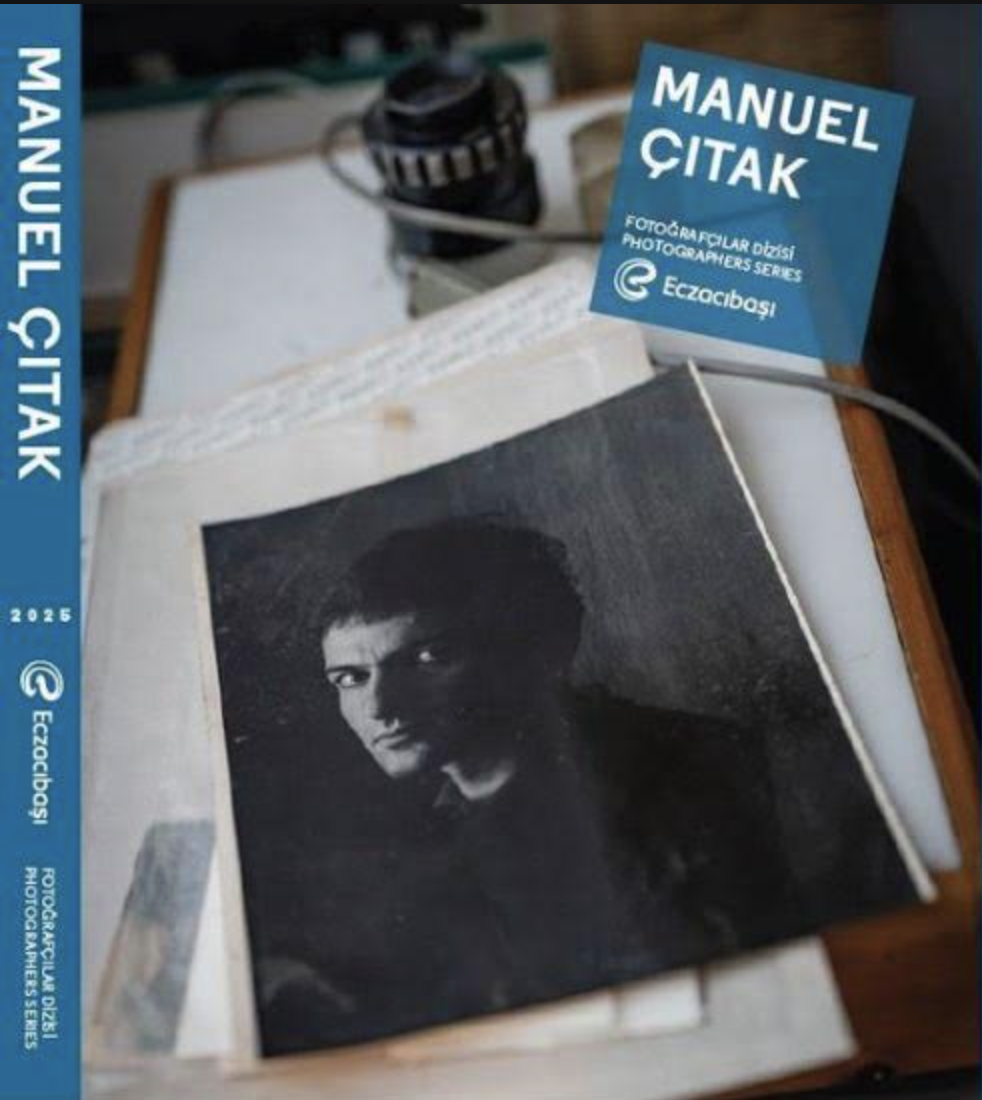
I met Manuel in 1995, when I was photo editor of Skylife, the Turkish Airlines in-flight magazine. (So I was 23 and he was 33.) As I was coming from Ankara at the weekend to show him my photographs, he had invited me to his home. And I was enough of an Ankara boy that this was my first sight of Cihangir Caddesi. That day I was very taken with the light box he had made himself, on which we laid out the slides (positive slide film) to look at them. He told me how he had made it, and following his example I made one too. Years later, when I saw this light box in the cover photograph of Manuel’s book in the Eczacıbaşı Photographers series (a photograph by Orhan Cem Çetin), I was thrilled. I remembered that I had learned at the master’s hand.
As far as I remember, Manuel and I never again met by appointment. We ran into each other sometimes on some stretch of Türkiye’s coast, sometimes in the studio, sometimes in the street. He was usually not alone, as he loved spending time with his family. But when he was on his own, we found it hard to part. I am not exaggerating: these were chance meetings at a pedestrian crossing that turned into conversations of half an hour or 45 minutes. Photography barely made its way into these conversations. We had so many interests in common! I think we talked most about building, carpentry, tools and gear .
The last time I ran into him was a few months before his death, in İnönü Park in Maçka. He had heard that a tree species (Celtis australis) that he wanted to plant in the garden of his house in Ayvacık grew in this park, and had come to see it. Since I knew the tree, we found it together and talked about it.
What struck me most in Şebnem İşigüzel’s essay “Kendine Ait Bir Ada” was this:
“The crowds he stood neither inside nor outside of, in which he made himself invisible, the uncanny landscapes he gazed at alone: a man who loved living so much was, for the sake of photography, living life almost entirely through his viewfinder.”
Orhan Cem Çetin, editor of the only two books of Manuel’s work, published in his lifetime and after his death, laments “realising, with sorrow and regret, that we never set aside time for an in-depth analysis of his photography, and hardly talked about his work, his series, the human conditions he pursued” .
Yet not talking about photography with him feels so familiar to me. I would have liked, once again, to talk with my ‘master’, so passionately in love with life, about nature, trees, the heating system he designed for his summer house in Ayvacık, the meals he cooked for his family, the caravan, stone, wood, bicycles, all the glorious trivia that is life itself.
Work done well excites people and spurs them to create. Manuel carries on doing this through his work, which is only now, after his death, meeting the public as a whole. Good people give us the will to live. Good people whose appetite for life, whose curiosity, shows in everything they touch. That never ends.