Emin Hitay: “Real support means letting the artist stay in the room”
The young artist support programme that Emin Hitay, founding chairman of the Hitay Foundation, began in 2013 by taking three art students to Art Basel has become an international competition bringing together students from eight countries. We talked with Emin Hitay about how to go beyond giving an artist their first opportunity, the limits of international visibility, and ways of making young people’s artistic practice sustainable in Türkiye.
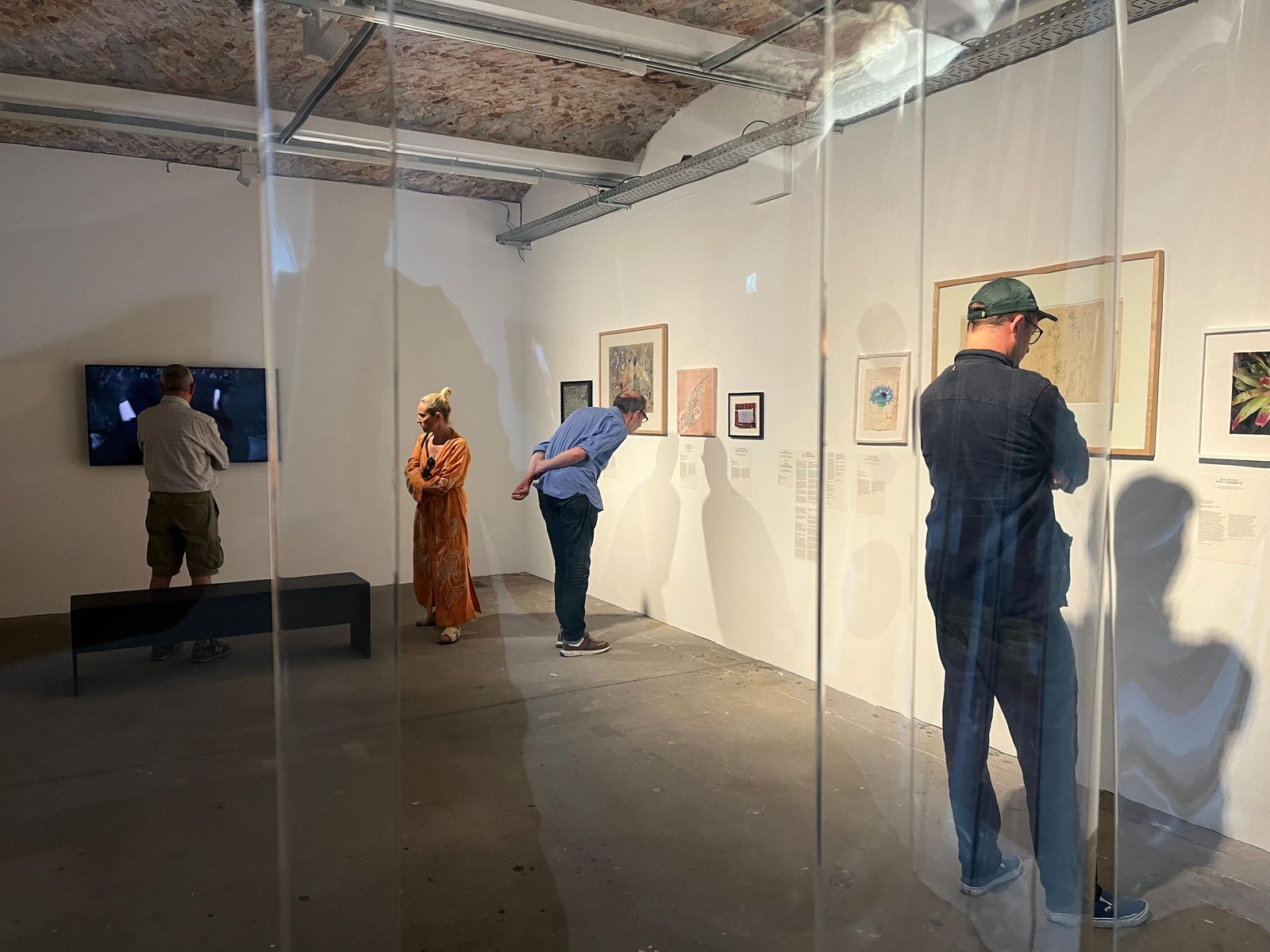
The story of the Hitay Foundation’s programme for young artists began in 2013, when there was not yet a foundation or an international competition. Through a personal initiative by the collector Emin Hitay, three art students were sent abroad to see Art Basel in person. Over the years the programme grew: the competition, opened last year to university students in Türkiye, expanded this year to eight countries in partnership with the Organisation of Turkic States and received around 600 applications. With this year’s winners, the number of young people who have seen international art events such as Art Basel, the Berlin Biennale and the Venice Biennale in person thanks to the programme has reached 50.
The foundation’s founding chairman, Emin Hitay, has extended his relationship with collecting, which began when he bought his first work in 1986, towards the conditions in which artists produce. Today the foundation’s competition aims to give aspiring young artists the chance to see the international art world first hand, to meet peers from other regions and to look at their own work from the outside.
- But as the competition grows in scale, a more fundamental question arises: is taking a young artist to Venice or Basel enough to make a lasting difference to their life in art?
This is the point Hitay keeps returning to as he talks about the project. For an artist who had a studio, teachers and a circle as a student, the few years after art school are among the most fragile, when that support structure largely disappears. And there is a distance to cover between giving someone a first opportunity and creating the conditions in which that opportunity can turn into a lasting effect.
We talked with Emin Hitay about how an initiative that began with three students in 2013 became an international platform, the relationship between collecting and founding a foundation, the tension between the local and the global, and what young artists in Türkiye need most today in order to keep making work.
The student support programme you started as a personal initiative in 2013 has, over the last two years, become first a national and then an international art competition. Do you systematically follow where the young artists you have supported are today? How do you assess the impact of the competition, and later of the foundation?
When we set out in 2013, our aim was not simply to run a project but to make room for talent and for different ways of thinking. Years have passed, and with this year’s winners the number of our students who have gained international art experience has reached 50. They have had the chance to see the world’s leading art events, such as Art Basel, the Berlin Biennale and the Venice Biennale, in person. Seeing those young people gain experience on the international stage and build their own artistic language independently is our greatest motivation today. Rather than tracking them with a systematic list, we prefer to keep an organic, genuine connection. We are still in touch with many of them. We follow some of their exhibitions, and talk with others about their new work.
To my mind, the foundation’s greatest impact is this: being able to give an artist at the start of their career the confidence of hearing “Your work, your way of looking at the world, is valuable, and we stand behind it.” Another sign of that impact is that a competition which began with a single university has become an international platform receiving around 600 applications from eight countries.
For us, though, the most tangible result is when a young person starts to see their own work with different eyes and can say, “I can be part of this world too.” I believe that confidence has a multiplier effect on an artist’s story of success.
The competition began in 2013 with three students experiencing Art Basel and has become an international platform bringing together young artists from eight countries. Beyond the growth in scale, has its purpose changed too? In what ways is today’s structure different from the one you set up in the early years? Are there things you are afraid of losing as you grow?
The scale has grown and our reach has widened, but the essence has not changed at all. The excitement in the eyes of those three students in the first year, discovering the international art world, is the same experience young people from eight countries are having today. The aim is still for aspiring young artists to get to know the international art world in person, beyond the pages of books. What has changed is who they share that experience with. In the early years we started with students from a single university. Last year we opened the competition to all university students in Türkiye, and this year, in partnership with the Organisation of Turkic States, we reached eight countries.
The one thing we are determined not to lose as we grow is the sincerity of those first days and the direct contact we have with artists. We are no longer a structure that simply looks outwards from Türkiye. We have built a multinational, two-way ground for dialogue, where different regions look at one another and interact, in Türkiye and around the world. What we watch most closely as we grow is that we do not lose our care.
As the number of applications rises, there is a risk that each file turns into a number. That is why we assessed every application with an international jury of 12, giving each entrant the time they deserved. We want to remain not a bureaucratic institution but a dynamic companion that keeps art alive.
As a collector you are interested in the artwork itself, and as the founder of a foundation in the conditions under which artists produce. How do these two perspectives feed each other, and are there moments when you feel a tension between the two roles?
Rather than a tension, there is a perfect complementarity here. As a collector, you connect with a work’s intellectual depth, with the power of that finished moment. As the founder of a foundation, you concern yourself with the ecosystem that work needs in order to exist, the workings behind the scenes. When I bought my first work in 1986 it was a purely instinctive act of ownership, but over time I realised that buying the work is not enough. You also have to support the minds that will produce such work, the new generations. One is about preserving yesterday and today, the other about actually building tomorrow.
Of course, the two perspectives can sometimes pull in different directions. The collector’s eye looks at finished work, whereas on the foundation side you are usually faced with a potential that is not yet fulfilled. It is easy to look for what is missing in a student’s work; what matters is being able to see where that work could go. That is why it is important to us not to leave the selection to our own judgement alone, and not to confuse the collector’s taste with the foundation’s responsibility. The competition is judged by a jury of academics and artists from different countries.
Still, the two roles draw from the same source: the excitement of witnessing good work come into being and an artist develop.
Enabling young artists to see an international fair or biennial also gives them a distance from which they can reassess their own work. In your view, which is the most transformative experience for a young artist’s career: meeting other artists, seeing different places, entering a critical circle, or being able to look at their own work from the outside?
Everything you list is very valuable, but I think the most transformative is learning to breathe easily inside the international art ecosystem. Platforms such as the Venice Biennale do not just show a young artist new work; they show them where their own practice sits within this vast global narrative. Meeting other artists, their peers, makes the experience especially powerful. Seeing someone of the same age, raised in another country, give a completely different answer to the same question makes you confront your own work and lets you see it from the outside.
This year’s 10 winning students are taking part in a special discovery programme organised as part of the 61st Venice Biennale, where they will share the same space with young artists from different countries. I believe the conversations they have with one another at the end of the day will change them as much as what they see at the biennial. Being able to look at your own work through a world-class lens broadens an artist’s professional vocabulary, their ability to make an argument and their self-confidence. The fair or the biennial provides a stage; the real transformation happens among the young people asking each other questions in front of that stage.
A tension is often drawn today between “drawing on the local” and “being part of the global art world”. You see the two not as alternatives but as complementary. So what do you think a young artist from Türkiye should not lose when they gain international visibility?
To me, these two are not alternatives but each other’s lifeline. The most critical thing an artist from Türkiye should not lose on the international stage is their own distinctive language, their cultural references and the question they asked when they began the work. Trends change very quickly, and producing work according to what is popular at the moment or to commercial templates can make an artist ordinary. The real strength lies in being able to translate their local codes, concerns and collective memory into a universal, contemporary and intellectual language the whole world can understand. Originality is born precisely from this balance between being rooted and being open to the world.
International visibility brings expectations with it, and it is very easy for an artist to drift towards making the work others expect. Yet what makes them visible is often their own story. Seeing painting, sculpture and photography students from eight countries on the same platform this year reminded me of that again. Each of them carried the light, the materials and the memory of their own region, and it was this difference that enriched the competition. Preserving the local and telling it in a form everyone can read is the most valuable capital an artist has in the long run.
The structure set up this year with the Organisation of Turkic States also creates an interesting ground for rethinking the idea of shared cultural heritage through contemporary art. Is having a common past enough to bring artists closer together, or does the real value emerge when this shared heritage is reinterpreted by different generations and regions?
Having a common past is a very strong starting point, a precious kind of acquaintance. But what brings art into being and carries it forward is not nostalgia. The real value emerges in how this shared cultural heritage is reinterpreted by today’s social changes, by technology and by new generations. This year, in partnership with the Organisation of Turkic States, students from Türkiye, Azerbaijan, the Turkish Republic of Northern Cyprus, Kazakhstan, Kyrgyzstan, Hungary, Uzbekistan and Turkmenistan came together in the same competition. There is of course a shared memory, but in each region the young generation reads that memory from a different place.
In some of their work tradition appears as a material, in others as a subject to be questioned. What is valuable is that these different readings sit side by side. Regions that have been left outside the centre have very fresh narratives to offer to global art history. The point is not just to commemorate the past or ensure geographical representation, but to pass those strong roots through the filter of contemporary art and create a new, interdisciplinary artistic dialogue about the future. Our role is to prepare the ground for this encounter and then leave room for whatever emerges from it.
You describe the foundation’s goal not so much as growing the competition but as building a sustainable art ecosystem. In your view, what is the weakest link in this ecosystem in Türkiye today? When it comes to supporting an artist, what difference do you see between “giving a first opportunity” and being a long-term stakeholder in their creative journey? Where do you think the foundation’s responsibility begins and ends?
Unfortunately, the weakest link in Türkiye’s art ecosystem is sustainability. It is relatively easy to find sponsors for high-visibility events, but support for independent platforms, for research and for the everyday practice of an artist still at the start of the road stays in the background and falls short. The first few years after art school are especially critical. As a student you have a studio, teachers, a circle. The day you graduate, most of that disappears, and finding the space, time and resources you need to keep working becomes harder. Many talents are lost precisely in this transition.
Giving a first opportunity is opening the door to an artist; but the truly meaningful support is making sure the artist who walks through that door can stay in the room and keep working. For me, that is real support. This is why we are shaping the competition not as a one-off prize but as a sustainable platform for culture, discovery and education. I believe the foundation’s responsibility is a companionship we care about, one that lasts until the artist stands on their own feet, independent and strong, with more options ahead of them, able to speak their own distinctive language freely.
Looking back on the Hitay Foundation’s impact on the art world in ten years’ time, which of the goals you are setting today would you count as a real success if it had been achieved? In other words, what will the foundation’s true legacy be for you?
When I look back in ten years, the picture I want to see is young artists who set out with our support taking their place in the world’s most important museums and biennials with their own independent, strong voices. If one of the young people going to Venice as a student today were to return to the same biennial with their own work, that would be a deeply meaningful success for me. So would seeing the number of students with international experience, 50 with this year’s winners, multiply, and this meeting point built with eight countries turn into a lasting network.
But the real legacy will not be a list of names. For me, true success means showing how transformative it is to trust a student’s talent and introduce them to the world’s art scenes, and making sure this approach spreads independently of us. I would like to have led the way in getting the business world, young entrepreneurs and other institutions to see supporting art not as a secondary act of social responsibility or a luxury hobby, but as a fundamental investment in society’s intellectual capacity, its cultural memory and its future. A foundation has achieved its purpose when it can create a habit that carries on without it.