Waiting for the punchline with Norm Macdonald
“Norm: The Tale of Norm Macdonald” sometimes leans too heavily on the comfort of familiar footage, moving on to a new joke when it could linger longer over some difficult questions. Even so, it captures the feeling of spending time with Norm.

Watching Judd Apatow’s Netflix documentary Norm: The Tale of Norm Macdonald, a few minutes may be enough to understand why the man in front of you was so loved. Sprawled in his chair on a television show, he is telling a joke; the story goes on and on, the host starts to laugh, the audience laughs with him, and Norm, with that faintly mischievous look on his face, keeps talking as if he too were wondering where all this might end up.
When Norm reaches the end of the joke, you sense that what you have just experienced was not simply a well-told story. There is something odd in the way this man looks at the world, and once that way of looking catches your attention, it leads you on to other clips, other jokes, other stories.
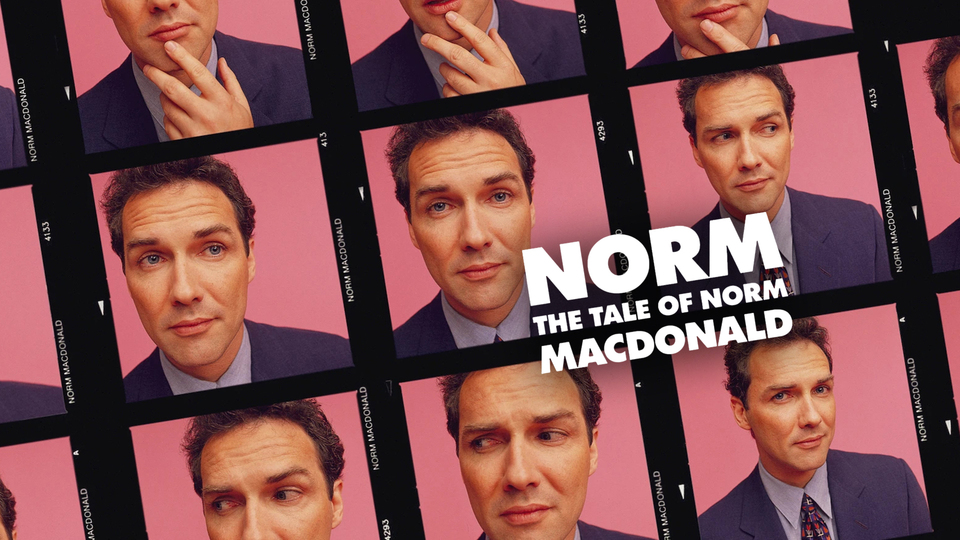
Although his name never reached as wide an audience in Türkiye as it did in America, Norm Macdonald was someone comedians spoke of with admiration, who could turn a few minutes as a guest on a television show into an unforgettable performance, and who has kept finding new audiences through his clips online since his death.
Born in Canada in 1959, he worked the stand-up circuit before joining Saturday Night Live, where he became known as the anchor of the show’s fake news bulletin, Weekend Update. He acted, made his own sitcom and podcast, and went on tour. But when you try to describe him through a handful of career milestones, something that cannot easily be put into words goes missing among them. Wherever he was, Norm built a world all his own.
Apatow’s documentary opens the door to that world not by sitting the people who knew Norm in front of the camera today, but by bringing together the images and sounds he left behind. We watch Norm on stage, behind the news desk, opposite David Letterman or Conan O’Brien, at home and beside his mother. Now and then we hear, in his own voice, passages from his 2016 book Based on a True Story. Hearing the story of a life from the person who lived it seems like a good idea. With Norm, the question of how much of it you are going to believe becomes part of the fun of the film.
Because even when talking about himself, he was not keen on leaving the truth sitting quietly where it was. He said different things at different times about his age, his education and his childhood. His book, its title promising that it was “Based on a True Story”, slipped a good deal of fiction into a memoir. As you try to work out when Norm is confessing something and when he is playing with you, after a while you care less about where the line between the two lies. You just want to keep listening to the story.
Norm grew up in Quebec and Ontario. He is said to have studied mathematics and philosophy for a while at Carleton University in Ottawa, without finishing his degree. By his own account, in French-speaking Quebec he learned Latin instead of French at school. He later turned the oddness of that choice into a joke: there were plenty of people around him speaking French, but he did not run into many Ancient Romans. He was a serious reader, fond of Tolstoy, Chekhov and Russian novels. When he met The New Yorker writer Ian Parker in New York in 2016, he had started reading Proust’s In Search of Lost Time and, halfway through the first volume, had begun to worry that he might have picked the wrong English translation.
That same day he told Parker about one of Chekhov’s bleak stories. A man dying on a long sea voyage breathes his last, yet the story carries on: his body is put into a sack and dropped into the sea, and, as Norm remembered it, the fish begin tearing pieces off him. He laughed as he told it; the man was dead, but the things happening to him were not over. Parker noted that not all the details Norm recounted were in the original story. Even when talking about a writer he loved, he did not hold back from making the tale a little bit his own.
In his comedy, too, we see how the familiar can turn strange when you look at it long enough. In one of his most famous examples, a moth walks into a podiatrist’s office and starts talking about his life. As he talks about his job, the lovelessness between him and his wife, his children and his unhappiness, the moth we knew a few minutes earlier to be an insect turns into the weary hero of a Russian novel. Having listened, the doctor tells the moth he should see a psychiatrist about all this, and asks why he came to him. The moth replies: “The light was on.”
The world Norm built while telling the joke matters as much as that simple answer. He draws the audience into the story, keeps them there for a while, and just as we forget where we are, brings us back to the beginning. Behind that ease lay careful craftsmanship. On a day witnessed by The New Yorker writer Nathan Heller, Norm listened to a young comedian’s joke sentence by sentence, thought about which piece of information should come when, moved words around and rearranged the story so the last line would land better. The man who seemed on stage to say whatever came into his head could labour at length over the order of a few words.
One of the heavier matters in Norm’s life was gambling. He played poker, bet on sports, spent time at the gambling tables and, by his own account, lost his savings several times. The journalist Michael Kaplan describes a weekend in Las Vegas with him during which Norm, after losing a large sum, asked to borrow money so he could play again, and soon lost that too.
When he described the spell of gambling, he always went back to the moment when the outcome was still unknown. The bet had been placed, the dice thrown but not yet landed on the table, and for those few seconds winning was still possible. In Based on a True Story he wrote that hope is a wonderful thing to be addicted to. In another conversation he said that thinking about the chance of losing money on a football game could be more bearable than spending the whole night thinking about approaching illness and death.
When he died in 2021, his audience learned that he had been living with cancer for years. He had shared his illness with no one apart from his family and a very small number of close friends. Watching him in the documentary, you wonder how much of his life he kept to himself. In front of us is a man who never stops talking, telling stories, making people laugh, and the things we do not know about him sit quietly among the things we do.
Norm: The Tale of Norm Macdonald sometimes leans too heavily on the comfort of familiar footage, moving on to a new joke when it could linger longer over some difficult questions. Even so, it captures the feeling of spending time with Norm. We see how he is with his mother, the smile that crosses his face as he listens to another comedian, the way he stops in the middle of a story and looks at the person opposite. We begin to know the man who laughed while talking about Chekhov, fretted over a translation of Proust and invented a long, melancholy life for a moth.
By the end of the film, it is hard to say we understand everything in Norm’s life. Then again, his stories rarely left us with a definite answer either. But while those stories were going on, we wished he would talk a little longer. That is the feeling the documentary leaves too: the wish to hear his voice once more and spend a little more time with him.