Notes from the Biblioteca Capitolare, the world’s oldest surviving library: ‘Like Dante, I am in the middle of time’
With a history of more than 1,500 years, Verona’s Biblioteca Capitolare is considered the oldest library in the world still in operation. Ranging from manuscripts dated 517 to texts that were erased and later came back to light, its collection sheds light not only on the history of writing but on how books have been preserved over the centuries.
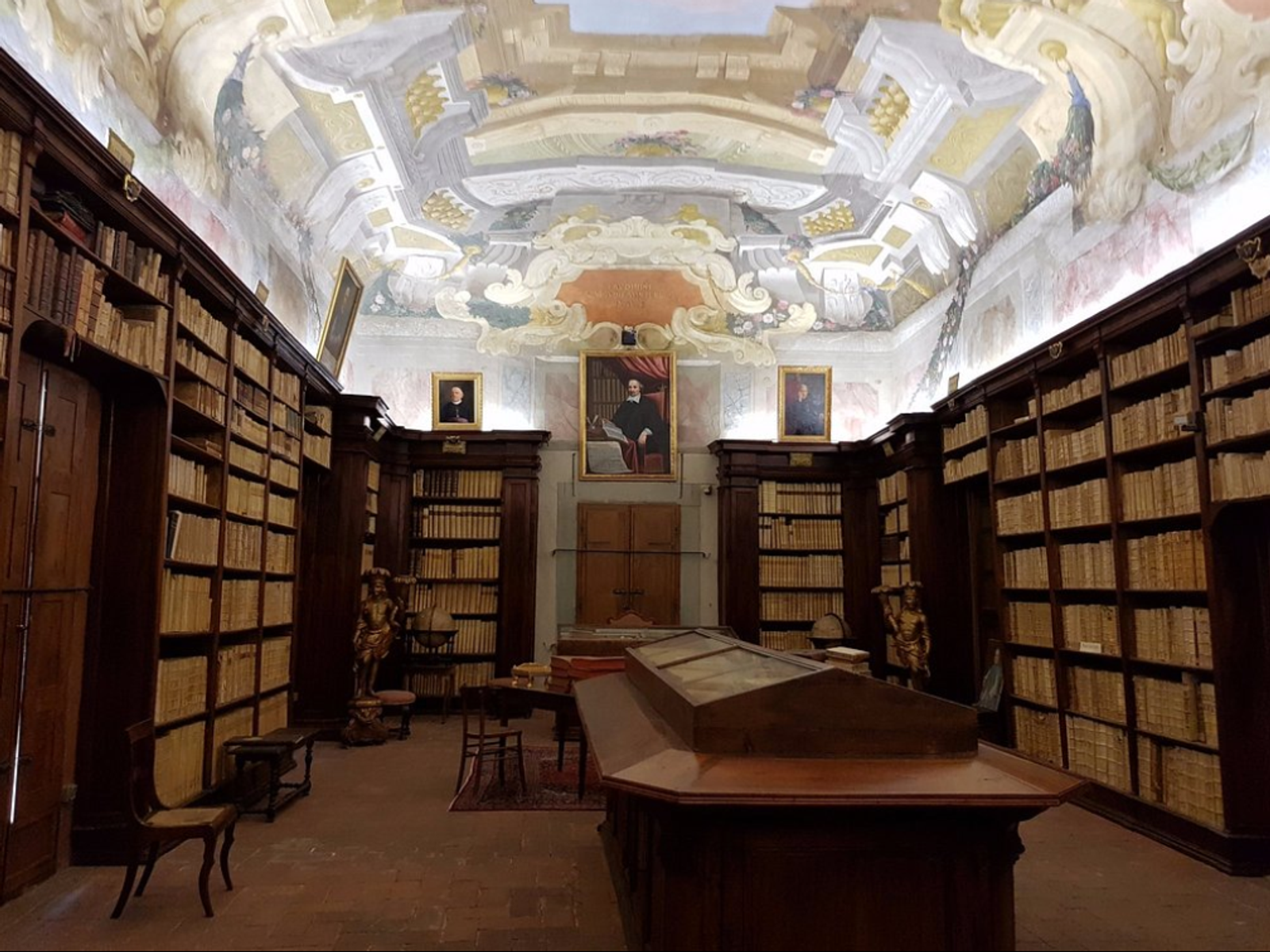
When I stepped inside, I thought time had stopped. It was as if I had been flung into an era I did not know. Among words I did not know and lives I did not recognise, my breath caught for a moment. Then I remembered this feeling. I had felt the same thing when I walked into Dante’s house in Florence. Time had vanished, and I was lost inside history. I was no longer in my own time; time had long since drifted away from me.
Some places do not tell you about the past; a door opens and suddenly you are inside it. You know where you are, but you are not so sure when you are. That is what happened at the Biblioteca Capitolare in Verona. The moment I stepped through the door, I stopped. Perhaps it was the high ceilings. Perhaps the dark wooden bookcases covering the walls from end to end. Or perhaps it was the silence of centuries-old books standing side by side beneath the great chandelier hanging from the ceiling, on shelves that rose almost from floor to ceiling.
For a while I stayed in the middle of the room without going near anything. In a place like this, you do not know where to look first. My eyes travelled from one end of the shelves to the other. Wooden galleries rising tier upon tier, rows of books, pale bindings, darkened ones among them… The room is so large and the shelves so high that you feel tiny.
Then I went closer. I saw that those books, which looked alike from a distance, were in fact nothing like one another. Some had crumbling spines. Their leather had lifted, their bindings were torn, and other papers, other writing had begun to show beneath. Some were bowed, some had sunk, some leaned against the book beside them. The fragments on a few of their spines looked as though they would come away in your hand if you touched them a little more. Some seemed to have come not from the depths of the centuries but straight out of a war. Perhaps this is what moved me most. Because in front of me were not simply old books. There were books that had lived. Books that time had passed over, books that had held out against history…
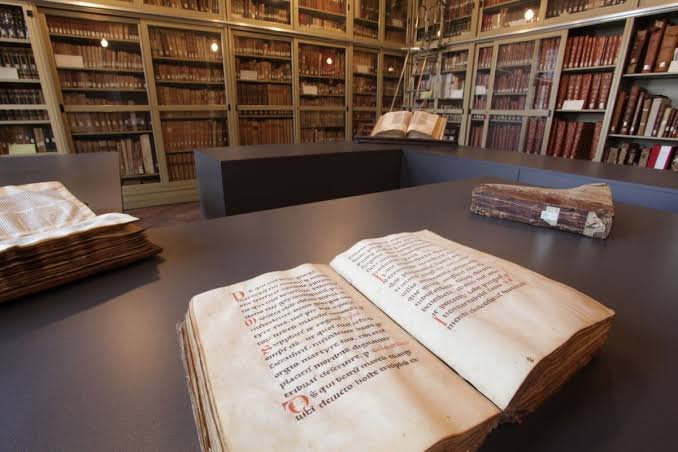
I walked slowly around the room. Then I looked at the manuscripts on display. There was no guide. Time was the guide: dates, and priceless collections that carry you off to other centuries the longer you look… Considered the oldest library in the world still in operation, the Biblioteca Capitolare has a history of more than 1,500 years. One of the most important witnesses to the work of writing here is a codex from the hand of a scribe named Ursicino.
Its date is known to the day: 1 August 517. This date is one of the most important pieces of evidence that a scriptorium was at work in Verona in the 6th century. When Ursicino finished the manuscript he had copied, he recorded his name, the place where he was and the date. In a sense, it is Ursicino’s hand that tells us the age of the Biblioteca Capitolare.
Imagine a person. More than 1,500 years ago, he sat down at a table. Parchment in front of him, pen in hand… He wrote the letters one by one. Perhaps he grew tired, perhaps he took a break, then started again. And when he finished his work, he noted down his name and the date. Did he ever imagine that what he wrote would still be read so many centuries later? What enchanted me there was not only the age of the books but writing itself. Indovinello Veronese… A tiny riddle dated to the late 8th or early 9th century. A few lines jotted down in a manuscript. Today it is considered one of the earliest written traces of the vernacular that would become Italian.
What is more, it is a riddle that likens writing to ploughing a field. The fingers are oxen, the white page a field, the pen a plough and the ink black seed… How lovely that a scribe described writing this way centuries ago. Moving across a white page, leaving black seeds behind you… Could there be a more beautiful comparison for a writer?
Then the story of the Gospels written in gold and silver letters on purple parchment… Codice VI. One of the library’s most precious manuscripts. It is a reminder that there was a time when a book was not merely an object carrying thought but a work of art in its own right. Purple parchment, gold and silver letters… You find yourself thinking how a page we can now reproduce in a few seconds was created, centuries ago, with such great labour and skill.
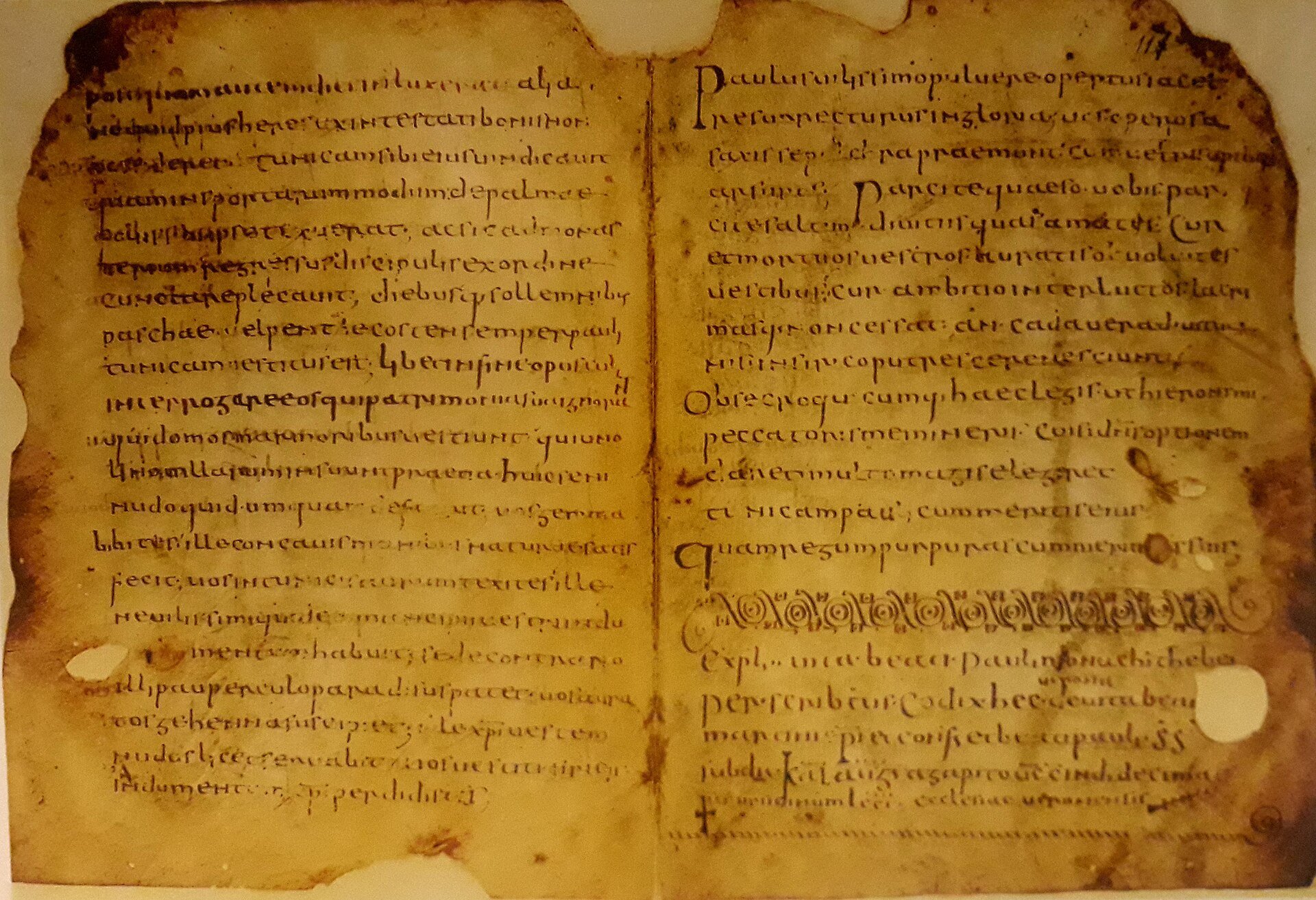
The oldest known copy of Saint Augustine’s De Civitate Dei, dating to the early 5th century, is also part of this collection. So is Gaius’s Institutiones, one of the most important sources of Roman law… And the story of Gaius’s text is a strange trick of time in itself. It is a palimpsest. Because parchment was expensive, the old text on it was erased and another text written on the same surface. One piece of writing sleeps for centuries beneath another. Then it is found again.
When I learned this, I thought that books, like people, can have second lives. Even when they are covered over, forgotten or even erased, they can sometimes come back to light. On one side the Gospels and Augustine, on the other Roman law, astronomy, medicine, poetry and music… How strange it is that humanity has hidden knowledge between the lines for centuries, isn’t it?
Traces of Dante, texts left from the Middle Ages, words written in other languages… As I wandered among all of this, I felt my bond with time snap. Perhaps the feeling is even stronger in libraries. Because what people have left here is not just an object; it is their thoughts. As someone who has worked with books for years, I think I know why this shook me so much.
I have mostly witnessed the beginnings of books. A manuscript arriving, the first read, the editor’s notes, the author’s objections, the rush over the cover, the trip to the printer… I know how long, exhausting and exciting it is to bring a book into the world. In Verona, though, for the first time I thought so powerfully about what comes after a book.
When we publish a book, perhaps we think its story is complete. But we do not know. Who will read it? Who will keep it? In which home library will it wait for years? Will it be lost while moving from one place to another? Will it survive a fire, a war, a flood? Will it fall into someone’s hands a hundred years from now? And what about a thousand years?
The Biblioteca Capitolare’s own story is rather like this, too. Things lost, things forgotten and things found again… The library is a witness not only to time but to disasters as well. Earthquakes, epidemics, wars, plunder… When the Adige River burst its banks in September 1882, a great many documents in the library’s archive were also badly damaged.
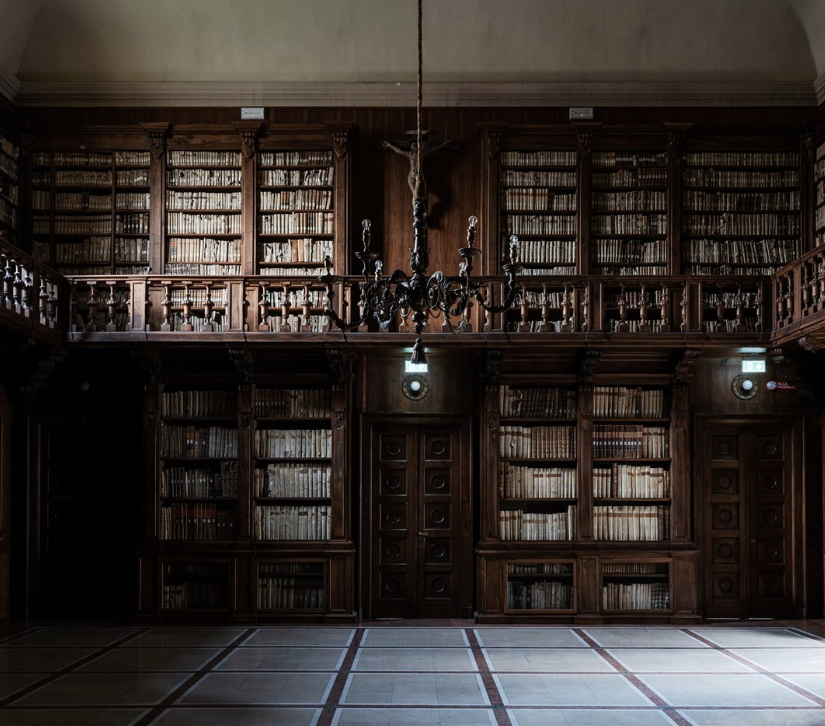
That this collection survives today speaks not only of the durability of books but of the effort made over generations to protect them. Because for a book to live for centuries, it is not enough for it simply to have been written. Someone has to keep it, protect it, repair it when needed and hand it on to the next generation. Perhaps this is where the real story of libraries begins. That is why I would not have wanted to see those books restored and gleaming. They were beautiful with their wounds. With their torn spines, their faded ink, their missing corners… Because all those wounds were proof of what they had lived through. When I came to Verona, I knew I would be entering the oldest library in the world still in operation. But when I left, what stayed with me was not that it was “the oldest”.
Ursicino stayed with me. That person who sat down at a table and wrote on 1 August 517. As he added his name to the end of a book, he of course had no idea that more than 1,500 years later someone else would come to Verona and look at his handwriting. Perhaps this is part of the miracle of writing. You do not know whom it will reach. You do not know how long it will live. You have no idea what will happen to it after you. And still you write.
As I left the library, I turned back and looked at the room once more. The tall wooden shelves, the great chandelier, the rows upon rows of books… Outside, Verona carried on. People were walking in the streets, the squares were filling up, coffee was being drunk, phones were ringing, life was flowing with the bustle of today.
I went out too. But a part of me stayed inside. In a torn book spine. In the pen ploughing a white field. In words that came back to light when they were thought to have been erased. On Dante’s trail… And in a date. 1 August 517. The calendar says 2026. But I am still, a little, on 1 August 517.