The flawed inheritance of love: three views of fathers and daughters in contemporary cinema
Charlotte Wells’s “Aftersun”, Joachim Trier’s “Sentimental Value” and Rodrigo Sorogoyen’s “El ser querido” look at three different stages and three distinct emotional forms of the father-daughter relationship. In one, a daughter returns to the past to try to understand her father; in another, two sisters carry the weight of the past into their present relationships; in the third, a father and daughter meet again after many years and reopen old grievances.

When does a person really begin to know their father? When do they truly understand him, that is? When their childhood admiration for him fades? When, as adults, they notice his weaknesses? Or when, tracing the fractures in their own life, they find that every path leads back to the same man?
What is most interesting when thinking about the father-daughter relationship is that it does not end with childhood. Years pass, people change, fathers grow old, daughters build lives of their own, yet the emotional bond formed in childhood resurfaces at the most unexpected moments of adulthood.
Charlotte Wells’s Aftersun (2022), Joachim Trier’s Sentimental Value (2025) and Rodrigo Sorogoyen’s El ser querido (2026) look at three different stages and three distinct emotional forms of this long relationship. In one, a daughter returns to the past to try to understand her father; in another, two sisters carry the weight of the past into their present relationships; and in the third, a father and daughter meet again after many years and reopen old grievances.
Yes, three separate films, but at the heart of each lies the same question: how does the way a father copes with his own life become an inheritance in his daughter’s?
Calum in Aftersun, Gustav in Sentimental Value and Esteban in El ser querido are very different men. Calum is a young father struggling with the darkness inside him; Gustav is an ageing director who arranged his life around his art and, years later, pays the price in broken family ties; Esteban is an artist who carried the authority of his professional success into his private life and is forced to reckon with the violence and domination of his past. What these three characters most have in common is that the marks they have left on their daughters’ lives are far greater than they imagine.
And perhaps this is where the most intricate side of fatherhood lies: while making sacrifices out of boundless love for his child and taking joy in the time they share, a father may also, without realising it, pass on the wounds, fears and unresolved conflicts he carries from his own past. It lies in the deep chasm between the existence of unconditional love and the way that love is received by the other.

‘Aftersun’
Aftersun makes this distance visible with remarkable subtlety. Eleven-year-old Sophie and her father Calum are on holiday together in Türkiye. They swim, play games, talk and film each other. Their closeness is easy to read in their little jokes and the ease between them. Calum’s love for his daughter is plainly felt. Yet as the film goes on, a clear divide begins to open between the father Sophie sees and the man the audience watches.
Calum, only thirty, appears as a young man caught between what adulthood expects of him and his own inner world, struggling financially and emotionally. Sophie, meanwhile, is a child who senses his unhappiness now and then but, because of her age, cannot grasp its extent. For we know that a child first defines its parents through its relationship with them. Who a father is when he is alone, what fears he lives with, what he thinks about at night: all this lies outside the child’s knowledge.
Wells turns precisely this gap in knowledge into the film’s narrative principle. The footage Sophie records on her camera, the memories of the adult Sophie and Calum’s moments alone blend into one another. In this way the rifts between two different times of a childhood memory become visible: what was understood as it happened, and what took on meaning years later. A father’s silence one evening, his unexpected anger or his eyes filling with tears gain new meaning when looked back on. Sophie, too, tries to reread her father’s life through signs that have stayed hidden within her childhood memories.
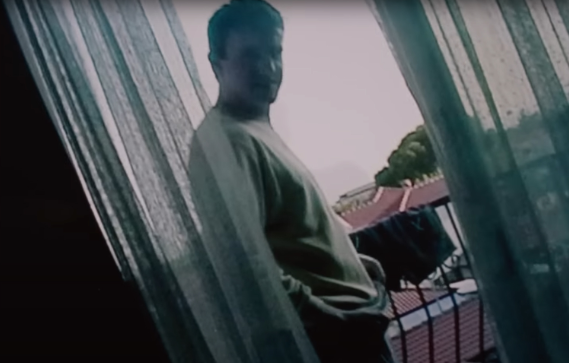
At this point the film’s real subject becomes “the way memory works”. Remembering means less bringing back the past as it was than building a new relationship between what we know now and what happened then. Sophie’s adulthood keeps putting new questions to her childhood. She can now recognise her father’s unhappiness, and perhaps understand him better because she has met similar feelings in her own life.
The film’s closing airport and dance sequence strikes the viewer as the most powerful expression of this search. The father in Sophie’s mind steps out from among the remembered images to become a figure hard to reach, and the adult Sophie’s wish to reach him becomes a belated attempt at a contact she could not make as a child. The dance to “Under Pressure” in particular creates a moment in which love and loss take bodily form together.
Here we must also touch on an important psychological point: a child may sometimes link a parent’s suffering to their own responsibility. Returning to the past in adulthood can be a way of freeing oneself from this mistaken feeling. Sophie’s effort to understand her father allows her, in a sense, to redraw the boundaries of her own childhood. We see that the darkness Calum lives in belongs to a life far older and more complex than Sophie’s existence.
The achievement of Aftersun lies in its ability to hold Calum within this complexity and show him to the viewer as both a loving father and a person struggling to bear the weight of his own life, because in doing so the film releases fatherhood from the expectation of perfection and brings it together with human fragility.
‘Sentimental Value’
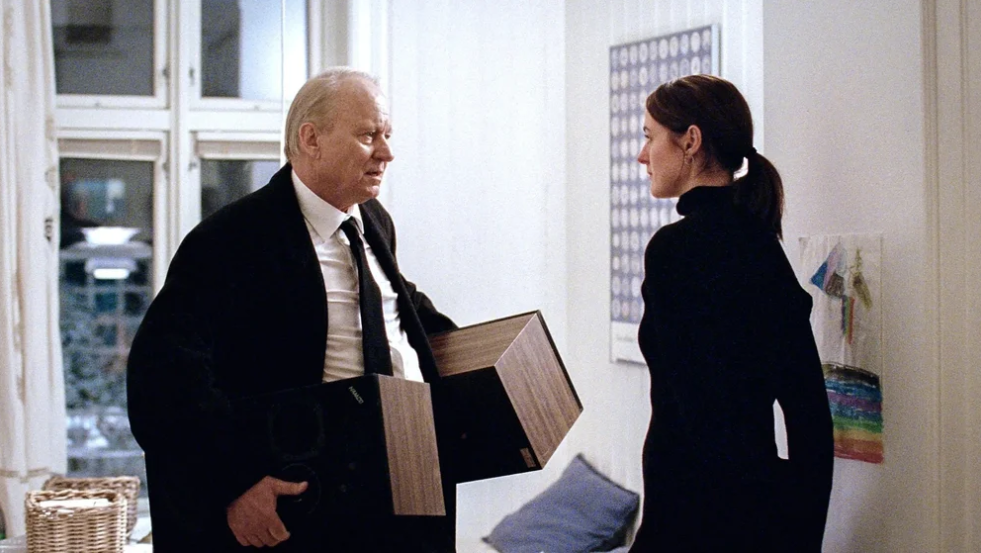
In Sentimental Value we watch a story in which the daughters have grown up, the father has grown old and the consequences of the past have already settled into adult relationships. Gustav Borg appears here as a film director who drifted away from his family years ago. After the death of his former wife, he re-enters the lives of the daughters he had become estranged from, Nora and Agnes. Nora is a successful stage actor; Agnes, who has a family of her own, leads a seemingly more balanced life. The difference in how two sisters raised by the same father relate to him is, of course, one of the film’s most important layers. Nora’s difficulty with intimacy, the crises she goes through before going on stage and the indecision in her emotional life offer important clues for thinking about her relationship with her father. Explaining a person’s entire psychological world through a single childhood relationship would of course be too reductive, but it is clear that Gustav’s long absence has played a significant part in Nora’s experience of trust and attachment.
Agnes looks at the same family history from a different place. She has developed other ways of coping with the void her father left, and thanks to her relationship with her older sister she can view the past in a wider frame. In this way Trier shows that the same event within a family can have different emotional consequences for different children. The children’s ages, the roles they take on in the family, their temperaments and the bonds between them shape how a shared past is lived.
When we consider this difference alongside Winnicott’s thinking, we see that what is decisive in a child’s psychological development is not that the caregiver always behaves flawlessly, but that they can offer a reliable and sufficiently stable relationship. Such a relationship helps the child recognise their own feelings and engage with the world in safety. Bonds whose continuity is broken, on the other hand, can make intimacy in adulthood something both longed for and anxiety-inducing.
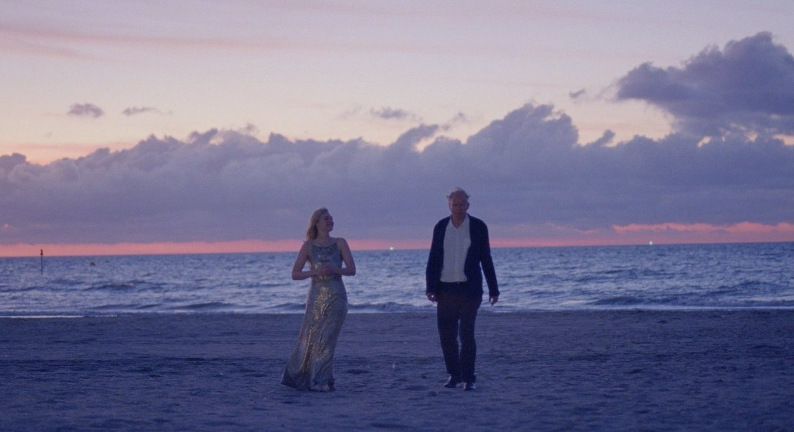
This duality is clearly visible in Nora’s life. On one hand she wants to be seen, loved and understood; on the other she shrinks from the vulnerability that intimacy brings. What is more, she carries on her father’s profession in another form: Gustav is a director, Nora an actor. Both make other people’s emotions visible through their work, yet they find it hard to speak to each other about their own.
This is where Trier’s subtle irony begins. Gustav places the things he cannot say to his daughter inside the screenplay he has written. He wants to cast Nora in his new film; perhaps he believes that working together will open a way to the feelings they have stored up for years. But the offer naturally contains a power relationship too. Even as he reaches out to his daughter, the father chooses to stay in the director’s chair: he has written the lines, he has defined the role, he has designed which emotions his daughter will live in which scene. This is exactly why Nora’s refusal cannot be seen merely as a professional decision. By turning him down, she intervenes in how her own life will be represented in her father’s narrative. In adulthood she sets limits on a relationship in which, as a child, she had very little say.
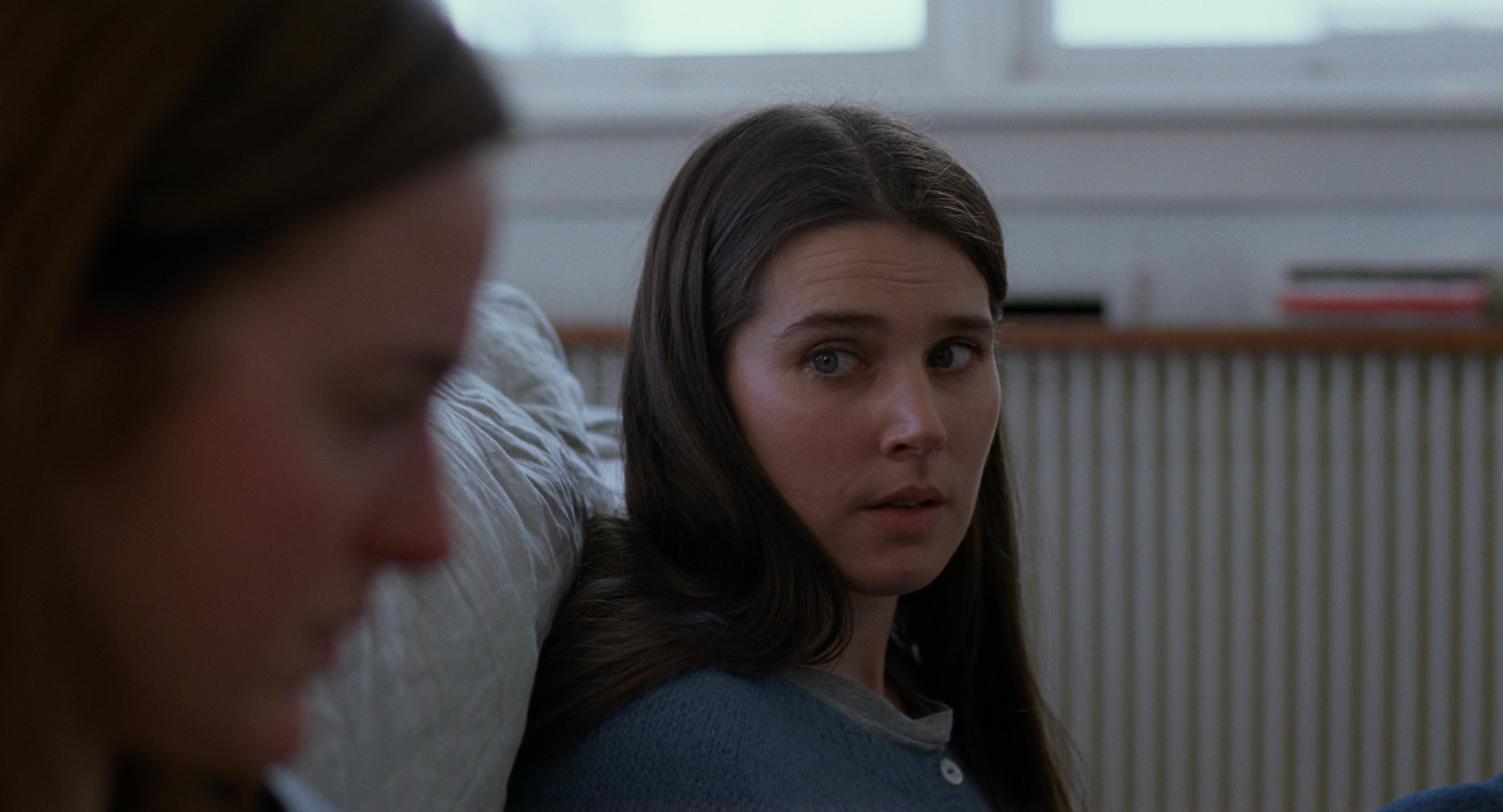
The film’s intergenerational dimension deepens through the story of Gustav’s mother. What happened to a woman who joined the resistance during the Second World War, was tortured and later took her own life leaves a deep mark on her son’s life. The pain Gustav brings to his films actually comes from his own childhood. Behind Nora’s emotional difficulties, too, lie the effects of her father’s relationship with this past. And so an invisible transmission across three generations takes shape. The trauma one generation lives through turns, in the next, into other behaviours, other fears, other ways of relating. Knowing that Gustav was a child who lost his mother helps us understand the emotional background of his relationship with his own daughters. A pain suffered in the past sometimes surfaces years later in the life of an entirely different person.
The film’s title, “sentimental value”, is very meaningful in this respect. The value of a house, an object or an image is formed by the experiences stored within it. The family home is, of course, the material counterpart of the memories generations leave one another. Walls, rooms and objects carry what people both want to remember and try to leave behind. The different ways Nora and Agnes approach this house and their father show that an emotional inheritance is inevitably reinterpreted. We do not carry the past we receive from our family in the same way all our lives. We can give it new meanings, transform parts of it and build a different future in our own relationships.

‘El ser querido’
Rodrigo Sorogoyen’s El ser querido, meanwhile, opens up a harsher and more political layer of the father-daughter relationship. This time we meet Esteban Martínez, an internationally successful director, and his daughter Emilia, a woman whose acting career has not reached where she hoped. Father and daughter, who have not seen each other for thirteen years, meet again when Esteban offers Emilia a role in his new film.
Sorogoyen’s opening sequence, roughly twenty minutes long, places the entire tension of this relationship inside a conversation. As two people try to re-enter each other’s lives, old grievances make themselves felt as much in what they avoid saying as in what they say. Esteban’s professional power, the uncertainty of Emilia’s career and the old accounts between them make a seemingly ordinary meeting extremely complex.
Here the relationship between fatherhood and power emerges far more sharply than in the other two films. The opportunity Esteban offers Emilia also reproduces the imbalance of power between them. A father in a position to change his daughter’s professional future thus adds an economic and professional dimension to an emotional relationship.
Pierre Bourdieu’s concept of symbolic power can help in understanding this relationship. We know that power is not established only through open orders or coercion; the reputation, knowledge and social position a person holds also shape how others behave. In the film, when the prestige Esteban carries as a director is added to his position as father, two separate authorities stand before Emilia. On one side the viewer sees a father who neglected his daughter for years, on the other a director offering her an important professional opportunity. What is more, a father’s approval can reach far deeper into an adult daughter’s life than professional success.
For someone who felt insufficiently seen by their father as a child, recognition from him years later naturally means both great joy and the reawakening of old hurts. The greatest difficulty of Emilia’s situation is this: taking up the opportunity her father offers also requires her to rethink the meaning of what she went through in the past. Esteban’s past violence and domineering behaviour give this relationship another weight. The director’s behaviour on set raises the question of where the line falls between an artist’s creative freedom and the domination he exerts over others. Film history has a long tradition of great directors’ bullying being excused by their talent. Sorogoyen also opens to debate the consequences of this tradition as they reach into family relationships.
What is really being questioned here is how far a person may intrude on another’s life in the name of love. Esteban may well love his daughter; he may believe in her talent and want her to succeed. But how love relates to recognising the other person’s freedom matters as much as the feeling itself. The distance between Emilia’s needs and Esteban’s expectations forms one of the film’s central conflicts.
In this respect El ser querido invites a very fruitful comparison with Sentimental Value. In both films the father is a director, the daughter an actor, and the attempt at reconciliation unfolds through a film project. Gustav and Esteban both use the language they know best, cinema, to reach their daughters. But because cinema is also the field in which they feel most powerful, even as they set the terms of emotional closeness they tend to hold on to the position of power they are used to. Beyond this, Gustav’s relationship with art seems to stem more from a need to work through the pain of the past, while Esteban’s appears more directly tied to male ego and authority.
In one man’s attempt to approach his daughter, emotional inadequacy weighs heaviest; in the other’s, the habit of domination. This distinction also shows the limits of treating the father-daughter relationship as a purely psychological matter. Fatherhood is also a socially defined position: traditional ideas of masculinity expect the father to be strong, successful, the one who decides and directs. When a child begins making their own decisions in adulthood, this authority has to be rearranged. For a man like Esteban, who has spent his life directing other people’s behaviour, accepting his daughter’s independence can be especially hard.

We might say that the most interesting element uniting the three films is that cinema itself becomes a means of understanding the father-daughter relationship. Yet who holds the camera means something entirely different in each film. In Aftersun, Sophie films her father. Years later she returns to the same footage to learn more about him. The image becomes a way of rebuilding a lost closeness. We see that Sophie recorded the past but only began to grasp the full meaning of those recorded moments in adulthood. In Sentimental Value and El ser querido, by contrast, it is the fathers who stand behind the camera. Gustav and Esteban want to see their daughters in their own films. Both try to reshape the family relationship through art, while wanting the power to decide how their daughters will be seen.
This contrast matters, because in Aftersun the daughter turns to images to understand her father, while in the other two films the fathers create images in order to connect with their daughters. In one, cinema appears as the domain of memory; in the others, as the domain of representation and power. Sophie’s images hold questions directed at the past, while Gustav’s and Esteban’s films become attempts to shape the present relationship.
Here the question of whose gaze it is becomes decisive. Loving someone can also mean fitting them into the image we have formed of them in our minds. Parents develop expectations about who their children are, but as a child grows, a gap can open between these expectations and the child’s own desires, because building an adult relationship requires being able to know the other person beyond their past role.
Gustav’s wish to cast Nora in a film telling his own mother’s story is, of course, particularly striking in this light. Gustav places his daughter inside a character tied to the greatest trauma of his childhood. He expects Nora to give bodily form to a pain from his own past. In this way, his daughter’s talent as an actor and her father’s emotional need become intertwined. Esteban’s working with Emilia raises a similar question:
“Can a daughter, playing a part in her father’s story, remain the subject of her own?”
Aftersun asks the same question from the opposite direction. As Sophie tries to understand her father’s life, she rebuilds his story in her own memory. Yet it is plain that there will always be a part of Calum’s inner world that Sophie cannot reach. Perhaps the film’s most moving quality lies in accepting this limit. We cannot know the people we love in every respect; loving them often means learning to live with this incomplete knowledge.
In all three films, the daughters’ progress towards adulthood is linked to beginning to see their fathers as human beings. In childhood the father appears through his role in the family; in adulthood, as a separate person with his own childhood, desires, fears and failures.
Sophie can grasp Calum’s unhappiness only years later. Gustav’s emotional inadequacy gains meaning alongside his mother’s death and what he lived through as a child. Esteban’s authoritarianism deepens through the links between professional success, masculinity and personal history. The father becoming human does not erase the consequences of his actions. On the contrary, it makes it possible to see the true complexity of a relationship. Understanding why someone behaved as they did and weighing the effect that behaviour had on us are different processes, so a changed relationship with one’s father in adulthood often begins when these two processes are separated.
This is where the question of forgiveness arises. The three films suggest different possibilities of forgiveness. Sophie’s search for her father turns towards a past in which a two-way conversation is no longer possible. Nora’s relationship with her father appears as a living conflict that still has the potential to change. Emilia, for her part, has to choose between what she went through in the past and the reconciliation offered to her now. There is, after all, no single form of forgiveness. To forgive can sometimes mean grasping the reasons behind a past act, sometimes relating to the other person within new boundaries, and sometimes redefining their place in our lives.
Watching all these films, we arrive at a broader thought about the father-daughter relationship. In childhood, we begin living in the world our parents offer us. Adulthood means, to some extent, recognising that world’s limits, seeing its shortcomings and building a life of one’s own. Sophie returning to the footage of her father, Nora confronting her father’s screenplay, Emilia stepping in front of her father’s camera… Each is treated as a different moment in the same long process. All three women try to redefine the meaning of their relationships with their fathers. And inevitably, in this process, the fathers change in their daughters’ eyes: the powerful figures of childhood gradually become people carrying the burden of their own past, with ways of hurting as well as ways of loving.
Perhaps the most important thing these films say together is that adulthood means not only building a life independent of our parents but also understanding that they, too, have independent lives. We realise how lonely, wounded, even helpless the people who once stood at the centre of our whole world could be within their own. There can be hurt within love, distance within closeness, anger within admiration. Is the coexistence of these feelings not simply part of the nature of a relationship that changes over the years? Can a father-daughter relationship be reduced to so easy an emotional settlement? Let us end, then, by answering the question we asked at the very start with another question:
“Is it not often only when we discover, and more importantly accept, that our father is also a person with weaknesses, desires and fears, that we begin to truly know and understand him?”