From Romain Gavras’s ‘Athena’ to ‘La Commune’: the anger is there, so why no revolution?
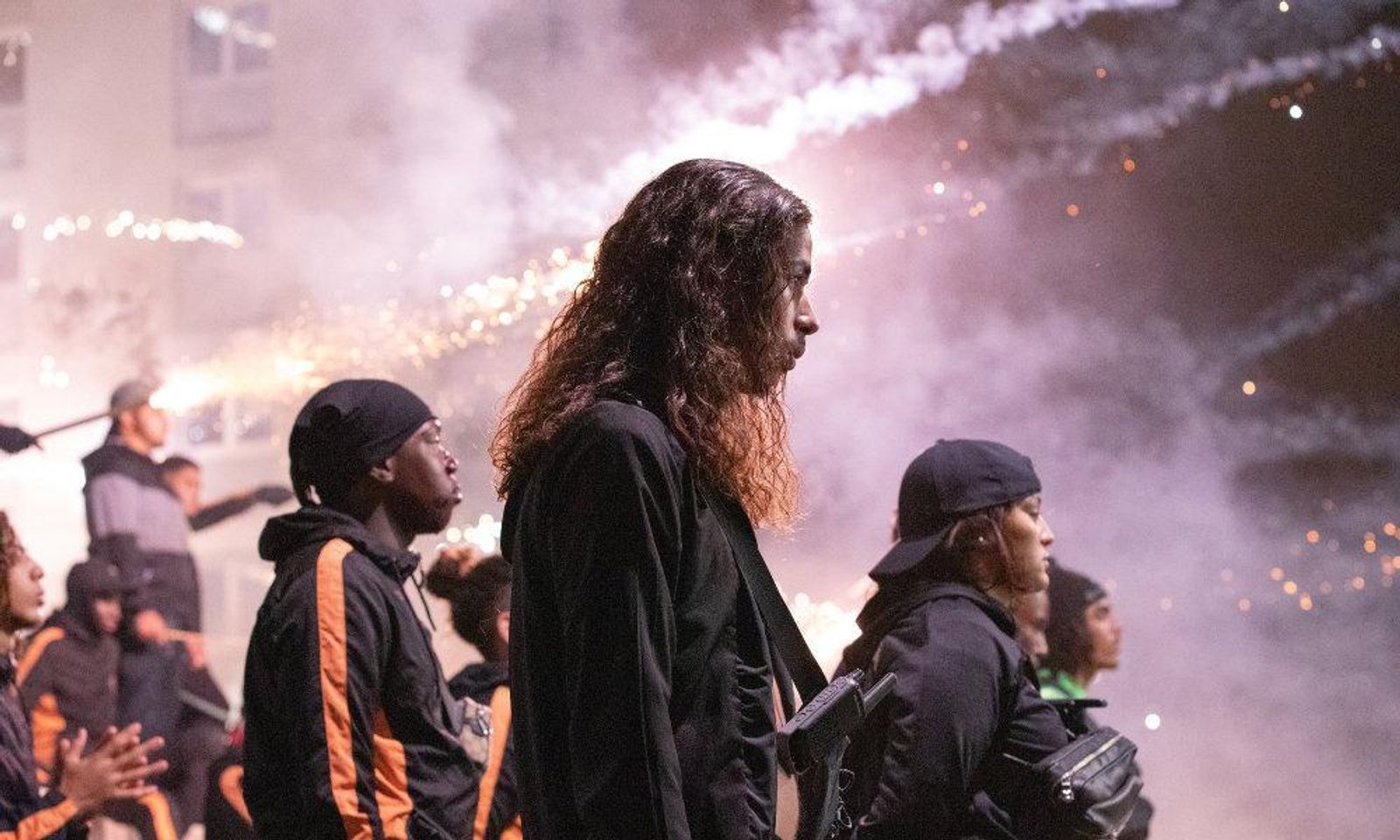
Why is the distance between rejecting an order and building another in its place so great? Romain Gavras’s 2022 film “Athena” does less to answer this question than to set it before us in all its violence. Through a sense of movement that grows each time the crowds enter the frame and a dizzying editing pace, the film shows how anger can turn into collective energy.
We no longer need long explanations to understand that an order has become unsustainable. One by one, its promises have lost their gilt; the kings have long been naked. So in this new world, how will naked kings be brought down from their thrones? We do not know yet. What we do know is that a people’s revolt against the order imposed on it is often seen by those in power as chaos and anarchy. Yet behind the anger rising in the streets lies the fact that the existing order has become unacceptable.
What do we have in front of us? Economic insecurity, deepening inequality, crises of representation, climate disasters, broken trust in institutions… The same symptoms, appearing in different corners of the world, in different forms but with striking similarities. Anger builds, the streets boil, governments are shaken. And each time we arrive at the same question: why is the distance between rejecting an order and building another in its place so great?
Romain Gavras’s 2022 film Athena does less to answer this question than to set it before us in all its violence. And what a way to do it! The film opens with an uprising in a banlieue, the outer suburbs of French cities, that erupts after a boy is said to have been killed by police violence. As the camera runs after the characters, it pulls us into the middle of the clash. Barricades go up, police vehicles are overturned, fireworks become weapons, the streets turn into a battlefield. Here the uprising stops being an event that is told; it becomes an energy we experience with our bodies, one we are even eager to be part of.
Much of the power of Athena, a film full of scenes that stir me every time I watch it, comes from this. The film shows how anger can turn into collective energy, through a sense of movement that grows each time the crowds enter the frame and a dizzying editing pace. Individual pain merges with a shared sense of injustice; the street stops being the setting of everyday life and becomes a place where power is challenged. Beyond a certain point, language, borders and cultural differences lose their importance. The uprising on screen no longer belongs only to the banlieues of France; it meets the anger building up in different corners of the world, an anger that has yet to find a common language and a political direction.
But as the film goes on, for those not content simply to be swept up in the fervour of revolt, another issue comes into focus: as the anger grows, it becomes less and less clear where this energy will flow. Towards the end of the film, it emerges that behind the death that sparked the uprising lies a far-right provocation designed to mobilise the crowd. So while the film shows how justified anger can become a mass phenomenon, it also reveals how that anger can be manipulated.
A justified reaction against an order can become the instrument of entirely different political aims. But this possibility does not invalidate the revolt itself; on the contrary, it asks us to think more carefully about who is trying to shape the anger, with which narratives and towards which ends.
It would be easy to criticise the film for not offering a political programme. But cinema’s job is not to write a programme for revolution. It is more interesting to look at the tension between the film’s form and the events it depicts: Athena turns the uprising into an extraordinary visual experience while leaving the life that might be built after it almost entirely outside the frame. We see how the streets are taken; but what then? The question of what might take the place of the order that has been toppled is left open. But perhaps the real issue is not so much that the film does not answer this question as which answers we expect in order to understand an uprising.
Perhaps this is exactly where we need to stop if we want to understand the political crisis of our age. The problem is not only that the old order has become unsustainable; it is also whether our imagination of how to build a world to replace it is itself in crisis. Have the alternatives really run out, or are they simply not yet visible enough? Are new forms of organisation being born and slipping past us because they do not resemble the political forms we are used to? Or is what we understand by revolution no longer enough to grasp today’s social relations and political possibilities?
To follow these questions, it may help to look at three French banlieue films from the past thirty years together: Mathieu Kassovitz’s La Haine (1995), Ladj Ly’s Les Misérables (2019) and Romain Gavras’s Athena (2022). We cannot draw a direct line of cause and effect between them. But we can read the three films as cinematic reflections of the same historical tension at different moments. Each treats exclusion, police violence and social anger in its own way; together they show how accumulated tension is lived in everyday life, how it becomes visible and how it turns into open conflict.
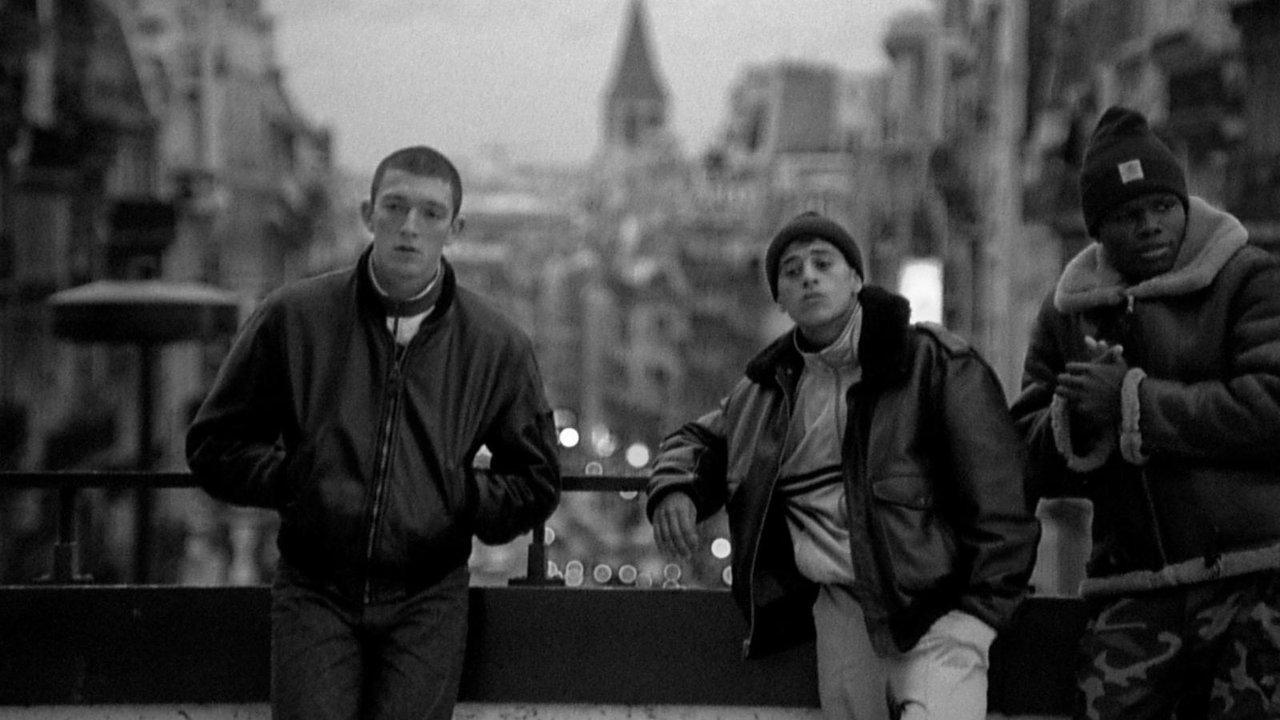
That is why the famous story of the fall in La Haine still means so much. But today the issue is no longer only the fall itself; it is the moment of hitting the ground, and what comes after. A society can keep up its own normal even as it drifts towards disaster; life goes on flowing in the illusion that everything is fine. And we, too, often carry on living inside that normal without noticing that the crash has become inevitable.
Les Misérables moves this tension onto another plane. Here the relationship between the police and the residents of the banlieue cannot be reduced to a single act of violence. There is an order in which different social actors, local power relations and institutional violence are tangled together. The source of the conflict is not one bad cop or one angry young man; violence persists within the relationships that constantly reproduce it.
Athena, for its part, carries this build-up to the moment of explosion. The sense of falling in La Haine and the steadily mounting tension of Les Misérables become here an almost uninterrupted choreography of revolt. There is a clear shift across the three films: a line running from the everyday experience of exclusion to the complex structure of institutional violence, and from there to the visual spectacle of social explosion. Yet it would be misleading to read this shift as linear progress. A more visible uprising does not necessarily mean greater political change; but nor does that mean an uprising is nothing more than a spectacle. The real question the films raise together is less when social anger becomes visible than how far we are able to see the political possibilities emerging within that anger.
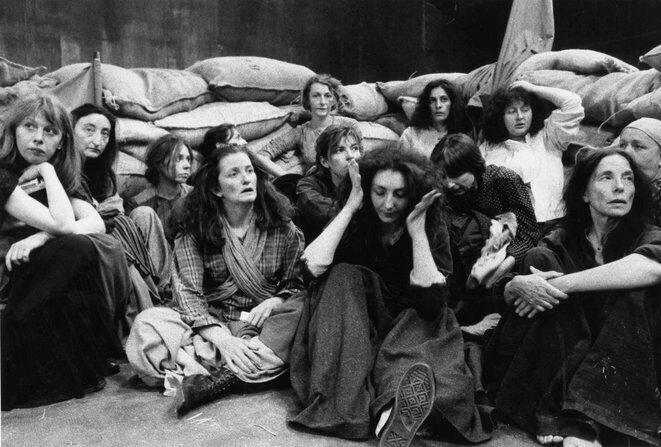
From here we can move on to Peter Watkins’s 2000 film La Commune (Paris, 1871). While Athena foregrounds the energy of the uprising and the intensity of the clash, La Commune approaches a historical experience of revolution through people’s attempts to find a political voice, to argue with one another and to govern themselves. The two films work with different aesthetic and narrative choices. Rather than declaring one more successful than the other, it is more fruitful to ask which political experiences each makes visible.
Guillaume Cailleau and Ben Russell’s Direct Action (2024) also proposes looking at politics from somewhere else. In this film, which observes collective life and struggle over a long period at the Notre-Dame-des-Landes ZAD (a “zone to defend”, a long-running protest occupation) in France, politics does not appear only at the peak of confrontation. Daily chores, communal living, solidarity and the material conditions of sustaining a struggle also come into the frame. Set side by side, these films raise another question about political cinema:
“Do we see revolt only as a moment of explosion, or can we also recognise the new relationships, possibilities and ways of life that emerge within that moment?”
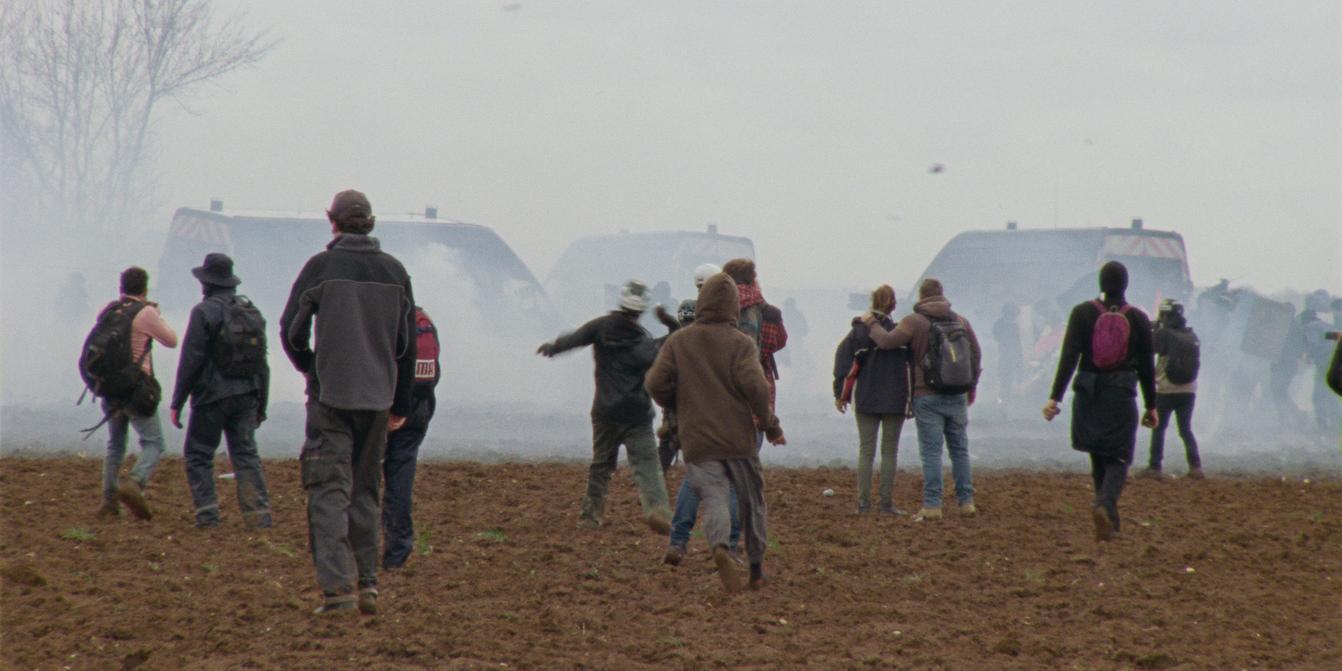
This question goes beyond cinema and becomes a matter of how we think about politics. Can we measure the meaning of an uprising only by whether it changed who holds power, how long it lasted or which institutions emerged at the end? Or might these yardsticks make it harder to understand what is changing in social movements whose outcomes we cannot yet see?
Putting up a barricade, a crowd moving as one, people leaving their fears behind and taking to the streets: these are political experiences in their own right. Their meaning cannot be exhausted by asking whether a lasting institution was built afterwards. The ways people come to know one another, their belief that they can act together, their beginning to demand things they once thought impossible: these too can change political life. Not all of these changes lead to the same result; some become permanent, some recede, and some resurface years later in other forms. But the fact that we do not yet know their outcome does not make the experience meaningless.
Returning to Athena, we can also pose the question the film leaves unanswered in another way: does not knowing what will come after an uprising mean that we cannot see what changes within it? Perhaps we overlook political possibilities we cannot yet name because they do not appear in the forms in which we are used to recognising them.
Nor can we say that anger has not taken to the streets in Türkiye. There is a line of protest that runs from the 2013 Gezi Park protests to the demonstrations that grew after the arrest of Istanbul mayor Ekrem İmamoğlu in March 2025, and from campus boycotts to consumer boycotts. The real question is why this mobilisation struggles to turn into a new and lasting political wave. The answer should be sought as much in the opposition’s difficulty in setting its own agenda, and in its habit of still reading the younger generation through old political templates, as in the conditions of repression.
What the opposition and the traditional left in Türkiye find hard to grasp is that younger generations may not want to inherit old political loyalties and rituals. Young people do not only want to be called out onto the street; they want a say in what kind of place the street will be. Standing up against an injustice does not necessarily mean repeating the slogans of a political tradition, adopting its symbols or becoming part of a ready-made identity. When the slogans of the past fail to answer today’s world and young people’s anxieties about the future, they can narrow rather than unite, and drive people away from the street rather than draw them to it.
In different parts of the world, the young people taking to the streets carry a protest that is not content merely with changing the leaders in power, but also questions the future being left to them. They want a world in which the planet remains liveable and they are not condemned to insecurity and exploitation. These movements have no single leader, no shared programme and no identical political goals. Nor is the point to bring them all under one roof; it is that they raise questions the old ways of doing politics cannot answer. In Türkiye, however, no political will has yet emerged that is ready to connect with this search, to learn from it and be changed by it rather than squeeze it into its own moulds.
Young people are looking not only for someone to represent them, but for a political space in which they can think together that another future is possible. The delay is not caused by an absence of anger; it is that a politics able to recognise that anger, and to change alongside it, has not developed enough.
In the end, anger building up in the streets or spilling over from cinema screens is not enough on its own. The real revolutionary possibility will open up when we set aside the arrogance of old templates and find the courage to learn the language of the new generation.