From the Riace Bronzes to Türkiye: a museum ecosystem. Where does a museum end?
Putting cultural heritage at the service of tourism is one thing; designing tourism so that it helps people experience cultural heritage more deeply and more sustainably is another. When we confuse the two, a work can easily turn into a logo, a souvenir or an image consumed on social media.
When we think of museums, the first things that come to mind are enclosed spaces and protected buildings. We wander through those cool, light-filled rooms, and when we step outside we assume the museum experience is over. But what if the museum does not end the moment we leave the building, and instead spreads out into the city, the landscape and everyday life?
One recent example that prompts this question is the Riace Bronzes in Italy’s Calabria region. Today these two statues are among the most important works in the National Archaeological Museum of Reggio Calabria. Yet in Calabria’s 2026 programme they are not treated simply as masterpieces to be seen in the museum. The story the statues carry spreads to different parts of the region through events, historical and tourist routes, digital content, exhibitions, performances and concerts.
What is more, this approach was not designed as a one-off festival: the Riace Bronzes Month is intended to be held every year. In other words, the works stop being solitary objects in a display case and become a focal point that links different places and stories.

At first glance this model might look like a new idea for Türkiye. Yet we have seen initiatives that bring cultural heritage together with the promotion of a region and its tourism narrative in Türkiye before.
In 2018, to mark the 20th anniversary of Troy’s inscription on the UNESCO World Heritage List, a “Year of Troy” was declared. The promotion did not focus on the archaeological site alone. Alongside the governor’s office, the Provincial Directorate of Culture and Tourism, the university, the municipality, chambers of commerce, guides, hoteliers and travel agencies, other Çanakkale destinations such as Gökçeada, Bozcaada and Assos-Küçükkuyu-Ayvacık were brought into the same framework. This shows us that there was an attempt to use Troy as an overarching narrative carrying the whole of Çanakkale as a destination.
So what was the effect? In July 2018 the Çanakkale Governor’s Office announced that the number of domestic and foreign tourists visiting the ancient city of Troy had roughly doubled.
In the same period, a “Türkiye Tourism Year” had been declared in China, and a marked rise in the number of Chinese tourists was also reported. Did the visibility created over that one year manage to become a lasting regional network once the campaign was over?
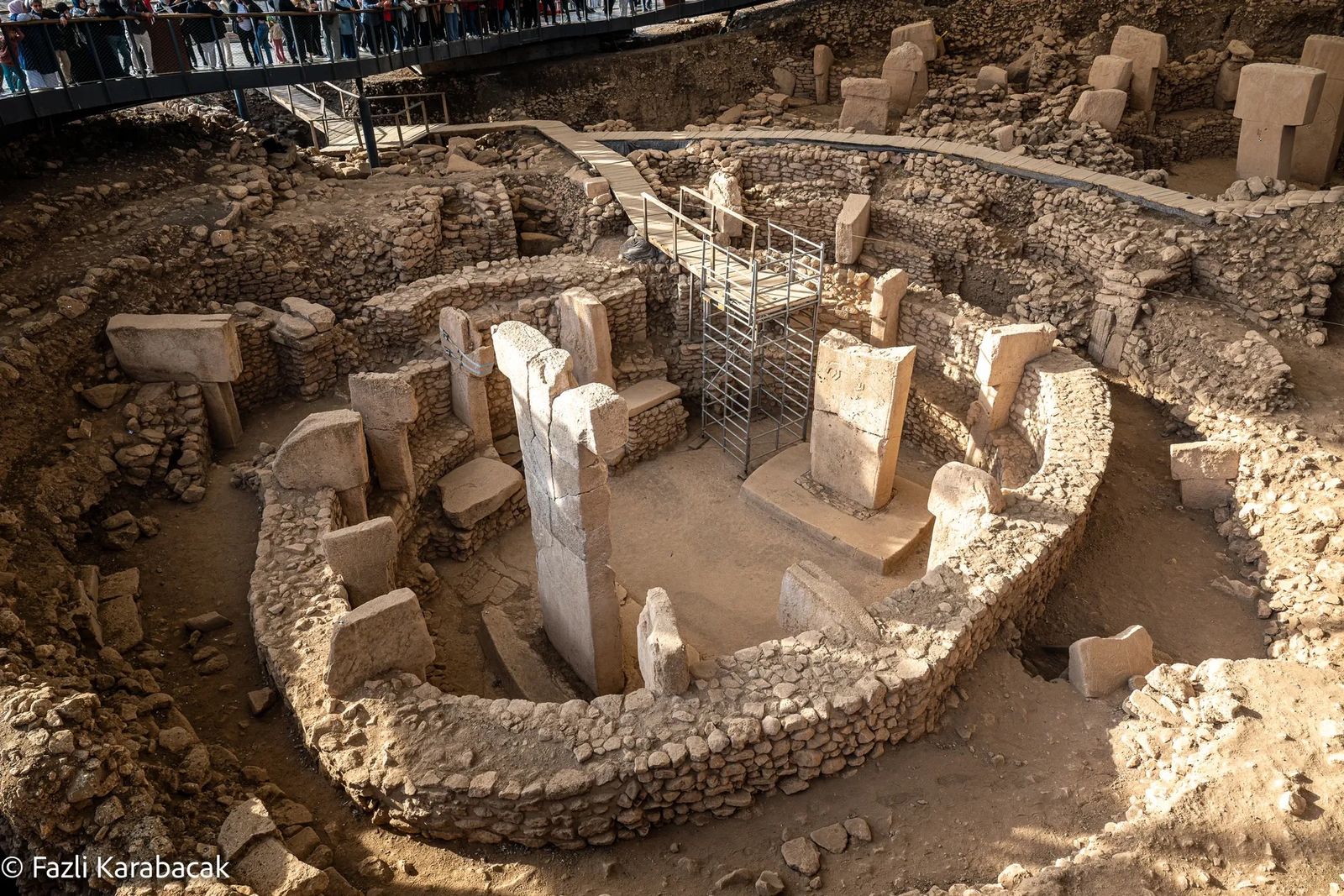
A similar approach was seen at Göbeklitepe. At the request of the Şanlıurfa Governor’s Office, 2019 was declared the “Year of Göbeklitepe”. Public bodies, local authorities, tourism businesses, the university, professional associations and cultural actors then came together around the same brand and drew up a work calendar and a roadmap. With the founding of Şanlıurfa Turizmi Geliştirme A.Ş., a company set up to develop tourism in the province, the aim was also to run symposiums, tours, promotional work and similar activities more professionally. According to the governor’s office, groundwork for these preparations had in fact been under way since 2016. So which was more decisive in Göbeklitepe’s success: the iconic site itself, its UNESCO visibility, the coordination between stakeholders, or professional destination management?

When measuring impact, the first thing we usually look at is visitor numbers. Yet that figure on its own is not enough. How long visitors stay in the city, whether they venture beyond the main archaeological site, how local businesses are affected and to what extent local people take part in the process all matter too. The real question, though, is whether the network that was built carries on living after the campaign ends. We can see true success less in a jump in visitor numbers than in the mark this activity leaves on the region and the continuity it creates.
On a wider scale there is the Mesopotamia brand. The project, launched in 2014 by the GAP Regional Development Administration, the state body responsible for developing south-eastern Anatolia, aims to bring together the history, gastronomy, nature and cultural heritage of the region under a shared destination narrative. The goal is not only to increase tourist numbers but to respect the balance between conservation and use, support sustainable tourism, and boost employment and tourism revenue. For this reason the project has not stopped at a logo or a promotional campaign; it has been backed by a range of tools such as themed routes, digital content, and signage within cities and across the region.
Unlike Riace, however, Mesopotamia has no single icon at its centre. Instead there is an umbrella brand covering a much wider geography. Its strength comes from diversity. But it is precisely this breadth that can make it harder to form a distinct cultural focal point in the visitor’s mind.
On the Lycian Way, the centre shifts entirely: rather than a single museum, there is a whole cultural landscape. According to the Culture Portal, the Ministry of Culture and Tourism’s heritage website, it is around 540 kilometres long, Türkiye’s first long-distance walking route, and was designed to bring recognition to old paths and protect them. Ancient cities, villages, walking trails, local businesses and the natural environment come together in a single visitor experience. So building a museum ecosystem does not necessarily require a single museum at its centre. Sometimes it is the landscape itself that carries the story. Launching a campaign may be relatively easy; the hard part is keeping the network alive once the visibility fades. If funding, a shared calendar, cooperation between institutions and local ownership do not continue, even a strong themed year can quickly turn into a memory.
How can we turn cultural heritage campaigns into lasting networks of relationships?
Expectations of museums have grown; functions such as accessibility, participation and building ties with society are becoming ever more visible. That is why we should not confine the role of museums to the visit inside the building. For example, rather than treating the Gypsy Girl as the emblem of the Zeugma Mosaic Museum, we could think of her as part of a wider cultural story that spreads across Gaziantep. The ancient city of Zeugma, the Euphrates, the city’s trading history, local craftspeople and gastronomy could all be different stops within this whole. That way, instead of leaving the museum saying “I’ve seen the mosaic”, visitors go on to explore the landscape the mosaic belongs to.
The same approach could be applied to the Hittite heritage. Let us imagine a “Hittite Month”. What if the Museum of Anatolian Civilisations, Hattuşa, Yazılıkaya, Alacahöyük and Çorum became a route linking different layers of the same civilisation… What if a tablet became a starting point opening onto the history of diplomacy, a rock relief onto systems of belief, a city gate onto political power… Visitors would then move not between separate sites but through the geography of a civilisation.
The Uluburun shipwreck offers another example. A story beginning at the Bodrum Museum of Underwater Archaeology could stretch to Kaş, to ancient maritime trade, shipbuilding, coastal culture and the historical connections of the Mediterranean. Imagine a single wreck leading us into the story of the entire Mediterranean. But there is an important distinction here. If the aim is to build long-term relationships around cultural heritage, a “museum ecosystem” can be created between museum and city, archaeological site and local community, craftsperson and designer, tourist and local story, and cultural heritage and everyday life.

The ecosystem here is not a hierarchy in which small actors line up around a large museum; it is a network of relationships in which different institutions, communities, places and ways of making nourish one another. That is why having culture and tourism under the same institutional roof should not be seen merely as an administrative merger. Bringing gastronomy, local stories and seasonal events together in a shared annual calendar can also tie these pieces together. In this way, instead of one-off promotional activities, more sustainable models can be built that live throughout the year and grow through the contributions of different actors.
But there is another boundary here. Putting cultural heritage at the service of tourism is one thing; designing tourism so that it helps people experience cultural heritage more deeply and more sustainably is another. When we confuse the two, a work can easily become a logo, a fridge magnet or an image consumed on social media. In a well-built ecosystem, by contrast, the work can lead visitors towards a story bigger than itself: the history of a city, the memory of a region, the ways a community makes things, the layers of a landscape.
Let us think about linking our strong museums and heritage sites more firmly with the places where they stand. If Türkiye’s past experience shows this is possible, the next step may be ensuring these relationships last. So let us return to the answer to our opening question: when it is well built, a museum’s reach may never end.