In Istanbul, the fish told the season
Istanbul once kept its calendar by the sea. The arrival of bonito, bluefish and mackerel decided not only what would be cooked in the kitchen but also when the boats would be launched, how the fish stalls looked and the daily rhythm of the city. Some things never change. When October comes, eyes in Istanbul still turn back to the sea.
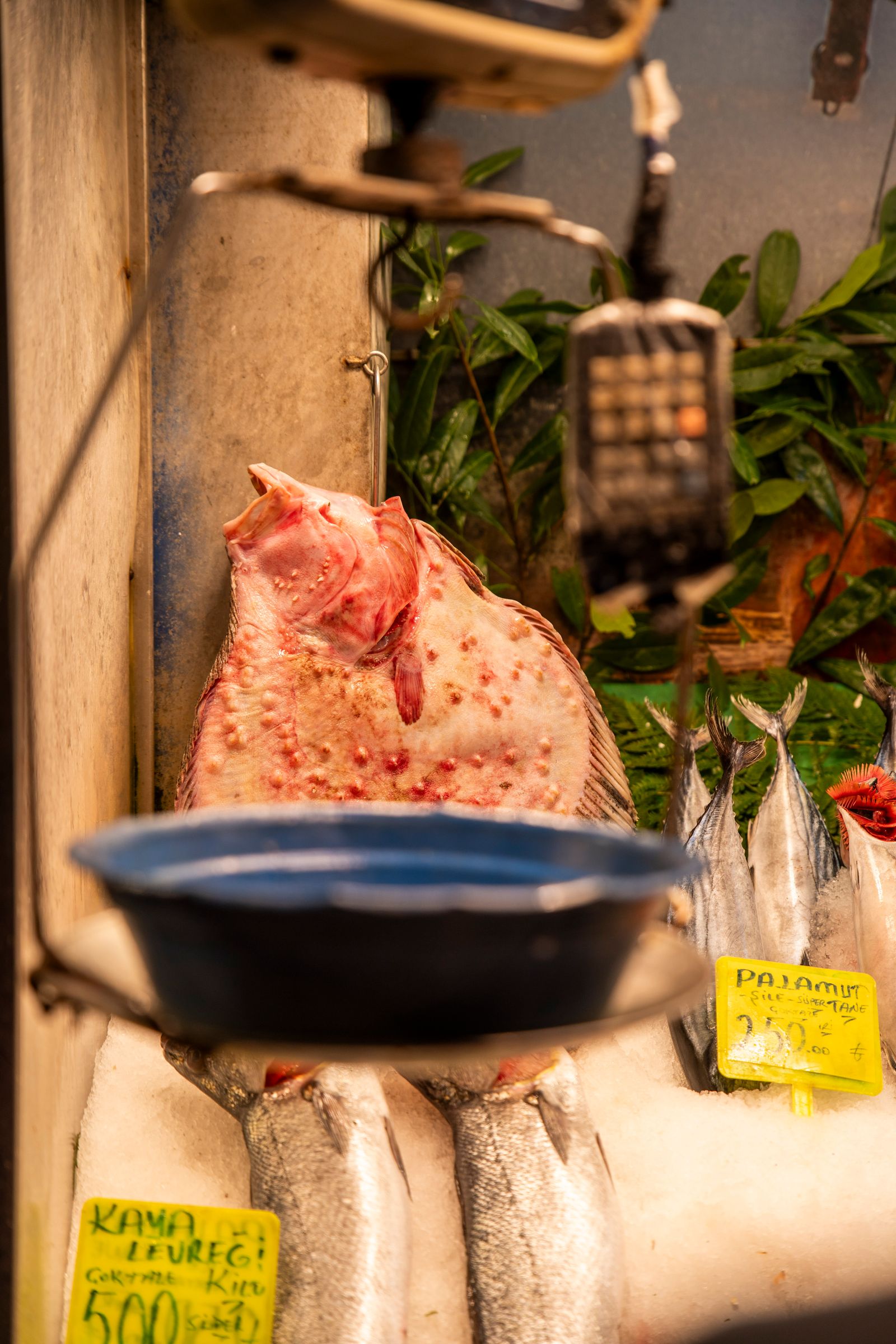
Photographs: Kaan Walsh
As autumn approaches, the sea once again takes pride of place in Istanbul’s conversations. Water temperatures are followed, fish sizes are discussed, and news circulates about shoals arriving from the Black Sea. As the fishing season opens, part of the city inevitably turns marine biologist. Then comes the real business: which fish has arrived, how should it be cooked, which one should you choose at the stall?
In Istanbul, the start of the fish season never meant simply that more fish came out of the sea. The arrival of the fish was a small change of regime, in the kitchen and in daily life. The frying pan went back on the stove, the prospect of a grill appeared, onions were sliced more often for piyaz (onion salad), and at the meyhane (a traditional tavern) counter, lakerda (salt-cured bonito) took on another meaning. And it mattered not only which fish arrived, but when.
Ahmet Hamdi Tanpınar’s line in Beş Şehir (Five Cities), “The Teşrin months have come, the lüfer season will begin”, ties the season in Istanbul to the fish’s stately arrival. Straight afterwards, Tanpınar reminds us that in April the Judas trees will bloom on the hills of the Bosphorus. Lüfer (bluefish) on one side, Judas trees on the other: in the city, the seasons are read not from the pages of a calendar but from signs set by nature.
In old Istanbul cuisine, the calendar really was something you could eat. The arrival of the fish carried the bustle at sea to the stall, and the abundance on the stall to the kitchen; it shaped a whole series of decisions, from what to cook to what to preserve. A fish’s season was therefore also the calendar of the fisherman, the seller, the cook and those who sat down at the table.
From sea to stall: the calendar’s first signs
Karekin Deveciyan’s 1915 book Balık ve Balıkçılık (Fish and Fishing) shows how detailed the knowledge was on which Istanbul’s relationship with the sea rested. It records fish species, migrations, dalyans (fixed net traps), netting spots and fishing gear, capturing the Bosphorus along with the way it worked beneath the surface. The sea was not only a resource that changed with the seasons but also a realm that was observed, classified and put to use by particular methods.
Istanbul did not just learn the route the fish took; it even built an order along that route. In the Bosphorus dalyans painted by Thomas Allom in the 19th century, the poles planted in the sea, the nets and the lookout structures form a second architecture on the water. The routes the fish passed along, the ways of catching them and their seasonal movements shaped life along the city’s shores. Today we look at the same water and wait for the ferry. The fishermen of old Istanbul, meanwhile, watched for the arrival of palamut (bonito), mackerel or lüfer. The change on the sea was not limited to the appearance of one species; it also signalled the bustle on the shore.
But the fish’s season did not begin and end at sea. Under what conditions the fish reaching Istanbul would be sold, how it would be priced and to whom it would be distributed were also part of this order. The moment the catch entered the city’s economic life, it was bound to the calendar of trade and rules.
When the fish comes ashore
The fish leaving the Bosphorus was only the beginning of the story. Fish arriving in Istanbul was auctioned at the Balıkhane, the state fish house, under government control; it was sold to middlemen and to tablakar, the tray-carrying street vendors, and tax was collected at the point of sale. Palamut and torik (large bonito) were traded by the pair, some products such as turbot and lobster by the piece, and many other fish by weight. The fish might have swum in from the Black Sea a few hours earlier. By the time it reached Istanbul, its accounts were ready.
The opening of the Balıkhane’s new building on 18 November 1902 is one example of how institutionalised this order had become. On opening day, 17 kilos of choice red mullet, çinekop (young bluefish) and plaice were put up for auction in baskets. Bidding started at 150 kuruş and closed at 600 kuruş, with the Balıkhane Directorate as the buyer. The fish were sent to Abdülhamid II. Even the sultan’s fish went through the auction.
This detail may seem small, but it reveals an important side of Istanbul’s relationship with fish. Fish was as much a commercial, fiscal and administrative object as an ingredient for the everyday table. Movement at sea demanded order on land.
The palace’s fish
It is easy to imagine that, in the palace of an imperial capital on the Bosphorus, fish always held the place of honour at the table. The records paint a somewhat more measured picture. In the 1473 Kilerci (palace pantry) registers from the reign of Mehmed the Conqueror, fish, oysters and prawns appear among the goods bought for the palace and Kuşhane kitchens (the latter cooked for the sultan himself). So seafood did have a place in the palace kitchen. Even so, compared with red meat and poultry, fish carried less weight in the palace cuisine of the classical period. Reading the whole relationship that the people of Istanbul, and especially its coastal communities, had with fish through the palace kitchen would therefore be misleading.
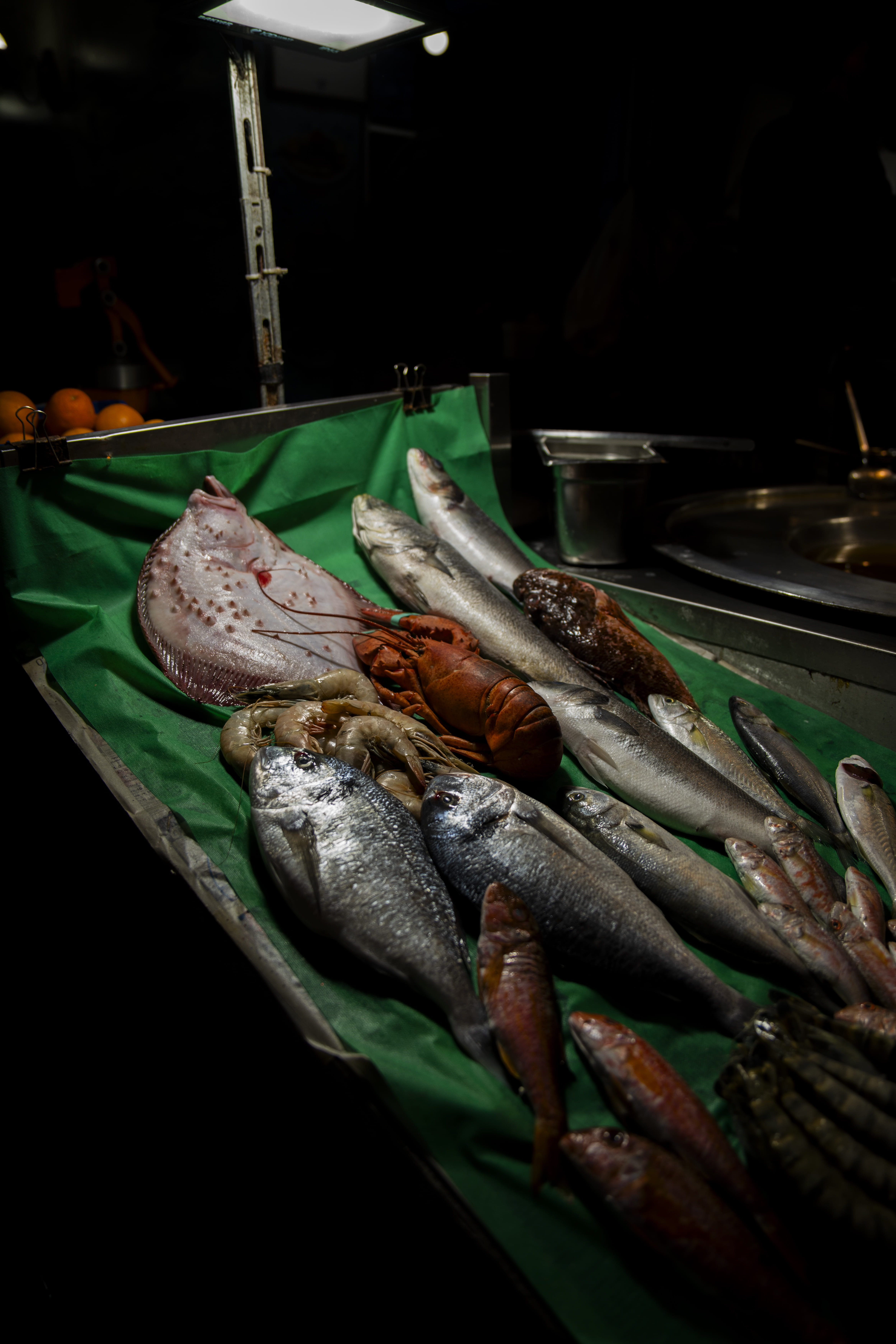
Fishing for the palace was, moreover, a regulated matter in its own right. A ferman (imperial decree) of 1577 discussed the fishing methods and privileges of the müsellem fishermen, a privileged corps who fished for the imperial household. So the palace’s fish, too, passed through taxes, licences and fishing rules on its way from sea to table.
Istanbul drew up the legislation for fish before it ate it. But the fish reaching the city was not enough for the seasonal calendar to find its echo in the kitchen. Which fish was in season, and how was it to be cooked or preserved?
Lüfer season: the size of the fish, the expectations of the kitchen
To understand Istanbul’s fish calendar, it is enough to look at the lüfer family. Çinekop, sarıkanat, lüfer, kofana: these names, used for the same fish at different sizes, show how detailed Istanbul’s relationship with fish is. As the fish grew, its name, size and fat content changed, and so did the expectations surrounding it. Palamut, too, was not simply called a big palamut when it grew; it took the name torik. And this transformation opened the door to a new possibility in the kitchen: lakerda.
Today we tend to imagine Istanbul’s fish cuisine as a little too plain. Good fish, a grill, rocket, onion; touched as little as possible. Yet the 1844 Melceü’t-Tabbâhîn (The Cooks’ Refuge) tells a rather different story. The book includes recipes such as lüfer külbastı (grilled cutlets), swordfish and palamut külbastı, mackerel kebab, papaz yahnisi (priest’s stew) made with mackerel, fried anchovies, oyster pilaki (braised in olive oil) and mackerel tarator (nut sauce). Swordfish and palamut can go on the grill on bay leaves and be eaten with hazelnut tarator. Lüfer is dredged in flour and grilled, then goes back on the heat with finely chopped onion, vinegar and water. Mackerel is topped with onion, parsley and lemon. So Istanbul has not always left good fish alone. Sometimes it has kept it rather busy.
In Mahmud Nedim’s Aşçıbaşı (Head Cook), from the end of the century, the repertoire grows even wider: fish soup, mackerel kebab, swordfish or palamut with bay leaves, fried garfish and anchovies, mussel pilaki, stuffed mackerel, pickled fish, caviar and çiroz (dried mackerel) salad.
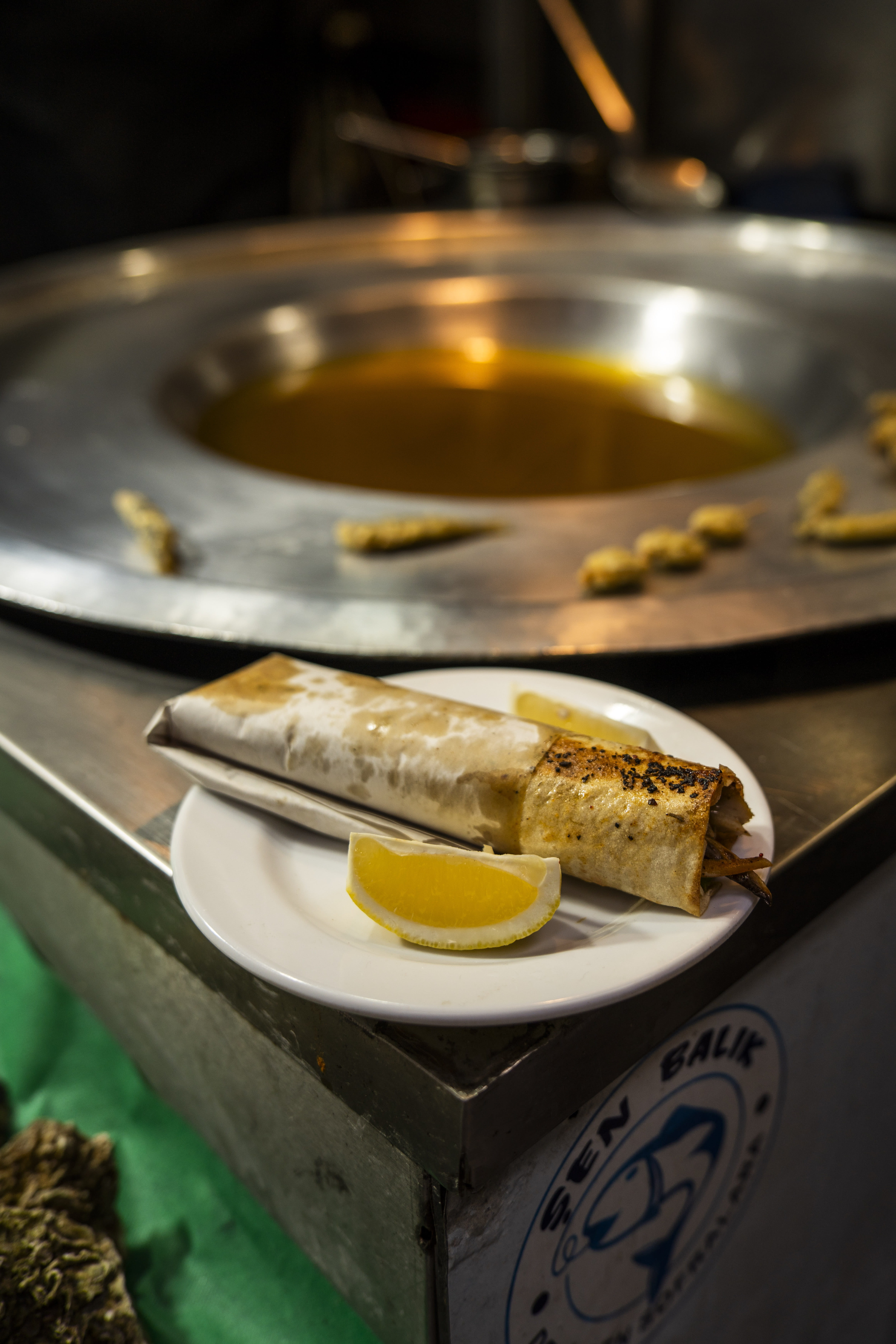
And then there is lüfer pilaf. The lüfer is poached, its flesh is picked from the bones and returned to its own broth, the rice is cooked in that broth, and finally cinnamon is sprinkled over the top. It is hard to predict the reaction you would get today if you asked for cinnamon on your lüfer pilaf at a Bosphorus fish restaurant. Yet the recipe has its place in cookbooks from around 1900. This variety shows that fish’s place in the kitchen was not limited to fresh produce thrown on the grill in season. The same ingredient was prepared with different techniques, went into different recipes and was put to use beyond the seasonal glut.
A lüfer affair at Balıkpazarı
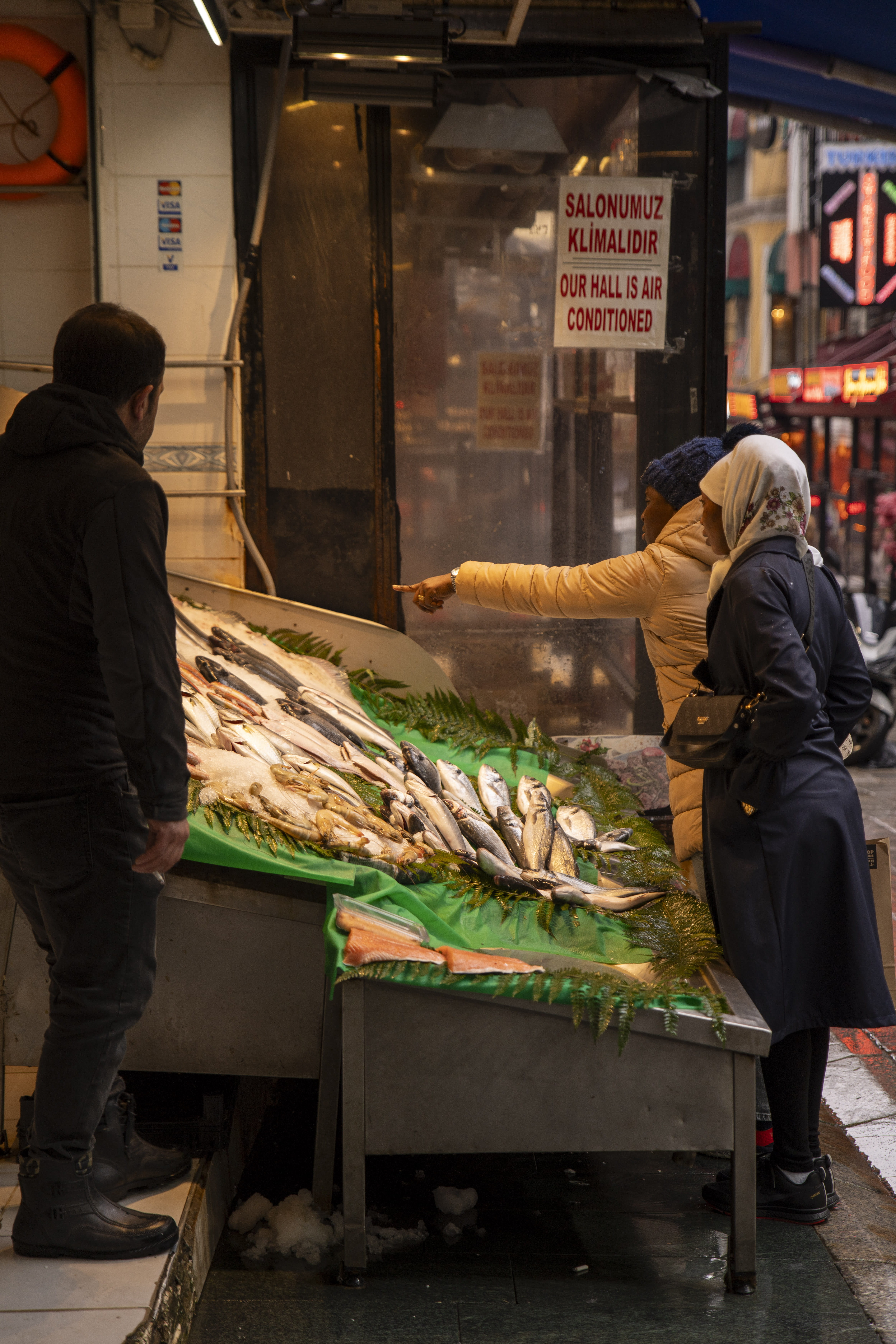
On 17 October 1898, Ahmet Rasim goes to Balıkpazarı, the fish market, and approaches a stall amid the sellers’ cries of “Lüfer, oh lüfer!”. The seller says twenty kuruş, and Rasim starts to haggle. The fishmonger swears on his fish’s eyes. In the end, some two and a half okka (an Ottoman weight) of lüfer are bought for thirty kuruş and sent home.
Rasim already has in mind how the fish will be cooked. The lüfer will be browned on the grill, then left to rest in a sauce of olive oil, lemon and mustard. But the cook mistakes the fish for palamut, cuts it into pieces and fries it dry in the pan. The lüfer Rasim was looking forward to vanishes. And so a botched dinner manages to make its way into Şehir Mektupları (Letters from the City).
More than a hundred years have passed. When it comes to looking a fish in the eye, expecting the seller to stand behind their goods, finding the price a little too high and holding firm opinions on how the fish we take home should be cooked, it cannot be said that we have changed much. That is why Rasim’s fury at his ruined dinner still feels familiar today.
What is more, thanks to that fury we learn how lüfer was chosen in the Istanbul of 1898, what it cost, how it was sent home and how it was considered proper to eat it. Gastronomic history can be read not only in banquets but also in the writings of a man annoyed because his dinner was ruined.
The state and the lüfer
To understand the prestige of fish in Istanbul, it also helps to look less at how it was cooked than at what people did for its sake. Mehmed Recai Efendi, father of the writer Recaizade Mahmut Ekrem, is a devoted lüfer enthusiast. According to a story Ali Pasiner relays from Münir Süleyman Çapanoğlu, one night Sultan Abdülaziz and Nevres Paşa go out for lüfer in disguise and find Recai Efendi at his fishing line.
The sultan encourages Nevres Paşa to tease Recai Efendi. But this is a bad idea, because Recai Efendi is waiting for fish. Eventually he loses his temper and lashes out at Nevres Paşa and at the “black-bearded” man beside him who has been egging him on. The black-bearded man is Sultan Abdülaziz.
The next morning an aide-de-camp from the palace hands Recai Efendi the Atiyye-i Şahane, an imperial gift in a red purse, sent by “the black-bearded man of last night”. Humour aside, it is a detail that shows what lüfer meant to its devotees on the Bosphorus. For in the unwritten constitution of the Bosphorus, there is no rank among the men at the end of a fishing line. Even for a sultan, testing the patience of someone waiting for fish is not very wise.
Lüfer season thus goes beyond the bustle at sea. It brings with it meetings on the shore, nights spent with a line, conversation and rivalry. In the end, the fish calendar orders the city’s social life too.
Poetry until the fish arrive
What the old Bosphorus fisherman Asaf Muammer told Rıdvan Tezel in the 1950s reveals another side of this world. Muammer remembers the lüfer nights of the old Bosphorus as the “Lüfer Era”. In the evenings the boats gather on the Bosphorus; while everyone waits for lüfer, conversation, music and poetry come into play. Care is taken with light so as not to frighten the fish.
Then the fish arrive. The priority given to conversation and cultural pursuits naturally shifts. Without fish, poetry is free; when the lüfer come, everyone gets down to work. Around a seasonal catch, a community forms with its own habits and a shared language. Waiting for the fish is also a reason to come together and spend time with one another. The movement at sea orders life on the shore.
Istanbul’s way of turning the fisherman into a cultural character finds its echo in literature too. Tevfik Fikret’s poem Balıkçılar (The Fishermen), published in 1899 in Servet-i Fünûn, the leading literary journal of its day, tells of a fishing family forced by hunger to put to sea in bad weather. This time the fish’s season and the yield of the catch stop being a matter of pleasure or curiosity and become a question of livelihood. In the next generation, Sait Faik follows the fishermen, the nets and the boats out to the islands.
These examples show that the meaning of fish in the city does not fit into a single story. As the everyday lives of people living around the sea became part of literature, the same calendar found different echoes in different lives. That is why Istanbul’s relationship with fish is not only a matter of culinary history. Fish is caught, sold, cooked, and then written about. The season that comes from the sea settles into the city’s language and memories too.
When the season ends: the fish’s second life
Perhaps one of the most interesting aspects of Istanbul’s fish cuisine is that the pursuit of freshness and a passion for preserving can live at the same table. On one side, people ask whether the fish was caught that morning. On the other, the same produce is dried, salted or pickled so that it can be eaten months later. The fish calendar prompts thought not only about which species will arrive when, but also about how to make the most of that season.
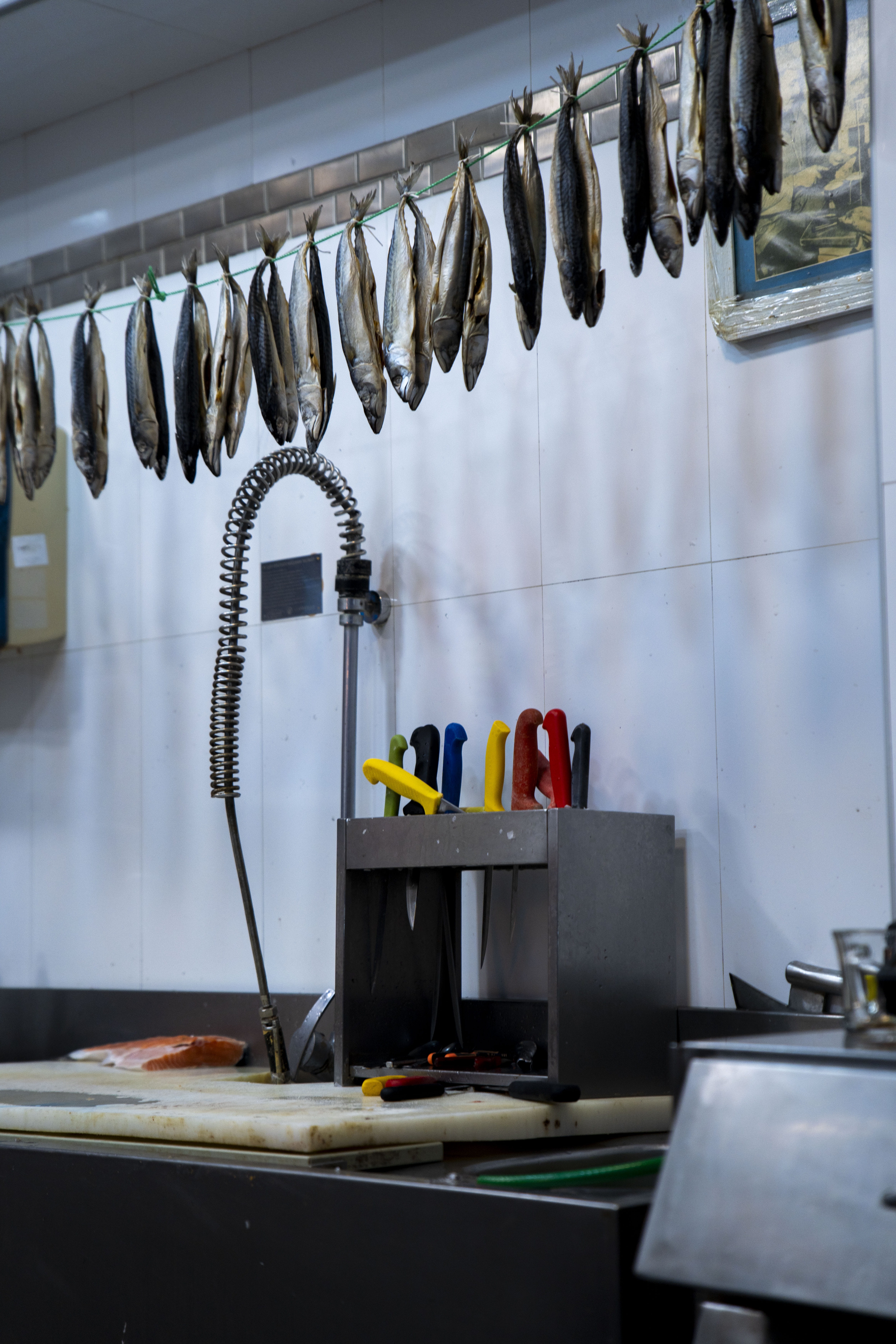
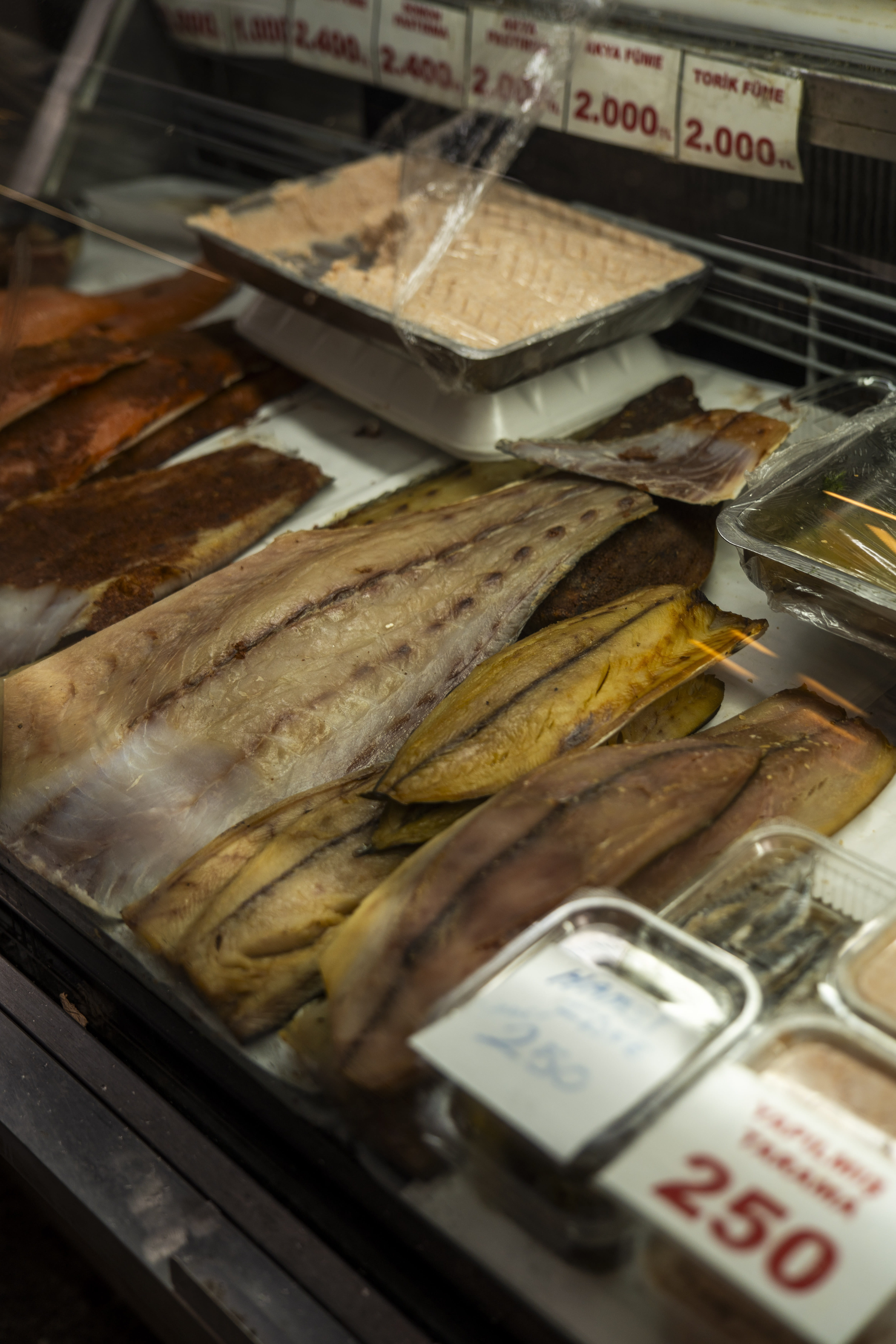
Mackerel that have spawned in spring and grown lean become çiroz. In the traditional method Deveciyan describes, the fish are salted, tied in pairs and dried. Then, to be able to eat the dried fish, we start working on it all over again: it is held over a flame, the flesh is pulled away, and it is softened once more with vinegar and olive oil. Drying a fish only to soften it again may look like unnecessary work from the outside. But clearly the result was enough to win Istanbul over.
The solution developed for torik, meanwhile, is an even more painstaking job: lakerda. The fish is cut into thick chunks and the blood around the spine is carefully cleaned away. The pieces are soaked in cold water to draw out the blood and laid in coarse salt. Then comes the wait. The oily fish that swam through the Bosphorus a few weeks earlier becomes something else, pink and white, sliced thin. The preparation is laborious, the serving comically simple: lakerda, red onion and olive oil. In fact, çiroz and lakerda solve the same problem. The fish’s season will pass, and people will want the flavour it gave to stay at the table a little longer.
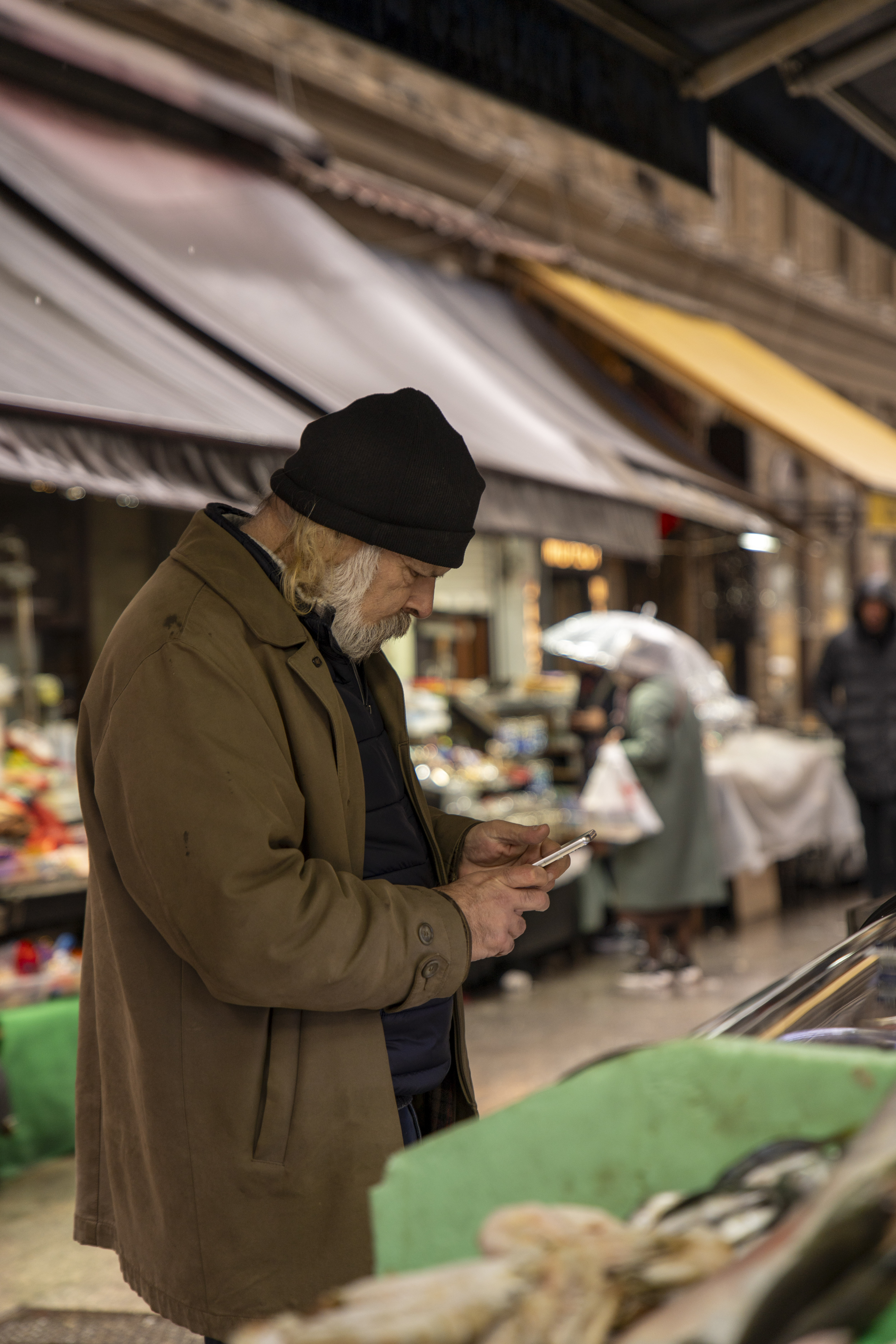
Today, when seasonal fish is discussed, the focus is mostly on freshness, fishing periods and choosing well. Yet in the old Istanbul kitchen, knowing the season meant not only understanding when abundance would come but also knowing how to make use of it. Preparing fish for another time was as much a part of this knowledge as eating it fresh.
The calendar beneath the waves
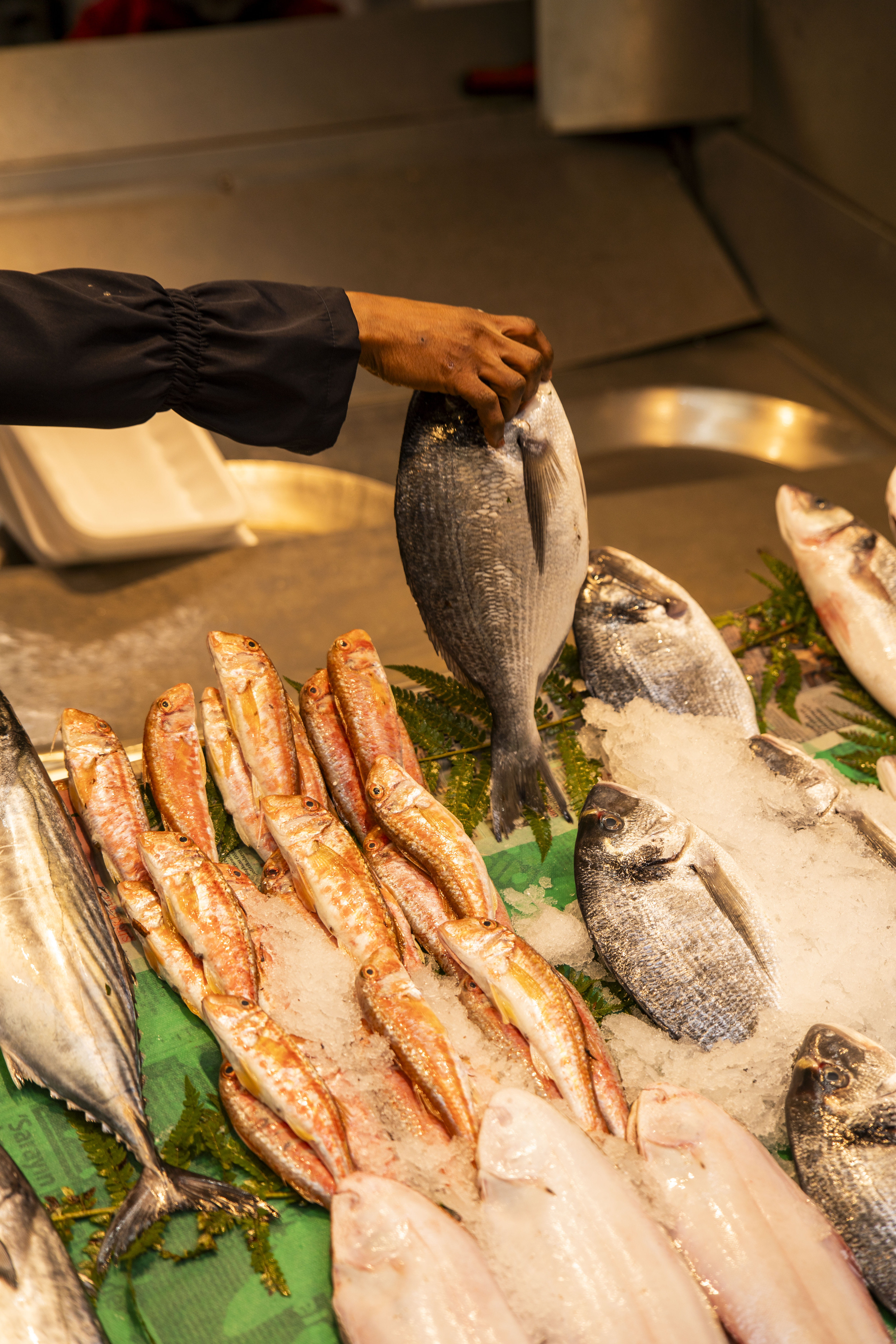
Today it is easier to tell that fish season has arrived. News, phone calls and social media quickly announce which fish has appeared on the stalls. Still, in Istanbul we ask, “Has the palamut started?” When October comes, we talk about lüfer. At the stall, people look the fish in the eye, lift its gills and try to find out where it was caught. “It came in this morning” remains a powerful sign of trust, accepted as a way of dating a fish’s freshness as precise as carbon dating.
Not every detail of the old calendar has survived. The conditions of fishing, consumption habits and the shape of our everyday relationship with the sea have changed. But the habit of following the fish’s season, looking for the right fish at the right time and knowing how to make the most of it has not disappeared entirely.
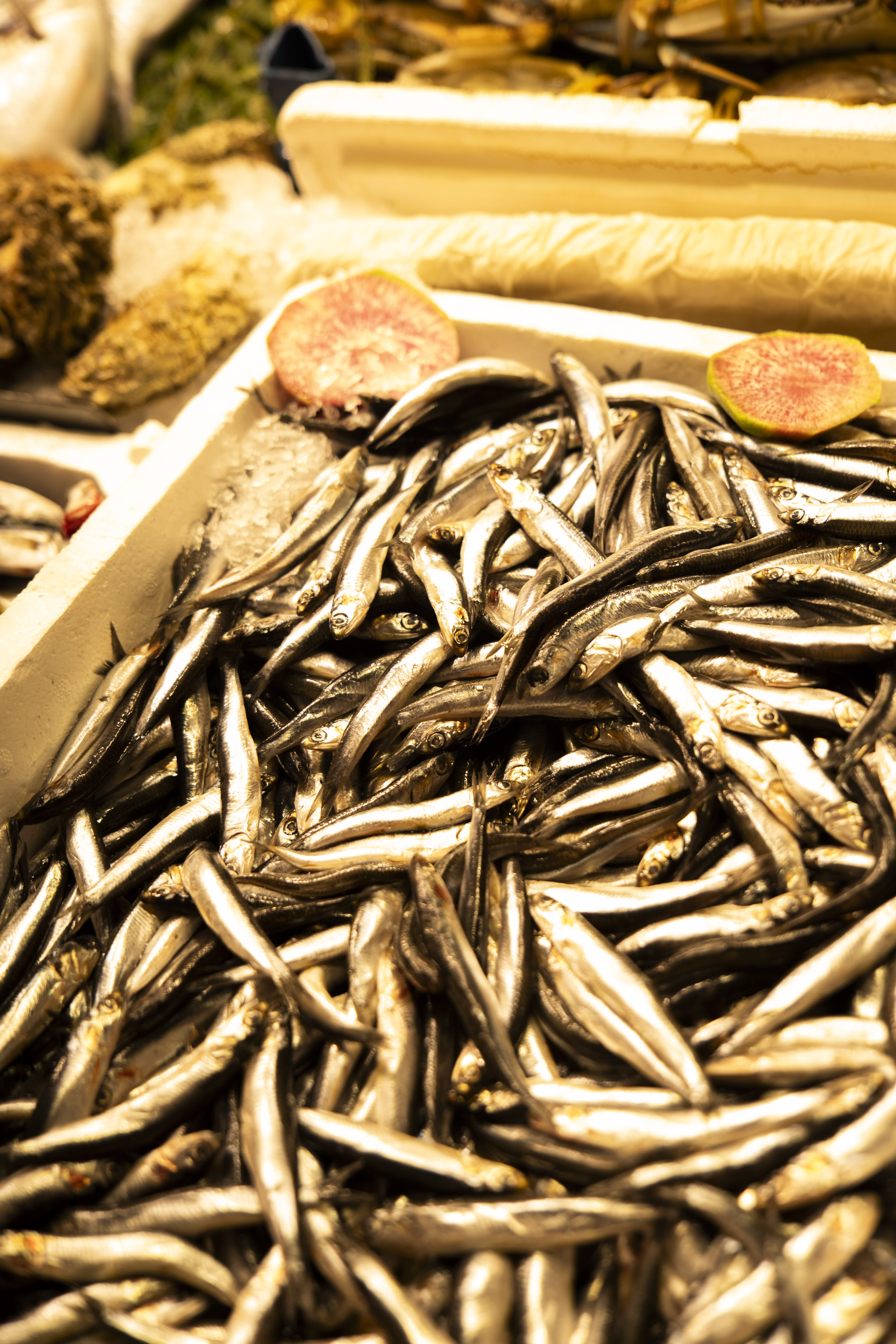
Once, the lüfer’s entry into the Bosphorus could change which boat went into the water, what was shouted at Balıkpazarı, where the night was spent, which pan went on the stove and what the city talked about the next day. The arrival of the fish set off a chain of movement from sea to stall, from kitchen to table and from there to literature. It was as if the season rewrote the city’s order from scratch.
Istanbul’s old fish calendar is somewhat scattered today. But in October, when fishing lines multiply along the shore, a small part of the system still works. Someone looks at the water and waits for something to bite at the end of the line. At the stalls, people ask about lüfer, talk about where the fish came from and debate the taste of fish eaten in season.
And when the arrival of a fish stirs up enough in the city, it becomes a calendar itself. In Istanbul, the season was once told not only by the months but by the fish. And some months are still called lüfer.
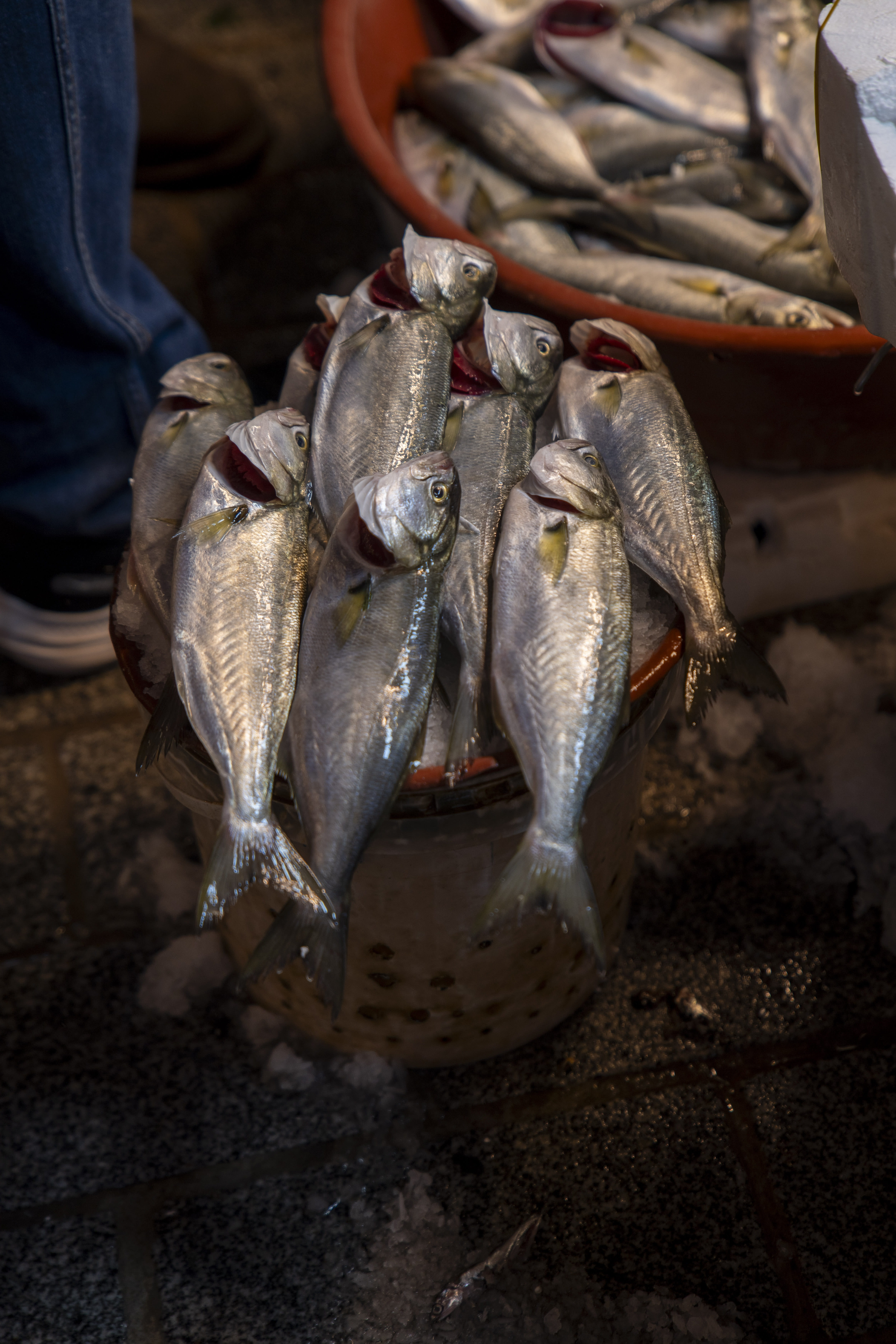
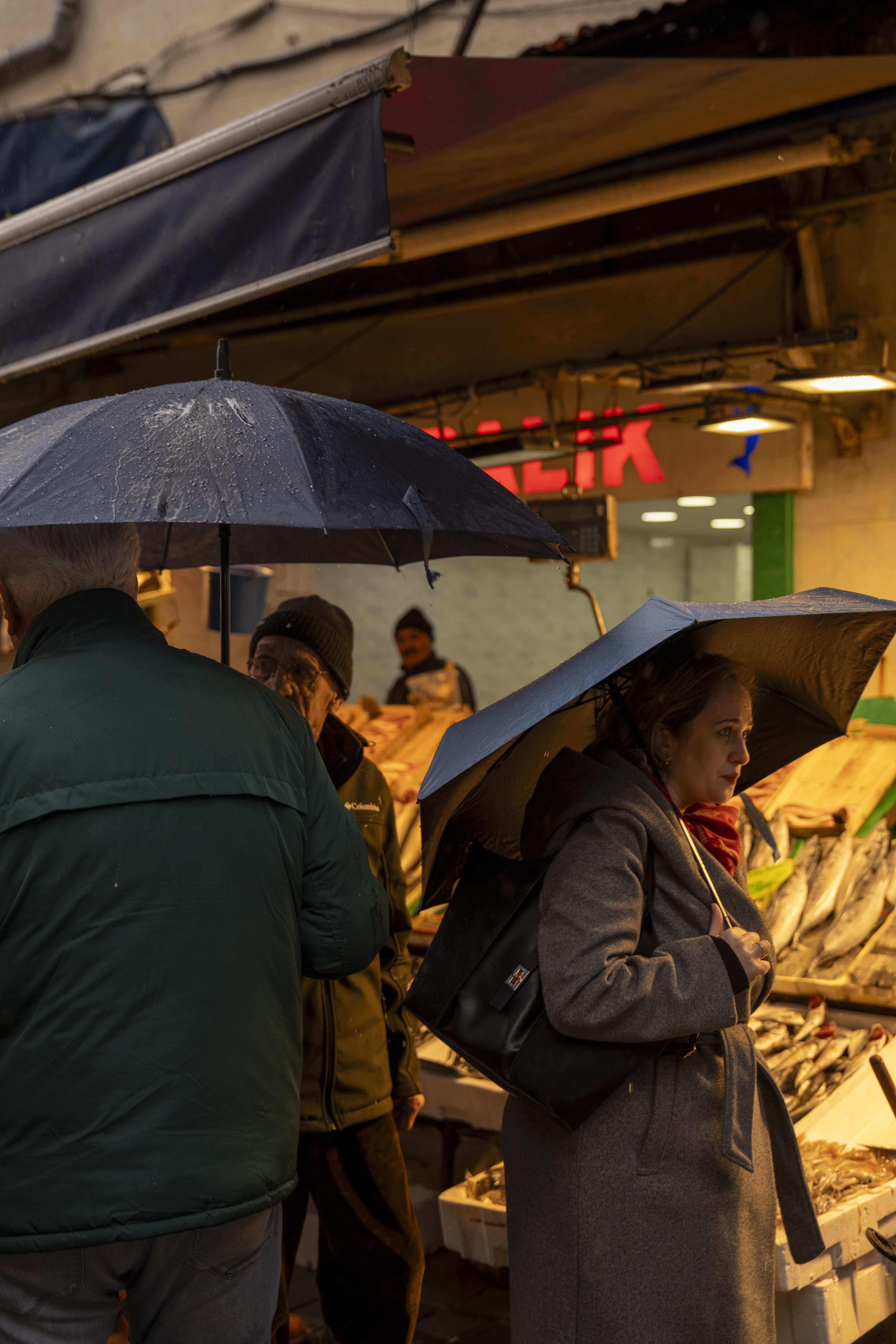
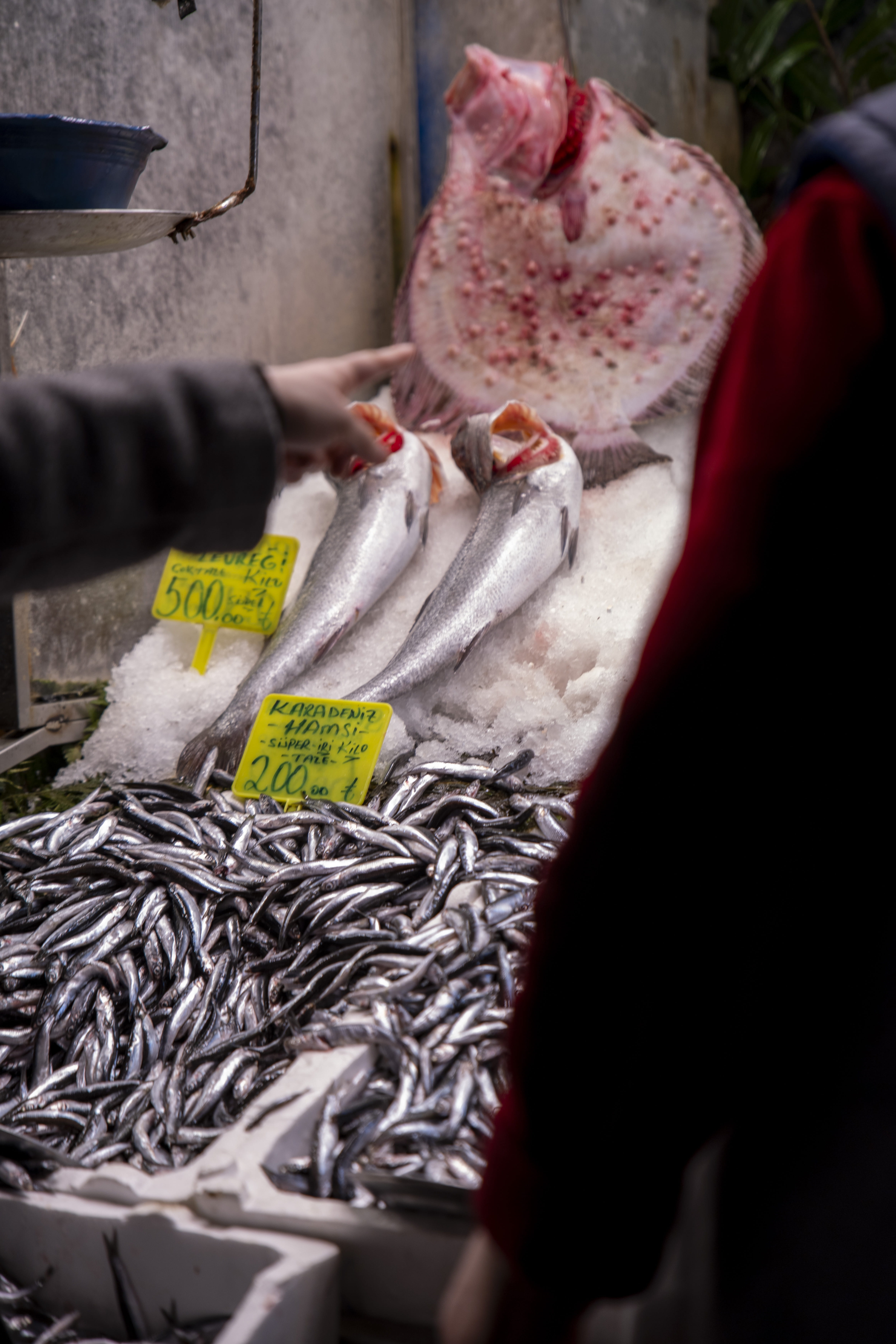
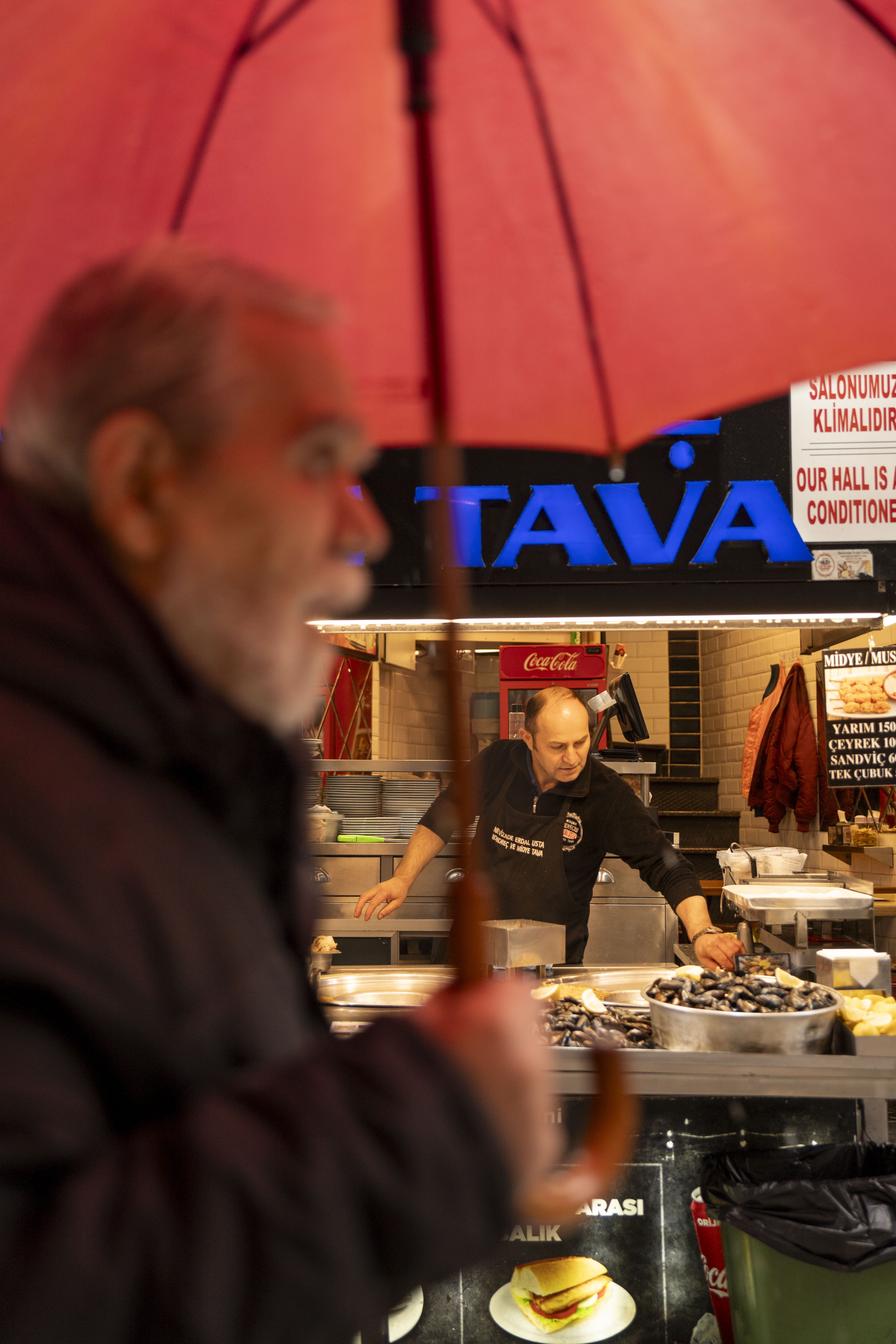
The photographs in this article were taken for Aposto by Kaan Walsh at the Kadıköy and Beyoğlu fish markets, on Istanbul’s two shores, in February 2026.