Grouper’s Liz Harris: is mystery in music still possible?
Grouper, the solo project of American artist Liz Harris, comes to the Fiba Salon İKSV stage on 4 November. We met her on Zoom before the concert to talk about music today and how she draws on darkness.
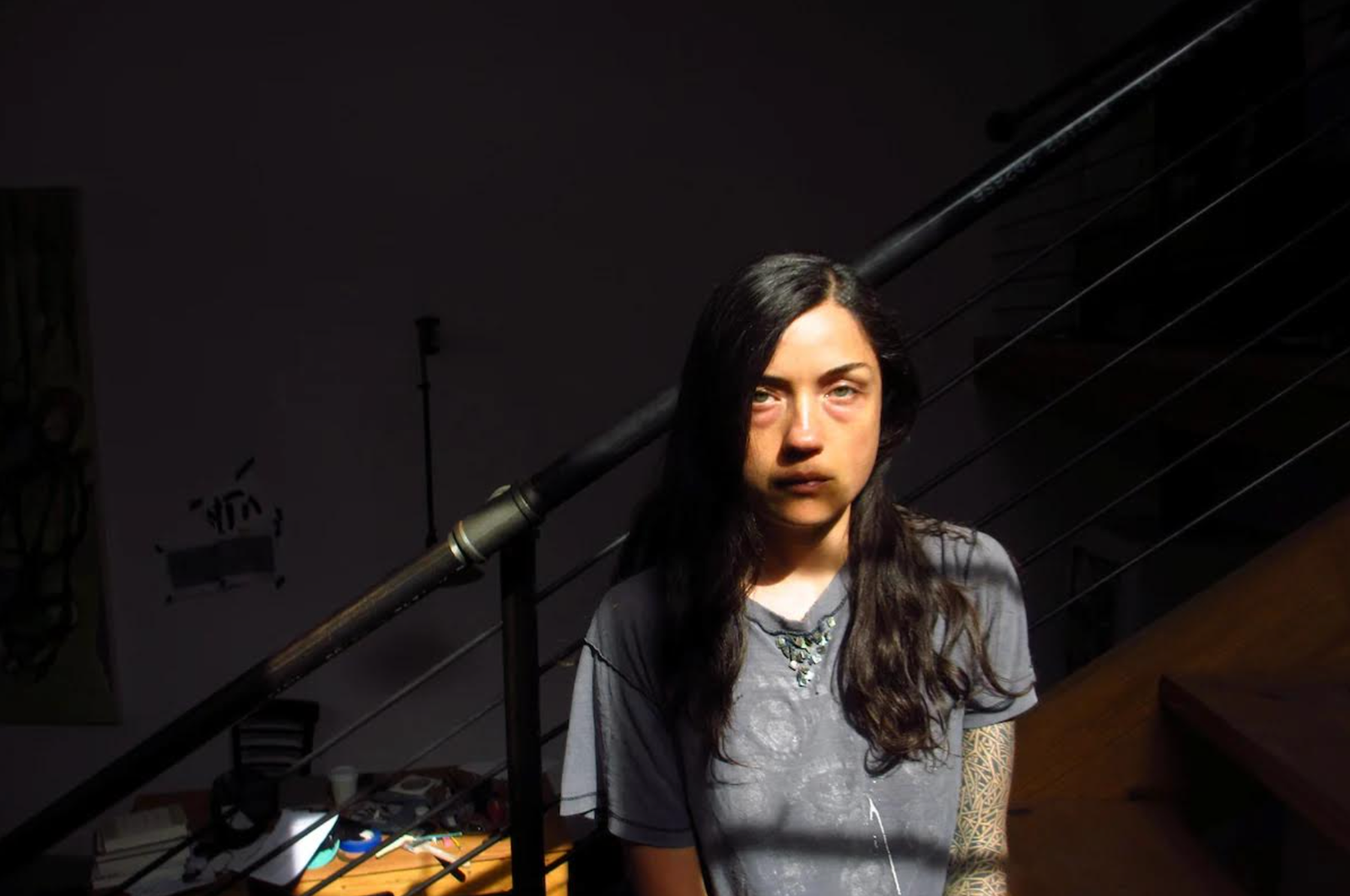
Grouper, the solo project of American artist Liz Harris, invites the listener into a musical world that drifts between lo-fi and dream pop and holds many different soundscapes. When her 2008 song “Poison Tree” went viral on TikTok, we also saw how timeless her music is, and how it reaches across generations.
Liz pours her solitude and inner darkness into melodies, drawing inspiration from the ocean. Having spent her childhood in a commune, she has chosen to keep her distance from social life as an adult, too. She gives very few interviews and has an air of mystery about her. Ahead of her concert on 4 November at Fiba Salon İKSV (İKSV is the Istanbul Foundation for Culture and Arts), I meet Liz Harris, whom we know as Grouper, over Zoom. She keeps her camera off, but the delicacy of her voice, much like her songs, puts you at ease and makes you want to keep talking. Liz Harris and I talk about music today and about how she draws on darkness.
I know you don’t give many interviews, so thank you all the more for making the time. Where are you right now, and how are you?
I’m at home in Oregon. I’m well. It’s my last day to rehearse and pack my suitcase before I set off on tour. Tomorrow I have to go to the city where the airport is. So a busy day lies ahead, but I feel good.
You’ll be playing Fiba Salon İKSV on the evening of 4 November. What brought you back to Türkiye?
I’ve been to Türkiye a few times. I think I’ve been to Istanbul three times. I also went to Cappadocia once, for a festival. I really love Istanbul. I met Ekin Fil, who’ll be on stage with me, the first time I went there. We’ve been friends ever since. It’ll be lovely to see her again. Istanbul really is an incredible city. I love its history and its food. Actually, what I love most is wandering aimlessly, taking the ferries, walking and visiting the mosques. One of my nieces is named after Hagia Sophia, so visiting it has a special meaning for me as well.
‘I didn’t grow up wanting to perform’
Your music is often described as sad. Your song “Headache”, for example, takes on a different shape depending on the mood I’m in when I listen to it. What sort of mood are you in when you make music?
I think it’s exactly as you describe. It isn’t so simple that you can just call it sad and leave it there; there’s always a mix of feelings in it. There’s melancholy too, but not a melancholy that pulls you in completely and drowns you. There’s also an inner uplift, or a kind of faith. And of course I always prefer to leave room in the songs for different interpretations.
“Invisible”, meanwhile, is about feeling invisible, and many of your songs are built on themes like this. Despite your introspective nature, you go on stage and play your songs to crowds. What does being on stage mean to you?
That’s an interesting question. I didn’t grow up wanting to perform. It was never something I wanted in my life. But I fell in love with making music. Going on stage became something I had to work out later, because people asked for it. I wanted to try, but I don’t think I’ve ever had the kind of personality that longs to be larger than life on stage, to be in the spotlight or to have people staring at me. Over time, though, I’ve made peace with it, because I focus on the parts of performing that I love. The connection with the people in the same room and the chance to make something creative matter to me.
That’s why I often play films in the background, to turn my performances into something else. I don’t aim to play the songs exactly as they sound on the album, either. I try to create almost a separate space of making, where the pieces are alive, change and take on different sounds. And the films in the background have another nice side: people aren’t staring at me while they’re on. (She laughs.)
‘I had a chaotic childhood, and it took me time to make sense of what I went through’
Do you think music can say things that words can’t?
Absolutely. I think that’s what drew me to music in the first place. When I started making music, I didn’t know how to put much of what I felt into words. Interestingly, the forms of communication our society values and prizes most are spoken and written language, aren’t they? If you want to communicate, get a job or do anything at all in the world, you have to be good at those. But language can sometimes be far too linear and limited.
With music you can talk about five different things at once without using words. You can convey an expression or a feeling directly. As a child I always struggled with verbal communication. I wasn’t a talkative child. I still sometimes feel it’s easier for me to express myself in riddles or poetic language than to speak directly.
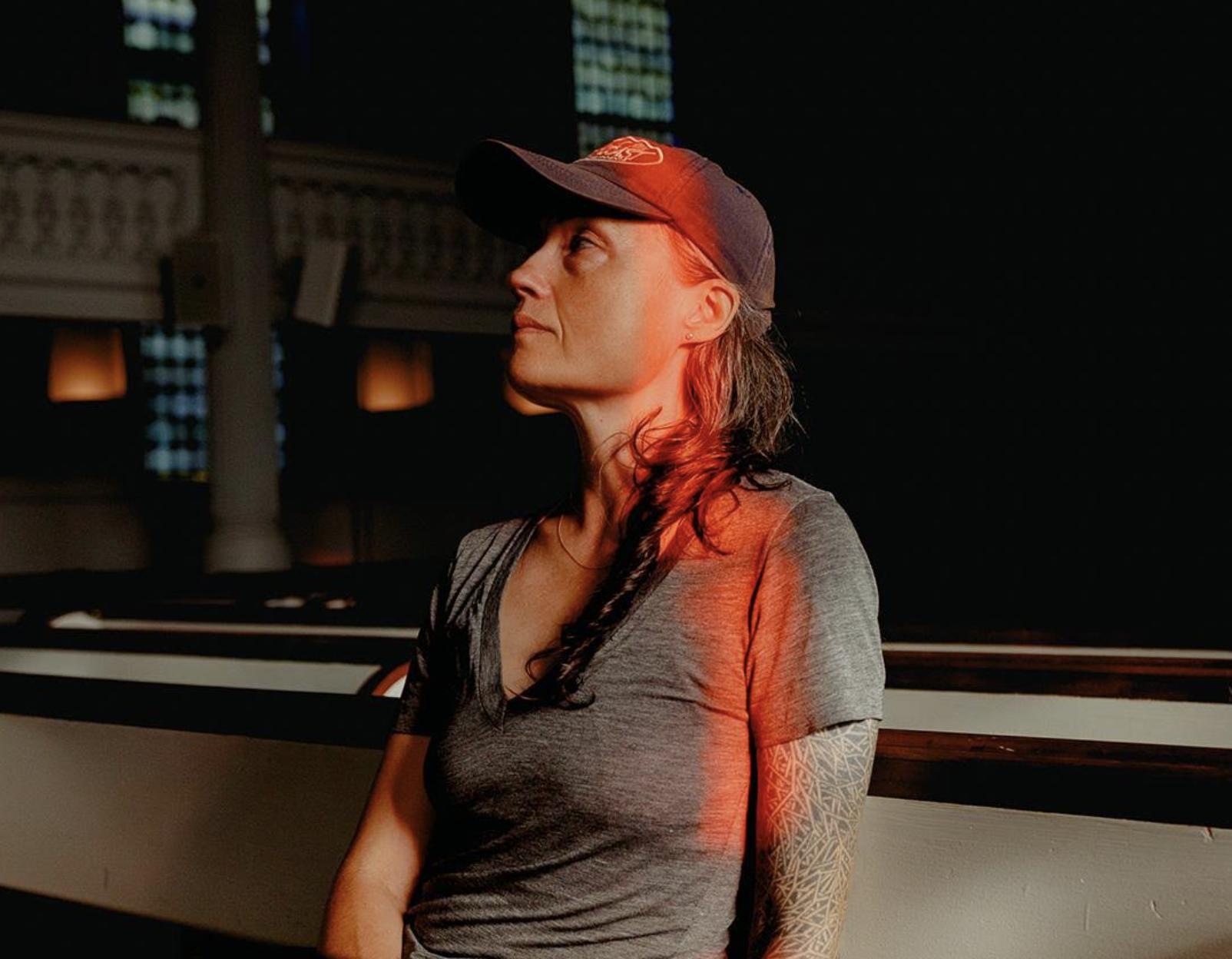
In one interview you mentioned trying to understand your darker sides through music. Has your relationship with that darkness changed over the years? Have you found new ways of understanding it?
I think as I get older I’m learning more and more to stay with whatever is inside me and to accept it. I feel I’m on much firmer ground. Part of that is about getting older, but I was also in therapy for a long time. I had a fairly chaotic childhood. So it took me a long time to make sense of what I went through, even of what exactly had happened.
That was also behind what I went through in my twenties and much of what came through in my music. Therapy really helped a lot. So did getting older. As you grow up, you get to know yourself better. Over time you have to learn to live with certain sides of yourself and to love yourself as you are, because there’s a limit to what you can change.
I understand you very well, because I was in therapy for a long time too. Therapy is a really hard process, but just as rewarding.
Absolutely, it doesn’t make everything better instantly, as if touched by a magic wand. First it stirs everything up and shakes you.
‘What surprised me most was “Poison Tree” blowing up’
Image and spectacle matter more than ever in today’s music industry. Is it hard to make such minimal music in a world like that?
I notice that musicians’ photos are given more and more importance. We live in a culture where the visual is very much at the forefront. I have friends who make minimal, challenging music but manage to get past those expectations and still reach a wide audience.
So I have full faith in the younger generation coming up. Personally, I try to resist these demands of the industry too. When a new album comes out, there have to be photo shoots, but I call that “the appearance game” and try not to focus on that part of the work.
But I believe the younger generation is pushing back against these expectations as well. And these are people who grew up taking that visual culture as normal. It’s really wild, because when I was growing up it was impossible even to find photos of artists, never mind the music. There wasn’t a big internet culture yet.
So we listened to music without knowing who the artist was. That created a great mystery around the music. Today it’s getting harder and harder to come across that kind of mystery, but I still think people will always look for mystery and go after what they don’t know. Because the unknown is by its nature fascinating. So people will keep looking for artists who go against the established order and stand outside the norm.
Yet it’s a little ironic that the younger generation discovers music through platforms like TikTok, where the visual comes first. How does it feel to have people from different generations listening to your songs?
It really is ironic. It feels like a lovely gift. At the concerts on my last tour in America, I could clearly see such a large young audience for the first time. They were really sweet young people, into art, queer. They wanted to come up and talk to me. Meeting them was really lovely. Honestly, it surprised me.
The audience changes every few years. Sometimes I think to myself that it would be natural for interest to fade at some point and for people to stop listening to the music I make. Musical tastes change, after all. So it surprises me, and makes me grateful, to still see people interested.
What surprised me most was “Poison Tree” blowing up, because personally it wasn’t a track I’d thought would become very popular. I still wonder sometimes what it is about that song that moves people so much. It has a fairly repetitive structure, but I’m really glad they love it.
I think the new generation is much more open to listening to every genre than earlier generations. My generation was so conservative that if you listened to rock, you listened only to rock and ignored everything else.
Yes, you’re absolutely right. Concerts by people like Sarah Davachi or Kali Malone, who make music that demands deep listening, are still full. And the people going to those concerts are the same young people who also go to raves and big pop concerts. Yes, there’s a real openness in the younger generation, and that’s very cool.
‘My first album was shaped by the upheavals of my childhood’
What did you listen to growing up?
My father went back to school late in life to study composition, so he was always playing the piano at home, and my ears were filled with classical and early music. My mother and siblings lived in separate houses, but each of them had wonderfully colourful taste in music. My sister listened to 80s goth, new romantic and new wave; my eldest brother DJed in clubs in San Francisco; and my other brother was a total metalhead. My mother loved pop, folk tunes and world music. The first music I discovered on my own was probably R&B and rap, which grabbed me when I was 12 or 13 and where I felt I belonged. And of course Nirvana and grunge were in the mix at the same time. In short, I grew up surrounded by a very wide range of music.
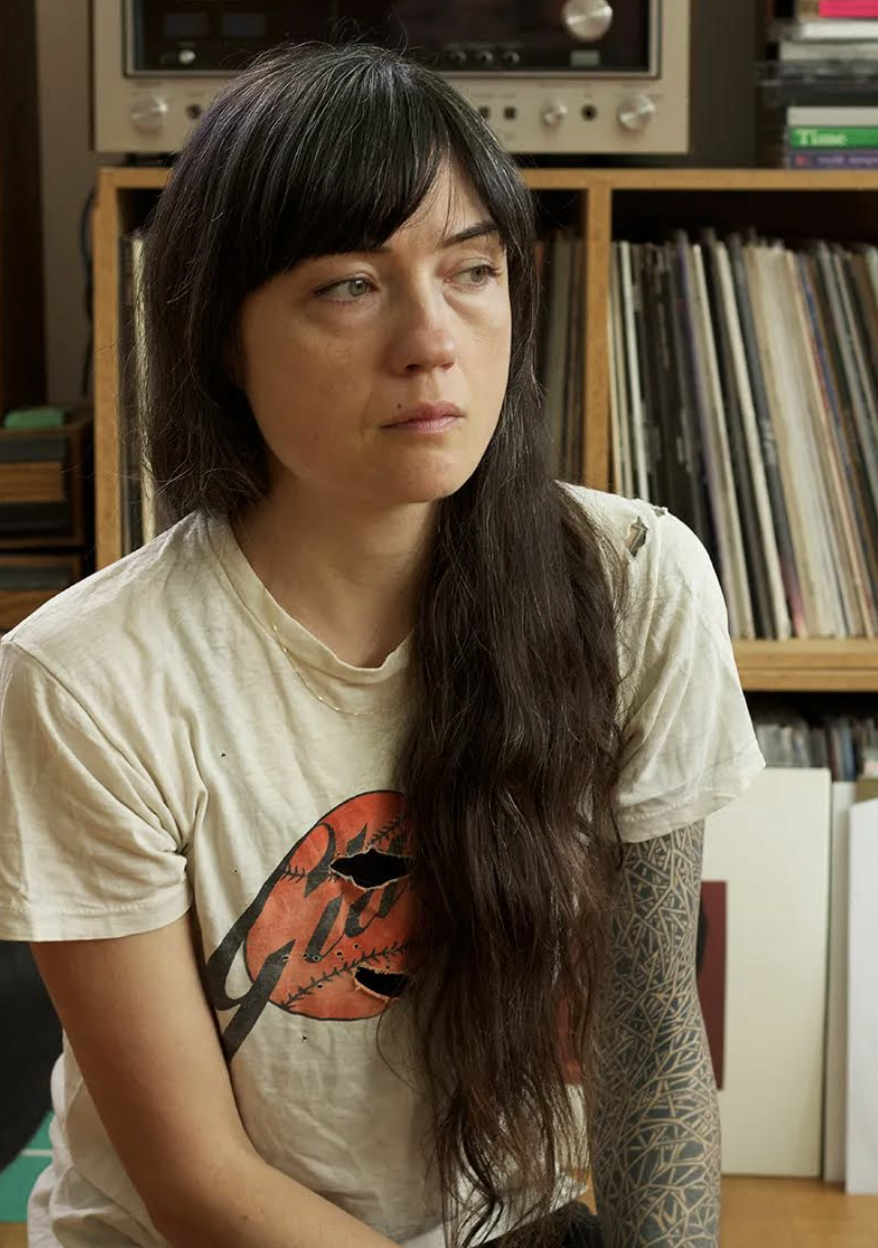
I don’t know if you want to talk about it, but how has the commune you spent your childhood in come through in your music?
Funnily enough, because I chose a band name connected to that experience, I think some people assume all of the music is about it, but that’s definitely not true. It’s more a way of referring to myself. [In the commune where the artist grew up, children and parents called one another “grouper”.] But I do think my first album was shaped by a sense of being lost and a search for self that took root in that commune experience, because that period was truly unsettling for me.
There was a lot of loneliness and isolation in my childhood. When I was very young, perhaps a little too early, I realised that I was on my own and had to look after myself. I think when you go through hard things at a young age, they always stay with you. So I’m sure it still comes through in the music I make today, because it deeply shaped my sense of self.
But like every other experience, it had two sides. There were good things that came from growing up in a commune too. For example, there are people I’m still very close to from my childhood. They kept us apart from Western culture. Although that was sometimes confusing, I think there were good sides to growing up without television and being open to different experiences. We also took part in lots of group activities together. So all of this was a complicated experience with both good and bad sides. But of course, because it shaped who I am today, it continues to affect me and all the music I make.
‘I could never make an album like Cover the Windows and the Walls again’
Which of your albums or songs describes you best? Perhaps there’s one that changed everything in your life?
I think I love a different side of each of my albums. But I still really love the feeling and the sound quality of Cover the Windows and the Walls. I don’t think I could recreate it today, because that album came from a time when I was still recording in quite lo-fi ways, didn’t know much about production and refused to work in a studio. It’s a magical album for me.
Then there’s Way Their Crept, because that album was like a mystery even to me. I wasn’t planning to make an album; I’d only just started making music, and I recorded it before I’d fully grasped it myself. It feels to me as if it came pouring in from somewhere outside rather than from within. For that reason alone, I set it apart.
I know you haven’t stayed silent about the war in Gaza and the rise of fascism in the US. Do you think music helps us connect with social issues, or does it pull us away from the world and offer an escape?
I think it can do both. Music can be a refuge where you escape and hide from the weight of the world, and it can also let you feel that pain and injustice to your bones and form a deeper connection. We can’t bury our heads in the sand and do nothing. People use music for different needs: sometimes they listen to breathe, to calm down and to shut the world out, and sometimes to share the great collective anger or grief for which words fall short.
I think a person can do more than one thing at a time. And music helps us express experiences like these. It can take you out of your own head for a moment, but at the same time, especially with live music, it makes you feel connected to other people. So I definitely believe music can do that.
Realising that someone else is expressing what you feel through their music creates a very deep sense of connection. That’s one of the reasons I think it’s important, as an artist, to talk about all of this and to acknowledge what’s happening in the world. When people see what they feel translated into someone else’s emotions, it creates a very deep sense of connection. That’s why I think it’s so important, as an artist, to talk about these things and acknowledge what’s going on.
I notice this especially in the US. I remember we were on tour when the Ed Sheeran thing happened. Honestly, I barely even knew who he was, but my sound engineer told me about it and said, “This is a really big deal.” Everyone was talking about it. Metallica recently did something similar too. Of course, there are disappointing examples as well.
‘The music I listen to when I’m sad is the ocean’s waves’
What kind of music do you listen to when you feel sad or lonely?
Sometimes I like music that makes me sad and gives me energy at the same time, because somehow it helps you win back a little of your strength. I really love Dead Can Dance. Their music is melancholic but also has energy and movement. I also love Burial’s Untrue.
There are some truly powerful classical pieces too: Arnold Schönberg’s “Verklärte Nacht”, for example, and Arvo Pärt’s “Tabula Rasa” or “Fratres”. Because I’ve listened to those recordings since childhood, they’re practically etched into me, and they can help me reach a lot of things. But yes, when I feel sad, the first thing I usually do is leave the house and go to the ocean. So that’s the music I listen to, I suppose. Ocean waves.
You make your music alone. Recently, though, you formed a band called Helen and made the album The Original Faces. What did you discover along the way?
With Helen there was a wonderful relief in sharing the workload with two friends. It came at an interesting time, because it was after COVID and my head was scattered by some personal difficulties life had thrown at me. My bandmates pushed me quite hard to play and record, and I’m glad they did, because making that album pulled me out of the mildly depressed state I was in. It was great and fun. It was like an affirmation of our friendship, which I think is so important to emphasise at a time when the world has gone so mad. A sense of community, of belonging to one another, is so important. It’s the only way we can stay on our feet. I realised I’d brought the same sensitivity I bring to Grouper into Helen as well.