This week in Bibliotherapy: books for teenagers who struggle to express themselves
There is a longer distance than we imagine between thinking about our feelings and expressing them. Sometimes thinking even becomes an alternative to expressing. We spend so much time in our own minds that we never have to talk to anyone else. In adolescence, on top of all this comes a sensitivity to what other people think. Three books for teenagers who find it hard to express themselves.
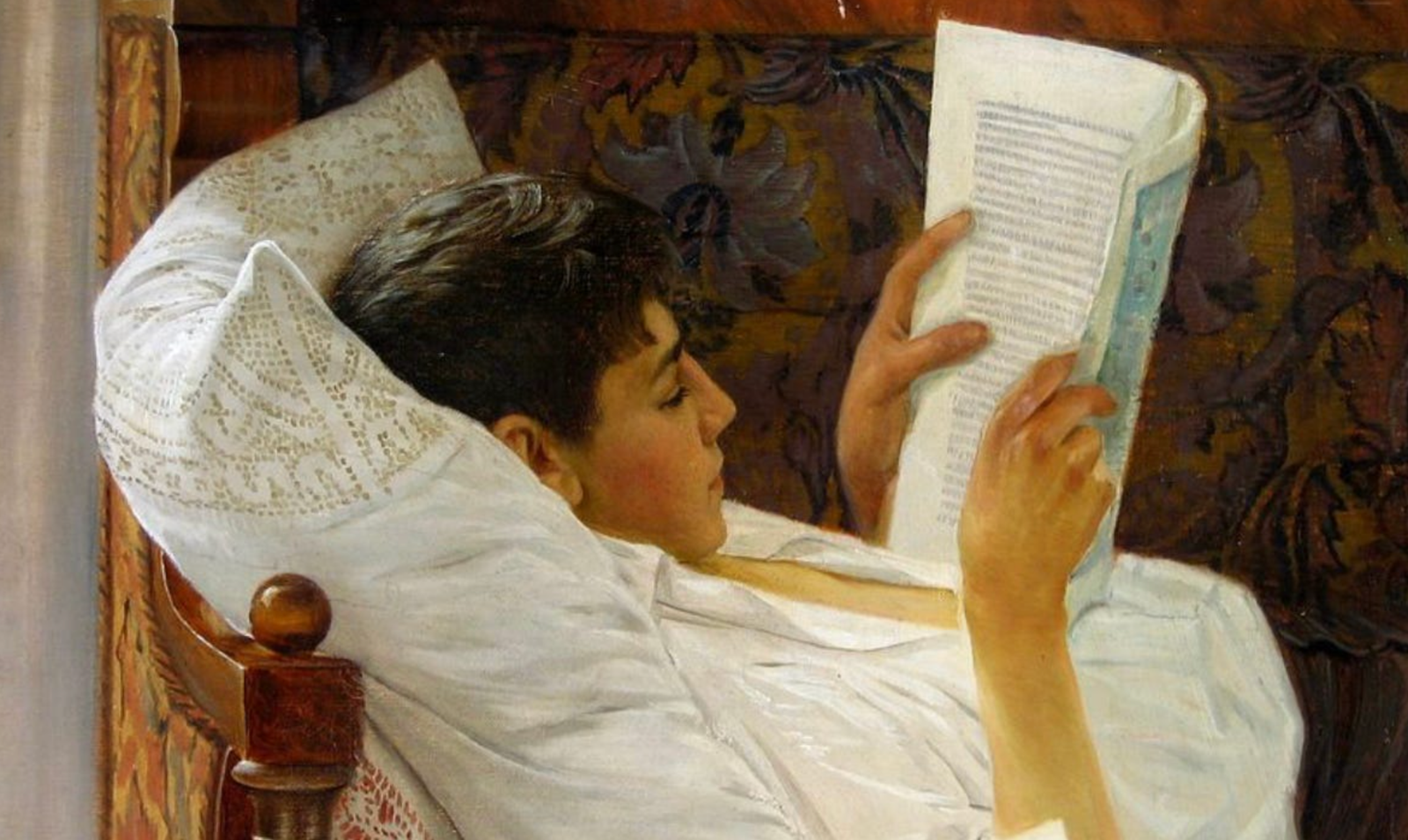
“I have a son in the seventh grade. Something happened yesterday and I saw that, even though he reads a great deal, he could not express himself at all. Unfortunately his classmates have similar difficulties, and they do not read at all. Could you recommend books for 13-year-olds to help them recognise and express their own feelings?
Evren”
Dear Evren,
First of all, I am glad your son reads so much. I am sure the books he reads are giving him something. I also understand your worry about how he expresses himself; like every parent, you want him to move through this world with confidence. But I have a question for you: How well do we adults express our feelings?
- When someone hurts us, for example, don’t we fall silent instead of saying so? Do we easily put into words the fear beneath our anger, the sense of inadequacy behind our jealousy, the hurt inside our wish to pull away?
Sometimes we think about something for days, even weeks, yet cannot talk to the person concerned for five minutes. We hold arguments in our heads, ask questions and answer them, rehearse what we will say again and again. Then, when we meet that person, we act as if nothing has happened.
There is a longer distance than we imagine between thinking about our feelings and expressing them. Sometimes thinking even becomes an alternative to expressing. We spend so much time in our own minds that we never have to talk to anyone else. In a sense, we use thinking to avoid socialising.
In psychology there is a defence mechanism called “intellectualisation”. Instead of making direct contact with a difficult feeling, a person turns it into an intellectual problem. They explain their pain, analyse their fear, weigh up their disappointment in terms of cause and effect. And while doing all this, they keep the feeling itself at a certain distance.
Add “rumination”, that is, “getting stuck in a thought”, and we can end up circling the same ideas endlessly. We recall a sentence someone said over and over, wonder why they said it, calculate what would have happened had we answered differently. We exhaust every possibility in our heads. But in real life nothing changes, because we are having all these conversations on our own.
Now to your 13-year-old son. In adolescence, on top of all this comes a sensitivity to what other people think . Have you heard of the concept of the “imaginary audience” put forward by the developmental psychologist David Elkind? It describes the way teenagers sometimes feel they are constantly being watched and judged by others. We went through this too, remember: being embarrassed in front of a friend, giving the wrong answer in class, the person we liked not liking us back could feel like the end of the world. So saying “I don’t care” instead of “I’m hurt” could feel much safer.
Adolescence is also a time when we want to be understood and, at the same time, try to hide our inner world from others. The child wants independence. They try to create a space of their own, a space no one else can enter. Sometimes their silence may come not from not knowing what they feel but from not wanting to share it with anyone. It is important to tell the two apart.
Then there is the matter of naming feelings. Knowing that we feel bad is not the same as distinguishing whether we are disappointed, humiliated, afraid or lonely. Psychology calls this “emotional differentiation”. A child may have a vast vocabulary, may have read hundreds of books, and still struggle to name their own feelings, because literary vocabulary and emotional vocabulary do not always develop at the same pace.
This is where we parents have some work to do. Children watch how we talk to each other, what we do when we are angry, how we show sadness, whether we apologise when we make mistakes. This process, studied as parental emotion socialisation, plays an important part in children’s emotional development.
In some families, for instance, anger is allowed but fear is forbidden. In some there is room for sadness but not for jealousy. In some homes everyone loves each other but no one says so. In others, hurt feelings are not talked about; people wait for them to pass with time. In this way children learn not only which feelings are acceptable but also which ones must be hidden.
And then, of course, there is listening. When our child talks, might we be rushing to give advice, correct them, explain why they should not feel that way? Sometimes children stay silent not because they do not know what they feel, but because they know how they will be received if they say it. Now to my recommendations. The first two you can read together with your son. The third I recommend to you, and indeed to all of us.

‘Submarine’ by Joe Dunthorne
My first recommendation is Joe Dunthorne’s novel Submarine. Our hero, Oliver, is 15: extremely clever, observant, and convinced of his own self-awareness. He examines his parents’ marriage, his mother’s possible interest in another man, his father’s state of mind and his relationship with his girlfriend Jordana almost as if conducting a scientific study.
Oliver’s mind never stops. He draws conclusions from people’s behaviour, calculates probabilities, classifies events. Sometimes he even turns the people around him into characters in a story he is writing in his head. Yet all this mental activity does not make him any more emotionally capable. While trying to work out what others think, he can neglect to truly understand what they feel.
Dunthorne’s humour comes largely from this. While Oliver believes himself an extraordinary observer, he gives away how limited his point of view really is. You laugh as you read, but after a while you also notice how lonely this boy is.
- Analysing people’s behaviour is not the same as connecting with them. Being able to talk at length about ourselves does not mean we truly know ourselves either. This is perhaps Oliver’s greatest mistake: he thinks his intelligence will protect him from emotional turmoil.
Now think for a moment: aren’t there adults like this around you? People who can explain for hours why a relationship is not working but cannot say to the other person, “I’m afraid you don’t love me”. Getting to know Oliver may make us question how far we can trust the stories we build in our own minds.
Once he has finished the book, you could ask your son why Oliver thinks so much. But do not ask straight afterwards whether he does the same. Let him talk about Oliver first. Perhaps his own story will have its turn.

‘The Perks of Being a Wallflower’ by Stephen Chbosky
My second recommendation is Stephen Chbosky’s The Perks of Being a Wallflower. Charlie is 15: sensitive, introverted, a careful observer of others. Throughout the novel he writes letters to someone whose identity we never learn. He tells of his friendships, his family, his first loves, his fears, his shame, the experiences he cannot make sense of. Charlie has so much to say... Yet he finds it hard to share any of it with the people around him in daily life. In his letters, though, he is completely open.
In truth, what prompted the question at the start of this piece was a conversation between Charlie and his teacher Bill around the middle of the novel: Bill asks Charlie whether he is trying to avoid socialising by only reading and thinking.
So why does this boy pour his heart out to a stranger? Could it be because closeness brings with it the possibility of loss? What someone who does not know us thinks of us may hardly change our lives. But a loved one finding us weak, inadequate or cowardly could shake the whole balance we have built around who we are.
The novel also shows, with perfect examples, how Charlie learnt all his patterns of behaviour from his parents, and especially from his father. While the family is watching the final episode of M*A*S*H, a series that ran for years, his father goes to the kitchen to make a sandwich. It is the first time this has ever happened in the family’s history. When Charlie follows him, he sees his father crying there, and his father tells him this will be a secret between them. Do you see what I mean?
If your son cannot tell someone else about his feelings straight away, he could try telling himself first. Writing, keeping a diary, recognising our own feelings in what a character goes through can be the start of the road to talking. One small warning, though. The novel also deals with heavy subjects such as trauma and sexual abuse. So before giving it to a 13-year-old, I would suggest the parents read it and judge whether the child is ready.
Which brings me to another important point: we do not stay silent only because we cannot find the words. Sometimes we stay silent because we cannot find anyone who can hold those words.
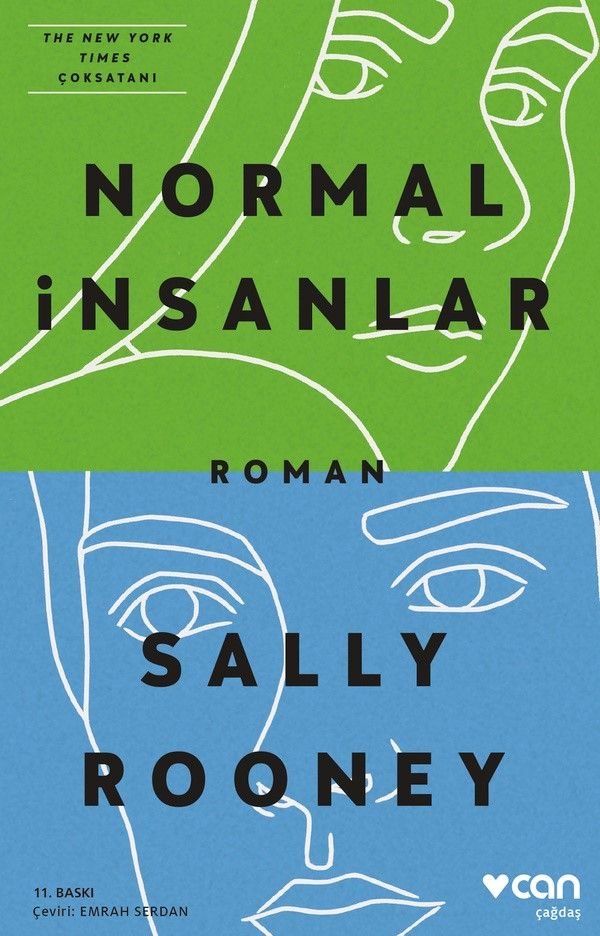
‘Normal People’ by Sally Rooney
My third book is Sally Rooney’s novel Normal People. This one I recommend especially to adults, because it reminds us that we do not automatically learn to express our feelings just by growing up.
- Connell and Marianne are two young people from different social backgrounds who grow up in the same town. At school Connell is popular and Marianne is an outcast. A strong closeness grows between them, but Connell keeps their relationship secret because he worries about what others will think. When they go to university their social positions change, but their closeness, and their difficulty in explaining themselves to each other, remain.
In Rooney’s novel, much happens because it is left unsaid. A need one of them cannot voice becomes a gesture the other misreads. One’s shame creates a feeling of rejection in the other. Both care deeply about the same relationship, yet again and again they fail to understand what the other wants.
Again, if after checking whether it suits your son you decide to give him this book, the novel may help him see what can be lost when the necessary communication does not happen.
I hope I have offered at least a little remedy for your worry. With love.