World literature’s elegant revolutionaries: on the ‘Latin American Boom’
“Latin Amerika Patlaması - Boom Mektupları” (The Boom Letters), brought into Turkish by Süleyman Doğru, invites us into the world of four groundbreaking names in Latin American and Spanish-language literature, through an “introduction” written jointly by the book’s editors, some 207 letters and messages, the writers’ interviews with one another, and the essays, critiques and articles they wrote about their works.
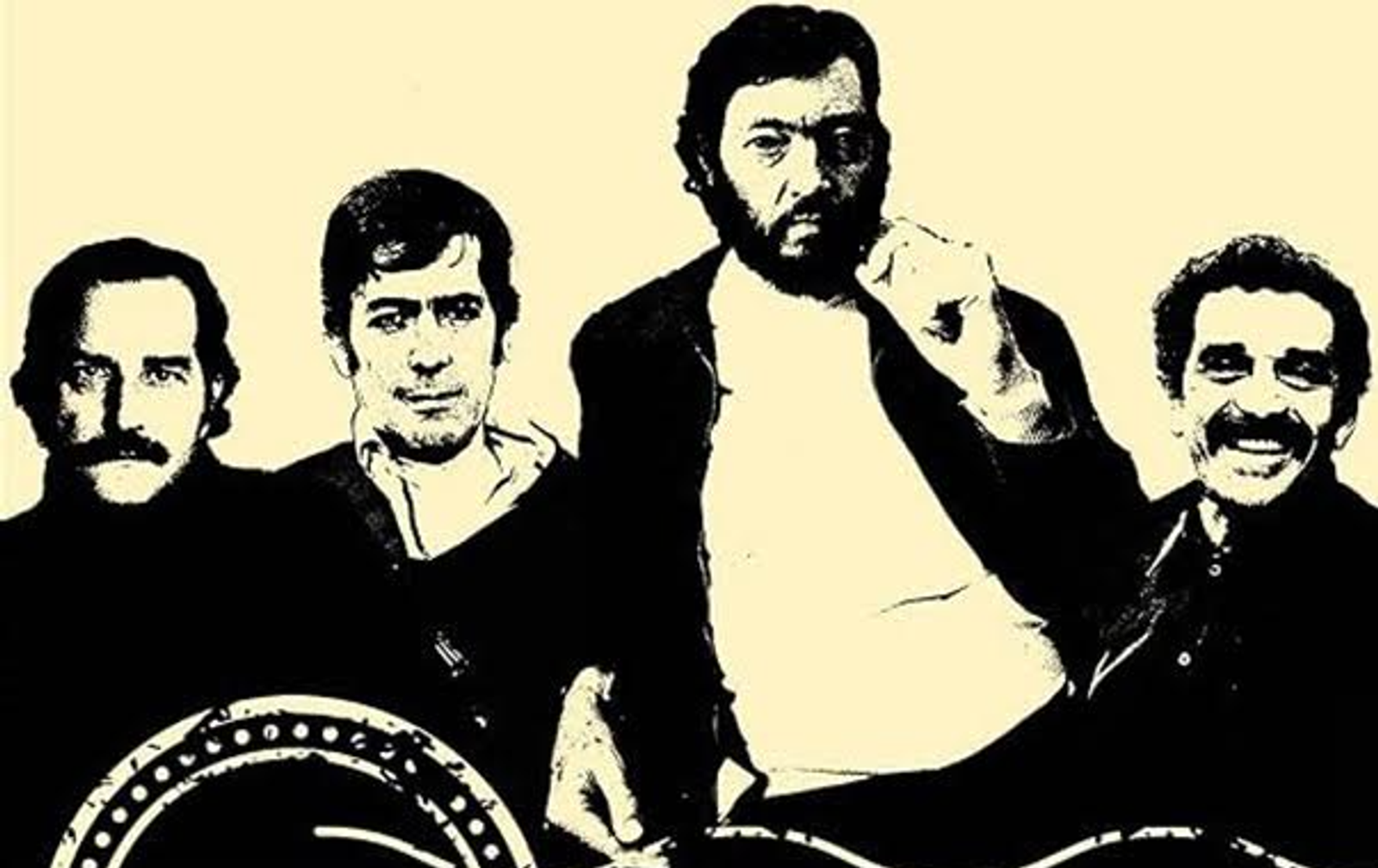
The works, friendships, correspondence and spirit of solidarity of four groundbreaking names in Latin American and Spanish-language literature came to be regarded as a remarkable literary movement, and it was given the name “the Latin American Boom”. To understand the heartfelt grace in the friendship of this foursome, let us listen to the words Julio Cortazar used in 1968 about Marquez and his wife:
“He and Mercedes are both magnificent people; when life puts beings like these in your path, friendship springs up like a fountain.”
Some languages have had the good fortune to spread across the earth; Spanish, for instance, spoken by nearly 640 million people in around twenty countries. As for why it is fortunate... A traveller of Mexican origin setting off south from Canada could cross an entire continent, all the way to Tierra del Fuego at the southernmost tip of South America, without ever needing Google Translate or a pocket translation device. In the cities of the countries along the way, they could buy books or newspapers from the kiosks and watch television in their hotels.
They could listen to Shakira in the USA, Thalía in Mexico, Gaby Moreno in Guatemala, Luis Enrique in Nicaragua, Debi Nova in Costa Rica, Violeta Parra in Chile, Juanes in Colombia, Mercedes Sosa in Argentina and the Buena Vista Social Club in Cuba.
To give a more serious example, a student at the Facultad de Filología in Salamanca, Spain’s coolest and most prestigious faculty of literature, can read Neruda, Borges, Asturias, Carpentier, Infante, Sabato and countless works by hundreds of Spanish-language writers who have left their mark on world literature, all in their own language.
A consortium of companions
And so, across these boundless Hispanic lands, a remarkable literary event exploded, one that reflected the splendour of this language, lasting first from 1959 to 1975 and then, intermittently, until the mid-80s: the Latin American Boom!
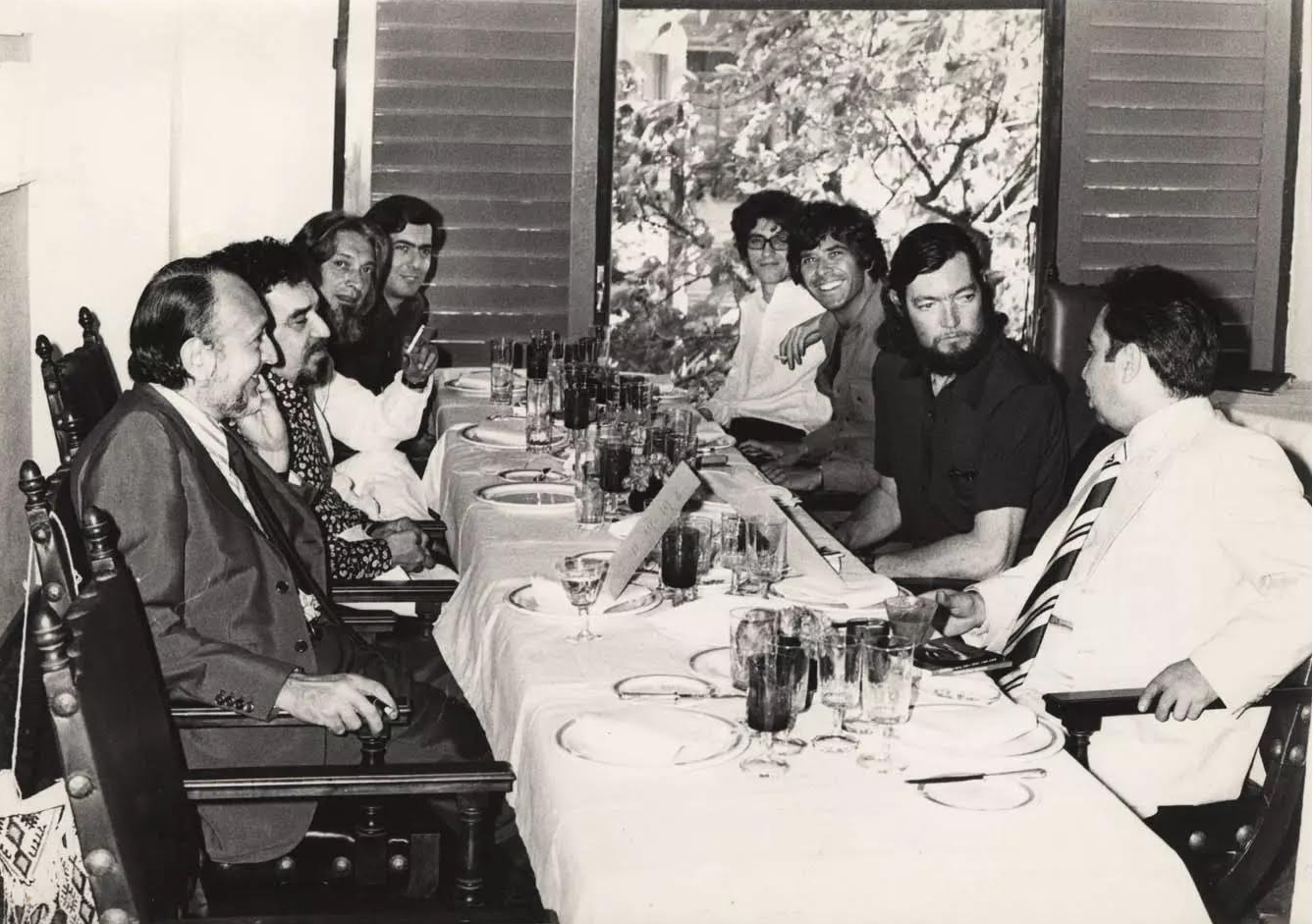
We follow the course of this explosion over the years through the correspondence between four novelists: Julio Cortázar, Carlos Fuentes, Gabriel García Márquez and Mario Vargas Llosa. A consortium of companions that can be traced through the intellectual contribution and support they offered one another, their enviable friendships, their master and apprentice relationships, and the moments when the pupils outgrew their masters.
They were such an enviable group that they would coin a term of their own for every stage of their friendship. For instance, they called their intercontinental, transatlantic meetings, which demanded great sacrifices of time and money, pachanga: that is, a party, a celebration, a riot of fun! To borrow the editors’ words:
“A moment (an endless present unfolding second by second)... A movement or a style... A glittering band like the Beatles, a club, a community, perhaps an Order of the Knights of the Square Table, a passing alliance, as events and political conflicts would show, a game, a friendly rivalry, a pinch of squabbling, an endless debate, a Latin American style party of course, a celebration among close pals, a deification of the Latin American novel, and above all a quartet (all male) devoted to debating the literary and political outlook of an entire continent during its most decisive, most exciting, most optimistic period and the most utopian moment of its modern history!
A show of strength in the arena of world literature by four writers, two of whom won the Nobel, while of the other two it was said ‘he really should have won it’!”
Boom! A coming together, a unification!
In this context, the following words from the editors’ “introduction” are striking:
“The ‘Boom’, a cultural phenomenon with a worldwide impact, a coming together, a unification, was not only a peak in fifty years of literary evolution on the Latin American continent, until then regarded as an insignificant and unknown geography; the relationship between these four writers was also a unique and fascinating thing!”
When literary critics spoke of “the Boom writers”, they meant these four novelists in particular. Of course, the term did not end there. Among the Boom’s leading chroniclers, the Chilean José Donoso, the Cuban Guillermo Cabrera Infante and Juan Goytisolo (despite being Spanish), great writers though they all were, never made it inside that circle, and tacitly acknowledged as much.
Reading the letters of the Supreme Kronop Julio Cortázar (kronop, a notion the writer himself invented, means a person who spills beyond the frame, rule-defying, creative and free-spirited), the Aztec Eagle Carlos Fuentes, the Colonel, also known as Gabo, Gabriel García Márquez, and the Great Inca Chief Mario Vargas Llosa means sitting at the feet of these four giants, grasping a very brief but revolutionary period in the literary history of the 20th century, and taking lessons in sincerity, grace and gentlemanly courtesy from these sultans of the pen.
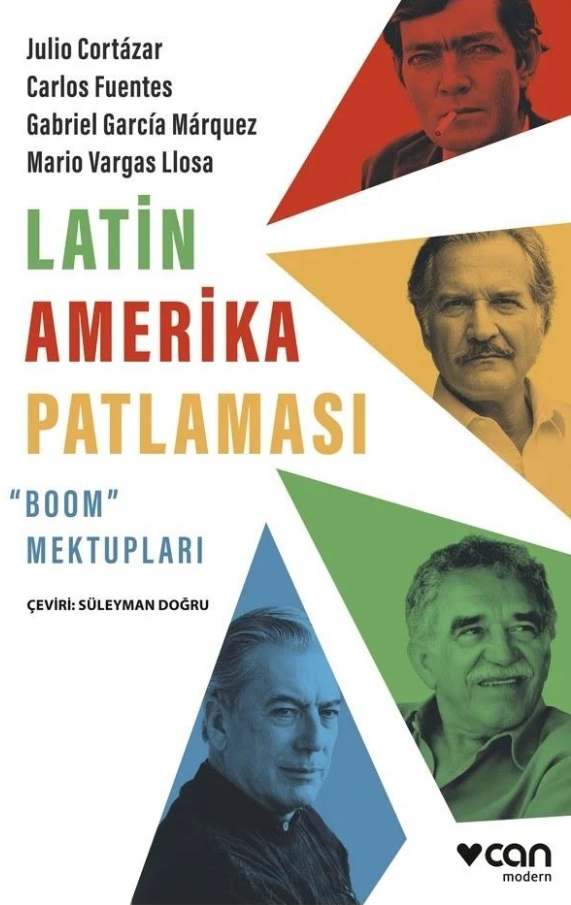
Latin Amerika Patlaması - Boom Mektupları, brought into Turkish by Süleyman Doğru, with some 207 letters and messages, the interviews the writers conducted with one another in the book’s final section, and the essays, critiques and articles they wrote about their works, can be read not only as a portrait of an era and four writers but also, as the passage I quoted earlier stresses, as something that reaches beyond the field of literature: an entire continent that had never been taken seriously in any respect proving itself to the world.
A call to play, to action, to faith
The book’s editors describe the work as “The four-voice dialogue recorded in the letters is, of course, a construct of Homo ludens, a game with very strict rules, which Huizinga called ‘the inseparable alliance of rapture before the sacred with make-believe and fun’, and the same idea of play forms the backdrop underpinning the quartet’s great novels” and close the subject like this:
“[These letters echo] the call to ‘play, action, faith’ in Fuentes’s novel La región más transparente (Where the Air Is Clear), the invitation to uncertainty in Cortázar’s ‘Hopscotch’, fate left to the dice in Vargas Llosa’s ‘The Time of the Hero’, or Buendía in García Márquez’s ‘One Hundred Years of Solitude’, who discovers in literature ‘the best toy ever invented for making fun of people’.”