




Hello from the third issue of istanbulberlin Route!
This is an invitation to encounter culture and arts agents, films, books, projects, ideas and different point of views, twice a month, compiled from the content of istanbulberlin.
To have a look at the advantures of istanbulberlin until today, please visit the website; to stay connected please follow instagram, facebook and twitter accounts and subscribe to the YouTube channel.
- Joseph Beuys at 100: A selection of events you could attend online.
- Istanbul-Berlin route brought two rappers together in one song: Luciano and Lil Zey made a song together for Luciano's new album "Aqua".
- Istanbul born,Berlin based visual artist Ceren Saner's first artist book “Inside The Ring” brings together a selection from her current series of photographs and videos, starting with moments from Berlin.
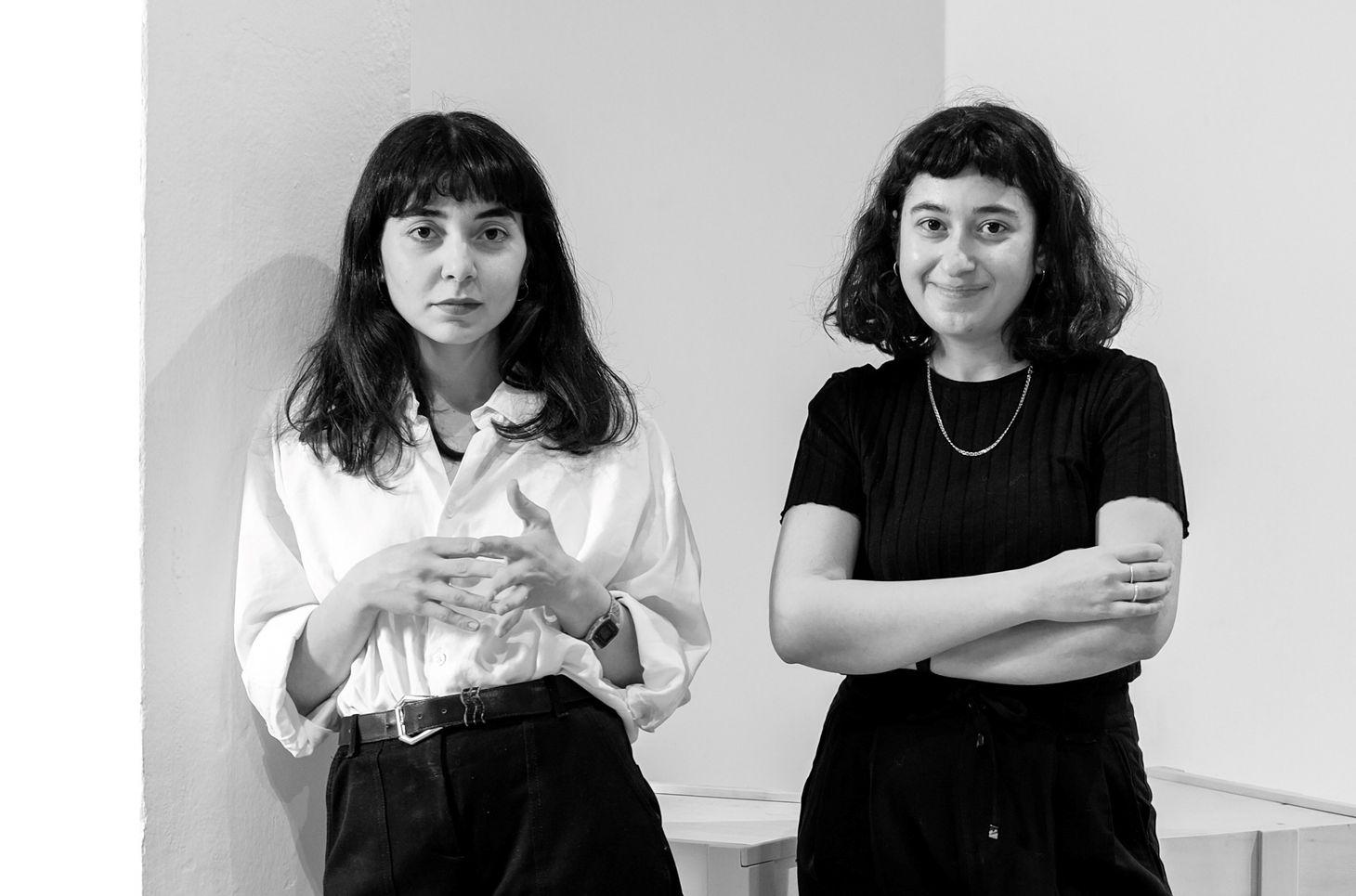
- In the face of the potential destruction of the Botanical Garden founded by the Jewish German scientists Alfred Heilbronn and Leon Brauner, Dilşad Aladağ and Eda Aslan ask, “Is it possible to make space for the garden in urban memory?” This question leads them to a project centered around Alfred Heilbronn Botanical Garden and the plant-life established there entitled “The Garden of (not) Forgetting” and an exhibition that could be seen in Depo until June 6th. In this piece, you will read the story of “The Garden of (not) Forgetting” and a side story, brought to life from the archives, of a Turkish and a German women scientist, whose stories are connected by two houses they both lived, one in Istanbul and the other in Münster, that feels like the script of a Hollywood movie.
Joseph Beuys at 100
If sculpture, action and installation artist, scholar, politician and activist Joseph Beuys (1921-1986) lived, he would be 100 years old today.


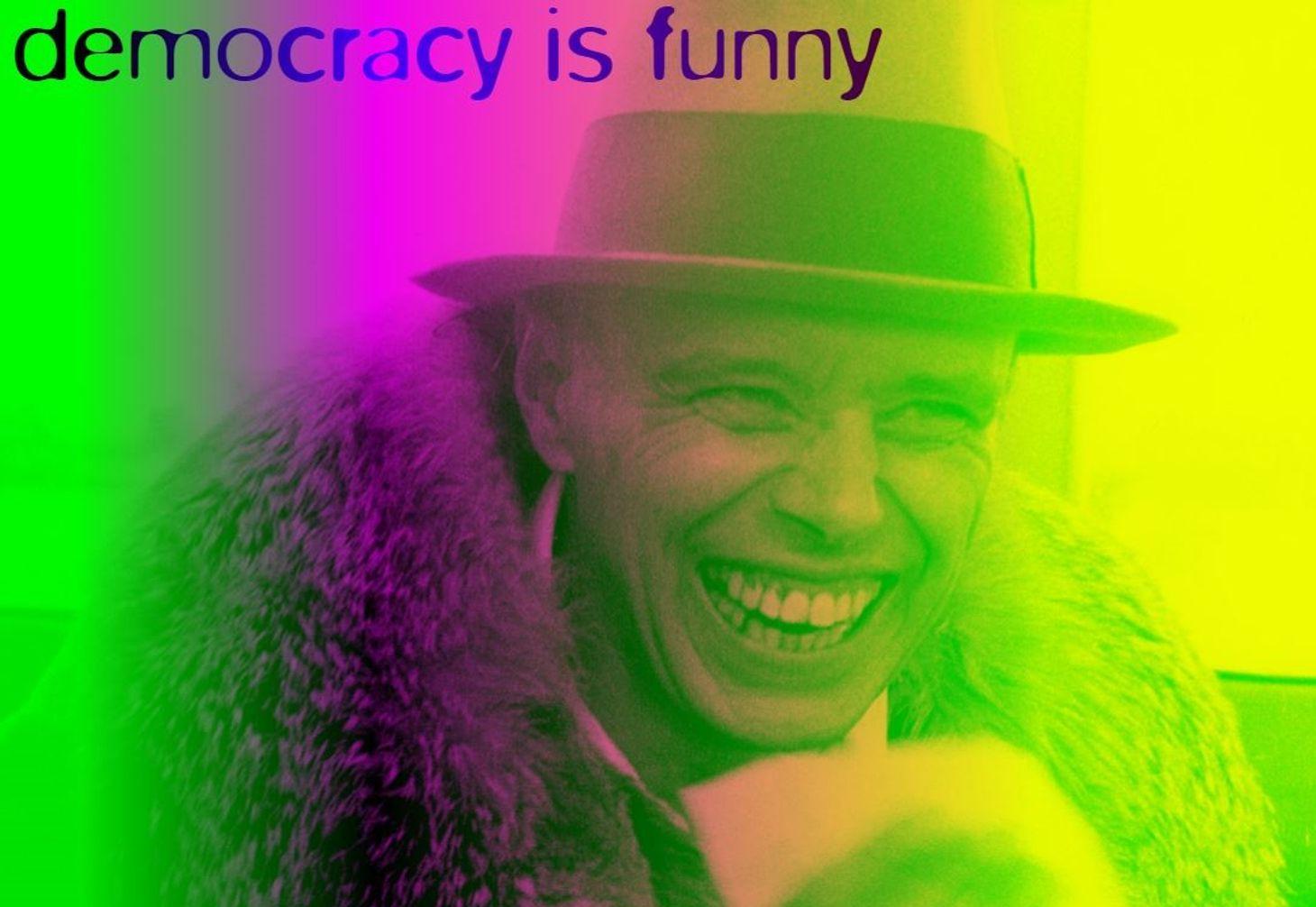
He is considered by many, alongside with Marcel Duchamp, John Cage and Andy Warhol, one of the most prominent artists of 20th century.
He "extended the definition of art" by saying "Everybody is an artist," and emphasizing the role of art in transforming the society. Today, all the topics he kept busy with are still relevant, though nearly all of them has a polarizing effect on discussions.

Beuys's signature
Related with his 100th birthday, books are published, events and exhibitions are organized all over the world. Here is a selection:
English and German; extensive project with events in both Germany and the world "beuys2021";
German; a video series on how his ideas echo today "behind the scenes“;
To hear how young people relate with the artist today and more: '100beuys.com”
Akbank Art Center's "100 Yıl Beuys" is a video series moderated by art curator and academician Marcus Graf.

The Duet of Luciano & Lil Zey: "Elmas"
Istanbul-Berlin route brought two rappers together in one song: Luciano and Lil Zey made a song together for Luciano's new album "Aqua".


Lyrics written by the two rappers together, the music video of the song "Elmas" (Diamond) was shoot in Istanbul. Here you could listen from digital platforms or buy the song.
Last year, Luciano collaborated with Turkish rapper Ezhel and German musician Gentlemen on the song "Devam".
The second biggest audience of Luciano comes from Turkey, following Germany, that is half a million listeners.
Ceren Saner: To Survive Inside The Ring with Photographs
Istanbul born,Berlin based visual artist Ceren Saner's first artist book “Inside The Ring” brings together a selection from her current series of photographs and videos, starting with moments from Berlin.
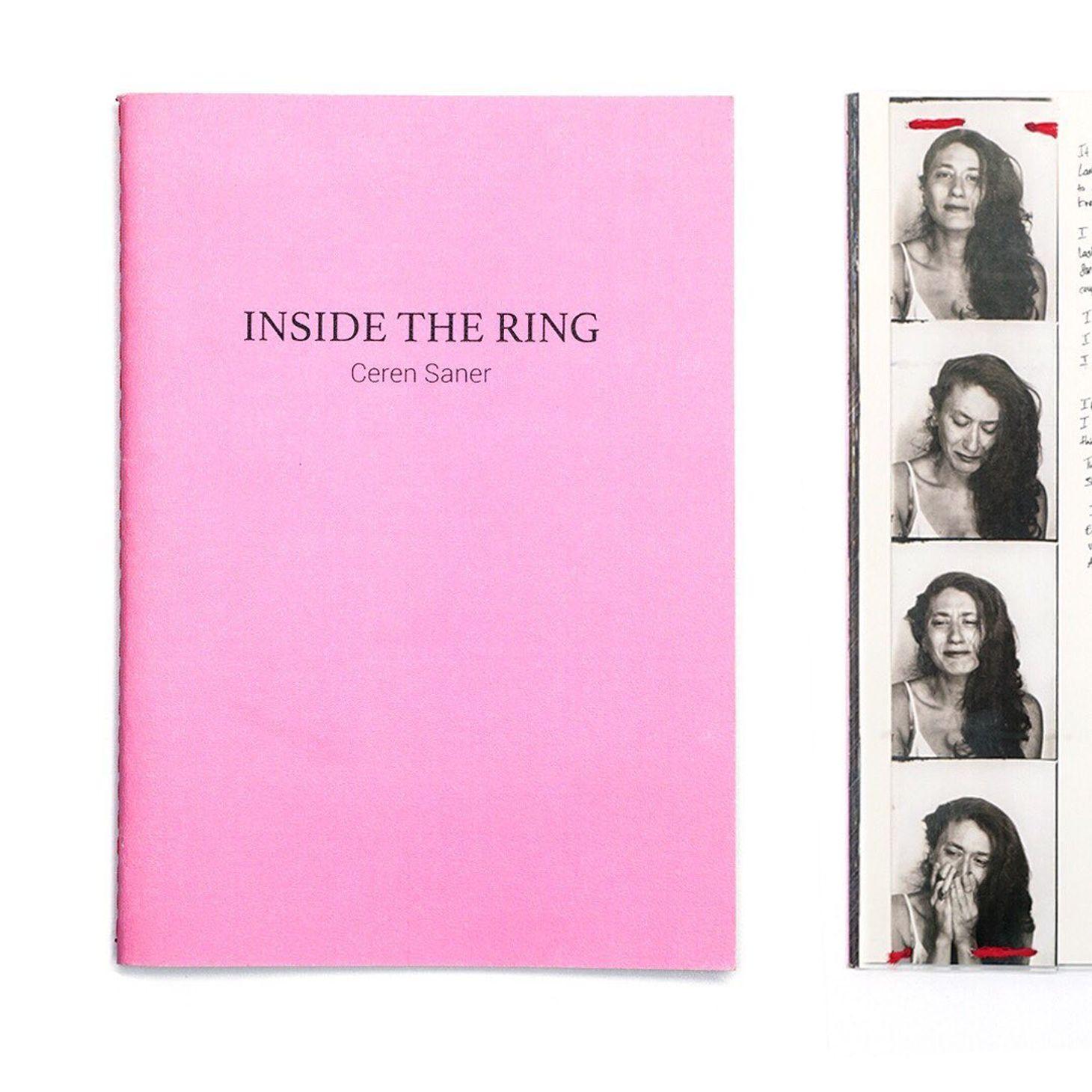
The book takes it's name from the "ring bahn" the train route that is a circle around Berlin. At the same time references the boxing ring. As she states at the Kaos GL interview, photographs are always "the way to survive" for her.

The artist numbers the book that is published with 300 editions and contains sections hand-sewn by her. These stitches leave traces on the photographs at the reverse side of the pages.
The artist tells the sewedsections are her self-portraits and she sums her preference of this design as “sewing herself to the city”. She says, “And this can be expressed as a bond for myself in a place where I do not have a feeling of belonging, to create a trace from me to survive.”
The artist leaves the needle she sews the sections with in that edition. Thus, the viewer could be a part of the process and she remarks the sewing has not come to an end yet.
Remembering Exercises from The Garden of (not) Forgetting: Two Countries, Two Homes, Two Women
In the face of the potential destruction of the Botanical Garden founded by the Jewish German scientists Alfred Heilbronn and Leon Brauner, Dilşad Aladağ and Eda Aslan ask, “Is it possible to make space for the garden in urban memory?” This question leads them to a project centered around Alfred Heilbronn Botanical Garden and the plant-life established there entitled “The Garden of (not) Forgetting” and an exhibition that could be seen in Depo until June 6th. In this piece, you will read the story of “The Garden of (not) Forgetting” and a side story, brought to life from the archives, of a Turkish and a German women scientist, whose stories are connected by two houses they both lived, one in Istanbul and the other in Münster, that feels like the script of a Hollywood movie.
Alfred Heilbronn Botanical Garden was founded in 1935 by Alfred Heilbronn and Leo Brauner, who German-Jewish academicians that were forced to leave their homeland during World War II. The oldest botanical garden of Turkey was in the historical peninsula, right next to the Süleymaniye Mosque. Despite its precious location, it was not much known. "When you make a search through internet, you can only find a few images, even the students of Istanbul University does not know about it."

Seeds from the Earth, 2020, Installation, original seed catalogues of Alfred Heilbronn Botanical Garden published between 1935-1993, 41 catalogues. 40x20x150 cm wooden shelf. Photo by Fikret Can Kuşadalı
In 2013, there are rumors that it would be transferred to the Istanbul Mufti, that is affiliated to the Directorate of the Religious Affairs. This transfer happens in 2015 but stays confidential and it comes to the surface in 2017 and the garden physically moves in 2018.
The journey of “The Garden of (not) Forgetting” begins when Dilşad Aladağ invites Eda Aslan to Alfred Heilbronn Botanical Garden in 2017.
Dilşad is an architect with research exhibition experience, Eda is an artist; they are two friends approaching to subjects as city memory and abandoned spaces with similar sensitivities. After their first visit, they start to spend long hours in the garden, four days a week.
Memory Struggle
Dilşad, tells their first visit to the garden with Eda as: “When you go to an abandoned place in the center of a political debate, you see an empty space. Here, it was the opposite, the plants wrapped everywhere, they were entangled to themselves and the walls. On the other hand, they were neglected and everywhere was mossed. However, there was a liveliness coming down on you. It really was a space that does not accept to be abandoned or reacting to it.
When the garden is being moved, Eda and Dilşad wait “with tied hands and tears in their eyes.” In a geography as Turkey and in the current pollical climate, they do not see a way of struggle that they could protect the garden in physical means. However, they say, “we could find the true stories of this place and tell them.” And their memory struggle begins.

From the exhibition poster of “The Garden of (not) Forgetting”, that is extended until June 6th.
This struggle turns to a trip to Germany in the traces of personal archives, a research project that Salt promotes, the exhibition in Depo and a medium-length documentary film that is in the post-production phase. As in the book that came out because of the project, they pass by “many places on the trail of a place”. The project that is centered the botanical garden and the plant-life established there, gains new layers with the stories of the garden’s founders and professors.
Here you will read the stories of three scientists that Dilşad and Eda took out from personal archives, that takes place in two different houses, one in Turkey and the other in Germany and are intertwined by these houses. I choose to write about this story as it feels like a Hollywood scenario.
To delve into other layers of the project that linger between reality and poetics, you could visit the exhibition at Depo until June 6th.

Many Places on the Trail of a Place, 2021 Printed book. 15x23 cm, 143 pages, 500 copy. The texts are written between February 2019 and March 2020 and published on Manifold. Many Places on the Trail of a Place will be published both as a printed and e-book in collaboration with Manifold and with the support of SAHA.
Alfred Heilbronn: Hope Raised by the Garden
Born in 1885 in Fürth, studies in Munich, works at the university in Münster. His first wife is art historian Magda Heilbronn. He is Jewish but even Magda is not “they make little of the religious difference and get married.” They have two kids named Hans and Agnes.
Alfred and Magda build a house with nineteen rooms together.
“The personal archive of Magda Heilbronn is magnificent, the photos of the house during construction that is step by step and the albums that were prepared with daintiness” amazes Eda and Dilşad. They attribute the detailed photos of the house to the rise of the Bauhaus school. Magda, “has an incredible eye, all modern details of the house in different areas are captured in photographs.”
When they have to leave the Nazi Germany, Alfred Heilbronn first sought refuge in Switzerland. Magda and the kids stay in Germany. When he comes to Turkey, he also takes them along.
Dilşad and Eda finds an album of Alfred Heilbronn that belongs to the time that he settles in Turkey. Just like Magda documenting the house in Münster, he takes the record of the garden.
That was when we understood the importance of the garden. They took photographs of it between 1935 to 1937. There are many photos before the opening. From this album, we see how he raised hope on the garden and how excited he was for the new beginning. We also found his Turkish notebook. One of the conditions of this refuge is to learn Turkish in two years. In two years, both him and his children learn Turkish.

Alfred Heilbronn’s Turkish-German words notebook he took while learning Turkish, 1935, Alfred and Mehpare Heilbronn archive, with permission of Kurt Heilbronn.
Magda Heilbronn: “Orient Experience in Istanbul”
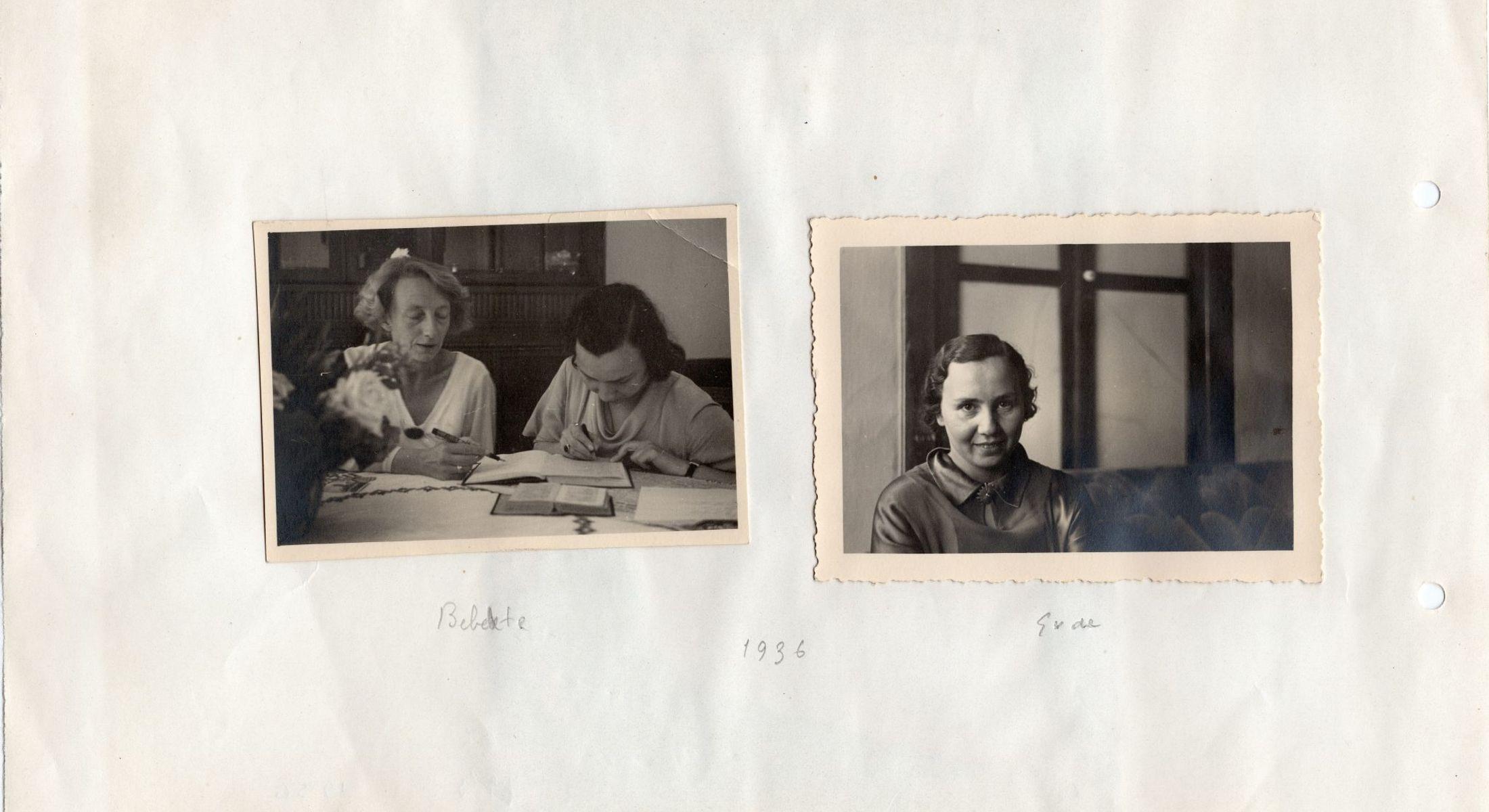
In the last page of Magda’s album, appears the apartment in Bebek they lived in. Eda and Dilşad also found her album documenting the historical places in Istanbul. Magda “is having an orient experience of sorts in Istanbul,” with Dilşad’s words. Along with Turkish, she learns Farsi and Arabic. Her teacher is the child of one the elite families of late Ottoman times, a scientist herself and their friend Mehpare Başarman. Magda Heilbronn passes away in 1944 in Istanbul.

Mehpare Başarman teaching Farsi to Magda Heilbronn in Bebek, 1936, Alfred and Mehpare Heilbronn archive, with permission of Kurt Heilbronn.
Mehpare Heilbronn: Acting as a Cultural Ambassador in Germany
In five years after Magda’s death, Alfred Heilbronn gets married with Mehpare Başarman, and they start to live together in the apartment in Bebek.
Just like Magda taking many photographs in this apartment, Mehpare also take pictures of the surroundings of the house and the Bosphorous.

Alfred Heilbronn and Mehpare Başarman togerher with professors from the university in the Botanical Garden; together with pharmacist in a botanics trip in Bosphorous, 1939, Alfred and Mehpare Heilbronn archive, with permission of Kurt Heilbronn.
Alfred Heilbronn works in the university until 1950s and takes notes travelling in Turkey. They make the most reseach on the flora of Uludağ. In 1951, their child named Kurt Lütfi Leopold is born.
Getting married with a Turkish women, Alfred also has to take Turkish nationality and this comes with a prize of losing the privilages of being a foreign scholar. His love to his work continues even he has to get retired in 1952. Taking his son together with, in 1956, he returns to the house in Münster "with the hope to live his family life there".
Mehpare stays alone for four years in Istanbul, meanwhile “things at the university take a turn for the worse.” After the coup in 1960, Mehpare is one of the 114 professors that are sent down from the university. To continue her research, Mehpare goes to Münster to her husband. Within a year, Alfred Heilbronn passes away. Even this is a sad end, his story, according to Eda and Dilşad is full of hope: “He starts life fearlessly wherever he goes, he never looses his determination to work, create and teach. He educates many.”

Alfred Heilbronn during botanics visits, 1951, Alfred and Mehpare Heilbronn archive, with permission of Kurt Heilbronn.
8 mm Films
Mehpare goes through a depressive period where she does not leave this nineteen-room house as her son Kurt tells. She refuses to learn German and for a while she teaches in English and French at the university, however, she “cannot get much involved in life and shuts herself in the house.” This is also the time when so called “guest workers” arrive in Germany from Turkey.
With this closure, she gets many letters from anyone who would be passing by, as if she was a cultural ambassador. In a letter, singer Adnan Pekak asks her to ‘arrange a stage’ for him. Another one would like to arrange a dormitory to his son but she does not know German.
Dilşad narrates what they found in this archive:
I am not exaggerating, we found thousands of postcards in about 5 boxes. During this period, they host many guests at the apartment and all guests write to guest books. We also found 8mm films where she filmed every corner of the house. Mehpare had another version of the sensitivity of Magda. …
They are living in Germany and visiting Turkey. These 8mm films are brand new in 1970s and their relatives in Turkey have never seen a place like that, they have not seen a fridge like that. She continues to act as an ambassador. There are videos where you could see all electronic devices in Germany. How the house looks from outside, the flower room, the music room. Kurt Heilbronn says: ‘We would film Istanbul when we are visiting, there are many Istanbul videos. And we would film Germany when we are back home.'
These films, the bond the two women established through the houses, were really interesting for us.

Kurt Heilbronn at their house in Münster, the house in Münster of the Heilbronn family, Alfred and Mehpare Heilbronn archive, with permission of Kurt Heilbronn.
In the next istanbulberlin Route;
- Less Me. More We. exhibition decorating the streets of St. Pauli in Hamburg.
If you like the newsletter, please share the subscription link.
I would be more than happy to hear your opinion and suggestions, to contact me [email protected]
Best wishes from Istanbul,
Sedef İlgiç


