




istanbulberlin Route has been silence for two months becaus of the project we have been working on. From today, until the end of November, we will be releasing the fruits of our project #60JahreMusik.
This year is the 60th anniversary of the workforce agreement between Turkey and Germany. At istanbulberlin, we will be reading this history via music with our project In the first phase of the project, we will be publishing an article series, video, and written interviews along with two events in September: one in Istanbul and the other in Berlin.
This project is made possible through the contributions of the Berlin Yunus Emre Institute.
Hello from the fifth issue of istanbulberlin Route!
This is an invitation to encounter culture and arts agents, films, books, projects, ideas and different point of views, twice a month, compiled from the content of istanbulberlin.
To have a look at the advantures of istanbulberlin until today, please visit the website; to stay connected please follow instagram, facebook and twitter accounts and subscribe to the YouTube channel.
In this issue;
- Project Announcement: #60JahreMusik: Musical Echoes of the Stories of Germany’s Turkish Immigrants;
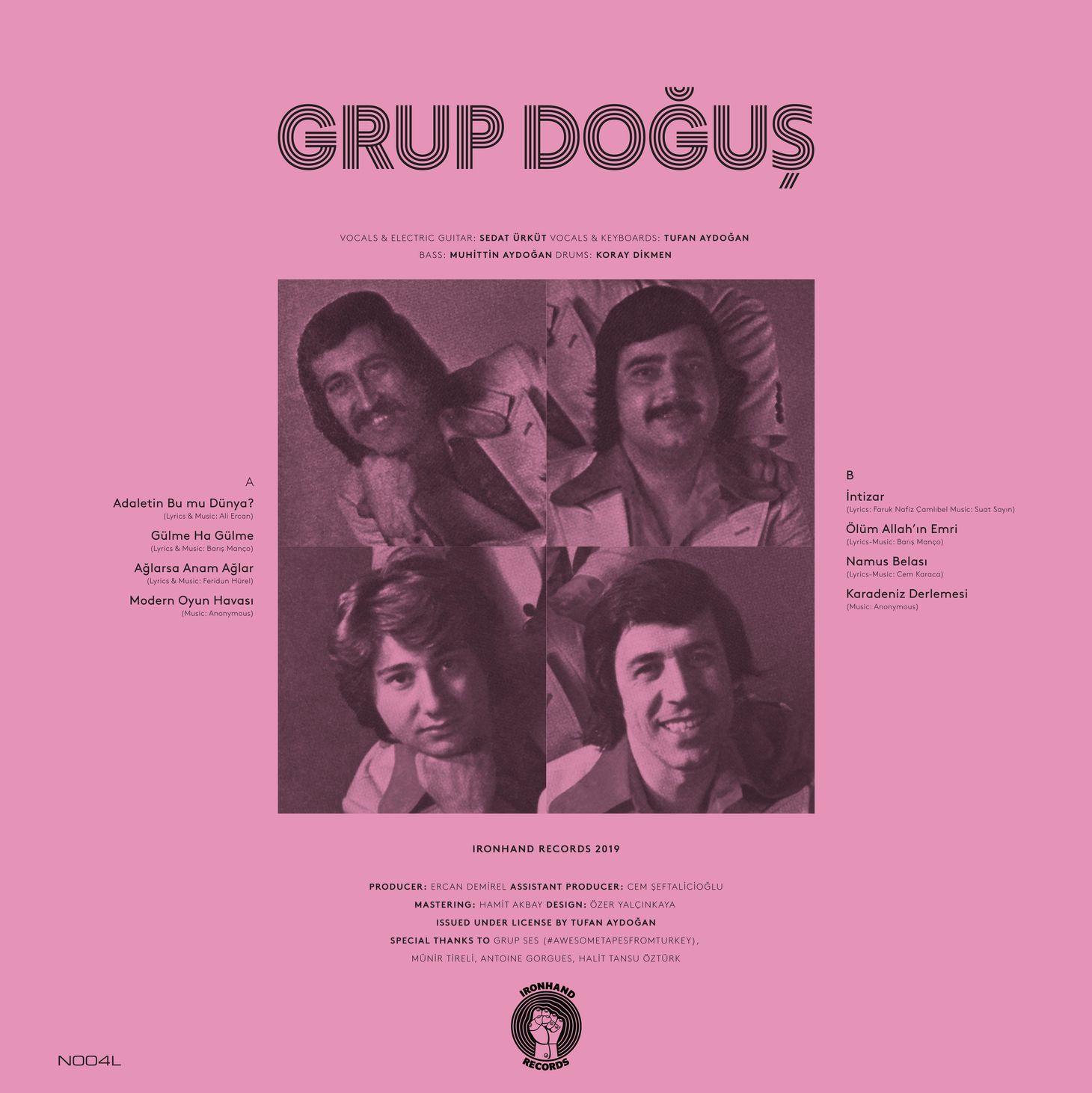
- Quiz time! We will be awarding one person who gives correct answers to all of our 12 questions the vinyl record of Grup Doğuş, by Irondhand Records.
- Brief: Collectivity vs. Individuality on the Streets of St. Pauli
- Brief 02: Exhibition: We're From Here. Turkish-German Life 1990.
- Interview: Architects from Turkey and Germany Came Together at One Exhibition: "Women Architect"
#60JahreMusik: Musical Echoes of the Stories of Germany’s Turkish Immigrants
This year is the 60th anniversary of the workforce agreement between Turkey and Germany. At istanbulberlin, we will be reading this history via music with our project #60JahreMusik. In the first phase of the project, we will be publishing an article series, video, and written interviews along with two events one in Istanbul and the other in Berlin. This project is made possible by the contributions of the Yunus Emre Institute in Berlin.


As the Federal Republic of Germany rose from its ashes in the wake of the war that “we lost by proxy”, Turkey rushed in to fill the demand for a cheap workforce, following closely in the footsteps of Italy, Spain and Greece.
On October 30, 1961, a Labor Agreement was signed between Bonn, the capital at the time, and Ankara. It would transform Germany, transform cultures, and transform lives.
While the “guest workers” were originally scheduled to stay for two years, longer residence was expedited in 1964, and they were later allowed to bring their families. “Aliens” at first, the “guest workers” eventually became “citizens”.
How would the present day have looked from the vantage point of that first journey from Sirkeci Station to the München Hauptbahnhof? The third, even the fourth, generation to be born in Germany; our post-immigration society of over two and a half million of “Turkish descent” means that indeed the very question of ancestry, of where one’s native land is, has lost its urgency.
#60JahreMusic
This project is occasioned by the anniversary of that very Labor Agreement. During its run, we at istanbulberlin will be reading the six-decade-long history of the mass immigration from Turkey to Germany through the music. Because examining this history from various perspectives rooted in the present day may open up a space for encounters between different fractions and be the first step towards the right conditions for a dialogue we feel we sorely need. Because the stories we unearth may shine a light upon the circumstances that make up the present day. Because music is life. It touches and unites those from every walk of life.
Within #60JahreMusik, you’ll be hearing the united voice of two people: istanbulberlin’s founder Sedef İlgiç, based in Istanbul, and DJ Nazlı Sağdıç Pilcz aka Djane Funshine, based in Stuttgart.
Since the first day we disembarked on this project, spurred along by our personal curiosity, we have been encountering musicians we wished we had discovered sooner and songs and albums we wish had been more popular, and being privy to all kinds of musical stories. We’ve become acquainted with musicians, music critics, and academics, journalists and culture and arts professionals working in the fields of music and immigration. All the doors we knocked on were opened to us with attentiveness and enthusiasm for our project, and those who opened them kindly gave us their time and support, as well as their encouragement. Lucky us!
Finally, from July 2021 onwards, we will be sharing our efforts in the form of a series of articles, short anecdotes, interviews, playlists and ultimately a podcast.
We’ll be holding two project-related events in September, in Berlin and Istanbul respectively. We are absolutely stoked for this first step in opening up physical spaces for encounters.
Lastly, we anticipate a book feature.
You can find all content related to the project here, and follow istanbulberlin via its social media accounts and the istanbulberlin Route.
As we share all this with you, will you share with us your ideas and suggestions, as well as any stories you have that you would like us to share?
We look forward to hearing from you.

Frühstück Alla Turca: Between #gasterbeitergroove & #newwavesound
Save the date for the Berlin event of the #60JahreMusik Project.
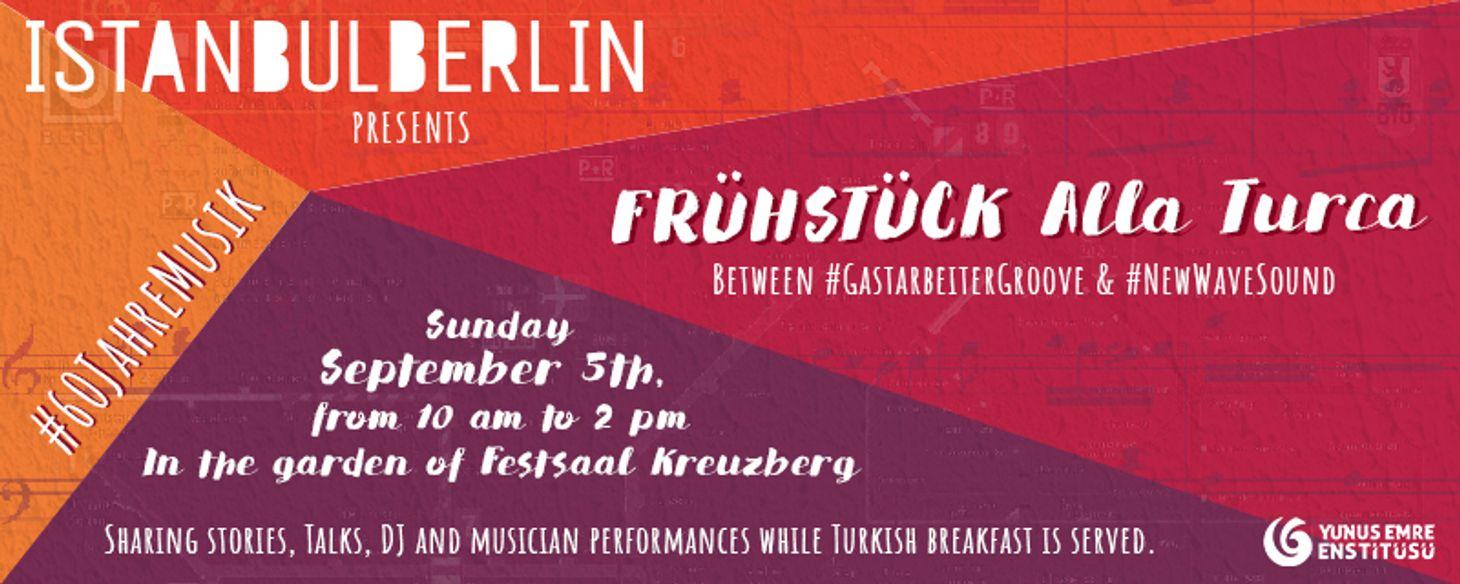
Let’s meet for a matinée on September 5th Sunday between 10 am and 2 pm, in the garden of Festsaal Kreuzberg. To share stories, to hear DJs and musicians perform, to build bridges between #gasterbeitergroove & #newwavesound of Berlin while Turkish breakfast is served.
#60JahreMusik Case File I Quiz: The ’61-90 Era: Meanwhile in a Parallel Universe
What were there between the period 1961 - 1990? We will be awarding one person who gives correct answers to all of our 12 questions and share their e-mail address with us, the vinyl record of Grup Doğuş, by Irondhand Records. Last day to participate: 20 August Friday
Please take our quiz from here.
About the Award: Born of a jazz musician father, Brothers Tufan (organ) and Muhittin Aydoğan (bass) formed Grup Doğuş 1974 with Koray Dikmen (drums) and Sedat Ürküt (guitar) in Germany. In 1975 the band recorded a cassette album with a fabulous Anatolian Pop repertoire. In 2019 Ironhands Records published it as vinyl. If you would like to start listening to this album while answering our questions...

Exhibition: We're From Here. Turkish-German Life 1990.
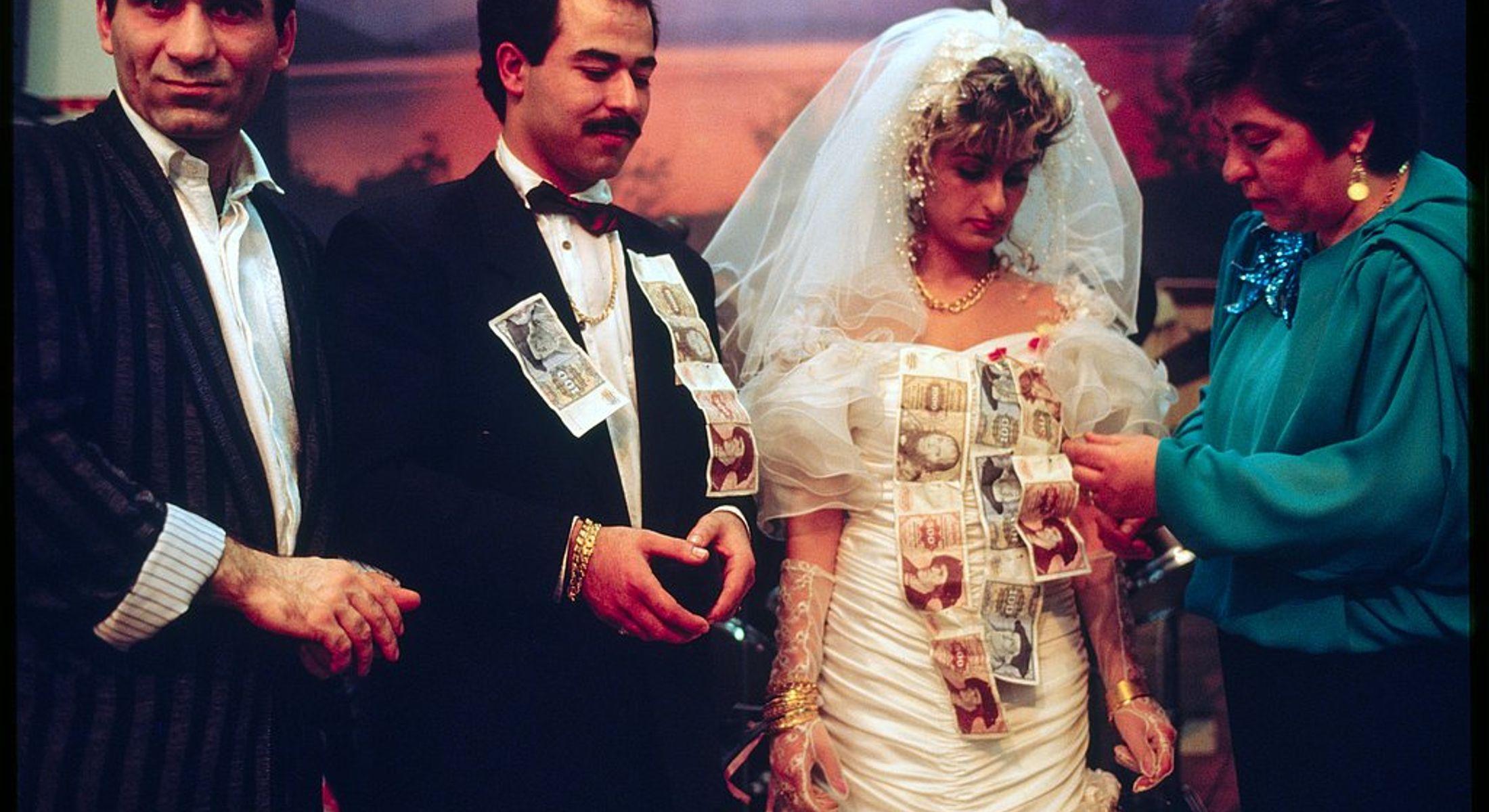
Upon the 60th anniversary of the recruitment agreement signed between Bonn and Ankara, "We're From Here. Turkish-German Life 1990. Photographs by Ergun Çağatay." exhibition could be visited between June 21st - October 31st at Ruhr Museum.
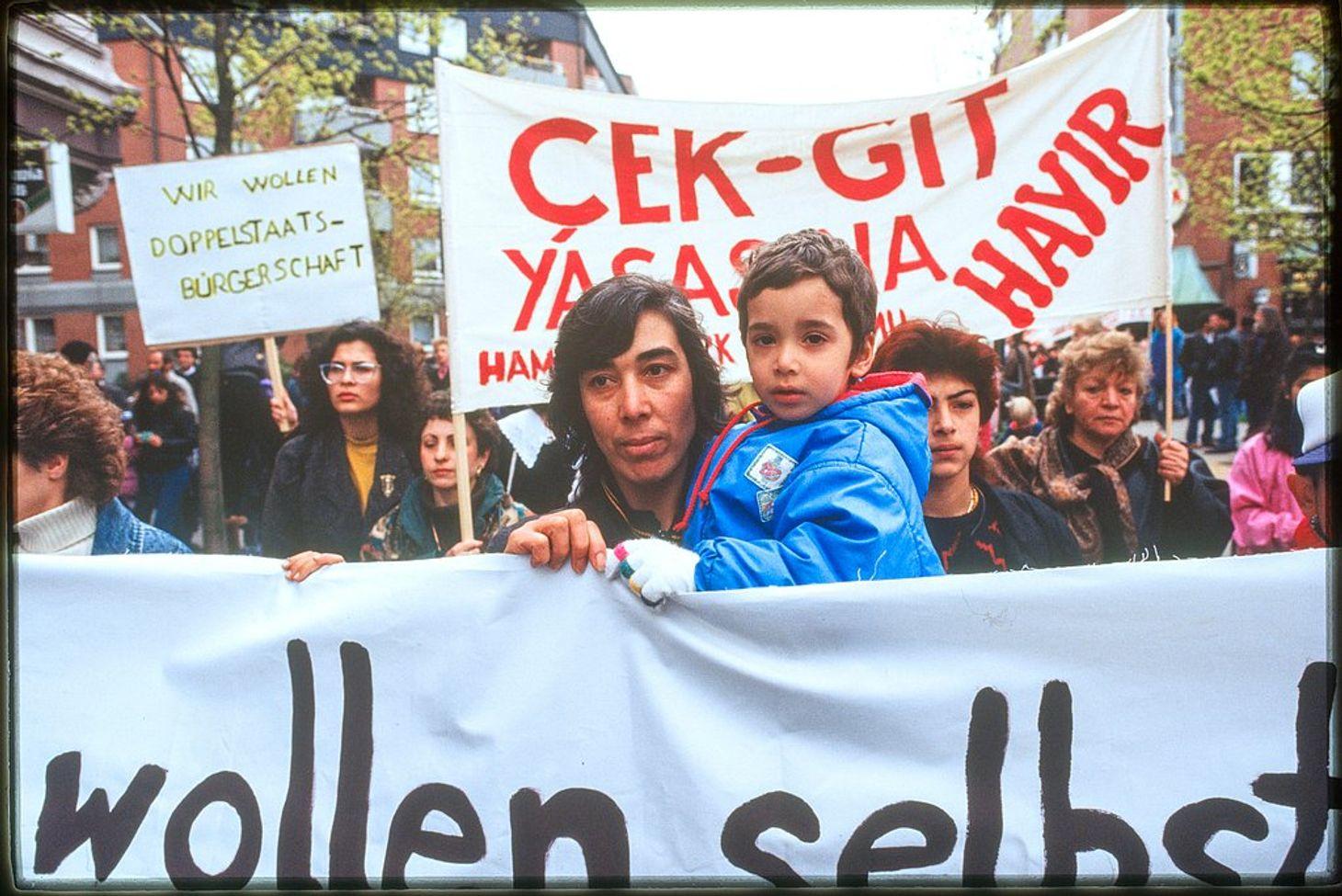
Photographer and journalist Ergun Çağatay (1937–2018), travels five German cities between March - May 1990: Hamburg, Cologne, Werl, Berlin and Duisburg. He documents the migration from Turkey with a photo-interview series. He photographs the lives of first and second generation "guest workers".
A magazine related with the exhibition, could be downloaded from here free of cost.

Copyright © Ergun Çağatay/Fotoarchiv Ruhr Museum/Stadtmuseum Berlin/Stiftung Historische Museen Hamburg
Collectivity vs. Individuality on the Streets of St. Pauli
Turkish designer living in Hamburg, Yiğit Karagöz, replied to the rising individuality during the pandemic, with an open call. His call turned into an exhibition on the streets of St. Pauli neighbourhood of Hamburg, that is known for its critical and high collective spirit.
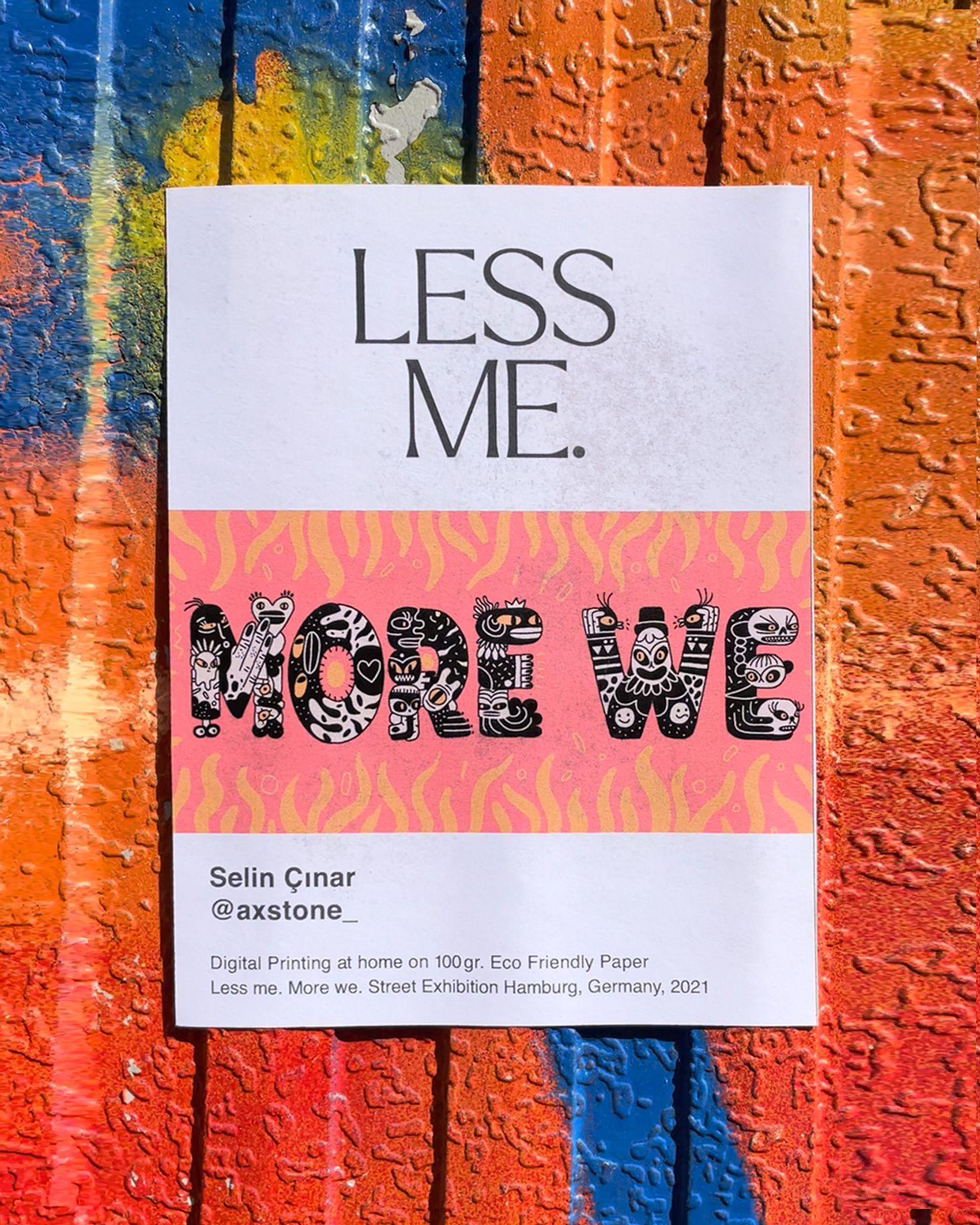
In this open call, he shared his design with the writing “Less me. More we.” He invited designers who share his feelings to design in this concept.
76 artists replied to the call. With Yiğit Karagöz says he was not expecting this much attention. “I thought, the attention means there were so many people who felt like me. When people I called took it this seriously, I took it even more seriously.”
These designs are being exhibited now on St. Pauli, please see here the video The project is planned to continue.
Architects from Turkey and Germany Came Together at One Exhibition: "Women Architect"
"Women Architect" Exhibition, brings together women architects and their work from Germany and Turkey. Architect Özlem Erdoğdu Erkarslan, who has been one of the members making the Turkish side of the exhibition happen and Nuran Ünsal, one of the architects taking place in the exhibition, answered my questions on women in architecture. physically at Chamber of Architects Istanbul Büyükkent Branch, until 31.07.2021.
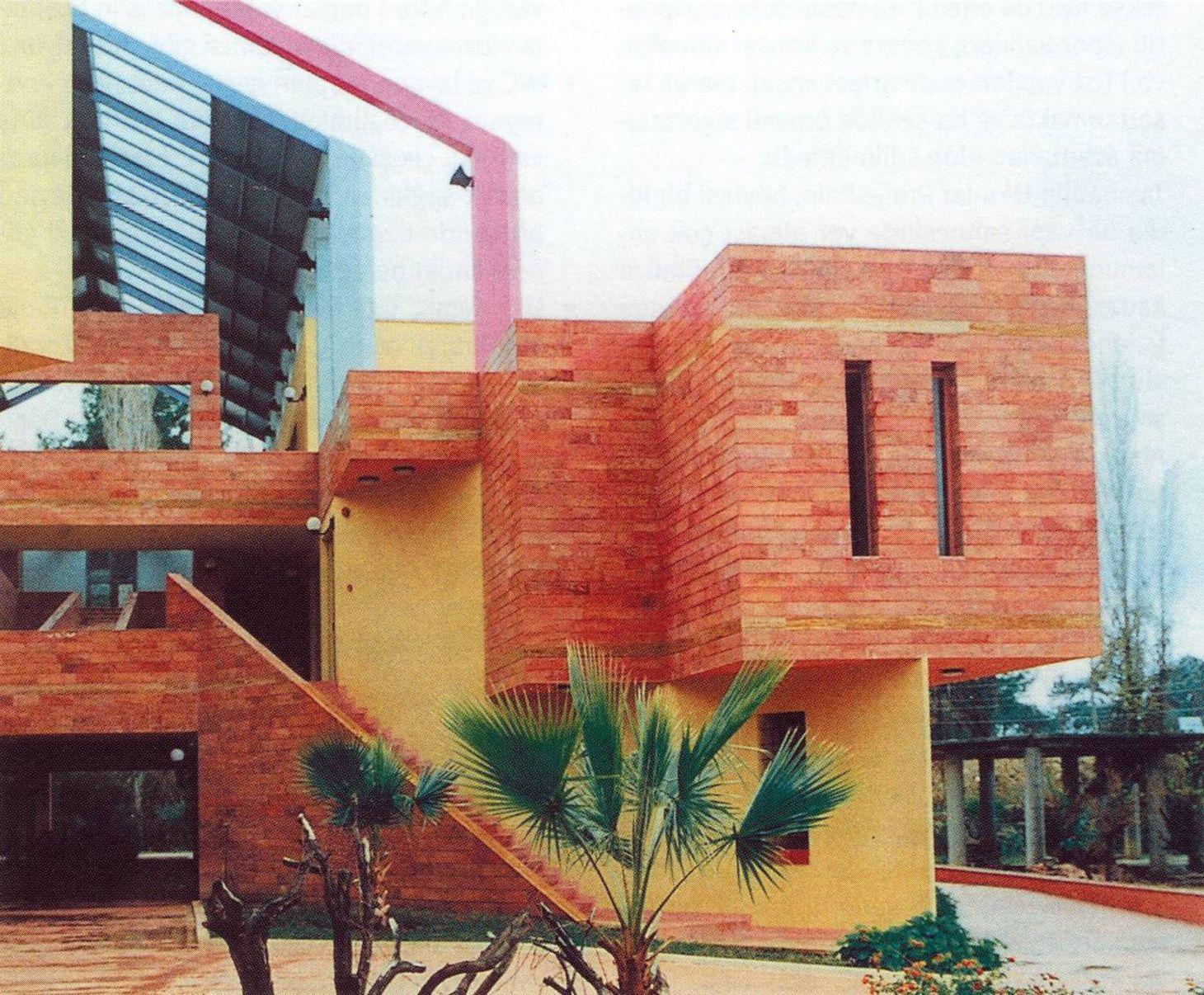
You could visit the exhibition virtually from here.
Architecture is Still Dominated by Men
Even the need to curate this exhibition tells us that the architecture is still a field that is dominated by men. Özlem Erdoğdu Erkarslan draws attention to the demand of women to architecture education. Even they graduate successfully, “In the shaping of the structing environment, in the decision-making mechanisms, there are still men.”
Nuran Ünsal agrees to the male domination in architecture, "like any field" she says, and shares an experience:
In the Government Office Project Competition, the governor is also in the jury as advisor. After the last result envelope is opened and the best project chosen is made by a woman, the governor asks, ‘How come a women made the best project amongst all these architects?’ The governor is also a man. All the jury members are men! I don’t know what she would say if the governor was a woman. But when I am in a jury and a woman’s name comes out of an envelope, I correspond with joy.
Believing equal representation is as important in architecture as in any field of life, Ms. Erdoğdu Erkarslan says:
After the investment of education, the reward to the efforts and time should be in equal fruitfulness. Furthermore, in design, it is always problematic to define the different layers of a space from similar perspectives. The designer is expected to feel the different needs with empathy and reflect them as a subject. However, when this subject is predominantly male/white/heterosexual/Anglo Saxon, then we can make sure that empathy will be ineffective.
Turkish and German Architects Side by Side
“What do we see when we look at the women architects and architectural projects they created?” I ask. Ms. Ünsal believes there neither woman or men or Turkish or German of an architect.
“If the names are closed, we could not have differentiated sex or nationality. They are all successful works in their subjects.” On the other hand, Ms. Erdoğdu Erkarslan answers my question as follows: “The two countries have a coinciding political and cultural history. Then with immigration an utterly different encounter comes. The exhibition itself, while bringing together the women architect subjects together, it did not dwell upon common historical legacy. However, it opened new perspectives and networks for us on what we could search for in archives in our future research. Introducing 18 women architects from both countries and aiming to create a space for dialogue amongst them, the exhibition seems to attain the objective with this last comment.
In the next istanbulberlin Route;
- Case File I: The ’61-90 Era: Meanwhile in a Parallel Universe. Feature I: ın the words of contemporary folk bards, the Predicament of Germany’s "Guest Workers": In the first article of our case file on the ’61-90 era, from 1961 to the fall of the Berlin Wall, we’ll ease into a wide-angle perspective on the music market of Germany’s “Imagined Turkey”. The work conditions and lives of contemporary bards are channelled through the #gastarbeitergroove - that is, guest worker grooves. Also included in the feature; the women stars of the day and wedding performers that transformed into disco folk the folk music familiar to all of us.
- Gurbette Esen Yeller: “Weddings Were the First Step Towards Settling in Germany for Good”: Even the name of the Gurbette Esen Yeller trio, meaning the Winds of Gurbet, suffices to explain their position. Two brothers from a family who migrated to Germany in the 70’s to work played at a wedding for the first time in 1983, accompanied by a friend. Comprised today of Hüseyin Sarıcı, Onur Olgun and Ender Sarıcı, Gurbette Esen Yeller got together with us on a holiday in a video call, and we discussed their story starting with that first wedding to span nearly four decades, their music encompassing both authentic folk music and disco folk, and what weddings mean to the estranged and homesick.
If you like the newsletter, please share the subscription link.
I would be more than happy to hear your opinion and suggestions, to contact me [email protected]
Best wishes from Istanbul,
Sedef İlgiç


