



Hello!
This week, we are peeling the orange and digging into the topic of orange wine. They made wine from oranges? Does it smell like oranges? Did they squeeze oranges into it? Put those questions aside carefully and slowly and take a look at this week's article. A week that a little technical, a little aromatic, a lot colorful.
Attention! This post is about wine, a fermented grape juice from alcoholic beverages. For readers under 18, non-fermented grape juice may be more suitable.
What's in our glass?
🎵Grapest Hits: Orange Melodies
🍷 Fresh Out of the Bottle: The Orange Side of the Wine
Cheers,
This week, Grapest Hits picks a color : orange! I've prepared an acidic, full-bodied and fun playlist like the orange wine itself. If you have already clicked above to open the playlist, and songs started to jingle in the background, let's get started!
The Orange Side of the Wine


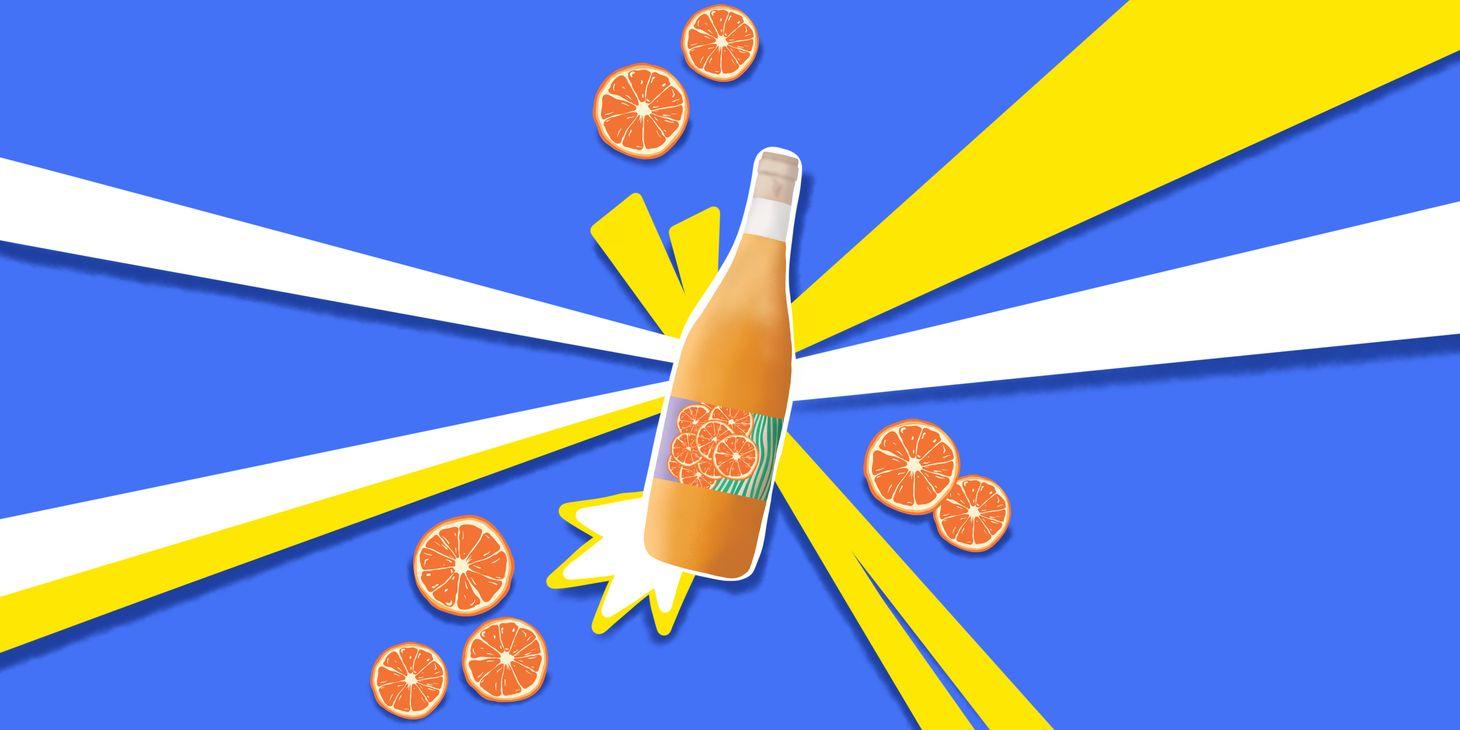
They made wine from oranges? Does it smell like oranges? Did they squeeze oranges into it? We are slowly leaving aside such questions and continue reading the article. My answer is: No, orange wine is not made from oranges. We are not giving up on the grape. Orange wine takes it's name from the color of the wine, which can also be referred to as amber wine.
Production Process
We can think of orange wine as a kind of white wine. The process that gives the orange color in the production flow is the skin contact. Now let's go back to the beginning, the harvest. The grapes are being picked, coming from the vineyard to the winery. They are separated from the stems and crushed and pressed with a gentle pressure. As the grapes are crushed with this gentle pressure, free run juice is produced. A small note: the gentle crushing-squeezing process is very gentle, the seeds of the grapes must not be broken. Let's not think of it as pressing. If the seeds of the grapes snap, the bitter oils and tannins in the seeds are released and the bitter taste is inevitable, be careful. Now, we have crushed grapes and we have a free flowing must. White wine production so far is the same as orange wine. What did we say? We can think of orange wine as a kind of white wine. The orangeness of the production process starts right here!
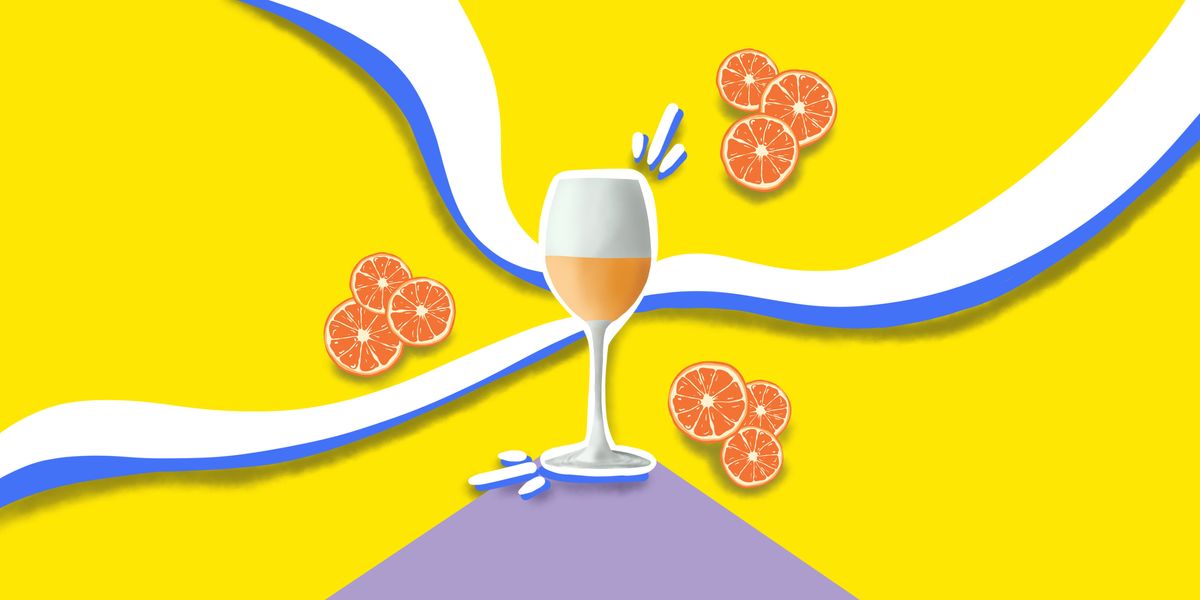
Illustration: Kıvanç Müçek
The Orange Step
Skin of the crushed grapes are kept in contact with the must for a while. Skin plays a leading role because it contains color pigments, some flavor components and tannins. As the skin comes into contact with the must, these color pigments, flavor components and tannins pass into the must. This is the starting point of the orange, these color pigments. Thanks to them, the wine lives up to its name, it becomes orange. While having this special and beautiful color, the taste profile of the wine is also affected. Because in this way, more bitter flavors can emerge, you know, because tannins are involved. There are also flavor components coming from the skin, it's a carousal!
In white wine production, zero or very little skin contact is applied. So the grapes are crushed and go to pressing. They do not stay with the skin, you can think of as they are in a hurry. The reason for this "hurry" is the desired and expected flavor profile of the wine. Most of the flavors that we like so much in white wines comes from the flesh and juice of the grape. When the skin gets involved, things really change! In general, the desired white wine profile has fresh fruits, a smooth palate and a light color. Since there is not much room for skin contact in this profile; grapes go to the press urgently without much contact with the skin or the air. Since we are in a hurry and we are running away; we can think that the color pigments in the skin cannot find their place in the must. That's why white wine is lighter in color than orange wine. In fact, orange wine is produced like red wine. In red wine, there is contact with the skin, that's where red wine gets its red color. We can also think of orange wine as a wine produced using white grapes with the red wine production technique.
Illustration: Kıvanç Müçek
Flavor Profile
Of course, the taste profile is also affected by this production process. The flavor profile goes to a completely different direction with the flavor components from skin contact and the oxidative notes from the contact with air. Let's consider white and orange wine from the same grape. The fruits in the wine are a little stronger, a little more oxidative in the orange wine. Let's imagine an apple for example. In the white wine of the same grape, this apple comes fresh, whereas in the orange wine of the same grape, this apple shifts to a slightly darkened profile, as if it has been waiting outside for a while. This example is a sign of oxidation caused by contact with air. We can imagine the flavor profile between the two as something like this. Of course, as usual, we are not generalizing, but exemplifying for a better understanding. In addition to the flavor components in the peel, there can also be more bitter flavors, as you know, tannins are involved. We can think of this bitterness like the bitterness in a very dark tea.
Illustration: Kıvanç Müçek
For the flavor profile; some dried fruits, some nuts, hay are the most common flavors. Besides the change in the flavor profile, there is also a change in the structure on the palate. The reason is, again, tannin. As in red wine; tannins come in contact with the skin during orage wine production, and we experience the drying effect of tannins on the palate. I shared the tannin issue in my article "Is it in tea but not in wine?", let's take those who want to refresh their minds there.
Worth Every Penny
We said that grapes are in a hurry in white wine production. There is no skin contact. Skin contact means more time, more equipment and more people; so the cost increases. It pays back, but it can also cost a fortune. It's a costly wine due to the production process, in general.
Food Matching
As we spoke above, there is skin contact resulting in having tannins- as in red wine production. And those tannins have a closer structure on palate as in red wines compared to white wines.
Having the tannin impact on the palate, we can move towards strong dishes. Let's not be afraid! It can even pair with red meat, why not? Tannin actually binds to protein and gives that dryness we feel. The reason behind this perfect and classic red meat&red wine pairing is this tannin-protein binding. Tannin combines with protein and offers a different structure on the palate. That's why wines with high tannins are usually paired with red meats. You can think of tannin reacts with protein as an opposing component. This is the sensorial experience we have while having red wine& red meat pairing. In orange wine; since we have some tannins as well, it can pair well with light red meat dishes.
Illustration: Kıvanç Müçek
How about some seafood? That would be nice! The fruits in the orange wine will be amplified with the fish, because the salty and fishy taste will amplify the fruit's natural flavor we get from the wine. You can think of adding a pinch of salt on an apple. Try it, you will feel the difference! It is a very close sensorial experience to this fish and orange wine pairing.
Let's zoom in to a cheese platter. In stinky cheeses (such as Roquefort, Epoisses, Munster), the heavy odors and funky notes will be balanced with the fruits in the orange wine. Meanwhile, the oxidative notes, nuts, hay odors will change that balance a little bit and amplify the cheese taste. Again, a carousal! Another sensorial example could be pairing the hard cheeses, rather than stink cheeses. The intense milk and farm notes in the hard cheeses combined with the fruits of the wine will amplify those 2 flovor diections. So, the farm notes of the cheese (especially in the finish) will be more pronounced, and the fruitiness of the wine will be even more pronounced. Dear people who eat jam on feta cheese, this is a similar experience!
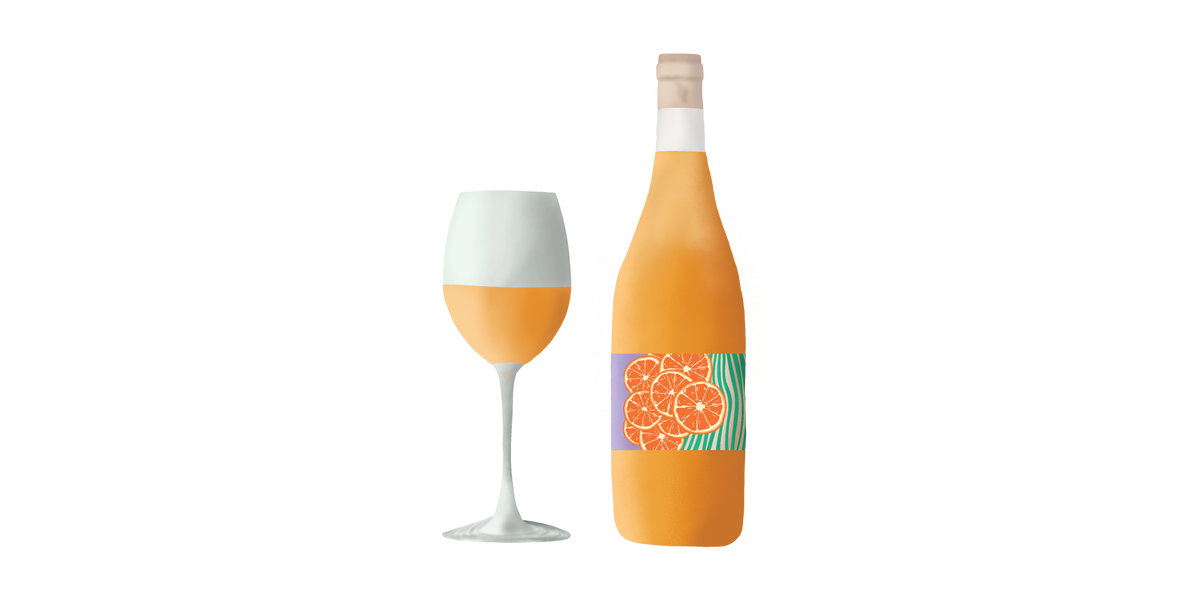
We have some examples of local orange wines, some of which I share below:
- Gelveri’s Hasan Dede, Kizil Üzüm, Koku Üzüm, Linen Gömlek wines
- Kastro Tireli's Hermos
- Paşaeli's Amber in the Shell