


Good morning. It's Wednesday, August 17th.
Today’s newsletter is filled to the brim with fresh market data, but perhaps the most important piece of information comes from a survey conducted by the ZEW Institute, displaying a gloomy investor outlook on the German economy not seen since 2011. Meanwhile, European energy prices surged to a fresh record, in what feels like an almost daily occurrence.
- On the flip side, Google is making robots with artificial intelligence, which are only capable of bringing chips and cleaning spills as of yet — but if you are reading this from a far future where the fate of humanity lies solely on you in a desperate war against machines… Well, here is a playlist to get you through the day.
– Can and Tanem
 Aposto World
 is our English-language briefing on the news that matters around the world, written by the Aposto newsroom in Istanbul. Every Monday and Friday morning we go through the international press, region by region: the UK, Europe, the US, the Middle East, Africa, Asia-Pacific and the rest of the world, with a closing section on culture, science, technology and sport. Each story is told in a few clear lines with the context you need, and links to the original reporting so you can read further. One email, twice a week, and you are up to date.
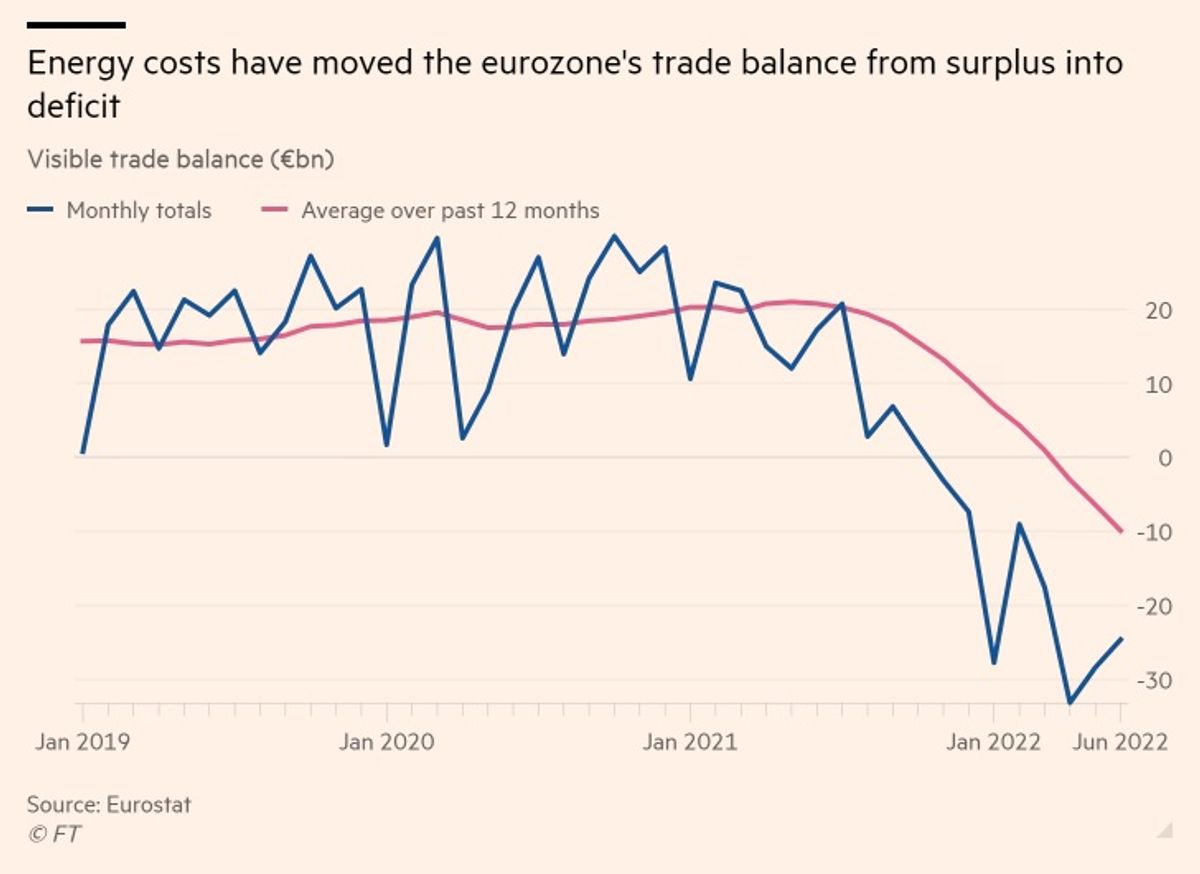
• Investor outlook on the German economy has sunk to its lowest level since the eurozone debt crisis more than a decade ago, dropping from minus 53.8 to minus 55.3, ZEW Institute’s gauge of investor expectations showed, reflecting the growing concerns about the economic fallout from Russia’s invasion of Ukraine that could plunge Europe’s largest economy into recession.
via Financial Times
- Meanwhile: German year-ahead electricity surged above 500 euros for the first time, ratcheting up pressure on households and businesses as the worst energy crisis in decades looks set to persist well into next year. Europe’s benchmark power price rose as much as 6.4% to €508 per MWh on the European Energy Exchange, marking a gain of roughly 500% in the past year.
• Britain’s unemployment rate remained at 3.8% in the three months to June, close to a half-century low, while inflation-adjusted wages fell by 4.1%, the biggest drop since records began in 2001.
- Zoom in: The number of people in work grew by 160,000 in the April-June period compared with the quarter before, much less than analyst estimates of an increase of 256,000. Job vacancies in the three months to July fell for the first time since mid-2020 but stayed close to a record high at 1.274 million.
- Brexit woes? The number of EU citizens moving to the UK has plummeted post-Brexit amid tighter visa requirements, according to figures from the Office for National Statistics. Only 43,000 people from EU member states received visas in 2021, a sharp decline compared to the 230,000 to 430,000 in the six years up to March 2020.
• Norway's exports reached a record high of 229 billion kroner (€23.2bn) in July —0.4% higher than the previous record set in March this year— driven mainly by natural gas prices that have soared since Russia's invasion of Ukraine. The Scandinavian country, which is a major producer of offshore oil and gas, set a trade surplus of 153.2 billion kroner (€15.5bn), also the highest on record.
⚡ Lightning Round
- The US housing market cooled as construction starts fell by nearly 10% in July to a 1.45 million annualized rate, the slowest pace since early 2021, according to government data released Tuesday. Meanwhile, canceled deals rose as buyers continued to back away from the market amid rising mortgage rates, according to an analysis by Redfin Corp.
- Canada’s consumer price index rose only 0.1% from a month earlier as consumer prices cooled with fuel prices falling by the most since the start of the pandemic. CPI rose 7.6% in July from a year earlier, Statistics Canada reported Tuesday.
- Israel’s consumer price index rose 1.1% in July from a month earlier, the Central Bureau of Statistics reported Monday evening, exceeding analyst expectations and marking a continuing upward trend as inflation reached 5.2% year-over-year.
• Pontegadea, Zara founder Amancio Ortega’s personal investment firm, is looking to diversify one of the world’s biggest fortunes away from retail fashion as shares of Zara parent Inditex lost almost a third of their value in the past five years. Fueled by proceeds from his fashion empire, the billionaire’s family office has invested more than $1 billion in energy ventures and almost $2 billion in real estate.
• Walmart announced earnings and revenue that beat analysts’ expectations in fiscal Q2, as sales grew more than 8%, but profits tightened, as consumers turned to the discount retailer for groceries and essentials. The company’s shares rose more than 5% in trading.

Getty Images
- The background: The retailer’s results still echoed its profit warning last month, when Walmart said inflation-pinched shoppers were buying less high-margin discretionary merchandise like apparel as they spent more on necessities. Expecting those spending patterns to persist, Walmart reiterated its forecast for the back half of the year.
• American Airlines agreed to purchase 20 supersonic Overture planes from Boom Supersonic, the companies announced Tuesday, with the option to purchase another 40 in the future. Boom says the jet will fly as fast as Mach 1.7, or about 2,100 kph, dramatically cutting trans-Atlantic and trans-Pacific flight times.
- A step back: The deal is the second firm order in the last two years for Boom, still years from building its first commercial airplane. United Airlines made a commitment last year to buy 15 Overture jets.
• Hedge fund Elliott Management has dumped almost all of its position in Japan’s SoftBank, reported Financial Times, after losing conviction in the group’s billionaire founder Masayoshi Son and his ability to close the huge gap between the value of SoftBank’s various holdings and its market capitalization. SoftBank is looking to manage growing investor unease amid a tech market slump and the group's $23 billion loss in Q2.
• Multiple explosions tore through a Russian military base in Crimea, with blasts engulfing an ammunition depot in the north of the Russian-annexed region that is an important supply line. Russian officials said the explosions disrupted trains and forced 2,000 people to evacuate from a nearby village. Moscow called this an accident, and Ukraine has neither confirmed nor denied responsibility for the incidents.

via Bloomberg
- Why it matters: If Ukraine claims responsibility, the explosions may raise the prospect of new dynamics in the war, as it would mean that Ukraine now has the capability to strike deeper into Russian territory or that pro-Kyiv groups are having success with guerilla-style attacks.
- In other news: The Central African Republic disputed widespread claims from the EU, UN, and the US that mercenaries from the Wagner Group —a private Russia-linked military— have killed scores of people, looted communities, and displaced thousands as they increase control of gold-mining areas in the war-torn country.
• Germany's Chancellor Olaf Scholz refused to support growing calls for an EU-wide ban on issuing tourist visas to Russian citizens, although some EU countries have started to bring their own visa restrictions. Scholz stressed: "This is not the war of the Russian people. It is Putin's war and we have to be very clear on that topic." He also underlined that there are many who flee from Russia because they do not support the war.
• Estonia will remove its Soviet-era monuments from public spaces, with the country's PM Kaja Kallas saying that the decision was made due to a risk of public disorder following Russia's invasion of Ukraine. However, many Russian-speaking Estonians are protesting the government's decision, striking a flashback from 2007 when the removal of a Soviet war memorial had led to days of rioting that resulted in one person's death and thousands of people's detainment.

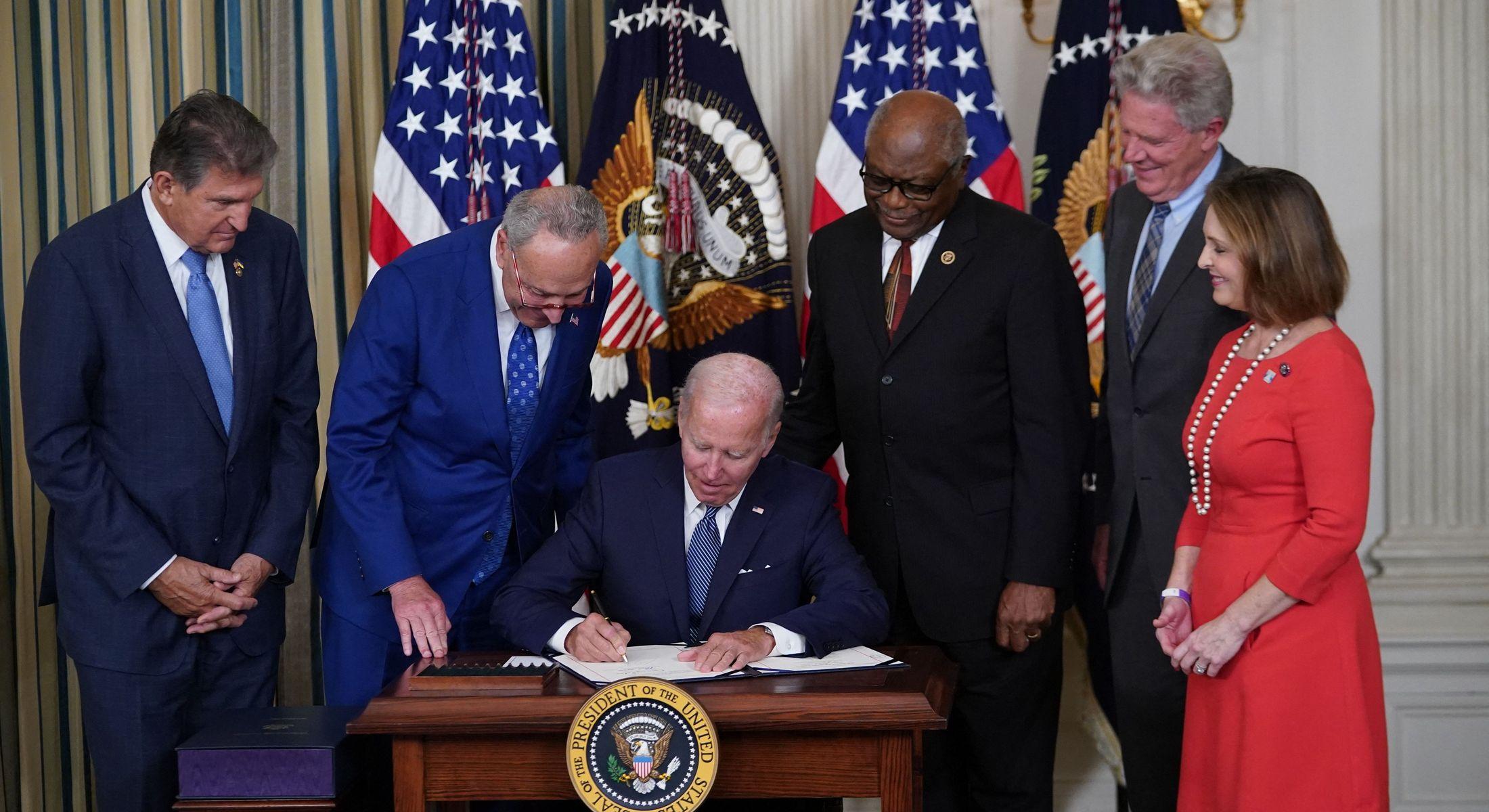
• US President Joe Biden finally signed into law his $437 billion tax, healthcare and climate bill, after more than a year of discussions. The newly renamed Inflation Reduction Act is expected to raise $737 billion in revenue over the next decade, with the biggest share coming from reductions in drug prices for Medicare recipients and tax hikes on corporations.
⚡ Lightning Round
- Italy's far-right Brothers of Italy leader Giorgia Meloni is riding a wave of popularity in the race to become the next PM, which would make her Italy's first female PM and its first far-right leader since WW2.
- China imposed visa bans and other sanctions on Taiwan's political figures as a way to punish both the self-governing island and the US in response to the congressional visits.
- Iran said it submitted a final written response to restore its tattered nuclear deal with world powers, after months of on-and-off talks in Vienna. The EU said they received Iran's response, and are now "studying it and are consulting with other JCPOA participants and the US on the way ahead."
• Ethereum’s “Merge” upgrade will take place in September, with the cryptography underlying the blockchain undergoing a radical shift to a system where the creation of new ether tokens becomes far less energy-intensive. The shift could be a game-changer for the blockchain, making it cheaper to mine and easy to adopt for fintech and other crypto apps.
- Why it matters: Ether is gnawing away at behemoth bitcoin's market share, accounting for nearly a fifth of the total crypto market capitalization of $1.14 trillion, up from less than 14.9% two months ago, according to CoinMarketCap.
- Meanwhile: Losses due to cryptocurrency hacks jumped nearly 60% year-to-date to $1.9 billion, propelled by a surge in funds stolen from decentralized finance (DeFi) protocols, many of which run on the Ethereum blockchain, according to a blog post from blockchain analysis firm Chainalysis.
• Russia previewed a model of its post-ISS space station, nicknamed ROSS, after announcing Roscosmos' departure from the International Space Station last month in response to the West's sanctions against their invasion of Ukraine. The design would accommodate four people in rotating tours and would offer better monitoring of Earth than Russia gets from ISS today, according to Russia's state media.

via Engadget
• Warner Bros. Discovery is laying off around 70 workers across HBO and HBO Max, which accounts for around 14% of staffers across the two divisions. HBO Max's reality and kids programming are being downsized, and thus will be less of a priority, in the major cost-cutting drive at the company that is planning to merge HBO Max and Discovery+ into a single platform next year.
• Google is making physical robots with the knowledge and conversation skills of virtual chatbots that can take, interpret and perform verbal commands. The mechanical waiters, shown in action to reporters last week, embody an artificial intelligence breakthrough that paves the way for easy-to-control multipurpose robots.

via Reuters
- Shut up and take my money: Google robots are not ready for sale yet, as they can carry out only a few dozen simple actions, such as fetching chips or cleaning a spill. "It's going to take a while before we can really have a firm grasp on the direct commercial impact," said Vincent Vanhoucke, senior director for Google's robotics research.