





Hello everyone,
Nuclear energy has always been at the center of criticism due to environmental and social risks. However, recent developments in fusion energy suggest an alternative that has no environmental impact, almost no risk, and is millions of times more efficient than fossil fuels.
This week, we open fusion nuclear energy up for debate, and try to understand its place in the climate crisis and circular economy.
🧠 A fresh start for your mind: You can keep reading Circular Economy 101 on the Aposto iOS app which offers information in the most convenient, satisfying, and reliable way possible.
Don’t forget to share your thoughts and comments.
Contact us at [email protected]
Let’s start!
Sustainable AND Nuclear?!


Debates about nuclear energies have been going on for many years. Although existing nuclear power plants produce much more energy than fossil fuels such as coal, oil, and natural gas, they have always been received negatively because of the nuclear waste they create and the accidents that reach disastrous levels. Arguments that nuclear energies are more sustainable than fossil fuels flared up in February 2022 because scientists who are carrying out JET (Joint European Torus) fusion energy research, which is conducting studies in the United Kingdom within the scope of the European Fusion Program, made statements in this direction.
Although nuclear energy is a very technical subject, in this article, we discuss fusion energy in the simplest way possible and discuss whether it can be a sustainable and environmentally friendly energy source.
☢️ Fission x Fusion
Currently, existing nuclear energy technologies are divided into fission and fusion.
Fission energy is the method that is currently used in nuclear power plants. In its simplest form, it is the energy obtained when an atom with a heavy mass splits into more atoms with less mass. Fission energy is created by a chain reaction. It is a process that creates unstable and radioactive waste. The main reason why nuclear power plants are at the center of criticism today is the fact that the formation of this radioactive waste and the atomic bomb work in the same way. It can be said that these criticisms are justified by the disasters that may occur if the chain reaction is difficult to control, the possibility of leakage is too high, and the radioactivity is not stored correctly.
Fusion energy, on the other hand, is the energy obtained when two lighter atoms collide and become a single, heavy atom. Solar flares are examples of fusion energy. Since existing fossil fuels are obtained by chemical reactions, they cause CO2 emissions, which is also the main cause of the climate crisis. In fusion energy, the unreacted and non-toxic helium emerges as the "waste" by-product of the process.
Now that our physics and chemistry intensive course is over, let’s take a look at the developments in fusion energy.
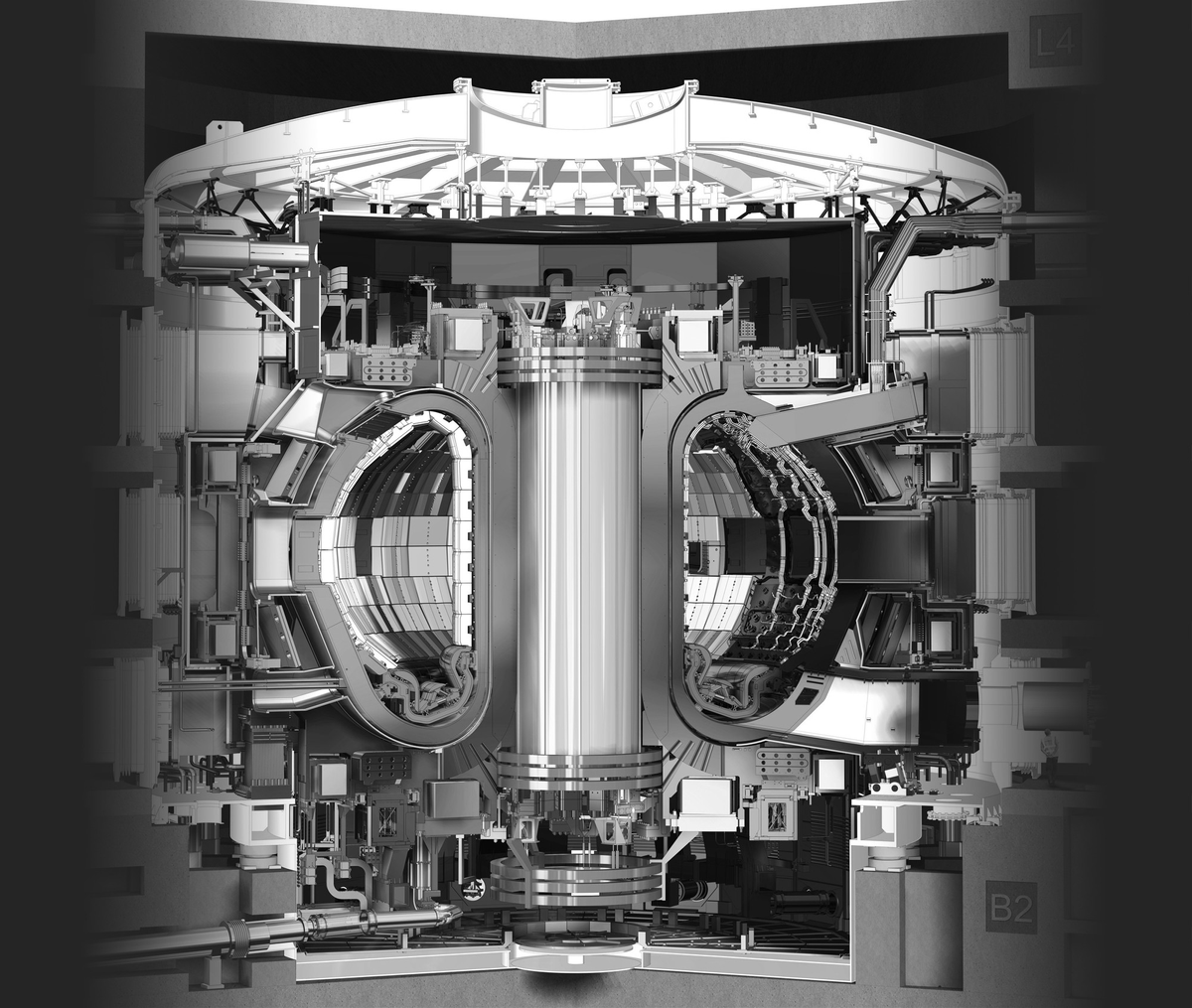
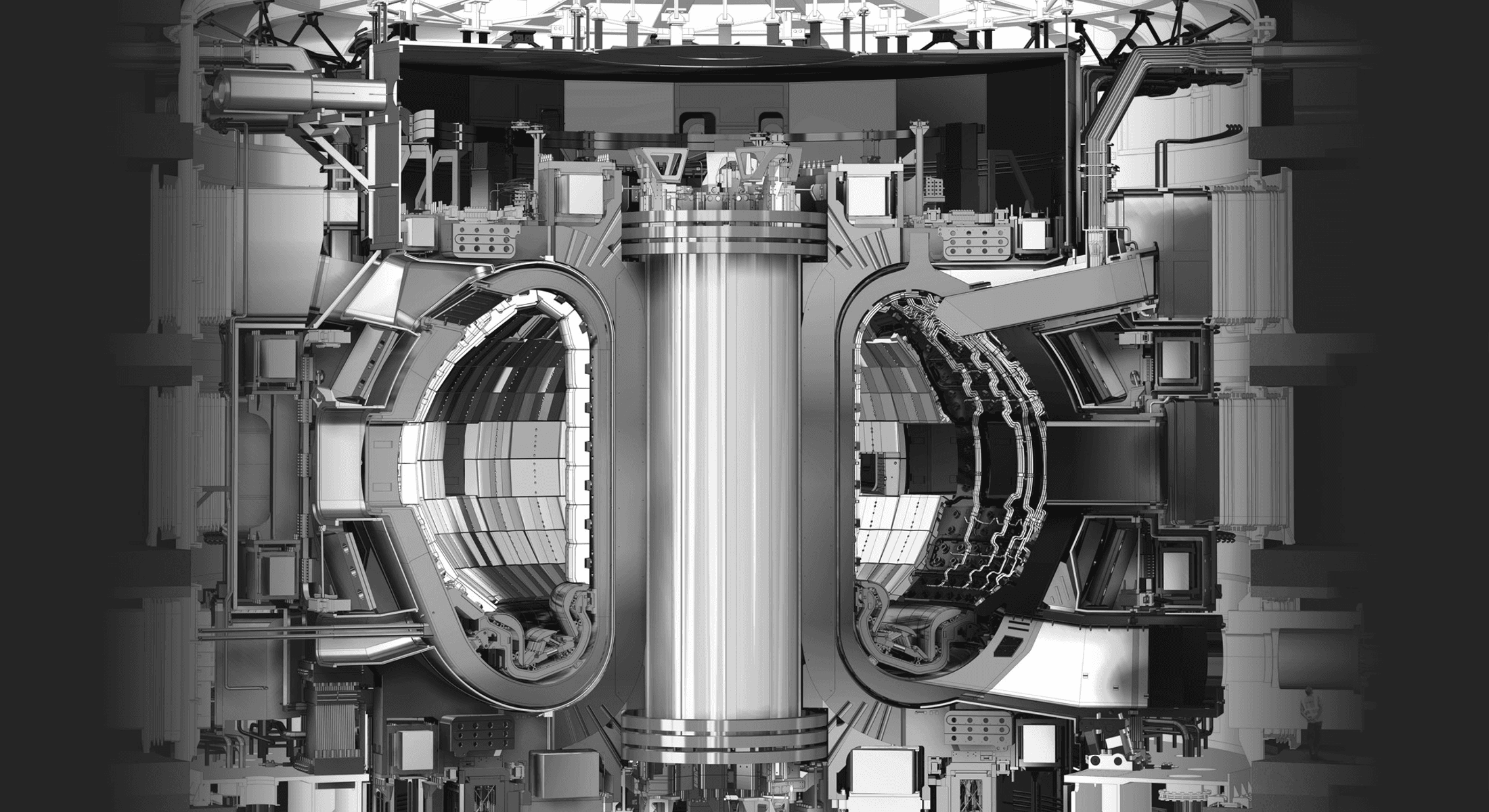
https://www.iter.org/mach
🍀 Is fusion energy actually sustainable?
It was announced that 59 megajoules (MJ) of fusion energy was produced in about five seconds in the latest tests carried out last February in the JET fusion energy research area in the UK. It is possible to simplify this info: 59 megajoules of energy corresponds to an average of 11 megawatts (MW). If this 11 MW of energy is captured and used for consumption, approximately 4 MW of energy remains.
With 1 MW of energy produced in a coal power plant, 400 to 1000 households’ annual energy needs can be covered. With a simple calculation, we see that 4 MW of fusion energy produced in five seconds can meet the annual energy needs of 1600 to 4000 households on average.
Although these ratios are considered by scientists to be much smaller than they should be, they are critical as they prove theories about how efficient fusion energy can be. However, studies on fusion energy, which have been going on for more than 40 years, are still only just starting.
🔎 Fusion in circular economy
When it comes to circular economy, the first thing that comes to mind is generation of waste. However, circular economy is not just about innovative and technological strategies of waste management. Although 55% of the carbon emission, which is the main cause of the global climate crisis, is due to the usage of currently used fossil fuels as an energy source, the remaining 45% of carbon emissions are caused by the waste that is generated during the production of products and materials, food waste, inefficient use of resources and destruction of natural resources.
For this very reason, although it is not discussed on the global agenda of circular economy, it is also directly related to the subject of correct use of energy resources. The main problem with the use of fossil fuels is that the resulting CO2 is actually "waste" that comes out as a result of the energy production process. In other words, while circular economy’s first step is to prevent waste generation, this particular step is not limited to preventing waste of products and materials.
🟩 Green energy
The definition of "green energy", which has increased in the energy sector in recent years, especially within the scope of combating the climate crisis, focuses on the production of energy from natural sources such as solar, hydro (water), and wind energy. Since the energy obtained from natural sources does not cause CO2 emissions, it is seen as the future of sustainable energy.
However, it is largely ignored that the facilities that need to be established for the energy to be obtained from these natural resources cause excessive material use. Due to the current designs and technologies, the construction of a windmill requires materials that cannot be reused in the remanufacturing process, or even recycled as a last resort after the windmill is no longer functional. It is also the same situation when it comes to the construction of solar or hydroelectric power plants, such as wind power.
Of course, this can be avoided with a redesign and it is possible to keep the resources in the loop or use them in a way that preserves their value for the longest amount of time possible. But the current system requires continuous use of materials that have never been used before for this renewable energy production.
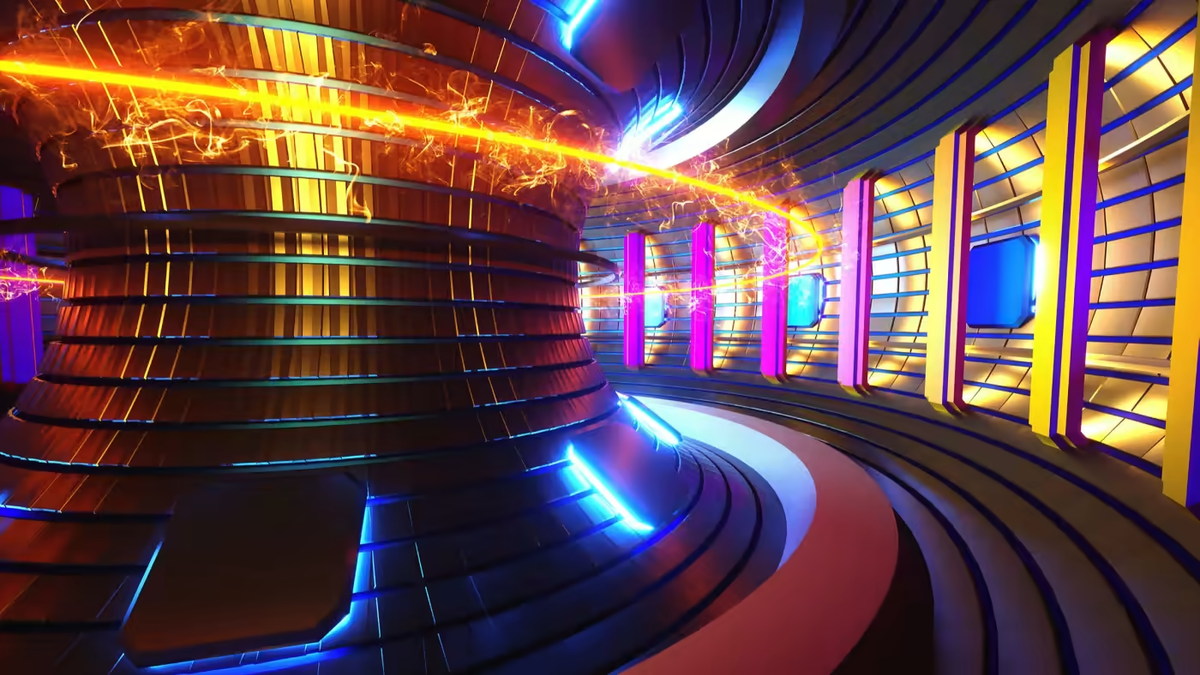
Nuclear fusion reactor © Marharyta Marko/iStock/Getty Images
As we mentioned above, if fusion energy both causes the release of a non-harmful by-product such as helium at the end of the process, and if only tritium, a natural isotope obtained from the hydrogen molecule, is required for this process, it can be a much more sustainable energy source alternative than renewable energy sources. In this case, it may allow the helium to be used in different ways and prevent the formation of environmentally harmful waste due to energy production.
As a result, fusion energy, which claims to have no environmental damage, instead of the fission energy used in existing nuclear power plants, may be the energy source of the future, as explained by scientists. However, the great risk of leakage and accidents at nuclear power plants is the biggest obstacle to eliminating reactions that would come up against new nuclear power plants. Technology is advancing every day, and what we know as wrong today may prove to be right tomorrow. Thus, our duty as individuals should be to research, question, and always engage in scientifically grounded debate.
What do you think, can fusion energy really be the energy source of the future and change the unreliable perception of nuclear energies?


