

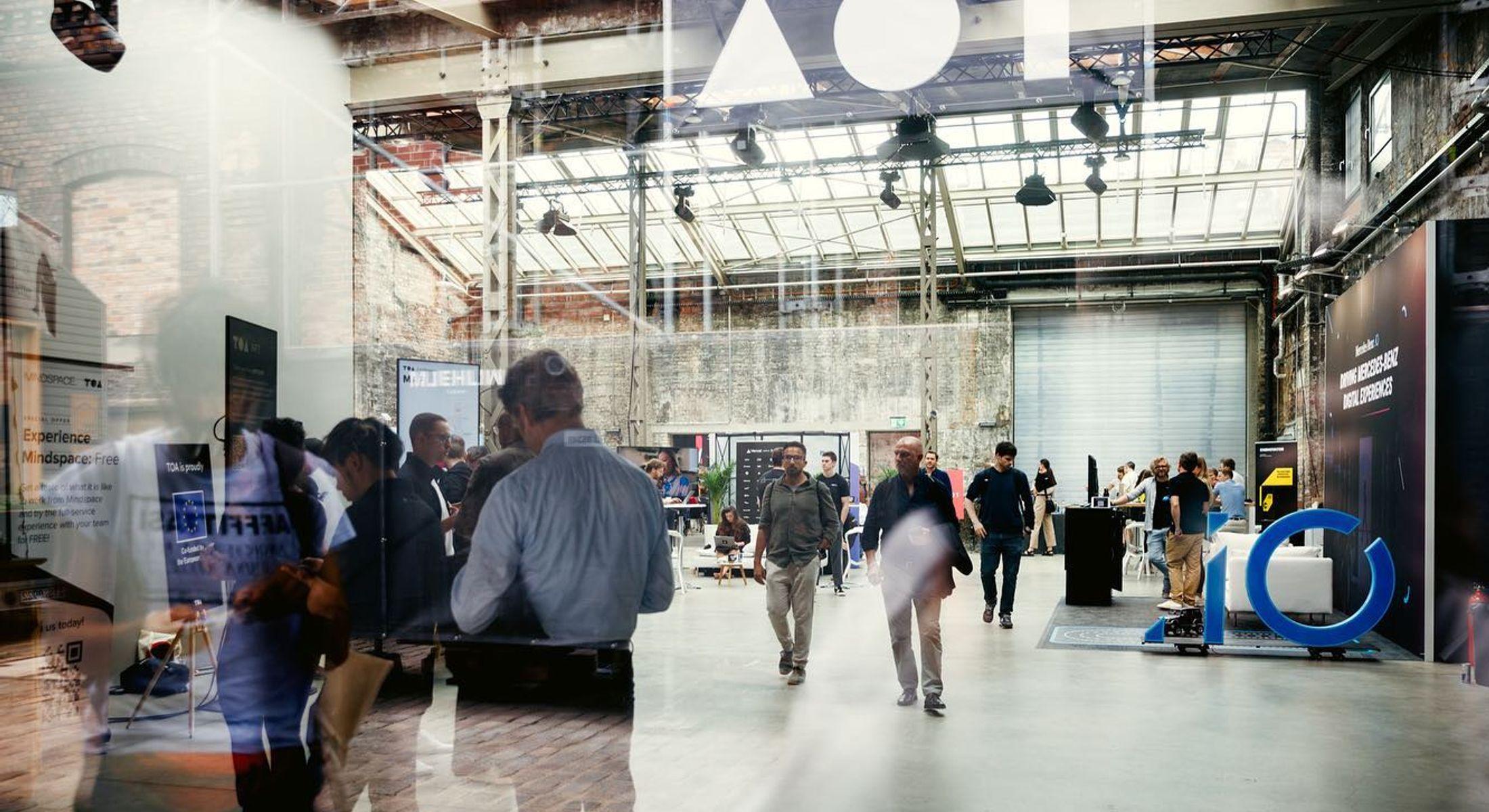
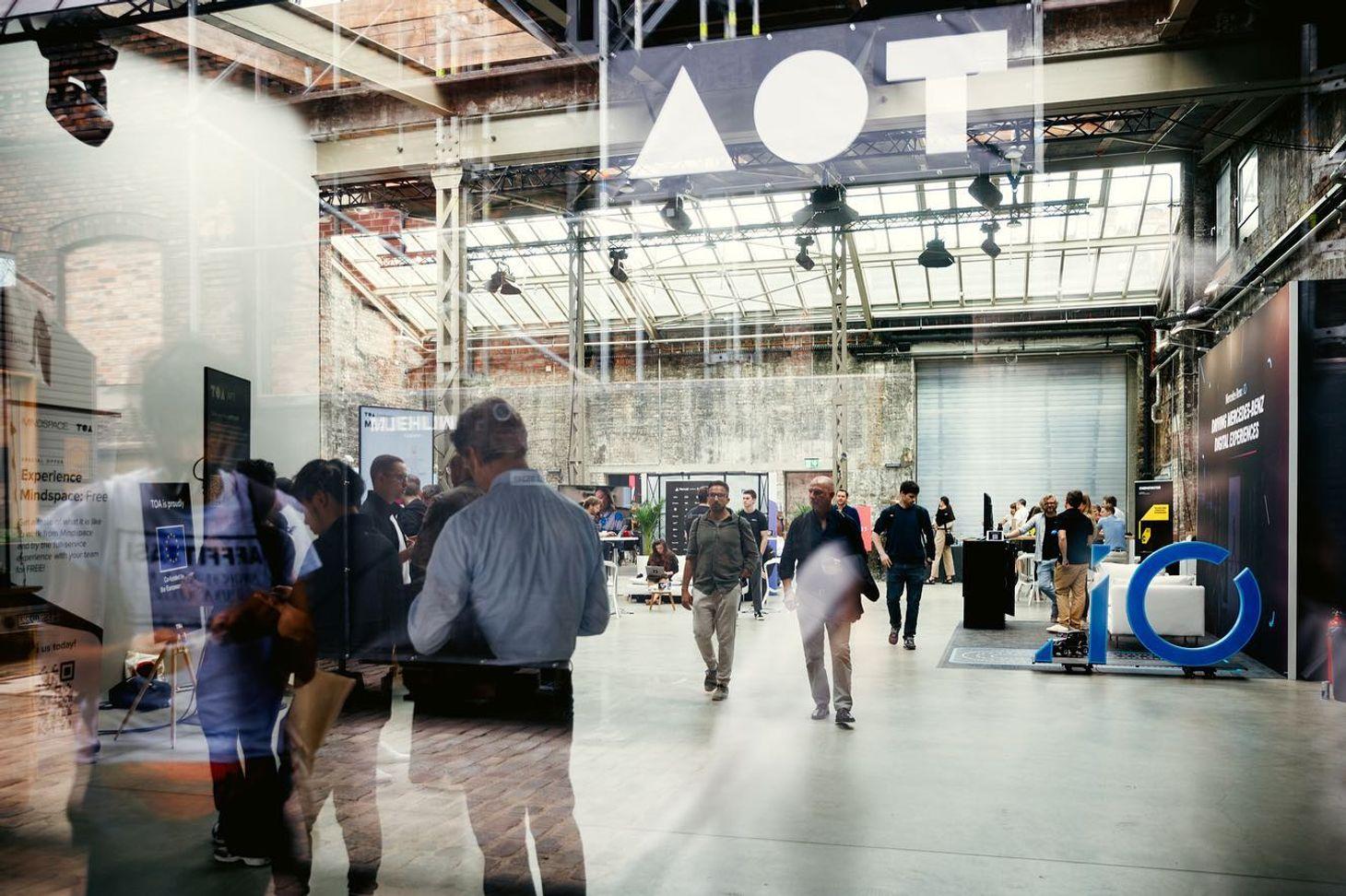
When you enter the festival, you know it's the right place to be. The only FOMO you could have is to miss out on what’s going on in the next room. When you approach the participants, talking about ideas just makes sense, and hearing their reflections on concepts just broadens your perspective.
Last week, I had the opportunity to attend TOA23, which takes place in Wilhelm Hallen, an old iron foundry that has been transformed into an event space as preserved by the original. And with this pop-up issue, I want to share with you what the future holds in the tech scene, the encounterings I’ve had, fresh perspectives I’ve listened to, and some questions I’ve asked.
At Aposto, we believe in the sense of belonging to a community that values deep and mindful consumption of information. By combining the best ideas to shape our perspective towards what the future holds from like-minded people and their out-of-the-box thinking thanks to the tech conferences and festivals, we get closer to the root causes of why we are doing this in the first place.
I hope you find it as inspirational as I did,
 Quando
Her salı ve cuma girişimcilik ve teknoloji ekosistemlerinden öne çıkan gelişmeler, paradigma değişimleri, inovasyon trendleri ve dijital dönüşüm e-posta kutunda.
- Go-to-market: A summary of the keynotes and panels.
- New ideas, all around: Interesting issues worth diving in.
- Alternative monetization: A quick look at crowd-investing.
- Exit door: Some questions I’ve been asking since the Tech Open Air ended.
What makes Tech Open Air unique?
How Tech Open Air Berlin stands itself apart from other festivals


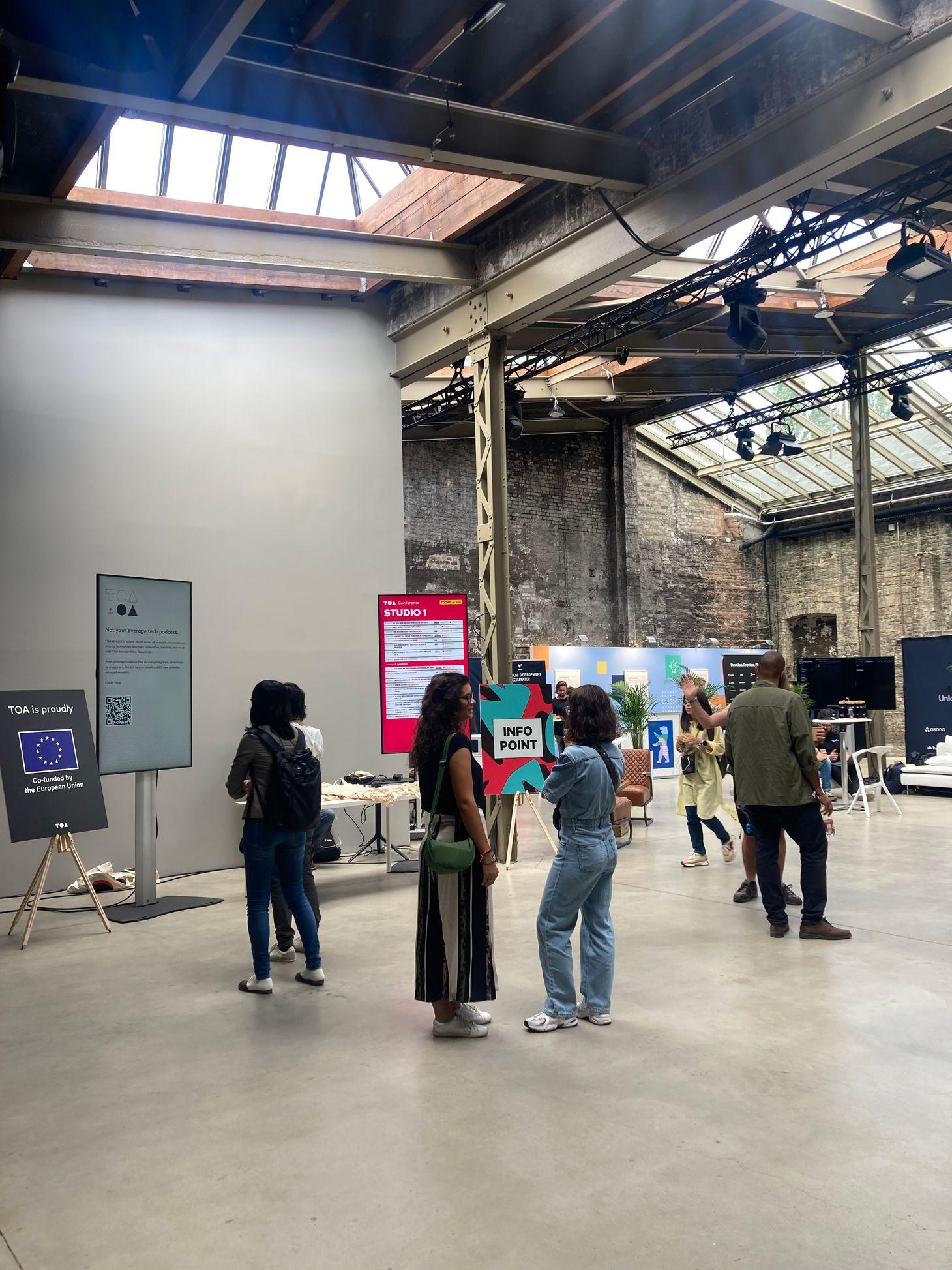
Tech Open Air defines itself by its mission: to help people and organizations become future-proof, thus gathering like-minded people from all around the world. The very first version of this crowd-funded festival evolved into a community of thousands of like-minded technology enthusiasts gathering in Berlin after three years of break. The festival still preserves its communitarian spirit on its 11th-year-anniversary.
Tech Open Air Berlin stands apart from other festivals due to these distinctive factors:
- TOA brings together professionals and enthusiasts from various fields such as technology, art, science, music, and design. This interdisciplinary approach fosters collaboration, innovation, and the exchange of ideas across different industries.
- The festival offers a wide range of content including talks, workshops, exhibitions, performances, satellite events, and interactive experiences. Attendees can explore emerging trends, disruptive technologies, and thought-provoking discussions on topics such as artificial intelligence, blockchain, virtual reality, sustainability, and more.
- TOA focuses on building a strong community by connecting like-minded individuals, entrepreneurs, investors, and industry leaders. It provides ample networking opportunities for attendees to connect, share knowledge, and form valuable relationships that can lead to collaborations and partnerships.
- The festival strives to provide a platform for underrepresented voices, supporting women in tech, minority entrepreneurs, and marginalized communities. This dedication to inclusivity fosters a richer and more representative dialogue throughout the festival.
- TOA attracts participants from around the world, making it an international gathering of tech enthusiasts, entrepreneurs, and investors. This global perspective enhances the exchange of ideas, broadens horizons, and encourages cross-cultural collaboration.

Interesting thoughts and statements were at every part of the talks. Here are some of the highlights and reflections to consider while designing the future.
- The Text Editor's Last Laugh keynote by Scott Chacon, the former Co-founder of Github, explored the future of programming and open source in the age of Large Language Models. He highlighted how AI will help with coding documentation and become the assistant of the coder.
- Reverse Big Tech: Stories From Privacy OGs panel by Jon von Tetzchner, co-founder and the former CEO of Opera browser and Vivaldi’s founder, highlighted the future of social media and browsers should be self-hosted social networking services. They are working towards it from browsers to cars. Microblogging features with data privacy was one of the core reasons for their partnership with Mastodon, a free and open-source software for running self-hosted social networking services.
- DAOs For a Fiat World keynote by Pia Mancini, democracy activist, open source sustainer, co-founder at Open Collective, and Chair of Democracy Earth Foundation, proposed that building collective business models would be the future of building a business. But there are some gaps to fill in: coordination, human effect, legal infrastructure, and financial obstacles. To fill in these gaps and to build value-driven and community-based startups, new systems and products need to be created to bridge fiat money to crypto.
- The Offline Awaking: Experiences First keynote by Tao Tao, GetYourGuide’s COO, suggested that the future of entertainment takes place more in physical places and through specialized experiences rather than the mainstream. As people look for more original experiences rather than microdoses of dopamine through social media, they would open up to their true selves.
- Vitality Over Longevity panel by Co-CEOs Audrey Tsang and Carrie Walter from Clue the #1 doctor-recommended period & cycle tracking app with more than 10 million active users and over $55 million raised, their approach to data as personalized medicine was interesting. They explained that each of our bodies was unique and our own data could help us to understand our own bodies. Clue considers itself a facilitator for the data to be understood.
- The Future of Happy Meal is in Biology was a panel discussion about fermentation, the vegan market, and the ingredients of our food. Industry leaders MicroHarvest, Mushlabs, and Kynda Biotech suggested that the future of food in ten years bring less meat consumption and more substitutes for meat, the vegan market will increase and the ingredients will be more clean. The only challenge they see the bio-upgraded food startup scene to expand is the regulations and the lack of guidance from governments.
Health: Rethinking birth with speculative design
What is it? A keynote. Lisa Mandemaker, who is recognized by BBC on its 100 Women 2019 list for her contribution to the speculative artificial womb prototype, explained her design process with impactful experiences and exploration of reproductive futures. With strategic thinking, she uses prototypes to delve into the socio-cultural and ethical impacts of emerging technologies.
Ever since humankind progressed towards the possibility of reproduction without a fetus, there have been ethical and rational discussions around artificial wombs. Lisa took the discussion out of philosophical conflict and scientific approach outside of this discussion and gave a fresh perspective and reimagination with speculative design.
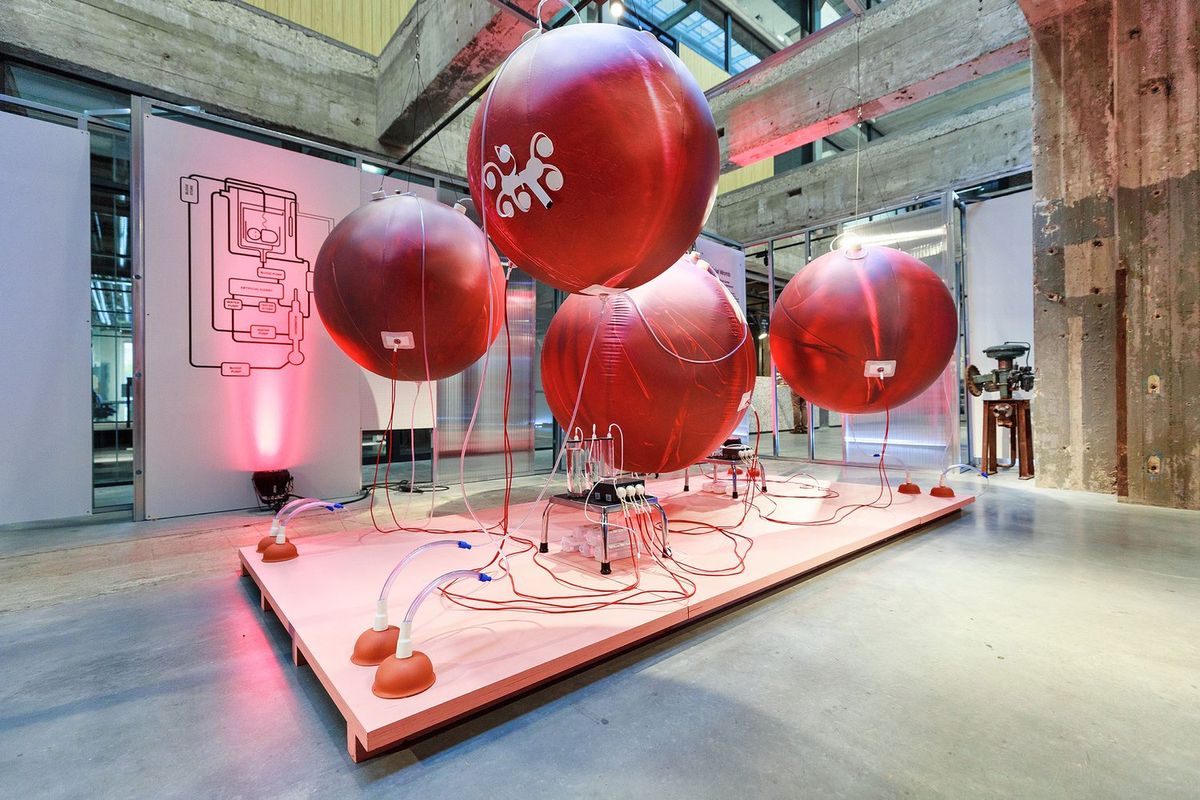
Artificial Womb speculatively designed by Lisa Mandemaker and Máxima Medical Centre
Project: Together with doctors from Máxima Medical Centre in the Netherlands, they proposed a design for artificial wombs. The very red design that they proposed for artificial wombs got interesting questions rather than criticism or ethical concerns. The questions were the following:
- Why this very specific design?
- How would I get connected with the baby?
- Where should it be built?
Her reason to do this design is to take this topic from a polarized approach to a gray area, and the questions she received approvals of this design practice.
Key takeaway: While the tech continues to concentrate on very private and vital parts of human beings, the design and integration of these technologies should be carefully considered. Instead of power moves and orthodox approaches, it has to be empathic and demonstrate psychological care.
A recommendation: If you are interested in the future of reproduction, I recommend you to read Sex Robots & Vegan Meat: Adventures at the Frontier of Birth, Food, Sex & Death by Jenny Kleeman.
Branding, unshakeable
What is it? A panel. Led by industry pioneers including Anna Franziska Michel from Yoona.ai, Thomas Lorenz from Journee, Alexandra Ile from The Dematerialised, and Enara Nazarova from Armoar, this panel explored the impact of Web3 on the present image and marketing strategies employed by brands.
In contemplating the digitalization of marketing in this new era, the experts considered three key elements: AI-generated content, blockchain technologies, and 3D user interface systems.
- They reached a consensus that we had been currently experiencing a transitional phase for brands' image and marketing strategies in the realm of artificial intelligence.
- The introduction of Apple's AI and VR Glasses was particularly significant, as it signaled a shorter timeframe for adaptation, although they think we still need 10 years for market assimilation.
- They encourage brands to make A/B tests when the market adaptation is completed.
Key takeaway: Although there are great opportunities for brands to digitalize their outlook today, for brands to digitalize their outlook today, including one of the pioneers like Nike there is still a testing ground and time for market adaptation.
Meaningful leadership in times of transformation
What is it? An interactive session.
Angel Hernandez delved into the fundamental skill sets necessary for navigating transformations and cultivating a sustainable future for future generations while highlighting the importance of a leadership approach centered around humanity. Some conceptual highlights of this interactive session were:
- VUCA stands for Volatility, Uncertainty, Complexity, and Ambiguity. It describes the situation of constant, unpredictable change that is now the norm in certain industries and areas of the business world. In a world filled with uncertainty and constant change, he suggests collective individualism to tackle and overcome the challenges.
- Collective evolution into a new paradigm involves different phases, each associated with a distinct color. Currently, we are in the turquoise phase, which represents co-creation. In this phase, there is a collective effort to collaboratively shape and design a new way of thinking and organizing society. Turquoise symbolizes the recognition of interconnectivity, shared responsibility, and the importance of collective action. It signifies a shift towards a more holistic and inclusive approach, where diverse voices come together to create positive change and address complex challenges.
Key takeaway: We cannot solve our problems with the current way of thinking which has created the problems in the first place. In the direction of creating something meaningful and “big,” we need to rethink the people surrounding us, and how we interact with each other and with ourselves.
Crowd-investing: When, why, and how?
In a world where dreams are dared to be pursued, a collective force emerges.
With the power of the crowd, ideas are transformed into reality through the magic of crowdfunding, while crowd-investing has taken it a step further, igniting entrepreneurial journeys by fueling them with not just support but a shared financial stake in the dreams that come true.
Crowd-investing works by enabling a large number of individuals to invest small amounts of money in a project or business, usually through an online platform, in exchange for a share of ownership or potential profits.
Consider Selina as an example, an aspiring entrepreneur with a groundbreaking idea for a sustainable energy solution. In the traditional investment landscape, Selina might have faced numerous roadblocks, struggling to secure the necessary capital from a limited pool of investors. However, crowd-investing changed the game for her. Through an online platform, Selina was able to pitch her idea to a diverse crowd of potential investors.
- The wider pool of investors that crowd-investing offered became Selina's lifeline. Passionate individuals from different stages of life resonated with her vision, recognizing the potential impact her innovation could have on the environment and society as a whole.
- Not only did crowd-investing grant Selina access to financial resources, but it also democratized the investment landscape. Previously, individuals without extensive wealth or connections in the traditional investment world would have found it nearly impossible to participate.
- Beyond the financial aspect, crowd-investing brought another invaluable asset to Selina's journey: market validation and feedback. As her campaign unfolded, Selina received comments, inquiries, and suggestions from the crowd of investors. This collective wisdom helped her refine her business strategy, identify potential challenges, and adapt her product to better meet the needs and desires of her target audience. The crowd became a diverse and dynamic sounding board, shaping the trajectory of Selina's innovation.
- Launching a crowd-funding campaign can generate significant attention and media coverage, providing exposure for her company and its products or services. This increased visibility can attract potential customers, partners, and even traditional investors who may have otherwise been unaware of the company's offerings.
Selina’s story is just one among countless tales of triumph that exemplify why crowd-investing is hailed as a remarkable model. But is that all there is for crowd investment? If that's the La-la-land way of receiving funds why everybody is not doing it?
From a business perspective, there are several potential downsides to consider when utilizing crowd-investing as a fundraising method:
- Crowd-investing involves issuing shares or equity in the company to a large number of investors. This can result in a dilution of ownership for the founders or existing shareholders, as each new investor receives a portion of ownership in exchange for their investment.
- Engaging in crowd-investing often requires sharing detailed information about the business, its financials, and future plans with a broad audience. This loss of privacy can potentially expose sensitive company information to competitors or the general public.
- Running a successful crowd-investing campaign requires significant time and effort. Companies must create compelling pitches and marketing materials, and engage with potential investors. Managing and updating the campaign, addressing investor inquiries, and providing regular updates can be resource-intensive, diverting focus from other critical business activities.
- With a larger number of investors, companies must devote resources to communicate and manage relationships with their investor base effectively. This includes addressing investor inquiries, providing updates, and potentially holding annual general meetings or investor events.
- Crowd-investing is subject to regulatory requirements that vary by jurisdiction. Companies must navigate these regulations, which can involve significant legal and administrative complexities. Compliance with reporting, disclosure, and ongoing regulatory obligations adds an additional layer of responsibility and potential costs.
- While crowd-investing opens doors to a wide pool of individual investors, it may not attract institutional investors or venture capital firms. This can limit the company's ability to secure larger funding rounds or access the expertise and network that institutional investors often bring.
While these downsides do exist, they should not overshadow the potential benefits of crowd-investing. However, it is important for investors to conduct thorough research, assess their risk tolerance, and carefully evaluate investment opportunities before participating in crowd-investing campaigns.
• Tech Open Air offers much more than keynotes, presentations, and conversations. It is an event where people can connect, share ideas, and broaden their horizons.
- The SIP & GIT Networking event on a rooftop hosted by the Co-founder of GitHub&Gitbutler was one of the highlights of the week. From Dogecoin's head of marketing to ChatGPT’s codebase creator to a 22-year-old who solved 300 startup cases, anyone I ran by had an idea or something interesting to tell.
- Breaking through the impossible, the escape game was designed for people to team up. A very high variety of people consists of startup coaches to bioengineers, each team member focused on a different part of the mission.

The Escape Game: Breaking Through the Impossible
- An engaging satellite event within the Tech Open Air featured insightful discussions on creating a compelling personal profile to attract investment. Entrepreneurs worldwide, ranging from pre-seed to Series A stage, discovered shared challenges in framing their businesses and establishing their entrepreneurial identities.
• Even though there is much more to explore about the Tech Open Air '23 that goes beyond the scope of this issue, here are some questions I’ve been asking since the Tech Open Air ended:
- How can we encourage disadvantaged groups to engage in the speculative design that makes valuable impacts to reduce global inequalities?
- What kind of measures can we come up with to advance the legal-regulatory systems that welcome and encourage technological investments?
- Is the crowd-investing method a plausible and alternative financial model for brands to become more resilient in times of crisis?
- How can brands communicate with the Web3 communities and reshape their target audiences in a more meaningful and efficient way?
- How can academic and research institutions contribute to advancing the knowledge and foster innovation in the bio food scene that offers solutions and alternatives for the challenges of climate change?