




3D Baskı Coral Carbonate
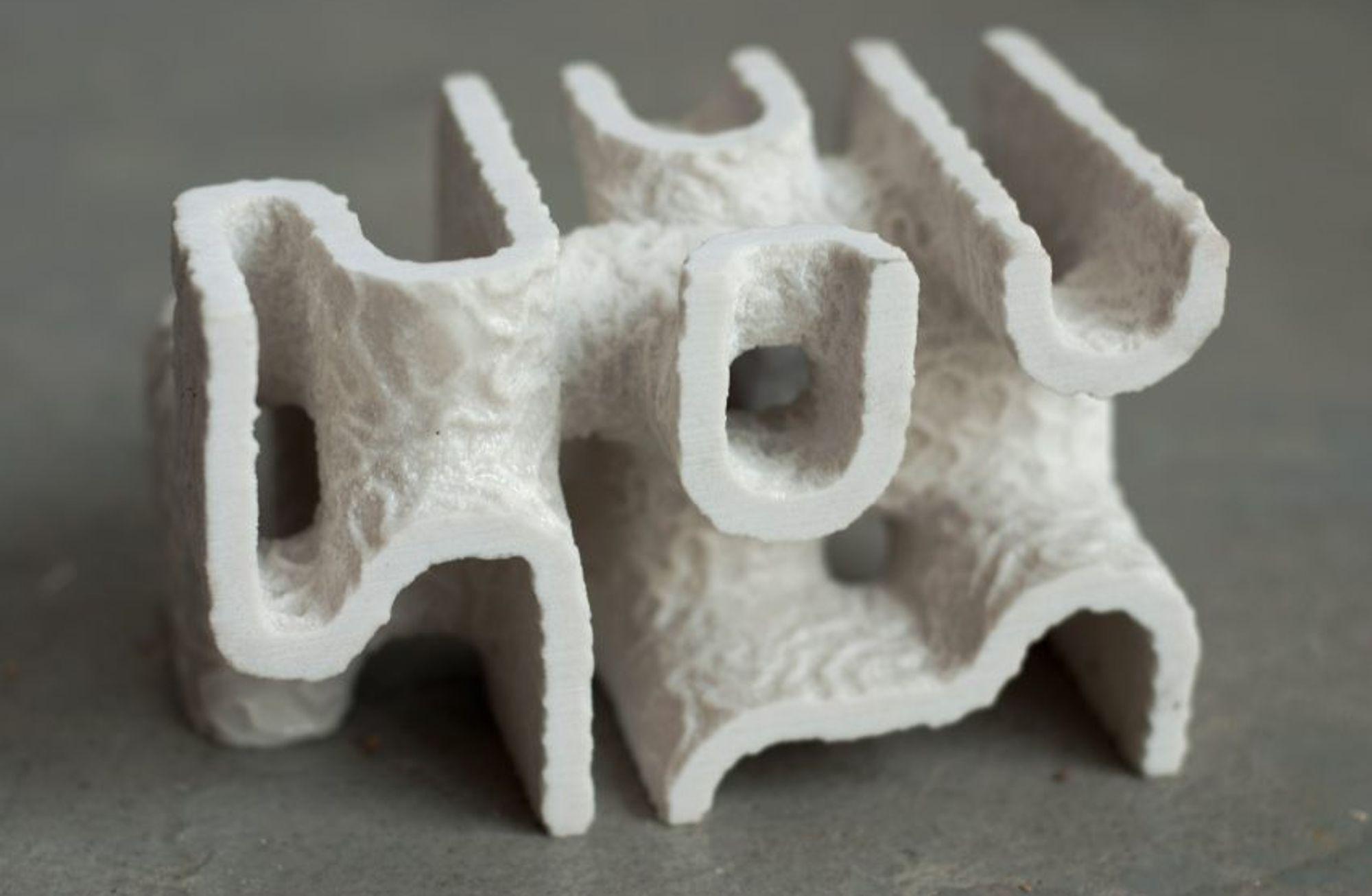
Coral Carbonate, mercan resifleri ve deniz yaşamının büyümesi için sürdürülebilir su altı "evler" oluşturmak için kalsiyum karbonat ile 3D baskıyı içeren bir araştırma projesi.
ABD tasarım atölyesi Objects and Ideograms tarafından geliştirilen proje, dünyadaki en savunmasız ekosistemlerden biri olan mercan resiflerinin restorasyonunu kolaylaştırmayı amaçlıyor.
3D baskı Coral Carbonate nesneleri, gözenekli, kayalık yüzeylere sahip silindirik gövdelerden oluşuyor. Bunlar, aynı zamanda kalsiyum karbonattan yapılan ve tüm mercan kayalığı yapılarının temeli olarak işlev gören doğal mercan iskeletleri şeklinde modellenmiş.
Mercan iskeletleri gibi, bu birimler de resiflerin büyümesini teşvik eder, çünkü yüzeylerindeki kuytu ve yarıklar mercan polipleri ve deniz yaşamının gelişmesi için yuva görevi görür.
Objects and Ideograms'ın başındaki mimar ve tasarım teknolojisi uzmanı Alex Schofield, "Yükselen okyanus sıcaklıkları ve asitlenmedeki artışla birlikte, evlerini oluşturmak için kireçlenmeyi kullanan birçok su organizması hızla yok oluyor" dedi. Coral Carbonate'in amacı, biyolojik organizmaların yaşayacağı ve kendi yeni evlerini ve topluluklarını büyüteceği bir 'ev' için temel oluşturmak.
Coral Carbonate, üç yıl önce, dünyanın dört bir yanındaki mercan resiflerinin insan faaliyetleri ve iklim değişikliği nedeniyle benzeri görülmemiş bir yıkım yaşadığını öğrendikten sonra Schofield tarafından başlatıldı.
Kalsiyum karbonat dünya çapında bol miktarda bulunur ve tipik olarak kireç taşı, mermer ve tebeşirden elde edilir. Stüdyo, gelecekte, mercan poliplerinin okyanus suyundan karbonu yakalamasına ve iskeletleri oluşturmak için kalsiyum karbonata dönüştürmesine benzer şekilde, karbon sekestrasyonu (karbondioksitin atmosferden uzaklaştırılması) yoluyla da materyal elde etmenin mümkün olabileceğini umuyor.
"Alternative materials for underwater ecosystems and coastline fabrication, such as concrete used for Reef Balls, Tetrapods structures, or even coral frags, often leach undesirable byproducts and contribute a large carbon footprint in their production process," added Schofield.
"Waste by-products from cities, such as old New York City subway cars, have also been used as a substrate for artificial reef restoration. Why do we use our own trash and byproducts of human life, to rebuild underwater?"
Objects and Ideograms' first Coral Carbonate prototypes were recently installed to the base of Float Lab in the San Francisco Bay in collaboration with California College of the Arts. They are now under close observation and have already seen habitation and growth.
The prototype combines several of the cylindrical objects tied together with rope in a stacked form. This is designed for flexibility and emulates marine biofouling – the accumulation of biological matter on submerged objects like boats that can be very diverse ecosystems.
The shapes and sizes for the Coral Carbonate units are developed through observation of natural coral skeletons combined with digital computation techniques.
Rather than attempting to directly replicate the size and shape coral skeletons, the 3D-printed objects are optimised to create as much surface area for life as possible.
"These are not one-to-one replicas of coral, the goal is not to literally recreate the skeleton of coral, but to learn from and mimic their forms and functions to create broader opportunities for biological growth in various conditions," said Schofield.
"The surface patterns, and spatial forms, are all optimised to create as much surface area as possible which make more real estate an opportunity for coral to settle and propagate with exposure to maximal sunlight."
Objects and Ideograms are now exploring how the patterns and forms of these objects can be scaled appropriately for other "clients" – such as fish seeking refuge from predators.
According to Schofield, the fabrication process for each object is highly replicable and the only hurdle for scaling is the size and number of 3D printers available.
"The larger the print bed of the printer, and the more printers accessible, the more can be fabricated and deployed," he said. "Today there are many large format binder jet 3D printers on the market that would help us scale in this way, we are always looking for new partners."
Coral Carbonate is an ongoing project and has so far involved many collaborations with the likes of the Fabien Cousteau Ocean Learning Center, California College of the Arts, and Moss Landing Marine Laboratories Benthic Lab.
Alex Goad is another designer featured on Dezeen that is helping with the restoration of coral reefs. His lego-inspired modular structures are intended to form a base for plant and animal life to return to their reef habitats that have been destroyed by human activity.
Earlier this year, British sculptor Jason deCaires Taylor created an underwater greenhouse off the coast of Australia as a habitat for marine life.


Kaydet

Okuma listesine ekle
Paylaş
İLGİLİ BAŞLIKLAR
NEREDE YAYIMLANDI?
BÜLTEN SAYISI
Bu hafta hem üretim yöntemi hem de final üründe sıklıkla kullanılan 3D baskıya değindik.
23 Eyl 2021
YAZARLAR
İLGİLİ OKUMALAR