





May 1st Indictment


As it is known, the government did not allow the celebration of May 1 Labor and Solidarity Day in Taksim Square this year, just as in previous years. However, last year, the Constitutional Court ruled that the categorical closure of Taksim Square to May Day celebrations was unconstitutional and found that the applicant unions' right to organize meetings and demonstrations had been violated.(1)
The Constitutional Court recalled that "in assessing the interference with a meeting to be held at a particular venue, the Constitutional Court will take into account whether the interference was reasonable, careful, and in good faith by Article 34 of the Constitution and whether a convincing justification for the interference has been provided. It will also examine whether the interference by the public authority arises from a compelling social need and whether it is proportionate" (para. 58).
The Court explained the importance of holding May 1 celebrations in Taksim Square as follows: "Taksim Square, which is one of the building blocks of labor and trade union culture, represents not only the solidarity of those present on May 1 but also the existence of the common memory of the working people."
In this case, every person who considers themselves a part of that culture has the right to be there on May Day to directly experience the meaning that Taksim Square expresses and to pass on their experience to future generations. Since May 1 is identified with Taksim Square, the limitation of this space leads to the restriction of the thought intended to be conveyed.” (para. 67).
Therefore, the Court accepted that a celebration in another area could not convey the same message as a celebration in Taksim Square. The decision of the administration to ban the meetings and demonstration marches on the grounds that Taksim Square was not included in the designated areas for such activities in Istanbul was characterized as a categorical prohibition of the freedom to choose the venue. This categorical prohibition was found to be unacceptable in terms of the Constitution, considering the importance of the venue for achieving the objectives of the meeting and demonstration march.
The Court also noted that law enforcement intervened before the demonstrations had even started. It stated that neither the administration nor the judicial bodies had demonstrated the existence of a real reason necessitating the intervention. The Court noted that in this case, the administration banned the gathering at the preferred venue without explaining the existence of a real danger that would require the absolute prohibition of assembly and demonstration marches in Taksim Square on May 1 and without considering possible measures to enable participants to hold events at the venue. It also noted that law enforcement officers intervened in groups based on the banning orders without showing any tolerance towards the exercise of the right in question.
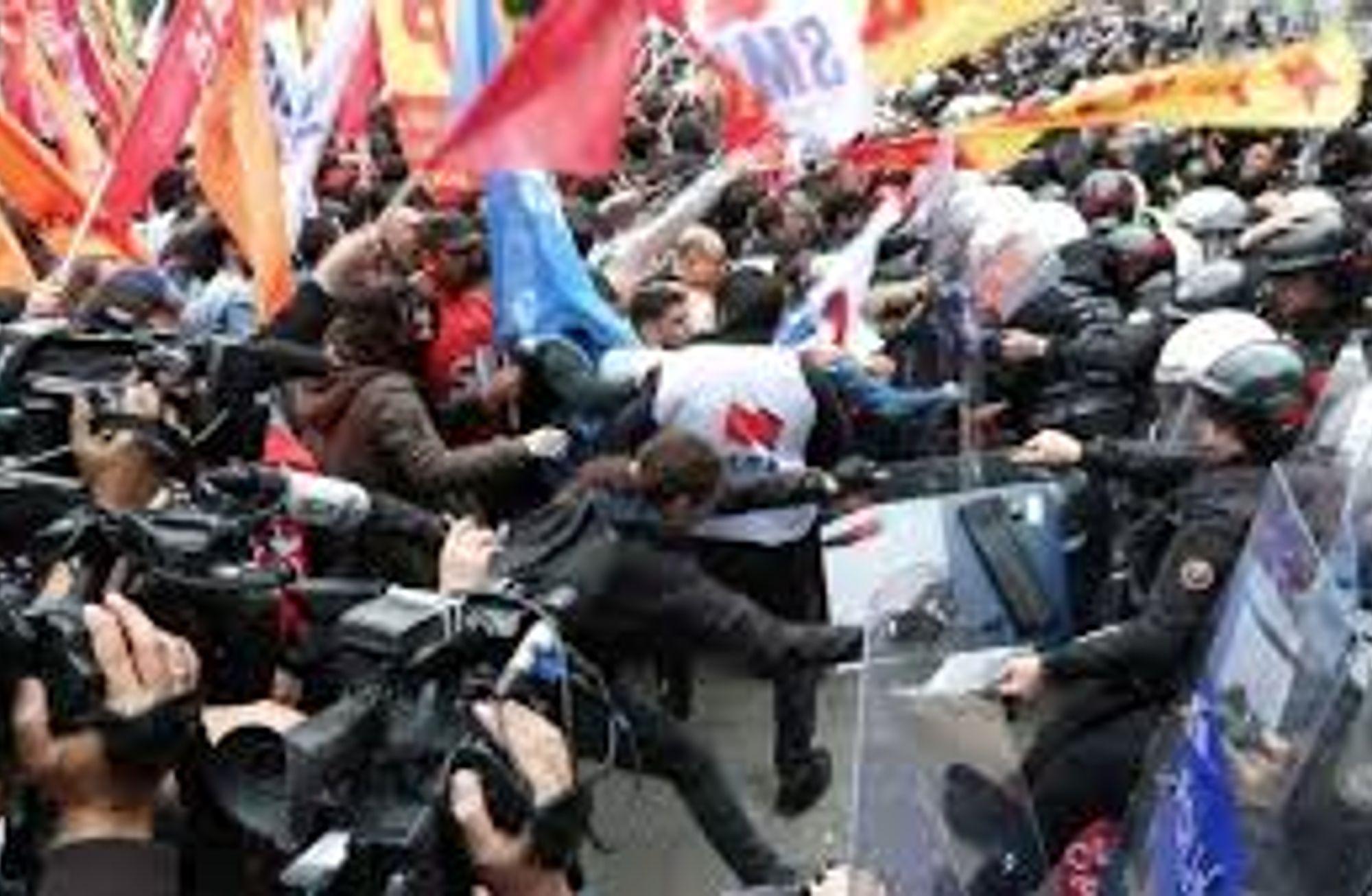
This new decision of the General Assembly of the Constitutional Court was not taken into consideration by the administration despite all reminders, and the celebrations in Taksim Square were banned without any concrete threat. As mentioned in the decision, law enforcement forces intervened against individuals and groups who wanted to march to Taksim Square this year as well. As a result, 42 people were arrested due to the incidents that occurred.
The Istanbul Chief Public Prosecutor's Office issued an indictment against the 42 arrested individuals on charges of "resisting to prevent the execution of duty," "participating in unlawful assemblies and marches without weapons and not dispersing despite a warning," "intentional injury," and "damaging public property." The prosecution demanded prison sentences ranging from 3 years and nine months to 13 years and six months for the defendants. Due to the high number of defendants, two separate indictments were issued: the first charged 30 people, and the second charged 12 people. The total sentence requested for all 42 individuals amounts to 567 years. The indictment also lists 19 police officers as complainants. (2)
This indictment, which indicates that neither the administration nor the judicial authorities take into account the decisions of the Constitutional Court, casts doubt on the realism and credibility of the government's rhetoric of détente, normalization, and reform. (3)


Kaydet

Okuma listesine ekle
Paylaş
İLGİLİ BAŞLIKLAR
NEREDE YAYIMLANDI?

Here is what we have compiled for you this week: 1. May 1st Indictment 2. Spring Festivities Celebrated at METU Despite Bans 3. Should the Public Budget be Cut or Expanded? Freedom Research Association
06 Haz 2024
YAZARLAR

Ali Rıza Çoban
Anayasa hukuku doçentidir. Doktorasını temel haklar alanında İngiltere'de Leeds üniversitesinde yapmıştır. İnsan hakları hukuku, hukuk devleti, yargı bağımsızlığı, anayasa yapımı, karşılaştırmalı anayasa yargısı alanlarında çalışmaktadır. Kendi uzmanlık alanlarında sivil toplum kuruluşlarıyla ortak çalışmalar yürütmektedir.

Özgürlük Gündemi
Özgürlük Araştırmaları Derneği'nin hazırladığı Özgürlük Gündemi, Türkiye’nin hukuk devleti, ekonomi, siyaset ve sivil toplum gündemine ilişkin vakıaların değerlendirildiği, iki haftada bir pazartesi günü yayımlanıyor.
İLGİLİ OKUMALAR