Sinopale’s founders, curators and artists on what the biennial has changed in Sinop
First held in 2006, Sinopale has, over twenty years, become one of Türkiye’s longest-running independent art initiatives. On the occasion of its 10th edition, we sat down with the biennial’s founders, curators and artists to talk about the relationship Sinopale has built with its city and the ways local knowledge meets contemporary art.
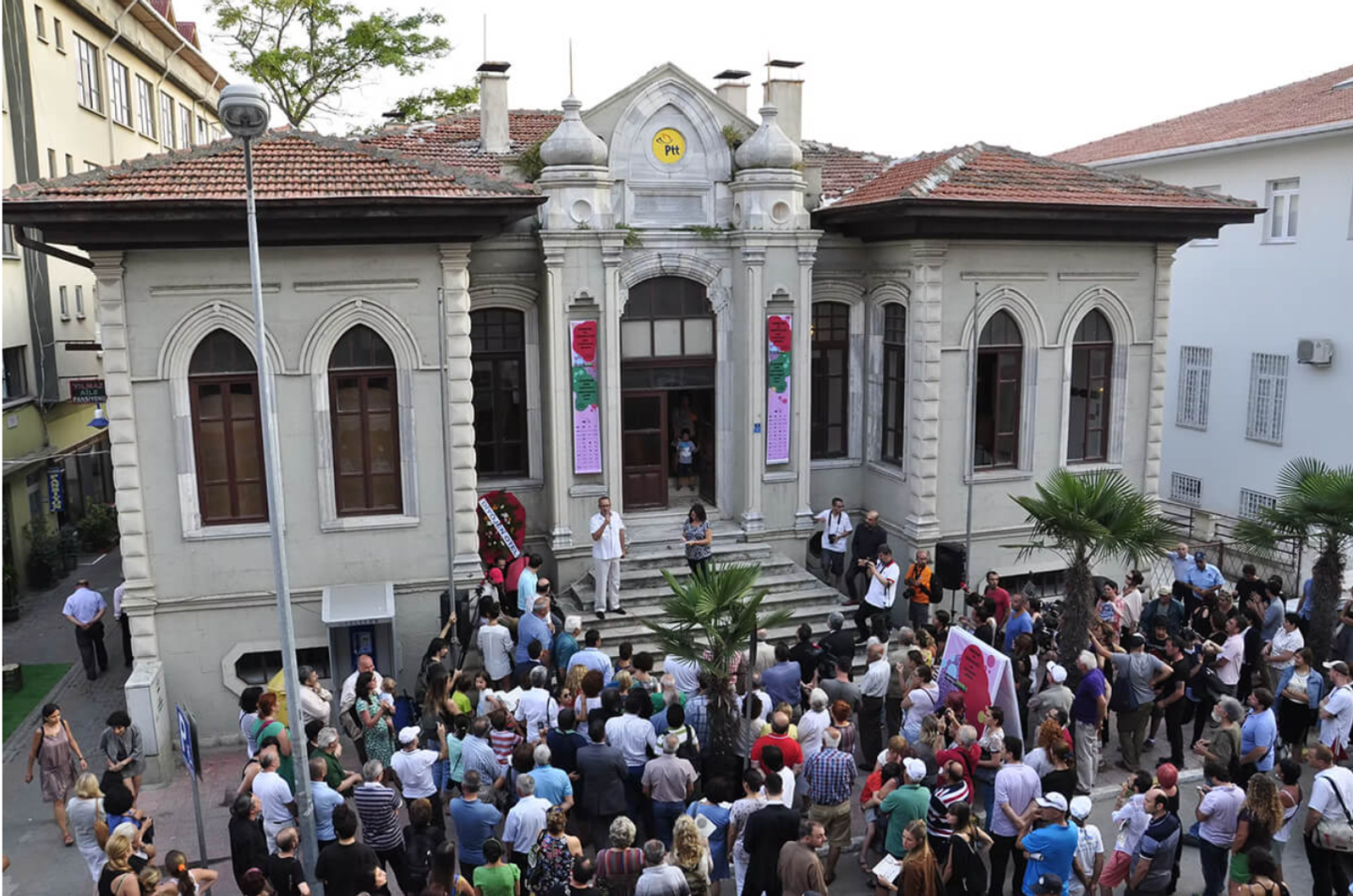
First held in 2006, Sinopale has, over twenty years, become one of Türkiye’s longest-running independent art initiatives. On the occasion of its 10th edition, we sat down with the biennial’s founders, curators and artists to talk about the relationship Sinopale has built with its city and the ways local knowledge meets contemporary art.
When Sinopale began in 2006, even the idea of a biennial in Anatolia was quite unusual. The first biennial founded in Anatolia, it is today one of Türkiye’s longest-running independent art initiatives, reaching its 20th year and its 10th edition. What has changed between what you believed was possible in Sinop, a city on the Black Sea coast, twenty years ago and what you see is possible today? If we measure a biennial’s success less by the works it shows than by the relationships, memory and transformation it leaves in the city after twenty years, what kind of mark has Sinopale left behind?
Elif Kuli: Sinopale grew out of our unshakeable belief in the power of contemporary art, not merely as a practice of exhibiting, but as something that deepens social empathy, sparks critical thinking and brings about a creative transformation, especially among young people. We set out foreseeing that relationship-centred, civic models of this kind could spread across the country, and because T. Melih Görgün is from Sinop and we knew the city’s local dynamics closely, we made Sinop our focus. We created the name Sinopale by bringing together the words Sinop and Biennial in a union that is both conceptual and spatial.
Looking back over twenty years, Sinopale has more than achieved the core goals it set itself: broadening the horizons of local young people, raising urban awareness and opening up a space for social learning. At the same time, in keeping with the spirit of imece (communal shared labour) at the heart of Sinopale, we would have wished for local authorities and the city’s various stakeholders to embrace the process with a stronger sense of ownership, and for a radical, continuous culture of participation to take deeper root in the city. Even so, the road we have travelled shows us anew every day what a precious possibility it is to learn and transform together.
‘Sinop is no longer a venue that hosts the biennial; it has become a subject with which the biennial is produced’
Mahir Namur: In truth, when we started in 2006 we did not know Sinopale would evolve into what it is today. Perhaps that is Sinopale’s most important quality. It all began in 2005, when Melih invited a group of people from the art world to Sinop. He asked them a very simple question: “What can we do together in Sinop?” The first biennial emerged from searching together for an answer to that question.
In the years that followed, we kept pursuing the same question with the people of Sinop and with artists, researchers and experts from different parts of the world. Each time we asked again, thought again and produced new answers. Because the greatest strength of participation lies not in carrying out a predetermined outcome, but in making possible processes that no one could foresee alone. As people think and produce together, new needs become visible; those needs give rise to new ideas, new relationships and new possibilities. That is how Sinopale developed. We learned by doing, what we learned revealed new needs, we responded to those needs, and every answer opened the way to new questions. It is this cycle that has carried us forward for twenty years.
If we measure Sinopale’s success only by the works on show, we miss an important part of the story. An exhibition lasts a few weeks, but the trust built between people, the habit of working together, shared memory and new ways of thinking live on for years. A festival or a biennial does not just produce a programme; it also transforms how people relate to one another, how they see a city and what they believe might be possible together. This is an ecosystem that forms over the years.
I think this is where Sinopale’s most important mark lies today. Over twenty years, thousands of artists, volunteers, students, neighbourhood residents, international partners and institutions have been part of the same experience. Some took part in only one edition, others walked alongside us for years; but each added a layer to Sinop’s cultural memory. The city was not simply a venue hosting the biennial; it became a subject with which the biennial was produced, learned and redefined.
When I look back to 2006, I remember a city that had long been neglected and had slowed down. Today, with its festivals, cultural institutions, carefully preserved heritage buildings, boutique hotels and cafés, I see a modest, beautiful, well-kept city of tourism and culture. I believe the dynamism, vision and spirit of collaboration that Sinopale generated played an important part in this.
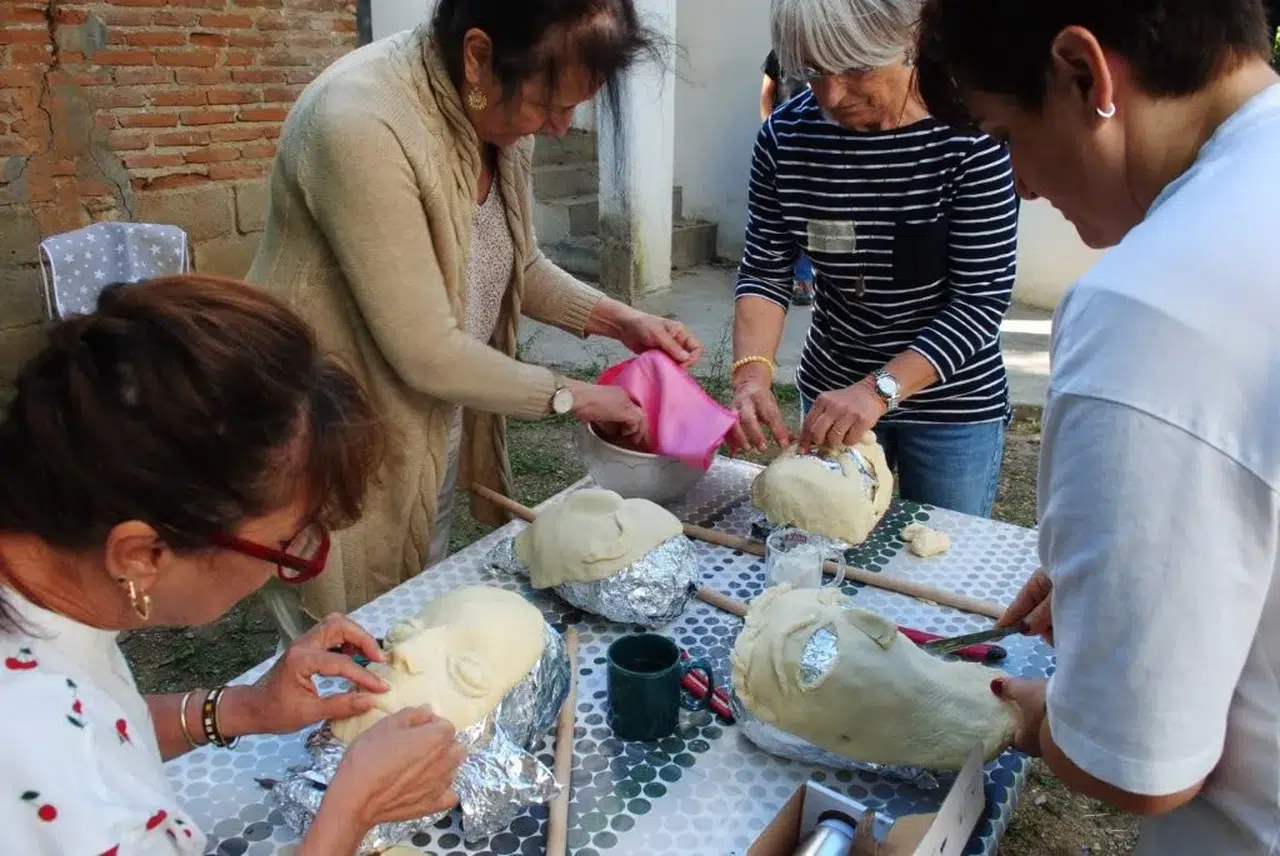
T. Melih Görgün: When I looked in 2006 at this city where I was born and grew up, what I saw was a coastal city with great potential but left outside the circulation of art and culture, a city that had in a sense withdrawn into itself. What we wanted to make possible then was to break down the sterile artistic hierarchies of the centre and turn Sinop into a living ‘lab-city’ (a laboratory city) where global and local thought, artistic research and participatory practices intersect.
What we see is possible, now that we have come this far, is deeply exciting: we have proved that art can be not just a product on display, but a political and aesthetic means of commoning that mends the social fabric, sets urban memory in motion and transforms the relationship individuals have with place.
After twenty years, the most tangible mark Sinopale has left lies far beyond its physical exhibition spaces, in the self-confidence and mental geography of the city’s people. Sinop is no longer just a geographical periphery; it is a space of encounter and learning where artists and thinkers from all over the world and local people come together on equal terms and weave horizontal networks through the philosophy of imece. In this process, as we took art out of elitist moulds and made it an organic part of everyday life, we placed Sinop’s own distinctive rhythm, its historical layers and its people at the centre of contemporary art.
The greatest legacy we leave is a collective memory that constantly renews itself, a social awareness that stands up for the right to the city, and the courage to think together about the future.
Sinopale now has twenty years of memory; but for a living structure, being able to break its own habits when necessary matters as much as preserving its past. As Sinopale’s new generation, the directors who came after Melih and Mahir, which parts of this legacy do you want to preserve and which do you want to change? How will it be possible, over the next twenty years, to keep Sinopale young, experimental and able to transform together with Sinop?
Çağatay Şimşek & Yiğit Bahadır Kaya: Twenty years of history is not made up only of the biennials or exhibitions that were organised. The relationships built along the way, the experiences shared, the ways of producing together and the bonds formed with the city are the most important legacy. For us, the real point is not so much to preserve this legacy as it is, but to make room for Sinopale to change and grow while protecting the values that brought it into being.
For those encountering Sinopale for the first time, understanding this structure and adapting to it is not always easy. Sinopale is built on its own model of production and solidarity, different from the way conventional biennials operate. Many newcomers initially suggest various changes, drawing on organisational models they have experienced before or consider ideal. But as they become part of the process, they say they come to see through experience why Sinopale works differently, and that this difference does not stem only from circumstances but is also a value that must be consciously protected.
Of course, this does not mean Sinopale’s current ways of working cannot be questioned. On the contrary, we believe that with every new edition we need to reassess our methods, improve where we fall short and keep up with the possibilities a changing world offers. We have to develop ourselves in many areas, from technology to organisational processes, from international collaborations to the involvement of new generations. But in doing so, we must not compromise the collective approach to production, the culture of volunteering, the relationship with local knowledge and the people-centred approach that make Sinopale different. That is where the real challenge begins: building a more systematic and sustainable structure without losing Sinopale’s spontaneous character, open to encounters and to thinking together.
We understand how valuable this structure is especially after the exhibition opens. After months of preparation, difficulties overcome together and production processes that can at times be quite exhausting, when we come together with the artists, our teammates and the participants, we see that what has emerged is more than just an exhibition. The shared satisfaction felt at the end of the process, the friendships formed and the experiences shared remind us again why Sinopale must go on existing in this way. It means a great deal to us when people who have been involved in Sinopale start to feel excited about the next edition, and tell us they want to be part of the process again in different roles, even if not as artists. The way for Sinopale to stay young and experimental over the next twenty years lies in passing this experience on to new generations while giving them room to develop their own methods and transform the structure. As in the past, Sinopale’s future will be shaped by the changing needs, ideas and dreams of Sinop and of the people who produce alongside it.
As it reaches its 10th edition, Sinopale has become not just a biennial but a network of relationships and solidarity that grows together with the city. While biennials around the world are increasingly associated with ever larger budgets, grand exhibitions and visitor numbers, Sinopale reminds us of the value of producing together, of local knowledge and of genuine encounters. As the biennial’s founder, how did you imagine this horizontal relationship with the city, with nature and with the people of Sinop from the very beginning? Looking back today, can we say that relational aesthetics has become not only an artistic approach but Sinopale’s very way of being?
T. Melih Görgün: This captures very well the ground we want to stand on: the genuine relationship we have built over Sinopale’s 20-year journey, beyond budgets and quantitative scale. Our dream was to find a form of artistic existence that does not clash with the city’s ecology, with the very existence of its geography and with the everyday life of the people of Sinop, but is instead in communion with them.
Sinopale itself was built on an “ethics of care”. Unlike a sterile understanding of art focused on the object and the exhibition, we placed at our centre the questions of how person touches person, person touches city, artist touches geography, and how together they produce a transformative language.
Where we stand today, in contrast to the fleeting excitement generated by grand spectacles and high-budget industrial biennials, the mark Sinopale leaves on the city is the courage to rethink collective life. Making the city’s own local knowledge, everyday practices and civic initiatives a founding element of art is not merely the biennial’s method; it is its very existence.
At Sinopale, the artist does not arrive in the city with a finished work and place it in an exhibition space; more often the work emerges through the people, knowledge, materials and conditions encountered in Sinop. Does the curator’s role change as a result? How did this open-ended way of working play out in your own practice during the curatorial process of Sinopale 10?
Deniz Kırkalı: For my curatorial practice this is actually a very familiar approach. Garp Sessions, which I have co-directed since 2019, and the practice-based doctoral research I completed in 2025 are curatorial models with a very similar spirit. So for me, the curator’s task is precisely to open up a space like this for encounters. Within that space, conditions and relationships shape the course of the work; in other words, I think the curator should lay the groundwork and then let go of control. Or rather, that is how I work. Sinopale’s open-ended way of working is nothing foreign to me; it is a continuation of my own practice on a different scale. But of course a biennial brings with it an institutional scale, a calendar and expectations. Here it is important to support the artists’ production processes, and working with a large team of volunteers helps a great deal. The materials and methods encountered in Sinop mean many decisions are made, and changed, along the way. Ezgi Tok’s installation in the exhibition, for example, came about almost entirely from materials she found in Sinop, and although it had not been planned in advance, she worked with a ceramics workshop in Sinop and tried out a new medium for the first time. I think it is necessary to make room for such decisions and, despite the pressure of time, to encourage artists to try what is new in their practice.
The international circulation of contemporary art keeps accelerating: artists move from one biennial to the next, works and concepts travel from one region to another. Sinopale, by contrast, asks the artist to slow down, to stay in one place and to build a relationship with it. How did producing to the biennial’s rhythm and foresight, while also being behind the scenes of its own dynamics and of the artists’ production, shape the way you planned and installed the exhibition?
Deniz Kırkalı: Yes, doing most of the production in Sinop changes the artists’ rhythm of work considerably. After months of conversations among all the curators, a conceptual framework emerges, and artists whose practices are open to collaboration and in dialogue with that framework are invited. Although the artists have an idea for their work that they share with us, a great deal is decided through encounters in Sinop days (or even hours) before the exhibition opens. It is a very particular production process. I place great importance on building long-term dialogue and relationships with artists, so being closely involved in an artist’s production process is something I prefer.
But as you say, although staying in this local context and building relationships are very much in the foreground at Sinopale, it is actually a very fast production process. Decisions are made very quickly over roughly 10 days, and a work emerges in negotiation with the conditions. Thinking together with a place is a practice I value greatly and like to stretch over a long time; here, though, I really enjoyed thinking about how, side by side with the artists and collaborators, we could adapt to constantly changing conditions and situations and chart a path. These relationships and conditions do not always match what the artist or curator has in mind, and many works went in very different directions from the draft projects we first saw. I would say this taught all of us to be flexible.
Against the Europe-centred circulation of contemporary art, Sinopale 10 places particular importance on building new routes between Georgia, Kazakhstan, South Korea and other regions. As an artist and co-curator from Georgia, you are part of this structure too. If we began drawing the map of contemporary art not from centres such as Istanbul, Berlin and London but via Sinop, Tbilisi or the Black Sea, what different art world would we see? Where do you see Sinopale’s potential to change this map?
Mariam Natroshvili: I would like to imagine an art world in which places like Sinop and Tbilisi can build direct relationships, without having to pass through established art centres for those relationships to be recognised and accepted. This could also change what receives attention. Local issues, bodies of knowledge and experiences could shape the discussions in the art world on the basis of their own particular conditions and perspectives.
For me, Sinopale’s potential lies in the continuity of these encounters. Artists spend time in the city, work with the people who live there and sometimes come back again. In this way, relationships can keep developing across the biennial’s different editions. I have experienced this myself: after first taking part in Sinopale as an artist, I returned this time as a co-curator. Reshaping the map of the art world begins with sustaining these bonds. That way, every encounter lays a foundation for future collaborations.
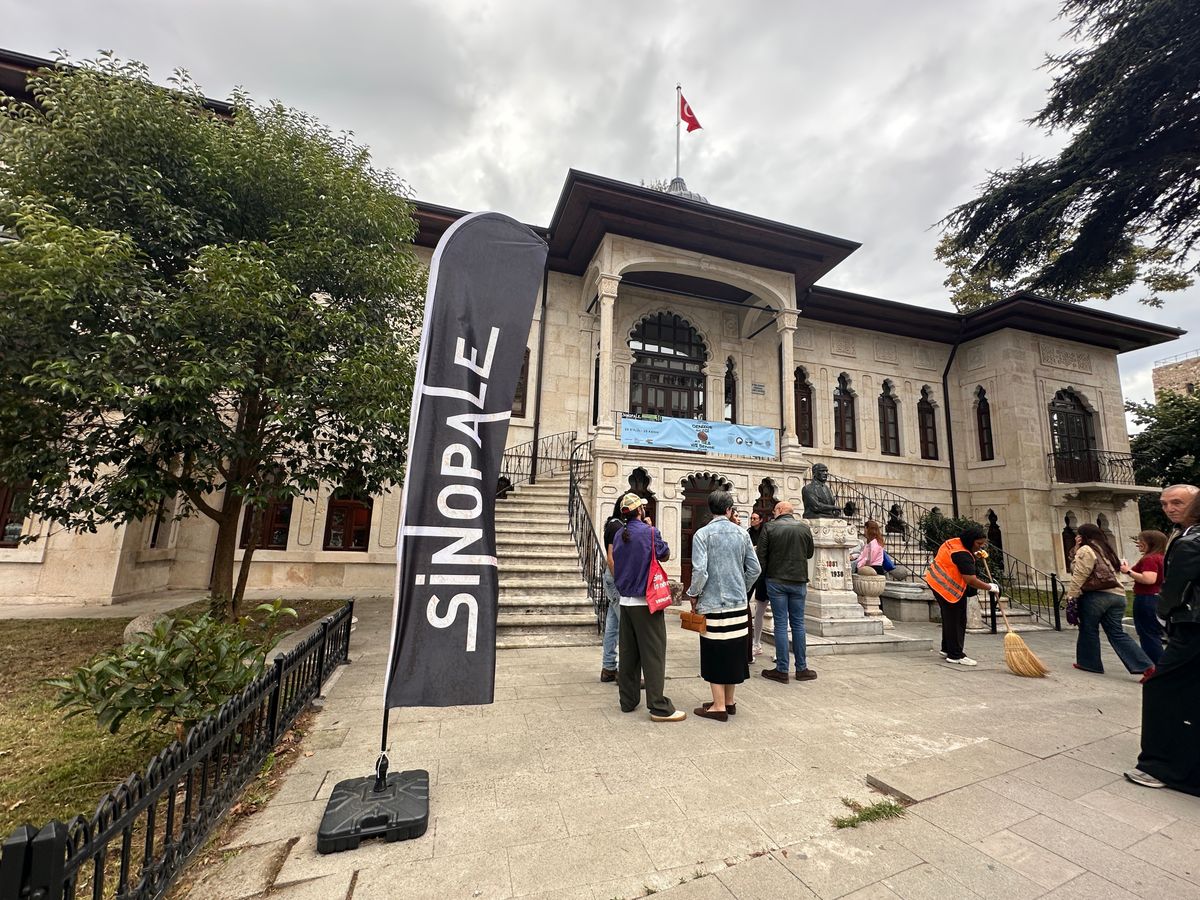
Sinop, too, is a many-layered city where different civilisations, migrations, the memory of its prison and the Black Sea meet. At Sinopale 10, as both artist and co-curator, how did you relate to this memory? At the previous biennial you had experienced the city as an artist, met local people, listened to the city and produced work. How did a story or trace you came across in the city, perhaps one you had not anticipated at the start, shape your curatorial approach?
Mariam Natroshvili: Having worked in Sinop before, I returned to the city with the relationships and memories I had built there. But knowing a place a little also makes you realise how much you still have to understand about it. I wanted to make room for the artists to discover things I might not have noticed.
What stayed with me was less a particular encounter than the way the city’s history persists within everyday life. Spending time in Sinop and listening to people’s stories offered different ways of uncovering these historical layers and understanding their relationship to specific places. The artists, too, found different starting points, ranging from a local legend to migrant women’s experiences of home and belonging. When their works came together, they revealed different ways of understanding Sinop without reducing it to a single narrative.
‘The real power of art lies not in the permanence of the object, but in the courage for transformation it leaves in the layers of urban consciousness and the social imagination’
Once Sinopale is over, the works have been taken down and the artists have gone home, what would you like to remain? Is a biennial’s real impact understood on the day it opens, or after it has disappeared?
Marina Fokidis: Perhaps herein lies one of the things Sinopale could offer the international art world on a wider scale. I would very much like more people from the international art world, beyond the artists and curators who already form an international community, to come to Sinop not only for the opening but also during the workshops and while the works are actually being developed. There is a lot to learn here about how exhibitions can be produced, how relationships can become part of curatorial method and how international exchange can grow out of a highly specific local context.
I hope this is precisely Sinopale’s next step: building much stronger international exchange not only around its final exhibition but around the production process itself. The knowledge accumulated here over twenty years deserves to reach much wider circles. For that, stronger support is needed from the state, institutions and private foundations. I believe Sinopale more than deserves this support, and in my view such support would be very well placed.
Deniz Kırkalı: I think what is learned from Sinop, from the sea, from intuition will certainly remain. For many artists in the exhibition it was a different production process, and I know that although it was challenging, it was inspiring in terms of adapting to conditions, being open to new collaborations and trying out new materials, methods and approaches. I hope they found new answers to the question of how we can work differently within the art world. As for visitors, I hope it reminds them that we also learn from our bodies and our intuitions, and that if we approach our surroundings and other living beings with curiosity, there are many different sides to knowing or reaching knowledge.
T. Melih Görgün: This question is vital for interrogating the ontological relationship contemporary art has with time and place. A biennial’s real impact should not be confined to the excitement of a grand opening day or to the limited period in which the works are on show; rather, the trace that remains becomes visible when the lights go out, the temporary structures are dismantled and the city returns to its own plain rhythm.
When the physical works are removed and the artists leave the city, what remains of Sinopale is an unobjectified space of mental transformation and liberation that has seeped into the fabric of urban space and memory. An awakened awareness of what a building might become, a new meaning given to a street corner, or that collective reflex developing around urban rights goes on working quietly long after the biennial has ended.
So even at moments when it is physically invisible, Sinopale is a hidden undercurrent living in Sinop’s capillaries, constantly nourishing the city’s critical gaze and transformative potential. The real power of art lies not in the permanence of the object, but in this courage for transformation it leaves in the layers of urban consciousness and the social imagination.
Mariam Natroshvili: I know that relationships endure. That is what matters most to me at Sinopale: the bonds formed between artists, the people who live in the city and everyone who makes the biennial possible. The works are taken down, but these relationships live on through conversations, friendships and future collaborations.