





Exclusive: Journey to the heart of universal knowledge - Internet Archive


Amid the information age, a place where you can feel your way through time, and touch the knowledge of lost epochs remains.
For anyone who was a kid in the 1990s, me included, wandering around the Internet Archive’s buildings in San Francisco is the equivalent of how it felt to turn a computer on when it made that big zoomy noise. The world’s largest digital library contains within its accessible archive just about anything you can imagine: old webpages, hundreds of thousands of books from the 1700s, many of the world’s popular video games, and more, including period music from the 2000s.
With its Open Library and Wayback Machine, the Internet Archive is an archive and a living memory of world cultures and societies. This intellectually stimulating tour, narrated by its founder, Brewster Kahle, was a powerful reminder of how valuable and fragile equal access to information is in this fast-paced age of technology.
Information is power
"The history of libraries is a history of deliberate destruction by the powerful"
— Brewster Kahle, founder of the Internet Archive
Brewster Kahle founded the Internet Archive in 1996. Before that, he studied computer science and engineering at the Massachusetts Institute of Technology (MIT). His interest in digital libraries and the potential of the Internet developed while working in the Artificial Intelligence Lab founded by Marvin Minsky, a major figure in artificial intelligence and computer science at MIT, and after graduating from MIT, he joined Thinking Machines Corporation, a pioneering supercomputer manufacturer. Here, he played a key role in developing the Connection Machine, a parallel supercomputer used for various artificial intelligence applications.
He is also the founder of Alexa, which many of us will remember, named after the ancient Library of Alexandria, bringing the Internet to the world. The current Internet Archive also takes its logo inspiration from the columns depicting the Library of Alexandria. Alexa Internet serves to archive the web and is sold to Amazon in 1999. Before that, in 1996, Brewster Kahle also founded the Internet Archive to provide "Universal Access".
The Internet Archive's mission is to preserve and provide free access to digital content for future generations. One of the Internet Archive's best-known projects is the Wayback Machine, which allows users to view archived versions of web pages over time. This tool has become invaluable for researchers, historians and anyone with a deep interest in any subject. However, book publishers in particular have filed a lawsuit against the Internet Archive, which is currently in the legal process, against this digital library, which has the same logic as physical libraries, opening books and documents to the world for free.
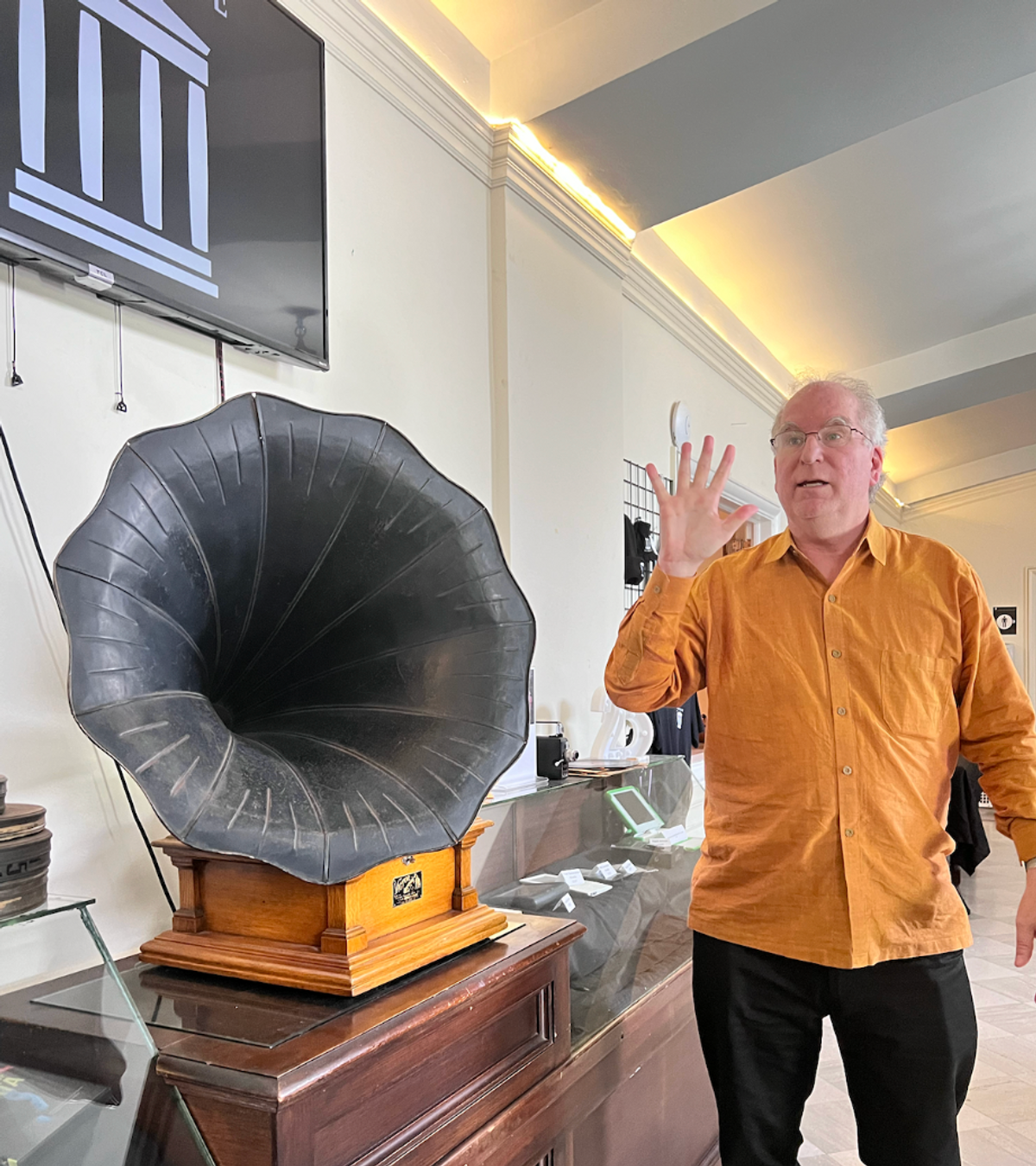
Brewster Kahle shares the story of this record belonging to Thomas Edison.
Brewster Kahle often describes himself as a "digital librarian." He is also a member of the Internet Hall of Fame, which recognizes people who have contributed to the development of the Internet. While listening to Brewster Kahle, I began to ponder who the librarian was who managed the Library of Alexandria two thousand years ago, orchestrating the collection and organization of books for readers. It dawned on me that Brewster Kahle is our modern-day Demetrius! Demetrius from Phalerum (today, the southern tip of Greece) was the one who brought 400 thousand books to the Library of Alexandria.
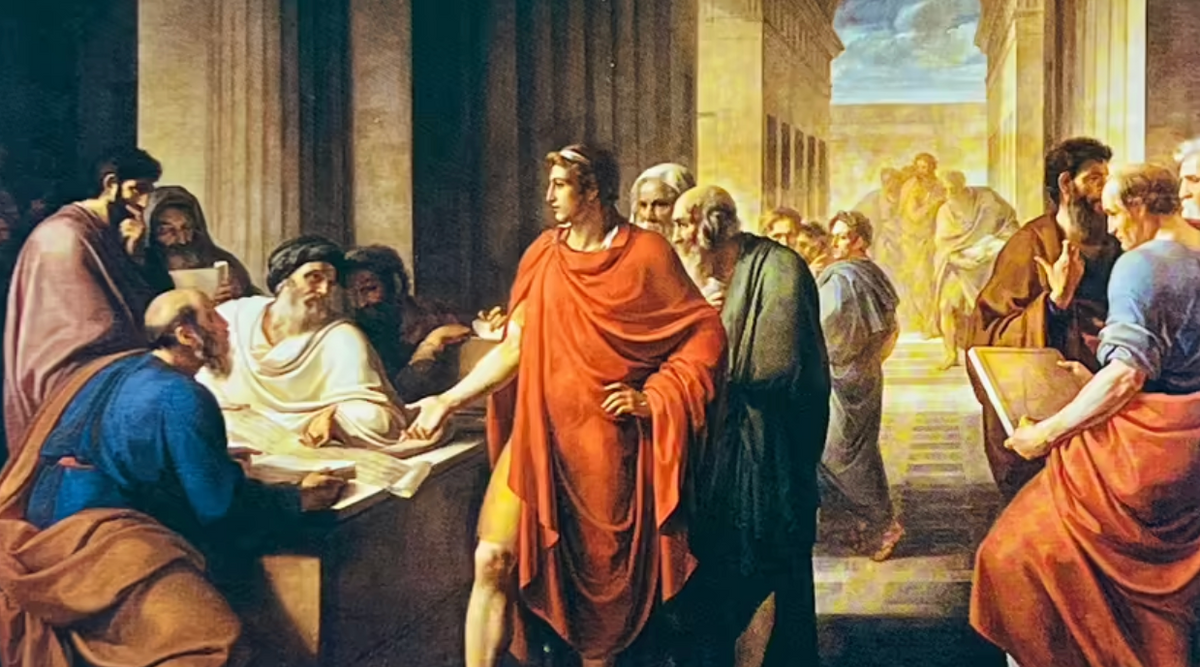
A 19th century illustration depicting scholars from the Library of Alexandria.
Although the number of books is rumored, he is described by historians as the person who managed the Library of Alexandria. He brought books from distant lands by ship across the Nile, made copies, and had them translated into Greek. At the time, the Library of Alexandria, named after the founder of the city, Alexander the Great, was funded by the king. Demetrius convinced the king and turned the library into a famous educational and knowledge center where books and education from all languages were available and people met. The one thing that Brewster Kahler underlines is how we can keep librarianship alive digitally and universally.
We live in an advanced technological age now, and while there are still forms of governance that block access to information and publications, we no longer have to lose five hundred years of knowledge in a book because a library burned down. In addition to digital archiving, Kahle and his team have undertaken efforts to preserve the physical copies of the books by storing them in specially designed shipping containers. They have also embarked on ambitious projects such as archiving television news, accessing NASA visual archive information, building an extensive software library, and supporting the digitization of physical media such as recordings and microfilm.
If you want to do research on the Internet Archive site, you can easily find it, and an environment where you can enrich your research and stories is provided to everyone equally. It also offers great access for those who cannot access the world's best libraries. One of the key figures behind this transformation is Sir Tim Berners-Lee, whose creation of HTML and URLs has unlocked the vast virtual space we navigate today.
From the World Wide Web to universal access
The term "World Wide Web (WWW)" was first used by Tim Berners-Lee in 1990. Tim Berners-Lee was a computer scientist at CERN (European Center for Nuclear Research) in 1989. He proposed a project to facilitate the sharing of information and developed the World Wide Web as a result of this project.
This system, developed by Berners-Lee provided access to information through hypertext documents. In 1990, he developed the first web browser and server. This system allowed users to access information stored on different computers easily. The first web page was launched at CERN in 1991 and contained information explaining how to use the web. Tim Berners-Lee's invention of the World Wide Web was an important milestone that enabled the Internet as we know it today to reach the masses. This invention revolutionized access to information.
'Technology reflects the people who built it'
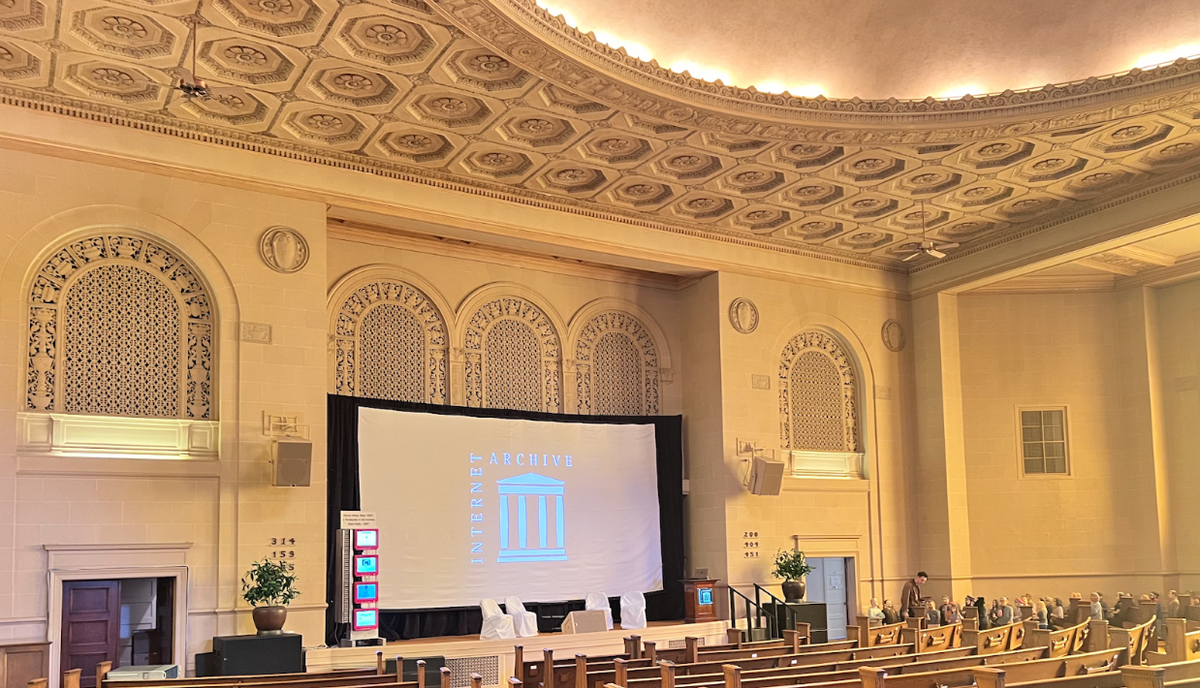
Some of the Internet Archive servers are also stored in this building. The lights on the servers in the great hall go on and off. Every time the light flashes, someone is uploading or downloading something from the Internet Archive, Brewster Kahle explains:
"We are the 200th most popular and 300th most popular website in the world. That's a lot of people. So, several million people and 6 million machines visit the Internet Archive website daily. But a lot of people have been using the Internet Archive's resources without coming to the website, and that's fine with us," he says. "I think technology reflects the people who build it. So we want to build beautiful technology. Our culture is based on these machines, and let's preserve it. So why are we opening them up like this, a bit like open shelves in a library? With one difference, when you look at a book on our library's public shelves, if someone is reading that book anywhere in the world, that book shines."
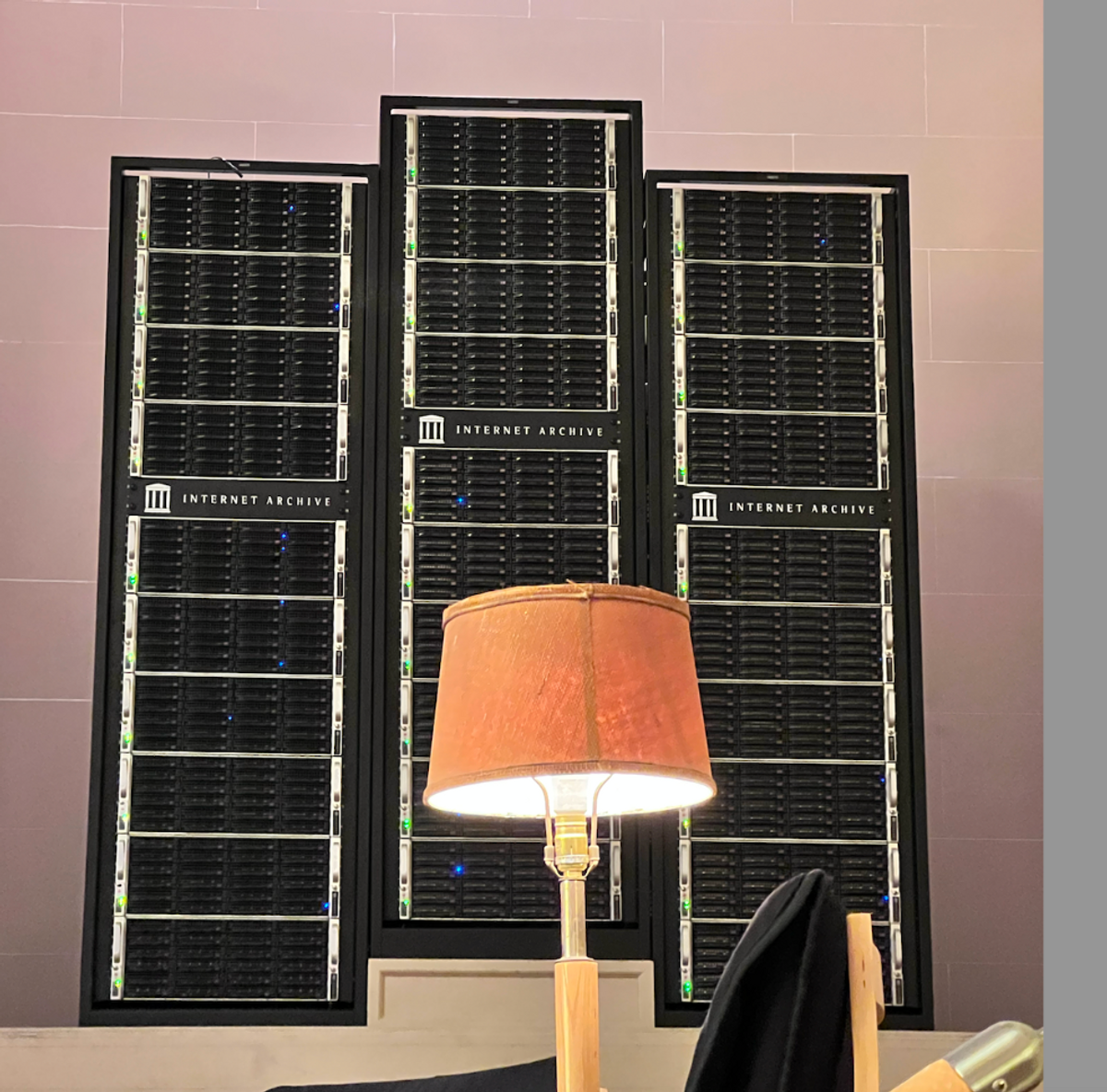
Servers in the Internet Archive building.
The land of the mismatched toys
When Brewster Kahle told us about the archive building and his work, the term he used for the many innovations coming out of San Francisco and the Silicon Valley culture, "The City of Misfit Toys", was very interesting. Kahle, who came up with the idea of universal access to all information of the 20th century in the late 90s and had been advocating the idea and the platform with great consistency for 28 years with the same enthusiasm as the first day, while fighting the copyright lawsuits brought against them by the big publishers in the US, finds the city in creativity that affects the world and at the same time makes a strong criticism of the internet boom:
"Internet Archive employees spend their lives working on a civic project for the public good. They sit outside the dotcom or AI boom that is happening right now. There is no gold at the end of the rainbow here. We can't sell the Internet Archive and then make billions of dollars and buy a house with that cash. We can't do that. So there must be another reason people spend their lives doing this. I think part of it is to be recognized and to be able to talk about their work."
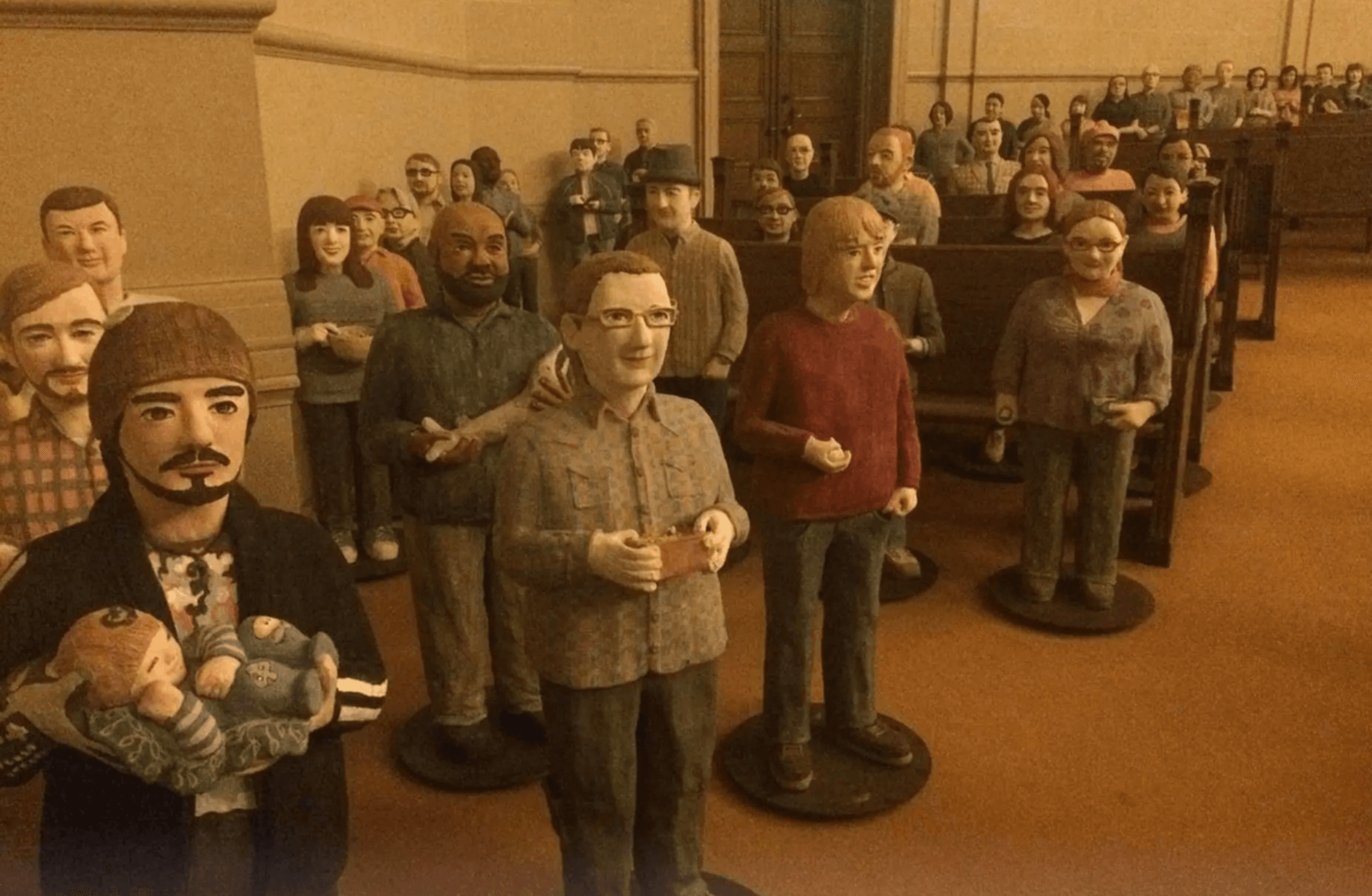
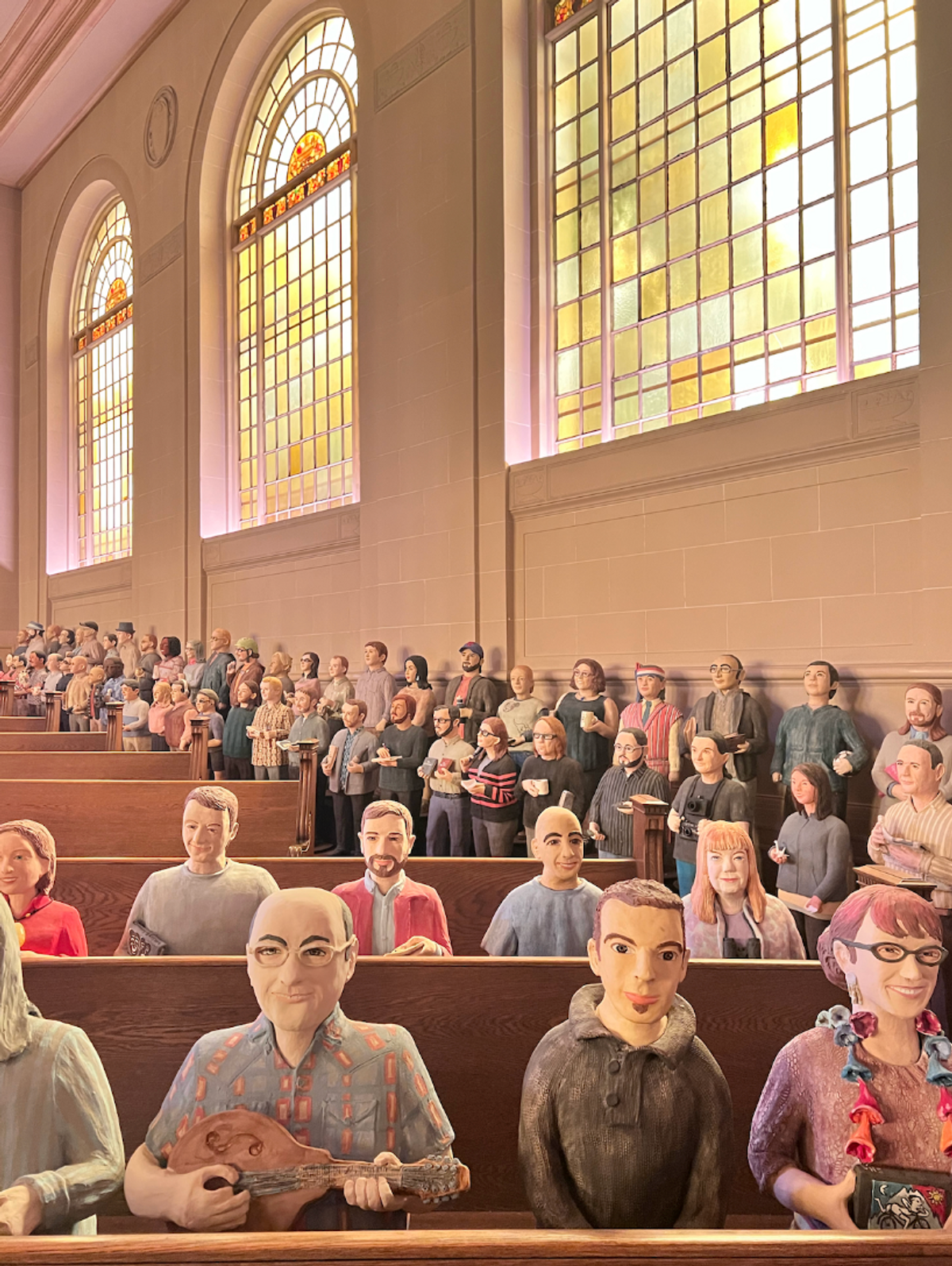
If you have worked at the Internet Archive for 3 years, they will make a ceramic sculpture of you. This initiative humorously reminds us of China's Terracotta army and reminds me of a form of communication we bring from history but have forgotten today. Communication and heritage through art. I think it was one of the most sophisticated ways I've ever seen to be recognized like that, rather than having your employee of the month or your achievement photo stuck in an email or in a glass frame that gets dirty over time.
Open Library, Aaron Swartz, Umberto Eco
Everyone in America is very nervous about the upcoming presidential elections, because America's most important core is freedom of opinion for all citizens. It is often said that democracy is and will be in danger of being undermined. Unfortunately, politics continues to influence every aspect of life worldwide in a way that is virtually unstoppable. The white waters of democracy, where no one can swim untouched by anyone else, are fast becoming murky. Given this scenario, accessing and preserving the Internet Archive is essential.
In November 2016, Brewster Kahle announced the creation of the Canadian Internet Archive, which will place a copy of the Internet Archive somewhere in Canada and move the servers. His statement on this, which he had previously shared with the press, reads:
"We need to prepare for a Web that may face greater restrictions. This means serving patrons in a world where government surveillance is not going away, and it is likely to increase. Throughout history, libraries have fought against horrific invasions of privacy, where people have been jailed for simply reading. At the Internet Archive, we fight to protect our readers' privacy in the digital world."
Our access to the digital world seems infinite to all of us, but it is not. Turkiye, for example, does not have access to 100% of the Internet. The internet freedom score in the Freedom House countries report is 30 out of 100. As of December 2022, more than 712,000 domain names and 150,000 URLs were blocked in Turkey.
Access to the internet can be essential in many ways. In our country, which is located in a disaster zone, there are sensitive situations such as solidarity and preventing the spread of misinformation from wrong sources, but there is also a suffering side not only in terms of access to education and information. Wikipedia was closed in Turkey from 2017 until 2020. During this time, access to Wikipedia was completely blocked from Turkish goverment. YouTube also was blocked from 2008 to 2010. Internet Archive is another platform that was blocked in Turkiye. In 2016, it was temporarily and access was later reopened.
When I was thinking about what better methods could have been used than blocking access, removing books from digital media, trying to intimidate by filing lawsuits, imposing bans or taking away the right to freedom of access, I -of course- thought of Aaron Swarzt, a young computer scientist and internet activist who also worked on Internet Archive's Open Library application and who is no longer with us.
Aaron Swartz, actually, has a very important role in the story so far. At the age of 14, he played an important role in the development of RSS, the software used to keep track of information on the internet, such as different articles, price tracking, and anything you want to be listed in one place. Aaron Swartz is a computer programmer and activist who has made significant contributions to open internet, open library, technology and internet freedom.
Open Library is a project initiated and maintained by the Internet Archive. Its aim is to create an open online library where every book has a web page. Aaron Swartz is one of the developers of Open Library and was active in the early stages of the project, working on the background and database software. Open Library is a free and open-source software project whose source code is freely available on GitHub.
His story is both personal, inspiring in that it can affect you more deeply the deeper you dive, and horrifyingly sad. Aaron Swartz left us of his own accord in 2013, at the age of 26. He inspired millions of people around the world with his passion and work for internet freedom, access to information and digital rights. Despite his young age, Swartz also left an important mark on technology and social justice. Especially in the open library project, which he contributed to the software of during the pandemic, the mechanisms for lending books, which filled the gap in the closure of physical libraries, are now the subject of publisher lawsuits against the Internet Archive.
Currently, 500,000 books in the Internet Archive will no longer be available for lending and will be removed from the library's access. They want to make sure that analog doesn't turn into digital, says Brewster Kahle.
'The truth costs money, lies are free'
The story of Aaron Swartz, one of the architects of the Open Library, which has almost the same mission as its name, as opposed to OpenAI training the entire Internet in its own program with resources from the biggest tech giants, leading to the end of his life, is increasingly becoming a story of profound irony.
As Brewster Kahle creates this context of truth and lies during the tour, I am reminded of Aaron Swartz's place and struggle in this story and Umberto Eco's The Name of the Rose. Umberto Eco's The Name of the Rose is an intellectual story set in an Italian monastery in the Middle Ages in 1327. The book shares tremendous insights into theology, literature and medieval history and has been adapted into a movie. In the story, William of Baskerville, a priest trying to solve a series of mysterious murders, and his young apprentice Adso search for a secret and dangerous lost book hidden in the monastery library. This book is the lost book known as Aristotle's "Poetics", which discusses the virtues of laughter.
In the fiction of the novel, Aristotle's lost book is seen as a great danger in the Middle Ages because it is about laughter and humor. These two important phenomena, comedy and laughter as a human reaction, threaten the authority of the time. The monastery feared that this book would lead people to heresy, so they hid it in the monastery library and made it inaccessible. The existence of the book plays a key role in unraveling the secrets behind the murders in the monastery.
The story of the Internet Archive's current struggle was a result of the same managerial interests. Struggle is the nature of freedom. It was only through struggle that emancipation came and was taken. We are always surrounded by the illusion that the internet is freer than real physical life. But if you tried to access real information, you might wake up one morning to the message that access to YouTube, Wikipedia, Twitter or the Internet Archive was blocked.
In the finale of "The Name of the Rose", years later, Adso, now old, returns to the ruins of the monastery and rescues the remaining scraps and books, eventually building a smaller library. In this sense, the book tells us the importance of controlling and transmitting knowledge in a shocking and gripping way.
Today, major publishers such as Hachette Book Group, HarperCollins Publishers, John Wiley & Sons, and Penguin Random House are suing the Internet Archive.
Most societies value the preservation of works of their culture and heritage. Without such preservation, there is no mechanism by which we can learn from their successes and failures. Our culture is now producing more and more artifacts in digital form, we are in a constant state of digital production with research papers, novels, historical and intellectual publications, fictional publications and current news. The mission of the Internet Archive is to help preserve these works and to create an Internet library for all peoples, as well as for researchers, historians, and scholars.
With the mission of universal access to all knowledge, Brewster Kahle concludes his tour by saying that humans have recently been overwhelmed by technology and that we are not raising a good enough generation with our resources. He also underlines that we need to humanize technology.
The mathematics of the Internet Archive
An e-book is about 1 megabyte. One million megabytes equals one terabyte. 28 million books, which is the number of books in the Library of Congress, is 28 million books, which is 28 terabytes. According to Brewster Kahle, that's the size of two hard disks you can buy at Best Buy:
"So you could have all the words in the Library of Congress for less than a month's rent. So why not? Why are we still where we are? So we need to build a better internet. We need to build a better internet that works better, has many winners, and is not just about consolidating more monopolies."
You can use the Internet Archive for your research without needing expensive reports or paid access to academic papers. The Wayback Machine is a real-time machine that takes you back to any year and any knowledge.


Kaydet

Okuma listesine ekle
Paylaş
YAZARLAR

Çiğdem Öztabak
Teknoloji ve kültür yazarı, serbest gazeteci. New York'da yaşıyor.

Quando İçgörü
Teknoloji ve bilim dünyasını şekillendiren trendlere yönelik analizler, sektörlerden içgörüler, güncel veriler ve etki yaratan raporlar.
İLGİLİ OKUMALAR