




Hello from the first issue of istanbulberlin Route!
This is an invitation to encounter culture and arts agents, films, books, projects, ideas and different point of views, twice a month, compiled from istanbulberlin content.
I am Sedef İlgiç, I founded istanbulberlin to create an agenda by keeping a record of our time, connecting the culture and arts scene in Istanbul with the world and contributing to the cultural exchange between Turkey and Germany.
To have a look at the advantures of istanbulberlin until today, please visit the website; to stay connected please follow instagram, facebook and twitter accounts and subscribe to the YouTube channel.
I am leaving the playlist created for for istanbulberlin by Nazlı Çiğdem Sağdıç Pilcz aka Dj Funshine here to accompany this first issue.
In this newsletter:
- Contemporary artist currently working in Berlin, Nevin Aladağ's video installation Traces, turns Stuttgart, where the artist spent her childhood and early youth, to a playground;
- Third of the istanbulberlin Encounters is on air with Thomas Mühlbauer, the owner of Turkish-German Bookstore & Cafe. He tells the story of the bookstore, that is opened by his father, after deciding to stay in Istanbul on his migration journey to Iran;
- Nermin Yıldırım’s last novel "Ev (Home)" is about, "the different meanings of home, the space and blanks it fills", with her own words. As we have passed a year mark of quarantine and the investigation on "home" continues;
- Here is bi'bak, a project space in Berlin that opened a cinema despite the arguments related with the future of cinemas during the pandemic: An interview with bi'bak's founders Can Sungu & Malve Lippmann.
'Traces' of Nevin Aladağ's Stuttgart
'Traces' can be visited at Arter.


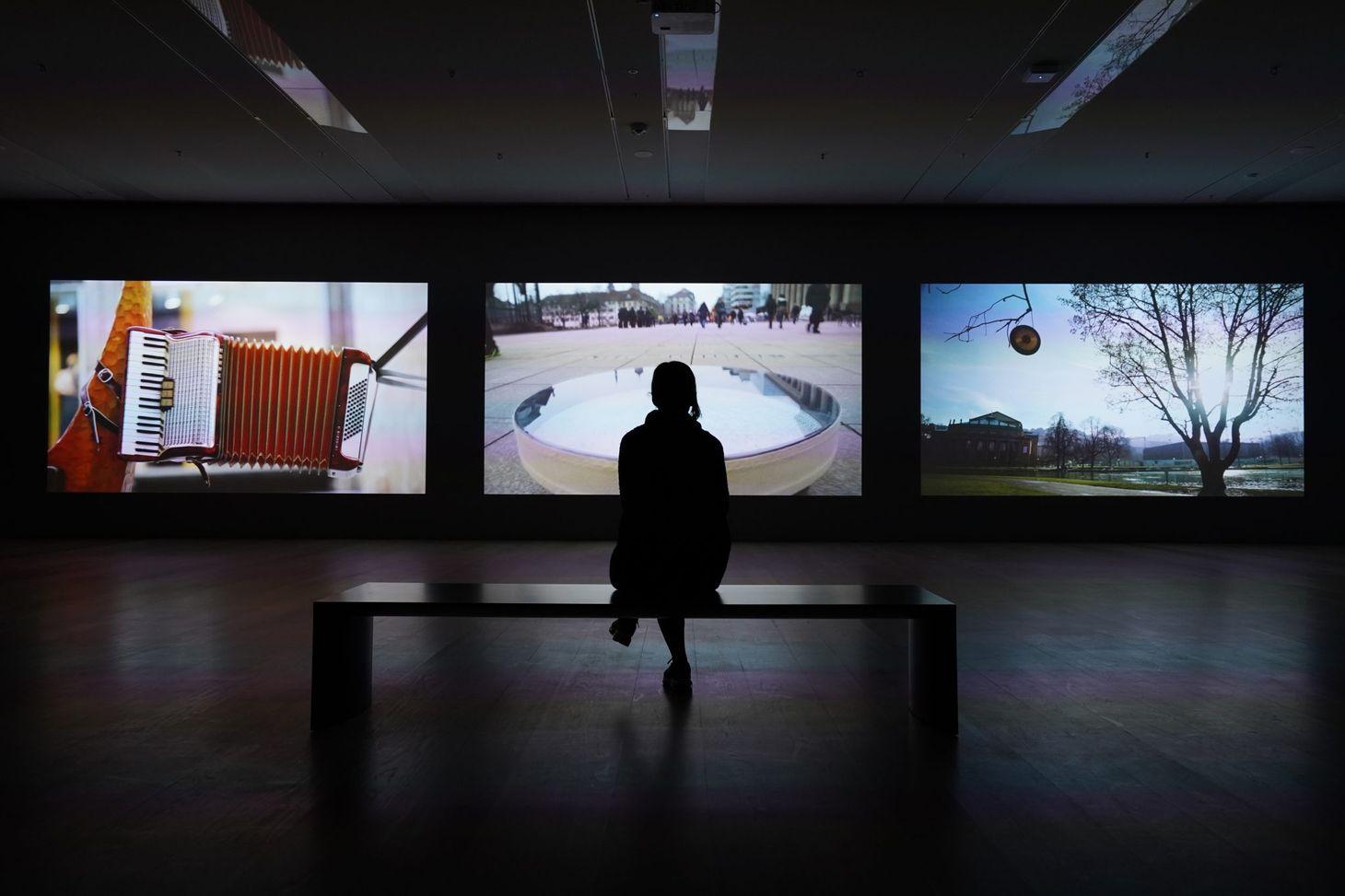
Contemporary artist currently working in Berlin, Nevin Aladağ's video installation Traces is opened to the public again after an interaption due to the pandemic. The work that took place at the 57th Venice Biennale will welcome visitors until July 25th at Arter.
Traces, turns the city Stuttgart in Germany, where the artist spent her childhood and early youth, to a playground. Natural elements of the city such as a walking trail or a children's park, are transformed into performers of the musical instruments like an accordion or a frame drum. Thus, the city becomes both the stage and the performer of the performance.

German Cake Along With Turkish Coffee
Third of the istanbulberlin Encounters is on air with Thomas Mühlbauer.
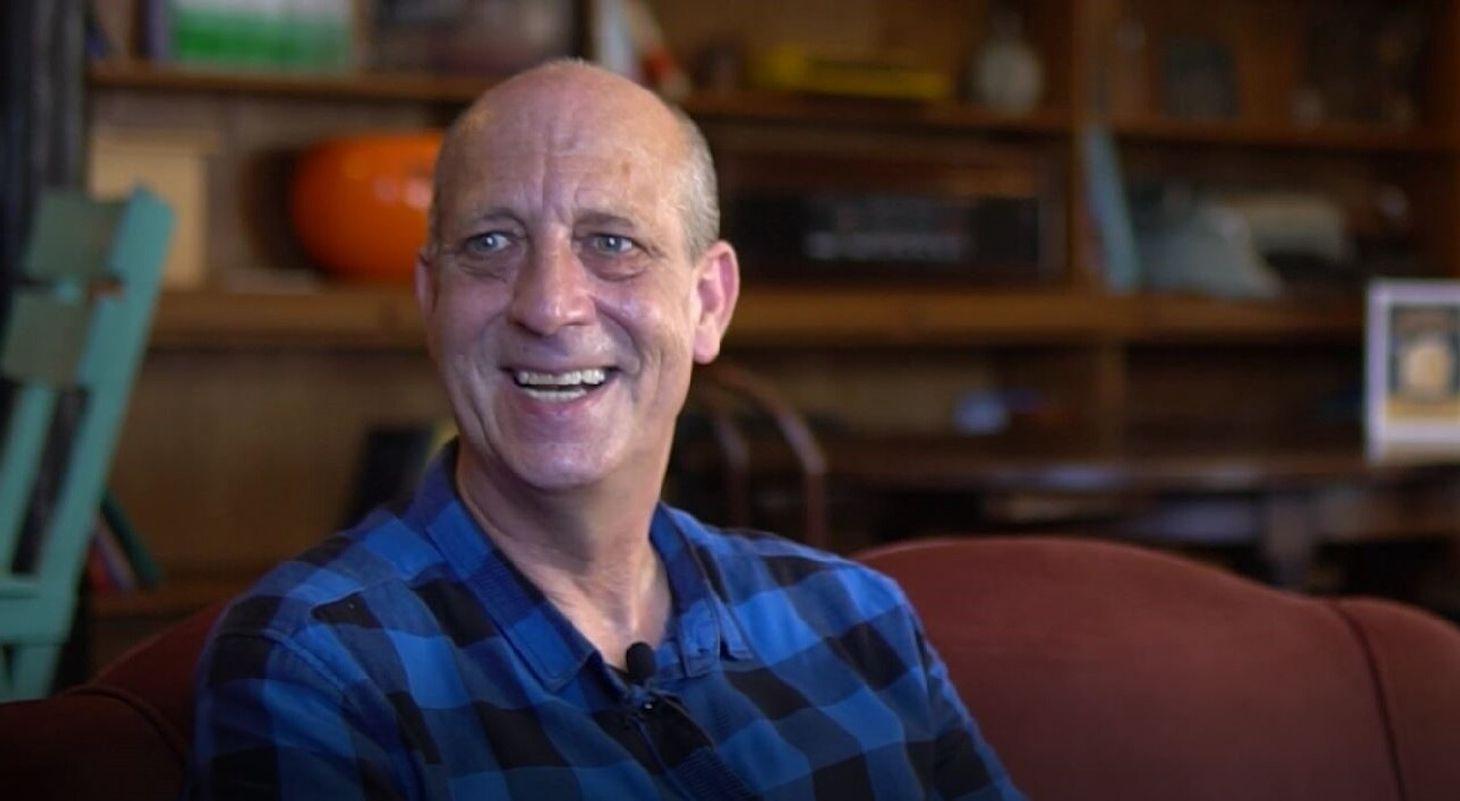
Turkish-German Bookstore & Cafe, is one of the rare shops that exists since 1955 in Istanbul Beyoğlu district.
The owner of the bookstore, Thomas Mühlbauer tells the story of its establishment, the transformation of not only the bookstore but also Istiklal Street and the role they play in the encounters between Turkey and Germany.
Would you like a piece of German cake along with your Turkish Coffee?
Click here to watch the interview.
Nermin Yıldırım: The Walls of The House, Bonded with Uncanny Secrets
As we have passed a year mark of quarantine and the investigation on "home" continues...
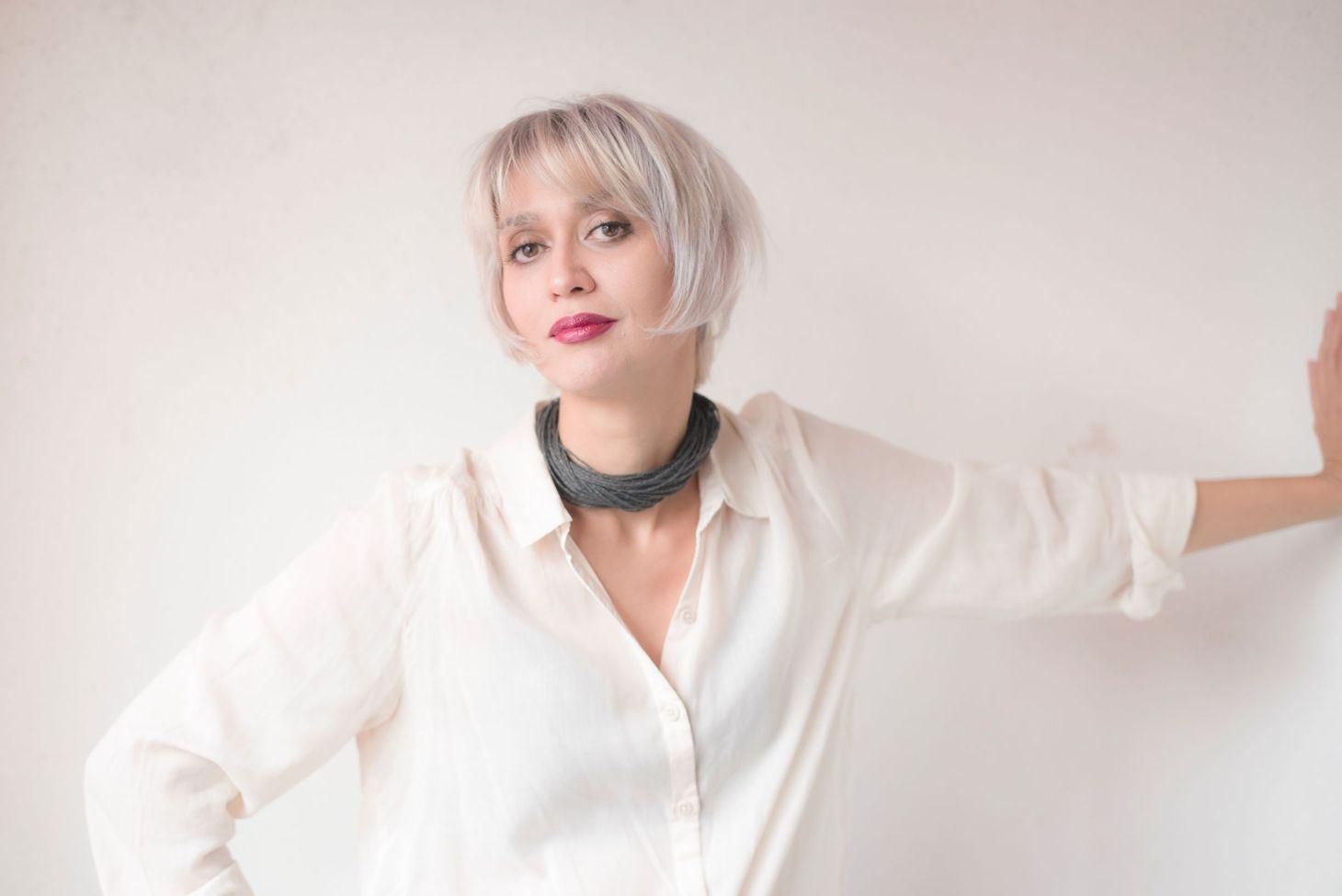
The latest novel of author Nermin Yıldırım, living in Istanbul and Barcelona, "Ev" (Home) is published in November 2020 in Turkish. With her own words, "it is a novel about the different meanings of home, the space and blanks it fills".
Manolya Su Danoğlu translated her answers.
In German there is a relationship between the words Heim (Home) - Heimat (Homeland) – Geheim (Secret) – Unheimlich (Heimlich: Hidden – Unheimlich: Uncanny). What kind of a relationship do you correlate between these words?
We have this saying, "kol kırılır yen içinde kalır." [Which means that if something happens within the family, it should be resolved within the family; when translated literally: "The arm breaks, the sleeve remains within".] Culturally, I think that "home" is that sleeve. And family, too. An authoritarian structure, which on one hand is there to protect us, on the other hand traps and condemns us to its own conscience.
So yes, close to its German connections, I can say that a home has walls, that are bonded by uncanny secrets.
I watched Nomadland recently. This dialogue in the movie sums up my view on home and homelessness very well:
-Are you homeless?
-No, I am not homeless. I am houseless.
2. In Poetics of Space, Gaston Bachelard uses house as a tool to analyse the human soul. Because “Our soul is an abode. And by remembering ‘houses’ and ‘rooms,’ we learn to ‘abide’ within ourselves.” What do you think about this analogy between house and body? Or what is the imaginative width of “house” for you?
In the process that made me and prepared me to write the novel "Ev", the feeling that the house is a physical and spiritual shelter was dominant. I was imagining a structure that was not a part of the people, but would physically close in on them and while doing this, complete the spiritually shattered soul. I believed that this structure could be reached and/or returned to from some sort of journey.
But then, as I thought more broadly on the house, as I was writing the novel, I realized the house was not located outside, but rather inside. This did not narrow its field, but widened it. To reach a certain point was not necessary to get home. On the contrary, anywhere we were could be home.
In "Ev" many different meanings that are attributed to the house, echo in the lives of the characters: the childhood home, a dog becoming home for a person, the change in the meaning of home for someone who is separated from their country… What does "feeling at home" mean for the residents of the your novel?
On the one hand, those who call us home, even those who take us in, those who lock us in… On the other hand, those who kick us out of the house, those who do not let us into new houses, those who do not open the doors… We may be experiencing one of the most double standard and hypocritical times in history, in terms of personal and social relations with the house.
"Ev" is a novel about the meanings of home, the space and blanks it fills. Although it is my personal belief that a home is mostly built on deficiencies, there is no doubt that the definition may change according to anyone defining it. It may be a bench in the park for some, for others it can be a train compartment, a ship cabin or a cardboard box house.
The memories of elders, the hopes of children, a sheltering laughter on a painful day, a pair of shoes left at the door, an old photograph that revives a forgotten time, these things are home as well.
EXTRA 2: I read "Ev" as a story of a character who was able to burn down her own house, which was turned into hell and then find the strength to build a new one with her chosen family. Is it sometimes a good idea to burn down the house?
I find it meaningful to get rid of the old one or to redefine the old one in order to establish a new one. It can be sometimes be by writing, and yes, sometimes by burning.
bi'bak: Take a Closer Look, and Maybe From Another Perspective
Berlin based project space bi’bak, offers programs that are after the reflection of migration and global movements in art. And whilst the function and future of cinema is at stake during the pandemic, they opened a cinema: Sinema Transtopia.
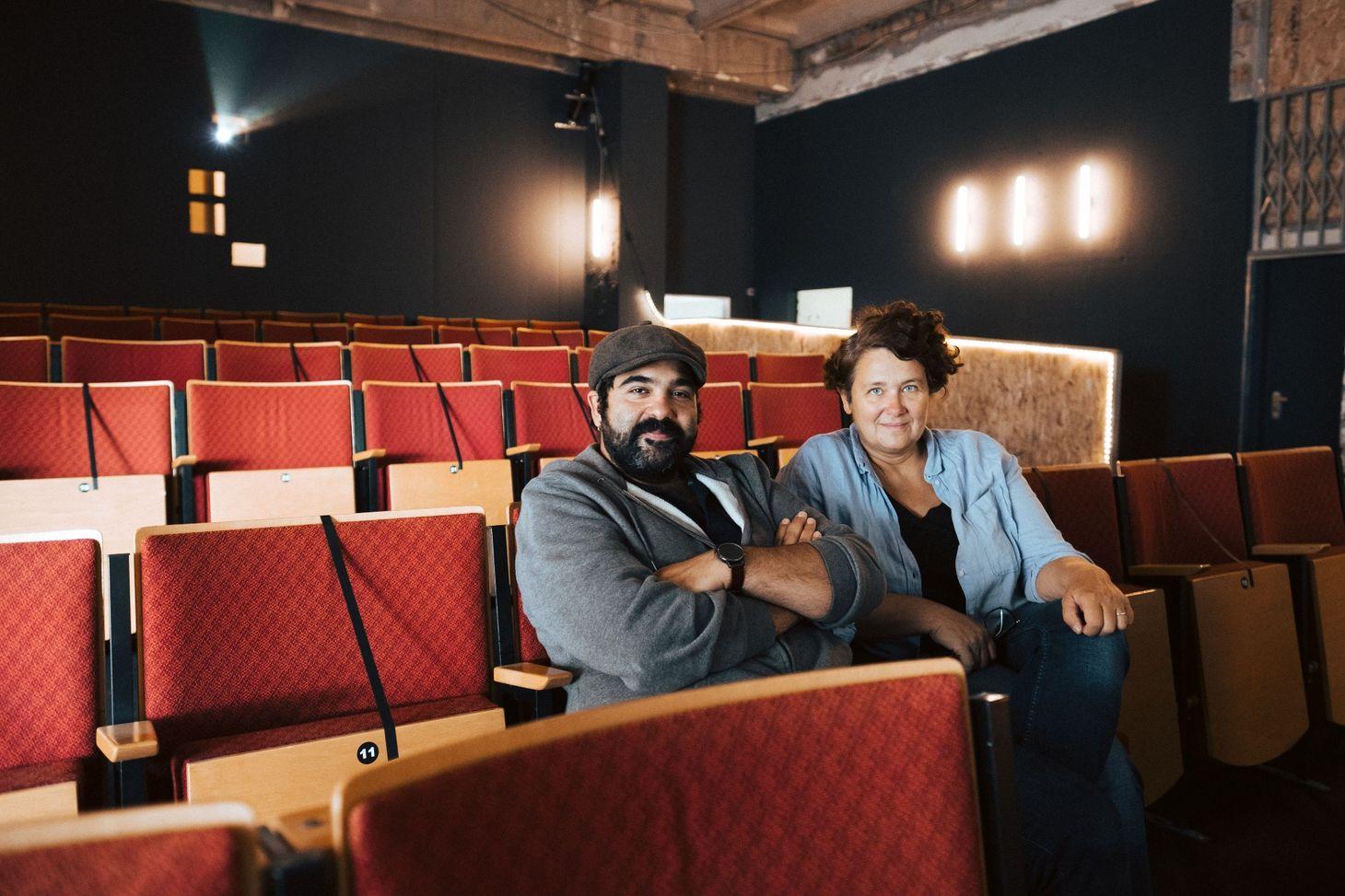
Some in Istanbul might remember them by the exhibition with Depo in 2018 that was entitled "Bitter Things" which still continues to move around, now in Romania.
For the ones that have not encountered with bi'bak before, I met the founders, artist and curators Can Sungu ve Malve Lippmann a few weeks ago online. They joined me from their project space in Berlin. Our interview was cut a few times with their cat moving the camera and a passer-by on the street asking for someone they do not know. Even these give an idea of bi'bak's space. Let's hear more from them.
It has been an interview on conversation with some other interviews on the independent cinemas. Here you could check the related interviews.
As You Take A Deeper Look You See Something Else
S: Tell me the story behind the name of your project, bi’bak?
M: We rented this place as a studio space first.
There is a big window opening to the street and when we moved here everybody was looking through the window, asking “What are you doing?” Then we transformed it to a concept, saying “come in, look in” and now we say “take a closer look”, to historical context, to memory culture.
And maybe also look from another perspective than the usual main discourses, transported by the main media.
C: As you take a deeper look you see something else. It works very well actually here in Wedding, this neighbourhood that we are in has a big migrant population and Turkish is like a second language.
M: In the last years a lot of young people also moved into this area, the rents were comparably cheap still. They are raising also.
C: There is also a new migration from Turkey to Berlin, in the last few years young people are coming to live here.
Göçün Kültürdeki İzi
S: What is your main focus at bi’bak?
C: In our programme we focus on transnational narratives. That includes different types of topics like migration history, global mobilities, but also all the popular culture around that and their aesthetic dimensions:
How do we see the traces of migration in the urban culture, popular culture? As in a city like Berlin which is very much shaped by migrant communities and their cultures.
This is the main line that we follow everything we do here since five years.
This transnational approach traces alternative perspectives to an Euro-centric point of view which still dominates the field of arts and culture.
We feel the main discourse here, in Europe and in Germany, is very much defined by white German perspective. Still non-white perspectives are very much marginalized or excluded as cultural actor, policymakers and players in the field. That’s why we mainly give space to non-European perspectives.
Everything that we do e.g. the film programme, workshops, discussions, we follow this line. This also brings us the possibility to work together with communities.
M: Each project, also the experts that we invite; they reach out to their communities. For example for the Thai Film Festival we had a huge Asian community attracted by this and it mixes with other communities.
C: This transnational approach also brings these communities together. We bring different groups together to discuss their perspectives, experiences and strategies e.g. linked to their work dealing with rascism or colonialism. This collaborative work with the communities aims to offer alternative perspectives within the cultural field.
It is Important that Culture is Accessible for Everybody
S: It makes it much more interesting to have this broader perspective. Let’s come to Sinema Transtopia. To open a cinema at the times we are passing through seems courageous. How did you decide to do it?
M: We planned it already a long time ago. We have been doing our film programme in the former space of bi’bak since 2015. But the technical conditions were not very convenient. Even before the pandemic we were thinking about moving to another space. For this reason we were working with Herkes için Mimarlık with students from Germany and Turkey to develop ideas of what a cinema space could look like, already in 2018. And since then we were continuously thinking about it.
In Berlin as the rents are going up the space for culture is always getting narrower. It is very difficult to find an affordable space.
There is this initiative Haus der Statistik, right on Alexanderplatz. They developed an alternative usage concept for a huge formerly GDR administration building of 600.000 square meters. We quickly decided to move and renovated a space on the ground floor to a cinema. But our contract is not long term. Already this year the renovation of the whole building will start and continue until 2025. After that, there will be a possibility to come back to the house.

In the second issue of istanbulberlin Route...
- Professor Emeritus Ülker Gökberk published a book recenlty that brought Walter Benjamin's Berlin and Bilge Karasu's Istanbul together. We talked about this togetherness that crosses space and time;
- Forth of the istanbulberlin Encounters is with musician and performer Holger Maik Mertin. He talks about his performance took place in Istanbul, Barın Han, "Our Analog Me" and his interest in Turkish rythyms. We were also lucky to record a little performance by him to share with you.
If you like the newsletter, please share the subscription link.
I would be more than happy to hear your opinion and suggestions, to contact me [email protected]
Best wishes from Istanbul...


