





Hello!
This week involves a little bit of fruit, a little bit of cookies, a little bit of fries. There is an aromatic chaos, beware. In this issue, we are opening 2 bottles and filling 2 different wine glasses with ten hundred thousand million bubbles. "Let's not call every sparkling wine champagne." I say and ask the curious question: "What is the difference between prosecco and champagne?" Since we already opened 2 bottles, our plates are not left empty; the pairings are also coming. You may be a little surprised, I am warning you, there is no prejudice; there is trying and experiencing.
This week's menu:
🎵 Grapest Hits: Prosecco
🥂 Class in a glass: Prosecco vs. Champagne
🍟Pairings: Sparkling Wine and Fries
Attention! This publication refers to wine, which is fermented grape juice from alcoholic beverages. For readers under 18 years of age, non-fermented grape juice may be more suitable.
Cheers
This week on Grapest Hits we are bubbling with Italian melodies. The wine is Prosecco, so we will be travelling to Veneto region of Italy. As you know, sparkling wine means celebration; so we're getting a bit lively in this playlist. This playlist will accompany you while you are reading this issue, and drinking your Prosecco. If you have already started playing it, and if you are already swinging-a bit, welcome to my bubbly issue!
Prosecco vs. Champagne
All in one breath:


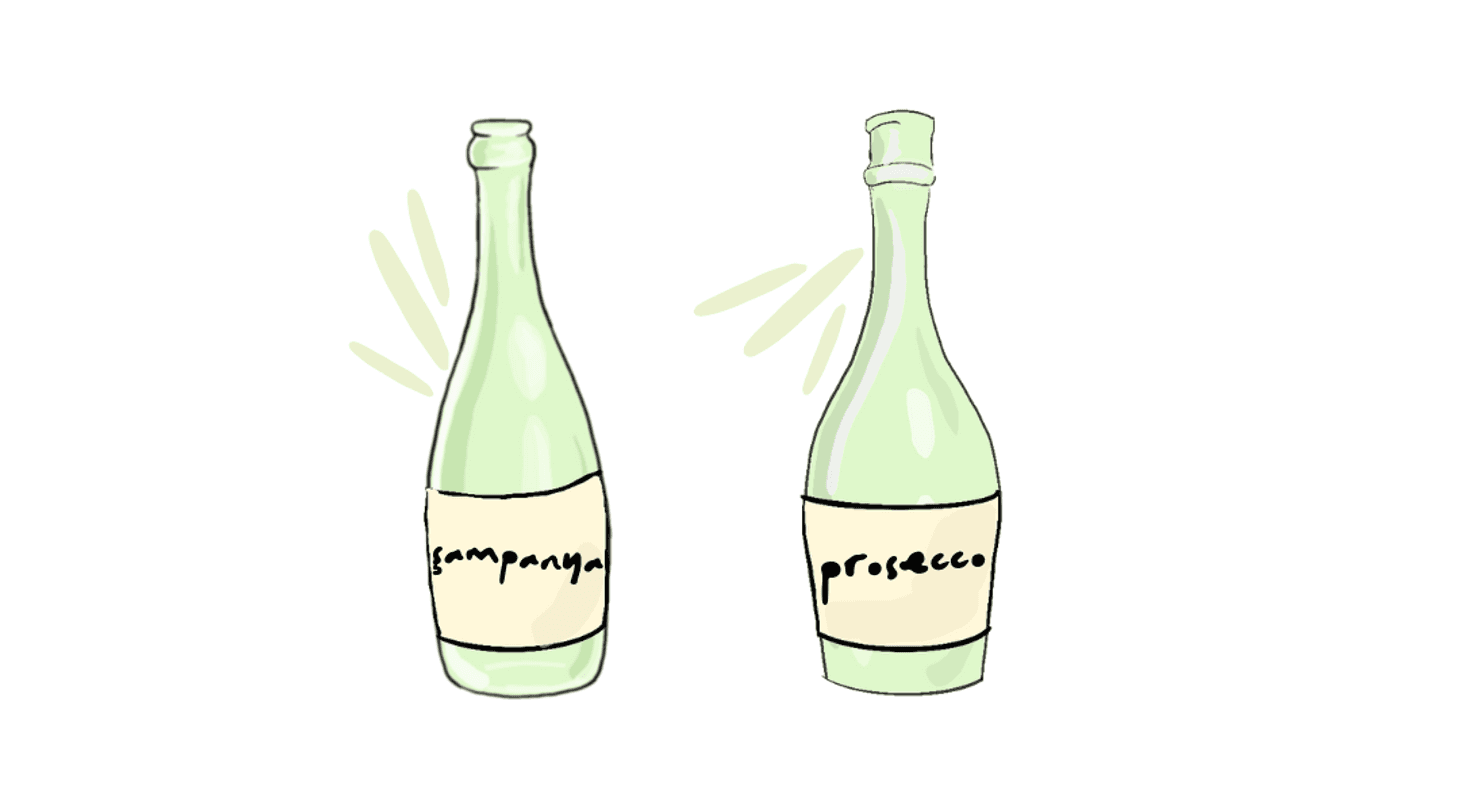
- Champagne is French, Prosecco is Italian.
- Champagne is from Champagne region; Prosecco is from Veneto region.
- Champagne is made from "Chardonnay, Pinot Noir and Pinot Meunier" grapes; Prosecco is made from "Glera" grapes.
- Champagne is made with the traditional method; Prosecco is made with the tank method.
- Champagne's aroma profile has almonds and toasty notes; Prosecco's aroma profile has fresh fruits and flowers.

Production
Tank Method
Tank method is often less appreciated compared to the traditional method (a.k.a. méthode champenoise, méthode traditionnelle), but we respect it- a lot. I described the traditional method last week in my article "A bubbly week", link here. If you take a look, you can understand this method in detail. The tank method takes less time, less labor and cost compared to the traditional method. Hence more capacity, more bottles, more sales. And why is that?
- No aging on the lees after the second fermentation. (Champagne is aged on the lees for 15 months to develop texture in the wine.)
- No "riddling".
- No screw caps, no disgorging.
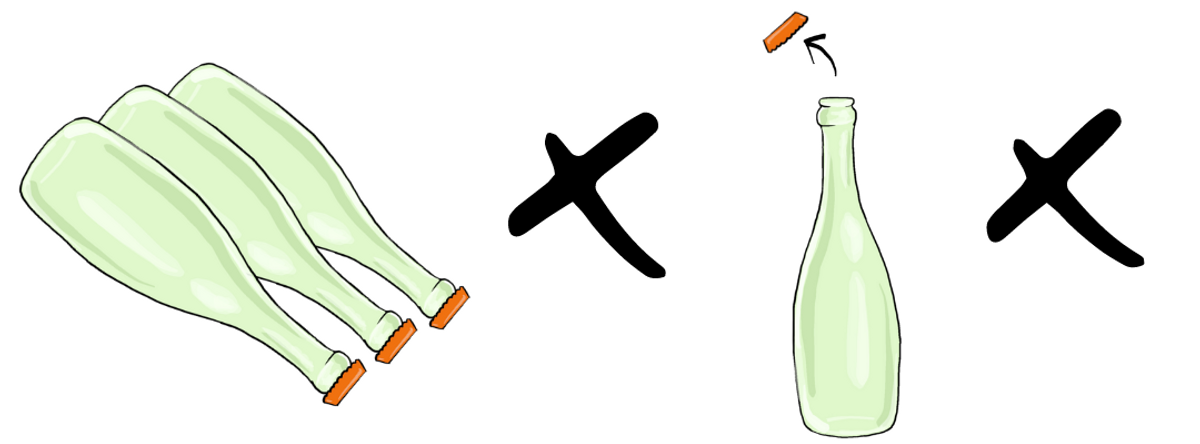
If you're thinking "Riddling and a screw cap!? What are those?", let's take you here. All of these steps take time, labor and cost. Without these, you can produce and sell faster. Now, let's look at the tank method step by step.
Step 1: Base Wine
Base wine is made.
Step 2: Second Fermentation
Sugar and yeast are added to the base wine in the tank. In the traditional method, the base wine is bottled and the second fermentation takes place in the bottle. Compared to traditional method; in tank method there are no bottles; there are tanks. So you do not have the second fermentation in each and every bottle; but totally in a tank. And this tank is a high pressure tank. Since this is a sparkling wine, we need bubbles. Bubbles in a sparkling wine mean carbon dioxide. We don't let go of the carbon dioxide from the fermentation, we keep it in the tank. Without pressure it will fly away. So this is the reason why are looking for a high pressure tank.
Step 3: Lees-less Farewell
Now, the second fermentation is over. Yeast practically ate the sugar. And yeast dies in a process called autolysis. And those dead yeast cells which are autolytic yeast particles are called lees.
Depending on the style of sparkling wine you want to make, the wine can be aged on their lees, or you can get rid of them. In tank method, this is not commonly applied. This period gives specific aromas to the wine; like butter, brioche, toasted bread, cookies. This profile is not desired in tank method, so aging on the lees is (mostly) avoided. Here, more fruit forward aroma profile is preferred. Therefore, there is usually no contact with lees. Yeast cells are is removed by filtration.
Step 4: Bottling
Wine is filled into the bottles with the help of pressure and carbon dioxide; and ready!
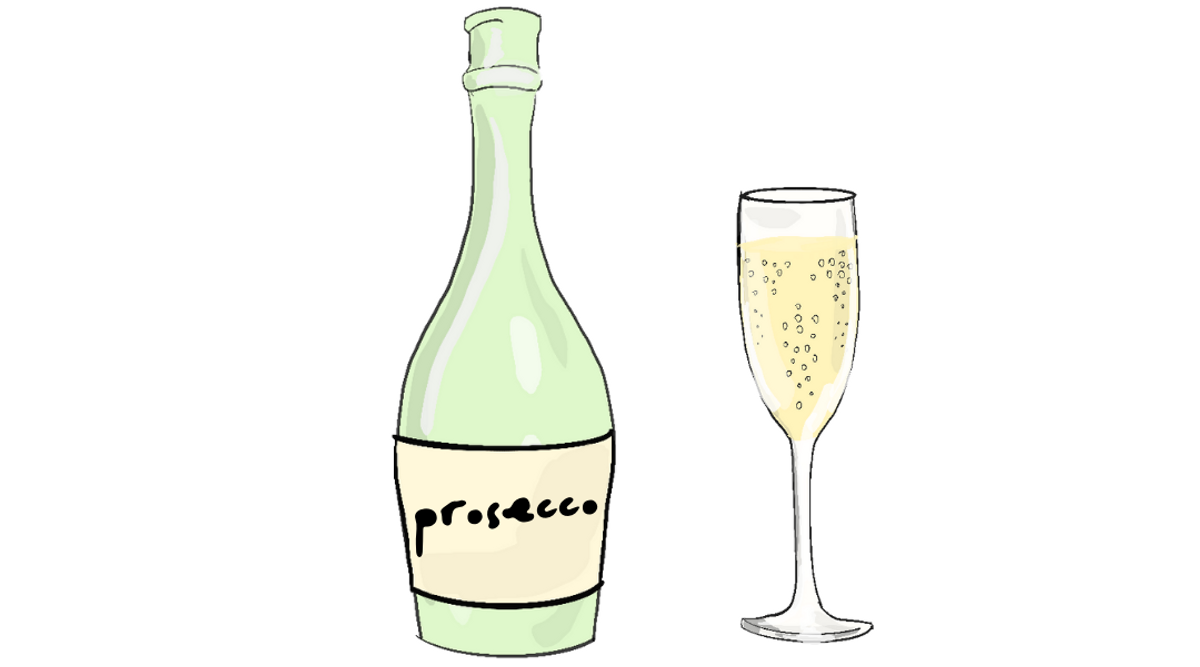
Aromatic Differences
Fruits or cookies?
There are 2 main reasons why prosecco and champagne have different aroma profile:
- Production process
- Grapes
There are aromatic differences between Prosecco and Champagne precisely because of the autolytic yeast particles/lees in the production process- as shared above. Champagne and sparkling wines produced with the traditional method have aromas like toasted bread and cookies due to the yeast autolysis. And this aromatic profile is actually the most distinctive sensorial experience in aroma profile. Let's say you are blind tasting; that is, you taste without knowing what you are tasting. If you get notes of toast, cookies, brioche on the nose, you might immediately link this profile to the yeast autolysis/lees aging and think that this might be a sparkling wine produced in the traditional way. In Prosecco, on the other hand, the primary aromas of the base wine - fruits and flowers - are at the forefront.
As for the grapes used, Champagne is made from "Chardonnay, Pinot Noir and Pinot Meunier", while Prosecco is made from "Glera". The difference in the aromatics of the grapes also differentiates Prosecco and Champagne in terms of sensory experience.

Sparkling Wine and Fries
Which food sparks with bubbles?
The pairings are actually a multi-layered journey on the palate. The layers of these journeys are sometimes an unexpected flavor, sometimes a structure that tickles your palate, sometimes a memory. I will think of this journey as a sensory experience and divide it into structural (textural) and aromatic. I will share both through similarities, contrasts and complementarities.
- 🍷Similarities create explosions.
- 🍷 Opposites create collisions.
- 🍷 Complementarities create harmony.
Oyster
The most well-known pairing to champagne is crustaceans. Especially oysters and champagne is the most cliché pairing. Cliché means stereotypical. Unchanging, repetitive. When it comes to sparkling, oysters are our cliché pairing.

Structural experience: similarities and explosion
- The wine shouldn't take a back seat, and the food shouldn't be the sole focus. We don't want them to dominate each other; we want them to be "one". The mouthwatering acidity of the champagne revitalizes the texture of the oyster, which is slipping away. Imagine squeezing lemon on fish, a similar texture. There are also the bubbles of champagne here; it tickles the palate- which has a refresing (and cleansing) impact.
Aromatic experience: complements and harmony
- An oyster that has the smell of the sea and a sparkling wine that has the smell of a lemon. Those who squeeze lemon on fish; this is exactly the aromatic harmony we are talking about. Plus, there is an umami effect. Oysters are very rich in umami. If you ask what umami is, I explained it in my article "1,2,3,4, Umami!", here. Have you ever picked up a bag of chips and couldn't put it down till the end? Or when you can't get enough of Asian cuisine, you've had too much soy sauce; have you had another plate? These are all from umami. It makes the flavor fuller, it coats the palate and you crave for more! In wine pairings, umami emphasizes the fruit notes of the wine further. With oysters rich in umami; the lemons and apples- or any other foods you are tasting- in the wine are feeling even more, boosted.
French Fries
I'll leave the clichés aside and move on to the pairings that I think you should try. The most important feature of food pairings in sparkling wine is its bubbles. That bubbly, palate tickling structure cleanses the palate no matter what you eat. The next bite is another journey, a new beginning.
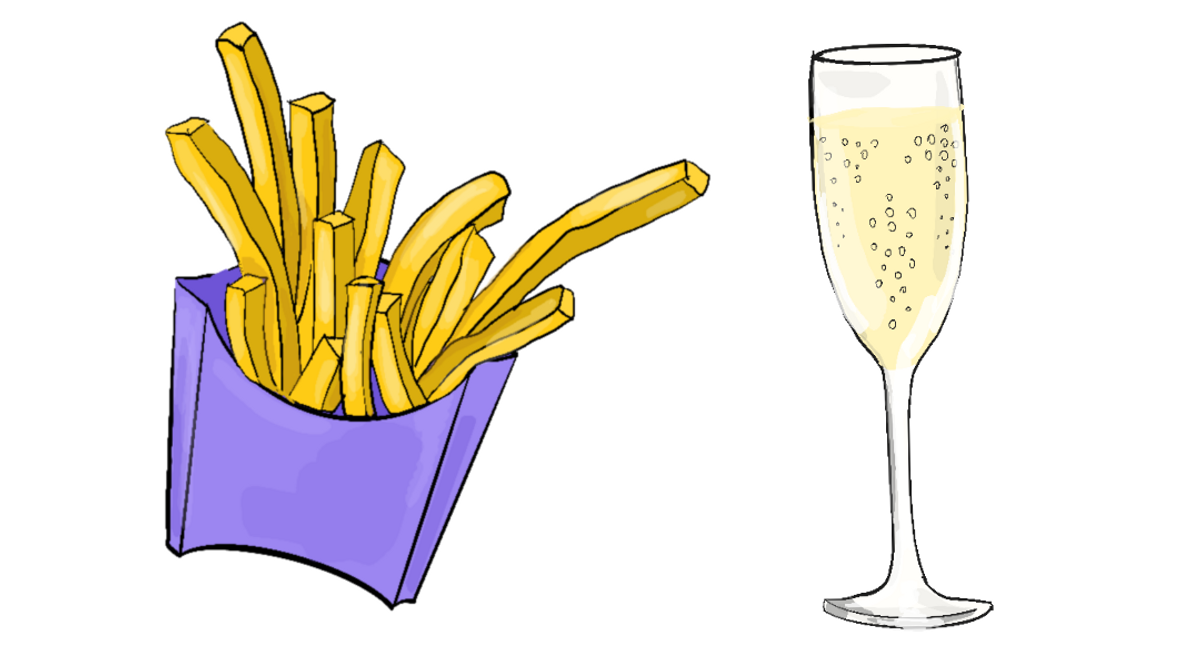
French fries are in question. We have a high fat content; the journey on the palate is long, very long. That's exactly why it's a perfect pairing with sparkling wine.
Structural experience: contrast and collision
- When you eat French fries; because of the high fat content, both the taste and the fat stay on the palate for a long time and do not disappear so easily. The bubbly palate tickling structure and acidity of the sparkling wine wash away the fat of the fries. The next bite is another journey, a new beginning. The harmony of sparkling wine and fries comes mostly from this structural experience; contrast and collision.
Aromatic experience: similarities and explosion
- A little saltiness, a little fat taste on the palate. The saltiness in the fries will emphasize the fruit in the sparkling wine. Does anyone sprinkle a little salt on an apple? "Me!" The salt brings out more of the aromas of the fruit. If you haven't tried it, I strongly recommend you to taste the apple with and without salt. We see a similar effect in the pairing of sparkling wine and fries. The salty and fatty fries boost the fruity flavors of the sparkling.
Fried Chicken
 Structural experience: contrast and collision
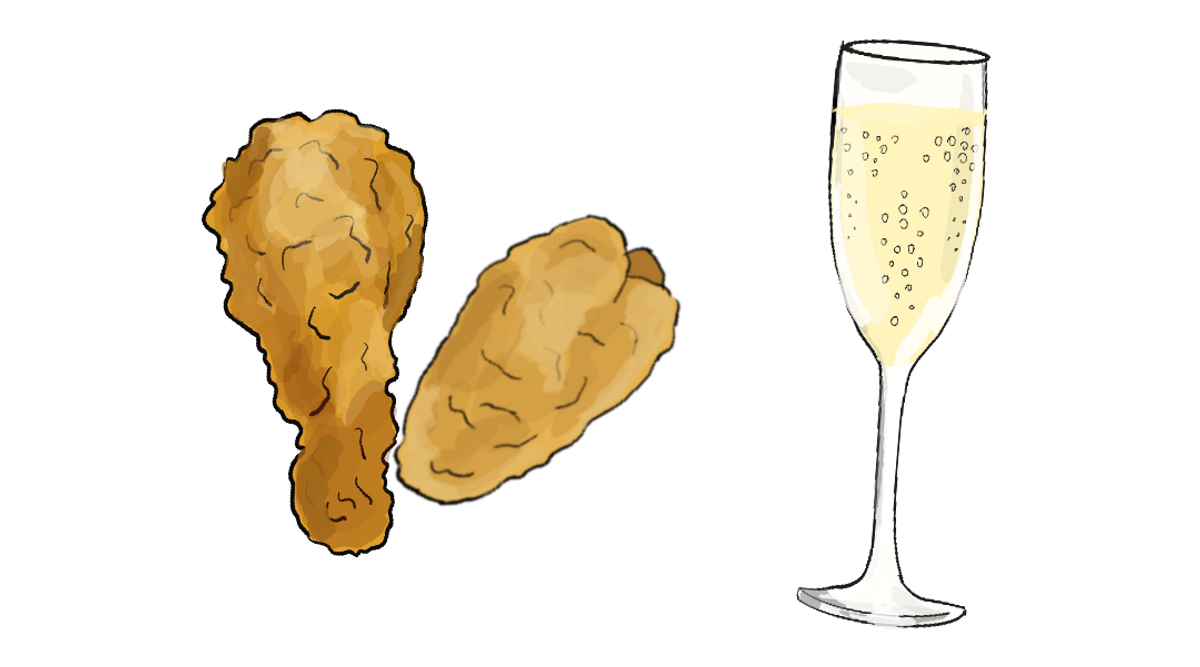
- There is a similar structural experience with French fries: bubbles and their palate cleansing effect. Bubbles are not alone, let's not forget the acidity. The acidity of the wine helps the bubbles to wash away the fat on the palate. Good acidity cuts the fat like a knife 🔪 It's as if you've never eaten a fatty piece, and you move on to the next piece. It's a dangerous pairing! Here, the crispy crust of the fried chicken paired with the bubbles creates an interesting texture. Crispy chicken and sparkling wine. There is a clash, but also harmony.
Aromatic experience: similarities and explosion
We see the same effect here as the saltiness in French fries. When the salty and fatty taste of the fried chicken comes together with the heavy fatty taste that tires the palate, the experience in the palate evolves. The fruits in the wine come to the forefront, even explode and take away the fatty taste.
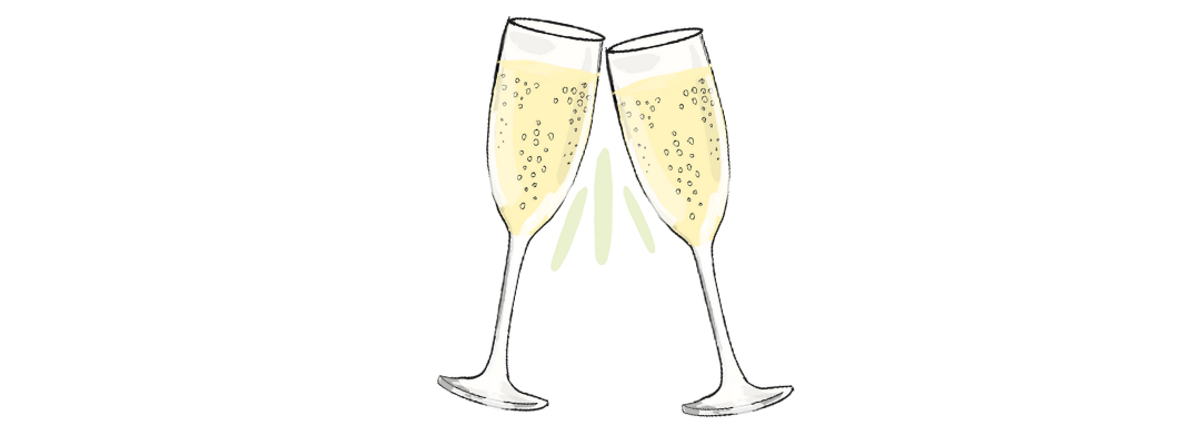
Illustrations by Ester Saba, a big cheers to you Ester!
As we explore the wine in our glasses, we continue to dream of the next sip. Veraison is a wine publication that takes its name from the magic word, magic period of "veraison." In our upcoming issues, I will offer news fresh from the vineyard, insights into wine culture, and surprising pairings. It charts routes of sensory experience, and shares tasting notes.
Thank you for reading!
Cheers,
Selin🍷


