




Igal Nassima on Art, Apple and the Future of Spatial Computing


 Quando
Her salı ve cuma girişimcilik ve teknoloji ekosistemlerinden öne çıkan gelişmeler, paradigma değişimleri, inovasyon trendleri ve dijital dönüşüm e-posta kutunda.
We interviewed Igal Nassima, an engineer, artist and adjunct professor at NYU, about how virtual reality will affect artists in the next few years and how Apple Vision Pro might lead this change.
- In 2015, Nassima founded Superbright in New York, a design studio that developed its own proprietary technologies—including spatial audio creation, multiplayer VR and volumetric capture.
Duygu Daniels: First of all congratulations; not only are you one of the leading designers and developers of AR/VR experiences but you've been shaping its future for some time now—even teaching the subject at NYU. Watching your journey has been a thrill. So take us behind-the-scenes, let’s start with Vortic Art. What’s the product, how long have you been working on it and what inspired you to start it?
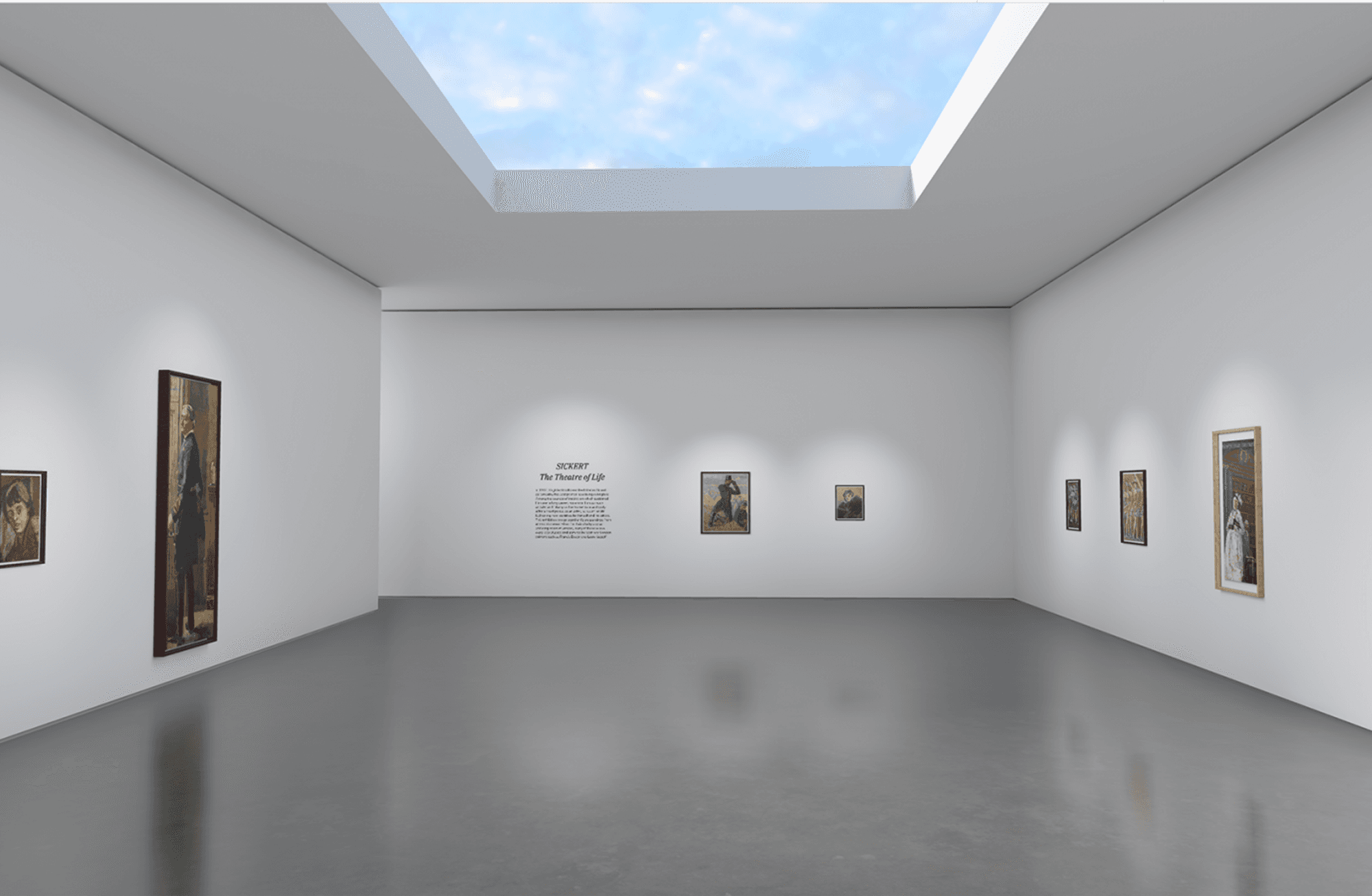
Igal Nassima: Thank you Duygu! Vortic is a publishing platform for cultural institutions to create digital exhibitions that can be experienced using web browsers, mobile phones and VR headsets. Institutions can use our custom online builder to frame, hang or light artworks and render their exhibitions on the cloud, and have it up and running in less than 30 minutes.
I’ve been working on Vortic since 2020, and the project got incubated through collaboration between my studio Superbright and Victoria Miro Gallery in London.
Between VMG’s expertise in the arts market and our expertise in the technology, we decided to test a product built specifically for museums and galleries.
DD: Who’s the end-user for Vortic Art right now and are you planning on expanding its audience?
IN: Vortic follows a b-b-c model where our clients are galleries, museums and art fairs, and they use our product to reach a wider audience online. We intend to open it to a wider public audience so anyone can create exhibitions.
Recently we started curating our own exhibitions online under a program called Vortic Curated.
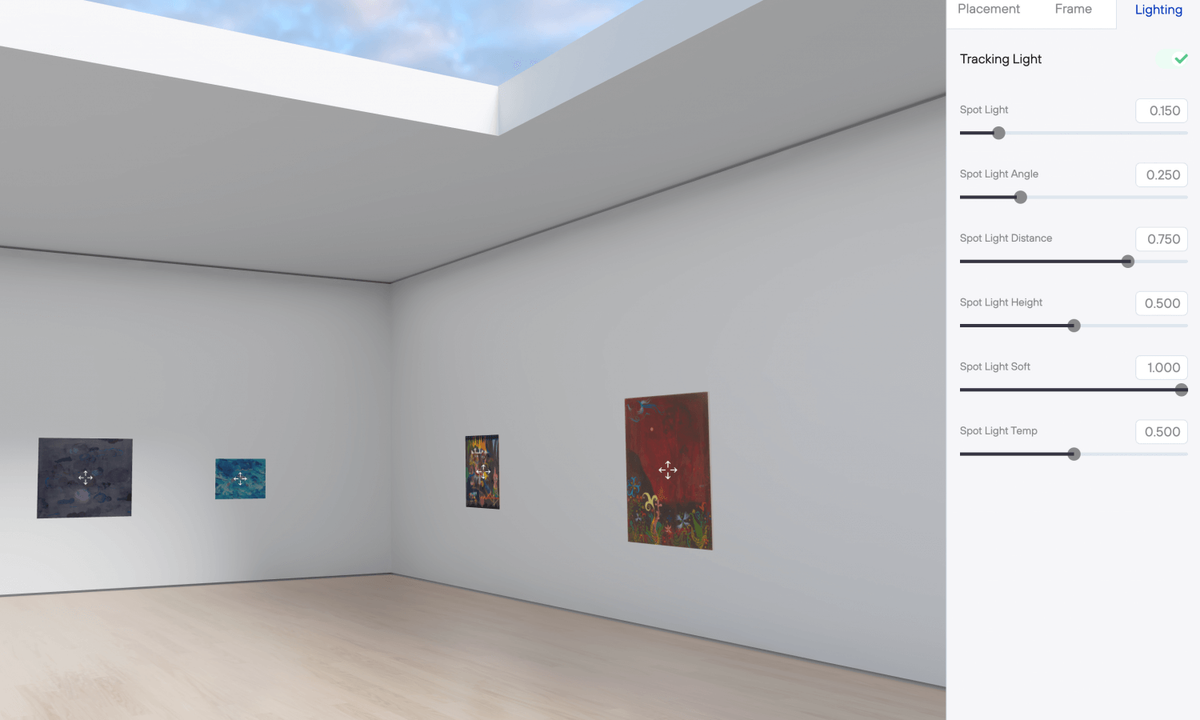
Vortic, Curate CMS Tool
DD: What were some key moments in your journey with Vortic Art where you thought “OK, we’re on to something here”?
IN: I believe products have that magical timing where they find a place in the world. For us it was during Covid when all the galleries & museums were shut down, and there was a serious need for a place for institutions to show their exhibitions. Initially we were targeting to work with 3 galleries, in about 3 months we had 75 galleries using the platform and it was chaos. During this time we learned a lot, and were able to evolve the product.
The second goal post was the evolution and sales figures of Meta Quest Headsets and the announcement of Apple’s Vision Pro. We felt like there was a healthy amount of investment into infrastructure and adoption to keep the project moving forward.
DD: How do you think VR will influence artists in the next 5 to 10 years? And for those artists interested in dipping their toes, where and how would be a good place to start?
IN: This is something I think about a lot, and will try to keep it as succinct as possible and probably fail:
- Presenting Work: Over the years, we have diminished the experience of viewing an artwork online to a square box on a tiny screen. Art has a contextual relationship with its presentation, especially with light and architecture, which defines the viewing experience. We don’t say you are going to see an exhibition at Vortic, we say you will visit an exhibition, you will be in that gallery.
- Creating work: There are several tools released in VR over the years such as Tilt Brush (now there is an Open Brush), or Quill where artists can create works in the headset. For example last year we worked with Eric Fischl, whois a painter/sculptor and he drew vignettes in VR, which we then casted in bronze working with a foundry, which he then painted over them again in-real-life. In the end we created an edition of works that are really unique both in process and result.
- Using it as a medium: There are artists working with VR as a medium since the 90s if not earlier, which has a discourse on its own. I would recommend checking the works of Char Davies, Rachel Rossin, Jon Rafman working in contemporary arts and works of Jessica Brillhart, Chris Milk, Felix and Paul for exploring VR as narrative and documentary film.
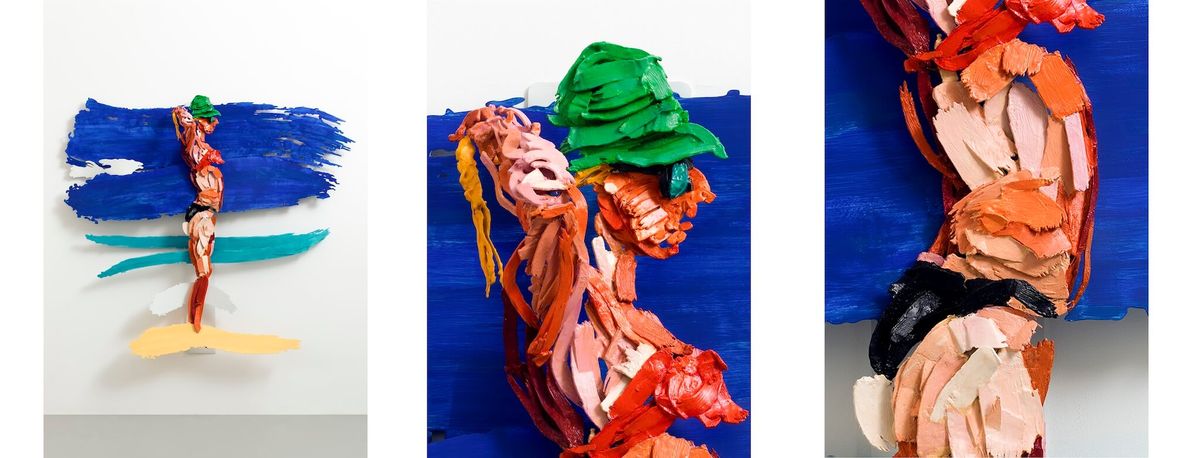
Eric Fischl, Girl With Green Hat, 2023
To dip your toes in creating VR projects, you can start with a 360 camera, and make some films you can play in a VR headset, or make simple experiences in Unity Game Engine and run it in VR. There are many tutorials on Unity’s website to enter this space and you are never late, cause when I teach a class, I give this warning to my students: “By the time this class ends, ½ what you learned will be obsolete, the technology is changing that fast.”
DD: What’s your favorite part about working in and with VR?
IN: VR directors have the incredible luxury of having someone's full attention without disruption, and change their mode of presence, body and experience.
As Char Davies would put it very elegantly VR can “facilitate a temporary release from our habitual perceptions and culturally biased assumptions about being in the world, to enable us, however momentarily, to perceive ourselves and the world us freshly.”
Exploring concepts such as an embodiment and presence are really exciting and rewarding because you can redefine someone's identity by giving them a new body, or a totally new mode of interaction that is detached from reality.
DD: What type of business models do you think will succeed in VR?
IN: There are a few markets that have done well in VR. These include gaming, and enterprise applications in simulation, training and education.
In these verticals, the power of the medium really comes through. For example, training someone to put an engine together, or apply heart surgery is quite impactful in VR, because again the medium is experiential, you are not watching but doing it.
With Apple’s Vision Pro, we are now entering the Spatial Computing era, which is different from previous product positioning. While Quest and Vive had brought VR to masses, Apple has done what they do best, made a computer that can use your environment as the interface, so it's more agnostic in its purpose than just VR.
I also want to add that one of my favorite Turkish words is “bilgisayar”, I am not sure what the translation would be but, maybe “mekansal bilgisayar” or “konumsal bilgisayar”.
DD: As Vision Pro becomes more widely adopted what do you think its first major use-case will be?
IN: If I were to make some speculation—like we all love to do with Mac products—and I would say that Apple invested so much in entertainment and sports, this will be the #1 use case. They also acquired NextVR which broadcasts sports in VR.
It will be followed by productivity applications because of how spatial computing changes your perception of the screen space, and maps to your environment. They also made it quite easy to port iPhone or iPad applications to Vision Pro, so their developer community can adapt it very easily.
Though personally, I believe that Apple does not have a purpose for the headset “yet”, and they will rely on developers to figure it out. This approach is similar to the Apple Watch, which when first released was really ambiguous, then overtime became your health and fitness tracker.
DD: What do you think about its single-user experience—or whatever we’re calling it—where a person can’t watch content with someone physically next to them, do you think this is a deal-breaker?
IN: There are ways to make experiences social, however I think they only apply for remote experiences. When you are in the room with someone, if you slap a ski mask on your face, with a screen on it, you are most likely isolating yourself. It's a social problem, not a problem of technology. I don’t see it as a deal breaker, I just think trying to force social behavior is problematic. As you can notice the eyes are mostly blurred on the headset, I don’t think this feature was well received.
I do find older demographics much more comfortable in Mixed Reality mode, where they can see the world through the camera before they try full immersion. It does make interactions easier within a room with other people.
DD: With your AR and VR projects what type of hardware or software limitations do you have right now that you hope will be resolved in the future?
IN: 3D content production (CG) and scanning works (photogrammetry) is expensive.
There are no standards on 3D file types, though there are some efforts in resolving this, so if you make content for Quest, do not really expect it to work great on let’s say Vision Pro.
Developer tools are quite recent, and not very mature.
So I am hoping for better developer tools such as Reality Kit by Apple, more adaption of the VR headsets making more people interested in creating 3D content (more ROIs), which will drive the industry forward. Also waiting for scanning tools like Polycam to improve where you can actually use the output in your projects, currently their output has too many issues.
Don't believe in magical shortcuts, assume there will be an AI tool doing the work for you! As I remember you saying one day “content is king” and that does hold across the spectrum.
Hardware limitations are being improved on and I do not see them as blockers, I think constraints are good for creativity.
DD: I’m borrowing this from Kent Bye from the "Voices of VR" podcast where he loves to end his episodes with this one question: What do you think is the ultimate potential of VR—but in this case in the context of art and the art world?
IN: Where would we be without Kent!
Let me take a deep breath:
There are many cultural institutions around the world with amazing collections. I am talking about 100,000 ancient coins in a vault in Oxford, or incredible Andy Warhol archives in Pittsburg, 100’s of Basquiat works at Moma, and of course many displaced cultural works such as Pergamon Altar in Berlin.
Most museum collections rarely see the day of light. Most people do not have access to big cities or museums to see them.
VR can break the barriers here, it can be an extension of museums' physical spaces as their digital wings. They can create new architecture, completely catered to the works they want to display, with the works’ context in mind, share their collections and make exhibitions at a fraction of a cost and also monetize them.
I am not saying VR will replace the experience of visiting a museum, though I believe equal access to culture and education is important, especially today. And I hope we will be able to do this with Vortic.
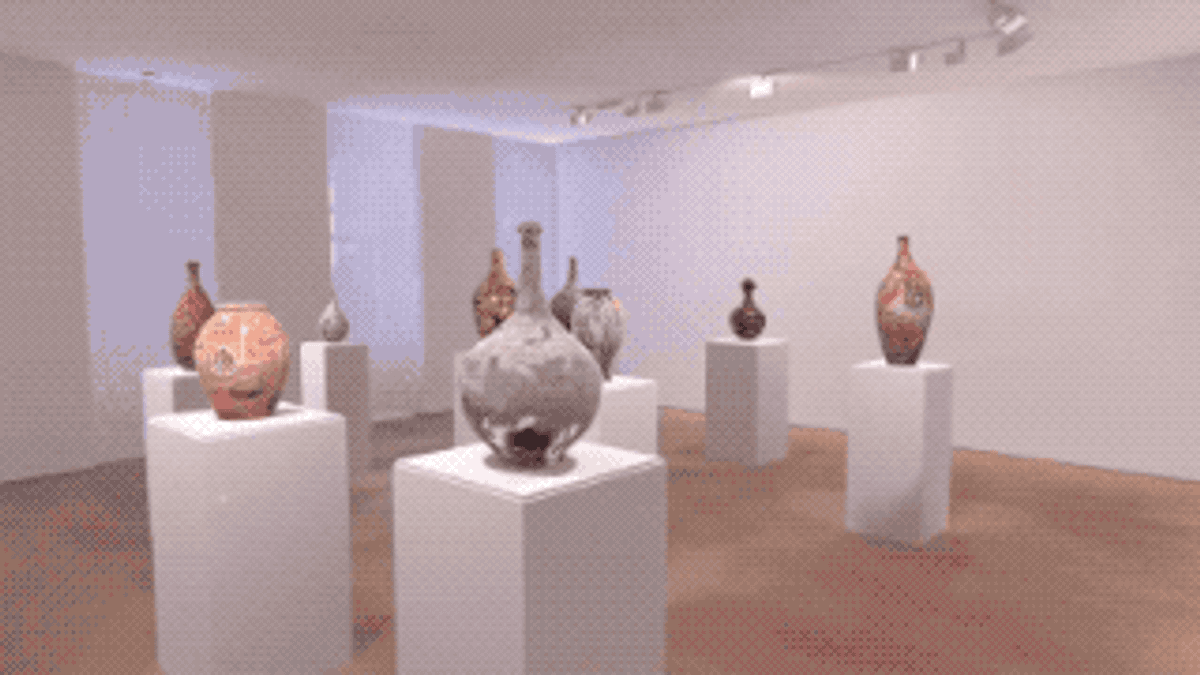
Grayson Perry @ Victoria Miro Gallery, London
DD: This all sounds very much grounded in reality (no pun intended) where VR feels accessible; like a simple, viable tool for today as opposed to a distant future. I also like that the experience you’ve created can both affect the art work and process itself or completely leave it alone providing only the “space”. So lastly Igal, how do you recommend we continue to follow your work?
IN: You can follow us on Instagram or e-mail us at [email protected]. Visit exhibitions at Vortic using vortic.art.


Kaydet

Okuma listesine ekle
Paylaş
QuandoHer salı ve cuma girişimcilik ve teknoloji ekosistemlerinden öne çıkan gelişmeler, paradigma değişimleri, inovasyon trendleri ve dijital dönüşüm e-posta kutunda.
YAZARLAR

Duygu Daniels
Duygu, çoğunlukla tüketici uygulamaları üzerine çalışan bir yazılım tasarımcısı. San Francisco'da yaşıyor.

Quando
Her salı ve cuma girişimcilik ve teknoloji ekosistemlerinden öne çıkan gelişmeler, paradigma değişimleri, inovasyon trendleri ve dijital dönüşüm e-posta kutunda.
İLGİLİ OKUMALAR

Bugüne dek bir yazılım ürününe “başarılı” denebilmesi için ürünün mümkün olduğunca çok sayıda insana ulaşması gerekiyordu. Fakat yapay zeka, yalnızca bir kişinin, bir ailenin ya da bir arkadaş grubunun kullanacağı uygulamalar geliştirmeyi de artık anlamlı hâle getirdi. Bu sayede kodlama da yalnızca ticari bir süreç olmaktan çıkıp kişisel bir yaratıcılık aracına dönüşmeye başladı.

Bu yıl sonbahar sezonu, teknoloji arenasındaki dev isimleri konu alan bir dizi yapımın gösterime girişine sahne oluyor. Bir zamanlar Hollywood'un komedi unsuru olarak gördüğü bu liderler, bugün neredeyse bir korku filminin başrolüne yerleşiyor. Fakat bu kez korku, teknolojinin uzak bir gelecekte yaratabileceği sorunlara ilişkin kurgusal senaryolardan ziyade, bugün sahip olduğu güçten ve bu gücün yarattığı sonuçlardan besleniyor.
Yapay zekaya ne istediğimizi anlatmaya çalışırken kendi isteğimiz hakkında da bilgi ediniyoruz. Bazen söylemediğimiz bir ayrıntıyı, bazen ise hiç düşünmediğimiz bir soruyu fark ediyoruz. Peki karşımızdaki bizi anlamakta ustalaştıkça bizim de kendimizi daha iyi anlamamız mümkün mü?
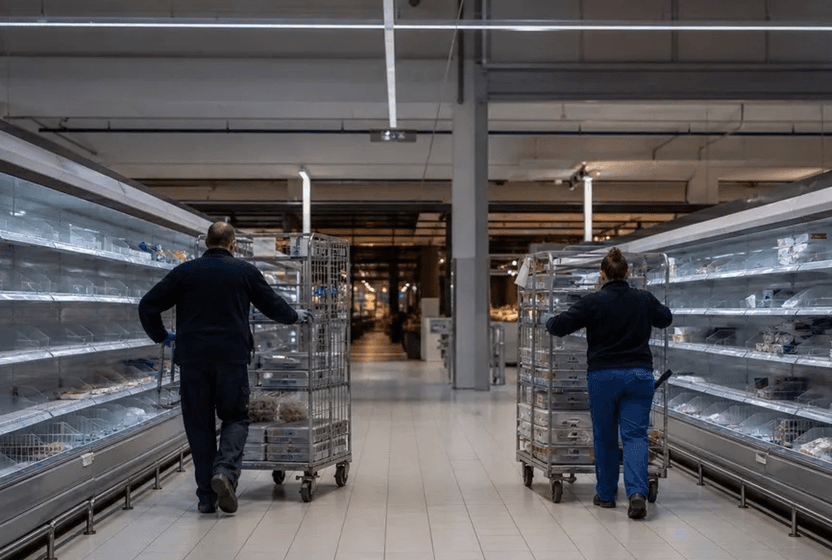
Fransa'da bir siber saldırı yüzlerce marketin soğutma sistemlerini uzaktan ısıtarak tonlarca gıdanın çöpe gitmesine neden oldu. Akıllı buzdolaplarından otomobillere, yataklardan su arıtma tesislerine kadar gündelik hayatı internete bağlayan teknolojiler, verimlilik sağlarken yeni bağımlılıklar ve kırılganlıklar da yaratıyor. Peki hayatı kolaylaştırmak için her şeyi birbirine bağlarken neleri gözden kaçırıyor olabiliriz?
Kadın sesiyle konuşan, kullanıcılarının ihtiyaçlarına göre şekillenen ve hayatı kolaylaştırmayı vadeden yapay zeka, gerçek kadınlar söz konusu olduğunda bambaşka bir tablo ortaya koyuyor. Dijital şiddetten işe alım süreçlerine, toplumsal cinsiyet önyargılarından ekonomik eşitsizliklere kadar pek çok alanda mevcut sorunları yeniden üretme potansiyeli taşıyan bu teknoloji, kadınlar için nasıl bir gelecek tasarlıyor?