




The Fragrance of Who You Are: A Conversation with Algorithmic Perfumery Co-Founder


 Quando
Her salı ve cuma girişimcilik ve teknoloji ekosistemlerinden öne çıkan gelişmeler, paradigma değişimleri, inovasyon trendleri ve dijital dönüşüm e-posta kutunda.
"What matters is how you feel when you smell what you made. That moment of recognition, 'This is me', isn’t something AI can simulate. But it can help us reach that moment faster, more intimately, and more inclusively."
—Anahita Mekanik
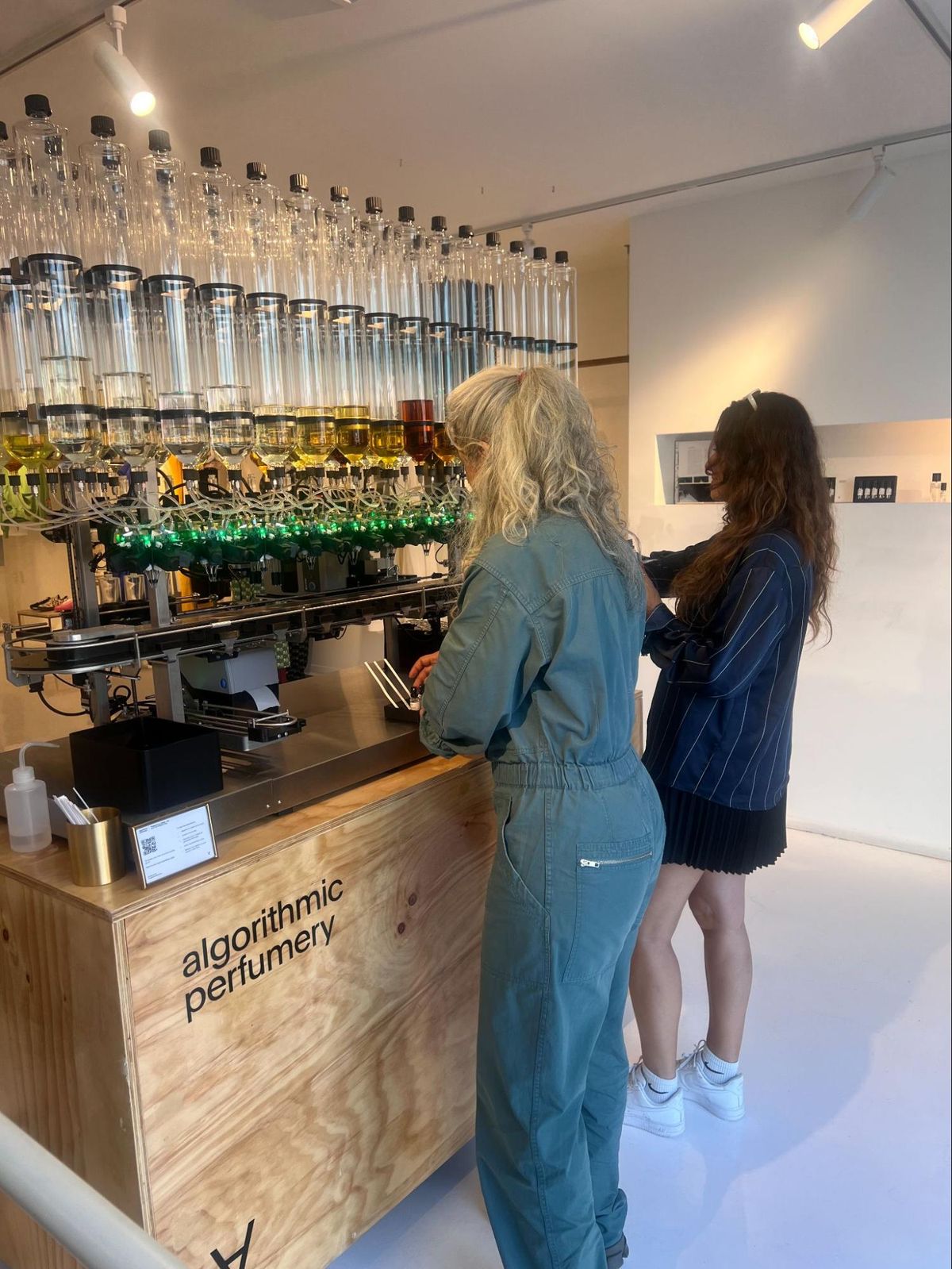
In a sincere gallery space inside Atelier Jolie in New York City, an experimental, creative playground founded by Angelina Jolie, I witnessed something quietly interesting: A fragrance made by a machine with artificial intelligence (AI) algorithms. Not a perfume selected off a shelf, not a scent copied from an existing luxury brand, but a fragrance generated from scratch based on my personality, my opinion about myself, and a few introspective answers I had submitted just minutes earlier.
The machine is part of EveryHuman, an algorithmic perfumery platform that blends art, AI, and scent. EveryHuman carries a philosophy that every human is a creator and that scent, long controlled by luxury conglomerates and gatekept by industry insiders, can be reclaimed as a medium of self-expression.
The concept was envisioned by Frederik Duerinck, a Dutch creative technologist and filmmaker. As the founder of Scentronix, EveryHuman, and Algorithmic Perfumery, Frederik brought the prototype to life, blending his background in sensory storytelling, digital art, and system design. Before building machines that make scent, he directed award-winning documentaries and multisensory installations across Europe. The project decentralizes access to scent creation and reframes fragrance as a democratic, data-powered expression.
The project was co-founded by Anahita Mekanik, a seasoned executive and perfumer with roots in the traditional fragrance industry and the future-facing worlds of customer experience, generative design, and tech. Her resume spans from creating global scents for niche and mass markets to developing immersive olfactory experiences with artists, engineers, and AI researchers.
For decades, perfume brands told us how we were supposed to smell. Scent became something aspirational, gendered, and romanticized, something to be gifted in key emotional moments. It was often so expensive that we only experienced it through duty-free purchases, lugging oversized bottles through airports. Now, in an era where our feeds try to sell us a red lipstick the moment we unlock our phones, these consumption rituals have become overwhelming.
What I loved most about this project was that it invited me to step away from all of that. In a space free from advertising pressure and aesthetic algorithms, I got to sit quietly with myself and create something truly personal, a scent made for me, not marketed to me. It felt private, intentional, and refreshingly low-waste.
Algorithmic Perfumery doesn’t insert you into the algorithm as a consumer product. Instead, it lets you borrow the algorithm and collaborate with it. That’s where my conversation with the project’s co-founder and scent expert Anahita Mekanik began. With her calm intelligence and cool energy, she explained the origin of their platform and how their algorithm isn’t just a machine, but a mirror.
In this interview, Anahita explains what it means to create a scent with a machine, how AI enables but does not replace human creativity, and why scent is more intimate than even language.
First, let’s start from the core. What is EveryHuman, and what does it mean to create a fragrance through a machine?
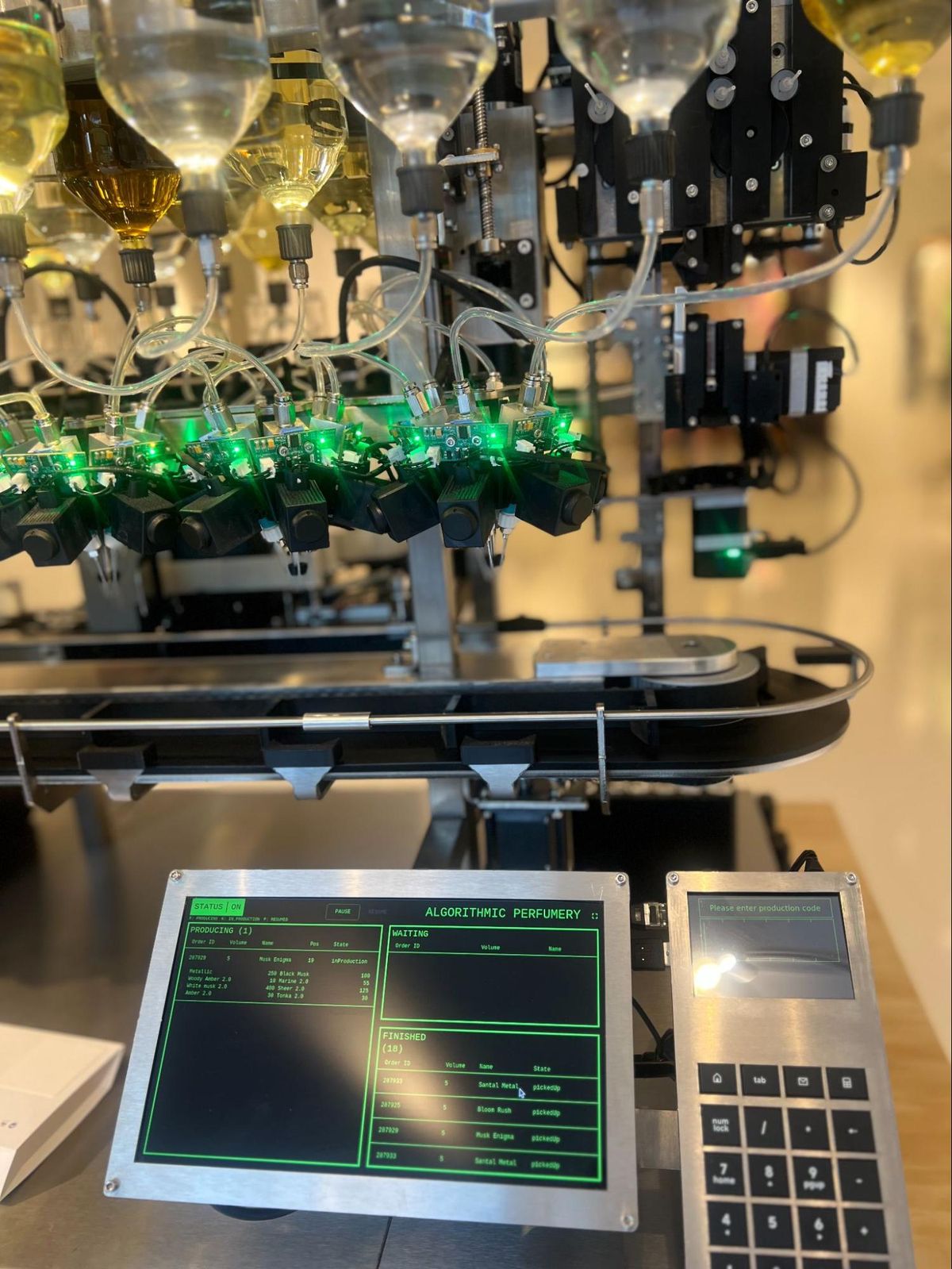
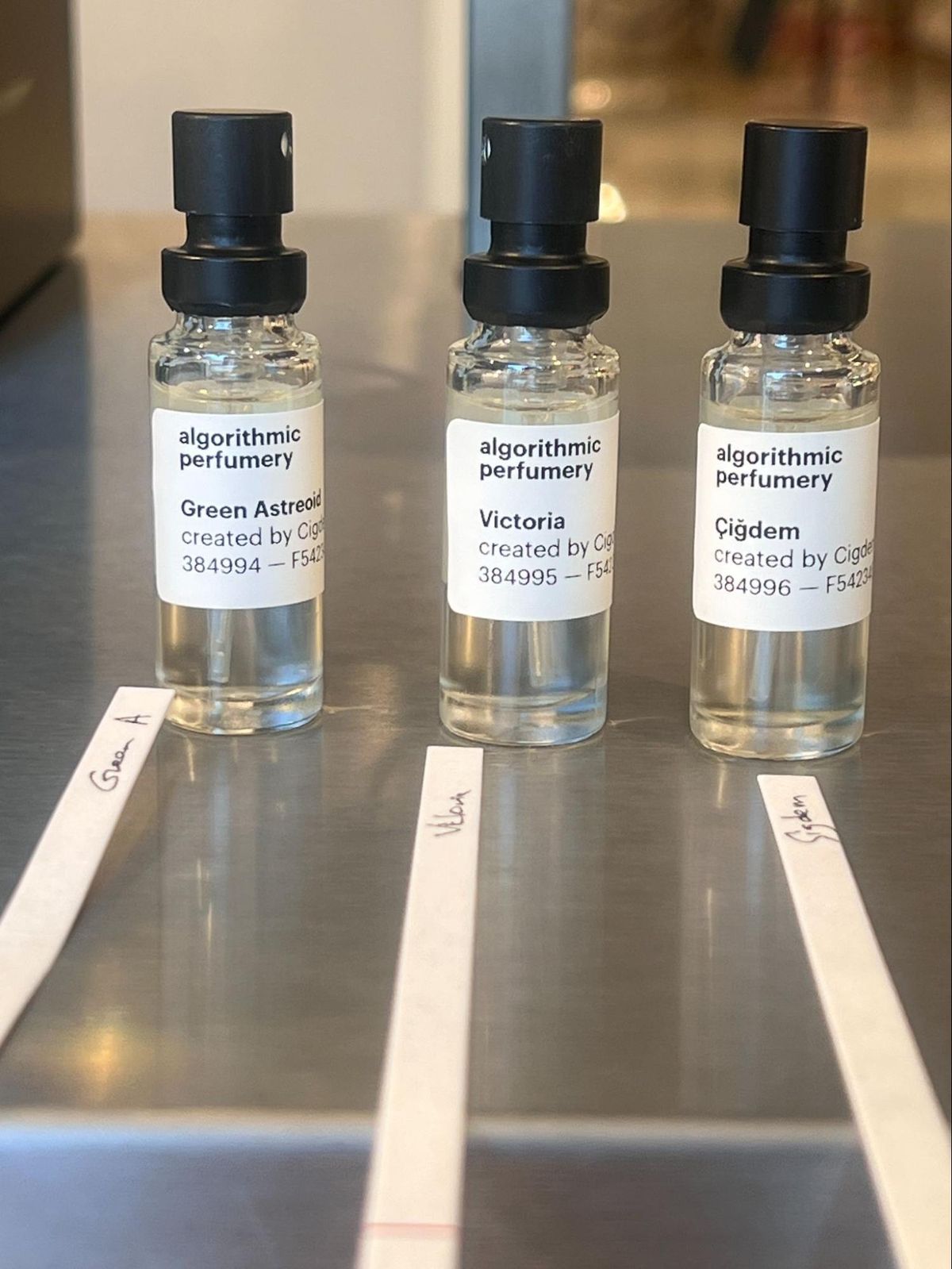
EveryHuman is a tech startup at the intersection of art, science, and scent. Our bigger mission is about creative autonomy. We believe everyone should be able to create something that reflects them, especially something as intimate and historically exclusive as fragrance. We build AI-enabled machines that allow people to co-create their perfume. That means you answer a deeply introspective questionnaire, questions about your personality, emotional tendencies, even the kind of dreams you have, and the machine generates three scent formulations based on those responses.
It’s not about choosing a scent from a catalog. It’s about participating in a generative process. The algorithm uses your input to propose original scent structures, and you can tweak them, personalize them, or just go with what resonates. You become the creator.
And the physical experience—watching the perfume come to life—is very powerful.
Yes. Watching the scent get produced in front of you is part of the magic. We call it "closing the loop" between the digital and the physical. For example, in Atelier Jolie, where we met, the machine was producing people’s scents on demand, one after another. Over time, these moments of interaction also feed the platform itself—we learn, adapt, and fine-tune based on honest feedback from real people.
How did the idea begin?
It started when I met my co-founder, Frederick Duerinck, in New York in 2016. At the time, I worked in traditional fragrance, helping create global scents, working with perfumers and houses responsible for some of the biggest brands. Frederick, on the other hand, came from a different world. He’s a documentary artist and technologist based in the Netherlands, and he's been doing a lot of work with multisensory installations. Scent was always part of his narrative toolkit.
We connected over a shared desire to reimagine scent, not just as a product but as an experience, a dialogue. We developed the concept of algorithmic perfumery during an innovation lab I was running, where we explored the future of scent. It became clear very quickly: we wanted to build a machine that could create scent and help you create your scent.
How big is the team behind Algorithmic Parfumery?
It takes a village. We have around 30 people: engineers, perfumers, designers, coders, and concept developers. We’ve built everything in-house. Our production and R&D team is based in Breda, Netherlands. That’s where the machines are made, the formulas refined, and the engineering developed. I’m the only one based in New York, but we’re very connected across time zones.
Where is Algorithmic Parfumery available?
Today, we have over a dozen machines worldwide in London, Vienna, Copenhagen, Dubai, and New York. We’ve partnered with the Museum of the Future in Dubai for three years and collaborated with platforms like TFS in London. So far, over 180,000 people have interacted with the platform. What’s remarkable is that each scent is truly unique; there are no templates or standard catalogs. It’s all real-time generation. We will be opening in mid-September in Bağdat Caddesi and the Taksim area in Istanbul!
That intimacy struck me. The questions you ask about love, dreams, and anxieties feel more like a therapy session than a shopping survey. How did you decide on these questions?
Scent is one of the most emotionally powerful senses. It’s deeply tied to memory and identity. The act of creating your scent can be incredibly reflective. That’s why the machine isn’t just an output device; it’s a mirror.
So, how does AI work here?
We use AI to analyze the answers people give on the survey and to generate fragrance formulas based on that data. But what’s important is that the AI doesn’t decide for you, it proposes. You smell, reflect, and give feedback. Then you can iterate. That feedback loop trains the system further.
Also, all data is anonymized. We’re not interested in selling data but in learning patterns, why certain people in certain emotional states might be drawn to specific scent families. It’s about understanding emotion through olfaction.
Do you see this as a new way of consuming?
Absolutely. This is post-brand consumption. You’re not buying someone else's idea of who you should be. You’re creating your own. And because we have no minimum order quantity, you can make a one-off scent and never repeat it. It’s the opposite of mass production. It’s deeply personal.
Where do you think AI and human creativity intersect most meaningfully?
For me, AI is an enabler. It doesn’t replace beautiful things; it makes the process more accessible. Scent has always been an elusive medium, mysterious, and hard to access unless you are an insider. We built this platform to open it up. And yes, we use algorithms, but the emotional depth comes from people.
What matters is how you feel when you smell what you made. That moment of recognition, this is me, or isn’t something AI can simulate. But it can help us reach that moment faster, more intimately, and more inclusively.
Saying goodbye: As I left Atelier Jolie that day, I carried a scent I named using the Turkish letter “Ç,” a small act of personal pride. It now sits on my desk as a tiny bottle of memory, made not by a perfumer in Paris, but by a machine that listened to who I am. In a world that tells us who to be, it’s rare to have a moment that reflects who we already are.


Kaydet

Okuma listesine ekle
Paylaş
QuandoHer salı ve cuma girişimcilik ve teknoloji ekosistemlerinden öne çıkan gelişmeler, paradigma değişimleri, inovasyon trendleri ve dijital dönüşüm e-posta kutunda.
İLGİLİ BAŞLIKLAR
YAZARLAR

Çiğdem Öztabak
Teknoloji ve kültür yazarı, serbest gazeteci. New York'da yaşıyor.

Quando
Her salı ve cuma girişimcilik ve teknoloji ekosistemlerinden öne çıkan gelişmeler, paradigma değişimleri, inovasyon trendleri ve dijital dönüşüm e-posta kutunda.
İLGİLİ OKUMALAR

Martı ve Tripy Mobility gibi yerli şirketlerin yakın tarihli duyuruları, robotaksilerin beklenenden çok daha önce Türkiye yollarında kullanıma sunulabileceğine işaret ediyor. Bu duyurular oldukça kritik bir soruyu da gündeme taşıyor: Regülasyonlar derhal hazır hâle getirilse dahi bu kadar karmaşık kent koşullarında robotaksileri faaliyete sokmak mümkün mü? Boğaziçi Üniversitesi’nden Prof. Dr. Ilgın Yaşar ve güncel olarak bir otomobil firmasında görev alan Kontrol ve Otomasyon Mühendisi Berk Üke, bu soruyu Aposto okurları için yanıtladı.

Silikon Vadisi’ni bir dönem sallayan Theranos skandalı, yakın zamanda yeniden teknoloji, medya ve iş dünyasının merkezine yerleşti. Girişimin kurucusu Elizabeth Holmes, 11 yıl hapis cezasına çarptırılmasının ardından bu kez dünyayı sallayan bir belgeselin ana konusu oldu. Üstelik kendi talebiyle…
Bugüne kadar en azından bir kez bir işi ChatGPT ile yapıp bir daha asla yapay zeka olmadan yapamaz hâle geldiyseniz yalnız değilsiniz. “Beceri atrofisi” olarak adlandırılan bu durum, yapay zekanın hayatımızı kolaylaştırırken bizi nasıl ona bağımlı hâle getirdiğini de açıklıyor. Uzmanlara göre asıl risk, yapay zekanın işimizi elimizden alma potansiyelinde değil, kendi becerilerimize ihtiyaç duymayacak kadar yapay zekaya bağımlı hâle gelmemizde yatıyor.
Yapay zeka modellerinin sayısının artması ve kullanım maliyetlerinin farklılaşması, şirketleri ihtiyaçlarına en uygun modeli bulabilecekleri platformlara yönlendiriyor. Farklı modelleri tek bir çatı altında buluşturan yapay zeka pazaryerleri, geliştiricilere esneklik ve maliyet avantajı sunarken sektörde rekabetin dinamiklerini de değiştiriyor.

Son üç yılda yapay zeka hep pırıltılı manşetlerin diliyle anlatıldı; şimdiyse herkes dönüp bilançoya bakmaya ve bu kadar paranın nereye gittiğini ve ne zaman döneceğini sormaya başladı. 1840’ların demiryolu çılgınlığını hatırlatan bu fiyatlama ve sabır krizi, insan uzmanlığını yok sayarak her problemin üzerine bilgi işlem gücü boca etmenin mucizevi kârlar getireceği inancını da sarsıyor.
