

Sam Altman and Steve Kerr: An unconventional conversation on leadership, wealth, and the future


 Quando
Her salı ve cuma girişimcilik ve teknoloji ekosistemlerinden öne çıkan gelişmeler, paradigma değişimleri, inovasyon trendleri ve dijital dönüşüm e-posta kutunda.
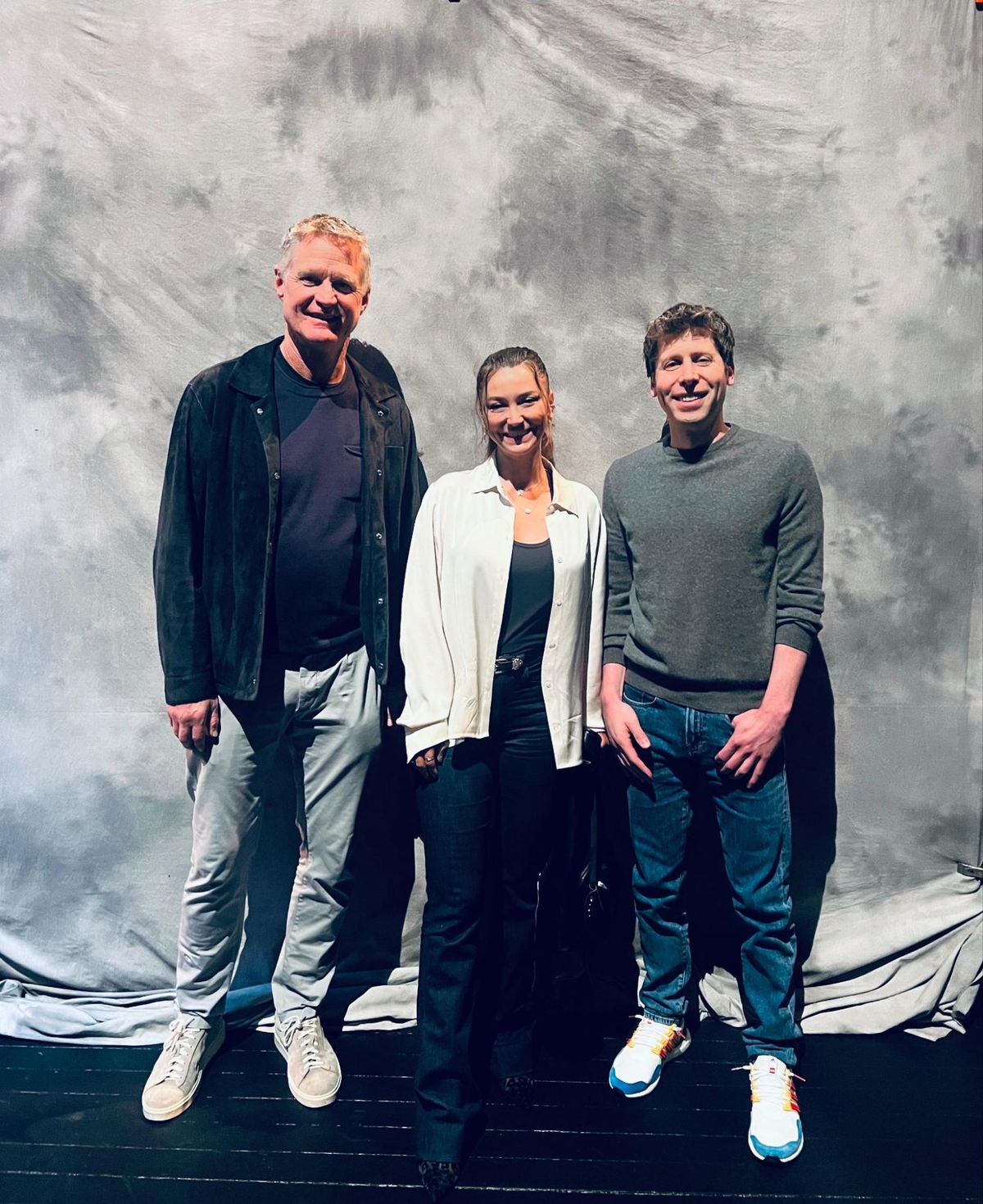
In the heart of San Francisco, OpenAI CEO Sam Altman, one of the tech world’s most debated figures, and legendary NBA coach Steve Kerr came together for an unexpected conversation. Even though the backstage meet-and-greet was brief, the invitation-only gathering brought together leading names from the city and Silicon Valley. Held in a nearly sold-out historic theater, the talk explored the future of AI, leadership, innovation, and the fate of San Francisco, punctuated by moments that no one saw coming.
The event opened with a jolt when a man jumped on stage, attempting to serve a subpoena to Sam Altman, the CEO of one of the world’s most valuable and most contested companies. The intruder said he was there to deliver a subpoena and tried to hand a paper to Altman. He was a member of Stop AI, a civil group that believes the AI development race poses serious risks to humanity and campaigns to halt or strictly limit the development of artificial superintelligence.
Information that surfaced afterward indicated the subpoena sought Altman’s testimony in a lawsuit they filed against OpenAI. Stop AI has sued, claiming OpenAI obstructed their non-violent protest. Altman remained seated as security escorted the man out. The interruption felt like a harbinger of the tension to come.
AI and sports: Unexpected intersections
Moderated by Manny Yekutiel, the conversation began with ChatGPT and everyday uses of AI. Kerr said he had used AI for a medical question and described the experience as “like having 10 doctors at once.” He also noted that the Warriors use these technologies, particularly in draft decisions and player development. This was striking to me, because on the same day the internet was buzzing with headlines about ChatGPT’s health and legal advice.
Kerr emphasized that all sports now evolve at the pace of technology, adding that they also leverage AI to enhance player performance and interpret statistical data.
The wealth gap: Moderator Yekutiel raised NVIDIA CEO Jensen Huang’s sky-rocketing wealth, now valued at $179 billion, and contrasted it with the week’s news that 42 million Americans could lose SNAP food assistance and go hungry. “What does it mean to live in a world where this is possible, and if you believe it’s wrong, what responsibility do the ultra-wealthy have to fix it?”, he asked.
Before Altman could answer, the room burst into applause. Although Altman has no equity in OpenAI, he is a billionaire himself. He began by saying Huang shouldn’t be held responsible for people losing food assistance, a response that, interestingly, drew even more applause. He continued to defend the NVIDIA CEO, saying he has done “great” things for the country, the world, and the economy, and that “building big tech and big companies is, in itself, a great thing.” Still, he added that people who work hard, are lucky, and benefit from society’s infrastructure “should give back,” and said, “I’m sure he will.”
Kerr added that the economy seems stacked “against the younger generation,” pointing specifically to how difficult it has become to buy a home. “A lot of people are struggling to get by, and this enormous wealth at the top—I’m happy to be part of it, just by coaching basketball—but it really feels strange,” Kerr said. “With this wealth gap and inequality, I don’t feel like our country is headed in the right direction.”
Yekutiel pressed further:
“Don’t you both have a role here? I’m not trying to blame you, but you’re the leaders of these two sectors, right? If you wanted to make going to a basketball game more affordable, you’re Steve Kerr. And Sam, you know these people, right? They respect you, and they also profit from you. What’s your responsibility? Can’t you make this better?”
“This machine is so big that I don’t think any of us can stop it,” Kerr replied. He pointed to the rise of legalized sports betting and sponsorships and said the NBA leadership would be unlikely to heed any appeal regarding ticket prices.
On the future: Optimism or realism?
Throughout the talk, Altman gave complicated answers about the future of AI. He acknowledged that the sector and platforms his roughly $1 trillion company has helped open up could bring some undesirable outcomes, but he said people should consider this on the scale of millennia. “Maybe our socioeconomic contracts will have to change very dramatically,” he added. “Five hundred years ago, there was no such profession as a basketball coach; fifty years ago, there was no such profession as the CEO of an AI company.”
This response acknowledged that technology drives social transformation, while also implying that there will be losers or total reconfigurations along the way. In Altman’s view, it’s unrealistic to expect only a feel-good story out of changes that are permeating every layer of society through AI. The future will be very different from the present, and who can say for sure what it will be?
Altman also said he wants to live in San Francisco all his life and tied the city’s status as a tech capital to “cultural freedom.”
This extraordinary conversation at the Sydney Goldstein Theater revealed contrasting tones of leadership at the intersection of technology and sports, unpacking the complexity of wealth inequality and offering both hopeful and anxious glances toward the future. Leaders of two different worlds admitted they don’t have all the answers—but at least tried to ask the right questions.
Other highlights from the night:
- Sam Altman: If you can set a bold yet hard-to-attain, crystal-clear vision that everyone can get behind, I think that’s incredibly powerful.
- Steve Kerr: Leadership matters most when things aren’t going well. When you’re winning, everyone’s happy, right? So the values you stay true to have to come alive to build a culture.
- In my brief introduction to Sam Altman, he told me he loves Istanbul; as one of the world’s most famous AI leaders, the idea of helping him bring in his “Istanbul data” created an interesting nuance for me.
2026 threshold: AI, robotics, and space
Following this important night, a question lingers: What kind of picture are we stepping into in 2026? As models scale, robotic systems become more agile, and the infrastructure debate jumps to a planetary scale. Elon Musk has already begun discussing the possibility of relocating data centers to the Moon. That could shift computation into a new layer where energy is abundant, cooling is natural, and latency can be strategically managed.
- If these axes truly converge, the fate of data centers will be decided not only by the cities they’re in but also by the gravitational and sensor fields they inhabit, that is, by their edge centers.
What came through most clearly in the Sam Altman and Steve Kerr exchange is this: If leadership is responsibility, can the Moon shoulder a burden Silicon Valley can’t, or are we just constructing another layer of inequality? And perhaps the more urgent question is this: alongside data centers, cities, CEO fortunes, and a lunar economy, if we could design one rule for how AI should protect human connection over the next 100 years, what would it be?